Why do you read dozens of books a year and still get nothing?为什么你一年读了几十本书,却还是一无所获?
Someone asked me, why do I still feel that I have not changed after reading dozens of books in a year?
At this time, you have to be careful of a common misunderstanding in reading, that is "philatelic reading".
The main symptom of "philatelic reading" is to regard how many books you have read as the ultimate goal of reading.
2
Nowadays, in the self-introduction of many book masters, there is always a sentence about how many books they read every year, including me. Because this is a very beautiful result, it looks good when it is taken out. But after this kind of publicity is too much, many friends have misunderstood, thinking that the pursuit of quantity is the purpose of reading. As long as I read a lot, I will be a very good scholar.
The most common example of philatelic reading is the New Year's resolution of "how many books will I read in a year".
When I was in college, I also made such a mistake. I made a plan for myself. This year, I will read 200 books! The result is to read in a hurry, without time to think, let alone translate into action, and immediately change a book.
After a year, there may be a very beautiful list of books, but there are very few that I really remember and really change myself. It’s even possible to see a certain title and think, “Huh? Why don’t I remember reading this book?”
I call this kind of misunderstanding "philatelic reading".
3
What harm will "philatelic reading" do to us?
When we focus on the pursuit of quantity, the goal of reading becomes to finish this book as soon as possible, and go to the next one as soon as possible. We humans are smart animals, we will naturally look for faster and less labor-intensive methods within the rules we make. On the premise that I want to finish reading this book, the faster and less labor-saving method must be to reduce the amount of active thinking such as thinking, reviewing, connecting with reality, etc., and change it to a comprehensive passive reception.
However, comprehensive passive reception is precisely the most inefficient way of learning.
Have you ever had such an experience? You finish reading a book, you know it's a good book, you also know that you read it sloppily, you could have gotten more from the book, but you just don't have the motivation to reopen the book again. book.
Have you ever wondered why this is?
In fact, there is a problem with your goal. In your subconscious mind, you have unknowingly set a goal with the lowest difficulty for yourself, which is called "finishing the book". Your subconscious mind thinks that your goal has been completed, then Whether you have gained or not, naturally you will have no motivation.
And "philatelic reading" is subconsciously setting the goal of "finishing the book" for a hundred books.
You say, is this a bad thing?
4
So, what kind of prescription should we use to treat "philatelic reading"?
First of all, we must first understand that the quantification of reading is divided into three levels.
The highest level is about the quantization of its own state, the middle level is about the quantization of the output state, and the lowest level is about the quantization of the input state.
For example, I am a fat person and I really want to lose weight. I plan to exercise more and read a lot of books on running and fitness.
So at this time, how should I quantify my reading?
The best way is to use my physical indicators as the standard of quantification. How close do I want my weight to be, what level do I want my body fat percentage to be, and how much do I want my waist, bust, and arm circumference to be. This is the quantification of one's own state. If I set goals for myself in this way, it will make me lose weight the most.
However, as a beginner in fitness, I may not know that there are so many indicators that can be used to measure my figure, so the next best way is to use my exercise volume as the standard of quantification. How much exercise do I want to do, how many miles I run, and how many calories I want to burn every day.
This is to focus on the quantization of the output state, which is also a good way for us.
And the least effective thing was how many books I read about fitness and running as a goal. In the past few years, I have read nearly 20 related books, but in the end I am still a fat man of two hundred catties. This is the quantization that focuses on the input state.
You will find that when your quantization focuses on your own state, it will naturally drive your output, and your output will naturally drive your input. And the reverse will not have such an effect.
Therefore, the best way to treat "philatelic reading" is to find a higher level of quantification, use the quantification that focuses on your own state as the goal, or at least use the quantification that focuses on the output state as the goal, and then let them drive your input. Over time, you will find that not only will you accumulate the amount of reading, but the books you have read will really bring about changes for you.
Yu Minhong said in an interview that he has a habit that he has kept for many years - chatting with writers.
However, he did not do this for socializing, but "forced" himself to maintain a certain amount of reading after busy work.
Although this will bring pressure, he feels that reading can bring about changes in life, and he must persist no matter how tired he is.
Bacon once said: "The practical person despises reading, the simple-minded admires reading, and the wise and wise use reading."
Every good book is a door leading to a wider and higher world.
If a person wants to grow quickly, he must read first-class books and talk to first-class ideas.
Some netizens asked Cai Lan:
"I usually feel very happy to laugh and play with my friends, but when I calm down, I feel boring. How can I get high-quality happiness?"
Cai Lan replied: Only read more books.
As one of the four great talents in Hong Kong, Cai Lan's erudition has been talked about for many years.
Friends praised him as "funny", because he can always find some interest in ordinary things with his rich knowledge.
Netizens lamented that he was "sober" because he could always quote scriptures and analyze the mysteries of life in simple terms.
He was accompanied by books all his life and lived freely.
I agree with Lin Qingxuan's words:
Third-rate make-up is the make-up of the face; second-rate make-up is the make-up of the spirit; first-rate make-up is the make-up of life.
A person with poetry and books can often nourish a rich and gentle soul.
Just like Dong Yuhui, who became popular last year because of his knowledge.
He talked about philosophy and history in the live broadcast room, from the hardships of reality to the strength of ordinary people.
Some fans said: He gave me a lot of warmth and strength, and gave me the courage to face all the trivial things in life.
But for Dong Yuhui, the better you read, the better you will be.
During the 8 years of teaching at New Oriental, he has always kept reading dozens of books a year.
It is a good book that allows him to gain inner strength when he is in a trough; it allows him to learn to be self-consistent and live well in the moment under heavy pressure.
Liang Wendao said: "Reading to the end is to make us more tolerant to understand how complicated the world is."
Reading is the simplest and most practical way to relieve emotions and nourish the spirit.
Open the book when you are irritable, and as the words flow into your heart, the hustle and bustle of the outside world will gradually fade away.
Seek help from books when you are stuck. The more you understand, the less entangled and helpless you will be.
Sadness cannot be explained without books, anger cannot be explained without books, and spirits cannot be lifted without books.
Read more, people will not sink in narrowness and superficiality.
I have seen such a picture:
Three people with locked heads sat side by side.
The first person held his head in his hands and closed his eyes arrogantly; the second person was puzzled and helpless.
The third person opened a book and started to read. Unexpectedly, the iron lock was easily opened with a "bang".
Everyone actually has a cognitive shackle, and reading is the way we unlock the shackles.
Ji Xianlin, a master of Chinese studies, was born in a poor mountain village.
Due to lack of material, most of the children in the village are illiterate.
Fortunately, Ji's father knew the importance of knowledge and sent him to Jinan to go to school when he was 6 years old.
During his time in Jinan, Ji Xianlin gained enlightenment from the book and learned the truth of learning to change his destiny.
After entering Tsinghua University, he also read through the books he was interested in day and night.
After graduation, many students chose to serve the "iron rice bowl".
He also had the opportunity to get a good job, but went to Germany to study in order to continue his studies.
But it was also this decision that brought another qualitative leap in Ji Xianlin's life.
After he finished his studies and returned to China, he was recommended to teach at Peking University. Relying on reading and learning, he realized his counterattack from a poor boy in the countryside to a master of Chinese studies.
Someone on the Internet once asked: "Why do people study?"
One answer left a deep impression on me: break the shackles of reality and enter another vast and vast world.
If you are confused about life, read biographies. In other people's joys and sorrows, maybe there is our answer;
Feeling that life is too tiring, I open a book of essays. Those quiet and beautiful words have the magic power to restore tranquility;
If you don't know what to do with your work, go to see the dry goods in the workplace. When you understand the method and strategy, many difficulties will naturally be solved;
If your interpersonal relationship is not good, you can turn to psychology for help. The perceptual puzzle can't be cleared, but the rationality can.
There are many divergent paths in life, and reading is the home.
What good books bring us is not only the acquisition of knowledge, but also the expansion of horizons and the upgrading of cognition.
As a top university in China, Peking University has cultivated a large number of elites from all walks of life.
But why Peking University and not elsewhere?
Wang Qiang, the co-founder of ZhenFund and a graduate of Peking University, replied: Because Peking University taught everyone one thing—reading.
It is those classics that have been read that become the guarantee that Peking University people can go a little further than others no matter what field they are in.
But what kind of book is a classic? How to read to make every minute spent truly worthwhile?
Here are a few tips to share:
1. Extensive reading to expand the boundaries of cognition
A writer once said: People's daily reading should be like making a "salad"-a little bit of all types of books.
Only in this way will the thinking not be biased and deformed.
When you have no way to start, learn more in depth according to the category:
Historical biography can lengthen the cognitive dimension and expand our thinking;
The advantage of philosophy is that it allows us to transcend the mundane and have a more detached and sober interpretation of the world;
Poetry and prose, take you to taste all kinds of flavors in the world with delicate tentacles;
Scientific monographs allow you to deepen your professional field and gain cutting-edge thinking.
2. Empirical decision-making, weakening opportunity cost
In this era of information explosion, all kinds of new books emerge in endlessly.
In order to keep up with the trend, many people only buy books that are on the popular list.
But smart people have always adhered to a principle: read less bestsellers and more classics.
Writer Yu Hua has said many times: I always recommend reading classics. Because classics are picked out by generations of readers.
Don't be attracted by useless gimmicks, read masterpieces, pioneering works in the field, and focus on things that really matter.
After all, a book that can withstand the waves must have its irreplaceable value.
3. Stimulate internal drive and realize long-termism
I really like Liu Run's words: Reading should not be like climbing a mountain, but more like weaving a net.
Mountains need to be climbed strenuously; nets allow us to happily jump from one node to another.
Try to offset the pressure of utilitarian reading with the joy of recreational reading:
Read more alternately: when you get tired of reference books, switch to novels;
Choose a way that makes you comfortable: such as listening to books in fragmented time instead of spending a lot of energy on the original.
When reading becomes a joyful thing, you can love and persevere from the bottom of your heart.
Zhou Guoping divides the joy of reading into three points:
1. Satisfaction of thirst for knowledge;
2. Communication with the souls living in the book;
Third, the enrichment and growth of one's own spirit.
The significance of reading lies in increasing knowledge, cultivating xinxing, and more importantly, transcending mediocrity and broadening the pattern.
Those books you have read will eventually be engraved into your life and make you a better you.
How many books can a person read in a lifetime?
I once saw in the Tianya community that someone claimed to have read tens of thousands of books.
If you read one book a day, you will get 365 books a year, and 3650 books in ten years.
How many years can a person study in a lifetime? You don't read much before the age of ten. After the age of 40 or 50, the energy and eyesight are not good, and more importantly, the curiosity about new things is greatly weakened, and the reading is not much. The time that can really be used to study should be about thirty years. If it is thirty years, the total number is about 11,000. Forty years, about 14,000 copies. Fifty years, about 18,000 copies.
The question is, can you read a book in a day? If it is an easy-to-understand martial arts novel or romance novel, it is possible; if it is a more complicated book, it is impossible. On average, reading a book in two to three days is already very fast.
According to reading a book in two days and reading it for fifty years, the total is 9,000 books. According to the speed of one book in three days, the total number is 6,000.
A normal person has a long lifespan and a relatively fast reading speed. He can probably finish reading 6,000 books in his lifetime.
The question is, is the speed of one book every three days credible? Most of the time, we have to go to work or school; in our spare time, we do housework, socialize, engage in leisure activities and so on. The time available for reading is very limited.
What's more, the source of information is not just books. Newspapers, DVDs, CDs, CDs, and the Internet are all things that are often used.
Considering these factors, the speed of one book every five to seven days should be more reasonable.
According to one book every five days, if you read it for 30 years, you can finish reading 2,000 books in a lifetime. One book for seven days, 1600 copies.
That is, a normal person, living a normal life, who loves to read, but is not a bookworm or a reading genius (if there is such a thing), can read 1600 to 2000 books in a lifetime.
In addition, finishing a book is not the end of the task, but also requires thinking and tasting. A good book is worth reading and reciting repeatedly. This reduces the total. It is assumed to be between 1200 and 1500 copies. Then, a middle-aged person or a young person who has read six or seven hundred books from the beginning to the end is considered very good; if he claims to have read a thousand books, it is suspected of exaggeration and bragging. As for those who claim to have read tens of thousands of books...
When I was young, I didn’t have many books. I once read popular science magazines at a classmate’s house, and I read dozens of them in one afternoon. I don’t know if this counts? Also, like some books, if you like to read them, if you read them several times, or read them more than a dozen times, is it just one book?
Books are carriers of ideas. Nietzsche once said, "My vanity is to say in ten sentences what others can say in a book, and what others can't say in a book." In fact, a lot of information now spreads faster. Books are good things, and not only books are the carrier of ideas, haha.
A good book should be read repeatedly, read horizontally, and read relevant comments. If you want to read to pick out the mistakes, you will know the next sentence after reading the previous sentence.
Haha, that is to read the book thoroughly. However, it is better to have no books than to believe in books.
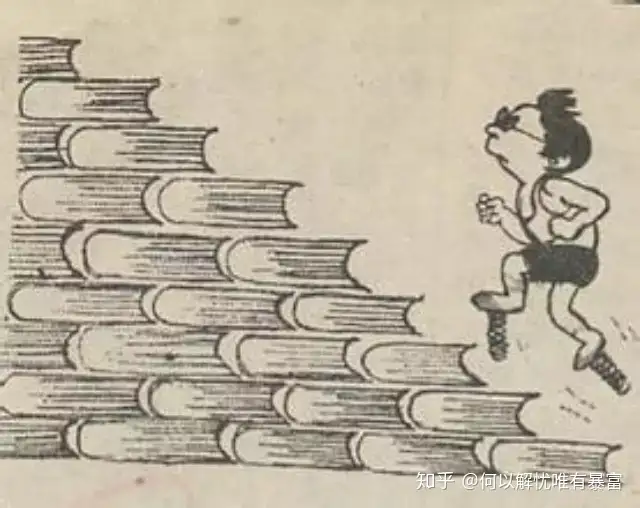
有人问我,为什么一年下来,读了几十本书,却还是感觉自己依然没有变化?
这个时候,你要小心一个读书中常见的误区,那就是「集邮式阅读」。
「集邮式阅读」的主要症状,就是把读过多少本书,作为阅读的终极目的。
2
现在很多读书达人的自我介绍里,总会有一句每年读多少本书,包括我也是。因为这是个很漂亮的成绩,拿出来很好看。但是这样的宣传太多之后,给很多朋友造成了误解,认为追求数量就是阅读的目的,我只要读的多,我就是很厉害的读书人。
集邮式阅读的最常见例子,就是「我一年要读多少多少本书」的新年计划。
我在大学的时候,也曾经犯过这样的错误,我给自己制定计划,这一年,我要读两百本书!结果就是匆匆忙忙地读,来不及思考更谈不上和转化为行动,就马上换下一本。
一年下来,可能有一张很漂亮的书单,但是真正记住的,真正改变自己的,很少很少。甚至有可能看见某个书名,心里却在想「哎?我怎么不记得我读过这本书?」
这样的误区,我称之为「集邮式阅读」。
3
「集邮式阅读」会给我们造成怎样的危害呢?
当我们把注意力集中在追求数量上时,阅读的目标就变成了尽快读完这一本,赶紧去看下一本。我们人是聪明的动物,我们会在自己制定的规则内,天然去寻找更快更省力的方法。而在满足我要把这本书读完的前提下,更快而且更省力的方法,必然是减少思考、回顾、联系实际等等这些主动思考的思维量,而改为全面的被动的接收。
可是,全面的被动的接收,恰恰是最没有效率的学习方式。
你有没有过这样的经验?你读完了一本书,你知道这是一本好书,你也知道自己其实读的很马虎,你本可以从书中获得更多,可是,你死活就是再也没有动力,重新再打开这本书。
你有没有想过,这是为什么?
这实际上,是你的目标出了问题,你在潜意识中,不知不觉为自己设定了一个难度最低的目标,叫做「把书翻完」,你的潜意识认为你的目标已经完成,那么不论你有没有收获,自然也就都没有动力了。
而「集邮式阅读」,就是在潜意识中,为一百本书都设定了「把书翻完」这个目标。
你说,这是不是一件糟糕的事情?
4
那么,我们应该用怎样的药方,来治疗「集邮式阅读」呢?
首先,我们要先了解把读书这件事量化,是分为三个层次的。
最高层次,是关于自身状态的量化,中间的层次,是关于输出状态的量化,而最低层次,是关于输入状态的量化。
举个例子来说,我是一个胖子,我很想让自己瘦下来,我准备多多运动,看了很多跑步和健身方面的书。
那么这个时候,我应该如何量化我的阅读呢?
最好的方式,是以我的身体指标来作为量化的标准。我希望自己的体重降到多少近,我希望自己的体脂率达到一个怎样的水平,我希望自己的腰围、胸围、臂围能到多少。这种就是关于自身状态的量化。如果我按照这样的方式来为自己设定目标,才是最能让我瘦下来的。
不过作为刚入门的健身小白,我可能不知道有这么多的指标能用来衡量我的身材,那么退而求其次的方式,是用我的运动量来作为量化的标准。我希望自己每天做多少运动,跑多少公里,消耗多少卡路里。
这种就是关注于输出状态的量化,对于我们来说,也是不错的方式。
而最没有效果的,是我把看了多少关于健身和跑步的书籍作为目标。这几年我看了将近二十本相关的书籍,到头来还是一个两百斤的胖子。这种就是关注于输入状态的量化。
你会发现,当你的量化是关注于自身状态的时候,会自然的就带动你的输出,而你的输出,又会很自然的带动你的输入。而反过来就不会有这样的效果。
所以,治疗「集邮式读书」最佳方法,就是找到更高层次的量化,用关注于自身状态的量化作为目标,或者至少用关注于输出状态的量化作为目标,然后让他们带动你的输入。久而久之你会发现,这样不仅有阅读量的积累,而且你读过的书才会真真正正为你带来改变。
导读:人生最大的捷径是用时间和生命阅读和拥抱了世上一流的书。在书海里寻觅人类历史上大浪淘沙后留存下来的经典作品,从中汲取其真善美精华。
北大出了许多企业家,这让我非常自豪。我经常回忆,北大为什么会产生企业家?我一直以为清华才可能产生企业家,因为它搞科技。北大是学术的殿堂,是精神自由的三角地,是自焚的地方,是结束肉体的地方,是让灵魂再生的地方。企业、上市等等好像与北大无关。但是经历了这么多年人生后,我明白了北大为什么会产生企业家。
以北大的32楼为例,当年我和俞敏洪(新东方教育科技集团董事长兼CEO)作为北大青年教师住在该楼的第二层。后来俞敏洪创办了新东方,成了伟大的企业家。
第三层楼,当年住着一个来自山西的叫李彦宏的青年,天天在水房里光着上身用冷水冲澡,唱着“夜里寻他千百度,你在哪呢”,天天念“百度”两个字,于是后来诞生了百度公司。而从知识储备来讲,李彦宏无论如何都不可能做企业,他是学图书馆系古典文学编目专业的。
第四层楼住着北大中文系的愤怒诗人黄怒波。这些年来,黄怒波令人刮目相看,成为中坤集团创始人,在冰岛购置土地。
更匪夷所思的是,北大中文系的女生楼里一个长相非常平和的人龚海燕,她充满着激情,创办了世纪情缘。
英文系、图书馆系、中文系都是与金融、融资、管理完全无关的专业,但是学这些专业的人怎么会创建出成功的企业?我想,这是因为北大给予了我们一样东西,就是怎样塑造生命的东西,使得我们对知识的渴望超过一切。
我有一个座右铭叫“读书只读一流的书”—真正值得我智力投入、值得我尊重、花费我精力的大概就是这两大类。我觉得读书一定要读一流的书,做人一定要做一流的人。
正是读经典,读那些能够改变我们生命轨迹的书籍,成为北大人离开校门后不管走到哪个领域,能比别人走得稍微远一点的保证。因为那些书不是字,是生命,而这些生命对读者的生命来说,是一种引领。
现在我们生活在信息的海洋里,也算人生有幸,但是要接受的信息太多了。那么什么样的书该读呢?我读书的选择是这样的:畅销书坚决不读,不是我看不起畅销书,而是我知道生命有限,只能读人类历史上大浪淘沙的作品。
我所读的作品的创作年代越来越早,因为我觉得越是早期的人,他们写下的文字越是生命的写照。
读一流的书就要衡量这个作家进入书前的状态是什么。他是为满足市场的需要而写,还是倾其鲜血、生命和经历而写。如果你读的不是真文字,遇到的不是真语言,那么最后见到的也一定是虚幻的世界,不是真实的世界。读书真正对读者产生作用的时候,就是读者和真正的生命融汇在一起的时候。千百年来,没有被淘汰的著作是人类一代又一代人选择的结果,而不是现在市场的选择,更不是广告词的选择,这是非常关键的。

为什么读经典能改变我们的生命呢?文学的功能是什么?在我看来,文学的功能就是:真正有力量的文字,一定能够对我们的审美进行奇异的再造,在我们对“真善美”的追求上有奇异的启示,有充电的感觉。所以那些人类最高的价值,真的、善的、美的东西就会融入我们的血液。一旦人的身体里有这三样东西,在现实社会中就不会轻易被世俗的、流行的、暂时的甚至非常糟糕的价值观扭转。
读那些经典的、人类熟悉的甚至很多人因为追求时髦而不屑一读的文字吧。这些文字使我们对生命、审美、真理、语言与世界的关系有了更直接的感觉。我认为我人生最大的捷径就是,用时间和生命阅读和拥抱了世上一流的书。
我还有一个看法—读书和吃饭一样,不能偏食,要有一个balanced diet,精神的脾胃才能健康。
首先,是不是要读读宗教、神学?我觉得一定要。读神学著作我们才能理解超越人性的东西,才能获得一种上帝般的眼界,才能达到一种超尘脱俗的境界。我时不时会翻出《大藏经》来没有目的地读,还有《圣经》《古兰经》及其他宗教、神学理论著作。
读完神学,我觉得我理解了宇宙的神秘(如果这神秘往往被称为上帝的话);反观宇宙,我更加清醒地意识到了人的渺小,这使我不得不变得谦卑。不要把宗教、神学等同为迷信。
第二,一定要读哲学。哲学从某种意义上说,是寻找人之为人的存在根由的一种诘问。作为一个人,我们不得不问我们自己是从哪里来的,我们要到哪里去。
第三,不能不读历史。历史对人类到目前为止的所有生活场景进行了最接近真实的描述。人的生命有限,如果想领略人类经历的甜酸苦辣、成功和失败、生命和死亡,就只能去读历史。
第四,心理学要读。像弗洛伊德这样的心理学家,他拆解的是人意识的存在,探寻的是一个人的意识和心灵究竟怎样协调运行的,是如何保持人之为人的内在本质的。
人是情感的动物。那些穿透情感层面,展示情感宇宙奇景的一定是好诗。所以为了情感成长的丰富,一定要读诗。在这个世界上只有两种东西是接近上帝的,一种是诗,一种是音乐。
文学不可不读。作家通过语言向人的想象力挑战,这是文学的基本功能。比如村上春树,他的题材和写法奇诡诱人,有人把他视为通俗作家中的摇滚乐手,但我认为他一点都不缺乏深刻性—实际上他是在试图捕捉现代文明里飘浮的现代人的存在本质和表征。我喜欢的作家有卡尔维诺、君特·格拉斯、雷蒙·卡佛、博尔赫斯、米兰·昆德拉,接下来就算得上村上春树了。
我有村上的日文原版,英译本,台湾赖明珠译本和国内的林少华译本。我是村上春树迷。为读懂村上,我发誓开始学习日文这东西。
科学领域的一流读物也要读。我坚信在科学思想和人文思想方面存在着某种意义上平行发展的东西。
人的日常阅读应该融合以上种种,要学会做出一盘有利于精神和心灵健康的“沙拉”。我称这种读书为饮食平衡法读书。这样人的生存才能不偏颇,精神的林木才不会因营养匮乏而枯萎或畸形。当然这是“读书人”的读书,专家学者另当别论。从终极目的上说,读书是建造一个完全属于自己心灵的世界的过程。
人读书越多,越不会被外在的环境所困扰,越不会被寂寞孤独这样可怖的东西所折服。因为书籍逐渐在人的心灵里建造了一个完全独立于外界的力量的王国,这个王国是被心灵完全拥有的,在这个世界里栖居着令人神往的古今中外丰富而伟大的灵魂。
当一个人的心灵完全拥有这样一个王国的时候,他灵魂的承受能力会有多么坚强!因为他完全不需要依靠任何外力来支撑他的生命。


评论
发表评论