Who did Chairman Mao look down on the most?毛主席最看不起谁?
Mao Zedong loved reading, especially Chinese classical literature. He not only could learn from history, but also was good at using the past to satirize the present and "new interpretations of ancient things".
Among the many Chinese literary and dramatic works, there is a Beijing opera called "Famen Temple", which was deeply loved by Mao Zedong, and he watched it many times during his Yan'an period. Later, during the negotiations in Chongqing, Chiang Kai-shek invited Chairman Mao to watch a play many times, one of which was "Famen Temple".
"Famen Temple" tells the story of the Ming Dynasty.
A woman named Song Qiaojiao, after her husband was wronged and imprisoned, took advantage of the Queen Mother's visit to Famen Temple to offer incense, and stopped the sedan chair to seek justice. The queen mother was moved by Song Qiaojiao and ordered the eunuch Liu Jin to deal with the matter. Later, Liu Jin ordered Zhao Lian to investigate the case. After Zhao Lian's investigation, the case finally came to light.
"Famen Temple" vividly depicts the world and human conditions in the middle and late Ming Dynasty. It has been enduring for many years and is a classic in the hearts of the masses.
However, the most impressive characters in the play are neither Song Qiaojiao, who pleads for her husband's life and values love and righteousness, nor Liu Biao, a sinister and cunning villain, but Jia Gui, a young eunuch under the chief eunuch Liu Jin.
Jia Gui was servile to his superiors, domineering to his inferiors, and others gave him a seat in front of Liu Jin. He said that he was used to standing and dared not sit. He was a typical image of a slave in the old society. He is like a vivid mirror, reflecting the ugly face of a powerful villain.
Epstein, an American journalist who interviewed in Yan'an back then, recorded in detail Mao Zedong's voice and smile when he was watching a play. According to him, when Mao Zedong saw eunuch Liu Jin tell his eunuch Jia Gui to sit down, and Jia Gui said that he was "used to standing", he clapped his hands and laughed out loud.
In 1949, Mao Zedong once again watched "Famen Temple" starring Tan Fuying, Hou Xirui, Hao Shouchen, Li Duokui and others at the Chang'an Grand Theater in Beiping.
He said with emotion to the people around him: "There are two typical characters in "Famen Temple", one is Liu Jin and the other is Jia Gui. Liu Jin has never done anything good in his life, except for correcting a wrong case in Famen Temple." .And Jia Gui's every word, deed, and every move is a complete slave look. We must oppose this kind of slave thinking."
These words deeply touched the people around them. They knew that the chairman was encouraging them to think independently, seek truth from facts, and maintain self-esteem.
In 1956, Mao Zedong brought up "Famen Temple" again. Only this time, the characters like Jia Gui have a new color of the times.
At that time, New China was facing a severe situation. On the one hand, it had to face the blockade of Western countries, and on the other hand, the relationship with the Soviet Union was becoming increasingly tense.
Some cadres gradually lost their fighting spirit and national self-confidence under the situation of being attacked by two sides, and became at a loss.
Mao Zedong keenly captured this phenomenon. He mentioned "Jia Gui" many times in public, hoping to use the name of "criticizing Jia" to alert some improper trends and reverse some unhealthy phenomena.
On April 20 of that year, Chairman Mao listened to a report on the Second Five-Year Plan in Zhongnanhai. Leaders Liu Shaoqi, Zhou Enlai, Zhu De, and Deng Xiaoping were also present.
At the meeting, Mao Zedong criticized the popular saying that "without Soviet aid, China's construction would not be successful."
He said: "This kind of thinking is wrong. Being a slave is used to being a slave, and there is always a sense of slavery, just like Jia Gui in the play "Famen Temple". When he was asked to sit, he said he was used to standing."
Immediately afterwards, Chairman Mao cited the examples of Lenin's resistance to the Second International and China's resistance to the Third International to discuss the importance of a country's self-respect and self-improvement.
At that time, the Soviet Union provided large-scale assistance to China, and some Soviet advisers developed an arrogant attitude, while many Chinese comrades felt that they "took others' hands short" and often showed humility and even inferiority in front of the Soviets.
Mao Zedong was very disapproving of this phenomenon.
On April 25, he brought up this matter again, criticizing some people who "have been slaves for a long time, feel inferior in everything, and can't straighten their waists in front of foreigners, just like Jia Gui in "Famen Temple."
Mao Zedong encouraged Chinese people to redevelop the "spirit of despising US imperialism" during the period of resisting US aggression and aiding Korea, so as to truly stand on their own among the nations of the world.
The "foreigners" here obviously refer to the Soviets.
On March 22, 1958, Mao Zedong mentioned Jia Gui again at the Chengdu Conference.
He said: "The monk Huiming in "The Romance of the West Chamber" stepped forward to deliver a letter to General Baima. We would like to have some Huiming in China now. The phenomenon of some leading cadres' low spirits is a manifestation of slaves, just like "Famen Temple" It’s like the Jia Gui in the movie.”
The spirit of the speech at this meeting was quickly conveyed to cadres at all levels.
On May 14, the Second Ministry of Machinery Industry submitted a report to Mao Zedong.
The report said: "(To the Soviet experts) at the beginning was a completely passive dogmatic attitude, dare not think, dare not ask, just copy and copy. After the Chengdu meeting, it was discovered that the work of the Soviet experts must also emphasize retreat, in order to False with real, virtual and real combined."
Mao Zedong commented in this report: "Soviet experts are all good comrades, and what is reasonable always makes sense. Unreasonable, or not wise, so the two sides are separated, and the responsibility lies with us. We respect the Soviet comrades, work hard and be open-minded. Study, but you must get rid of superstitions! No one looks down on Jia Gui."
Subsequently, Peng Dehuai conveyed this spirit in the military system, advocating that Soviet military advisers should not only "respect and learn with an open mind", but also "break superstition".
In 1960, as China and the Soviet Union turned against each other, the Soviet government withdrew all experts and took away all drawings.
Many major design projects and scientific research projects came to a standstill, and some construction projects were forced to stop. This undoubtedly added to the difficulties for China, which was in trouble at the time. Some foreign commentators even said that China's nuclear weapons development has suffered a devastating blow.
Faced with this predicament, Chairman Mao did not have the slightest timidity. He said loudly: "We have no choice but to rely on ourselves and our own two hands."
It is this determination of self-reliance that has greatly encouraged the confidence and courage of all personnel on the national defense science and technology front. The Chinese finally relied on their own efforts to complete the great cause of "two bombs and one satellite".
Oppose the "Jia Gui" type villain and the deep-rooted servile thought in this kind of person, advocate self-esteem, self-love, self-confidence and self-improvement, and be able to be tenacious and unyielding in the face of power and oppression. This is the portrayal of Mao Zedong's life and is also the eternal legacy he left for future generations spiritual wealth.
Chairman Mao is the person with the "hardest bones" in China, and what he admires are people with backbone and integrity.
Chairman Mao mentioned a person named "Jia Gui" more than once. Chairman Mao bluntly said that "Jia Gui" was the person he looked down on the most. Because he is a slave without integrity, Chairman Mao commented on him, "I have been a slave for a long time, and I can't straighten my waist in front of my master"!
Why did Chairman Mao dislike "Jia Gui" so much? Who is "Jia Gui"?
01
In fact, Jia Gui is the name of an eunuch in the Peking Opera "Famen Temple".
"Famen Temple" is adapted from a story in the early Ming Dynasty. The story is true, but the role of Jia Gui is fictional. Similar to most traditional dramas, Peking Opera "Famen Temple" also narrates the story of "talented scholars and beautiful women, emperors and generals, kindness and resentment".
Stills of "Famen Temple"
Chairman Mao liked the play "Famen Temple" very much. During his stay in Yan'an, Chairman Mao watched this play with great interest four times.
During the negotiations in Chongqing, the "host" arranged several Peking Opera performances in order to ease the contradictions between intense negotiations. The guests invited to watch the performance included Chairman Mao, important members of the Kuomintang and famous democrats in Chongqing.
The performer is the famous troupe "Li Family Troupe". It is said that the reason why the "Li Family Troupe" is invited is mainly because of Chiang Kai-shek's personal preference. Among many Peking opera masters, Chiang Kai-shek especially liked the performance of Li Huiliang, a martial artist from the "Li Family Class".
At that time, Chiang Kai-shek ordered two plays "Mu Guiying in Command" and "Thirteen Sisters", and Chairman Mao ordered "Famen Temple".
There is another way of saying that the Kuomintang people ordered "Apology to the Thorn", and the democrats ordered "Harmony with Generals and Prime Ministers", but Chairman Mao unexpectedly ordered "Havoc in Heaven". Although this statement has no evidence or is purely fictional, it vividly reveals the different positions and choices of the three forces at that time.
Chairman Mao likes to watch "Famen Temple". In addition to valuing its literary and artistic value and appreciating the superb performance skills of the artists, Chairman Mao is particularly interested in the little eunuch Jia Gui in the play.
There is such a plot in "Famen Temple": when the chief eunuch Liu Jin asked the young eunuch Jia Gui to sit down, Jia Gui replied naturally: "Don't sit down, I'm used to standing as a slave."
It is said that after the performance began, several important members of the Kuomintang sitting in the back row were still talking about it, and they kept talking about "US aid" and "international aid". Apparently, they wanted to show off in front of Chairman Mao, to show how powerful they were with the support of the United States.
At this time, Chairman Mao did not speak, let alone revealed a hint of ridicule or disdain.
But when the above-mentioned plot was played on the stage, Chairman Mao showed contempt and disgust on his face. He pointed to Jia Gui on the stage and said to the people around him: "Look, the master gave him a seat. But he said he was used to standing, and he looked like a slave!"
Although the volume of Chairman Mao's words was not loud, they were heard in the ear, and the key members of the Kuomintang sitting in the back row could hear them clearly and truly.
Later generations speculated that Chairman Mao's words were specifically addressed to those key members of the Kuomintang, with the intention of mocking the ugliness of the Kuomintang government's obedience and groveling in front of its American masters in order to win "American aid."
We have no way of knowing whether what Chairman Mao said at the time really had such a meaning. However, after hearing Chairman Mao's words, the key members of the Kuomintang in the back row completely shut up.
I think those officials should have "entered the role and checked their seats", a big eunuch with physical and mental disabilities, a submissive little eunuch... a slave look, such irony is too spicy!
"Famen Temple" Still Photo 2
In the summer of 1949, Chairman Mao came from Xiangshan to watch a performance at the Chang'an Grand Theater in Beiping, where the traditional Peking opera "Famen Temple" was about to be staged. At the invitation of Chairman Mao, some representatives who will attend the "First CPPCC" also came to watch the performance.
After the performance, Chairman Mao walked out of the theater surrounded by everyone. While walking, Chairman Mao said to the democrats around him:
"The two eunuchs in "Famen Temple" are very typical, one is Liu Jin and the other is Jia Gui...Liu Jin has never done a good thing before, but corrected a wrong case in Famen Temple, which can be regarded as what he did for the people A good thing." Chairman Mao commented, "This Jia Gui is very humble, in front of his master, Jia Gui has no dignity, no spine, his every move, every word and deed is a complete slave look."
Someone echoed: "Eunuchs are not normal people, and Jia Gui is the representative of this group."
Chairman Mao changed the subject and said: "There are many Jia Guis around us. They are pitiful and pathetic... We must advocate seeking truth from facts and independence of personality. A person must have a little self-esteem and a little backbone. A slave like Jia Gui Thoughts don't matter."
Chairman Mao also said: "The fox pretends to be powerful and domineering to the subordinates, and is submissive and servile to the superiors. Even the great eunuch Liu Jin looks down on him."
Over time, "Jia Gui" has become synonymous with "slave". Speaking of Jia Gui, people will naturally think of the kind of people who are full of servility and have no spine.
02
Chairman Mao especially admired a literati who "does not eat what is cheap" - he would rather starve to death than receive "relief food" from the United States.
In the 1940s, during the war, all industries in China were depressed and prices soared. Even people like Zhu Ziqing, a professor at Tsinghua University, can't afford food, and the family can only survive on porridge. At this time, the United States shipped grain to China, and the Kuomintang authorities issued "flour ration certificates" to the professors, and the professors could purchase the flour aided by the United States with the certificate.
Chiang Kai-shek and Leighton Stuart (first from the right)
However, due to the depreciation of the currency and the frequent interruption of food supply, the price of food has skyrocketed. Zhu Ziqing's monthly salary is only enough to buy more than three bags of flour. What's more, even if they can buy flour, the Americans have conditions: Since they accept the relief from the United States, the Chinese should be grateful to the United States and bow their heads.
In the vernacular, it is: If you want to eat American flour, then you have to be obedient. In short, flour is not given for free.
In the article "Farewell, Leighton Stuart", Chairman Mao wrote in pungent language:
The Americans sprinkled some "relief powder" in Beiping, Tianjin, and Shanghai to see who was willing to bend down to pick it up.
Then, Chairman Mao mocked: "It's such a bad food, it will hurt your stomach if you eat it."
Sure enough, Chairman Mao's words came true soon after.
In May 1948, the U.S. government tried in vain to revive Japanese militarism. As soon as the news came out, it was strongly condemned by all walks of life in China.
In this regard, the US ambassador to China Leighton Stuart and Consul General Carboud in Shanghai made threatening and insulting speeches. In their speeches, Leighton Stuart and Carboud refused to respond to inquiries from all walks of life in China. Instead, they used "American aid flour" as an excuse to accuse "the Chinese do not know good and evil, and will repay kindness with revenge", and even threatened to cut off "American aid."
Facing insults and threats from the Americans, 110 scholars from Tsinghua University jointly issued the "Solemn Statement of Teachers One Hundred and Ten", calling on the people of the country to refuse to receive "U.S. aid flour" to protest the U.S. policy of supporting Japan.
There is such a passage in the statement:
"For the sake of the dignity and integrity of the Chinese people, we categorically reject all charity goods from the United States that have the nature of buying souls, whether they are purchased or given."
Before the "statement" was officially released, Professor Wu Han from Tsinghua University went to Zhu Ziqing's home, hoping that Zhu Ziqing would sign the statement. But as soon as he stepped into Zhu Ziqing's house, Professor Wu Han hesitated.
Because of hunger and serious illness, Zhu Ziqing was bedridden and had no money for medical treatment. What's more, there are nine people in Zhu Ziqing's family, old and young, and the life of the Zhu family has been extremely difficult.
Professor Wu Han thought that if Zhu Ziqing signed the "declaration", life for the Zhu family would be even more difficult. Therefore, he said to Professor Zhu Ziqing: "Whether to sign the 'declaration', my suggestion is to do what you can, don't force it."
Zhu Ziqing
Professor Zhu Ziqing said: "Mr. Wu should be aware of my character and attitude. During the Spring and Autumn Period, people with integrity would not eat "food that comes from you" even if they starved to death. I’ve made up my mind a long time ago, I’d rather starve to death than accept insulting handouts from the Americans!”
After saying this, Zhu Ziqing sat up with his sick body supported, and signed the three words "Zhu Ziqing" on the "declaration" without hesitation.
Early the next morning, Professor Zhu Ziqing asked his wife to return the "flour ration certificate". Seeing that there were still a few flour tickets of the current month at home, Zhu Ziqing said to his wife: "Hurry up and return it. There is still a small half bag of flour at home. You take it away together. If you want to return it, you must return it completely!"
More than a month later, Professor Zhu Ziqing's condition deteriorated, and the medicine failed. Unfortunately, he passed away at the age of 50.
As he was dying, Professor Zhu Ziqing strenuously and intermittently told his family members: "One thing must be remembered, I signed the 'declaration' on the refusal of US aid. From now on, no matter how difficult it is, you should not Accept American flour."
Some people say that Professor Zhu Ziqing is "scholarly spirited" and that "food is the paramount necessity of the people", so there is no need for Professor Zhu Ziqing to "fight to the death".
But Chairman Mao did not see it that way. In the article "Farewell, Leighton Stuart", Chairman Mao wrote:
We Chinese have backbone. Many who were once liberals or democratic individualists stood up in the face of the U.S. imperialists and their lackeys, the Kuomintang reactionaries...
We should write odes to Wen Yiduo and odes to Zhu Ziqing, they show the heroism of our nation.
In this article, we can also see a heroic and familiar saying:
There is nothing to be afraid of a little bit of difficulty. Block it, block it for ten or eight years, and all problems in China will be solved! The Chinese are not afraid of death, but are they still afraid of difficulties? Lao Tzu said: 'The people do not fear death, so why should they be afraid of death. '
03
When China was facing the most severe international environment, Chairman Mao repeatedly mentioned the eunuch Jia Gui in "Famen Temple". Chairman Mao wrote in "On the Ten Major Relationships":
Some people have been slaves for a long time and feel that they are not as good as others. They can't straighten their backs in front of foreigners. Like Jia Gui in "Famen Temple", he was asked to sit, but he said he was used to standing.
Chairman Mao reprimanded him as "full of slavishness and incurable", and then called on the people of the whole country to "improve national self-confidence, and develop the spirit of 'despising US imperialism' advocated in the War to Resist US Aggression and Aid Korea!"
In the early days of the founding of the People's Republic of China, the "Big Brother" of the Soviet Union gave great help to our country, and the Chinese people are grateful and respectful to the "Big Brother" of the Soviet Union. However, some problems have also been exposed in the frequent exchanges and close contact between Chinese and Soviet personnel.
Chairman Mao meets Soviet leaders
At that time, the "Second Ministry of Machinery" submitted a "report on the relationship with Soviet experts" to Chairman Mao. After reading this report, Chairman Mao personally wrote:
"'All brothers in the world', you must respect the comrades of the Soviet Union and learn from them humbly. However, you must also break the superstition and defeat Jia Gui!"
Chairman Mao specially marked: "You must know that Jia Gui (that is, the slave) is looked down upon by anyone."
In the middle and late 1950s, Chairman Mao mentioned the name "Jia Gui" many times in his speeches and reports.
At that time, our country was facing the most severe international environment since the founding of the People's Republic of China. On the one hand, Sino-Soviet relations are becoming increasingly tense, and there is a tendency to openly split; on the other hand, my country has been threatened by force and economic blockade by Western countries headed by the United States, and it is becoming more and more serious.
Faced with one difficulty after another, some people in the country have become at a loss, and some people have even begun to lose confidence and waver in their beliefs. To read more good articles, please subscribe to "The Era".
In order to lead the new socialist China onto the path of "independent" development, Chairman Mao wrote the article "On the Ten Major Relationships".
In response to pessimistic and erroneous remarks such as "If China loses the aid of the Soviet Union, China's construction cannot be successful", Chairman Mao pointedly pointed out:
Some people are used to being slaves, and they are always a bit slavish, just like Jia Gui in "Famen Temple", when they told him to sit, he said he was used to standing."
'Jia Gui' feels inferior in everything, and cannot straighten his waist in front of his master. Some of our comrades are very similar to 'Jia Gui', and cannot straighten their waists in front of foreigners.
In Chairman Mao's writing, "Jia Gui" is a negative teacher, he is weak, superstitious about authority, he has no independent personality, and is a complete slave.
At a meeting, Chairman Mao once again mentioned the name of "Jia Gui". He said impassionedly: "We must cut off the slave's tail, we must get rid of superstition, and we must completely overthrow Jia Gui's style. No one looks down on Jia Gui!"
Now, the deformed group of eunuchs has long since disappeared. So, are there still people like Jia Gui around us? Unfortunately, eunuchs have long since disappeared in the world, but "people like Jia Gui can be seen everywhere" - this is the opinion of Mr. Ji Xianlin, a famous orientalist master, linguist, writer, and historian.
Ji Xianlin
Mr. Ji Xianlin said, "You don't need to look carefully, you may still often meet the 'Jia Gui' of Famen Temple who is 'kneeling and can't stand'."
Why did Mr. Ji Xianlin say this?
After the reform and opening up, our country absorbed foreign capital and introduced some advanced technologies and experiences from abroad. However, when the windows were opened, "mosquitoes and flies" also came in together. For a while, some people's curiosity about foreign cultures quickly turned into "worship", and some "elites" developed a "superstition" towards the West, and worshiped devoutly in front of Western developed countries. They pursue American values, and some radicals even believe that the next step for China is to fully "Westernize."
This is a kind of spiritual self-mutilation, behind which is "Jia Gui"-style inferiority complex.
Under the influence of this trend of thought, the "Jia Gui" could not stand up, so they would never be able to walk a straight path.
As everyone knows, China has China's national conditions, and China's affairs can only be handled by the Chinese themselves. The result of blind worship and superstition can only be humiliating and futile.
04
Finally, let me talk about the main difference between "minion" and "slave".
First of all, "slave" is forced, while "slave" is voluntary; secondly, "slave" is a social class, while "slave" is a kind of social consciousness, national consciousness, and a distorted interpersonal relationship.
The most critical difference between a "slave" and a "minion" is: a "slave" still has a life goal of being free, while a "slave" attaches everything to his master and has no life goal of his own.
That is to say, although a "slave" is unfortunate, he is not so terrible, because he still knows how to struggle, at least he still has the hope of breaking free from shackles and gaining freedom; Human beings are forever "Jia Gui" slaves.
This is the fundamental reason why Chairman Mao despises "Jia Gui" and doesn't like to see "Jia Gui".
In Chairman Mao's view, "Jia Gui" is nothing more than a walking corpse with no bones, no integrity, no dignity, no ideals, and his vivid soul has long since died!
Chairman Mao's Comments on the Nineteen Emperors
After 1949, Mao Zedong made clear comments on the eighteen emperors on various occasions
1. Emperor Xin.
Emperor Xin, the last monarch of the Shang Dynasty, was posthumously named Emperor Xin of the Shang Dynasty. King Wu of Zhou called him "King Zhou".
After Emperor Xin succeeded to the throne, he attached great importance to farming, the people lived in stability, and the country was strong. He continued to use troops against Dongyi, repelled Dongyi's expansion into the hinterland of the Central Plains, and expanded the scope of the Shang Dynasty's control to the Jianghuai area. In particular, the victory of the crusade against Xu Yi expanded the territory of Shang to the southeast coast.
However, in the later period of Emperor Xin's reign, he spent huge sums of money to build a deer platform, a wine pool, pampering Daji, hanging his meat for a forest, and craving extravagance. He became headstrong and could not listen to different opinions. Kill Bigan and imprison Jizi; use cannon fire and other torture to suppress the people and lose their hearts. In addition, the yearly battles consume a huge amount of national power, which instead affects itself. "Zuo Zhuan" states: "Zhou defeated the Eastern barbarians and died."
In 1046 BC, King Wu of Zhou defeated the Shang army in the historic Battle of Muye, and Emperor Xin boarded Lutai and set himself on fire to die for his country. "Historical Records Volume Three Yin Benji Third" records \"Jiazi Day, Zhou's army was defeated. Zhou walked into (chaoge), climbed Lutai, dressed in his precious jade clothes, and died in the fire. \"The Shang Dynasty perished from then on.
"King Zhou" is an insulting and contemptuous title for Zhou people. According to "Shuowen Jiezi" citing posthumous posthumous explanation: "Cruel donating righteousness is called Zhou". In today's terms, "Zhou" is a villain who does all kinds of evil.
Mao Zedong's comments:
"Actually, King Zhou was a man of great ability, literary and military skills. He managed the southeast and consolidated the unity of the Dongyi and the Central Plains. He has made great achievements in history. King Zhou defeated the barbarians in Xuzhou and won the battle, but suffered losses. It was very big, and there were too many prisoners to digest. King Wu of Zhou took advantage of the emptiness to attack, and a large number of captives defected. The policy was not done very well, so it failed later.”
2. Qin Shihuang.
Qin Shihuang Yingzheng (259 BC-210 BC), was the monarch of Qin State at the end of the Warring States Period. He ascended the throne at the age of thirteen, unified the six kingdoms and established the Qin Dynasty at the age of thirty-nine, died at the age of fifty while on tour, and reigned for thirty-seven years.
Mao Zedong's comments:
Mao Zedong had a lot of remarks on Qin Shihuang, who was the first to unify China. They can be summed up as follows:
1. Qin Shihuang is an expert who cares more about the present than the past.
2. Once, Mao Zedong said to Zhang Shizhao, you said that the Communist Party is equal to Qin Shihuang, no, it is more than a hundred times.
3. Confucius and Mencius are idealists, Xunzi is materialism, and the "leftist" of Confucianism. Confucius represents slave owners and nobles. Xunzi represents the landlord class. He also said that in Chinese history, it was Qin Shihuang who really did something, and Confucius only talked empty words.
4. We should be fair. Qin Shihuang is much greater than Confucius, but he has been scolded for thousands of years.
5. Advise the emperor to stop scolding Qin Shihuang, and discuss the cause of burning the pit. The soul of the ancestor dragon died and Qin still lives, and the scientific name of Confucius is Gao Shichaan. Qin political law has been practiced for a hundred generations, and the "Ten Batches" is not a good article. Familiar with "On Feudalism" by the Tang Dynasty, Mo Cong Zihou returned to King Wen. All the successful politicians in the past dynasties were legalists in the early stage of feudal society. These people advocate the rule of law, and those who break the law will be killed, and they advocate favoring the present and despising the past. Confucianism is full of benevolence, righteousness and morality, and full of male robbers and female prostitutes, all of which advocate favoring the past and devaluing the present.
6. Qin Shihuang was the first famous emperor in China's feudal society. I am also Qin Shihuang. Lin Biao called me Qin Shihuang. China has always been divided into two factions, one faction says Qin Shihuang is good, and the other says Qin Shihuang is bad. I agree with Qin Shihuang, not Confucius.
3. Xiang Yu, Overlord of Western Chu.
Xiang Yu (232 BC - 202 BC), raised troops in Wu County at the end of the Qin Dynasty, led the Chu army to defeat the Qin army in the Battle of Julu in 207 BC, and named himself "Overlord of Western Chu" after the death of Qin. When Chu and Han were fighting for hegemony, they were defeated by Liu Bang in the Battle of Gaixia, and finally they were surrounded by the Wujiang River, where they committed suicide and died. Xiang Yu can be said to be the most brave military strategist in Chinese history, and the word "Overlord" was exclusively used by Xiang Yu in history.
Mao Zedong's comments:
1. It is advisable to chase the poor with the remaining bravery, not to be famous and learn to be the overlord.
2. In a conversation in 1964, Mao Zedong further pointed out the three mistakes of Xiang Yu's defeat: Hongmenyan refused to listen to Fan Zeng and let Liu Bang go; mechanically abided by the boundary agreement; and established Xuzhou (then called Pengcheng). So, why can't Xiang Yu accept advice and employ people? This is related to his subjective weakness.
4. Liu Bang, Emperor Gaozu of the Han Dynasty.
Liu Bang (247 BC - 195 BC), Emperor Gaozu of the Han Dynasty, was the first emperor born as a commoner in Chinese history and the founding emperor of the Han Dynasty. During his reign, Yu Jia conquered the world by himself; took "rest and recuperation" as the national policy, implemented "light corvee and low tax", and vigorously developed the economy; issued the "seeking talents" to recruit management talents for the country; established etiquette to consolidate imperial power; paid equal attention to offering sacrifices to Confucius Use Confucian scholars to advocate filial piety to govern the world. Liu Bang is one of the great pioneers of the Han nationality and Han culture, and has made many contributions to the development of the Han nationality and the unification and strength of China.
Mao Zedong's comments:
1. "An old man makes a good man", "the most powerful one among the feudal emperors", "he won the world first because of the right decision-making, and second because of the right employment". In 1964, Mao Zedong further pointed out: "Since ancient times, most capable emperors were born rough. Liu Bang of the Han Dynasty was the most powerful among the feudal emperors. Liu Jing advised him not to establish the capital in Luoyang, but to establish the capital in Chang'an. He immediately went to Chang'an; the gap was drawn, Xiang Yu led his troops back east, and he also wanted to rest in Chang'an. Zhang Liang said, what a treaty or no treaty, to attack, he immediately listened to Zhang Liang's words, and went east; When he said no, Zhang Liang kicked him, and he immediately changed his words and said, "If you want to seal it, you can seal it as the real king of Qi, why do you need a fake one."
2. King Xiang was not a statesman, while King Han was a brilliant statesman.
5. Liu Che, Emperor Wu of the Han Dynasty.
Emperor Wu of the Han Dynasty Liu Che (157 BC - 87 BC) was the seventh emperor of the Han Dynasty. He reigned for 54 years, second only to Emperor Kangxi of the Qing Dynasty. Emperor Wu of the Han Dynasty carried out a number of drastic reforms after he actually took power, which had a profound impact on later generations of China. He opened up the largest territory of the Han Dynasty and made achievements in various fields. In his later years, he resorted to militarism and caused the disaster of witchcraft. In the fourth year of Zhenghe, Liu Che issued an imperial edict to sin against himself. In short, Emperor Wu of the Han Dynasty was one of the greatest emperors in Chinese history because of his great talents and outstanding achievements in culture and martial arts.
Mao Zedong's comments:
Emperor Wu of the Han Dynasty was very talented and broad-minded, and developed Liu Bang's achievements. In his later years, he knew the disadvantages of extravagance, arrogance, and alchemists, and issued an edict of guilt, which can be regarded as the heyday.
6. Emperor Liu Shi of the Han and Yuan Dynasties.
Han Yuan Emperor Liu Shi[shì] (74 BC-33 BC), the 11th emperor of the Han Dynasty, reigned for 16 years. The reign of Emperor Yuan was the starting point of the Western Han Dynasty turning from prosperity to decline, and the social crisis gradually deepened. Emperor Yuan himself also indulged his relatives and eunuchs too much, which laid the root cause of the demise of the Western Han Dynasty.
Mao Zedong's comments:
Didn't history mention something about the "Government of Wen and Jing"? In fact, Emperor Wen and Emperor Jing were only conservative, mediocre and incompetent. From Emperor Yuan, things went from bad to worse.
7, Cao Cao.
Cao Cao (155-220), styled Mengde. A famous military strategist, statesman and poet in the late Eastern Han Dynasty, and the founder of the Wei State during the Three Kingdoms period. Prime Minister of the Eastern Han Dynasty, later named King Wei; after his death, he was posthumously King Wu of the Han Dynasty. After his eldest son Cao Pi founded Wei State and proclaimed himself emperor, he was honored as Taizu Wu Emperor.
Mao Zedong's comments:
Cao Cao is a great statesman, military strategist, and also a great poet... Cao Cao unified northern China and founded the State of Wei. He reformed many evil policies in the Eastern Han Dynasty, restrained the powerful, developed production, implemented the farming system, supervised land reclamation, promoted the rule of law, and advocated frugality, so that the society that had suffered great damage began to stabilize, recover, and develop.
8. Liu Yu, Emperor Song Ming of the Southern Dynasties.
Song Ming Emperor Liu Yu (439-472), the seventh emperor of the Song Dynasty during the Northern and Southern Dynasties. Liu Yu killed his nephew Liu Ziye and came to power. During his six and a half years in power, Liu Song's national power declined sharply due to the tragic internal struggles and the competition with the Northern Wei Dynasty for the Huaibei region, and the people suffered unspeakably. The so-called "the world is in turmoil, and the people are in dire straits."
Mao Zedong's comments:
Ascension to the throne "can be described as strange."
9. Xiao Yan, Emperor Wu of Liang in the Southern Dynasties.
Emperor Wu of Liang Xiao Yan (464-549), the founder of Liang in the Southern Dynasty. Xiao Yan reigned for forty-eight years, the longest reign among the emperors of the Southern Dynasties. In the early days of Emperor Wu of Liang, the country was prosperous and strong, and he was a promising emperor. In the later period, he was obsessed with Buddhism and became a monk many times. Attempts to rule the people with Buddhism and condone evil led to the Hou Jing Rebellion and destroyed the economic foundation of Jiangnan.
Mao Zedong's comments:
1. Xiao Yan is good at keeping healthy, does not eat too much, and does not approach women after middle age. However, it is not appropriate for Yu Zhi to separate himself, the villain to advance day by day, and the good assistant to stay far away, so that he perishes.
2. Listening alone creates traitors, and acting alone creates chaos. Liang Wu has Yan.
10. Chen Shubao, the Empress Chen of the Southern Dynasties.
Chen Houzhu Chen Shubao (553-604), the last emperor of the Chen Dynasty during the Southern and Northern Dynasties, reigned for 7 years. Chen Shubao was a licentious emperor. According to "Southern History·Chen Benji", "playing prostitutes and drinking, and writing poems." Sixteen years after Chen was destroyed by the Sui Dynasty, Shubao died of illness in Luoyang.
Mao Zedong's comments:
The intellectual emperor is "no prospect"
11. Yang Jian, Emperor Wen of the Sui Dynasty.
Sui Wendi Yang Jian (541-604), the founding emperor of the Sui Dynasty, reigned for 24 years. Yang Jian established the Sui Dynasty and unified China that had been divided for hundreds of years. The official selection system for selecting talents through imperial examinations he initiated has been used in China for 1,300 years. The system of three provinces and six ministries he established laid the foundation for the official system of later generations. He vigorously developed the economy and culture, making the Sui Dynasty a prosperous country. During the reign of Emperor Kaihuang, the Sui Dynasty had a vast territory and a population of more than 7 million households. It was a period of glorious Chinese farming culture.
Mao Zedong's comments:
Its approach "contains great chaos"
12, Tang Taizong Li Shimin.
Li Shimin (598-649), the second emperor of the Tang Dynasty, reigned for 23 years. Li Shimin is an outstanding military strategist, and made military exploits in the process of establishing the Tang Dynasty. In 626, Li Shimin launched the Xuanwu Gate Incident, killing the prince Li Jiancheng and his fourth brother Li Yuanji. He forced his father Li Yuan to abdicate and ascend the throne. After Li Shimin became emperor, he was good at listening to the opinions of his officials, ruled the world with literature, and opened up territories with martial arts. The glorious reign of Zhenguan began. He will forever be recorded in the annals of history with his prominence in Wenzhi and illustrious martial arts, and he has become a generation of sages.
Mao Zedong's comments:
Evaluation of his military ability: "Since ancient times, there has been no one on the right of Li Shimin in the army, followed by Zhu Yuanzhang."
13. Zhu Wen, Taizu of the Later Liang Dynasty.
Zhu Wen (852-912), abolished Emperor Ai of the Tang Dynasty, Li Jue, and stood on his own. During Zhu Wen's reign, he attached great importance to farming, but the people's livelihood was very difficult due to years of fighting. In his later years, he was shameless and incestuous, raped his daughter-in-law, and was killed by his third son Zhu Yougui.
Mao Zedong's comments:
Zhu Wen is in the place of the Four Wars. He is similar to Cao Cao, but more cunning.
14. Li Cunxu, Emperor Zhuangzong of the Later Tang Dynasty.
Later Tang Zhuangzong Li Cunxu (sound xù, 885-926), the founder of the Later Tang Dynasty during the Five Dynasties period, was the eldest son of Jin Wang Li Keyong, nicknamed "Yazi". Before Li Cunxu became emperor, he fought bloody battles with Houliang for more than ten years. After more than a hundred battles, he was extremely brave. He was the most powerful emperor in the Five Dynasties period. But when he conquered the world, he didn't know how to govern the world. He favored actors, reused eunuchs, and the government was absurd. Three years later, he was killed in a mutiny. The speed of failure was rare in history.
Mao Zedong's comments:
1. Kang Yanxiao's plan, Li Cunxu's decision, and Guo Chongtao's help, these three people can be described as heroes who understand current affairs.
2. Give birth to children like Li Yazi.
15. Li Yu, the queen master of the Southern Tang Dynasty.
Li Yu (937-978), the last emperor of the Southern Tang Dynasty. Li Yu is not good at politics, he is a faint king who governs the country. But his artistic talent is extraordinary: he has certain attainments in calligraphy, painting, rhythm, poetry and prose, especially in Ci, and he is known as the "Emperor of Ci through the ages". He reigned for fifteen years, and the Southern Tang Dynasty died three years later in the Song Dynasty.
Mao Zedong's comments:
1. Although the Empress Li of the Southern Tang Dynasty was versatile, he did not grasp politics, and finally perished.
2. The intellectual type emperor is "no prospect".
16. Song Taizong Zhao Guangyi.
Zhao Guangyi (939-997), the second emperor of the Song Dynasty, reigned for 21 years, and was the younger brother of Taizu Zhao Kuangyin. Taizong was promising in politics, loved reading, poetry and prose, and valued cultural undertakings, which changed the bad habit of emphasizing martial arts and despising literature since the end of Tang Dynasty. However, he has repeatedly failed in the military and is not good at martial arts.
Mao Zedong's comments:
1. This person does not know soldiers, and is not an opponent of Khitan. After repeated defeats, the Khitan always used the method of luring the enemy to go deep, gathering and annihilating them, and the Song people finally lost consciousness.
2. Unscrupulous, eager to take the stage.
3. Zhao Kuangyi's words of a villain.
17, Genghis Khan.
Borjijin Temujin (1162-1227), Khan of the Mongol Empire, nicknamed "Genghis Khan". Mongols, the founder, statesman, military commander, and emperor of the Great Mongol Kingdom (the Great Khan of the Mongol Empire). After the establishment of the Yuan Dynasty, Kublai Khan, the ancestor of the Yuan Dynasty, respected Genghis Khan as Emperor Taizu Shengwu.
Mao Zedong's comments:
"Some old men can do great things: Genghis Khan is an illiterate old man." (Mao Zedong just wanted to emphasize that "some old men can do great things", Genghis Khan was not illiterate, Yelu Chucai, a famous official in the early Yuan Dynasty, wrote in "Xuanfeng Qinghuilu" It is mentioned in the book that Genghis Khan can read the documents in person.)
18. Ming Taizu Zhu Yuanzhang.
Zhu Yuanzhang (1328-1398), Emperor Gao of the Ming Dynasty, was the founding emperor of the Ming Dynasty. Reigned for 31 years. He was the second emperor who was born in a commoner among the emperors of several major dynasties in Chinese history. He was poor when he was young. During his reign, he attached great importance to farming, built water conservancy projects, reduced and exempted taxes, and gradually recovered and developed social production, which was known as the "Rule of Hongwu" in history. At the same time, the "Law of the Ming Dynasty" was established to manage the people and bureaucrats with severe punishments and laws, severely crack down on corruption by officials, set up special agencies such as Jinyiwei, and strengthen the central imperial power. Zhu Yuanzhang has always been a very controversial figure. Those who hold positive comments think that he has vigorously cracked down on corruption and achieved remarkable results in economic development; moreover, Taizu is a rare diligent emperor. Those who hold negative comments focus more on its high-handed rule, such as massacres of heroic officials, use of special agents to control politics, literary prisons and court staff, etc.
Mao Zedong's comments:
(1) Evaluation of the ability to govern the country: "Don't look down on the old man." Some old men can do great things: Genghis Khan is an illiterate old man; Liu Bang is an old man who doesn't know a few words; Zhu Yuanzhang is also illiterate and is a Cattle herders." (Note: When Genghis Khan, Liu Bang, and Zhu Yuanzhang were emperors, their cultural level had reached the level of being able to review memorials and sign orders.)
(2) Evaluation of military capabilities: "Since ancient times, Li Shimin has never been better than Li Shimin, followed by Zhu Yuanzhang."
19. Xuanye, the fourth emperor of the Qing Dynasty, Kangxi
During the Second Session of the Second National People's Congress in April 1960, Chairman Mao met Lao She and talked about Kangxi's "Three Great Contributions":
Mao Zedong said that the first great contribution of Emperor Kangxi was to conquer the territory our country owns today. The large territory we inherit today was basically firmly determined by Emperor Kangxi. He conquered Galdan three times, united all the Mongolian tribes, and firmly guarded Xinjiang. He marched into Tibet, revitalized the Yellow Sect, respected the Dalai Lama, escorted the sixth Dalai Lama into Tibet, defeated the Junggars, and took a crucial step in maintaining the unity of the southwestern frontier. He invaded and suppressed Taiwan, fought fiercely in Penghu, and completed the great cause of unifying Taiwan. He recovered Yaksa in the Northeast, organized the people of all ethnic groups in the Northeast to fight against Russia, signed the "Nerchinsk Treaty" with Tsarist Russia, guaranteed that I would garrison Heilongjiang forever, won the victory of independent diplomacy, and made great contributions to the consolidation of the Northeast frontier.
Mao Zedong said that Emperor Kangxi's second great contribution was his united front policy. When the Manchus entered the customs, their military strength was only over 50,000, and their family members were only 200,000. With such a small population to rule such a big country, occupy such a large territory, and manage such a large population, the contradictions were very prominent. Emperor Kangxi invented a unified On the front line, he first united the Mongolians and other ethnic minorities, and later united the upper class of the Han nationality. He also comprehensively studied and inherited the Han culture that was much more advanced than the Manchu culture at that time. He respected Confucius and Confucianism. In terms of setting up officials, all high-ranking officials are full and Han, such as bachelors, ministers, ministers, and ministers of military affairs. In this way, Kangxi successfully overcame the difficulty of the lack of Manchu officials, and truly achieved the miraculous effect of defeating a hundred with one.
Mao Zedong said that the third great thing about Emperor Kangxi was his employment system with clear rewards and punishments. Mao Zedong gave some practical examples to show that even if the prince made a mistake, he would still be severely punished. The prince lost the battle and dared not enter Desheng Gate when he came back, so he still had to squat outside the city, waiting for punishment. His set of methods can not only mobilize the enthusiasm of his subordinates, go forward bravely, without hesitation, but also organize a team with strict discipline, invincible. Mao Zedong particularly praised Emperor Kangxi's learning spirit, saying that he was not only talented, but also diligent and studious. He knew several foreign languages, including Greek, in addition to several national languages. He is not only a military strategist, a politician, but also a great literati. He is proficient in poetry, poetry, poetry, calligraphy and painting. Mao Zedong also said that Emperor Kangxi was the first enlightened monarch who knew how to learn from the advanced knowledge of Western capitalism. Kangxi liked to study natural science. He has strong interests in mathematics, astronomy, geography, medicine, biology, anatomy, agronomy and engineering technology, and personally presides over the editing of scientific and technological books.
Mao Zedong's remarks, as well as the intervention of Zhou Enlai, Liu Shaoqi and others, surprised Lao She. Mao Zedong's evaluation of the Manchus and Emperor Kangxi was always in Lao She's mind, and it became the main topic of Lao She's thinking in his later years
毛泽东酷爱读书,尤其爱好中国古典文学,他不但能够以史为鉴,而且善于借古讽今、“古事新解”。
在众多的中国文学戏剧作品中,有一出名叫《法门寺》的京剧,深得毛泽东喜爱,在延安时期就看过多次。后来重庆谈判时蒋介石多次邀请毛主席看戏,其中一次就是看《法门寺》。
《法门寺》讲述的是明朝年间的故事。
一个名叫宋巧姣的女人,在丈夫蒙冤入狱后,趁太后到法门寺上香之际,拦轿伸冤。太后被宋巧姣所感动,命令宦官刘瑾处理此事。后刘瑾责成赵廉查清此案,经过赵廉查访,案件终于水落石出。
《法门寺》形象地刻画了明朝中后期的世间百态与人情冷暖,多年以来经久不衰,是广大人民群众心中的经典之作。
然而戏中最令人印象深刻的角色,既不是为夫请命、重情重义的宋巧姣,也不是阴险狡诈的恶棍刘彪,而是大太监刘瑾手下的小太监贾桂。
贾桂对上奴颜婢膝,对下作威作福,别人在刘瑾面前给他让坐,他说自己站惯了不敢坐,是典型的旧社会狐假虎威的奴才形象。他像一面生动的镜子,照出了势力小人的丑恶嘴脸。
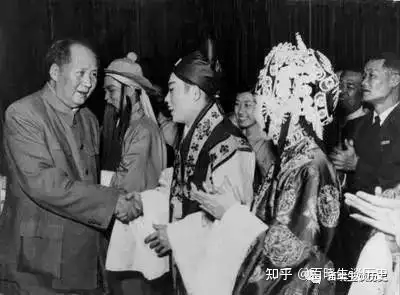
当年在延安采访的美国记者爱泼斯坦曾详细记录了毛泽东看戏时的音容笑貌。据他所说,当毛泽东看到宦官刘瑾叫他手下的太监贾桂落座,贾桂说自己“站惯了”的时候,直接拍手笑出声来。
1949年,毛泽东再次在北平长安大戏院观看了谭富英、侯喜瑞、郝寿臣、李多奎等人出演的《法门寺》。
他感慨地对身边的人说:“《法门寺》里有两个人物很典型,一是刘瑾,一是贾桂。刘瑾这辈子没干过什么好事,唯独在法门寺纠正了一件错案。而贾桂的一言一行,一举一动都是十足的奴才相。这种奴才思想,我们必须反对。”
这番话深深触动了周围的人,他们知道主席是在鼓励他们独立思考,实事求是,保持自尊心。
1956年,毛泽东再次提起了《法门寺》。只不过这一次,贾桂类人物有了新的时代色彩。
当时的新中国面临着严峻的形势,一方面要面对西方国家的封锁,一方面和苏联的关系日趋紧张。
一部分干部在两面夹击的处境下,逐渐丧失了斗志和民族自信心,变得茫然无措。
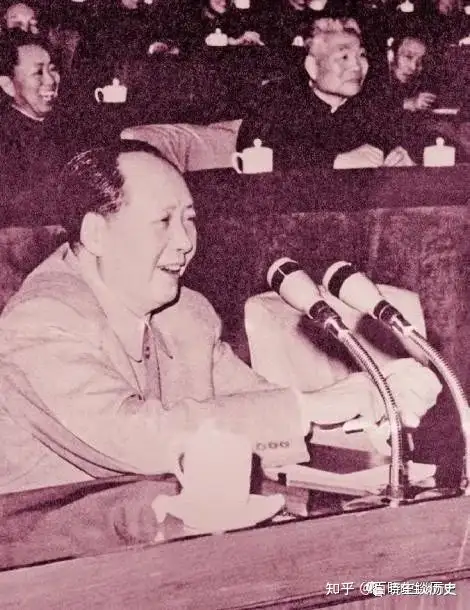
毛泽东敏锐地捕捉到了这一现象,他在公开场合多次提起“贾桂”,希望借“批贾”之名,来警醒某些不当之风,扭转一些不良现象。
当年4月20日,毛主席在中南海听取关于第二个五年计划的汇报,刘少奇、周恩来、朱德、邓小平等领导人也在座。
在会上,毛泽东针对当时社会上流行的“没有苏联援助,中国的建设就不可能成功”的说法进行了批评。
他说:“这种想法是不对的。当奴隶当惯了,总有点奴隶气,好像《法门寺》戏里的贾桂一样,叫他坐,他说站惯了。”
紧接着,毛主席又列举了列宁反抗第二国际和中国抵抗第三国际的例子,来论述一个国家自尊自强的重要性。
当时苏联对中国进行了大规模援助,一部分苏联顾问产生了自高自大的态度,而很多中国同志觉得“拿人家的手短”,往往在苏联人面前表现得很谦卑甚至是自卑。
对于这一现象,毛泽东是很不以为然的。
4月25日,他又提到了此事,批评有些人“做奴隶做久了,感觉事事不如人,在外国人面前伸不直腰,像《法门寺》里的贾桂一样。”
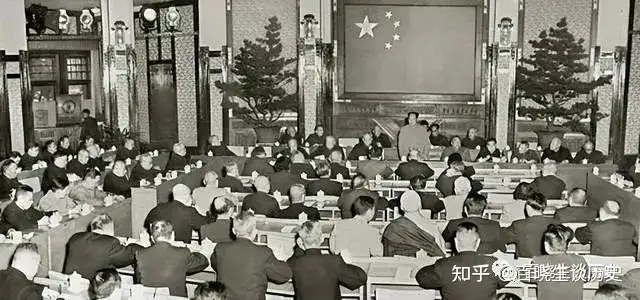
毛泽东鼓励国人重新发展抗美援朝时期的“藐视美帝国主义精神”,真正做到自立于世界民族之林。
这里的“外国人”,很显然就是说苏联人。
1958年3月22日,毛泽东在成都会议上再提贾桂。
他说:“《西厢记》中的惠明和尚,挺身而出去给白马将军送信。我们中国现在出一点惠明才好。现在有些领导干部精神不振的现象,是奴隶的表现,像《法门寺》里的贾桂一样。”
这次会议的讲话精神很快传达给了各级干部。
5月14日,第二机械工业部向毛泽东呈上了一份报告。
报告中说:“(对苏联专家)开始是一种完全被动的教条主义态度,不敢想,不敢问,只会照抄照搬。成都会议之后,发现对苏联专家的工作也必须强调务虚,以虚带实,虚实结合。”
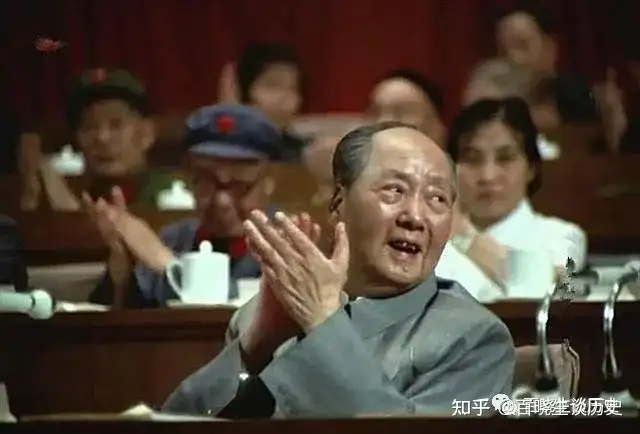
毛泽东在这份报告上批示:“苏联专家都是好同志,有理总是讲得通的。不讲理,或者讲得不高明,因而双方隔阂不通,责任在我们方面。我们尊重苏联同志,刻苦虚心学习,但一定要破除迷信!贾桂是谁也看不起的。”
随后,彭德怀在军队系统传达了这一精神,倡导对苏联军事顾问既要“尊重、虚心学习”,又要“破除迷信”。
1960年,随着中苏交恶,苏联政府撤回了所有专家,带走了所有图纸。
许多重大的设计项目和科研项目陷入停滞,一些施工建设项目被迫停工,这对当时正处在困境中的中国而言,无疑是雪上加霜。外国有评论家甚至说中国核武器研制遭到了毁灭性打击。
面对这种困境,毛主席没有丝毫胆怯,他掷地有声地说:“我们没办法,就靠自己,靠自己两只手。”
正是这种自力更生的决心,极大地鼓舞了国防科技战线全体人员的信心和勇气。中国人最终依靠自己的努力,完成了“两弹一星”的伟大事业。
反对“贾桂”式的小人和这种人骨子里根深蒂固的奴性思想,提倡自尊自爱、自信自强,面对强权压迫能够做到顽强不屈,是毛泽东一生的写照,也是他留给后人永远的精神财富。
毛主席是中国“骨头最硬”的人,他欣赏的,也是有骨气、有气节的人。
毛主席曾不止一次提到过一个叫“贾桂”的人,毛主席直言,“贾桂”是他最看不起的人。因为他是没有气节的奴才,毛主席评价他“奴才做久了,在主子面前伸不直腰”!
毛主席为什么那么不待见“贾桂”?“贾桂”又是何许人也?
01
其实,贾桂是京剧《法门寺》中一个太监的名字。
《法门寺》改编自明代初年的一段故事,故事是真实的,可贾桂这个角色是虚构的。与大多数传统戏剧类似,京剧《法门寺》叙述的也是“才子佳人、帝王将相、恩恩怨怨”的故事。
《法门寺》剧照一
毛主席很喜欢《法门寺》这出戏,在延安的日子里,毛主席就四次饶有兴致地观看过这出戏。
重庆谈判期间,在紧张激烈的谈判间隙,为缓和矛盾,“东道主”安排了几场京剧演出。应邀观看演出的宾客有毛主席、国民党要员和在渝著名民主人士。
演出的是有名的戏班子“厉家班”,据说,之所以请“厉家班”,主要因为蒋介石的个人偏爱。在众多京剧名家中,蒋介石尤其喜欢“厉家班”武生演员厉慧良的表演。
当时,蒋介石点了两出戏《穆桂英挂帅》和《十三妹》,毛主席点的正是《法门寺》。
另有一种说法,国民党人点的是《负荆请罪》,民主人士点的是《将相和》,而毛主席却出人意料地点了《大闹天宫》。这个说法虽然无据可查,或者纯属虚构,却生动揭示了当时三种力量的不同立场和不同选择。
毛主席喜欢看《法门寺》,除了看重它的文艺价值,欣赏艺人精湛的表演技巧之外,毛主席特别感兴趣的便是剧中的小太监贾桂。
《法门寺》里有这么一个情节:大太监刘瑾让小太监贾桂坐下的时候,贾桂很自然地回了一句:“甭坐了,奴才我站惯了。”
据说,演出开始之后,坐在后排的几个国民党要员还在那里高谈阔论,他们开口闭口都是“美援”、“国际援助”。显然,他们这是有意在毛主席面前显摆、嘚瑟,以显得他们有美国的支持,因而何等强大。
这个时候,毛主席没有说话,更没有透露出一丝嘲讽或者不屑的意思。
可当戏台上演到上述情节的时候,毛主席的脸上便显露出鄙视、厌恶的表情,他指着戏台上的贾桂对身边的人说道:“你看看,主子给他让坐,他却说站惯了,一副奴才相!”
毛主席的话虽然音量不大,却声声入耳,坐在后排的国民党要员听得清清楚楚、真真切切。
后人猜想,毛主席这句话就是特意说给那几个国民党要员听的,意在嘲讽国民党政府为了争取“美援”,在美国主子面前唯唯诺诺、卑躬屈膝的丑态。
毛主席当时说的话是否确有这种寓意,我们无从知晓。不过,听了毛主席这句话,后排的那几个国民党要员彻底闭上了嘴。
我想,那几个官员应该是“进入角色、对号入座”了,一个身心残缺的大太监,一个唯唯诺诺的小太监……一副奴才相,这样的讽刺也太辛辣了吧!
《法门寺》剧照二
1949年夏,毛主席从香山来到北平长安大戏院观看演出,这里正要上演传统京剧《法门寺》。应毛主席的邀请,即将出席“一届政协”的部分代表也来观看了演出。
演出结束之后,毛主席在众人的簇拥下走出剧场,毛主席一边走,一边对身边的民主人士说:
“《法门寺》里两个太监很典型,一个是刘瑾,一个是贾桂……刘瑾以前没有办过一件好事,唯独在法门寺纠正了一件错案,这也算是他为人民办的一件好事。”毛主席点评道,“这个贾桂很卑微,在他的主子面前,贾桂没有尊严,没有骨气,他的一举一动、一言一行都是十足的奴才相。”
有人附和道:“太监原本就不是什么正常人,贾桂正是这个群体的代表人物。”
毛主席话锋一转道:“我们身边也有不少贾桂啊,既可怜,又可悲……我们要提倡实事求是、人格独立,一个人是要有一点自尊心、有一点骨气的,贾桂这种奴才思想要不得。”
毛主席还说:“对下狐假虎威、作威作福,对上唯唯诺诺、奴颜婢膝,就连大太监刘瑾都看不起他。”
久而久之,“贾桂”就成了“奴才”的代名词,说起贾桂,人们就会很自然地联想到奴性十足、没有骨气的那类人。
02
毛主席格外欣赏一位“不食嗟来之食”的文人——他宁可饿死,也不领美国的“救济粮”。
上世纪四十年代,战乱中的中国百业萧条,物价飞涨。连清华大学教授朱自清这样的人都买不起粮食,一家老少只能以稀粥糊口。这个时候,美国给中国运来了粮食,国民党当局给教授们发了“面粉配给证”,教授们可以凭证购买美国援助的面粉。
蒋介石和司徒雷登(右一)
可是,因为货币贬值,加上粮食供应时常中断,导致粮价暴涨,朱自清一个月的工资只够买三袋多面粉。更何况,即使能够买到面粉,美国人也是有条件的:既然接受美国的救济,中国人就该对美国感恩戴德,俯首帖耳。
用大白话来说,就是:你想吃美国的面粉,那就要乖乖听话,总之,面粉不是白给的。
在《别了,司徒雷登》一文中,毛主席用辛辣的语言这样写道:
美国人在北平、天津、上海洒了些‘救济粉’,看看谁愿意弯腰拾起来,这叫作‘姜太公钓鱼——愿者上钩’。
接着,毛主席嘲讽道:“嗟来之食,吃下去肚子要痛的。”
果不其然,不久之后毛主席这话就应验了。
1948年5月,美国政府妄图复活日本军国主义,消息一出,就遭到中国社会各界的强烈谴责。
就此,美驻华大使司徒雷登和驻上海总领事卡宝德发表了威胁性和侮辱性的演说。在演说中,司徒雷登和卡宝德拒不回应中国各界的质询,反而以“美援面粉”为由头,指责“中国人不识好歹,恩将仇报”,甚至威胁要中断“美援”。
面对美国人的侮辱和威胁,清华大学110位学者联合发表了《百十师长严正声明》,呼吁国人拒领“美援面粉”,以抗议美国的扶日政策。
《声明》中有这样一段文字:
“为了中国人的尊严和气节,我们断然拒绝美国具有收买灵魂性质的一切施舍物资,无论是购买的或给予的”。
“声明”正式发表前,清华大学吴晗教授去了朱自清家,希望朱自清在声明书上签名。可是一跨进朱自清的家门,吴晗教授就犹豫了。
因为饥饿和严重的病情,朱自清已经卧床不起,无钱医治。更何况,朱自清一家老少共有9个人,朱家的日子已经过得特别艰难。
吴晗教授想,如果朱自清在“声明书”上签了字,朱家的日子将会更加艰难。所以,他对朱自清教授这样说:“是否在‘声明书’上签字,我的建议是量力而行,不要勉强。”
朱自清
朱自清教授却说:“吴先生应该清楚我的为人和态度,春秋时期,气节之士即便饿死也不吃‘嗟来之食’,古人尚能如此,我辈也能做到,否则,将妄为人师。我早就想好了,宁可饿死,我也不接受美国人带有侮辱性的施舍!”
说完这句话,朱自清硬撑着病体坐了起来,毫不迟疑地在“声明书”上签上了“朱自清”三个字。
第二天一大早,朱自清教授就让他的夫人退还了“面粉配给证”。看到家里还有几张当月的面粉票,朱自清对夫人说:“快拿去退了,家里还有小半袋面粉,你一并把它带走,要退就退个干净彻底!”
一个多月之后,朱自清教授病情恶化,药石罔效,不幸离世,终年仅50岁。
弥留之际,朱自清教授吃力地、断断续续地嘱咐家人:“有一件事情务必要记住,我是在拒绝美援的‘声明书’上签了字的,今后,无论有多么困难,你们都不要接受美援面粉。”
有人说,朱自清教授这是“书生意气”,“民以食为天”,朱自清教授大可不必“以死抗争”。
可毛主席却不是这么看的,在《别了,司徒雷登》一文中,毛主席这样写道:
我们中国人是有骨气的。许多人曾经是自由主义者或民主个人主义者,在美国帝国主义者及其走狗国民党反动派面前,他们站起来了……
我们应当写闻一多颂,写朱自清颂,他们表现了我们民族的英雄气概。
在这篇文章里,我们还能看到一段豪气干云且耳熟能详的名言:
多少一点困难怕什么。封锁吧,封锁十年八年,中国的一切问题都解决了!中国人死都不怕,还怕困难吗?老子说过:‘民不畏死,奈何以死惧之。’
03
当中国面临最严峻的国际环境时,毛主席又多次提到《法门寺》里的太监贾桂。毛主席在《论十大关系》中写道:
有些人做奴隶做久了,感觉事事不如人,在外国人面前伸不直腰,像《法门寺》里的贾桂一样,人家让他坐,他说站惯了。
毛主席斥责其“奴性十足,不可救药”,进而号召全国人民“把民族自信心提高起来,把抗美援朝中提倡的‘藐视美帝国主义’的精神发展起来!”
建国初期,苏联“老大哥”给予我国非常大的帮助,中国人民对苏联“老大哥”心存感激、尊重有加。但是,在中苏人员频繁交往、近距离接触中也暴露了一些问题。
毛主席接见苏联领导人
当时,“二机部”向毛主席提交了一份“关于同苏联专家关系的报告”,看完这篇报告,毛主席亲笔批示道:
“‘四海之内皆兄弟’,你们要尊重苏联同志,刻苦虚心地向他们学习。但是,你们也要破除迷信,打倒贾桂!”
毛主席特别标注道:“要知道,贾桂(即奴才)是谁也看不起的。”
进入上世纪五十年代中后期,毛主席又在讲话和报告中多次提到“贾桂”的名字。
当时,我国面临着建国以来最严峻的国际环境。一方面,中苏关系日趋紧张,且有公开分裂的趋势;另一方面,我国遭到以美国为首的西方国家的武力威胁和经济封锁,且有愈演愈烈之势。
在一个接一个困难和风险面前,国内有一部分人变得茫然无措,一些人甚至开始丧失信心、动摇信念。阅读更多好文,敬请订阅“峥嵘年代”。
为了带领社会主义新中国走上“独立自主”发展道路,毛主席撰写了《论十大关系》一文。
针对诸如“如果失去苏联的援助,中国的建设不可能成功”等悲观、错误的言论,毛主席一针见血地指出:
一些人当奴隶当惯了,总是有点奴隶气,好像《法门寺》里的贾桂一样,叫他坐,他说站惯了”。
‘贾桂’感觉事事不如人,在主子面前伸不直腰,我们一些同志跟‘贾桂’很像,在外国人面前直不起腰。
在毛主席的笔下,“贾桂”就是一个反面教员,他软弱、迷信权威,他没有独立人格,是一个彻头彻尾的奴才。
在一次大会上,毛主席又一次提到“贾桂”的名字,他慷慨激昂地说道:“要割掉奴隶尾巴,要破除迷信,要彻底打倒贾桂作风,贾桂是谁也看不起的!”
而今,太监这个畸形的群体早已消亡殆尽,那么,我们身边还有贾桂这样的人物吗?很不幸,世上早没了太监,可是“贾桂似的人物到处可见”——这是著名东方学大师、语言学家、文学家、史学家季羡林先生的看法。
季羡林
季羡林先生说,“无须细察,你仍然可能跟‘跪习惯了不会站立’的法门寺‘贾桂’时常碰面。”
季羡林先生何出此言?
改革开放之后,我国吸纳外资,引进国外的一些先进技术和经验,但是,打开窗户,“蚊子和苍蝇”也一起进来了。一时间,一些人对外来文化的好奇迅速演变成“崇拜”,更有一些“精英人士”对西方产生了一种“迷信”,虔诚地拜倒在西方发达国家面前。他们追求美式价值观,有激进极端者甚至认为:中国下一步应该全盘“西方化”。
这是一种精神的自残,背后是“贾桂”式的自卑。
在这样的思潮影响下,“贾桂”们的腰杆是挺不起来的,因而永远也走不出一条笔直的路。
殊不知,中国有中国的国情,中国的事情只能靠中国人自己来办,盲目崇拜和迷信的结果只能是屈辱的、徒劳的。
04
最后,再说一说“奴才”与“奴隶”的主要区别。
首先,“奴隶”是被强迫的,而“奴才”是自愿的;其次,“奴隶”是一个社会阶层,而“奴才”是一种社会意识、国民意识,是一种扭曲的人际关系。
“奴隶”与“奴才”最关键的区别是:“奴隶”尚有获得自由的人生目标,而“奴才”却把一切都依附于他的主子,根本没有自己的人生目标。
也就是说,“奴隶”固然不幸,却并不那么可怕,因为他还知道挣扎,至少还有挣脱桎梏、获得自由的希望;而一个人倘若赞叹奴隶生活,并陶醉于其中、乐不思蜀的话,这个人就是万劫不复的“贾桂”式的奴才了。
这就是毛主席鄙视“贾桂”、不待见“贾桂”的根本原因。
在毛主席看来,“贾桂”不过是一具徒有其表的行尸走肉而已,他没有骨气,没有气节,没有尊严,没有理想,其灵气生动的灵魂早已死去!
毛主席对十九帝王评论
1949年以后,毛泽东在各种场合先后对十八个帝王有明确的评论
1,帝辛。
帝辛,商朝末代君主,商谥帝辛,周武王称他为“纣王”,夏商周断代工程认为他在前1075年-前1046年在位。
帝辛继位以后,重视农耕,百姓生活安定,国力强盛。他持续对东夷用兵,打退了东夷向中原腹地的扩张,把商朝控制范围扩大到江淮一带。特别是讨伐徐夷取得的胜利,把商的国土扩大到东南沿海一带。
但是,帝辛在位的后期,花费巨资修建鹿台,造酒池,宠妲己,悬肉为林,穷奢极欲。他变得刚愎自用,听不进不同意见。杀比干,囚箕子;使用炮烙等酷刑镇压民民众,失去人心。另外,年年征战,国力消耗巨大,反而累及自身,《左传》称:“纣克东夷而陨其身”。
前1046年,周武王在历史性的牧野之战中击败商军,帝辛登上鹿台自焚殉国。《史记·卷三·殷本纪第三》记载\"甲子日,纣兵败。纣走入(朝歌),登鹿台,衣其宝玉衣,赴火而死。\"商朝从此灭亡。
“ 纣王”,是周人侮辱、蔑视性的称呼。按《说文解字》援引谥法的解释:“残忍捐义曰纣”。用现在的话来说,“纣”就是无恶不作的坏蛋。
毛泽东的评价:
“其 实纣王是个很有本事、能文能武的人。他经营东南,把东夷和中原的统一巩固起来,在历史上是有功的。纣王伐徐州之夷,打了胜仗,但损失很大,俘虏太多,消化 不了,周武王乘虚进攻,大批俘虏倒戈,结果商朝亡了国。”“商纣王是很有本领的人,周武王把他说得很坏。他的俘虏政策做得不大好,所以以后失败了。”
2,秦始皇。
秦始皇嬴政(前259年-前210年),是战国末期秦国君主。他十三岁即位,三十九岁时统一六国建立秦朝,五十岁出巡时驾崩,在位三十七年。
毛泽东的评价:
毛泽东对第一个把中国统一起来的秦始皇,有较多的言论,归纳起来有下面几条:
1、秦始皇是个厚今薄古的专家。
2、一次,毛泽东对章士钊讲,你们讲共产党等于秦始皇,不对,超过一百倍。
3、孔孟是唯心主义,荀子是唯物主义,是儒家的“左派”。孔子代表奴隶主、贵族。荀子代表地主阶级。又说,在中国历史上,真正做了点事的是秦始皇,孔子只说空话。
4、我们应该讲句公道话。秦始皇比孔子伟大的多,可是被人骂了几千年。
5、 劝君少骂秦始皇,焚坑事业要商量。祖龙魂死秦犹在,孔学名高实秕糠。百代都行秦政法,《十批》不是好文章。熟读唐人《封建论》,莫从子厚返文王。历代政治 家有成就的,在封建社会前期的,都是法家。这些人主张法治,犯了法就杀头,主张厚今薄古。儒家满口仁义道德,一肚子男盗女娼,都是主张厚古薄今的。
6、秦始皇是中国封建社会的第一个有名的皇帝,我也是秦始皇,林彪骂我是秦始皇,中国历来分两派,一派讲秦始皇好,一派讲秦始皇坏。我赞成秦始皇,不赞成孔夫子。
3,西楚霸王项羽。
项羽(前232年-前202年),秦朝的末年在吴县起兵,在前207年的钜鹿之战中统率楚军大破秦军,秦亡后封自己为“西楚霸王”。楚汉争霸的时候于垓下之 战被刘邦打败,最后被围到乌江江边,自刎而死。项羽可以说是中国历史上最以猛勇闻名的军事家,“霸王”一词在历史上是属于项羽专用的。
毛泽东的评价:
1、宜将剩勇追穷寇,不可沽名学霸王。
2、在1964年的一次谈话中,毛泽东进一步指出项羽战败的三个错误:鸿门宴不听范增的话,放走刘邦;机械遵守鸿沟协定;以及建都徐州(当时叫彭城)。那么,项羽为什么不能纳谏和用人呢?这便和他主观上的弱点有关。
4,汉高祖刘邦。
汉高祖刘邦(前247年-前195年),是中国历史上第一位平民出身的帝王,汉朝的开国皇帝。在位期间,御驾亲征一统天下;以“休养生息”为国策,实行“轻 徭薄赋”,大力发展经济;下“求贤诏”为国家广招管理人才;定礼仪以巩固皇权;祭祀孔子并重用儒士,提倡以孝治理天下。刘邦是汉民族和汉文化的伟大开拓者 之一,对汉族的发展,以及中国的统一和强大有很多的贡献。
毛泽东的评价:
1、“老粗出人 物”、“封建皇帝里边最厉害的一个”,“他得天下一因决策对头,二因用人得当”。1964年毛泽东更进一步指出:“自古以来,能干皇帝大多是老粗出身。汉 朝的刘邦是封建皇帝里边最厉害的一个——刘敬劝他不要建都洛阳,要建都长安,他立刻就去长安;鸿沟划界,项羽引兵东退,他也想到长安休息,张良说,什么条 约不条约、要进攻,他立刻听了张良的话,向东进;韩信要求自封假齐王,刘邦说不行,张良踢了他一脚,他立刻改口说:'要封就封真齐王,何必要假的。’”
2、项王非政治家,汉王则为一位高明的政治家。
5,汉武帝刘彻。
汉武帝刘彻(前157年-前87年),是汉朝第7位皇帝,在位长达54年,时间之长仅次于后世的清康熙帝。汉武帝在实际掌握权力后进行了多项大刀阔斧的改 革,深远地影响着后世的中国。他开拓了汉朝最大版图,在各个领域均有建树。晚年穷兵黩武,又造成了巫蛊之祸,征和四年刘彻下罪己诏。简言之,汉武帝雄才大 略,文治武功显赫,是中国历史上最伟大的皇帝之一,汉武盛世也被后人视作中国历史上的三大盛世之一。
毛泽东的评价:
汉武帝雄才大略,开拓刘邦的业绩,晚年自知奢侈、黩武、方士之弊,下了罪己诏,不失为鼎盛之世。
6,汉元帝刘奭。
汉元帝刘奭[shì](前74年-前33年),汉朝的第11位皇帝,在位16年。元帝在位时期是西汉由转向强盛衰落的起点,社会危机逐渐加深。元帝本人也过于放纵外戚、宦官,埋下了西汉的灭亡的根由。
毛泽东的评价:
历史上不是提什么'文景之治’吗?实际上,文帝、景帝只是守成,是维持会,庸碌无能。从元帝开始,每况愈下。
7,曹操。
曹操(155年-220年),字孟德。东汉末年著名军事家、政治家和诗人,三国时魏国的奠基者。东汉丞相,后封为魏王;去世后,汉谥武王。他的长子曹丕创立魏国称帝后,追尊其为太祖武皇帝。
毛泽东的评价:
曹操是了不起的政治家、军事家,也是个了不起的诗人……曹操统一中国北方,创立魏国。他改革了东汉的许多恶政,抑制豪强,发展生产,实行屯田制,还督促开荒,推行法治,提倡节俭,使遭受大破坏的社会开始稳定、恢复、发展。
8,南朝宋明帝刘彧。
宋明帝刘彧(439年-472年),南北朝时宋的第七位皇帝。刘彧弑杀了侄子刘子业而上位,他在位的六年半,刘宋因为惨烈的内*斗,以及和北魏争夺淮北地区,国力大幅衰落,百姓苦不堪言。所谓“天下骚然,民不堪命”。
毛泽东的评价:
登基“可谓奇矣”。
9,南朝梁武帝萧衍。
梁武帝萧衍(464年-549年),南朝梁的建立者。萧衍在位时间长达四十八年,是南朝的皇帝中在位时间最长者。梁武帝初期国家兴旺强盛,是一个有为的明君。后期痴迷于佛*教,多次舍身出家。企图以佛治民,纵容邪恶,导致侯景之乱,毁掉了江南的经济基础。
毛泽东的评价:
1、萧衍善摄生,食不过量,中年以后不近女人。然予智自离,小人日进,良佐自远,以致灭*亡,不亦宜乎。
2、专听生奸,独任成乱,梁武有焉。
10,南朝陈后主陈叔宝。
陈后主陈叔宝(553年-604年),南北朝时陈朝末帝,在位7年。陈叔宝是一个荒淫无度的皇帝,据《南史·陈本纪》记载“奏伎纵酒,作诗不辍”,又大建宫室,滥施刑罚,宠爱后妃张丽华,朝政腐败。陈为隋所灭16年后,叔宝病亡洛阳。
毛泽东的评价:
知识分子型的皇帝“没有出息”
11,隋文帝杨坚。
隋文帝杨坚(541年-604年),隋朝的开国皇帝,在位24年。杨坚建立了隋朝,统一了分裂数百年的中国。他开创的科举选拔人才的选官制度,在中国使用了 1300年。他确立的三省六部制,奠定了后世官制的基础。他大力发展经济和文化,使得隋朝成为盛世之国。开皇年间,隋朝疆域辽阔,人口达到700余万户, 是中国农耕文化辉煌灿烂的时期。
毛泽东的评价:
其做法“蕴藏大乱”
12,唐太宗李世民。
李世民(598年-649年),是唐朝第二位皇帝,在位23年。李世民是杰出的军事家,在建立唐朝的的过程中立下了战功。626年李世民发动玄武门之 变,杀*死太子李建成和四弟李元吉。逼迫父亲李渊退位而登基。李世民为帝之后,善于听取群臣的意见,以文治天下,以武开疆拓土。开始了辉煌的贞观之治。他 以文治昭昭、武功赫赫而永载史册,成为一代圣君。
毛泽东的评价:
评价其军事才能:“自古能军无出李世民之右者,其次则朱元璋耳。”
13,后梁太祖朱温。
朱温(852年-912年),废唐哀帝李柷自立,国号“大梁”,史称后梁。朱温在位期间,重视农耕,但是连年征战,民生多艰。晚年荒淫无耻,乱伦无度,强奸儿媳,被他的三儿子朱友圭杀死。
毛泽东的评价:
朱温处四战之地,与曹操略同,而狡猾过之。
14,后唐庄宗李存勖。
后唐庄宗李存勖(音xù,885-926),五代时期后唐王朝的建立者,晋王李克用长子,小名“亚子”。李存勖称帝之前,和后梁血战十多年,历经大小百余 战,勇猛异常,五代时期的皇帝以他的武功最厉害。但打了天下,却不知道应该如何治理天下,宠幸伶人,重用宦官,朝政荒唐。三年后因兵变被杀,失败之快,史上罕见。
毛泽东的评价:
1、康延孝之谋、李存勖之断、郭崇韬之助,此三人可谓识时务之俊杰。
2、生子当如李亚子。
15,南唐后主李煜。
李煜(937年-978年),南唐末帝。李煜不精于政治,是一个治国的昏君。但其艺术才华非凡:书法、绘画、音律、诗文均有一定造诣,尤以词的成就最高,被誉为“千古词帝”。在位十五年,南唐亡于宋三年后去世。
毛泽东的评价:
1、南唐李后主虽多才多艺,但不抓政治,终于亡国。
2、知识分子型的皇帝“没有出息”。
16,宋太宗赵光义。
赵光义(939年-997年),宋朝第二位皇帝,在位21年,是太祖赵匡胤的胞弟。太宗治政有为,爱读书,喜好诗赋,重视文化事业,改变了唐末以来重武轻文的陋习。但在军事方面屡有败绩,不善武功。
毛泽东的评价:
1、此人不知兵,非契丹敌手。尔后屡败,契丹均以诱敌深入、聚而歼之的办法,宋人终不省。
2、不择手段,急于登台。
3、赵匡义小人之言。
17,成吉思汗。
孛儿只斤·铁木真(1162—1227),蒙古帝国可汗,尊号“成吉思汗”。蒙古人,大蒙古国(蒙古帝国)奠基者、政治家、军事统帅,大蒙古国皇帝(蒙古帝国大汗)。元朝建立以后,元世祖忽必烈追尊成吉思汗为太祖圣武皇帝。
毛泽东的评价:
“ 一些老粗能办大事:成吉思汗,是不识字的老粗。”(毛泽东只是为了强调“一些老粗能办大事”,成吉思汗并非不识字,元初名臣耶律楚材在《玄风庆会录》一书中提到成吉思汗是可以亲自阅览文件的。)
18,明太祖朱元璋。
大明太祖高皇帝朱元璋(1328年-1398年),大明开国皇帝。在位31年。是中国历史上几个主要朝代的皇帝中第二个出身平民的皇帝,幼时贫穷。在位期 间,重视农耕,兴修水利;减免税赋;社会生产逐渐恢复和发展,史称“洪武之治”。同时立《大明律》,用严刑峻法管理百姓与官僚,严厉打击官吏的贪污腐败, 设立锦衣卫等特务机构,强化中央皇权。朱元璋一直以来都是一个极大争议的人物。持正面评价者,认为他大力打击贪污,发展经济成效显著;而且太祖是一个少见 的勤政皇帝。持负面评价者,则多从其高压统治着眼,如大加杀*戮功臣、以特*务锦衣卫控制政治、文字*狱及廷杖等。
毛泽东的评价:
(1)、对治国能力的评价:“可不要看不起老粗。””一些老粗能办大事:成吉思汗,是不识字的老粗;刘邦,也不认识几个字,是老粗;朱元璋也不识字,是个放牛的。”(注:成吉思汗,刘邦,朱元璋三人身为帝王时,他们的文化水平已经达到能批阅奏折和签署命令的程度。)
(2)、对军事能力的评价:“自古能军无出李世民之右者,其次则朱元璋耳。”
19,清第四个皇帝康熙 玄烨
1960年4月全国人大二届二次会议期间,毛主席见老舍讲康熙“三大贡献”:
毛泽东说康熙皇帝的头一个伟大贡献是打下了今天我们国家所拥有的这块领土。我们今天继承的这大块版图基本上是康熙皇帝时牢固地确定了的。他三征噶尔丹,团结众蒙古部,把新疆牢牢地守住。他进兵西藏,振兴黄教,尊崇达赖喇嘛,护送六世达赖进藏,打败准噶尔人,为维护西南边疆的统一,迈出了关键性的一步。他进剿台湾,在澎湖激战,完成统一台湾的大业。他在东北收复雅克萨,组织东北各族人民进行抗俄斗争,和沙俄签订《尼布楚条约》,保证我永戍黑龙江,取得了独立自主外交的胜利,为巩固东北边疆做出了重大贡献。
毛泽东说,康熙皇帝的第二个伟大贡献是他的统一战线政策。满族进关时兵力只有5万多,加上家属也不过20万,以这样少的人口去统治那么一个大国,占领那么大领土,管理那么多人口,矛盾非常突出,康熙皇帝便发明了一个统一战线,先团结蒙古族和其他少数民族,后来又团结了汉族的上层人士,他还全面学习和继承了当时比满文化要先进得多的汉文化,他尊孔崇儒。在官吏的设置上,凡高级官吏都是一满一汉,大学士、尚书、侍郎、军机大臣都是如此。这样,康熙便非常成功地克服了满族官员少的困难,真正达到了以一顶百的神奇效果。
毛泽东说康熙皇帝的第三个了不起的地方是他有奖罚分明的用人制度。毛泽东讲了一些实际例子,说明即使皇子犯了错误,也一样要受到严厉的处罚。皇子打了败仗、回来不敢进德胜门,照样要蹲在城外,听候处罚。他的这套办法既能调动部下的积极性,奋勇向前,义无反顾,又能组织起一支有严明纪律的队伍,所向披靡。毛泽东特别夸奖康熙皇帝的学习精神,说他不光有雄才大略,而且勤奋好学。他除了会几种民族语言之外,还会好几种外语,包括希腊文。他既是军事家、政治家,又是大文人,精通诗词歌赋,会琴棋书画。毛泽东还说康熙皇帝是最早懂得向西方资本主义先进知识学习的开明君主。康熙喜欢研究自然科学。对数学、天文、地理、医学、生物学、解剖学、农艺学和工程技术有浓厚兴趣,还亲自主持编辑科技书籍。
毛泽东的这一番议论,还有周恩来、刘少奇等人的插话,使老舍大为惊讶。毛泽东对满族和康熙皇帝的评价,始终装在老舍的脑子里,它成了老舍晚年主要思索的课题


评论
发表评论