Where is the competition between China and the United States headed? Yan Xuetong: Going back at least 10 years中美竞争向何方?阎学通:至少还要倒退10年
Politicians are talking about "multi-polarization", but in the objective world there are only two poles, China and the United States, and there is no third pole; scientific and technological progress is linear, but human civilization, spirit and system are likely to regress; China is globalization. The United States, the biggest beneficiary, also benefits, but it believes that the benefits are not large enough, and it wants to go global; if 2016 is used as the starting point, it has gone back 8 years. Calculated from 2023, it will be at least 10 years, or even more than 20 years; the digital economy accounts for an increasing proportion of national wealth, and the core of Sino-US competition is not ideology, but the digital economy; the United States has three elements for China: cooperation + competition + confrontation. Cooperation is optional, confrontation is a tool, competition is the core, and the strategy is "small courtyards and high walls" and small clubs; enterprises used to rely on globalization for development, and in the future it may no longer be appropriate to rely on international cooperation, but to take advantage of international decoupling , Cut off opportunities for creation.
Multipolarity is just a slogan,
There are only two poles in the world, China and the United States
Multi-polarization is a concept that was put forward in the early 1990s after the end of the Cold War. It has been 30 years, but the word multi-polarization is still being used, especially by politicians who like to use it very much. why is that?
The reason why the United States likes to talk about multi-polarization is that if it does not talk about multi-polarization, but about bipolarity, it is tantamount to admitting that China and the United States are on equal footing. The United States is as powerful; and countries such as Europe, Russia, India, Japan, and Brazil are also willing to talk about multipolarity. Because talking about two poles is tantamount to dwarfing ourselves. It must be said that we are also one pole, Russia is one pole, India is one pole, Japan is one pole, Europe is one pole, and we are equal to the United States and China.
As far as China is concerned, we also insist on multi-polarization. If we say otherwise, we demean others. If we talk about the two poles, it means that we are at the same level as the United States. Therefore, everyone needs to know that we insist on multi-polarization not because the objective world is multi-polar, but because it is politically correct to say multi-polar. But policymakers must face a reality, whether to formulate national policies according to a multipolar pattern or a bipolar pattern?
So, what does the objective world look like? is bipolar.
The competition between China and the United States has put pressure on more and more countries to choose sides. More and more Southeast Asian countries are complaining about the competition between China and the United States. They are under pressure to choose sides between the two. The reason they don't want to choose sides is because the bipolar structure is becoming more and more clear.
Macron was the first to openly acknowledge the bipolar situation. On August 27, 2019, Macron proposed in a speech that it must be admitted that Western hegemony may have come to an end. In the end, the world will revolve around two poles, the United States and China, and Europe will have to choose between these two rulers. Many people in Europe are unwilling to listen to what Macron said, and it is also politically incorrect in France.
But from the perspective of Macron, the reality he has to face is what kind of foreign policy France has to formulate. For example, Macron has just come to China. Why does he want to visit China at this time, under domestic and international pressure? My understanding is that a bipolar world is an objective reality. You must mediate between China and the United States. If you do not do such diplomacy, it will be detrimental to France.
After Macron's speech, UN Secretary-General Gutierrez also accepted this statement.
At the 74th session of the UN General Assembly, Gutierrez made a speech. He said that the world is being divided into two. The two largest economies on earth have created two independent and competing worlds. These two economies have their own dominant currencies, trade finance rules, their own internet and artificial intelligence, and their own geopolitical and military strategies.
What was Gutierrez's first mention of bipolarity? Politically, there is a bipolar pattern between China and the United States, which is not only reflected in natural space, but also in cyberspace, and in technology, especially AI technology. Guterres is the Secretary-General of the United Nations, and his speech must represent the views of the vast majority of countries.
So, I think in 2019, international politicians have begun to acknowledge that the world has become bipolar. In 2021, Gutierrez reiterated again at the seventy-sixth session of the UN General Assembly: I worry that our world is moving towards two different economic, trade and financial systems, technical rules, and two different approaches to the development of artificial intelligence , and two different military and geopolitical strategies. Once such a situation arises, it will be troublesome, and it will be more unpredictable than during the Cold War.
What Gutierrez meant was that during the Cold War period, the confrontation was fierce and there were many wars, but the certainty was stronger than now. Now the uncertainty is very large, not to say that there will be more wars, but that there will be many more accidents when you do things than before.
Business development through international cooperation
may no longer be suitable
In June last year, former Singapore Prime Minister Goh Chok Tong said that the United States would not cede its global leadership and was planning how to build an alliance to contain China's rise, but China would not give up easily either. Both China and the United States now see each other as a long-term threat . Goh Chok Tong's judgment is very important. Everyone here should not expect the current situation to improve in a short time. Enterprises must have the ability to survive and develop in such a bad and retrograde environment for a long time.
That is to say, the strategy of developing under globalization in the past and developing enterprises through international cooperation in the future may no longer be suitable. The future development is to take advantage of the opportunities created by various international decoupling and supply cuts. To put it simply, when an enterprise cannot purchase products with the lowest price and the best quality in the world, it provides opportunities for survival and development to products with high prices and poor quality.
Goh Chok Tong said it would be a world polarized and divided between two great powers, China and the United States, whose relationship would be based more on distrust than mutual trust, competition rather than cooperation, and it would be a In a world where countries passively choose sides, what people build will not be more bridges, but more high walls. That is to say, under the trend of globalization after the Cold War in the past, everyone was looking for various opportunities for international cooperation to strengthen development. Opportunity.
In 1990, the United States accounted for 26% of global GDP, China accounted for only 1%, Japan accounted for 14%, Germany accounted for 8%, and the United Kingdom accounted for 5%. In 2022, the GDP of the United States will account for 25%, and China will account for 18%. 70% of.
Some people say, why didn't 14% of Japan talk about the bipolar pattern back then? Because Japan is not a country with comprehensive national strength, Japan is a country with a single strength, called an economic strength country, and the size of GDP alone cannot make it a pole. China is a country with comprehensive strength. Just like at the end of the Cold War or in the 1980s, the GDP of the Soviet Union was smaller than that of Japan, but the Soviet Union was still a superpower because the Soviet Union had comprehensive strength, not only nuclear weapons, but far surpassed Japan in film, art, painting, and sports.
Although China's growth squeezes countries such as Japan, Germany, and the United Kingdom, the power comparison and trend between China and the United States determine that the United States will be very worried that China will be on an equal footing with itself. Therefore, judging from the current development trend, the world's economy is very bad, and the prospects are very poor.
The digital economy is the focus of Sino-US competition
I went to Princeton University to hold an international conference at the beginning of the month. Everyone has a consensus that there is no great hope for the global economy. The bad economy will be reflected in the fact that all major countries are not developing faster than their economies, but their economies are declining faster than theirs. Others are slow. The Ukrainian war has cost the economy not only Russia, but Europe as well, countries all over the world, and none of the major powers thinks it will grow strongly.
So from an economic point of view, what is the difference between the current bipolar structure and that of the Cold War? It is what Guterres said, this time it involves technology, network and economy, which is the digital economy.
The proportion of the digital economy in the economy and wealth of large countries continues to rise, because its annual growth rate is 1.5 times that of the overall economy. Since this part will become the main source of national wealth, no major country will focus on non-digital economic fields, it is just a matter of how much it can do. For example, Russia does not want to develop the digital economy, but it does not have the ability to do so and can only rely on selling natural resources.
During the Cold War, the US-Soviet competition took place in natural space—on the ground, in the sea, in the sky, and in the universe. This time, the Sino-US competition is in cyberspace, or in other words, they are conducting strategic competition in both natural space and cyberspace. Whoever has the upper hand in cyberspace wins. If you don't have an advantage on the Internet and only have an advantage in natural space, you can't win. Like the war in Ukraine. Russia has absolute military superiority in natural space, but it has a disadvantage in cyberspace. Russia cannot use its absolute military superiority in natural space to achieve political goals.
Why does the digital economy have a major difference from the non-digital economy in the natural space? The difference is in the data.
Now many documents and policies have been issued, concerning data protection and data utilization. Data is a resource of the digital economy, just like oil, coal, minerals, and seawater. This natural resource is what we rely on for production in the natural space. Without these resources, you have no production. When it comes to cyberspace, what are the main uses for production and services? The resource is data. Regardless of the progress of science and technology or military competition in the competition between major powers, it is whether the technology of collecting and analyzing information is better than the other party.
Therefore, the strategic competition between China and the United States will definitely focus on digital technology innovation. The "small courtyard and high wall" built by the United States is to prevent China's digital technology innovation from catching up with the United States. If I can't stop it, I will ban it, just to make your progress relatively slower than mine. This is why we see Gutierrez repeatedly emphasizing the difference between the bipolar structure of China and the United States and the Cold War.
The United States takes one point very seriously. They believe that the core of Sino-US strategic competition is not ideology, but digital technology, and the core of digital technology is the performance of chips on hardware, continuous improvement of chips and other basic scientific research. The U.S. government passed the "Chip and Science Act" in July last year to curb China's technological innovation faster than the United States. Therefore, the government decided to provide US$57 billion in subsidies and US$24 billion in tax incentives for local chip manufacturers, and allocate US$200 billion in funding for related innovation, training, and R&D in the next five years; encourage companies such as Intel, Samsung, and TSMC to build factories in the United States. Some clauses restrict the economic, trade and investment activities of relevant enterprises in China.
You see, the U.S. government “want to subsidize technological innovation.” You may not think there is any problem with this sentence. Because our policy is also to encourage enterprises to innovate, give preferential policies, and even give some rewards. But this used to be the reason for the United States to sue China at the World Trade Organization for a long time, saying that you have engaged in unfair competition and that your state subsidies for technological innovation are tantamount to using national power to compete with our companies, which is unfair. Demand sanctions against such companies and demand punishment for the Chinese government.
Now the U.S. government is taking the lead in implementing an American-style nationwide system and subsidizing technological innovation. The United States has formulated a bill that actually violates its own political principles, that is, free trade and market economic competition. One can imagine how important this matter is to Americans. The United States believes that this is fundamental to whether the United States can win the competition with China, so it has enacted such a law. This is not policy, this is already the law of the United States.
China is the biggest beneficiary of globalization,
U.S. Thinks It Benefits Less Than China
In such a situation, we all find that uncertainty and technological competition are becoming more and more fierce, and the confrontation is becoming more and more serious. We call it anti-globalization, which is a major event related to the direction of human history.
After the end of the Cold War, globalization emerged. Globalization is composed of two parts: economic marketization and political democratization. When the United States promoted globalization, some countries did not accept it at first. For example, in the early 1990s, we believed that globalization was Americanization, and we opposed it. After we joined the WTO, we found that China could benefit from globalization and make our economy develop faster, so we adjusted our policies and began to support economic globalization, but we did not support political democratization.
What are the results we have obtained through these years of development? China has become the biggest beneficiary of globalization, which is recognized by ourselves, the international community, and the United States. All of you here today should be said to be beneficiaries of globalization. The United States is also a beneficiary, but Trump put forward a point of view. He said that the United States initiated globalization. Why did China benefit the most in the end, not the United States? Therefore, he believes that globalization is a wrong trend, which is not good for the United States, because the United States has not gained as many benefits from globalization as China.
China does not deny that it is the biggest beneficiary of globalization, so our policy still supports the continuation of economic globalization, but the United States no longer mentions it, so it is moving towards anti-globalization.
We need to distinguish between anti-globalization, de-globalization, and anti-globalization. These three concepts are often used in the media, but no distinction is made.
Anti-globalization refers to ordinary people and small and medium-sized enterprises, because the result of globalization is that multinational companies and big capital can effectively allocate resources around the world, and small and medium-sized enterprises cannot compete with them, so small and medium-sized enterprises oppose it. The most famous "Occupy Wall Street Movement" back then opposed multinational companies, organized large-scale demonstrations against WTO meetings, and prevented ministers from discussing how to globalize. However, small and medium-sized enterprises cannot stop the development of globalization. Globalization is promoted by multinational corporations, but it is supported by governments with political power and sovereignty, so globalization is flourishing. Every year at the World Trade Organization meeting, ministers from various countries are discussing how globalization is supported by the government. There was a rebound in 2016. The United Kingdom took the lead in adopting Brexit to deglobalize, canceled the original globalization policy, and no longer promoted globalization.
It is not a big deal for a UK to do it, because its economic scale is too small and it does not have much influence. But in 2018, the United States joined in launching a trade war against China, began to engage in de-globalization policies, increased tariffs, banned free trade, and decoupled and cut off supply. The United States is the largest economy in the world. When the United States engages in deglobalization, anti-globalization becomes a trend. With the outbreak of the 2020 pandemic, governments have found one of the best legitimate reasons to stop globalization.
Why do we need to "focus on inner circulation"
dual cycle strategy
Globalization is a double-edged sword. Globalization has made many people rich, but at the same time, globalization has kept many middle-class wages stagnant for a long time, and made a very limited improvement in the lives of many poor people; globalization has brought about the spread of epidemics around the world, and globalization has made terrorism spread internationally Cooperation, the negative effect of globalization is becoming more and more prominent, so governments of various countries have used epidemic prevention as an excuse to reduce international cooperation and prevent personnel exchanges. Such a large-scale use of anti-globalization policies by many countries has led to anti-globalization becoming a historical trend.
Then, facing the trend of anti-globalization, China has proposed a "dual circulation strategy based on internal circulation".
Internal circulation is the main focus, which means that some domestic industrial chains composed of domestic enterprises will not be cooperated with the international market. Because the industrial chain does not cooperate with international companies, the industrial chain will not be interrupted due to international politics.
After these large economies have adopted de-globalization policies, there is one large economy left, which is the European Union. Because the EU is an organization, its member states cannot decide on their own, and because they will not withdraw from the EU, they cannot unilaterally engage in decoupling policies. After the Ukrainian war broke out in 2022, the European Union believes that it is dangerous not to engage in internal circulation, and to engage in international cooperation. A war will interrupt Europe’s oil supply from Russia, and even winter heating will be a problem, as well as food supply, fertilizers, and energy. etc. are affected. Therefore, less than a month after the Ukrainian war, the European Union decided on March 11 to reduce the dependence on international industrial chains for food, chips, medicines, raw materials, and digital technologies. In other words, the production of these industries is only carried out among EU countries, and the industrial chain between EU countries should be established instead of cooperating with outsiders.
I went to Europe last month. Many countries in Europe are considering reducing economic cooperation with China to prevent future political reasons from breaking the industrial chain and bringing risks to the development of enterprises. So this time after the President of the European Union von der Leyen came to China, the negotiations were over, and the press conference held made it clear that we should reduce our economic dependence on specific countries.
I found in Europe that it is not the governments of European countries that are doing this anymore, it is European companies and American companies that are starting to do this. They are reducing or shortening the industrial chain links of international cooperation. For example, there were 50 countries in the past. Narrow it down to 30 countries. Now there is a term called "friendly outsourcing", which means that I narrow it down to only the industrial chain between countries with stable political relations with me, at least shorten it, or even produce it by myself instead of cooperating with anyone. became a trend.
From here we can see the demand for anti-globalization, that is, the combination of the needs of small and medium-sized enterprises and the government's strategic policy of de-globalization has formed the trend of anti-globalization today. If the last globalization lasted for more than 20 years from the end of the Cold War to 2016, then the time for deglobalization this time may not be shorter than 20 years.
crossroads:
human political civilization and
It is possible for the system to go backwards
In the eight months between the judgment in June last year and February this year, China's understanding of this issue has become more clear. In February this year, China published a document called the "Global Security Initiative Concept Paper", which stated that "the current changes in the world, the changes of the times, and the changes of history are unfolding in an unprecedented way, and the international community is experiencing a rare Multiple risks and challenges, regional security hotspots emerge one after another, local conflicts and turmoil frequently occur, the spread of the new crown epidemic is delayed, unilateralism and protectionism are on the rise, various traditional and non-traditional security threats are intertwined and superimposed, peace deficits, development deficits, and security deficits , the governance deficit has worsened, and the world is once again standing at a historical crossroads.”
This is no longer talking about two sides, but talking about the direction in which our world is going backwards, so it is proposed that "the world stands at the crossroads of history". "Crossroads" in Chinese has never been used to describe the bright future of mankind. "Crossroads" means that we are heading for disaster.
From a political and philosophical point of view, such a judgment only tells us a trend, but from a scientific and academic point of view, we need to judge how long and to what level we will go back. From my personal point of view, if we take 2016 as the starting point, it has now gone back 8 years. Counting from now, it will take at least 10 years to go back, and the possibility of 20 years or more cannot be ruled out.
After humans had the concept of time, they discovered that time is linear. The same goes for economic development. In the past 120 years, economic development has changed from manpower-intensive to capital-intensive, technology-intensive, and knowledge-intensive in traditional industries, until today it is a digital knowledge-intensive development process. It is a one-way development and will not go back. .
But human political relations, civilization, spirit and system will regress. We had wars before the First World War, but the scale was not large. As a result, in the First World War, it was a big setback, and millions of people died after a war. Then came 22 years of peace, and then came World War II, with even more deaths, over 40 million. Then there was a progression, all the way to the Cold War. There are still wars at this time, and the deaths in each war are generally hundreds of thousands or hundreds of thousands. Another greater progress after the Cold War is globalization. In this case, wars still occur, but the scale and death toll have dropped on a large scale. It is rare for a war to kill more than 100,000 people. Now that we have entered into anti-globalization, the number of war deaths has begun to rise. The Ukrainian war has only been fought for one year, and no less than 200,000 military personnel on both sides have died. Humanity's international politics is in a cycle of progress and retrogression, and progress and retrogression. Today we have entered a period of regression. Is it a regression to the level of the Cold War, or a regression to the level of the World War? These are what we have to judge today. How far will history go back this time? In any case, there was a consensus on the issue of regression.
Globalization has intensified
International and domestic polarization
I have held a lot of meetings in Europe and the United States. In all the meetings, I have not heard a speaker say that I am optimistic about the prospects of the world. The best way to say it is to say that I am pessimistic, but I am not as pessimistic as you.
What about the economy? The economic situation we have seen is the forecast made by the World Bank. The economy will only grow by 1.7% in 2023, and last year it was estimated to be 3%. It is believed that China's epidemic situation will be lifted, and their economy will grow. Later, it was found that this is not the case. We released it on December 7 last year, and there is no growth momentum. Therefore, the World Bank's forecast has been revised down to 1.7%, and next year it will be 2.7%.
Where does anti-globalization come from? Globalization was developing well, but suddenly reversed, why did it turn around? Everyone is analyzing the reason for the U-turn. As long as the reason for the U-turn continues to exist, it is impossible for this car to return to the road of globalization.
I personally think that anti-globalization is caused by too many side effects of the development of globalization. In other words, globalization has given birth to a son of anti-globalization. Globalization has exacerbated international and domestic polarization, and the inequality between rich and poor has become increasingly serious. Ordinary people are becoming more and more disgusted and opposed to globalization.
Let’s talk about the international level first. The G20 summit was held in our country, and the media reported that the G20 represented more than 80% of the world’s GDP. I happened to be in Vietnam at the time, and the Vietnamese newspaper reported on the opening of the G20 in Hangzhou, China, in a very small corner of the newspaper, saying that there was such a thing. Why is Vietnam so inactive on this matter? It turns out that Vietnam is not a member of the G20, and the G20 is a club for the rich. How can the club of the rich expect the poor to support you? The G20 only represents more than 40 countries in the world, and there are more than 160 economies or countries in the world. They share 15% of the global GDP, and 40 of you enjoy 85% of the wealth. Are they happy?
Some of us have a very strange concept, always using the per capita concept to explain the benefits of increased wealth. This is like building a large mansion of several thousand square meters in the community, and later said that because our family built a mansion, the average housing area of each family in the community has increased. Do you think people will be happy?
Therefore, the polarization at the international level has led to small and medium-sized countries not supporting globalization and not thinking that globalization is reasonable. What is more serious is not international, but domestic, and the polarization within countries that benefit more from globalization will be more serious.
The United States is a country that has benefited more from globalization than other Western countries. According to the statistics of the United States, 10% of the people in the United States have a million-dollar wealth, and 65% of the families have a property of more than 25,000 US dollars. This shows that polarization is becoming increasingly serious in the United States. The wages of the middle class in the United States have increased in units of thousands for 20 years, while the wages of the rich have increased in units of billions. It's not that the Chinese don't suffer from poverty but from inequality. Americans are the same, and people all over the world are the same. I earn less, and you also earn less. I am not unhappy, especially if you earn less than me, I am very happy. The thing that upsets me the most is that you earn more than I do. This is human nature.
Therefore, the domestic polarization brought about by globalization does not mean absolute poverty, but relative poverty, that is, the gap between wealth possessions is widening too fast. Unicorn companies are all young children who have been working for a few years and control assets in units of 1 billion or 2 billion. Everyone thinks, can those who earn 3,000 or 5,000 yuan a month like globalization? So an anti-globalization force has formed among the masses.
Western populism is "ideology + power"
Digital technology has accelerated the polarization of wealth. People who are engaged in the digital economy, their wealth grows faster than those of the non-digital economy, and the speed of polarization is further accelerated, making the lower class and vulnerable groups more dissatisfied, and forming a populist trend of thought based on dissatisfaction .
What is Populism? He just doesn’t like the elites, he said, we are the masses, you are the elites, the country is made by the elites, and the policies formulated by your elites are good for you, not good for us ordinary people. The reality I see is that the polarization of national wealth is getting worse.
After the rise of populism, if only ideology is not terrible, but once it is combined with power, it will inevitably adopt a de-globalization policy. Why? Populism believes that all the misfortunes of the country are due to the introduction of foreign things by policymakers, immigrants, foreign capital, foreign technology, foreign capital, these foreign things have come and cut off our livelihood. Immigrants are robbing us of jobs, foreign capital has come and taken away our market, foreign technology has stuck with us, and foreigners have eroded our local culture. The easiest way to solve external threats is not to contact foreign countries. Cooperation and no communication are the safest, so the concept of economic security emerged.
How can we be economically secure? Wouldn't it be safe not to cooperate with others? North Korea is the safest. The Americans can’t even sanction North Korea. He said that I have nothing to do with you. Why are you sanctioning me? The safest thing is that there is no international cooperation. Populism is not the influence of ideas, but the influence of the combination of ideas and power. Populism is an ideology endogenous to Western countries. This ideology first challenged liberalism in Western countries. Populism is not against communism and socialism, but against liberalism. It was produced in Western countries and challenged the values dominated by Western countries. After populism became stronger, it began to spill over, spreading from developed countries to developing countries, and slowly populist ideas also emerged in developing countries.
There is a typical example. An auxiliary policeman in Suzhou arrested a little girl wearing a kimono. Later, the police station released her again and apologized to the little girl. Why did the auxiliary police arrest this little girl? It’s not that he has this kind of populist thinking, saying that I don’t like Japan, Japanese culture, or Japanese clothes. It means that I have the right not to allow you to like it, and I have the right not to allow you to choose what kind of clothes to wear. You are not allowed to have the right to choose clothes, because they are foreign, and I object to foreign ones. The aunt next to her is also wearing a uniform, but she is wearing a hygiene uniform. She is the cleaning lady, and the cleaning lady may not like the little girl wearing a kimono, but why doesn't she arrest the little girl? Because the cleaning aunt knows that my clothes do not give me this power. Auxiliary policeman with his clothes, he believes that the country has given me power, and I have the right not to allow you to have different thoughts from me. That is to say, the combination of populist ideology and power has begun to adopt anti-globalization policies, including anti-immigration, anti-rule of law, anti-elite, anti-science, and anti-foreign countries. So we saw that when Trump came to power, Johnson of the United Kingdom adopted a policy of de-globalization, which is to reduce international cooperation. The United Kingdom does not allow China's 5G to enter, and the United States cracks down on China's Douyin and does not allow the use of China's Douyin. These are all the results of the combination of populist ideology and power. The reason is to maintain its own economic security.
When policy legitimacy is provided for economic security, it becomes reasonable to interrupt or prevent any international cooperation. Why? Because economic security has no definition, no borders. What do you say is not to maintain economic security? You open a McDonald's, and the surrounding Chinese restaurants say that your McDonald's has attracted my children all the time, and you have caused me an economic threat. You can say that this threatens my economic security for any reason. You wear Japanese kimonos, and you influence the sale of Chinese clothing. So now economic security is actually a legitimacy basis of the de-globalization policy.
Let's summarize, what is the trend of anti-globalization? That is to say, globalization and the digital economy have exacerbated polarization, and then coupled with the extremization of liberalism, it has brought about the rise of populist thoughts. The rise of populist thoughts and the combination of power have produced the guiding principle of a generalized security concept. Everything is securitized, and everything is related to security. Under the pan-security concept, a de-globalization policy has been adopted for economic security. When most major countries do this, de-globalization has become a trend. In other words, anti-globalization is caused by the government's de-globalization policy, not by ordinary people's anti-globalization, nor by large companies.
The U.S. strategy is "small courtyards and high walls"
Under the trend of anti-globalization, what is the development trend of Sino-US relations?
In June last year, China published a document called "Falsehoods and Facts in America's Perception of China", which made a judgment on the United States. We believe that "the United States is the biggest source of chaos in the world order. The United States uses all internal and external resources to suppress China without a bottom line. The United States is the inventor and master of coercion diplomacy. The United States is the world's largest human rights violator. One of the main threats we face is that the United States is the initiator of the Ukraine crisis, the United States is a real threat to regional peace and stability, the United States is the largest source of dissemination of false information, the United States is the root cause of the current Sino-US trade friction, and the United States is the largest hacker empire in the world.” .
This understanding was further strengthened and politicized in February of this year, when China released a document called "U.S. Hegemony, Hegemony, Bullying and Its Harms." China said in the "Preface" that the United States is political, military, economic, technological, and cultural hegemony. How to solve this problem? "The United States should reflect on itself, deeply examine what it has done, abandon arrogance and prejudice, and abandon hegemony, hegemony, and bullying." That is to say, the United States must first write an inspection. Only when you admit your mistakes can our relationship be improved. Do you think America will do this? Which administration in the United States can make such a decision? This is China's understanding of the United States.
So how does the United States know China?
The U.S. Department of Defense released a report last year, which stated very clearly that "China is trying to undermine the U.S. alliance in the Indo-Pacific region, using its ever-increasing military power to coerce and threaten its neighbors, posing the most comprehensive and serious challenge to U.S. national security. The most significant strategic competitor of the decade, Russia is still an urgent threat.” Secretary of Defense Austin later explained on another occasion, saying, “China is the only one that both intends to reshape the international order and is increasingly powerful. competitors to do so. Unlike China, Russia is unlikely to systematically challenge the United States for long, but Russian aggression does pose an immediate and acute threat."
Some people in China believe that Russia's war in Ukraine has created a strategic barrier for China and restrained the strategic pressure of the United States on China. From this report, do you think it is possible? From the Ukrainian war to the present, the United States has not transferred a single soldier from the Asia-Pacific region to Europe. That is to say, whether the Ukrainian war occurs or not will not affect the U.S. containment policy against China in the Asia-Pacific region and the resources and strength it uses here.
Therefore, I want to tell you that the United States regards China as the biggest and most comprehensive strategic challenge. Both sides regard each other as the main threat. We have seen that the current relationship between China and the United States is not as good as the bilateral relationship before the establishment of diplomatic relations.
I'm someone in the 70's who grew up cursing American leaders in the 50's and 60's. Since Nixon's visit to China in 1972, China has stopped criticizing American leaders by name. After Trump came to power, we resumed naming and criticizing the United States, calling Pompeo an enemy of mankind. To what extent do you think the bilateral relationship will go? When I went to the United States this time, I felt that the perception of China in the United States has also seriously deteriorated.
The U.S. policy toward China is a three-pronged approach of cooperation, competition, and confrontation. Competition—technology, military, aerospace, talent, finance, investment, and trade—is the core of the policy; cooperation—climate, energy, etc. It is dispensable; confrontation—human rights, Xinjiang, Tibet, Hong Kong, East China Sea, South China Sea, Taiwan, these are all tools, and the real core lies in the field of competition. Well, if the United States wants to win the competition, it adopts a club strategy. Several countries set up small clubs, the core of which is to prevent China from participating. As you can see, the network cleaning plan, the G7 digital alliance, the 5G alliance, and the US-Japan-Taiwan-Korea chip alliance all focus on the field of digital technology. This is the core, and the strategy is "small courtyard and high wall".
Regarding the "small courtyard and high wall", I would like to give a special explanation. On April 10, a deputy secretary of the US Treasury Department was interviewed and gave an explanation to the American public. He wanted to tell the American public not to mistakenly think that the Biden administration would follow the China is fully decoupled. "Small courtyards and high walls" means "in terms of science and technology, we must prevent China's development, do not cooperate with China, and reduce ties with China in high-tech areas, but continue to maintain economic cooperation with China in other non-high-tech fields." That is to say, the sanctions against China's high-tech will not stop, but will only increase and not decrease, but it will not completely separate the two economies, because this is neither practical nor in the interests of the United States. I personally think that what this official described is Biden's economic policy toward China today, that is, it is not a comprehensive regulation and will continue to cooperate in non-high-tech fields.
So, what is the development trend? Generally speaking, the general trend should be getting worse and worse. In the next few years, the decline will be fast in some years and slow in some years, but the general trend is to decline, and we will not discuss this point.
"Reverse globalization" has become the norm
One point I want to discuss is, "Since the United States adopted the Indo-Pacific economic framework last year, the resulting strategic balance has begun to shift toward the United States. Originally, East Asian countries, including Japan and South Korea, relied on China for their economies and the United States for their security, but Due to the adoption of the Indo-Pacific Economic Framework, in addition to US allies such as the US, South Korea, Japan, and New Zealand, non-US allies such as India, Indonesia, Thailand, Malaysia, the Philippines, Vietnam, and Brunei also joined the participating countries. In other words, relying on the United States for security has not changed, and then there has been a division in the economy relying on China. In other words, economically, these countries also want to maintain a balance between the two ends. The original strategic balance of relying on China for the economy and relying on the United States for security has begun. Tilt in the direction of the US.
Finally, a word about Europe. Facing such strategic competition between China and the United States, what is Europe's choice? Macron said that "Europe must fight for strategic autonomy, we do not want to rely on others on key issues", which specifically mentioned, "If the tension between the two superpowers of China and the United States heats up, we will not have the time or resources to realize the strategic Self-government, we will become a vassal, Europe does not want to be caught in a confrontation between different camps."
This is a very specific question, that is to say, they believe that if the conflict between the United States and China in the Taiwan Strait escalates, and the sanctions imposed by the United States will disrupt all the industrial chains of economic cooperation with China, what should we do? It is necessary to prepare now to reduce the impact of future industrial disruptions, which are the specific measures to reduce risks mentioned by von der Leyen at the press conference on April 6. As an example, she cited the promotion of trade and investment diversification as a way to reduce dependence on specific countries. It has also led to a lot of political concerns about the expansion of foreign capital in China and the cooperation between foreign capital and Chinese companies.
Finally, I would like to say that the trend of anti-globalization has formed, and each of us has to treat it as a normal state. We have lived in a state of globalization for decades, and we think that is the norm, and we can go anywhere with this passport. The state before 2019 is over, and going everywhere is now an obstacle, and this fact will become a normal state in our lives. Therefore, the development of enterprises may not place their hopes on the fact that the current anti-globalization trend can be changed within a few years, but must consider how to formulate their own long-term development strategies in an anti-globalization environment.
thank you all.
As part of the strategy to contain China's rise, the U.S. government has adopted a series of sanctions against Chinese technology companies in recent years. According to the research of the China (Shenzhen) Comprehensive Development Research Institute, since the Trump administration came to power in January 2017, and the Biden administration passed the "2021 American Innovation and Competition Act" in June 2021, the U.S. Congress, government and important think tanks have issued a total of 209 reports related to China's science and technology policy. The above-mentioned science and technology policies against China include sanctions on Chinese high-tech enterprises, management and control of cutting-edge key technologies, and restrictions on the cultivation of scientific and technological talents.
As one of China's largest telecommunications equipment manufacturers, Huawei bears the brunt of the sanctions and has become one of the biggest targets of sanctions imposed by the United States to affect technological competition through trade policies. "Huawei" has become a hot word in the above-mentioned report together with words such as "artificial intelligence", "innovation", "technology" and "cold war".
1. Long-term reliance on the escalation of U.S. sanctions against Huawei
The U.S. crackdown on Huawei began more than ten years ago. Since Huawei failed to pass the review of the Committee on Foreign Investment in the United States (CFIUS) when it sought to acquire 3Com in 2008, the United States has been suppressing Huawei for more than ten years. Since then, Huawei's equipment sales contracts or research and development cooperation with many US companies, including AT&T and Google, have been terminated. Since 2018, the U.S. government’s suppression of Huawei has suddenly escalated. In addition to introducing various policies, the U.S. government also called on Western countries, including Australia, Japan, and European Union countries, to exclude Huawei’s participation in 5G network construction projects and stop purchasing other companies. equipment.
In May 2019, the U.S. Department of Commerce decided to include Huawei in the "Entity List (EL)" for export control, and Huawei began to be comprehensively sanctioned by the United States. In May 2020, the U.S. Department of Commerce expanded its export restrictions on Huawei, requiring foreign semiconductor chip manufacturers that rely on U.S. equipment and software to obtain a license from the U.S. Department of Commerce before exporting chip products to Huawei. Three months later, the U.S. Department of Commerce revised its ban on Huawei, further restricting Huawei's products produced using U.S. technology and software, and adding Huawei's 38 subsidiaries in 21 countries to the entity list. On September 15, 2020, the ban was further escalated, prohibiting any entity from providing chips with American technology components to Huawei.
So far, the Biden administration has largely followed the series of punitive measures taken against China during the Trump administration. The United States Innovation and Competition Act of 2021 includes a provision prohibiting the Commerce Department from removing Huawei from the "Entity List" without demonstrating that Huawei no longer poses a threat . Craig Singleton (Craig Singleton), a senior fellow at the Foundation for Defense of Democracies, a Washington think tank, also said that the United States may restart the bipartisan bill "Network Law" (NETWORKS), which was first proposed in the US Congress in 2020. Act) to impose additional sanctions or export controls on Chinese entities.
Intensifying geopolitical conflicts also make Huawei face difficult choices. As a multinational company, Huawei is likely to be sanctioned by Washington for failing to impose sanctions on Russia during the Russia-Ukraine conflict. Matthew Borman, an official of the U.S. Department of Commerce, warned that Chinese companies that evade sanctions against Russia may suffer a similar fate to ZTE, which is to ban Chinese companies that violate the rules by means of a "denial order" Sourcing American components and technology.
2. New business, new strategy, Huawei's future is bright
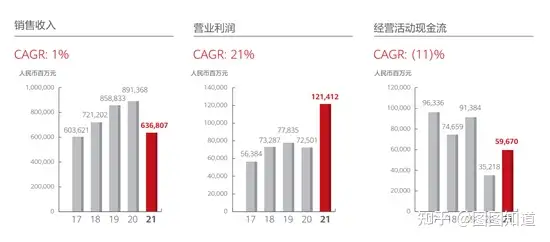
How is Huawei operating under the current situation of multiple sanctions and other restrictions? According to the 2021 annual report released by Huawei on March 28, Huawei will achieve sales revenue of RMB 636.8 billion in 2021, a year-on-year decrease of nearly 30% from 2020 (891.4 billion), and a profit of RMB 113.7 billion, a year-on-year increase of 2020 (64.6 billion). An increase of more than 70%, the net profit margin reached 17.9%. In terms of operating cash flow, Huawei has sufficient cash stock, which increased by 69.4%. At the same time, its asset-liability ratio has also dropped from 62.3% to 57.8%, and its capital structure has been further improved.
The long-term sanctions imposed by the United States have indeed hurt Huawei to a certain extent. The decline in revenue is an intuitive reflection, but the steady growth of profits shows that the United States cannot completely prevent Huawei from developing rapidly around the world. This is inseparable from Huawei's strong investment in research and development. Huawei will invest RMB 142.7 billion in research and development expenses in 2021, accounting for 22.4% of sales revenue. Both the amount of research and development expenses and the expense ratio are at the highest level in the past ten years. At present, Huawei's R&D investment among global enterprises has jumped from the fifth place in 2018 to the second place in 2021. The performance of its 5G applications and Huawei Cloud is particularly impressive.
In terms of 5G applications, by the end of 2021, Huawei has signed more than 3,000 commercial contracts for 5G applications in industries such as manufacturing, mining, steel, ports, and medical care. According to the report on the global telecom equipment market for the third quarter of 2021 released by Dell’Oro Group, Huawei accounts for 28.7% of the global market share, ranking first. In terms of 5G system equipment, the China Academy of Information and Communications Technology shows that in the first half of 2021, Huawei also ranks first with a market share of 35.2%. HUAWEI CLOUD has also begun to see improvement under the key development of the past two years. As of September 2021, Huawei Cloud has launched more than 220 cloud services and more than 210 solutions, and operates 61 availability zones with partners in 27 geographic regions around the world, covering more than 170 countries and regions. According to the global public cloud vendor ranking released by Omdia Universe in 2021: Huawei Cloud ranks first among Chinese vendors. In the "Market Share: IT Services, Worldwide 2020" research report released by Geithner in 2021, Huawei Cloud's global IaaS market ranking rose to the top five in the world, becoming one of the five global clouds.
During the same period, more than 700 cities around the world and 267 Fortune 500 companies chose Huawei to help them carry out digital transformation. The number of Huawei's service and operation partners increased to more than 6,000; the terminal business achieved a global sales revenue of 243.4 billion yuan. More than 8 million developers have used Huawei's open platforms, open source software, and rich development tools such as Euler, Shengsi, and Hongmeng Ecosystem to explore innovative business scenarios and business models. At present, there are more than 220 million Huawei devices equipped with HarmonyOS, making it the fastest-growing mobile terminal operating system in the world.
In addition, Huawei is also actively expanding multiple business lines with independent chip production or procurement capabilities, such as inverters and automobiles, in order to minimize the impact of high-end chip restrictions on Huawei. Currently, as the world's leading inverter supplier, Huawei is planning to launch more photovoltaic inverters in response to the government's call for carbon peaking. Huawei's inverter sales have increased significantly. In terms of Huawei's automotive systems, Huawei is transferring engineers from other business units to the self-driving car sensor and electric vehicle power unit. In order to effectively evade the areas covered by the current U.S. technology sanctions against China, Huawei has actively expanded its cloud computing business, digital energy business, terminal business, and smart cars in addition to its ICT infrastructure business.
Therefore, Huawei continues to generate revenue under US sanctions. The complexity of this business environment reflects the complexity and resilience of Sino-US economic and trade relations. On the one hand, China and the United States are interdependent and cannot be completely decoupled in various fields. Economic and trade sanctions will bring huge losses to both sides. On the other hand, the United States has defined China as an economic and trade competitor. cognition", decoupling in specific technical fields will inevitably exist.
Picture: Although Huawei's global sales revenue will decrease in 2021, its revenue and profit will increase by 75.9%. Source: Huawei
3. Sino-US economic and trade relations are both complex and resilient
Browsing Chinese customs data shows that since the United States imposed additional tariffs on China in July 2018, the Sino-US trade volume has been growing in all years except for a year-on-year decrease of 10.7% in 2019. The rebound in trade volume since the outbreak of the new crown epidemic has been particularly pronounced. In 2021, China's total trade in goods and services with the United States will increase by nearly 30% year-on-year to 755.6 billion US dollars, hitting a record high. On the U.S. side, U.S. merchandise exports to China also rose 21% in 2021 to $149.2 billion. China continues to lock in its position as the third-largest merchandise exporter to the United States, after Canada and Mexico among USMCA partners. It can be seen that although the trade friction between China and the United States has continued to this day, the economic and trade fields of China and the United States still show a trend of interdependence in general. The economic and trade relations between China and the United States, especially in the field of science and technology, have been decoupled, but not completely decoupled. .
On the one hand, the US Department of Commerce prohibits the export of the most advanced semiconductors, on the other hand, it also stated that it can "make individual judgments" on products that do not support 5G. At present, because the export control policy has caused great damage to the interests of suppliers, and there has been a significant industry diffusion effect, other companies in the supplier's industry have also had a negative impact. Therefore, suppliers and industry associations have taken countermeasures such as protests, appeals, and government lobbying, and the implementation of the Export Control Reform Act (ECRA), which restricts technology as a unit, is struggling in the United States. At the same time, during the solicitation process, the US industry expressed that if sanctions are imposed on China's "emerging technologies" and "basic technologies", many people will lose their jobs. According to the 2022 U.S. Export Report released by the U.S.-China Business Council, Oregon, as the largest chip exporting state in the United States, will create 33,782 jobs in 2020, an increase over the previous year. nearly 7,000.
Therefore, since the United States announced that Huawei was included in the export control "entity list", the U.S. Department of Commerce has also extended the period of Huawei's Temporary General License (TGL) from time to time, authorizing U.S. entities and individuals to conduct certain transactions with Huawei and its subsidiaries. . The U.S. government has also issued a large number of export licenses for foreign suppliers to continue to ship to Huawei, so as to ensure that its own interests will not be damaged too much. Documents submitted by 16 U.S. semiconductor and related industry companies including Qualcomm, Nvidia, Intel and AMD to the U.S. Securities and Exchange Commission show that in 2021, the products exported by these 16 companies to China will increase by 32 billion US dollars compared with 2019, an increase of 46%. .
Picture: The US trade deficit with China is still at a high level, and China-US trade has not been fully "decoupled". Source: Harvard Business Review
4. Analysis and prediction of the future US science and technology policy towards China
Unlike the Trump administration, the Biden administration attaches great importance to the development of science and technology in the United States. For the first time, the Biden administration promoted the president's technology adviser to the cabinet level, and most of its technology policy team members are executives from high-tech companies in Silicon Valley. It can be seen that the U.S. government's science and technology policy toward China will become the top priority of its China policy, and the U.S. is also trying to intervene in bottom-up market forces through top-down political forces. The America Competes Act of 2022, passed in February 2022, decided to allocate nearly $300 billion for scientific research and development. Of that, $52 billion in grants and subsidies went to semiconductor manufacturers. The Biden administration will strengthen its efforts to unite American technology companies and Chinese companies to compete for markets and users.
James A. Lewis, senior vice president of the US Center for Strategic and International Studies (CSIS), pointed out that, compared to trade, technology will become the main battlefield for Sino-US competition during the Biden administration. The focus of the dispute between China and the United States has shifted from trade issues to technology issues, and the trade conflict will escalate into the US's suppression of Chinese technology companies. Therefore, when evaluating the future U.S. science and technology policy toward China, the two dimensions of system and technology should be taken into consideration. On the basis of recognizing that the U.S. will continue to maintain a partial "decoupling" policy to safeguard its own interests, it is also possible that the U.S. The following three aspects have made a new round of upgrades to China's science and technology policy:
(1) Combining points and areas to establish a coverage and targeted sanctions mechanism
On the technology policy toward China, the Biden administration seems to have adopted a more moderate stance on the surface, but discriminatory law enforcement against Chinese technology companies will continue. This contradiction reflects the Biden administration's willingness to return to contact, dialogue and cooperation, but the sense of strategic confrontation and confrontation still exists. Compared with the Trump administration, the Biden administration of the establishment faction is bound to be more refined and specific in its science and technology policy towards China. On the one hand, entities and individuals such as enterprises and corporate executives will be the key targets of law enforcement, and on the other hand, some regulatory policies will be relaxed to minimize the damage to the interests of American companies.
At present, the U.S. technology sanctions against China mainly come from the entity list established by various U.S. departments. At the end of 2020, the U.S. Department of Commerce established a new "Military End User List" (MEU List) in the Export Administration Regulations (EAR). In June 2021, the U.S. Department of the Treasury carried out a comprehensive reform of sanctions, launching the "China Military-Industrial Complex Enterprise List" (CMIC List) including 59 Chinese entities, and launching the OFAC list. In addition, the U.S. Department of Defense also maintains a “List of Chinese Military Enterprises” (CMC List) and a “List of Chinese Communist Party Military Enterprises” (CCMC List).
Obviously, the United States is further expanding the coverage of sanctions against Chinese companies. At the same time, it is using these lists to distinguish the scope of sanctions from company to company, so as to deal with the impact of China's rise on the US in politics, economy, military, technology, and diplomacy. "Comprehensive Challenges" in areas such as the humanities and the humanities.
(2) Rebuild the "International Anti-China Alliance" and restrict China's development and acquisition of high-end technologies
In February 2021, the report "Asymmetric Competition: A Strategy to Cope with China's Science and Technology Competition" published by the China Strategy Group (CSG) advised the Biden administration that in order to avoid a situation where "China wins the Internet", it is necessary to establish a The "T-12" forum composed of Japan, Germany, France, the United Kingdom, Canada, the Netherlands, South Korea, Finland, Sweden, India, Israel, Australia and other countries jointly promotes the norms and values of technological development.
Compared with the direct and unilateral high-profile announcement of sanctions against China during the Trump administration, the Biden administration hopes to use the name of "technical democracy" to win over allies to take sanctions against China at the commanding heights of democracy. At present, the United States has made the "Five Eyes Alliance" countries and European countries the focus of building a camp to put pressure on China's science and technology, and continues to criticize Chinese companies on issues such as "human rights" and "cyber security" in the international public opinion field. This not only affects the reputation of Chinese technology companies, but also creates a business environment in which "isolation of Chinese technology companies is justice".
The United States is trying to expand the G7 into the D-10 to establish a "Democratic Science and Technology Alliance." The U.S. government cleverly used the "Halo Effect" proposed by international relations scholar Glenn Snyder (Glenn Snyder) to intervene in the political game of its allies based on mutual reliability perceptions, making them aware of the use of Chinese technologies such as Huawei. The company's equipment or technology would compromise valuable intelligence or military support provided by the United States. The US-EU Trade and Technology Council (TTC) established in June 2021 is a supplement to the "Democratic Technology Alliance". The committee defines the relationship between the US and Europe as partners committed to promoting digital transformation and new technology cooperation, and believes that the cooperation between the two parties is based on shared democratic values. Its purpose is to strengthen the leadership of the United States and Europe in technology and industry.
The Biden administration may continue to extend the scope of the Foreign Investment Risk Review Modernization Act (FIRRMA) or use various agreements such as the Wassenaar Agreement to join forces with other countries through alliances or pressure to promote Western The country accepts overseas investment review standards similar to those adopted by the United States towards China, and forms a technological strategic cooperation that advances and retreats together
政治家都在说“多极化”,但客观的世界只有中美两极,不存在第三极;科技进步是线性的,但人类的文明、精神和制度是有可能倒退的;中国是全球化最大受益者,美国也受益,但它认为受益不够大,要去全球化;如果以2016年为起点,已经倒退了8年。从2023算,至少还要倒退10年,甚至20年以上;数字经济占国家财富比重上升,中美竞争核心不是意识形态,而是数字经济;美国对华三要素:合作+竞争+对抗。合作可有可无、对抗是工具,竞争是核心,策略就是“小院高墙”,搞小俱乐部;企业过去是靠全球化发展,今后靠国际合作可能不再合适,而是要利用国际脱钩、断供创造的机会。
多极化只是口号,
世界只有中美两极
多极化是冷战结束后90年代初就提出的一个概念,到现在已经30年了,但多极化这个词儿还在提,尤其是政治人物们都非常喜欢用这个词。这是为什么?
美国喜欢说多极化的原因是,如果不说多极化,说两极,那就等于承认中国和美国是平起平坐,这从美国来讲这政治不正确,不能承认世界上有任何一个国家已经和美国一样强大;而欧洲、俄罗斯、印度、日本、巴西这些国家也愿意说多极化。因为说两极,也等于矮化自己,必须说我们也是一极,俄罗斯是一极,印度是一极,日本是一极,欧洲是一极,和美国和中国是平等的。
从中国来讲,我们也坚持说多极化。如果我们不这样说,等于贬损了别人。如果我们说两极,那就变成了我们跟美国是一个级别。所以,大家需要知道,我们坚持多极化,不是因为客观世界是多极化,而是因为说多极化才政治正确。但决策者们必须得面临一个现实,到底是按多极格局制定国家政策,还是按两极格局制定国家政策?
那么,客观的世界是什么样的呢?是两极。
中美竞争,给越来越多国家形成的压力是要选边。越来越多的东南亚国家在抱怨中美竞争,他们有压力,要在两者之间进行选边,他们不想选边,原因就是因为两极格局越来越明确。
第一个公开承认两极格局的是马克龙。2019年8月27号,马克龙有一个讲话提出,必须承认西方霸权或许已经终结,最终世界将围绕两个极点运转,即美国和中国,欧洲将必须在这两个统治者之间进行选择。马克龙说这句话,欧洲很多人不愿意听,在法国内部也是政治不正确。
但从马克龙来讲,他要面临的一个现实,就是法国得制定什么样的外交政策。比如马克龙刚来中国,他为什么在这个时候,顶着国内国际的压力也要来中国访问?我的理解就是两极世界是一个客观现实,你必须在中美之间进行斡旋,你不做这样的外交对法国不利。
马克龙讲话之后,联合国秘书长古铁雷斯也接受了这个说法。
在第七十四届联大会议上,古铁雷斯有个发言,他说这个世界正在一分为二,地球上最大的两个经济体创造了两个相互独立、相互竞争的世界。这两个经济体分别有自己主导的货币、贸易金融规则、自己的互联网和人工智能以及自己的地缘政治和军事战略。
古铁雷斯头一次提到两极格局的内容是什么?政治上是中美两极格局,这不仅体现在自然空间上,还要体现在网络空间,体现在科技,特别是AI的科技技术方面。古特雷斯是联合国秘书长,他的发言必须代表绝大多数国家的看法。
所以,我认为在2019年,国际政治人物已经开始承认世界已经形成两极格局。2021年,古铁雷斯在第七十六届联大会议上再次重申:我担心我们的世界正朝着两种不同的经济贸易和金融体系、技术规则发展,两种不同的人工智能发展方法,以及两种不同的军事和地缘政治战略。一旦出现这样的情况将带来麻烦,它比冷战时期更难以预测。
古铁雷斯的意思是,冷战时期对抗激烈,有很多战争,但确定性比现在强。现在是不确定非常大,不是说战争会更多,而是说你做事情会遇到什么样的意外,比以前要多得多。
企业通过国际合作发展
可能不再适合
去年6月,新加坡前总理吴作栋说,美国不会将全球领导地位拱手相让,并正在计划如何建立联盟来遏制中国的崛起,但中国也不会轻易放弃,中美现在都把对方视为长期威胁。吴作栋的这个判断非常重要,在座的各位不要指望目前的形势短时间有所好转。企业要有长期在这种不好的、倒退的环境中生存和发展的能力。
也就是说,过去在全球化下发展,而今后通过国际合作来使企业发展的策略可能不再适合。今后的发展是利用各种各样的国际脱钩、断供创造的机会。简单讲,当企业无法采购世界上价格最低、质量最好的产品的时候,就给价格高、质量差的产品提供了生存的机会,发展的机会。
吴作栋说这将是一个两极分化,并在中美两个大国之间分裂的世界,他们的关系将更多地建立在不信任而不是互信、竞争而不是合作的基础之上,这将是一个各国被动选边站的世界,人们建造的不会是更多的桥梁,而是更多的高墙。也就是说,在过去冷战后全球化趋势下,是大家在国际上寻找各种合作的机会来加强发展,今后更多的是找国际合作被终止之后的发展机会,或者说无法进行国际合作创造的机会。
1990年全球GDP的份额,美国占26%,中国只占1%,日本占14%,德国占8%,英国占5%。2022年,美国GDP占25%,中国占18%,美国相对衰落了,因为美国它跟全世界大国之间的实力差距日益拉大,但跟中国实力差距在缩小,中国的GDP已经占到了美国的70%。
有人说,日本当年14%为什么不说两极格局?因为日本不是综合国力的国家,日本是一个单一实力的,叫做经济实力国家,单靠GDP的规模不能使它成为一极。而中国作为综合实力国家。就像冷战末期或者80年代时期,苏联的GDP小于日本,但苏联仍然是超级大国,因为苏联有综合实力,不仅仅有核武器,在电影、艺术、绘画、体育都远远超过日本。
虽然中国的增长挤压的是日本、德国和英国这些国家,但中美之间这样的实力对比和趋势决定了美国会非常担心中国会和自己平起平坐。所以,从现在发展趋势来讲,全世界的经济都很不好,前景都非常差。
数字经济是中美竞争重点
我月初去普林斯顿大学开了个国际会议,大家有一个共识,全球经济都没有大的希望,经济的不好将表现为所有大国不是比谁的经济发展快,是比谁的经济衰落的速度比别人慢。乌克兰战争不仅让俄罗斯的经济受到损失,欧洲也受到损失,世界各国都受到损失,没有一个大国认为它将强劲增长。
那么从经济角度讲,现在的两极格局和冷战时期的有什么区别呢?就是古特雷斯讲的,这一次涉及到技术、网络和经济,就是数字经济。
数字经济在大国经济和财富的比重不断上升,因为它每年增长的速度是整体经济的1.5倍。既然这一部分将成为国家财富的主要来源,任何一个大国都不会把重点放在非数字经济领域,只是能做到多少的问题。比如俄罗斯,它不是不想发展数字经济,但它没有能力去做,只能靠卖自然资源。
冷战时期,美苏竞争是在自然空间——地上、海里、天空、宇宙,而这次中美竞争是在网络空间,或者说在自然空间和网络空间同时进行战略竞争。谁在网络空间占有优势,谁就能赢。你如果网络上没有优势,只在自然空间有优势,你也赢不了。比如乌克兰战争。俄罗斯在自然空间拥有绝对军事优势,而它在网络空间是劣势,俄罗斯就无法用它在自然空间的绝对军事优势实现政治目标。
为什么数字经济产生了和自然空间里非数字经济的重大区别?区别就在于数据。
现在出台了很多文件,很多政策,关于数据保护问题、数据利用问题。数据是数字经济的资源,就像石油、煤炭、矿产、海水,这种自然资源是我们在自然空间进行生产的,所依赖的,没有这些资源,你就没有生产。到了网络空间,生产和服务主要用的是什么?利用的是数据这个资源。大国竞争中不管科学技术的进步还是军事竞争,都是搜集和分析信息的技术是不是比对方强。
所以,中美战略竞争肯定会集中在数字技术创新上,美国搞的“小院高墙”就是阻止中国数字技术创新赶上美国。我阻止不了就禁止,就是要使你的进步速度相对要比我慢。这就是为什么我们看到古铁雷斯反复强调中美这次的两极格局和冷战的不同。
美国对一点非常重视。他们认为中美战略竞争的核心不是意识形态,是数字技术,而数字技术的核心是芯片在硬件上的表现,芯片不断改进提高和其他基础科学的研究。美国政府在去年7月通过了“芯片与科学法案”,要遏制住中国科技创新的速度超过美国。所以政府决定对本土芯片制造商提供570亿美元补贴,240亿美元税收激励,并在未来5年拨款2,000亿美元支持相关创新、培训、研发;鼓励英特尔、三星、台积电等公司在美国建厂,部分条款限制有关企业在华的经贸投资活动。
大家看,美国政府“要为科技创新进行补贴”。诸位可能不觉得这句话有什么问题。因为我们的政策也是鼓励企业创新,给政策优惠,甚至给一些奖励。但这曾经是美国长期在世界贸易组织起诉中国的理由,说你们进行了不公平的竞争,你们对科技创新进行国家补贴,等于是拿国家力量和我企业竞争,这是不公平的。要求对这样的企业进行制裁,要求对中国政府给予惩罚。
现在美国政府自己带头搞美国式的举国体制,搞技术创新补贴。美国制定了一个法案居然违背了他自己的政治原则,就是自由贸易和市场经济竞争。可想而知,这件事对美国人有多重要。美国认为,这是事关美国能否在与中国的竞争中取胜的根本,所以才会制定这样的一个法。这不是政策,这已经是美国的法律。
中国是全球化最大受益者,
美国认为自己的受益不如中国大
在这样的一个形势下,我们大家发现不确定性和科技竞争越来越激烈,对抗越来越严重,大家给它起名叫逆全球化,这是一个关系到人类历史走向的大事情。
冷战结束后出现了全球化,全球化是由经济市场化、政治民主化两部分构成。美国推动全球化的时候,一些国家一开始不接受,比如像我们90年代初期的时候,认为全球化就是美国化,我们反对。我们加入了WTO之后,我们发现中国可以从全球化中受益,使我们经济发展更快,于是我们政策调整了,开始支持经济全球化,政治民主化这部分我们不支持。
我们通过这些年的发展,得到的结果是什么?中国成为全球化最大受益者,这一点我们自己也承认,国际社会也承认,美国也是这样认为。今天在座的诸位应该说都是全球化的受益者。美国也是受益者,但特朗普提出了一个看法,他说是美国发动了全球化,为什么最后受益最多的是中国,不是美国?所以他认为全球化是个错误趋势,对美国不利,因为美国从全球化得到的好处,没有中国多。
中国不否认是全球化最大受益者,所以我们的政策仍然说支持继续经济全球化,但美国不再提了,所以就走向了逆全球化。
我们要分清反全球化、去全球化和逆全球化,这三个概念在媒体中经常使用,但没有做区分。
反全球化是指普通老百姓,是指中小企业,因为全球化的结果是跨国公司、大资本能够在全球进行资源有效配置,中小企业跟他们竞争不过,所以中小企业就反对。当年最有名的“占领华尔街运动”,反对跨国公司,组织大规模游行反对世贸组织开会,阻止那些部长们讨论怎么全球化。但中小企业阻止不了全球化的发展,全球化是由跨国公司推动,但得到了拥有政权和主权的政府的支持,于是全球化蓬勃发展。每年世界贸易组织开会,各国部长在讨论怎么全球化都是政府支持干。2016年出现了反弹,英国带头采取脱欧去全球化,把原先搞的全球化政策取消,不再推动全球化了。
一个英国做,没有什么了不得的,因为它经济规模太小,没有多大的影响力。但到了2018年,美国加入发动对华贸易战,开始搞去全球化政策,增加关税,禁止自由贸易,脱钩断供。美国是世界最大经济体,当美国搞去全球化,逆全球化就成了一个趋势。随着2020年疫情的发生,各国政府找到了一个阻止全球化最好的合法理由。
为什么要“以内循环为主”
的双循环战略
全球化是双刃剑。全球化让很多人富了,但同时全球化让很多中产阶级工资长期不涨,让很多穷人生活改善的非常有限;全球化带来了疫情在全球的传播,全球化使得恐怖主义在全球进行国际合作,全球化的负面作用越来越突出,于是就出现了各国政府以防疫为理由,减少国际合作,阻止人员往来,这样逆全球化政策的大面积的多国的使用,导致了逆全球化成为了历史趋势。
那么,我们中国面临逆全球化的趋势,提出了一个“以内循环为主的双循环战略”。
内循环为主,就是说在国内进行一些纯粹由国内企业构成的产业链,不跟国际进行任何合作,因为产业链里边不跟国际合作,就不会因为国际政治导致产业链中断。
这些大的经济体都采取了去全球化政策之后,还剩下一个大的经济体,就是欧盟。因为欧盟是个组织,它的成员国没法自行决定,因为不会脱欧从欧盟退出去,就不能单方面的搞脱钩政策。2022年乌克兰战争发生之后,欧盟认为不搞内循环是危险,搞国际合作是危险的,一场战争导致欧洲从俄罗斯的石油供应中断,连冬季取暖都是问题,还有粮食供应、化肥、能源等都受影响。所以,乌克兰战争不到一个月的时候,3月11号欧盟就决定,减少粮食、芯片、药品、原材料、数字技术对国际产业链的依赖。也就是说,这些产业的生产只在欧盟国家之间进行,建立欧盟国家之间的产业链,而不要跟外面进行合作。
我上个月去了欧洲,欧洲很多国家都在考虑减少跟中国的经济合作,防止将来因为政治原因带来产业链的断裂,给企业发展带来风险。所以这次欧盟的主席冯德莱恩来到中国以后,谈判完了,开的新闻记者会明确提出,我们要减少对特定国家的经济依赖。
我在欧洲发现,已经不是欧洲国家的政府在这样做,是欧洲的企业和美国的企业开始这样做,他们都在减少或缩短国际合作的产业链环节,比如原来有50个国家合作,我现在把它缩小到30个国家。现在有个词叫做“友好外包”,就是说我把它缩小到只有跟我政治关系稳定的国家之间的产业链,最少是缩短,甚至个别的就干脆自己生产,不跟任何人合作,这成了一个趋势。
从这里我们看到了反全球化的需求,就是中小企业的需求和政府去全球化的战略政策相结合,形成了今天逆全球化的趋势。如果上次全球化从冷战结束到16年持续了20多年,那么这一次逆全球化的时间恐怕不会短于20年。
十字路口:
人类的政治文明和
制度是有可能倒退的
去年6月份的判断到了今年2月份,8个月之间,中国对这个问题的认识变得更加明确。在今年2月,中国发表了一个文件,叫“全球安全倡议概念文件”,文件中提出“当前世界之变,时代之变,历史之变,正以前所未有的方式展开,国际社会正经历罕见的多重风险挑战,地区安全热点问题此起彼伏,局部冲突和动荡频发,新冠疫情延宕蔓延,单边主义、保护主义明显上升,各种传统和非传统安全威胁交织叠加,和平赤字、发展赤字、安全赤字、治理赤字加重,世界又一次站在历史的十字路口。”
这里边已经不是两面讲,而是就讲我们这个世界在往什么方向倒退,于是提出“世界站在历史的十字路口”。汉语中“十字路口”从来不是描述人类美好前景的,“十字路口”意味着我们走向灾难。
从政治和哲学角度来讲,这样的判断只是告诉我们一个趋势,但从科学、从学术的角度讲,我们需要判断要倒退多长时间、倒退到什么水平。从我自己个人来讲,如果以2016年为起点,现在已经倒退了8年了。从现在算,至少还要倒退10年,不排除20年或以上的可能性。
人类有了时间概念以后,就发现时间是线性的。经济发展也是一样。过去120年,经济发展从以传统工业的人力密集型向资本密集型,向技术密集型,向知识密集型,直到今天到了数字知识密集型的发展进程,是单向发展的,不会倒退回去。
但人类的政治关系、文明、精神和制度是会倒退的。我们一战之前有战争,但规模都不大,结果到了一战,一次大倒退,一场战争下来死亡以几百万上千万计。之后是22年的和平,然后到了二战,死亡人数更多,4,000万以上。然后出现了一个进步,一直到冷战。这时候依然有战争,每场战争的死亡一般是十几万或者几十万人。冷战后又一个更大的进步是全球化,在这个情况下战争仍有发生,但规模和死亡人数大规模下降,一场战争死亡人数超过10万人的很少。现在开始了进入逆全球化,战争死亡人数开始上升。乌克兰战争只打了一年,双方军事人员死亡已经不少于20万人。人类的国际政治在进步倒退、进步倒退之间循环。今天我们进入了一个倒退的时期,是倒退到冷战那个水平,还是倒退到世界大战的水平?这些都是我们今天要判断的。这次历史倒退要倒退多远?无论如何,在倒退问题上形成了共识。
全球化加剧了
国际和国内的两极分化
我去欧洲去美国开了很多的会,所有会上我就没听到一个发言人说我对世界前景持乐观态度,最好的说法就说我悲观,但我不像你那么悲观。
那经济会怎么样?我们看到的经济情况是世界银行做出的预测,2023年经济只有增长1.7%,去年预计是3%,认为中国疫情放开了,他们经济会增长,后来发现不是那么回事。我们去年12月7号放开,并没有增长的劲头。所以,世界银行的预测下调至1.7%,明年是2.7%。
逆全球化是从哪来的呢?全球化发展得好好的,突然逆旋,怎么就掉头了呢?掉头的原因大家都在分析,掉头的原因只要继续存在,这车就不可能重新再回到全球化的路上。
我自己认为逆全球化是因为是全球化发展产生的副作用太大导致的。也就是说,全球化生了一个逆全球化的儿子,全球化加剧了国际、国内两极分化,贫富不均日益严重。普通人对全球化越来越反感,越来越反对。
先说国际层面,在我们国家开G20峰会,媒体报道说G20代表了全球80%以上的 GDP。当时我正好在越南,越南当天的报纸报道中国杭州开G20,是在报纸上一个特别小的小角上,说有这么件事。越南为什么对这个事这么不积极?原来越南不是G20成员国,G20是个富人俱乐部,富人俱乐部怎么能指望穷人支持你呢?G20只代表全球40多个国家,世界上剩下160多个经济体或国家,他们去分享全球15%的GDP,你们40个人享受了85%的财富,他们能高兴吗?
我们有些人有一个很奇怪的概念,老用人均的概念来解释财富增加的好处。这就好比是自己在小区盖了几千平米的大豪宅,之后说由于我们家盖了豪宅,小区平均各家的住房面积都增加了,你想人家能高兴吗?
所以,国际层面的两极分化带来中小国家不支持全球化,不认为全球化是合理的。而更严重的不是国际,而是国内,全球化受益越大的国家内部两极分化就越加严重。
美国是全球化受益相对来讲比其他西方国家更大的国家。美国统计,美国拥有百万家产财富的人是10%,财产在2.5万美元以上的家庭有65%。这说明,两极分化在美国日益严重。美国中产的工资20年是以千为单位增长,富人是以亿为单位增长。不是中国人不患贫而患不均,美国人一样,全世界人都一样。我挣得少,你也挣得少,我没有什么不高兴,特别是你比我挣得还少,我还很高兴。我最不高兴的就是你比我挣得多。这是人性。
所以,全球化带来的国内的两极分化,不是说绝对贫困,而是相对贫困,就是财富拥有量之间的差距拉开的速度太大了。独角兽企业都是几个年轻小孩,干上几年,控制的资产都是以10亿、20亿为单位。大家想,那些每个月挣3000、5000块钱的人,能喜欢全球化吗?所以在大众中间形成了一种反全球化的力量。
西方民粹主义是“思潮+权力”
数字技术加快了财富的两极分化。从事跟数字经济相关的人,他们的财富增长速度快于那些非数字经济增长,两极分化的速度进一步加快,使得下层社会、弱势群体更加不满,并在不满的情绪上形成了一种民粹主义思潮。
民粹主义思潮是什么?就是不喜欢精英,他说,我们是大众,你们是精英,国家都是由精英决策的,你们精英制定的政策都是对你们有好处的,对我们老百姓没好处。我看到的现实就是国家财富的两极分化越来越严重。
民粹主义兴起之后,如果只有思想并不可怕,但它一旦跟权力相结合,那就必然采取去全球化政策。为什么?民粹主义认为国家的所有不幸都是因为决策者引进了外部的东西,移民、外资、外国技术、外国资本,这些外国的东西来了,把我们的生路断掉了。移民跟我们抢工作,外资来了,把我们的市场占走了,外国技术对我们卡脖子,外国人侵蚀了我们的本土文化,那么最简单的解决外部威胁的办法就是不跟外国接触,没有合作、没有往来是最安全的,于是出现了经济安全的概念。
怎么才能经济安全?不跟人合作不就安全了吗?朝鲜最安全,美国人制裁朝鲜都制裁不了,他说我跟你什么关系没有,你制裁我什么呀?最安全的就是没有任何的国际合作。民粹主义不是思想带来影响,是思想和权力结合带来的影响。民粹主义是从西方国家内生的一种意识形态,这种意识形态先是在西方国家挑战自由主义,民粹主义不是反对共产主义、社会主义的思想,民粹主义反对的是自由主义的思想。它在西方国家产生,挑战了西方国家主导的价值观。民粹主义强大了之后开始外溢,从发达国家向发展中国家扩散,慢慢的发展中国家民粹主义思想也起来了。
有一个典型的例子,苏州有一个辅警把一个穿和服的小女孩抓起来了,后来派出所把她又放了,对小女孩道歉。为什么辅警把这个小女孩抓起来?不是他有这种民粹主义的思想,说我不喜欢日本,不喜欢日本文化,不喜欢日本衣服,是说我有权力不允许你喜欢,我有权力不允许你选择穿什么样的衣服,我不允许你拥有选择衣服的权利,因为那是外国的,外国的我就反对。旁边的大妈穿的也是制服,只不过穿的是做卫生的制服,是保洁阿姨,保洁阿姨也不一定喜欢这小女孩穿和服,但她为什么不把这小女孩抓起来?因为保洁阿姨知道,我的衣服不赋予我这种权力。辅警他这身衣服,他认为国家赋予我了权力,我有权不允许你和我有不同的思想。也就是民粹主义思想和权力结合,就开始采取逆全球化的政策,包括反移民、反法治、反精英、反科学,反外国。所以我们看到特朗普上台,英国约翰逊上台采取的都是去全球化的政策,就是减少国际合作。英国不允许中国5G进入,美国打击中国的抖音,不允许使用中国的抖音,都是民粹主义思想和权力结合的结果,理由是为了维护自己的经济安全。
当为经济安全提供政策合法性之后,中断、阻止任何国际合作都变得合理。为什么?因为经济安全没有定义,没有边界。你说做什么事不是维护经济安全?你开一家麦当劳,周边的中国餐馆说你麦当劳把我的儿童时刻都吸引走了,你给我造成了经济威胁,你可以以任何理由说这威胁了我的经济安全。你穿日本和服,你影响了中国服装的出售。所以现在经济安全实际上是去全球化政策的一个合法性基础。
我们总结一下,逆全球化的趋势是什么?就是说全球化和数字经济加剧了两极分化,然后加上自由主义极端化,带来了民粹主义思潮的兴起,民粹主义思潮兴起和权力结合,就产生了泛化安全观的指导原则,把所有的事情都安全化,任何事情都与安全相关,在泛安全观下为了经济安全采取了去全球化的政策,当多数大国都这样做,逆全球化就成了一种趋势。也就是说,逆全球化是政府去全球化政策导致的,不是老百姓反全球化导致的,也不是大公司引发的。
美国的策略是“小院高墙”
在逆全球化的趋势下,中美关系是怎样的发展趋势?
中国在去年6月发表了一个文件,叫“美国对华认知中的谬误和事实真相”,对美国做了一个判断。我们认为“美国是世界秩序最大乱源,美国运用内外全部资源对华进行无底线的打压,美国是胁迫外交发明者和集大成者,美国是世界上最大的人权侵犯国,美国是当前台海和平稳定面临的主要威胁之一,美国是乌克兰危机的始作俑者,美国是对地区和平稳定的真正威胁,美国是散布传播虚假信息最大源头,美国是当前中美贸易摩擦的根源,美国是全球最大黑客帝国”。
这个认识在今年的2月份得到进一步强化和政治化,中国发布了一个文件,叫“美国的霸权、霸道、霸凌及其危害”。中国在“序言”中说,美国是政治霸权、军事霸权、经济霸权、科技霸权、文化霸权,这事怎么解决?“美国应该反躬自省,深刻检查自己的所作所为,放弃傲慢与偏见,摒弃霸权、霸道、霸凌。”就是说美国首先要写检查,你承认错误,咱们关系才能改善。你认为美国会做这个吗?美国哪一届政府能做这样的决定吗?这是中国对美国的认识。
那美国怎么认识中国呢?
美国国防部去年发布报告,非常明确提出“中国正在试图破坏美国在印太地区的联盟关系,利用其不断加强的军力来胁迫威胁近邻,对美国国家安全形成最全面的严重挑战,中国是今后几十年后果最为重大的战略竞争者,俄罗斯仍是迫切威胁。”国防部长奥斯汀之后在另一个场合又专门做了解释,说,“中国是唯一既打算重塑国际秩序,又越来越有实力这样做的竞争者。与中国不同,俄罗斯不可能长期系统挑战美国,但俄罗斯侵略确实构成一个直接尖锐的威胁。”
国内有人认为,俄罗斯进行的乌克兰战争给中国建立了一个战略屏障,牵制了美国对中国的战略的压力。从这个报告看,你认为可能吗?从乌克兰战争发生到现在,美国没从亚太地区调一兵一卒去欧洲,也就是说乌克兰战争发生不发生,都不影响美国在亚太地区对中国进行的遏制政策和在这使用的资源和实力。
所以,我想跟大家说,美国把中国视为最大、最全面的战略挑战。双方都将对方视为最主要的威胁,我们看到,现在中美之间的关系,都没有建交前的双边关系好。
我是70多岁的人,50年代和60年代都是骂着美国领导人长大的。自从1972年尼克松访华,中国不再点名批评美国领导人。特朗普执政之后,我们重新恢复对美国的点名批判,称蓬佩奥是人类公敌,你想双边关系到什么程度?我这次去美国,感觉美国那边对中国的看法也是严重恶化。
美国对华政策采取的是:合作、竞争、对抗三管齐下,竞争——技术、军事、航天、人才、金融、投资、贸易,这是政策核心;合作——气候、能源等,这些都是可有可无;对抗——人权、新疆、西藏、香港、东海、南海、台湾,这都是工具,真正的核心是在竞争领域。那么,美国要赢得竞争,它采取了一个俱乐部战略,几个国家成立小俱乐部,核心是不让中国参加。大家看,网络清洁计划、G7数字联盟、5G联盟、美日台韩四方芯片联盟,所有这些的重点都在数字技术领域,这是核心,策略就是“小院高墙”。
关于“小院高墙”,我想特别解释一下,4月10号美国财政部一位副部长接受采访,针对美国大众做了一个解释,想要告诉美国大众,不要误以为拜登政府要跟中国全面脱钩。“小院高墙”是说“在科技方面要阻止中国的发展,不跟中国合作,减少跟中国在高科技方面的联系,但在其他非高科技领域里继续保持跟中国的经济合作。”这就是说,对中国的高科技方面的制裁是不会停止的,只会增加不会减少,但不会把两个经济体完全分开,因为这既不实际,也不符合美国的利益。我个人认为,这位官员描述的就是今天拜登的对华经济政策,即不是全面调控,在非高科技的领域将继续进行合作。
那么,发展趋势是什么样?总的来讲,大趋势应该是越来越差。今后几年是有的年头下降快,有的年头下降慢,但大趋势是下降,这点我们就不讨论了。
“逆全球化”已成常态
我想讨论的一点,“由于去年美国采取了印太经济框架,这样带来的结果战略平衡开始向美国方面偏斜。本来东亚国家包括日本和韩国,都是经济靠中国,安全靠美国,但是由于采取了印太经济框架,参加的国家除了美国、韩国、日本、新西兰等美国的盟友之外,印度、印尼、泰国、马来西亚、菲律宾、越南、文莱这些非美国的盟友国家也加入了,也就是说安全靠美国没变,然后在经济靠中国里出现了分化。换句话说,经济上,这些国家也想两头维持平衡,原有的经济靠中国、安全靠美国的战略平衡,就开始向美国方向倾斜。
最后说一下欧洲。欧洲面临这样的中美战略竞争,他们的选择是什么?马克龙说“欧洲必须为战略自主而战,我们不想在关键问题上仰仗他人”,里边特别提到,“如果中美两个超级大国之间的紧张局势升温,我们将没有时间或资源实现战略自主,我们将沦为附庸,欧洲不想陷入不同阵营之间的对抗。”
这是一个非常具体的问题,就是说他们认为,万一美国和中国在台海地区的冲突升级,到时候美国的制裁使得和中国的经济合作产业链全部中断,怎么办?现在就得准备减少将来产业的中断带来的影响,就是冯德莱恩在4月6号新闻发布会上讲的降低风险的具体措施。她举例提到促进贸易和投资多样化这一途径,以减少对特定国家的依赖。也导致外资在中国扩大生产以及外资和中企合作出现了很多政治顾虑。
最后我想说一句,逆全球化的趋势已经形成,我们每一个人都得把它作为常态来对待。我们在全球化状态下生活了几十年,我们认为那样是常态,拿着本护照哪里都可以去。2019年以前的那种状态结束了,现在去哪都是障碍,而且这个事实将成为我们生活中的一个常态。所以,企业的发展恐怕不能把希望寄托于目前的逆全球化趋势可以在几年之内改变,而是必须得考虑如何在逆全球化的环境下制定自己的长期发展战略。
谢谢大家。
作为遏制中国崛起战略的一部分,美国政府近年来针对中国科技企业采取了一系列制裁措施。据中国(深圳)综合开发研究院研究显示,自2017年1月特朗普政府执政,到2021年6月拜登政府通过《2021美国创新与竞争法案》,美国国会、政府及重要智库共发布209份涉及对华科技政策的报告。上述对华科技政策包括了对中国高科技企业的制裁、前沿关键技术的管控,以及科技人才培养的限制等。
作为中国最大的通讯设备商之一,华为首当其冲,成为美国通过贸易政策影响科技竞争的最大制裁对象之一。“华为”与“人工智能”“创新”“技术”“冷战”等词语一起成为了上述报告的热词。
一、 长期依赖美国对华为制裁不断升级
美国对华为的打压始于十几年之前。自2008年华为寻求并购美国3Com公司时就未能通过美国外资投资委员会(CFIUS)的审查,美国就开始了针对华为长达十几年的打压。此后,华为与包括AT&T,谷歌在内的多个美国企业的设备销售合同或研发合作都遭到终止。而从2018年开始,美国政府对华为的打压骤然升级,除去出台各种政策外,美国政府还呼吁包括澳大利亚、日本、欧盟国家在内的西方各国剔除华为参与的5G网络建设项目并停止购买其设备。
在2019年5月,美国商务部决定将华为列入“实体清单(EL)”实施出口管制,华为开始遭到美国的全面制裁。2020年5月,美国商务部扩大了对华为的出口限制,要求那些依赖美国设备和软件的外国半导体芯片制造商在向华为公司出口芯片产品前,必须取得美国商务部的特许。三个月后,美国商务部修订了对华为的禁令,进一步限制华为使用美国技术和软件生产的产品,并在实体列表中增加了华为分布在21个国家的38家下属公司。2020年9月15日,进一步升级了禁令,禁止任何实体将拥有美国技术成分的芯片提供给华为。
到目前为止,拜登政府仍在很大程度上沿袭了特朗普政府时期对华所采取的系列惩罚措施。《美国创新与竞争法》(United States Innovation and Competition Act of 2021)中就包括了一项条款,即禁止商务部在没有证明华为不再构成威胁的情况下,将华为从“实体名单”中删除。华盛顿智库捍卫民主基金会(Foundation for Defense of Democracies)高级研究员克雷格·辛格尔顿(Craig Singleton)亦表示,美国可能重启2020年首次在美国国会提出的跨党派法案《网络法》(NETWORKS Act)以对中国实体实施额外制裁或出口管制。
不断加剧的地缘政治冲突亦让华为面临着艰难的抉择。作为跨国公司,华为很可能会因在俄乌冲突中没有对俄进行制裁而受到来自华盛顿的制裁。美国商务部官员马修·伯尔曼(Matthew Borman)便警告道,规避对俄制裁的中国公司可能遭遇中兴类似的命运,也就是以“拒绝令”(Denial Order)的方式禁止违规的中国公司采购美国的零部件和技术。
二、 新业务,新战略,华为未来向好
华为在目前受到多方制裁和其他限制的情况下运营得如何?据3月28日华为发布的2021年年报显示,华为在2021年实现销售收入人民币6368亿元,同比2020年(8914亿)下降近三成,实现利润人民币1137亿元,同比2020年(646亿)增长了七成以上,净利润率达17.9%。在经营现金流方面,华为现金存量充足,增长了69.4%。同时,其资产负债率亦从62.3%下降到57.8%,资本结构得到进一步改善。
美国长期以来的制裁确实在一定程度上伤害到了华为,收入额下降就是直观体现,但利润的稳定增长表明美国并不能完全阻止华为在全世界范围内高速发展。这与华为在研发上的大力投入密不可分。华为在2021年投入研发费用人民币1427亿元,占销售收入的22.4%,研发费用额和费用率均处于近十年的最高位。目前,华为在全球企业中的研发投入已由2018年的第五位跃居到了2021年的第二位。其5G应用与华为云的表现尤为亮眼。
在5G应用方面,截止2021年底,华为在制造、矿山、钢铁、港口、医疗等行业累计签署了3000多个5G行业应用商用合同。根据Dell’Oro Group发布的2021年第三季度全球电信设备市场报告显示,华为占全球市场份额28.7%,排名第一。在5G系统设备方面,中国信息通信研究院显示2021年上半年,华为亦以35.2%的市场份额位居第一。华为云在这两年的重点发展下也初见起色。截至2021年9月,华为云已推出220多个云服务、210多个解决方案,与伙伴在全球27个地理区域运营61个可用区,覆盖170多个国家和地区。根据Omdia Universe 2021年发布的全球公有云厂商排名:华为云位居中国厂商第一。在2021年盖特纳发布《Market Share: IT Services, Worldwide 2020》研究报告中,华为云全球IaaS市场排名上升至全球前五,成为全球五朵云之一。
同期,全球700多个城市、267家世界500强选择华为帮助其开展数字化转型,华为服务与运营伙伴数量增长到6000多家;终端业务在全球实现销售收入2434亿元。超过800万开发者采用欧拉、昇思、鸿蒙生态等华为开放的平台、开源的软件及丰富的开发工具,探索创新的商业场景和商业模式。目前,搭载HarmonyOS的华为设备超过2.2亿台,成为全球发展速度最快的移动终端操作系统。
除此之外,华为亦积极拓宽逆变器和汽车等多条具备芯片自主生产或采购能力的业务线,以期将高端芯片受限对华为的影响降至最低。目前,作为全球领先的逆变器供应商,华为正计划推出更多的光伏逆变器以响应政府碳达峰的号召。华为逆变器销售额显著提升。在华为汽车系统方面,华为正将其他业务部门的工程师转移至自动驾驶汽车传感器和电动汽车动力装置部门内。为了有效规避了美国目前对华科技制裁所涉及的领域,华为除了ICT基础设施业务外,积极拓展云计算业务、数字能源业务、终端业务和智能汽车等业务。
因此,华为在美国制裁下仍持续创收。这种营商环境的复杂性体现了中美经贸关系的复杂性与韧性。在一方面,中美双方相互依存,无法在各种领域完全脱钩,经贸制裁会给双方带来巨大损失,在另一方面,美国已将中国定义为经贸上的竞争对手,基于这种“对手认知”,在特定的技术领域的脱钩将必然存在。
三、中美经贸关系复杂性与韧性兼具
浏览中国海关数据可以发现,自2018年7月美国对华加征关税以来,中美贸易额除2019年同比下降10.7%外,其他年份均处于增长态势。新冠疫情发生以来贸易额的反弹尤为明显。2021年中国对美商品和服务贸易总额同比增长近三成达到7556亿美元,再创历史新高。在美国方面,美国对中国的商品出口在2021年也增长了21%,升至1492亿美元。中国持续锁定美国第三大商品出口国的位置,仅次于USMCA伙伴中的加拿大和墨西哥。由此可见,尽管围绕中美两国之间贸易摩擦持续至今,中美经贸领域总体上仍表现出了相互依存的态势,中美经贸关系尤其是在科技领域,既有脱钩,但又未完全脱钩。
美国商务部一方面禁止最尖端半导体的出口,一方面又表示可以针对不支持5G的产品“作出个别判断”。目前,由于出口管制政策对供应商造成了较大的利益损害,且出现了显著的行业扩散效应,供应商所在行业的其他公司也产生了负面冲击。因此,供应商和行业协会纷纷采取抗议、呼吁以及政府游说等反制措施,以技术为单位加以限制的《出口管制改革法案(ECRA)》在美国的落实却举步维艰。同时,美国产业界在意见征集过程中表示,如果对中国的“新兴技术”和“基础技术”实施制裁,将导致很多人失去工作。据美中贸易全国委员会(The US-China Business Council)发布的2022年美国出口报告显示,俄勒冈作为全美最大的芯片出口州,该州在2020年就创造了33782个就业岗位,比前一年增加了近7000个。
因此,自美国宣布将华为列入出口管制“实体清单”以来,美国商务部还不时延长华为的临时通用许可证(TGL)期限,授权美国实体和个人可与华为及其子公司进行某些交易。美国政府亦为外国供应商发放了大量允许继续向华为出货的出口许可证,从而保证其自身利益不受到过多的损害。高通、英伟达、英特尔和AMD等16家美国半导体及相关产业公司向美国证券交易委员会提交的文件显示,2021年这16家企业向中国出口的产品比2019年增加了320亿美元,增幅达46%。
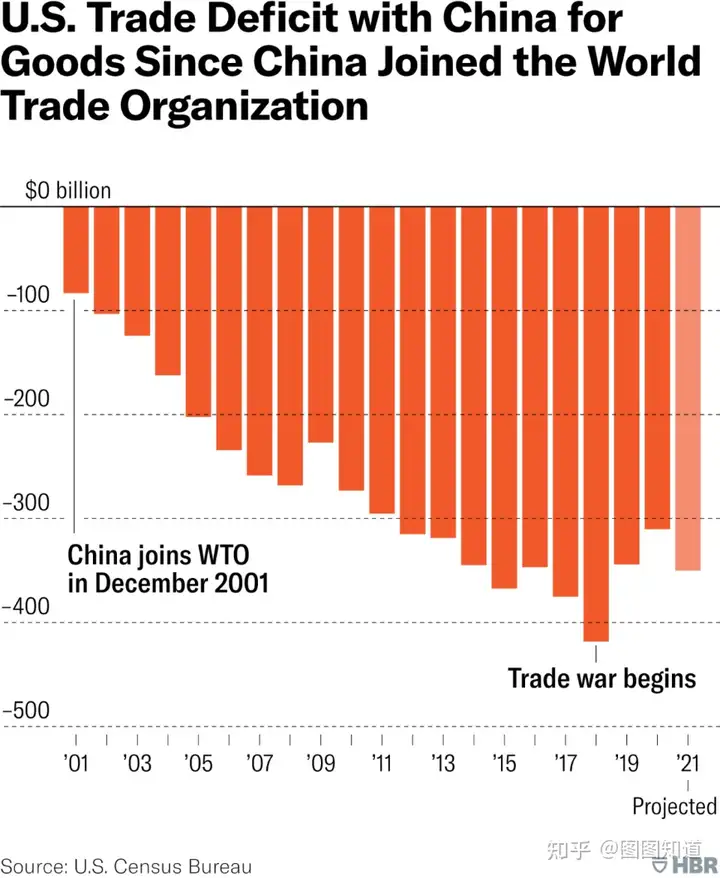
四、 未来美国对华科技政策的浅析与预判
不同于特朗普政府,拜登政府对美国的科技发展尤为重视。拜登政府首次将总统科技顾问提升至内阁级,而其科技政策团队成员也多是出身硅谷高科技公司的高管。由此可见,美国政府对华科技政策将成为对华政策的重中之重,美国亦试图通过自上而下的政治力量,干预自下而上的市场力量。2022年2月通过的《2022年美国竞争法案》(The America Competes Act of 2022)便决定拨款近3000亿美元用于科学研发。其中,有520亿美元的赠款和补贴提供给半导体制造商。拜登政府联合美国科技企业与中国企业争夺市场和用户的力度将有所增强。
美国战略与国际研究中心(CSIS)高级副总裁詹姆斯•刘易斯(JamesA.Lewis)指出,相较于贸易,科技将会成为拜登政府执政期中美竞争的主战场。中美两国争端的焦点从贸易问题转向技术问题,贸易冲突将升级为美国对中国科技企业的打压。因此,在评估美国未来对华科技政策时,应将制度和技术两个维度纳入考虑,在认识到美国将继续维持部分“脱钩”的政策以维护其自身利益的基础上,意识到美国可能在以下三个方面对对华科技政策做出新一轮升级:
(一)点面结合,建立既有覆盖面,又有针对性的制裁机制
在对华科技政策上,拜登政府表面上似乎采取了一种更加缓和的立场,但针对中国科技企业的歧视性执法将会持续。这种矛盾反映出了拜登政府有回归接触、对话与合作的意愿,但战略对抗和对立意识仍然存在。相比于特朗普政府,建制派拜登政府在对华科技政策上势必更为精细与具体。一方面,将以企业、企业高管等实体和个人作为重点执法对象进行限制,另一方面,将放宽部分管制政策以将美国企业受到的利益损害降至最低。
目前,美国对华科技制裁主要来源于美国各部门所设立的实体清单。2020年底,美国商务部在《出口管理条例》(EAR)中新设“军事最终用户清单”(MEU清单)。2021年6月,美国财政部对制裁进行全面改革,推出了包括59家中国实体的“中国军工复合企业清单”(CMIC清单),并推出OFAC清单。除此之外,美国国防部亦设有“中国涉军企业清单”(CMC清单)和“中共涉军企业清单”(CCMC清单)。
显而易见,美国正在进一步扩大对华制裁企业的覆盖面,而与此同时,又通过这些清单将企业与企业间被制裁的范围进行区分,从而应对中国崛起对美国在政治、经济、军事、科技、外交和人文等领域的“全面挑战”。
(二)重建“国际反华同盟”,限制中国对高端技术的开发和获取
2021年2月,中国战略组(CSG)刊发的《非对称竞争:应对中国科技竞争的战略》报告对拜登政府谏言,为了避免出现“中国赢得互联网”的局面,应建立由美国、日本、德国、法国、英国、加拿大、荷兰、韩国、芬兰、瑞典、印度、以色列、澳大利亚等国组成的“T-12”论坛,共同促进科技发展的规范和价值观。
相比特朗普政府时期直接单方面对华高调宣布制裁,拜登政府更希望以“科技民主”的名义,拉拢盟友一起在民主制高点对华采取制裁措施。目前,美国已将“五眼联盟”国家和欧洲国家作为构建对华科技施压阵营的重点,并在国际舆论场持续以“人权”、“网络安全”等问题抨击中国企业。这不仅影响了中国科技企业的声誉,更营造了“孤立中国科技企业即正义”这一营商环境。
美国正尝试将G7拓展为D-10,以建立 “民主科技联盟”。美国政府巧妙运用了国际关系学者施耐德(Glenn Snyder)提出的“联盟光晕效应”(Halo Effect),介入其盟友基于相互可靠性认知而进行的政治博弈,使其认识到使用华为等中国科技公司的设备或技术将损害美国提供的有价值的情报或军事支持。2021年6月成立的美欧贸易和技术委员会(TTC)便是对“民主科技联盟”的一项补充。该委员会将美欧关系定义为致力于推动数字转型和新技术合作的伙伴,认为双方的合作基于共同的民主价值观。其目的是要加强美欧在技术和工业方面的领导地位。
拜登政府可能通过继续延展《外国投资风险审查现代化法案》(FIRRMA)的范围或利用《瓦瑟纳尔协定》等在内的各项协定,以结盟或施压等手段联手其他国家,推动西方国家接受近似美对华所采取的海外投资审查标准,形成共进退的技术战略合作伙伴机制。此举旨在对华设立技术与设备获取屏障的同时,动用政府手段,通过国家间的投资和贸易协议开拓海外市场,支持以美为首的科技企业对中国科技企业不对称的竞争行为。
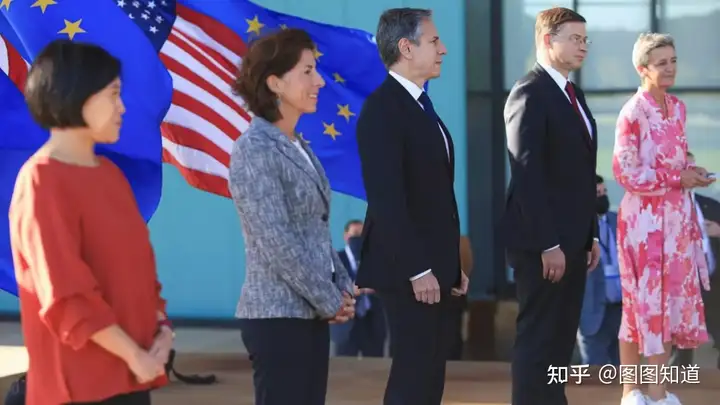
(三)将中国纳入以美为主导的新规制与新秩序
中国在《中共中央关于制定国民经济和社会发展第十四个五年规划和二○三五年远景目标的建议》明确将强化国家战略科技力量放在2021年工作的首要位置。在中美目前已出现“对手认知”的前提下,中美之间的科技主导权之争在所难免。而美国一切对华科技政策的终点,便是将中国纳入以美为主导的新规制与新秩序。
在互联网时代,科技正成为所有领域的集合点,制造业、金融业、农业、教育业、通讯业、交通业等都在科技的作用下迎来了较大的升级与改变。在二战后,美国基于传统安全领域构建的世界秩序正在区域势力不断崛起的过程中分崩离析,地缘冲突的频发亦加剧了这一进程。有别于单一领域的体系建构。因此,在新一轮世界秩序的建构中,美国必然希望通过科技对全球产业链设立新的规制,从而阻碍中国的崛起。重建美国主导的世界秩序将是美国的长期目标,这与中美竞争中的种种不确定性息息相关。而美国是否会成功还有待继续观察。


评论
发表评论