Vietnam has finally been blown up, and the flash crash has begun!越南,终于被吹爆了,闪崩开始了!
Vietnam has finally been blown up, and the flash crash has begun!
In the first quarter of 2023, Vietnam's imports and exports plummeted by 13%!
In April, the decline was even more severe, with another 18% drop;
You may think it’s nothing, it’s less than 20%, but Vietnam is the most import-exporting country in the world, and its dependence on foreign trade is so high that it’s nearly 200%!
You may be talking nonsense, how did this data come from? I know that China's dependence on foreign trade is 34%, and Japan's is 37%. How can there be another 200%?
It really is!
The scientific calculation of foreign trade dependence is the percentage obtained by dividing the total import and export volume of a country or region by GDP.
Vietnam's total import and export volume in 2022 is 701.3 billion US dollars, but the total economic volume is only 409 billion US dollars, so there is an outrageous 200%!
It can be said that Vietnam is the only country approaching 200%. What's going on?
You have to ask the United States, because the United States wants to sanction China, reject Chinese manufacturing, and impose heavy taxes on many Chinese products, but the United States cannot do without Chinese manufacturing, otherwise prices will go up, and inflation cannot be suppressed.
Therefore, they dragged Chinese products to Vietnam, printed Made in Vietnam on the products, and then dragged them to the United States to sell.
In this way, in the five years from 2017 to 2022, Vietnam’s container freight to the United States has soared by 156%, but the goods inside are all Chinese goods. As a result, Vietnam’s total import and export volume has soared, but The economic aggregate did not go up.
Of course, you can’t really say that it’s just dragging Chinese goods to Vietnam to print a LOGO. Some simple tasks, such as screwing a screw and making a packaging box, are still capable in Vietnam. So in the past few years, Vietnam’s economic aggregate Still growing fast.
At the same time, because Vietnam's labor cost is lower than China's and land prices are lower than China's, it has actually attracted a lot of investment and brought a lot of employment.
But it is also because of the high dependence on foreign trade, which accounts for more than 80% of GDP. Once foreign trade suffers setbacks, the economy will be seriously affected.
Vietnam's economic growth rate has fallen to the lowest point in 20 years, 42,000 Vietnamese companies have suspended operations, and 4,600 companies have closed their doors.
Vietnam has always been touted by some people that it will have a great possibility to surpass China in the future, will enter the ranks of developed countries before China, and will replace China as the world's factory. Why is it suddenly not working?
Of course, here, I first want to explain that Vietnam, although it used to be a white-eyed wolf, has indeed grown since 1979, after being taught sincerely by us at the Laoshan front for several years, and openly admitted its own mistakes , I started to be low-key and modest, and I didn't think about unrealistic things anymore. Instead, I learned from China in an all-round way from economic construction to political policies.
Even if China wants to set two centenary goals, Vietnam will set up two centenary strategic directions, and they don’t want to change their names. It can be said that they copy China’s homework best in the world.
The so-called Vietnam surpassing China is all imagined by China's country-hating party and public intellectuals. Vietnam has never had this idea.
Vietnam's goal is to surpass Thailand within 10 years, and even then, this goal is still a bit difficult.
In 2022, Thailand's economic aggregate will be US$495.2 billion, while Vietnam's will be US$409 billion.
Thailand's economic aggregate is nearly 25% higher than that of Vietnam. Even if Thailand remains stagnant, Vietnam must maintain a very high speed of development to achieve its goal.
Then again, why is Vietnam's economy in such a difficult situation?
The general environment is the global economic recession, and the European and American consumer markets have fallen sharply. Taking the United States as an example, in the first two months of 2023, imported containerized goods have plummeted by 20%, and the United States alone accounts for more than 1/3 of Vietnam’s exports.
But this is not the whole reason. Under the same general environment, China's exports increased by 10.6% in the first quarter, and by 16.8% in April, and the surplus surged by 96%. Why is this?
In fact, we are not comparing with Vietnam today, but just analyzing the reasons behind it.
Why do I think Vietnam's economic growth is unsustainable?
Many people think that the only reason Vietnam is more promising than China is because Vietnam’s wages are low and real estate prices are cheap, so the manufacturing industry will go to Vietnam.
This is simply off the charts!
According to their thinking, the most promising place in Asia should be Bangladesh, because the per capita salary in Bangladesh is only 700 yuan, which is much lower than that in Vietnam.
And the least hopeful place in China should be Shenzhen, because the average salary in Shenzhen is 7600 yuan;
Then why don’t all the factories in Shenzhen go to Bangladesh, where it only costs one-tenth of the salary to recruit a worker.
And these people are often clamoring: If we have high welfare, if we can’t 996, if we have weekends, our labor costs will be too high, and our manufacturing industry will be taken away by Southeast Asia;
Some people are yelling: India, Vietnam will replace China as a manufacturing power, if our population is small, if we cannot involve, China's advantage will decline;
The truth is: Any country that wants to rely on low wages and low costs to attract manufacturing has never been sustainable, and will only fall into the middle-income trap in the end.
Moreover, the so-called low wages and low costs in Vietnam are long gone.
In the past 10 years, the average wage in Vietnam has shown an annual growth rate of about 8%. In 2022, the average wage of workers will be 2,171 yuan, which is three times that of Bangladesh. This wage is not low in developing countries.
Why are wages rising so fast?
Because prices are rising faster, especially real estate prices.
Let's take Ho Chi Minh City as an example. At present, the average price of commercial housing in the whole market has reached 3,300 US dollars per square meter, which is equivalent to 22,000 RMB.
Even the price of civilian-level commercial housing has exceeded 17,000 yuan/square meter, while townhouses have risen to 57,000-86,000 yuan/square meter.
In the past five years, housing prices in Vietnam have skyrocketed upwards. The annual increase is around 20% or higher, and in many so-called good locations west of Hanoi, the increase is as high as nearly 35-74%...
But this is just the beginning!
Is the price reasonable?
Ho Chi Minh City has a population of about 12 million, with an average monthly salary of RMB 2,171 and a total economic output of US$56.5 billion in 2021, equivalent to RMB 380.8 billion;
Putting Ho Chi Minh City in China for comparison, it can probably enter the 70th position, which is about the same economic level as Hengyang and Jiujiang.
The average house price in Hengyang I found on the Internet is about 6,000 yuan/square meter, and the house price in Jiujiang is about 9,000 yuan/square meter...
In other words, the housing prices in Ho Chi Minh City are nearly twice as high as those in China.
The Vietnamese in Ho Chi Minh City can buy a house of one square meter with 10 months of salary without food or drink... Vietnam has not started to really develop, and it has already enjoyed the "top treatment" that we can enjoy!
Of course, you can say that Ho Chi Minh City is the second largest city in Vietnam and cannot be compared with our small cities... Yes, because of this, people think that the real estate prices in Ho Chi Minh City are too low, and there will be more in the future Huge upside.
Because the price of a commodity is often not directly related to its own value, but to people's expectations for the future of the commodity.
As long as everyone thinks it can rise, it will definitely rise!
Even if we don’t say that China’s housing prices have peaked, it would be great if they can rise by 5% in the next few years, but Vietnam’s prices have only just begun.
Of course, you can say that the economy of Ho Chi Minh City still has a lot of room for development in the future...
But it is a pity that the speculators will not give Vietnam a chance......
Housing prices have risen, labor has risen, so will the factory's low price and rent rise?
Of course, it is already 4 times that of 5 years ago!
Why is it rising so fast? Because the Vietnamese are not stupid, their manufacturing industry is only an extension of the end of China's manufacturing industry, and the profits are not much, and investing in real estate is the real business that makes a lot of money.
In fact, the story of Vietnam is frequently staged around the world. Developing countries, relying on lower wages and costs, attract a large amount of foreign capital to develop manufacturing industries to obtain the first pot of gold for their own country's development.
But the problem is that this window period is only 15 years at most, because with the continuous influx of foreign capital, real estate prices, service prices, and labor costs will all rise sharply. Raising interest rates will cause foreign capital to flee one after another, and the capital chain will be broken. The country will quickly return to its original shape, and then it will fall into a very embarrassing situation.
Foreign capital has run away, want to attract investment again? The low cost advantage is gone.....
Vietnam's window period is almost over, and the so-called cost advantage is already a story of yesterday.
Why Vietnam will be beaten back to its original shape, but China will not fall into the middle-income trap.
Because China has been doing one thing, that is, industrial upgrading.
What is the meaning of industrial upgrading?
We said at the beginning of the article that Vietnam's foreign trade dependence has reached 200%. How did this outrageous figure come from?
What is the difference between Made in China and Made in Vietnam?
For example, if a mobile phone is finished in China, it will be exported to Vietnam for 800 yuan for packaging. After packaging in Vietnam, it will be sold to Europe for 820 yuan, and Vietnam will earn 20 yuan...
However, the effect is not limited to this. You see that Vietnam has imported 500 yuan and exported 520 yuan. It seems that the trade volume is quite large, but what has China done?
A mobile phone requires 21 first-level supply chains such as application processors, baseband processors, storage chips, display screens, cameras, batteries, etc., that is to say, 17 manufacturers are required to provide raw materials for 1 mobile phone factory;
We single out a display screen from 21 first-tier manufacturers. The display screen needs 16 secondary supply chains such as liquid crystal materials, glass substrates, color filters, polarizers, and backlight modules;
We single out a liquid crystal material from 16 secondary supply chains. Liquid crystal materials require the synthesis of liquid crystal compounds such as perfluorophenylenes, new material development and application research, biphenylnitrile, esters, cyclohexylbenzene, 14 tertiary supply chains for oxygen-containing heterocyclic benzenes, pyrimidine rings, and tolanes;
Finding a toluene alone from 14 three-level supply chains requires a diaphragm compressor, and the diaphragm compressor requires 27 four-level supply chains such as precision lathes, metallurgy, and plastics;
Take a single precision lathe from 27 four-level supply chains......
No one can answer all the way to the lowest-end metallurgy, how long the mobile phone supply chain is, and how many jobs it can solve.
Through one mobile phone industry, China can solve the operation of at least 672 recycling manufacturers and suppliers;
Except for a few components such as high-end chips, the above can basically be completely independently manufactured in China;
How much economic development has been driven, and how many jobs for engineers, designers, workers, logistics and transportation have been solved?
So what is a mobile phone made in Vietnam? All the raw materials from China, South Korea and Japan are packaged and transported to Vietnam, and then assembled into a mobile phone in Vietnam, printed on the phone made in Vietnam, and then exported to the United States;
Vietnam settled 1 factory.
China settled 672 factories.
The only mobile phone that Vietnam can independently manufacture is mobile phone earphones. Of course, the three-tier supply chain in Vietnam is also uncertain, and raw materials need to be imported from China, Japan and South Korea;
Even if Vietnam can take away the assembly field where mobile phones account for less than 5%, they can't handle the remaining 95%. This is not counting the mobile Internet market driven by mobile phones.
The remaining 95% of the supply chain is still functioning well in China;
Therefore, many people panicked when they saw that Vietnam made packaging from China, and began to shout: Vietnam has taken away Chinese products, is that true?
Then China's industrial upgrading has been successful, can Vietnam learn from China's industrial upgrading?
It's a pity that not to mention making mobile phones, clothes can't be done. In 2021, all textile factories in Vietnam will shut down because China has run out of raw materials due to the epidemic.
Today, China firmly occupies 60% of Vietnam's imported fabrics and 55% of the fiber market.
The chairman of the Vietnam Textile and Garment Association said that 55-60% of the raw and auxiliary materials of Vietnam's textile industry are supplied by China, especially the raw and auxiliary materials of clothing, yarn, cloth, etc. are mainly imported from China.
These things cannot be produced in Vietnam and need to be imported from China, because the chemical technology involved cannot be handled by Vietnam, and Vietnam does not have the chemical industry base;
There are 39 major industrial categories, 191 medium categories, and 525 small categories. It is the only industrial manufacturing superpower in the world. Its industrial output value is the sum of the United States, Japan, Germany, and South Korea. Made in China is by no means in vain;
If the supply chain cannot be handled properly, developing countries will be locked in the low end of the manufacturing industry.
A country that wants to counterattack from a poor country to a rich country generally does what it does.
The first step is to exchange agricultural products for foreign exchange, such as Vietnamese rice;
The second step is to accumulate wealth to a certain extent before starting the textile industry, such as exchanging 700 million shirts for airplanes;
The third step is to start manufacturing to a certain extent, such as mobile phone computer assembly;
The fourth step is to enrich our own industrial categories, to make precision machine tools and chemical materials, and to complete more and more industrial materials and components;
The fifth step is to start building high-speed trains and large planes to a certain extent;
The sixth step is to start working on the lowest level of technology, such as chips, to a certain extent;
In the middle, continuous industrial upgrading and technology accumulation are needed.
But it is a pity that almost all developing countries can only stop at this point if they reach the third step, and they can no longer move forward, because they all lack heavy industry, chemical raw material and chemical product manufacturing, chemical fiber manufacturing, Rubber products industry, plastic products industry...they don't have any of these;
The cost of doing heavy industry is much higher than that of light industry, because in light industry, such as a stationery factory, the investment is small and the effect is quick, and you can make money when you make it. The economy has a stimulating effect, and the metallurgy is done well. If there is no lathe project, who will buy the iron blocks? Just like we want to conquer chips now, the investment is at least 100 billion yuan, and there will not even be a splash in a few years.
Then why can't Vietnam develop heavy industry, but China can?
It's not because the Chinese are smarter than the Vietnamese. The Chinese are just as eager for quick success, and if the financial real estate can make money, they will also flock to it.
But China has a Mao Zedong.
The problems that Vietnam cannot solve, we solved more than 40 years ago.
In the 1940s, facing the Japanese invaders, the Chinese people had no choice but to use explosives tied to their bodies to blow up Japanese tanks, because we couldn't even make tires, let alone tanks.
In 1976, the great leader died suddenly. What happened in these 27 years?
Steel production increased from 1.4 million tons to 31.8 million tons, an increase of about 20 times;
Coal production increased from 66 million tons to 617 million tons, an increase of about 10 times;
Cement production increased from 3 million tons to 675 million tons, an increase of about 200 times;
Timber production increased from 11 million tons to 51 million tons, an increase of about 5 times;
Electricity has increased from 7 billion kW/h to 2560 kW/h, an increase of about 45 times;
Crude oil production changed from basically 0 to 104 million tons;
......
Maybe these data are nothing to us today, but we have created our own industrial system from scratch under the premise of the blockade of the dual world of the United States and the Soviet Union.
We have gone from nothing at all to a systematic textile, printing and dyeing industry, machinery and machine tool manufacturing industry, and a wide variety of chemical industries; we have produced our own bicycles, automobiles, motorcycles, trains, ships, airplanes, record players, radios, televisions, Cannons, tanks, warships, missiles, atomic bombs, hydrogen bombs, satellites... also explored and successfully extracted oil from Daqing and Shengli oilfields, established a full range of pharmaceutical industries, successfully synthesized insulin, and transferred ribonucleic acid. ....
Until the mid-1970s, China produced large numbers of jet aircraft, heavy tractors, railway locomotives, and modern seagoing ships.
We also became a major nuclear power and completed the launch of interstate ballistic missiles. China successfully tested its first atomic bomb in 1964, produced its first hydrogen bomb in 1967, and launched its first satellite into orbit in 1970.
Even today, our heavy industry foundation is still there. Many countries can only envy and hate because they don't have it.
We fought two wars, one was to resist US aggression and aid Korea, and won a peaceful environment for more than 70 years;
It is an industrial war waged by two generations of hard work. China's status as an industrial powerhouse cannot be surpassed today because 40 years ago, the winner was already divided.
We disdain to compare with India, not because we are better than Indians, just because we stand on the shoulders of great men.
Finally we summarize.
Can Vietnam steal Chinese manufacturing?
Don't talk about it, this question is a complete insult to IQ. Vietnam itself dare not think about it. It is completely wishful thinking by the public haters;
Can Vietnam maintain high-speed development in the future?
It is difficult now, because Vietnam's low-cost advantage no longer exists.
Under the premise of global economic recession, why is China's foreign trade still thriving?
Because China is completing industrial upgrading, various industries have exploded, and China's export structure has made a leapfrog breakthrough compared with 20 years ago. Mechanical and electrical products accounted for more than half of the overall export, especially the explosive growth of the automobile industry in the past six months.
Why is only China able to complete industrial upgrading?
It is because China has the world's only ultra-large-scale single market with a full supply chain.
Then why can China establish a good heavy industry foundation and develop a complete industrial system based on it?
Because 70 years ago, we started a comprehensive heavy industry layout.
Finally, can Vietnam become a developed country?
I believe it will be possible. If China gets better, Vietnam will be able to make a fortune. At least engaging in low-end manufacturing is enough for them to earn. Ten years later, when China restructures the new global trade rules, it may be the biggest dividend for Vietnam. In the short term, as a neighbor who is quite sensible recently and does not stand in line, and now the most serious student, I believe that Vietnam can get a real opportunity for rapid development.
As you may have seen, the epidemic has repeatedly recurred recently.
In Xi'an, the city's communities (villages) and work units have been closed for management.
But the epidemic has not yet bottomed out. Last night (December 22), Xi'an reported 127 positive cases at one time.
The transmission chain in Xi'an is still unclear.
Abroad, many places have even exploded.
The Omicron that I wrote several times before has already fully demonstrated its power.
A study by the University of Hong Kong found that the replication speed of Omicron in tracheal epithelial tissue was accelerated by 70 times, and the infectious ability was too strong!
Now, Omicron has spread to 106 countries and regions. Many Western countries have introduced restrictive measures one after another, and Christmas is almost ruined.
More than 70% of the new cases in the United States are Omicron, and there have been deaths.
The World Health Organization also warns that "people who have been vaccinated or who have recovered from an infection are more likely to become infected or to be reinfected."
A new wave of epidemic "tsunami" is being generated.
However, the worst of them is Vietnam.
Another "winter"
To be honest, I didn't expect that the epidemic situation in Vietnam would be as bad as it is now.
On March 3 last year, I also wrote a special article "Will the first country in the world to control the epidemic be Vietnam again?" ".
At that time, the global epidemic was growing rapidly, but all the cases in Vietnam had been cured and discharged, no one died, and there were no new cases for 2 weeks.
For nearly half a year, Vietnam has no records of confirmed deaths.
But in recent months, the epidemic in Vietnam has counterattacked wildly.
In the past month or so, the number of newly confirmed cases in Vietnam has exceeded 10,000 every day.
From a global perspective, the number of new confirmed cases in most countries is declining, but the number of new confirmed cases in Vietnam continues to hit record highs.
Moreover, for several days in a row, it was the most in Asia.
Vietnam epidemic data
After careful analysis, the wave of the epidemic in Vietnam can be said to be a self-destructive Great Wall.
Why do you say that?
As I analyzed at the time, in March last year, the external situation of Vietnam's epidemic prevention and control was very bad, and the medical facilities and resources were roughly equivalent to the level of China 20 years ago.
But why did Vietnam take control at that time?
In fact, to sum it up, it is better to learn from China's tricks: strictly guard against death.
As shown in the picture above, until mid-May this year, the daily number of new cases in Vietnam was double digits at most, and there were zero new cases from time to time.
It can be said that during the first and second waves of the global epidemic, the situation in Vietnam is very stable.
So why is Vietnam here?
Motorcyclists waiting to pass through a checkpoint in Ho Chi Minh City, Vietnam
The key point here is that Vietnam has changed its epidemic prevention strategy.
Previously, Vietnam learned from China’s zero-clearing strategy, but since the middle of this year, Vietnam has gradually changed its thinking, wanting to learn from Singapore, the United Kingdom, and the United States, and also want to coexist with the virus.
So the control measures were gradually relaxed.
However, at this time, the Delta virus began to spread on a large scale. By September 30, within four months, Vietnam had a total of 786,208 new confirmed cases and a total of 19,301 deaths.
Vietnam is completely broken.
At this time, Vietnam began to want to go back and tighten the epidemic prevention and control measures, for example, requiring workers to eat and live in the factory.
But it was too late, because there were too many infected people, and it was impossible to clear it.
Moreover, because Vietnam is not as rich in medical facilities and resources as developed countries such as Singapore.
The poor medical level in Vietnam can easily lead to a run on medical resources. Therefore, the mortality rate is very high, and the fatality rate of the new crown virus is as high as 2.5%!
The epidemic is also getting worse, and now Vietnam has surpassed India to become the Asian country with the largest number of new confirmed cases every day.
Vietnamese people sit and queue for shopping
Why did Vietnam not learn from China all of a sudden, but instead learn from Britain, the United States and Singapore?
On the one hand, the BBC and other media touted Vietnam as a "model student in epidemic prevention", which made Vietnam a little bit smug.
More importantly, Vietnam's economy can't stand it anymore.
I once said that Vietnam is a good student of China. In terms of epidemic prevention and control measures, Vietnam can learn from China. But there is one thing Vietnam can’t learn, and can’t learn at all:
That is economic resilience.
A big difference between Vietnam and China is that Vietnam's economy is too fragile.
Vietnam's GDP in 2019 was US$0.26 trillion, and its exports that year were US$263.45 billion, which is equivalent to GDP.
In contrast, China's GDP in 2019 was 99 trillion yuan, and its exports that year were 17.23 trillion yuan, which was only a little more than 17% of GDP.
In 2020, Vietnam's per capita monthly income is only 4.25 million VND, which is less than 1,200 yuan when converted into RMB.
Simply put, Vietnam is not rich, but its people are poor.
Therefore, strict restrictive measures have made Vietnam's economy overwhelmed.
In 2020, Vietnam has done a good job in epidemic prevention and control, but its GDP only increased by 2.9%, hitting a new low in more than 30 years.
Vietnam's GDP growth rate from 1985 to 2020
The decision-makers in Vietnam became anxious and changed their thinking on epidemic prevention and control.
Whether you say helpless or forced, Vietnam has reached this point.
This may be the fate of a small country like Vietnam.
It is difficult to go to the ninth heaven if there is a lofty ambition in the sky.
They are all bad-mouthing the U.S. economy, but the GDP gap between China and the U.S. shocked many people in the first quarter. In the first quarter, China’s GDP dropped from 70% of that of the U.S. to 64%. ? Is our economy inferior to that of the United States? Where is the truth?
Will the GDP gap between China and the United States widen?
China's GDP data for the first quarter was recently released, and the GDP growth rate reached 4.5%, with a total of 28.5 trillion yuan. This growth rate is relatively impressive, but compared with the economic data of the United States, it is found that the gap has widened!
In fact, everyone is relatively pessimistic about the first quarter GDP data of the United States. After all, the world is bad-mouthing the U.S. economy. Both the previous IFM and the U.S. are not optimistic about the U.S. economic forecast in 2023.
Especially after China announced its economic data early, the United States has not released it for a long time. Many people even think that the economic data of the United States is not as good.
According to recent data released by the U.S. Bureau of Economic Analysis, the U.S. GDP in the first quarter of 2023 will grow by an annualized rate of 1.1%, the market expects it to be 2%, and the previous value is 2.6%. , slowed down by 1.5 percentage points.
In fact, looking at it this way, the economic data of the United States is not good, and the US economy may still face the risk of recession!
But in terms of the total amount, the U.S. GDP is 6.47 trillion U.S. dollars, while China's U.S. dollar equivalent is 4.16 trillion U.S. dollars. In comparison, the gap between China and the United States has widened.
China has dropped from 70% of the U.S. GDP to 64%. Many people find it hard to understand why the U.S. economic growth rate is lower than expected, and the growth rate is very low. China’s is quite objective, but it will widen the gap?
In fact, the core reason is due to inflation in the United States, the active monetary policy and fiscal policy of the United States, and the relative appreciation of the dollar.
Let’s talk about inflation in the United States first. It is relatively easy to understand that the high inflation rate in the United States has led to an inflated GDP.
What does inflation mean? That is, rising prices. Therefore, the impact of high inflation on GDP is mainly reflected through the impact of prices.
The GDP of the United States uses the expenditure method, that is, the consumption method, which will inevitably lead to an increase in the calculation of the GDP.
This increase in GDP is often an increase in nominal GDP and does not represent an increase in real GDP.
In terms of inflation rate, since the United States began to release water in 2020, it has pushed up global inflation. Since 2021, inflation in the United States has begun to cause widespread concern.
A high rate of inflation leads to rising prices and economic instability, which affects the purchasing power of consumers and the profitability of businesses.
Since the beginning of 2021, the consumer price index (CPI) in the United States has risen sharply for several consecutive months. The US personal consumption expenditures (PCE) price index for March 2023 rose by 4.2% year-on-year.
You must know that inflation exceeding 4% means that the nominal economic growth rate will increase more, which will undoubtedly directly push up GDP.
At the peak, inflation in the United States even rose by more than 8%, hitting a new high in 40 years, causing people to complain constantly because of high prices. At the end of last year, polls showed that 2/3 of Americans were unhappy. No hope for the future.
How did inflation come about? As we all know, due to the impact of the new crown pneumonia epidemic, there have been serious bottlenecks in the global supply chain, which has caused shortages of some commodities and pushed up prices.
Second, global financial policy easing, the US government's large-scale fiscal expenditure and monetary policy have all contributed to the increase in money supply and increased inflationary pressures.
Third, worker shortages and rising labor costs in some industries have also had an impact on inflation.
High inflation rates lead to increased purchasing power and pass these costs on to consumers, exacerbating the problem of inflation.
In the context of inflation pushing up GDP, in fact, active monetary policy and fiscal policy are also pushing up GDP.
Is the high GDP of the United States false?
From inflation pushing up GDP, it is not difficult to see that the GDP of the United States is a bit inflated!
Of course, we said that apart from inflation, there are other factors, such as active monetary policy and fiscal policy, as well as the appreciation of the dollar.
From the perspective of monetary policy, the United States has released a large amount of water. Under the situation of water release, the cost of loans will be reduced, corporate and personal borrowing will increase, and consumption and investment activities will also increase.
This expansionary monetary policy will stimulate the growth of GDP, but more often it will cause the nominal GDP to appear inflated, which actually corresponds to inflation.
We even saw that the United States distributed money to the people, and the money was released after the release of water. In fact, under the background of inflation, the purchasing power of currency is extremely declining. We also know the fact that excessive release of water has harvested low-income groups.
Then there is fiscal policy. The United States has engaged in infrastructure stimulus and manufacturing repatriation subsidies, but where does the money come from? Bonds are still issued, but the U.S. national debt is already facing a crisis of default. In fact, this stimulating fiscal policy has also led to an inflated nominal GDP.
After these series of measures, the short-term economic stagnation problem in the United States is a little better, but inflation cannot be suppressed, so in order to deal with this inflationary pressure, the United States has adopted a series of measures.
The Federal Reserve embarked on a frenzied monetary tightening campaign, including gradually raising interest rates and reducing its asset purchase program.
But the results were negligible. Inflation was not suppressed, and the dollar rose instead.
At the end of the first quarter of last year, the U.S. dollar index was around 98, but now the U.S. dollar index is above 100. During the period, the U.S. dollar index also stood at 114. Therefore, compared with the first quarter of last year, the current U.S. dollar is still higher.
The GDP comparison data of other countries must be converted into U.S. dollars, which will inevitably lead to a shrinkage of China's GDP denominated in U.S. dollars compared with the U.S. GDP.
The logic behind this is further refined, that is, when the dollar appreciates, the sales price of American products in the international market will be higher, thereby increasing the export revenue of the United States.
But doing so also devalues other countries' currencies and creates competition that reduces GDP growth in other countries.
Due to the global reach of the U.S. economy, a stronger dollar may boost its nominal GDP, but does not necessarily reflect real economic performance.
As a result, the GDP gap between China and the United States has widened!
To sum up, factors such as monetary policy, fiscal policy, dollar appreciation and inflation will all lead to inflated nominal GDP in the United States.
Of course, false highs are only one reason to explain the widening GDP gap between China and the United States. In fact, in the final analysis, the large GDP base of the United States is also a factor, which has also led to the fact that the United States has long been the largest economy in the world.
The reason why the U.S. economy is strong is, firstly, that the U.S. is largely due to its innovative and competitive business environment.
The United States has the most extensive venture capital market, a highly innovative technology ecosystem such as Silicon Valley, and an efficient business regulatory mechanism. These factors have had a huge impact on the economic prosperity of the United States. This is an area we are constantly improving.
Secondly, the United States has a strong U.S. dollar system. As the main reserve currency and global settlement currency, the U.S. dollar can make global profits, which also includes the tidal harvest of the U.S. dollar.
Third, the United States is very strong in science and technology and high-end manufacturing, and has significant advantages in the field of high-end manufacturing, especially from the fact that the United States is the neck of our technology, which is what we need to be strong.
Generally speaking, the widening GDP gap between China and the U.S. is due to some external factors, that is, the fact that the U.S. GDP is inflated. Of course, there are also relatively considerable situations, that is, although the U.S. economy is in recession, it still has its hard core. , there are areas we want to break through.
People's happiness is king
In the final analysis, for ordinary people, GDP is just a number, and ordinary people have a high sense of happiness in life and a high income is king!
The fact that China's GDP has dropped to 64% of that of the United States is a fact, and it is also caused by the global economic environment, China's economic structure, policy changes, and consumer spending.
For example, the global downturn and depression have had a major impact on China's exports and manufacturing industry. China's economic structure is facing the challenge of transformation and upgrading, and it needs to deal with potential financial risks.
First, China's role as the world's factory places it at the core of the global supply chain. However, with the increase in the epidemic, trade protectionism and geopolitical tensions, global demand has declined and consumers' willingness to pay has weakened.
This has led to idle production capacity in China's manufacturing sector, which in turn has affected GDP growth.
Second, China's economic structure is facing the challenge of transformation and upgrading. With an aging population and declining birthrate, China is gradually shifting from low-end manufacturing to high-end manufacturing, services and technology.
But this transition takes time and requires significant capital investment and technical support. Therefore, in the process, GDP growth may slow down.
Third, China is trying to implement macro-control policies centered on deleveraging to address debt risks and other potential financial risks.
While these policies may have long-term positive effects on the macroeconomy, they may also lead to a decline in GDP growth in the short term.
Fourth, the growth of consumer spending is not strong enough. Although the country has been promoting consumption upgrades and increasing the consumption level of residents, many people still make defensive deposits, and the proportion of low-income groups is high, which has led to restrictions on the domestic consumer market , thereby reducing GDP growth.
Finally, international factors have also had a negative impact on China's economic growth. Due to the "double standards" and "decoupling" imposed on China's technological field by the United States and other countries, China's technological progress has been significantly limited.
This could affect its position in global value chains and threaten GDP growth.
But in general, both China and the United States face their own economic challenges and problems.
I saw Yu Fenghui, an economics blogger, said:
Although it seems that the GDP of China and the United States is expanding and cannot catch up in the short term, it is not necessary to say so precisely that it is of little significance to catch up. If they cannot catch up now, it does not mean that it will be the same in the future.
In fact, after three years of the epidemic in China, and the Spring Festival in the first quarter, the epidemic was not over at that time. Under such unfavorable conditions, China's GDP growth rate in the first quarter reached 4.5%, which was actually hard-won.
Of course, we say that GDP is just a number for the common people. Good economic development and high growth rate are naturally a good thing. In the final analysis, it must be reflected in the lives of the common people.
Committed to avoiding serious inflation, preventing the money in the hands of the people from losing value, increasing the income of low-income groups, and giving the people a sense of gain and happiness are the kingly ways. On this point, we still need to work hard!
With the in-depth development of globalization and the rapid progress of information technology, the electronics industry has become the backbone of the development of all countries. Among them, the development of chip technology is the most critical, because the chip is the core of electronic products, and its importance lies in its increasing integration and complexity.
The competition among countries in the field of chip research and development is also becoming more and more fierce. Among them, China is in a critical period, which is related to the future of China's economy and technology. This article will discuss the importance of China actively researching and developing chips and meeting challenges from the perspectives of American experts’ views and forecasts on China’s chip research and development, analysis of the current situation and future, and discussions on how to deal with challenges.
Opinions and predictions of American experts
The views of American experts can be said to have surprised the Chinese. They believe that China's chip research and development strength is far from being comparable to that of the United States, and China's policy formulation and industry management also have many problems.
According to the analysis of American experts, there are still some serious problems in China: the problem of income and wealth redistribution, the problem of inadaptation of the labor force and the region, the problem of garbage siege caused by the large difference in regional and urban-rural development, and so on. Therefore, the stability and sustainable development of China's economy still faces many difficulties.
In addition, American experts assert that if chip research and development is not stopped, China will soon usher in an economic crisis. Because chip research and development requires massive funds and talents, and the current problem facing China's chip industry is the lack of research and development talents and technological innovation.
In addition, the price competition of chip manufacturers in the international market is fierce, and domestic manufacturers have lost to overseas manufacturers in terms of scale, production capacity, and innovation.
The status quo and future of China's R&D chips
China's chip industry has undergone crazy investment in the past few years, but these funds have not allowed China to make significant achievements in the field of chip research and development. At present, the output value and technological level of the domestic chip industry still lag behind the international advanced level. However, China has a huge market size that can provide sufficient demand for the domestic chip industry.
In addition, the Chinese government also has great support for the chip industry. Its measures include encouraging small and medium-sized enterprises to participate in chip research and development, tax incentives, research and development funds, and more. China also has a large number of cheap labor and land resources, and its cost advantage is also obvious.
However, there are still too few chip R&D talents in China, and both quantity and quality need to be improved. At present, China's chip companies still mainly rely on imported technology and equipment, and it is also an obvious problem that they do not have the ability to innovate independently.
In the future, China's chip industry will still face severe challenges. First of all, the entire industry is developing very rapidly in terms of technology, requiring continuous investment and technological innovation to keep pace with the market. Second, China's cost advantage does not bring much advantage due to fierce price competition among overseas chip manufacturers.
Finally, the cultivation and introduction of Chinese talents is also a major issue. China needs to be able to cultivate a group of talents who are capable of independent innovation, but also have market vision and forward-looking, so as to gain an advantage in future competition.
Responses and rebuttals to the predictions of American experts
China should not stop chip research and development, because this is an area that requires continuous investment and technological innovation. If China stops research and development of chips, hidden dangers such as technological backwardness and brain drain related to time will follow.
In addition, China should not rely on cost advantages to fight price wars, but should insist on independent innovation and independent brands, so as to truly improve the technological level and market position of the entire chip industry.
In the response and refutation, it is also necessary to admit that China still has many problems in the field of chip research and development. China's chip industry needs to strengthen international cooperation, absorb top international talents and technologies, use existing scientific and technological resources to resist this technological blockade, and become one of the successful chip manufacturing countries in history.
in conclusion
In the context of today's particularly complicated world economic situation, China must challenge itself, give full play to its own advantages, rely on independent innovation as the support, integrate with the international market, improve the level of chip technology, and promote the entire industry with solid strength and rich experience further development.
In the basic production of chips, we should do a good job in the construction goal of "seven and one excellent". That is to say, there are production skills independently mastered by the whole chain, MPW processes that can be controlled throughout the entire process, large-scale realization of a complete industry, self-built and designed systems, stable supply guarantees, exact profit expectations, and certain Social status, Yiyou refers to high-quality products.
If China's chip industry can develop its own advantages in talent, technology and market, continuously strengthen independent innovation, and lead the international chip technology process, then China's chip industry will be innovative, high-quality, and high-efficiency in the future of.
After China's overall economy has surpassed that of Japan and ranks second in the world, China's total exports are also in the forefront. In particular, China's manufacturing industry enjoys a world-renowned reputation, and many products labeled "Made in China" are loved by countries all over the world. Therefore, China's trade surplus with foreign countries has increased year by year. However, there is one country that is an exception, and this country is the United States with the largest economic aggregate in the world.
In order to get rid of each other's economic shackles, China and the United States are doing their best to increase the difficulty of importing and reduce the difficulty of exporting, so as to alleviate and get rid of the demand for the other party's goods. Under such circumstances, U.S. exports to China are still increasing year by year. What exactly did China buy from the United States?
1. China's international trade
When New China was first established, a thousand wastes were waiting to be rebuilt. Regardless of whether it is heavy industry or light industry, they are all in a state of being supported by others. Under such circumstances, self-sufficiency is not easy, and even a large part of things need to be imported from the Soviet Union to meet the demand. After that, it was also subjected to economic blockade by other countries, and China's international trade environment became increasingly harsh, with a serious trade deficit.
China actively introduces foreign capital to improve manufacturing levels and capabilities. Through the efforts of several generations of people from all walks of life, China's manufacturing level has already belonged to the forefront of the world, and the products produced are also of guaranteed quality. Many foreigners like products made in China, and the export of Chinese goods is gradually going overseas along with the name of Made in China.
The export volume of Chinese goods is increasing day by day, and the trade with other countries is basically in a state of trade surplus. It can be seen from this that China's international trade situation is constantly improving, and China has the right to speak in international trade to a certain extent.
2. Sino-US trade
China's international trade status has steadily improved, and it has the momentum to surpass the United States, the world's largest economy. In this case, in order to curb China's economic development and get rid of the influence of Chinese goods on the United States, the United States took the lead in launching economic restrictions on China.
The United States first raised tariffs on imported Chinese goods, making it more difficult to import Chinese goods. The implementation of this measure has a very obvious effect, and the number of products with labels made in China in American stores has decreased significantly.
Secondly, the United States has strengthened its trade with other countries. For example, in some Southeast Asian countries, the United States has developed its own industrial production chain to these countries. The economic and trade relations between the two have become increasingly close, and the United States has achieved a certain degree of de-Sinicization in manufacturing and other aspects. In addition, the United States has also imposed restrictions on Chinese companies and the chip industry.
Under such a large economic suppression by the United States, China had no choice but to launch a counterattack. Chinese customs has also raised tariffs on imports of American goods, and Chinese companies are also constantly developing and innovating products. Relevant departments are also stepping up related construction to reduce the impact of US economic restrictions by increasing trade with other countries. But even in this state, US exports to China are still increasing, with exports reaching 153.8 billion last year.
3. What exactly did China buy from the United States?
Although China's manufacturing industry ranks among the top in the world, the research and development of scientific and technological products is still lagging behind for various reasons. The scientific and technological production and research of the United States has always been at the top level in the world, so the largest category of goods China imports from the United States is technological products. Some well-known brands, such as Apple and Intel, are deeply loved by Chinese netizens.
Although China is a large agricultural country, the yield per mu and commodity rate are not high because China's terrain is not suitable for large-scale machine operations. China has a very large population, and the demand for food is very large. It just so happens that the commodity rate and machinery rate of American agricultural products are the highest in the world, so China needs to import some daily needed grains and soybeans for oil production from the United States. Products such as grains, seeds, and fruits account for the largest proportion of imports.
The United States has very advanced production technology, and the exploitation of natural gas and oil is very scientific, so the mass production is very large. China is also a big consumer of oil and natural gas, and it is very reasonable and convenient to import these from the United States. In addition, thanks to its unique natural conditions and advanced science and technology, the United States is at the forefront of the world in the production of some chemical products. China's manufacturing and medical industries urgently need these materials, so they need to be imported in the United States.
Summarize
With the improvement of China's international trade status, the export of Chinese goods is also growing steadily, but the industry that China exports has always been dominated by manufacturing. Some high-tech industries still need to import from technologically advanced countries such as the United States, so even if there is a trade dispute between China and the United States, the number of goods exported from the United States to China is still increasing.
At this time, China needs to continue to increase investment in science and technology, actively innovate, and expand and improve scientific and technological production capacity. Only when one's own strength is improved can it reduce and get rid of the influence of other countries' products on China. Only in this way can China's international status and right to speak be guaranteed.
The son of Huawei Chief Financial Officer Meng Wanzhou recently participated in a coming-of-age ceremony, and his attire has attracted the attention of netizens. It is understood that the practical value of this outfit is at least 200,000 yuan.
Meng Wanzhou, Liu Xiaozong and their son
This incident has aroused heated discussions among netizens. Some people think that this is also a luxury of the Huawei family, which is contrary to the brand image of Huawei's Chinese national enterprise; some people think that this is his personal right, which is understandable.
Sharp-eyed netizens discovered that Xiao Liu's clothes are not cheap.
The top is less than 100,000 after discount, and the pants are less than 50,000 after discount. This set is nearly 150,000 online.
With the conditions of his family, it is estimated that he will not look at online shopping, and will definitely buy it in a specialty store. 150,000 clothes should be matched with 50,000 shoes at least. I can't get this suit without 200,000. A suit of clothing is equivalent to a year's income of a well-off family.
Huawei is a Chinese national brand and has received strong support from many users in recent years. Some netizens said: "We use our patriotism to buy foreign mobile phones, but he uses it to buy LV." From this point of view, the extravagant consumption of Meng Wanzhou's son is called a departure from public reputation.
However, some people think that this is the personal rights of Meng Wanzhou's stepson, and he can choose the brands and consumption methods he likes. Some netizens said: "What clothes to wear is a personal right, and others have no right to criticize." This view believes that Meng Wanzhou's son's consumption choices have little to do with the values of the Huawei brand.
Luxury Consumption: Private Rights or Public Ethics?
In this controversy, a core issue is whether luxury consumption should be regarded as a personal right, or should it be constrained by public morality?
From the perspective of personal rights, consumers have the right to choose their favorite brands and consumption methods. It is not illegal for Meng Wanzhou's son to choose to buy 200,000 yuan worth of clothes. This is his personal choice.
However, from the perspective of public morality, luxury consumption may raise questions about social morality. On the one hand, this kind of consumption behavior may exacerbate the gap between the rich and the poor in society, triggering negative emotions such as envy and jealousy; on the other hand, this consumption behavior may affect the national image of the Huawei brand and make consumers dissatisfied.
Huawei Brand Image: National Mission and Family Inheritance
As a Chinese national brand, Huawei has carried the expectations of many Chinese consumers. The controversy caused by this incident also reflects consumers' concern about Huawei's brand image.
On the one hand, Huawei undertakes the national mission and hopes to promote the progress of China's technology industry through its own development. In this process, Huawei needs to win the trust and support of consumers. Therefore, the words and deeds of Huawei family members may affect the brand image.
On the other hand, as a family business, Huawei needs to inherit the family culture and values. During this process, the behavior of family members will also become the focus of attention from the outside world. The extravagant consumption of Meng Wanzhou's son may cause consumers to have doubts and have a negative impact on the national image of the Huawei brand.
Conclusion: Family businesses need to pay more attention to brand image
To sum up, the incident of Meng Wanzhou's son wearing 200,000 yuan clothes at the coming-of-age ceremony sparked heated discussions among netizens. This incident allows us to see consumers' attention to Huawei's brand image, and it also reflects that family businesses need to be more cautious about their brand image.
As a national brand, Huawei needs to continuously establish and inherit a good brand image in the process of development. The words and deeds of the members of the family business, especially the descendants of the family inheritance, will become the focus of attention from the outside world. Therefore, members of the Huawei family need to pay more attention to the brand image in terms of personal consumption and public behavior in order to maintain the trust and support of consumers.
At the same time, we should also realize that the extravagant consumption of Meng Wanzhou's son is only his personal rights. Although this consumption behavior may cause social and moral controversy, it does not mean that his behavior should be morally condemned. All parties should fully respect individual rights and interests in rational discussions, and at the same time pay attention to the inheritance and development of Huawei's brand image.
In this event, we saw the challenges of the family business in terms of brand image. Family businesses need to continuously improve their brand image in the process of development, while paying attention to the inheritance of family values. Only by establishing a good brand image can a family business stand out in a highly competitive market environment and win the trust and support of consumers.
In the future strategic planning, the country will devote all its resources and preferential policies, intending to focus on the vigorous construction and development of a place, and draw lessons from the development experience and model of Hong Kong. Some people ask whether it is to build this place into a second "Hong Kong". ? There are even rumors that once the construction is completed, the level of wealth here can even be compared with that of Singapore.
Spend hundreds of billions to build a "new battlefield" comparable to Singapore?
In recent years, the state has invested hundreds of billions of dollars in the Nansha District of Guangzhou, intending to turn it into a new "international strategic battlefield", and this has become a strategic goal of the state.
The Nansha District of Guangzhou is an important part of the construction of the Guangdong-Hong Kong-Macao Greater Bay Area. Its geographical location is special and important, and its construction is of great significance.
Because of this, the economic development and planning prospects of this place are highly valued by the central government and the Guangzhou local government.
From 2011 to 2021, the GDP of Nansha District of Guangzhou City has soared from 57.62 billion yuan to 213.16 billion yuan, an increase of about 369.9% in ten years. According to this momentum, by the end of the next decade, Nansha may surpass the domestic A large number of cities.
It is worth noting that the considerable economic development achievements in Nansha District are closely related to the preferential policies invested in the local area.
Previously, according to news from China Development Network, the State Council issued a related cooperation plan for Nansha facing Guangdong, Hong Kong and Macao (referred to as the "Nansha Plan").
This is an important decision made by the Party Central Committee and the State Council based on overall considerations for the construction of the Greater Bay Area. If it goes well, it will have a far-reaching impact on the stability and prosperity of Hong Kong and Macau, as well as the further development and construction of Guangzhou.
Now, the U.S. economy is in an unbalanced and unstable state. Coupled with the impact of the new crown epidemic, the world pattern is gradually changing. The state supports the development of Guangzhou Nansha. On the one hand, it can drive Guangzhou’s economic development, and on the other hand, it can strengthen Guangzhou. Nansha's shipping, trade, financial and other functions are a great boost to China's international status.
In fact, the key construction and preferential policies for Nansha have been approved and implemented a long time ago.
Since 2012, Nansha has introduced a total of 223 investment projects of Fortune 500 companies, and even the growth of economic indicators is very impressive.
This year, the Guangzhou government not only put forward the concept of building a central urban area for the first time in its work report, but also stated that Guangzhou will face the strategic planning of urban development in 2049 and optimize the urban structure.
It is not difficult to see that the national and local governments attach great importance to the comprehensive development of Nansha, and under the interaction of policies and GDP, a virtuous circle has initially formed.
At the end of the day, it's all about growth, and the results are remarkable.
As of the end of last year, the economic growth rate of Nansha District in Guangzhou has ranked first in the city, with a GDP of 225.258 billion yuan and a growth rate of 4.2%, ranking first.
In this regard, some netizens commented that the GDP growth of Nansha, which is still in its infancy, is so astonishing. If the construction is fully completed, won't it be able to compete with Singapore?
Take Singapore’s GDP in 2021 as an example. The GDP of that year was US$397 billion. The gap between Singapore and Nansha is still very large if the exchange rate is included. It's understandable.
It is worth noting that since this year, the development of Nansha District has been high-quality and fast. A large number of enterprises are implementing and implementing the "Nansha Plan", which shows that the state's investment in Nansha has already seen initial returns.
It's just that so many preferential policies have been "fed" to Nansha, which makes other cities not understand why the country spends so much effort on Nansha?
Focus on building here. The key point is that Nansha is located in the south of the Pearl River Delta. This special geographical location is very advantageous and the transportation is very convenient. If it is used properly, the development space is limitless.
Therefore, both the country and Guangzhou have given Nansha a lot of policy support.
Some people even think that under such "care and cultivation", Nansha has every chance to become the second "Hong Kong".
Does Nansha District really have the ability to replace the status of "Hong Kong"?
Can Nansha District have the ability to surpass or even replace Hong Kong?
Nansha District wants to become the second "Hong Kong", nothing more than a comparison of the economic development and legal system between the two.
Nansha is moving fast on the road of reform and innovation, and its previous development history has also laid a solid foundation for it. Now, Nansha has become the center of the Guangdong Free Trade Zone and has attracted a large amount of investment. The speed of development can be described as leaps and bounds.
From this point of view, it is not impossible for this "potential stock" to catch up with Hong Kong.
However, according to the data, Hong Kong's GDP in 2021 will be US$369.2 billion. Compared with Nansha's GDP, this figure is still far behind.
Based on this gap, some netizens stood up and expressed their opinion that Nansha will never become a second "Hong Kong".
There is a gap in economic development, and Nansha can rely on favorable policies and reforms to make up for the gap. The main reason why these netizens are unwilling to buy it is that they have considered Hong Kong's legal system.
Regarding this point, many scholars have raised sharp questions:
"Apart from economic development, is it difficult to catch up in other areas?"
"In addition to economic wealth, in terms of medical care, education, social welfare, and legal system, can Nansha imitate everything?"
This issue is worth considering. Due to differences in systems and other reasons, some things that can be achieved in Hong Kong may not be possible in Nansha for many years.
In the final analysis, the people are more concerned about the system and the rule of law than the blind pursuit of economic development.
But to some extent, Hong Kong's legal system is difficult to replace, and this also shapes Hong Kong's irreplaceability.
Nansha has a long way to go to become the second "Hong Kong". It cannot be replaced just by thinking about it. However, if you look at it optimistically, there is still a chance to catch up in the future.
Of course, some netizens now express their incomprehension to the country’s decision to spend huge sums of money to build Nansha: Why can’t the country invest in richer places? Does it have to pursue the goal of a second “Hong Kong”?
Taking a step back, even if there is still no possibility of replacing Hong Kong in the future, Nansha must also focus on construction.
The Nansha Islands are not only an important part of the 21st Century Maritime Silk Road, which is linked to maritime trade, but also involves sovereignty over territorial waters.
From the perspective of strategic significance, Nansha and Hong Kong have a certain complementary relationship. If Nansha can completely "take off", the significance will be unprecedented.
Future Development Prospects and Strategies of Nansha District
As one of the most competitive areas, Nansha District may have a major impact on China's international status once it is fully completed.
The Chinese government has long planned to build Nansha District into a world-class city, and Nansha's special geographical location also determines that it has the opportunity to become an international "transportation hub."
In fact, three of the world's top 500 companies and more than 30 holding listed companies have collectively arrived in Nansha, and have signed strategic cooperation framework agreements and project cooperation letters with the Nansha District Government. It can be said that the "industrial chain + capital chain" has been fully utilized. Take the lead.
In addition, the Secretary of the Party Committee of Guangdong Development Group Co., Ltd. has also stated that it will continue to increase investment in Nansha, and it is estimated that it will invest 20 billion yuan during the "14th Five-Year Plan" period.
Such leadership and pathfinding not only set a "demonstration example" for the development direction of other cities, but also drove the local economic development to a large extent.
With strong local financial resources and confidence, Nansha may not have the opportunity to "show its face" in the international arena.
It is worth noting that this year marks the 8th anniversary of the Guangdong Free Trade Zone, which covers the Guangzhou Nansha New Area.
By the end of last year, the Guangdong Pilot Free Trade Zone had achieved a total import and export value of 5350.8 trillion yuan, a year-on-year increase of 27.8%.
This speed of development can be described as rocket-like speed.
It is not difficult to understand that, as a demonstration area of in-depth cooperation between Guangdong, Hong Kong and Macao and an important hub of the 21st Century Maritime Silk Road, Nansha is bound to continue to receive policy and reform dividends.
These favorable policies and dividends, in addition to bringing further economic development to the local area, will also have important political, international and even cultural influences.
Such a unique Nansha has huge potential for future development, and the country is well-intentioned.
All in all, it is still too early for Nansha to compete with Singapore and replace Hong Kong, but judging from its strategic significance and the strength of national support and construction, it is definitely a continuous work to spend a lot of money to build Nansha!
Of course, in order to truly become a second Hong Kong, we still need to make up for our shortcomings in terms of system and finance.
To be comparable to Singapore, in fact, it is not only about urban construction and GDP. In fact, there are cultural background, system, social welfare, salary, people's sense of happiness, etc. behind it.
Therefore, from this point of view, the issue seems to be clear. It is another matter to say that it is comparable to Singapore and replaces Hong Kong, or it is not comparable!
It can only be said that we build Nansha, from the perspective of the overall situation, it has its strategic significance and its value!
越南,终于被吹爆了,闪崩开始了!
2023年第一季度,越南进出口猛降13%!
到了4月份,下滑得更猛了,又猛降18%;
你可能觉得没啥,还不到20%嘛,但是越南,是全球最依赖进出口的国家,外贸依存度高到离谱,居然有近200%!
你可能说胡扯吧,这个数据怎么来的?我就知道中国外贸依存度是34%,日本是37%,这还能有个200%?
还真是!
外贸依存度,科学的算法是用一个国家或地区的进出口总额除以GDP得到的百分比。
越南2022年进出口总额7013亿美元,可经济总量只有4090亿美元,所以就有了个离谱的200%!
可以说越南是唯一一个逼近200%的国家,这咋回事?
这要问美国,因为美国要制裁中国,拒绝中国制造,对中国很多商品征收重税,但是美国又离不开中国制造,否则物价就上天了,通货膨胀别想压下来。
于是,就把中国的商品拖到越南去,在商品上印刷上越南制造,再拖到美国去卖。
这样一来,从2017年到2022年5年时间,越南对美国仅集装箱货运就猛增了156%,但是里面装的都是中国货,结果越南的进出口总额嗖嗖嗖的猛涨,但是经济总量却没有上去。
当然,你不能说真的就是把中国商品拖到越南去印刷个LOGO,有些简单的工作,比如拧个螺丝,做个包装盒,这越南还是能干的,所以这几年来,越南的经济总量还是增长得挺快。
同时,由于越南人力成本比中国第,土地价格比中国低,事实上也吸引了大量的投资,带来了大量的就业率。
但也就是因为外贸依存度过高,外贸占据GDP比重的80%以上,外贸一旦受挫,经济就会受到严重影响。
越南经济增长率下滑到20年最低点,4.2万家越南企业停工,4600家企业关门。
越南,一直被有些人吹捧说在未来将有极大的可能性超过中国,将先于中国迈入发达国家行列,将取代中国成为世界工厂,怎么就突然不行了呢?
当然,在这里,我首先要说明,越南这个国家,虽然曾经是白眼狼,但自从1979年,在老山前线被我们真诚的教导了几年后,越南确实成长了,公开承认了自己的错误,开始低调谦和,也不想不切实际的东西了,而是从经济建设到政治政策,全面向中国学习。
甚至于中国要搞两个一百年奋斗目标,越南就要搞两个一百年战略方向,名字都不想改,可以说是全球抄中国作业抄得最好的。
所谓越南要超过中国,全是中国的恨国党和公知们臆想出来的,人家越南从来都没这个想法。
越南的目标是在10年内超过泰国,即便如此,这个目标都还有点困难。
2022年泰国的经济总量为4952亿美元,而越南为4090亿美元。
泰国的经济总量比越南高了近25%,即使泰国原地踏步,越南也要保持极高的发展速度才有可能实现目标。
那么话说回来,为什么越南经济遭遇了这么大的困境呢?
大环境是全球经济衰退,欧美消费市场大幅度滑坡,以美国为例,2023年的前两个月,进口的集装箱货物暴跌了20%,而仅仅美国就占据了越南出口的1/3以上。
但这并不是全部的理由,在同样的大环境下,中国一季度出口增长10.6%,4月份增长16.8%,顺差更是暴增96%,这是为什么呢?
其实我们今天并不是和越南做比较,只是分析下背后的原因。
为什么我认为越南的经济增长是不可持续的?
很多人认为越南只所以比中国有希望,就是因为越南工资低,地产价格便宜,所以制造业都会跑到越南去。
这简直是离了个大谱!
按照他们的想法,亚洲最有希望的地方应该是孟加拉,因为孟加拉的人均工资只有700元人民币,比越南低多了。
而中国最没有希望的地方应该是深圳,因为深圳的平均工资是7600元;
那深圳的工厂为啥不都跑到孟加拉去,招一个工人只需要10分之一的工资。
而这帮人经常在叫嚣:如果我们高福利,如果我们不能996,如果我们要双休,我们的人工成本就会过高,我们的制造业就会被东南亚抢走;
还有人在狂吠:印度,越南都会取代中国成为制造大国,如果我们人口少了,如果我们不能内卷,中国的优势就会下降;
真相是:任何一个国家,想依靠低工资、低成本来吸引制造业,从来都是不持久的,最后只会掉到中等收入陷阱中去。
而且越南的所谓低工资、低成本,早就是昨日黄花了。
在过去的10年,越南的平均工资每年都呈现8%左右的增长幅度,2022年,工人的平均工资为2171元人民币,是孟加拉的3倍,这个工资在发展中国家中,已经不低了。
那为什么工资涨得这么快呢?
因为物价涨得更快,尤其是地产价格。
我们就以胡志明市为例,目前全市场楼盘商品房均价达到3300美元/平,也就是折合2.2万人民币。
即使是平民级别的商品房价格已经超过1.7万元/平,而联排房子涨至5.7万元-8.6万元/平。
在过去的5年时间,越南的房价如火箭一般的向上窜。每年上涨的幅度都在20%左右或更高,在河内以西的许多所谓好地段,涨幅高达近35-74%......
但是,这仅仅是开始!
这个价格合理吗?
胡志明市人口约1200万,月平均工资折合人民币为2171元,2021年经济总量为565亿美元,折合3808亿人民币;
把胡志明市放在中国来做比较,大约能进入70名的位置,与衡阳、九江的经济水平差不多。
我在网上查到的衡阳平均房价大约是6000元/平,查到的九江的房价大约是9000元/平......
也就是说胡志明市比中国同类型的房价高出近一倍以上。
胡志明市的越南人,10个月的工资不吃不喝可以买一平米的房.......越南都还没开始真正发展,就已经享受到了我们能享受到的「顶级待遇」!
当然,你可以说胡志明市是越南的第二大城市,不能和我们的小城市比较......是的,正是因为如此,大家认为胡志明市的地产价格太低了,未来还有巨大的上升空间。
因为,商品的价格和它本身的价值往往并没有直接关系,而在于人们对商品未来的预期。
只要大家认为它能涨,就一定可以涨!
而中国的房价我们就算不说到顶,在未来几年能上涨5%就很不错了,但越南的价格才拉开序幕。
当然,你可以说,胡志明市的经济在未来还有非常大的发展空间......
但遗憾的是,炒房客们不会给越南机会了.......
房价涨了,人工涨了,那么工厂的低价和租金会涨吗?
当然,现在已经是5年前的4倍了!
为什么涨得这么快?因为越南人不傻啊,他们的制造业仅仅是中国制造的末端延伸,利润并不多,而投资地产,才是真正的挣大钱的业务。
事实上,越南的故事,在全球都在频繁上演,发展中国家,依托较低的工资和成本,吸引大量的外资发展制造业,来获取自己国家发展的第一桶金。
但问题是,这个窗口期最多只有15年,因为伴随外资的不断集中涌入,地产价格、服务价格、人力成本都会嗖嗖嗖的上涨,而这个时候,要击溃这个国家,只需要一次美联储的加息,就会让外资纷纷逃离,资金链断裂,这个国家会快速打回原形,之后就是陷入非常尴尬的境地。
外资都跑了,想重新拉投资?低成本优势已经不存在了........
越南的窗口期已经快过去了,所谓的成本优势,已经是昨天的故事了。
为什么越南会被打回原形,而中国就没有掉入中等收入陷阱。
因为中国一直在做一件事情,就是产业升级。
产业升级的意义是什么?
在文章的开头我们说了,越南的外贸依存度居然达到了200%,这个离谱的数字是怎么来的?
中国制造和越南制造有什么不同?
举个例子,一部手机在中国做好了,800元出口到越南去做包装,越南包装好了820块钱卖给欧洲,越南赚20块钱......
但是,效果并不限于此,你看着越南进口了500块,出口了520块,感觉这个贸易额挺大的,但是中国做了什么呢?
一部手机,需要应用处理器、基带处理器、储存芯片、显示屏、摄像头、电池等21个一级供应链,也就是说需要17个厂家为1家手机厂提供原材料;
我们从21个一级厂家里面单独拎出来一个显示屏,显示屏需要液晶材料、玻璃基板、彩色滤光片、偏光片、背光模组等16个二级供应链;
我们从16个二级供应链里面单独拎出来一个液晶材料,液晶材料需要全氟苯炔类等液晶化合物合成,需要新材料开发和应用研究,需要联苯腈、酯类、环己基 苯类、含氧杂环苯类、嘧啶环类、二苯乙炔类等14个三级供应链;
从14个三级供应链里面单独找一个二苯乙炔出来,需要隔膜式压缩机,隔膜压缩机需要精密车床、冶金、塑胶等27个四级供应链;
从27个四级供应链里面单独拿一个精密车床出来.......
一直追踪到最低端的冶金,手机供应链有多长,能解决多少就业,没人可以回答出来。
中国通过1个手机产业,可以解决至少延伸下去的672个循环厂家供应商的运转;
除了高端芯片等少数几个部件,以上基本上能在中国完全独立制造;
带动了多大的经济发展,解决了多少工程师、设计师、工人、物流运输的就业?
那越南制造的手机是什么呢,将中国或韩国日本的原材料全部打包运输到越南,然后在越南组装成手机,印刷上越南制造,接着出口到美国;
越南解决了1个工厂。
中国解决了672个工厂。
手机中越南唯一能独立制造的就是手机耳机,当然,三级供应链越南一样搞不定,需要从中日韩进口原材料;
越南即使可以拿走了手机占比大约不到5%的组装领域,剩下的95%他们搞不定,这里还没有算手机带动的移动互联网领域大市场。
剩下的95%供应链依然在中国好好的运转;
所以,很多人看到越南从中国手中做了包装,就慌了,开始喊:越南抢走了中国制造,是这样的吗?
那中国产业升级成功了,越南可以学中国产业升级吗?
很遗憾,别说做手机,做衣服也搞不定,2021年的时候,越南的纺织厂全线停工,因为中国由于疫情导致原材料断货了。
到了今天中国牢牢占据着60%的越南进口面料以及55%的纤维市场。
越南纺织服装协会主席说越南纺织业55-60%的原辅料都由中国供应,特别是服装原辅料、纱线、布料等主要从中国进口。
这些东西越南做不出来,需要从中国进口,因为牵涉到的化工技术越南搞不定,其中的化工工业基础越南没有;
39个工业大类,191个中类,525个小类,全球唯一的工业制造超级大国,工业产值为美日德韩四国总和,中国制造绝非浪得虚名;
搞不定供应链,发展中国家就会被锁死在制造业的低端。
一个国家,想由穷国逆袭成富国,一般是怎么做的。
第一步,先做农产品换外汇,如越南的大米;
第二步,积攒财富到一定的程度再做纺织业,如用7亿件衬衣换飞机;
第三步,再到一定的程度开始做制造业,如手机电脑组装;
第四步,丰富自己的工业门类,做精密机床,化工材料,完成越来越多的工业品材料与组件;
第五步,再到一定的程度开始做高铁,做大飞机;
第六步,再到一定的程度开始做技术最底层,如芯片;
中间需要不断的产业升级与技术积累。
但是很遗憾,几乎所有的发展中国家,做到第三步,永远只能止步于此,再也无法前进了,因为他们都少了重工业,化学原料及化学制品制造业、化学纤维制造业、橡胶制品业、塑料制品业....这些他们都没有;
做重工业要付出的代价远远高于轻工业,因为做轻工业,比如做个文具厂,投资小见效快,做出来就能赚钱,但是重工业,投资大耗时长,而且没有下游端的配合根本就不能对经济有促进作用,冶金搞好了,没有车床项目铁块块谁去买?就和我们现在想攻克芯片一样,投资至少千亿起,没个几年连水花都冒不出一个。
那为什么越南搞不成重工业,但是就中国搞成了?
不是因为中国人比越南人聪明,中国人一样急功近利,如果金融地产能挣钱,也一样蜂拥而上。
但是中国出了个毛泽东。
越南无法解决的问题,我们在40多年前就解决了。
40年代,面对日本侵略者,中国人民只能用肉身绑炸药包去炸日本人的坦克,因为我们别说战车,连轮胎都做不出来。
1976年,伟大领袖溘然长逝,在这27年里,发生了什么?
钢铁产量从140万吨增长到了3180万吨,增长约20倍;
煤炭产量从6600万吨增长到了61700万吨,增长约10倍;
水泥产量从300万吨增长到了67500万吨,增长约200倍;
木材产量从1100万吨增长到了5100万吨,增长约5倍;
电力从70亿千瓦/小时增长到了2560千瓦/小时,增长约45倍;
原油产量从根本的0变成了10400万吨;
.......
也许这些数据我们今天来看,并没有什么,但我们是在美苏二元世界封锁的前提下从无到有的完全属于自己的工业体系。
我们从完全没有,到了有系统的纺织、印染工业、机械机床制造工业、品种繁多的化学工业;生产出了自己的自行车、汽车、摩托车、火车、轮船、飞机、电唱机、收音机、电视机、大炮、坦克、军舰、导弹、原子弹、氢弹、卫星.....还勘探并成功地开采出了大庆、胜利油田的石油、建立了品种齐全的医药工业、成功合成了胰岛素、转移核糖核酸.....
直到70年代中期,中国还在生产大量的喷气式飞机,重型拖拉机,铁路机车和现代海船。
我们还成了一个主要的核强国,完成了州际弹道导弹的发射。1964年中国第一枚原子弹试验成功,1967年生产了第一枚氢弹,1970年把第一颗卫星发射进了轨道。
这些到了今天,我们的重工业基础依然很多国家只能羡慕嫉妒恨,因为他们没有。
我们打了两场战争,一场是抗美援朝,赢得了70多年的和平环境;
一场是两代人努力的工业战争,中国工业强国的地位今天无法被超越,是因为40年前,胜负已分。
我们不屑于和印度比,不是因为我们比印度人都强,仅仅是因为我们站在伟人的肩膀上。
最后我们总结一下。
越南能抢走中国制造吗?
别扯了,这个问题完全是侮辱智商,越南自己都不敢想,完全是公知恨国党们在痴心妄想;
越南未来还能保持高速发展吗?
在现在很难,因为越南的低成本优势已经不复存在。
在全球经济衰退的前提下,为什么中国的外贸还能一枝独秀?
因为中国正在完成产业升级,各个产业多点爆破,中国的出口结构对比20年前有了跨越式突破,机电产品占据了整体出口的一半以上,尤其这半年汽车产业在爆炸式增长。
为什么只有中国能完成产业升级?
是因为中国拥有全球唯一的全供应链超大规模单一市场。
那为什么中国能建立良好的重工业基础,并以此发展出完整的工业体系?
因为从70年前,我们就开始了全面的重工业布局。
最后,越南能成为发达国家吗?
我相信一定可以,中国好了,越南就能跟着发财,至少搞搞低端制造业也够他们赚的了,10年后,当中国重新构造全球新贸易规则的时候,可能是越南最大的红利期,作为最近还算明事理、不站队的邻居和现在最认真的学生,相信越南能得到真正快速发展的机会。
大家可能也看到了,最近疫情反复得很厉害。
在西安,全市小区(村)、单位已经封闭式管理。
但疫情还没有见底,昨天(12月22日)夜里,西安一次性就通报127例阳性。
西安的传播链,还没搞清楚。
国外,很多地方更是已经爆炸。
前面我好几次写文章说到的奥密克戎,已经全面发威。
香港大学研究发现,奥密克戎在气管上皮组织中的复制速度要加速70倍,传染能力太强了!
现在,奥密克戎已经传播到106个国家和地区,西方很多国家接连出台限制措施,圣诞节几乎泡汤。
美国新增病例70%以上是奥密克戎,而且已经出现死亡病例。
世界卫生组织还警告,“接种过疫苗或染疫后康复的人,更有可能感染或再次被感染。”
新一波疫情“海啸”正在生成。
不过,其中最惨的,要数越南。

又一个“寒冬”
说实话,我也没想到,越南疫情会糟到现在这个程度。
去年3月3号的时候,我还专门写过一篇文章《全球第一个控制住疫情的国家,会不会又是越南?》。
当时,全球疫情迅猛增长,但越南所有的病例都已经治愈出院,没有一例死亡,而且有2周没有出现新的病例。
将近大半年时间里,越南都没有确诊病例死亡的记录。
但最近几个月,越南疫情疯狂反扑。
最近一个多月,越南全国每天的新增确诊病例数都在1万以上。
放在全球来看,大部分国家的新增确诊病例数都在下降,但是越南的新增确诊病例数却不断创下历史新高。
而且,连续好几天,都是亚洲最多了。
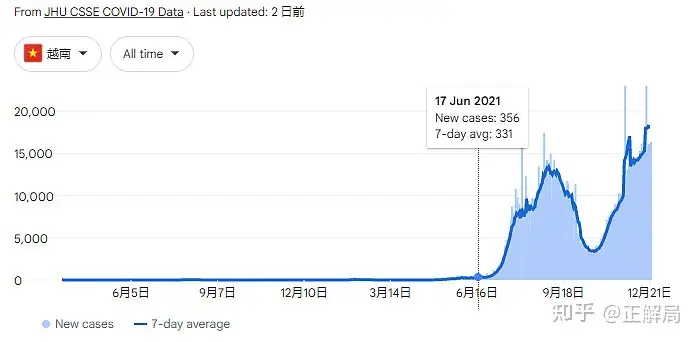
越南疫情数据
认真分析起来,越南这波疫情,完全可以说是自毁长城。
为什么这么说?
就像我当时分析的,去年3月时,越南的疫情防控外部形势很不好,而且医疗设施、资源大概相当于中国20年前的水平。
但是,当时越南为什么控制住了?
其实,归纳起来,还是学中国的招数:严防死守。
就像上面这张图里显示的,直到今年5月中旬前,越南全国每天的新增病例最多也就两位数,还时不时零新增。
可以说,在全球第一波和第二波疫情大潮中,越南形势很平稳。
那么,越南何以至此?
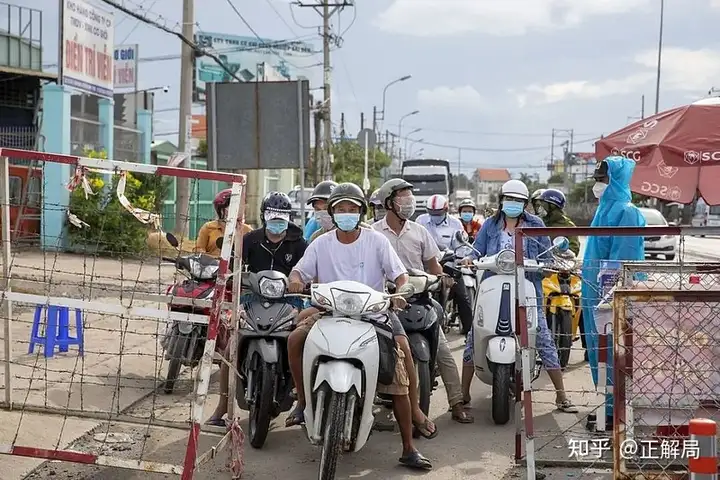
越南胡志明市等候通过检查站的摩托车手
这里面关键的一点是,越南改变了防疫策略。
先前,越南学的是中国的清零策略,但是,从今年年中起,越南就开始慢慢改变了思路,想学新加坡、英国、美国这些国家的那一套,也想和病毒共存。
所以慢慢放宽了管制措施。
但是,这时候德尔塔病毒开始大规模传播,等到了9月30日,四个月时间里,越南累计新增确诊病例786208例,累计死亡病例19301例。
越南全面破防。
这时,越南又开始想退回去,收紧疫情防控措施,比如,要求工人要吃住都在工厂里。
但是为时已晚,因为感染的人实在是太多了,根本没法实现清零。
而且,因为越南不像新加坡这类发达国家那样,医疗设施、资源都十分丰富。
越南医疗水平差,很容易造成医疗资源挤兑,所以,死亡率非常高,新冠病毒致死率高达2.5%!
疫情也变得越来越糟,现在越南已经超越印度,成为每天新增确诊病例数最多的亚洲国家。

越南人坐着排队购物
越南为什么一下子就不学中国,改学英美和新加坡呢?
一方面,BBC等媒体,吹捧越南是“防疫模范生”,让越南有些飘飘然。
更关键的是,越南经济受不了了。
我曾经说,越南是中国的好学生。在疫情防控的措施上,越南可以学中国。但是有一点越南学不会,也根本学不了:
那就是经济韧性。
越南和中国一个很大的不同是,越南经济太脆弱。
越南2019年的GDP是0.26万亿美元,当年的出口是2634.5亿美元,出口和GDP相当。
对比下,中国2019年的GDP是99万亿人民币,当年的出口是17.23万亿,出口只有GDP的17%多一点。
2020年,越南的人均月收入只有425万越南盾,换算成人民币,也就不到1200块。
简单来说,越南国不富,民尚穷。
所以,严格的限制措施,让越南经济吃不消。
2020年,越南疫情防控做得不错,但是GDP只增长了2.9%,创下30多年的新低。
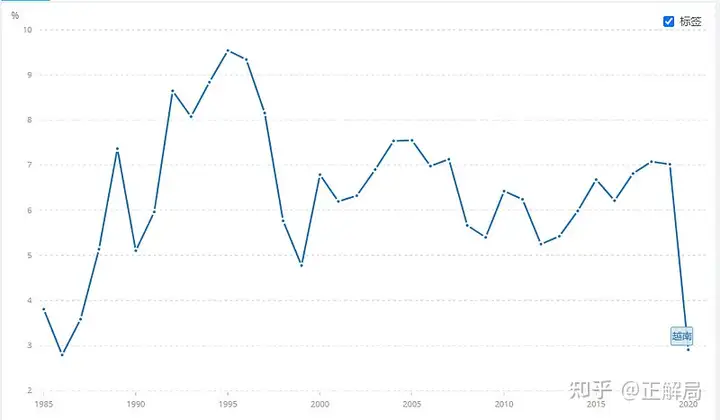
越南1985年到2020年的GDP增速
越南决策层就急了,也就换了疫情防控思路。
你说无奈也罢,被逼也罢,越南就到了这一步。
这也许就是越南这样小国家的命运。
空有凌云志,难上九重天。
中美GDP差距再扩大?
从近期美国经济分析局发布的数据显示,美国2023年一季度GDP年化环比增长1.1%,市场预期为2%,前值为2.6%,大幅低于市场预期,较去年四季度的增幅进一步下降,放缓了1.5个百分点。
美国的高GDP是虚的?
综上所述,货币政策、财政政策、美元升值和通货膨胀等因素都会导致美国名义GDP虚高。
其三,美国的科技实力和高端制造业非常强大,在高端制造业领域拥有显著优势,尤其从美国卡我们科技的脖子这一点,这也是我们需要强大的部分。
百姓幸福感才是王道
美国专家的观点和预测
中国研发芯片的现状和未来
结论
华为财务长孟晚舟儿子近日参加成人礼活动,他的打扮引起了网友们的关注。据了解,这一身行头实用价值至少20万元人民币。
孟晚舟、刘晓棕夫妇与儿子
这一事件导致了网友的热议,有的人觉得这也是华为企业大家族奢侈,与华为中华民族企业品牌形象违背;也有人认为这是他个人的支配权,无可厚非。
有眼尖的网友发现,小刘的衣服不便宜。
上衣打完折不到10万,裤子折后不到5万。这一套网上就要近15万。
像他家这个条件,估计不会看上网购,肯定会在专卖店里买。15万的衣服,至少得配5万的鞋吧,这一身没20万拿不下来。一身行头抵一个小康之家一年的收入。
华为公司为中国民族品牌,近几年来遭受很多用户大力支持。有网友表示:“我们用爱国精神买外为的手机,但是他用以买LV。”在这一观点下,孟晚舟儿子的奢侈消费称之为对大众口碑的背离。
花上千亿打造“新战场”可比肩新加坡?
' fill='%23FFFFFF'%3E%3Crect x='249' y='126' width='1' height='1'%3E%3C/rect%3E%3C/g%3E%3C/g%3E%3C/svg%3E)
南沙区真有本事取代“香港”地位?
南沙区的未来发展前景和战略


评论
发表评论