This blog is a vast information pool AI translated from the Chinese websites. The blogger is Haiqing Hua, a YouTuber (https://www.youtube.com/channel/UCvtj2f1ZNAZ1Kn4NrQ0JubA), you can contact him through: haiqinghua@yahoo.com
Thousands of years of history, repeating itself again!千年历史,再次重演!
获取链接
Facebook
X
Pinterest
电子邮件
其他应用
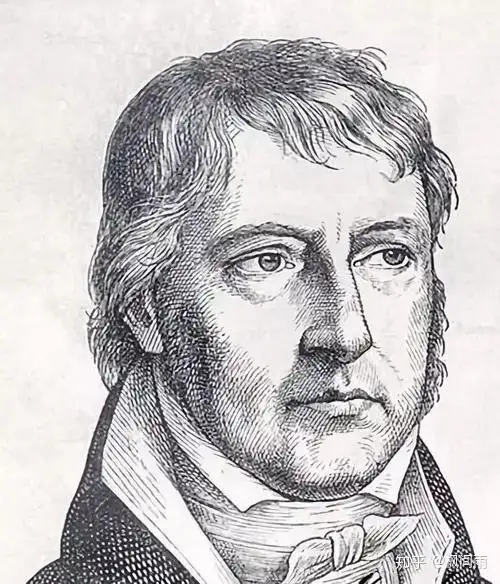
Whenever a disaster occurs, Hegel's famous quote always appears before our eyes:
The only thing humans can learn from history is that humans never learn from history.
Hegel (picture sourced from the Internet, invaded and deleted)
Not learning lessons and causing mistakes to happen repeatedly, from a human perspective, is "history repeating itself." And this article will give the answer from the perspective of human nature-it's not that human beings don't learn the lesson, but that they don't want to change. Even if you want to change it, you can't.
The full text consists of seven parts, nearly 4,700 words, and the reading time is about 10 minutes:
I selfish gene
II Law of Inertia
III Environmental Feedback Law
IV Zero-sum game
V civilization attribute
VI history repeats itself
VII Alternation of Civilizations
I selfish gene
All reasoning in this article is based on the "selfish gene":
Human nature is selfish, and it is possible to care for others only on the premise of self-interest. And the lowest self-interested behavior is for "survival".
The survival of the fittest in the theory of biological evolution can explain "why people are selfish" - selfishness is more beneficial in the competition for individual survival. The survival cost of the selfless people is higher. They have to face the cruel natural environment outside the tribe, and they have to face the living conditions of being squeezed out by selfish people of the same kind within the tribe. Over time, after countless rounds of natural selection, the survivors have more or less "selfish genes".
Out of "selfishness", people will develop an important guiding ideology, which dominates people's daily life and even decision-making at historical moments:
Seek advantages and avoid disadvantages. Faced with any choice, people will always calculate the pros and cons of each option for themselves, and finally make the most beneficial choice. For example, do what can make money and save worry first, and leave the difficult bones behind or throw them to others.
II Law of Inertia
This is an inference based on experience—there is also a law of inertia similar to that in physics at the level of human thought, including two points:
1. Everyone tends to respond to new events according to their own or others' past experience, which is called "inertia";
2. For a group, its inertia is proportional to the number of group members.
Inertia (the picture comes from the Internet, invaded and deleted)
The formation of inertia essentially lies in biological memory and selfish genes. In order to "seek advantages and avoid disadvantages", we will continue to collect past information to judge how to choose in the future; and those tried and tested experiences in natural selection or artificial selection have further created people's character and social civilization.
It is a pity that all information has limitations, and known information cannot deal with all unknown events. For those problems that cannot be solved by inertia, we usually call them "black swan events". In the face of such incidents, if you stick to the inherent experience, you may make a big mistake; however, if you find another way, you will always pay higher costs, and at the same time face the risk of nothing.
III Environmental Feedback Law
When we measure the pros and cons, we always have to determine the standard in advance, and this standard is often reflected in "money". Modern theories teach us many ways to quantify things to judge pros and cons, but none of them tells us to pay attention to the feedback of the surrounding environment to us (the surrounding environment generally refers to all the things and people that people can come into contact with in life, including natural environment and social environment). Because they seem unquantifiable and difficult to judge.
Here, this paper proposes a new viewpoint "Environmental Feedback Law":
The surrounding environment has feedback on any human behavior, and it needs a long enough time span to reach a measurable state. The so-called quantitative change causes qualitative change actually means that when the time span is long enough, a measurable change occurs.
This point of view is analogous to the "law of universal gravitation"-there is a gravitational force between everything, and the reason why people usually can't feel it is because the mass is too small. However, limited by the length of life, people cannot perceive the feedback of the surrounding environment, so they simply ignore it.
Newton's apple (picture sourced from the Internet, invaded and deleted)
Therefore, decisions in people's lives focus on immediate interests; even at the national level, they will not prematurely consider things a few years later (depending on the tenure of the decision-maker). As for the black swan incident, few people try to solve it-it is normal to fail to solve it, and it is best for decision makers not to seek merit but to seek no fault.
IV Zero-sum game
Any decision-making involving people involves games. Similar to the first law of thermodynamics (the law of conservation of energy), in a closed environment, the total amount of benefits remains stable; someone gains and someone loses. The game at this time is a zero-sum game.
Usually, within a certain time frame, the total amount of resources (including natural resources and population) in the world is relatively stable. The only exception is the technological explosion in the 20th century and after World War II, which caused the world's cake to grow suddenly within a few decades, but it has stabilized today.
However, people's pursuit of a better life is endless. Even if the cake does not grow, the desire will still grow. So a zero-sum game emerges—if the world is a cake for two people, if one party takes an extra bite, the other party will lose a bite.
From small organizations to large countries, zero-sum games exist everywhere. Correspondingly, there is also an "impossible triangle". Interest, work and relationship are the three corners, and one party in the game can only keep two corners at most. Guaranteed interest and relationship, you can't work together; guarantee interests and work together, you will lose relationship; guarantee work and relationship, you will lose interest.
Impossible Triangle (picture sourced from the Internet, invaded and deleted)
Is there a way to break the zero-sum game? Judging from the current human history, there are three ways to expand the cake in the group: outward plunder, backward plunder, and technological progress:
1. External plunder: including trade and war, eating other people's cakes. From the perspective of Westerners, earning their silver is equivalent to a war without gunpowder. This is why the Sino-US trade war will start.
2. Backward plundering: sacrificing future interests and eating the cake of future generations. The typical representative is the debt economy of the United States. A 13-year-old child asked Buffett: "Grandpa Buffett, you keep borrowing money. Do you want us to pay back the debt you borrowed?" Buffett said to him, "Study hard and let your grandson pay it for you."
3. Technological progress: improve the level of energy utilization, thereby increasing social productivity, and making a cake for all mankind.
Among them, outward plunder is the most classic way, and the history of mankind for thousands of years is a history of war.
V civilization attribute
Although historically, there has been no shortage of wars between the East and the West, the attributes of civilizations are quite different. Geographical location determines the attributes of civilization.
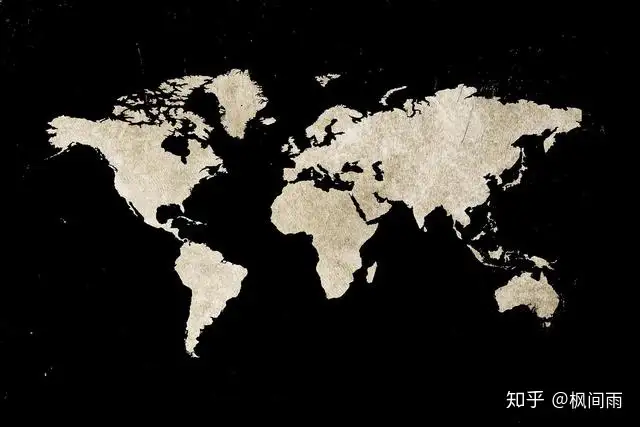
For land creatures like humans, it is much more difficult to conquer the ocean than to conquer the land. As long as there is an opportunity to expand their territory, the rulers will never think about controlling the sea. For Western civilization, the birth point in Europe is surrounded by coastlines on three sides, and the potential of the land has long been tapped; while Eastern civilization is different, the Asian continent is enough to play for thousands of years.
World map (picture sourced from the Internet, invaded and deleted)
Western civilization is an oceanic civilization, while Eastern civilization is an inland civilization.
When it comes to the ocean, many people think of the unknown and the mysterious. What kind of person will challenge the unknown and mysterious? The explorer is the portrayal of freedom. Human beings cannot change the vagaries of the sea, but they can enjoy its endlessness. Freedom is the cornerstone of marine civilization, and it is the mark engraved in the bones.
In the open ocean we feel freedom, in the crowded inland we seek harmony. The concept of inland civilization is to make everything "coordinated" and ultimately achieve harmonious coexistence.
It seems that the inland civilization is more friendly and peaceful? Not necessarily. "Coordination" does not mean "coexistence", but to change the living environment. There are two options:
1. Fusion. If you can't beat it, just merge.
2. To eliminate. If you can beat it, then do it.
Option 2 is the fastest. If both options are available, decision makers will basically give priority to option 2. There are many examples in history (from war genocide to biological species extinction, all are extermination); in modern civilization, due to the supervision and dissemination of public opinion , the decision makers had more fears, and the plan 2 was put into the cold palace.
The purpose of "coordination" is always unpretentious:
The world is too crowded, and only by coordinating with each other can we make each other comfortable; or, simply eliminate you, so that the world will not be so crowded.
"Freedom" and "coordination" are two ways of civilization's survival, and there is no distinction between superior and inferior. They are by no means isolated, just like yin and yang always coexist, there is me in you, and you in me. It's just that marine civilizations are more inclined to "freedom", while inland civilizations are more inclined to "coordination". Many contradictions between Eastern and Western civilizations are rooted in this.
VI history repeats itself
With the above basic theoretical reserves, we can now begin to explain the repetition of history.
History repeating itself can be divided into two categories:
1. Social reenactment: A reenactment caused by human behavior, usually with a cycle of several years to decades. For a cycle within a few years, it is recorded as a short cycle; for a cycle of several decades, it is recorded as a long cycle.
2. Natural recurrence: The recurrence caused by the natural environment has not been found yet.
For social reenactment, we rely on memory to trace, and for natural reenactment, we rely more on historical data. Looking forward to decades or even centuries in the future, history can be traced back in the form of audio-visual graphics. Maybe people in the 22nd century will get used to studying the lifestyles of "ancient people" in the 21st century through various official accounts.
History is composed of countless events; events are all dominated by people. All "replays" are closely related to our way of doing things.
Social repetition (short cycle): the product of maximizing the interests of decision makers
According to the "selfish gene", we know that the decision maker of any matter will always find a way to maximize his own interests, and the safest way is to make decisions according to the "law of inertia".
The length of life is unknown, but the length of tenure is known. Leaving the old position before winter, arriving at the new position before autumn, skipping the stage of loss and reserve, and going straight to the stage of growth and harvest is the way to maximize the interests of decision makers. Therefore, the tenure of a decision maker's post is often shorter or slightly shorter than a short cycle. Essentially, it is because decision makers will try their best to avoid "wintering" during their term of office when making decisions.
We will experience many such short cycles in our lifetime, such as the construction cycle of a city. When you see a good pavement being dug up and resurfaced, it may just be because the decision maker has changed.
Rise, rise! do not stop!
Social Reenactment (Long Cycle): A Forced Ending of a Drumming Pass
However, winter always comes. Therefore, decision makers will use the two methods mentioned in the "Zero-sum Game" section to escape the winter: outward plunder and backward plunder. In practice, both methods are common. However, according to the "environmental feedback law", no matter how you plunder the future, you will pay a price.
Everything is like beating a drum to pass flowers, and the decision-maker must not let the drum stop before leaving the field. But over time, the drum always stops, unhinged by any will, which is the future of debt collection. There is a beginning and an end, and there is a rise and a fall.
This is the long cycle that we go through more than once in our lifetime. One of the most common forms is an economic/financial crisis.
When there is a high tide, there is a low tide
Nature Repeating Itself: Forced Zeroing Caused by Natural Disasters
For humans, nature has always been mysterious. Since it is unknowable, it is not within human planning; for those natural disasters that have never been experienced in a lifetime, the probability of occurrence can be considered zero. Like a grasshopper, there is no need to think about how to survive the winter.
From ancient times to the present, "the minority obeys the majority" has been an important basis for human decision-making; in response to emergencies, it is also low probability (minority) that gives way to high probability (majority). Therefore, for those natural disasters that exist in theory but have never occurred in fact, people are always neglecting to formulate a response plan-the cost of response is too high, and the benefits can only be reflected when the disaster occurs, which is not in line with decision makers and the general public. the interests of some people.

Resources are limited, if they are all invested in the future, how will we live today? Instead of doing everything possible to prevent future disasters, it is better to resign to the fate of the present. Therefore, rare natural disasters, such as major earthquakes and new infectious diseases, always cause heavy losses to human beings. Ironically, it is people's usual "seeking advantages and avoiding disadvantages" that amplifies the destructive effects of natural disasters.
Natural disasters (pictures are from the Internet, invaded and deleted)
After a disaster, do people know how to improve? Won't. Since these disasters will not be encountered a second time in our lifetime, let future generations consider future disasters. For example, no one would have thought that 17 years after SRAS, the new crown virus broke out.
Limited by the lack of knowledge and the high cost, human beings often can only make up for natural disasters. "Lost sheep" represents the end of the previous stage, and "repair" is the beginning of a new stage. 2020 is the time to make up for it; the destructive power and consequences of this time are enough to be recorded in history.
VII Alternation of Civilizations
There are many views that tend to classify "epidemic" disasters as man-made disasters rather than natural disasters, on the grounds that policymakers' inaction cost people a lot. In this article, it is still a natural disaster (act of God) for two reasons:
1. Infectious diseases are a feedback from the natural environment to humans. The source starts from nature, not man-made.
2. The thinking of seeking advantages and avoiding disadvantages, so that people will not pay a huge price to strive for unknown benefits. Only when disasters happen can people pay attention to them.
Even when disaster is imminent, earnest preaching is still useless. People cannot be persuaded. Our so-called persuasion is nothing more than awakening the part of the other party's body that agrees with us through words. So how to make the other party's body produce "the part that agrees with yourself"? Give TA lessons through the environment, let TA always remember. All the immersion and empathy are because they have been in the situation and suffered from it before.
This is true for individuals, not to mention society, and even the entire civilization system? It is impossible to gain experience without paying a terrible price. Compared with the natural disasters hundreds of years ago, the progress of science and technology only makes human beings slightly understand why they are punished by nature, but they still cannot escape the punishment.
In the face of "contagion", different "civilization attributes" pay very different prices. Civilizations that advocate "freedom" will be more traumatized than civilizations that value "coordination" - the more emphasis on individuality and freedom, the more contagious it will be fast. Of course, everything has two sides. In terms of innovation and exploration, "free" civilizations will have more advantages. This is why Western civilization has spread more widely and led several technological revolutions. It's just that the natural disasters in 2020 pushed the two types of civilizations to the point of alternation.
The severe damage to civilization is not the demise of race, but the change of spirit and belief. When "freedom" is no longer emphasized, the essence of marine civilization is also dimmed. All civilizations are nothing more than the social inertia accumulated by human beings in the long-term survival process. After all, they still have to make concessions in front of survival.
The "free" age of navigation has long since ended, and a more "free" space age is far from coming. During this time limited to the earth, only "coordination" can make people feel more secure in their existence.
Earth, the only home
epilogue
This article contains many brain-hole-level ideas and inferences. However, it is always simple to put forward ideas, but the process of verification is long and arduous—so, in line with the principle of seeking advantages and avoiding disadvantages, leave the opportunity of verification to future generations. !
When I was teaching the text "Hongmen Banquet", I spent a lot of time discussing the reasons for Xiang Yu's failure with my students.
The purpose of my doing this is to diverge students' thinking and give them more materials for composition.
At that time, I asked the whole class: Qin Shihuang, Liu Bang, Xiang Yu, who among them are of the same generation?
Not surprisingly, most students think that Qin Shihuang is much older than Liu Bang and Xiang Yu, and Liu Bang and Xiang Yu are of the same generation.
I shook my head and told my students, "This is a common historical illusion."
They were quite astonished.
I continue to explain.
In fact, Qin Shihuang was only 3 years older than Liu Bang, and Liu Bang was 24 years older than Xiang Yu.
In other words, if Qin Shihuang was born in 1965, then Liu Bang was born in 1968, and Xiang Yu was born in 1992, a proper post-90s generation.
I tell the students that the Chu-Han struggle is actually a story of Liu Bang, born in the 1960s, and Xiang Yu, born in the 1990s, fighting for the world.
I will further guide and let everyone think of Han Xin's evaluation of Xiang Yu: the courage of a man, the benevolence of a woman.
Then let them think about the reasons for Xiang Yu's failure based on Xiang Yu's age.
The students discussed each other with each other, and later many students came to the conclusion: "Xiang Yu was too young at that time."
I later concluded: "We can say that Xiang Yu is arrogant, brave, and benevolent. But we can't be harsh, after all, he was only in his early 20s at that time, and he was immature in all aspects. What he faced was Mature old man Liu Bang.
I told them that Xiang Yu's failure has always been discussed a lot, but it is also a perspective to understand from the perspective of age and psychological maturity. To accumulate materials, one should not draw new ideas, but must have one's own thinking. The core of composition is the display of ideas, not the accumulation of materials and rhetoric.
The so-called "history" has three meanings: the past development process of human society; the record of past events; and human history understanding.
From the first explanation, we know that history includes endless, various events, events, things, and states of affairs, ranging from social forms, countries, and nations, to the joys, sorrows, sorrows, and joys of personal life. , The process of formation, development, conversion, change, and end of things. The history mentioned here is an objective existence, or it can be called "original history".
Since there is an "original history", there is also a "non-original history". Here we have noticed that the objectively existing "original history" is something that has passed, and historical things are in the past time period, and time cannot be stopped or reversed. In other words, for us, the "original history" that objectively existed no longer exists. Therefore, we must and can only know it according to its "carrier" that we can touch, or through an intermediary, which is the record of history and the remains of the past left behind.
The most important of these is the history of the past recorded in writing, which we can collectively call "written history." In this way, we have "non-original history" that is not the original objectively existing history.
This is the second meaning of the word "history".
In other words, we look at past history through the eyes of others, and understand past history through others' understanding of history. This is an indirect understanding, that is, to understand the original history through a carrier and intermediary. In this way, the "carrier" of past history or the "intermediary" of understanding the past is expanded from "written history" or "historical description" to include the physical objects left over from the past and the historical things in real life, that is, the recorded "recorded" ", not only understood as a description of words, but also contains the meaning of "carrier". They are all relying on materials for understanding history, and it can be said that they are all "historical materials". Regardless of the extent to which historical data reflect the real and original history, or even whether it is true or false, it is always an objective existence and the basis for us to understand history.
The task of historical science is to seek the truth, even if our historical understanding is consistent with the real and objective history, it can reflect the reality of objective history, describe the past history, and make the past reappear in front of people. However, the past cannot be restored. The history written by history seems to be restored, but in fact it is only a copy, a shadow of past history. The original and objective history does not matter whether you believe it or not, but the history written and the history you know can be divided into whether you believe it or not. Believe it or not depends on whether what is written is consistent with the original history. The written history and the original history are not the same thing. The relationship between them is the difference between the original and the copy, and the difference between the original form and the image. Past and original history is an objective existence, while written history is a subjective understanding. Written history is also an objective existence, but it is an objective existence of the subjective understanding of historians. All knowledge is the subjective cognition of human beings to the objective. Subjective cognition can never be completely consistent with the objective object it knows. Generally speaking, cognition is at best a relative truth.
This is the third meaning of "history".
Under our mediation, after the reconciliation between Saudi Arabia and Iran, the whole world is like a storm, changing every day!
Absolutely turbulent!
In the past many years, many people with incomparable strengths came forward, but they were unable to mediate good things. In this short month, the momentum was overwhelming, and many things were resolved.
So, what happened recently?
The first thing is: the most intractable contradiction in the Middle East will soon be solved!
What contradiction?
The conflict between Saudi Arabia and the Houthi armed forces in Yemen!
The armed conflict between the two has been as long as 8 years!
How to solve it?
Recently, it was reported that Saudi Arabia, together with the Omani delegation, went to Sanaa, the capital of Yemen, to negotiate with Houthi armed officials and reach a permanent ceasefire agreement.
Houthi leader Mohammad Ali Houthi has met with the head of the Saudi delegation, Mohammad al-Jaber!
Saudi Arabia and the Houthis are two sides in the conflict.
What about Oman?
Is the mediator of the two.
Before this meeting, Saudi Arabia was down-to-earth and first showed its sincerity: released 13 prisoners from the Houthi armed forces!
So far, it may not be clear why Saudi Arabia and the Houthi armed forces are the most difficult conflict in the Middle East.
So I have to add some background.
Let’s start with the sect of Muslims.
Many people should know that there are mainly two factions: one is Sunni, and Saudi Arabia is now the leader of this faction; the other is Shia, and Iran is the leader.
Map of Middle Eastern sects, pay attention to the red circle, because it will be mentioned below
Why are there two factions?
It is a bit similar to the problem that our ancient emperor encountered when he was old and how to choose an heir.
One faction advocates "meritocracy", in simple terms, it means that whoever does it will win, regardless of blood relationship;
What about the other faction?
They advocate blood relationship, and feel that Muslim leaders must be descendants of the Prophet.
The "virtuous" faction is the Sunni sect.
Those who advocate blood relationship are Shiites.
Under these two big factions, there are still many small factions that can be separated.
After understanding this, let’s start with the topography of the Arabian Peninsula.
Did you notice?
The Arabian Peninsula is actually quite interesting: close to the Red Sea, from northwest to southeast, there is a tall mountain range, and other places, and then slowly slope down from this mountain range to the Persian Gulf.
This mountain range is called the Serrat Range.
It's interesting: the further southeast you go, the higher the altitude.
When the altitude is high, the moisture in the air can be blocked, and orographic rain will appear. In some places, it can even reach 1000 mm, and green trees can grow and farmland can be opened up.
Rice terraces in the mountains of Serrat
What about the rest of the Arabian Peninsula?
Except for a little bit of Oman, the precipitation in other places is basically less than 100 mm!
It became a desert area.
Anyway how to say?
The old saying back home in Saudi Arabia is wrong: knowing that you may die there, but there will always be a desert you want to cross.
The Arabian Peninsula is not all deserts, it is also a place full of greenery!
The most green place is called Yemen!
As long as you are a human, if you don't really have no choice, you definitely don't like living in the desert.
Arabs do.
Therefore, this green place has been enviously called "Happy Arabia" by people from other parts of the peninsula since ancient times.
What does the name "Yemen" mean?
It is "happiness".
Almost 100 years ago, when Ibn Saud established Saudi Arabia, in addition to the traditional sites of Najd and Hijaz, he also swung south along the Red Sea and ate a large piece of "Happy Arabia".
Although not all happiness can be obtained, some happiness is also good!
As a result, a distant cause is planted.
What's the matter?
The "Happy Arabia" that Ibn Saud swallowed was inhabited by Zaidites, not Sunnis, though they were also Arabs.
This is the origin of the red circle above that everyone should pay attention to.
This Zade faction is also quite strange.
Many news reports now say that it is a branch of the Shia sect. In fact, for a long time, the Shiites in Iran and Iraq did not think that they were of the same clan at all!
Because of this distant cause, there is a proximate cause.
We all know that in the deserts of Saudi Arabia, very rich oil and natural gas were discovered, and suddenly became very rich.
After it became rich, it thought about how to use money to cross the border between Saudi Arabia and Yemen to promote its own set of teachings.
De Pai suddenly felt a lot of pressure.
How to do it?
The older generation first decided to learn from the West, set up a truth party, and wanted to win the election.
But this span is too big, and it fails every time.
What about the younger generation?
They took the lower-level route and set up a religious organization called "Youth Believers."
It works well and is very popular.
The leader was a scion of a religious family named Hussein Hussein.
He looks quite like Lu Liangwei.
Yemeni President Saleh felt that the situation was not good, so he hurried to suppress it without saying a word.
What about Hussein Houthi?
Maybe the level of education is not very high, and he doesn't have any ideas of his own. Maybe because the Zaidites and Iranian Shiites have a little similarity in basic teachings, he borrowed Iranian slogans and cursed Saleh is pro-US and pro-Israel.
Then raise the banner and fight against Saleh.
This Yemeni version of Lu Liangwei was even more miserable: he died after fighting for a long time.
His father, Badaldine Husse, took the case and inherited... a bit of chaos here, his son's behest, and led everyone and Saleh to the end.
Any armed force must display a banner.
Even the anti-government armed forces in the wild valleys of Africa often use the fashionable banner of "National League for Democracy" or something.
This armed force does not follow the usual path. Everyone said: In order to commemorate Hussein Houthi, we are called "Houthi armed forces"!
Everyone is from the mountains, and what they pay attention to is reality.
So those vain things will not be done.
What is the extent of this armament?
To give an example: the Iranians looked at it, hey, why did such an armed force rise in the southwest of Saudi Arabia?
So he quickly sent someone to serve as a military adviser there.
So some Western reporters asked the Houthis: I heard that Iran sent military advisers to you. Is there such a thing?
This is simply a trap.
The contradiction between Saudi Arabia and Iran is very serious. In addition, its founding king has swallowed a large piece of "Happy Arabia", and the people living on it are Zaidites.
The place where the Zaid faction lives in its territory is connected with the Houthi armed forces!
Saudi Arabia must be afraid of affecting it!
How did the Houthis answer such an obvious trap?
They said: The Iranians did send military advisers, but we ignored them, they were just hanging out!
The result is good, one sentence offends both sides.
What the Saudis heard: Iran sent military advisers!
What the Iranians heard was: the military advisers we sent, the Houthi armed forces simply ignored them!
So the Saudis decided to fight it.
But being so honest also has an advantage: when we get along, things are simpler.
Therefore, the combat effectiveness of the Houthi armed forces is relatively strong.
how to say?
Although they are disheveled, they are just a group of troops wearing slippers, but when fighting, the Saudi troops not only often suffer, but often suffer greatly.
For example, once, a light armored brigade in Saudi Arabia was ambushed by the Houthi armed forces. In fact, only one armored vehicle was destroyed, but the Saudi troops were frightened, and all abandoned the vehicle and fled. The equipment of a brigade was just given away for nothing. Armed the Houthis.
After Iran knew about it, its unhappiness disappeared immediately, and it was very happy.
It hurriedly and secretly sent all kinds of guns, missiles, drones, etc. to the Houthi armed forces.
What about the Houthis?
It is also very useful, and often creates miracles.
The results of it?
The territory of the Houthis is constantly expanding.
The territory of the Saudis and their supporters is constantly shrinking, and now it has reached the point of confrontation.
Everyone can't stand each other.
The Saudis are riding a tiger.
What about Americans?
In the name of protecting the Saudi territory from Houthi armed attacks, they stationed in Saudi Arabia. 2,500 American soldiers live in a base near its capital, Riyadh!
After the Khashoggi incident in 2018, why did Saudi Arabia have to spend $100 billion to buy American arms after being scolded bloody by the Americans?
It can't help!
There is Iran in the distance, and the Houthi armed forces nearby. What about at home?
There are these 2,500 American soldiers!
The result is: Saudi Arabia and the Houthi armed forces are fighting each other, and the American fisherman is benefiting!
With that amount alone, the per capita income of US soldiers stationed in Saudi Arabia is as high as 40 million US dollars!
The conflict between Saudi Arabia and the Houthi armed forces has both religious and historical reasons, as well as the reason for the competition between Saudi Arabia and Iran, and the reason for the United States. Is it extremely complicated?
Is it the most intractable contradiction in the Middle East?
Otherwise, the Americans wouldn't open their mouths so loudly and come up with such a high per capita income.
At this point, everyone understands: the reconciliation between Saudi Arabia and the Houthi armed forces not only means that everyone no longer has to fight, but also eliminates the reason for the US military to be stationed in Saudi Arabia!
In the future, the per capita income of the US military will be 40 million U.S. dollars, which will never happen again!
For Saudi Arabia, it can also get rid of a heart problem, and there is no need to worry about the U.S. military's elbow and armpit changes!
Let's talk about the second thing: In the past two days, Brazil and Argentina, the two major South American countries, have successively: We are going to return to the South American Nations League!
What is the Union of South American Nations?
On paper, the scale is huge:
Argentina, Brazil, Uruguay, Paraguay, Venezuela, Bolivia, Colombia, Ecuador, Peru, Chile, Guyana and Suriname, a total of 12, basically covering the entire South America.
There are also two observer states: Mexico and Panama.
What about ambition?
It's also quite ambitious.
After the establishment of this alliance in 2004, everyone clamored for various good ideas:
We want to engage in a unified South American market!
We want to establish a unified South American central bank and issue a unified currency!
We also want to build a unified South American army!
Just listening to slogans, Klass is absolutely awesome, and he is in such a mess that he wants to compete in the Americas and the United States.
So the question arises: Do Americans want such an alliance to exist?
Obviously don't want it!
Then something went wrong.
After the alliance was established, Colombia at that time had a good relationship with the Americans!
It first found fault with Venezuela, which made the Venezuelans very unhappy; then sent troops across the border to Ecuador, which made Ecuador furious.
There is another country that also has a good relationship with the United States.
Peru!
The President of Bolivia at the time was Evo Morales. The Peruvians said that he had made a mistake and announced the recall of the ambassador.
The two had another fight.
After that, anyway, from time to time, some countries jumped out, found a small problem, and quarreled with other countries.
Why is this happening?
There is America behind it!
Then in 2018, the right wing of South American politics at that time, that is, the pro-American group of people resurged. In that year, Brazil, Argentina, Chile, Colombia, Paraguay and Peru announced the suspension of participation in the Union of South American Nations.
This alliance is dead in name only.
Because countries with a larger area and a larger population almost all ran away!
Brazil and Argentina are big countries in South America!
Their return means that the alliance that gave the United States such a headache and finally dismantled is back!
So this is another big change!
Speaking of this, I don’t know if you have noticed: it has only been almost a month since the Sino-Shaikh joint statement on March 10, but a lot of things have happened in this month!
The pattern of the whole world has changed a lot because of this. Why did these things happen all of a sudden?
Simply put, it's time.
This short month is very similar to a past event that happened in the state of Jin in the Spring and Autumn Period more than 2,000 years ago.
What's the matter?
The three families wiped out their wits!
In the late Spring and Autumn Period, the entire state of Jin was controlled by four families.
The most powerful family is Zhishi.
Its head is Zhibo. According to historical records, this man is very powerful, tall and handsome; he is skilled in martial arts, good at archery and driving; he is not only good at martial arts, but also literary. Debate, the diction is beautiful; his character is also strong and resolute, decisive and brave.
How to describe it?
Absolute hexagon talent.
The Zhi family is the most powerful, and the most capable family member, so there are younger brothers to follow.
One is the Wei family and the other is the Han family.
slaughter
All belong to four families.
Among the four families, only one refused to accept Zhi Shi.
Zhao!
Three to one, that is a must-win battle.
So Zhibo felt that he would definitely win, and he was not very polite to Wei and Han, so he asked them for land.
What about these two?
They were also afraid of Zhishi, so they gave him all the good land.
But what about in the heart?
It must be extremely unpleasant!
After Zhibo got the land of the two families, he became even more arrogant, and sent someone to go to the Zhao family to ask for the land.
Seeing Zhao's refusal, Zhibo was furious, and called the Wei and Han families to beat the Zhao family. Those two families were afraid of him, so they dispatched troops to fight together.
The Zhao family, how can they beat three families?
Can only stick to Jinyang City.
What about Zhibo?
He was very clever. Seeing that it was difficult to attack the city, he dug the embankment of the Fen River and poured water from the Fen River to irrigate the city.
The city was quickly flooded, and people crowded on the walls.
The city wall at that time was made of earth, and if it was soaked in water for a long time, it would easily collapse.
Zhibo asked the head of the Wei family to drive for him, and the head of the Han family served as his guard. While watching the water, he said triumphantly: Now, I know that water can also destroy a country!
The faces of the heads of the Wei and Han families suddenly changed.
Because the capitals of their two families, like the Zhao family, were built by the river!
Just at this moment, the Zhao family sent someone to contact them and said bluntly: "Zhao's today is your tomorrow!" If the Zhao family is destroyed, it will be your two's turn next!
Wei and Han gritted their teeth and decided to form an alliance with the Zhao family.
On the same day, the three families joined forces to attack Zhi Shi's army, and finally got rid of Zhi Shi. That hexagonal talent, Bo Claes, who was awesome, also died in the hands of Zhao Shi.
Seeing this, do you think: Biden is actually quite similar to Zhibo?
At first, he also had a bunch of younger brothers, such as Europe, such as Japan and South Korea.
Like Zhibo, Biden was ruthless when he started.
For example, he caused a war between Russia and Ukraine through fighting, so that European countries had to follow the lead of the United States;
The war made it difficult for Russia's natural gas to enter Europe, and the United States sold high-priced gas to Europe;
The United States is also taking advantage of the energy shortage in Europe, attracting many European companies to enter the United States!
So we have always said that he is confident and methodical.
This is not to belittle him, but to say that he does have a few brushes.
Since it is so awesome, why has the United States not been going well in the past two years?
Because the United States has also made the same mistakes as Zhibo: like launching a technological war against us, and stuck our necks on chips; like crazily sanctioning Russia, confiscating Russia's overseas assets, and kicking it out of the swift system.
This is similar to Zhibo diverting water from the Fen River to irrigate Zhao's Jinyang City.
The vast majority of countries in the world are afraid of it!
Because today, the United States can use these tactics to deal with Russia and us. Tomorrow, if it doesn’t like anyone, won’t it use these tactics to deal with other countries?
So what to do?
Since the United States is such a big threat, if everyone can reconcile, they must quickly reconcile;
On the whole, everyone is scared, how can the United States go smoothly?
Anything under such a background will of course be messed up!
So when our counterattack started, in this short month, the whole world has actually changed drastically.
We have said before: in politics and diplomacy, the most important thing is to make yourself the intersection of the interests of all parties. Once you are at this intersection, everything will go smoothly. The world opens and closes for you, and the wind and cloud for you Discoloration. If you leave, no matter how strong your country is and how many troops you have, you will eventually fail.
After Biden came to power, what he did was to let the United States leave this intersection.
Why in the last month, but as soon as we launched a counterattack, Biden's entire layout fell apart, with holes everywhere? This is the reason behind it!
It's true: the organ was too clever to calculate, and it cost Qingqing's life instead!
Four Great Mothers in Ancient China
1. Mother Meng
Mengmu is the mother of Mencius in the Warring States Period, ranking first among the "Four Great Mothers". Her son, Mencius, was a famous thinker and educator in ancient China, and a master of Confucianism second only to Confucius, and was known as "the second sage". The reason why Meng's mother can cultivate such an excellent son is all because of her careful education of her children. Her most widely praised deed is the story of "Meng's mother moved three times".
Meng's mother lost her husband in her early years, but she did not want to remarry. She raised Mencius alone through hardships. At the beginning, she and Mencius lived near her husband's tomb so that she could go to worship him every day. It's just that after living in this kind of place for a long time, the young Mencius actually learned the crying and nonsense of funeral people. Mother Meng felt that such a living environment was not conducive to the growth of her children, so she moved her family to the market. But after moving his family to the market, Mencius followed the example of peddlers and started a hawking business. Mother Meng didn't want her son to become a villain in the market in the future, so she moved her family near the school. From then on, Mencius followed the scholars in the school and learned to "study hard and make progress every day". The reason why Meng's mother moved three times is because she knows a truth: "The environment will affect a person's growth."
Mother Meng also had a story about "a child who does not learn, but breaks the loom". She taught Mencius that if you give up your studies halfway, it is like a half-woven piece of cloth, which cannot be used by others. Similarly, if a person does not study hard when he is young, he can only do some hard labor when he grows up, which is useless. From then on, Mencius studied hard and became a generation of Confucian scholars.
2. Mother Tao
Tao Mu is the mother of Tao Kan in the Eastern Jin Dynasty. Tao Kan was a famous general of his generation, and he made great achievements in stabilizing the turbulent political situation in the early years of the Eastern Jin Dynasty. At that time, Tao's mother's story of "cutting off the banquet" and "closing the altar and withdrawing the fish" was also widely circulated.
Tao Kan was an orphan when he was young, and his family was poor. Mother Tao also lost her husband in her early years. She worked hard to make ends meet by spinning and weaving hemp, and supported Tao Kan to study. In terms of teaching children, Mother Tao has always taught her son that to make friends, one must make friends with people who are more qualified and educated than herself.
Once, Fan Kui, Xiaolian (that is, Juren) from the same county, visited Xian and encountered heavy snow, so he stayed at Tao Kan's house. When the weather was cold and the horses had no fodder, Mother Tao took off the straw mats on her bed and chopped them up to feed the horses. Because her family was poor and had no way to entertain guests, Mother Tao secretly cut off her long hair and sold it to her neighbors. , Change money to buy food and drink. In the Chinese concept, "the body, hair and skin, are subject to parents, who dare not damage them, and filial piety begins with the beginning", so hair should not be cut easily. Mother Tao's behavior in this way shows her sincerity in hospitality. Therefore, Fan Kui was greatly moved, and recommended Tao Kan to be appointed as a doctor by the county magistrate. Since then, Tao Kan has embarked on a prosperous official career. This is the allusion of "cutting off the banquet".
Tao Mu also has a well-known story of "Sealing the altar and retreating the fish". Tao Kan used to be a county official in Haiyang, Zhejiang Province, supervising the fishery, and his subordinates often gave him things. Once, a subordinate gave Tao Kan a jar of fish bream (pickled fish). The filial Tao Kan immediately thought of his loving mother who had lived in poverty in the countryside all her life, and asked the villagers to bring it to her. Unexpectedly, my mother returned the altar of fish untouched, and wrote in the letter: "As an official, leaving me with official things will not only not benefit me, but also increase my worries." ("Book of Jin" Volume 96 "Biography of Tao Kan's Mother Zhan")
Tao Kan was shocked and felt guilty when he received the fish and reply letter from his mother. He made up his mind to follow his mother's teaching all his life: to be a clean person and to be a clean official.
Later generations praised: "The mother of the world is like Zhan's who can teach her sons, so why does the country have no talent to use? But the use of the world is unreasonable?" (Ming Zhang Jiushao "Rebuilding Tao Muji Ji" ; Kangxi "Xingan County Chronicles" Volume 14 "Yiwenzhi Ji")
Three, the mother
Ou Mu is the mother of Ouyang Xiu in the Northern Song Dynasty. Ouyang Xiu was an outstanding statesman, writer, and historian in the Northern Song Dynasty, but his achievements were also inseparable from his mother's great education.
Oumu is also a single mother. Her husband passed away when her son was four years old, leaving her alone to support her son. When Ouyang Xiu's father was alive, the family was relatively well-off, but since his death, the family situation has plummeted and become poorer day by day. Later, it came to the point where "there is no room, and there is no row of land". It is conceivable that orphans and widows live in such a situation.
Ou Mu is a strong-willed woman. Her family is poor and ambitious. She raised her son through her own hard work and taught Ouyang Xiu how to read in the most primitive way. When he was young, Oumu taught him the principles of reading, writing, and how to behave. It’s just that the family was poor at the time, and the family had no money to buy pens, ink, paper and inkstones, so Ou Mu had to use reed sticks instead, and then spread some sand on the ground, using the ground as paper, and taught Ouyang Xiu to write stroke by stroke.
A child from a poor family was in charge of the family early. Under the careful guidance of his mother, Ouyang Xiu was very sensible, so he worked hard and achieved excellent academic performance. He was a high school scholar in the eighth year of Renzong Tiansheng (AD 1030).
During his tenure as an official, Ouyang Xiu actively supported Fan Zhongyan in maintaining the new law, and was later demoted because of this. But Oumu did not complain about his son's poor career, but comforted his son and said: "You are demoted for justice. It is not disgraceful. Our family is used to living a poor life. As long as you have no burden on your mind and your spirit is not weak, I am happy." With a mother like this, how can a son not be great?
Four, mother-in-law
The mother-in-law is the mother of Yue Fei, a famous general in the Northern Song Dynasty. When Yue Fei was 15 or 16 years old, the Jin people in the north invaded the south, and the rulers in power in the Song Dynasty were corrupt and incompetent, retreating steadily, and the country was at the juncture of life and death. Many selfish mothers do not want their children to go to the front line, hoping to preserve the blood of their children during the war. But the mother-in-law is different from ordinary mothers. She is righteous and takes the initiative to encourage her son to join the army and serve the country faithfully. In order to let her son always remember the admonition of "serving the country with loyalty and loyalty", she even tattooed these four words on Yue Fei's back with an embroidery needle!
Thanks to the active encouragement of his mother-in-law, after joining the army, Yue Fei bravely killed the enemy without hesitation. Once when Kaifeng, the capital of Song Dynasty, was besieged by the Jin army, Yue Fei went to the rescue with the deputy marshal Zong Ze. He defeated the Jin army many times and was appreciated by Zong Ze, who praised him as "wisdom, bravery and talent, Gu Liang will not be able to pass".
Later, Yue Fei became a well-known anti-golden hero of a generation, and was admired by people of all ages.
These are the "Four Great Mothers" in ancient China. The stories of their teaching children fully illustrate the importance and greatness of mother education.
This image shows a poster titled “The Ultimate Tool Stack for AI Agents” (created by Rocky Bhatia). It organizes the AI agent ecosystem into layered categories — essentially a reference map of the modern agent development stack. Here’s a clear breakdown of what it’s showing: 1️⃣ Orchestration Platforms Purpose: Coordinate workflows and manage how agents operate. Examples shown: LangChain Hub Make.com n8n Reka CrewAI + LangGraph PromptLayer Cognosys Flowise These tools help define how agents think, plan, and execute steps . 2️⃣ Tool Use & API Integration Purpose: Give agents access to external tools and real-world actions. Examples: OpenAI Functions Anthropic Tools LangChain Tools Zapier AI Actions SerpAPI BrowserPilot ShellGPT This layer lets agents: Call APIs Search the web Control browsers Use structured function calls It’s what turns an LLM from a chatbot into an action-taking system . 3️⃣ Agen...
Experiment 39: String standing wave 1 Experimental purpose Observe the standing wave phenomenon formed on strings and rings, study the conditions and rules for the generation of standing waves, and understand the normality of string vibration. Patterns and sound patterns of stringed instruments. 2. Experimental device The experimental device is shown in Figure 39-1, including an electric oscillator, a vibration source, a string (circular elastic band), and a steel wire ring. root. The vibration signal is generated by the electric oscillator and output to the vibration source in the vibration source box. The vibration source is modified from a speaker and connected to A vibrating rod, the vibration source drives the vibrating rod to vibrate up and down. The vibration frequency and amplitude of the vibrating rod can be determined by the electric oscillator The frequency adjustment knob and power adjustment knob control and adjust. The vibrating rod can drive the string or steel wire...









评论
发表评论