The biggest secret in the Chinese stock market: stock trading is "human nature", and the masters are "anti-human" stock trading中国股市中最大秘密:炒股就是炒“人性”,高手都“反人性”炒股
The biggest secret in the Chinese stock market: stock trading is "human nature", and the masters are "anti-human" stock trading
Without taking the time to understand human nature, it is difficult to deeply introspect yourself and know why you are wrong. Many people only think that stock trading is just stock trading. It is enough to understand stock trading knowledge, master some skills and learn to judge which stocks will rise and which stocks will fall. This is a very one-sided idea.
Stocks are actually speculated with the heart. When you buy, hold, stop profit, stop loss, and cut meat, you think you are making judgments based on signals. In fact, 95% of the main force is guiding the opponent's behavior based on human nature. Among the main opponents, there is you.
In real life, some people understand human nature very well and understand human nature very well. Then his stock trading will not be too bad.
These days, the short-term trading atmosphere is reminded from time to time in the article. If you understand it, you will naturally understand it, and if you don’t understand it, it will definitely feel meaningless. In fact, stock trading is human nature. If you want to make a lot of money in the stock market, you must be familiar with human nature and be anti-human in trading methods. How to know human nature well? The market and stocks have no temperature, but the traders behind them must have temperature. Through the K-line, time-sharing, and trading volume, you can see through the context, gain insight into the intention, and follow up. How to be anti-human? The reason why retail investors have become the dishes of the main force and big funds is that they follow the pattern set by the main force to chase ups and downs. To do the opposite, to go against the main force, is of course easy to say, but difficult to do. It is difficult for a person who is not very talented, who has put in a hundred times of effort and is in the right direction, to achieve great success.
The stock market, the index base is the best place to review the weaknesses of human nature:
It is an impartial and selfless judge, and will quickly review your right and wrong, ability, decision-making, wisdom, and everything else.
In daily life and work, people have been living a life in which there is no "right or wrong", only oneself is right. It's a pity that the "smartness" in life and work immediately becomes useless in the stock market. The stock market is a place that needs "wisdom", not "smartness". Most of the "experience", "knowledge", and "skills" in life and work... may not be useful in the stock market. If the experience of secular life is a universal truth, then a 50-year-old person can definitely make more money in the stock market than a 40-year-old person. But often this is not the case. A lot of experience and knowledge in life is not the truth.
It is precisely because of this that most people who are accustomed to living according to worldly experience and knowledge find it difficult to achieve success, and it is also difficult to obtain peace, tranquility, happiness and abundance. Those very few people who have achieved peace, tranquility, happiness and abundance are all independent thinkers who have overcome the weaknesses of human nature and made choices and judgments "against human nature".
The stock market is a battlefield that needs to "go against" human thinking. Mark Twain said a very profound sentence: "When you find yourself on the side of the majority, you should stop and think." The more crowded the place, the less you want to join in the fun, because the value of a crowded place has almost been tapped. Successful people in the investment world are more willing to look for the laws that are suitable for the stock market rather than individual cases, because the laws can be copied, but the individual cases cannot be repeated; they know that to plant a seed, they need to wait patiently for it They know how to admit mistakes, the key is that they know what is the standard of right and wrong, they know what should be insisted on and what should not be insisted on; they know that "a gentleman cannot stand under a wall ", they are good at identifying risks, knowing what is real risk and what is false risk.
Five "anti-human" skills:
Anti-Humanity 1: Sell Losing Stocks
When investors buy stocks, they are very ambitious when they build positions, and they are ready to make a lot of money. However, not all stocks in hand may be so powerful, and getting caught is commonplace. If you have multiple stocks in your hand, when selling stocks, most people will choose to sell profitable stocks; most people are reluctant to sell money-losing stocks, because this is psychologically "cutting flesh", and it is very difficult to admit failure. matter. However, it is often the profitable stocks that have a high probability of continuing to rise.
Anti-Humanity 2: Don’t look at stock prices every day
When the market is good, people may look at stocks many times a day, but economists advise investors to look at stock prices less often. According to statistics, the less you watch, the higher your return on investment. Because rationality is not the norm for humans, bounded rationality is. Watching stocks all day long, the fluctuation of stock prices will seriously interfere with your decision-making.
Anti-Humanity 3: Do not trade frequently
In general, frequent trading hurts both the "spirit" and the "body". Except for professional short-term speculators, frequent trading is not suitable. When the price fluctuates up and down, people are very easy to get emotional, which affects normal judgment. In addition, the handling fee is a cost that cannot be ignored, and the more frequent the transaction, the higher the fee. Investors should reduce ineffective operations, restrain trading impulses, and reduce transaction costs.
Anti-human nature 4: buy "expensive" stocks
People have the psychology of picking up cheap, but this is not good if it is applied to stocks. Since September 2016, the A-share market has seen an obvious trend of "leading" and leading stocks such as Kweichow Moutai and Midea Group have risen higher and higher, while small and medium-cap stocks have continued to fall. The characteristics of "leading" stocks are high stock prices and high market value. If you dare not buy Kweichow Moutai at 500 yuan, it will rise to 680 yuan. Brokers even think it will be as high as 850 yuan, until you can't afford it at all.
Anti-Humanity 5: Know how to admit defeat
Stock trading must be principled, have a bottom line, and know how to compromise with the market. A-share small and medium-sized entrepreneurial stocks have been bullish for 7 years, and blue-chip stocks have not been loved by the market. However, in the past year or so, blue-chip stocks have become the market's sweet pastry. The blue-chip bull market lasted for such a long time, which is very rare in the A-share market. Those who are keen on small and medium-cap stocks must know how to admit defeat, otherwise they will still only earn the index and not make money.
Most investors are irrational, and that includes us of course. If there are no regulations, rules, and systems in operation, the above five "human nature" mistakes will be made. Stock trading is a very "inhuman" thing, are you ready?
I saw a sentence today: "What is limitation? The limitation is that the woodcutter thinks that the emperor carries a golden pole." It is really in place!
If you want to learn successful value investing, don't memorize Buffett's mantras every day; if you want to start a business, don't read all kinds of success stories every day. What you need to collect most is how everyone fails! A person who has not thoroughly studied various failure cases cannot be successful. Those who just tell you every day that "such and such is good, you will be a new look and be a big success if you do so and so" are either nerds or liars.
In the bull market, everyone is talking about high elasticity. After several rounds of stock market crashes, they began to pay attention to "how to avoid fluctuations in net worth". In fact, the retracement of net worth itself is a by-product of market fluctuations. Refusing to retrace completely is tantamount to making an enemy of investment. But the same volatility has completely different meanings in different contexts: in a bubble environment, the tendency should be to reject volatility, but in an underestimated environment, you need to embrace volatility, and in most unknowable environments, what you need is to tolerate volatility calmly.
It is written in a book: "A mediocre general will list piles of problems and question marks for himself when facing a complicated environment, and he will be overwhelmed and unable to find the north. See the essence and key points of the situation at a glance, and act decisively." This is actually similar to investment decision-making. Excellent investors are good at grasping the main contradictions in both the market and the company, and can see the whole from the details and finally form a decision-making " logical fulcrum".
From the perspective of valuation, my personal first fear is not that it is expensive, but that the value is difficult to measure. The core that is difficult to measure is either too many variables or too far away from the boundary of capabilities; the second fear is not expensive, but a cheap trap. It seems cheap and easy to be cruel, but once it proves to be a trap, it will be a big loss. If other elements are relatively certain, then "expensive" is actually a very simple question, at least easy to measure. But if the important assumptions of the valuation are unclear or overturned, it will be fatal.
As long as you work hard for many things, there will be hard work without credit, and hard work will have a basic income guarantee. But the cruel and simple feature of the investment industry is that it never asks how much you paid, but only whether you are right or not. For this type of work, hard work comes second, and the first is correct values and methodologies. Otherwise, the direction is wrong, the harder you work, the more difficult you become, and the more obsessed you become, the more crazy you become.
The same is luck. Novice investors mostly look right because of good luck, while veteran investors often get good luck through being right. The former is random and passive, while the latter is highly probable and active. It is normal for a person to be lucky once or twice in his investment performance. But if it always looks so lucky, then there must be a factor called "ability" that attracts good luck. A sign of investment enlightenment is to learn to distinguish the waterline between ability and luck.
Two days ago, a friend asked how to work hard towards career investment. In fact, professional investment is a high-risk choice, especially in the initial stage, the elimination rate will be high. It doesn't matter whether you are professional or not in investing, professional or not is the key. In addition, it is best to start professional investment in a bear market. In a cruel environment, people can evaluate themselves more rationally and experience the difficulties of investment. If you can't get through it, it means it's not suitable. After you get through it, you can decide whether to go on or not.
To live long and well in the investment world, one must rely on the sense of risk, and the other must rely on the intuition of opportunities. Having a nose that can smell risks is the foundation of a long life. If you can keep the green hills, you will not be afraid of running out of firewood. If you happen to have a little intuition for big opportunities, it will be difficult to live a bad life. In fact, both risks and opportunities are essentially dealing with uncertainty, and learning to understand the complexity of the world and personal limitations is the basis for establishing such a handling mechanism.
There are many similarities between life and investment: both are inherently full of uncertainty, but both have methods to improve the long-term winning rate; more important than knowing what to do, is to know what things must not be done; decide The fate of life is often just a few judgments and decisions; various short-term contingencies will be ironed out by time, and the final result is basically fair; what you do determines the height, and who you are with determines the difficulty; the most painful thing is not to miss , but it was too late to understand.
How to make money in stocks?
To make money in stocks is the clear goal of everyone, but whether everyone can make money is not necessarily the case. I often hear people complaining: "After a few years of stock speculation, not only did I not make money, but I was caught." Some people also said: "When you buy stocks, they fall, and when you sell them, they rise. You can't make money." The words may be a bit extreme and one-sided, but there are indeed many people who have worked as "voluntary" salesmen for the stock exchange after several years of stock speculation without making any money!
How to make money in stocks? First of all, you must have certain stock trading knowledge, and secondly, you must have a good stock trading mentality
(1) Having a certain stock knowledge is the prerequisite for making money
Stocks are culture, knowledge, science, and a comprehensive science that integrates mathematics, economics, accounting, management, and nature. The process of stock trading is the process of comprehensive application of these scientific knowledge. Making money is the crystallization of the sublimation of these scientific knowledge. Stock trading is not a labor of strength, as long as you have strength, you can do it. Since stock trading is culture, knowledge, and science, it must be learned. Increase your knowledge about stocks.
(2) Having a good stock trading mentality is the basis for making money
I often hear people say: "The ** stock I just bought yesterday is still falling today", "I just sold the ** stock, and today's daily limit is reached." Investigating the reasons, in addition to the lack of knowledge mentioned above, the poor mentality of stock trading is also a reason that cannot be ignored. In a sense, stock trading is a mentality of speculation. As a speculator, when your stock has risen, you have made money, or even made a lot of money, you must keep a clear head and don't get carried away. Jump, keep a normal state of mind.
In the stock market, don't buy or sell rashly
Reckless trading is a weakness that many investors, especially those new to the market, tend to have when operating. As soon as they saw the stock price rise, they couldn't wait to follow up; when they saw the stock in their hands fell, they couldn't wait to sell it. As for why to buy this stock and why to sell that stock, there is no sufficient reason to convince myself, and the buying and selling decisions are made very rashly, which leads to trading mistakes.
The stock proverb goes: "Choosing stocks is like choosing a wife." This proverb emphasizes the importance of choosing stocks for investment and trading. To choose a good wife, to be a like-minded partner in your life and career, to accompany you through a long life together, you cannot just find a woman and become a wife. Those who become wives must have similar interests and temperaments with themselves, so that they can stay together for life. The same is true for stock selection. You need to understand the company's operating conditions, performance, and development; As far as stock nature is concerned, you should also consider choosing stocks that suit your own investment methods. For example, long-term investors should buy growth stocks with good potential and broad development prospects at bargain prices. It is impossible to determine its future direction if it is a Zhuang stock; on the contrary, investors who use short-term speculation as a means cannot buy stable growth stocks like long-term investors, because the short-term difference of such stocks is extremely small, and they cannot It is suitable for short-term speculation, but you should choose those theme stocks and Zhuang stocks, so that you can dance with Zhuang.
Some investors buy and sell rashly in the market without such careful research and analysis, with a hammer in the east and a stick in the west, and immediately build the west wall after losing money in the east wall. They just don’t have a set of their own trading strategies and plans. , such an operation, is there any reason for it?
Still cite the famous saying of investment guru Buffett: If you can't explain to a child the five reasons why you buy a stock within two minutes, you'd better not buy it.
Every investor should take this wise saying as a lesson when buying and selling stocks, and carefully consider the reasons for buying and selling. If you don’t have 5 reasons that can fully convince yourself, then don’t make a decision to buy or sell rashly.
When buying a stock, investors should consider whether the stock they want to buy is worth buying now from the following five perspectives:
(1) Whether the market is starting or will start. Because even if some stocks are of good quality, if the general trend does not match, they still cannot rise.
(2) Do you know this company yourself? Including its operating conditions, financial conditions, and especially its future development. Can it continue to grow operationally?
(3) Is this stock representative in the industry, and is it the leading stock in this sector? If there are more representative stocks, I would rather give up one or the other.
(4) Whether this stock is currently at a low level and has relatively high investment value. Of course, the so-called investment value is also relative. It is compared with its growth and cannot be measured by static price-earnings ratio alone.
(5) Are major institutions interested in such stocks? Such as plate structure, circulation market value, market image, etc. Of course, this aspect should also be considered comprehensively.
In the same way, before selling a stock, you should also consider and mature from 5 aspects before making a decision:
(1) Is there a head feature in the market?
(2) Is there really a big problem in the operation of this company?
(3) Is this stock representative in the industry, and is it the leading stock in this sector? If there are more representative stocks, I would rather give up one or the other.
(4) Whether this stock is currently at a low level and has relatively high investment value. Of course, the so-called investment value is also relative. It is compared with its growth and cannot be measured by static price-earnings ratio alone.
(5) Are major institutions interested in such stocks? Such as plate structure, circulation market value, market image, etc. Of course, this aspect should also be considered comprehensively.
In the same way, before selling a stock, you should also consider and mature from 5 aspects before making a decision:
(1) Is there a head feature in the market?
(2) Whether there is indeed a relatively serious problem in the operation of this company, such as whether it is difficult to operate, the financial situation is deteriorating, or a sunset industry, etc.
(3) Is this stock a stock with no characteristics and no representativeness?
(4) Is the stock overpriced for its investment value?
(5) Do the main institutions dislike this stock? For example, the plate is too large, the market image is poor, and the dealer cannot control the plate, etc.
One of the most common emotions in speculative trading is - entanglement
After the market trend is formed, those without positions are entangled in going short, and those with positions are entangled in flat or uneven? Those who are out of space want to enter at any time, but once they enter {tema}, they will be trapped. Once the loss is stopped, the trend will continue, and the trend of not stopping the loss will reverse; that entanglement...
In the end, it was clear that the trend was right, but they lost money repeatedly; those with positions had a hard time, fearing that the floating profit would disappear every day, and wanted to make a profit to close their positions at any time, but once the trend was flat, the trend became even colder, and those who were not fair sat again Roller coaster, that entanglement... In the end, when talking about this operation with others, it can only be "I think back then, I had a very good position in my hand, but in the end... oh... the past is too bad to look back... ";
In the volatile market, both long and short are struggling to see clearly. It seems to be falling, but it will rise as soon as it is short; it seems to be rising, but it will fall when it is long, and it is unlucky to be long and short; wait until the end to see clearly
The market is actually fluctuating, and my money has been wasted countless times... Regret... Why can't I control my hands and stop itching?
When the market trend is about to turn, everyone starts to worry about whether to find the top and buy the bottom. If you don’t search for the top and buy the bottom, if the market starts, you will have to repeat the tragedy of being in the air. The risk of hunting for the top and bottom is too great. That greed, that fear, that entanglement...the endless...Why do you want to speculate in stocks? Well, do something wrong!
Speculative trading is the most difficult job in the world to succeed (no one)! Hard work in other industries can make you rich, but hard work in this industry can only cause cancer. It seemed that he was extremely busy, and sometimes he would be free for a while, but in the end he ended up working as a part-time job for Yang Bailao—with no money and no life. The vast majority of people are focused on selling white fans and earning money from selling cabbage. This is obviously a disequilibrium between giving and getting. Is this called speculation? This is called playing life!
In fact, it is a fatal problem that most traders in the market will encounter, that is, the logic of the transaction is inconsistent.
In my early trading, I was often entangled in such a situation. Should I do the trend or the swing? In the end is to do long-term or short-term? Is it to make money and leave or hold on to the position? People who are entangled in these problems can only say that they have not yet formed their own set of trading systems, and the logic of trading is often confused. There is one set of logic for entering the market, and another set for exiting the market; When it comes to money, it’s a different story. If you pull out every transaction and analyze it carefully, you will find that it is very chaotic, making money is unreasonable, and losing money is also inexplicable.
The reason why most traders are entangled is to find the reason from themselves. Consistency in trading logic, systematic science, flaws in self-awareness of the market, traders' reasonable expectations of trading results, and correct understanding of their own martial arts are all the basis for solving entangled emotions in the trading process.
A friend sent me a private message asking: I have lost a lot of money moving around, I think I will hold this stock from now on and never move again, do you think it will work? I really don't know how to answer.
There are also a lot of people who move around to make money. Isn’t it just moving around? There are a lot of people who lose money by holding stocks that don’t move. If the trend is wrong or the trend is about to reverse, wouldn’t it be a big loss if you hold the stocks that don’t move? In fact, he attributed the loss of money to the movement, which is a mistake in itself. He has not even grasped the essence of the speculative market, so how can he solve the problem of losing money in the market by tricks and tricks?
Losing money is normal, everyone will lose money, but you must also lose money clearly, and the same is true for making money. You must speak logically and be able to justify yourself, otherwise the money you make will be lost, and the money you lost will never be considered. earn back,
The rules of stock speculation: put fish heads, discard fish tails, eat fish maws
1. Write an investment diary every day
Clearly record the reasons for your daily operations, trading varieties, positions, gains and lessons learned, and make a weekly summary to summarize your gains and losses for the week. If you make repetitive mistakes, you must punish yourself.
2. One of the rules of stock speculation: Put the fish head, discard the fish tail, and eat the fish maw
The trend market of a species is divided into fish head, fish maw, and fish tail market.
The fish head market is often the initial stage of the trend market, and it is difficult for you to distinguish whether it is a reversal or a rebound, so it is difficult to get it.
The fish tail market is often the end of a wave of trend market. The biggest feature is the continuous short squeeze or bull force. Worth mentioning.
In my opinion, the stage when we stock operators really need to eat big and eat hard is the fish maw market. At this time, the trend has been established, and the market advances three times and retreats one time. Good time for meat.
3. The right time, place and people for stocks
The so-called time refers to the trend in stocks. The long-term trend of soybeans is right now, but the short-term trend is obviously bullish. When this short-term trend deviates from the long-term trend, the method we should take is to wait and see with short positions and wait for a rebound When the end signal is clearly issued, we enter the market again to short.
The so-called geographical advantage, in stocks, refers to the K-line technical form that is beneficial to your opening direction. You see, the K-line chart of soybean stocks is clearly on the lower track of a downward channel. It is normal to rebound at this point, but you insist on entering the market to short. If you don’t lose money, who will lose money?
The so-called harmony in stocks refers to knowing yourself and your enemy. If you want to enter the market and go short, do you know who your opponent is doing long? What is their reason for doing more? How is their strength?
4. How important it is to be specific in stocks!
If you study a stock variety for 1 year, you are probably just getting started; if you study a stock variety for 5 years, you are likely to become a professional in this industry; In 20 years, you are likely to become a top expert in this industry; if you study a stock variety for 20 years, you are likely to become a leader in this industry that no one can match.
Regrettably, when many stockholders come to the market, they often try to make a lot of money from the stock market after studying a stock for less than half a year. This kind of typical gambling mentality often leaves you covered in bruises and death.
5 Never let your profitable orders turn into losses! This is an important principle of stock speculation
Let's take long positions as an example. As you build positions step by step, your cost of holding positions will continue to increase. Since you are adding positions with floating profits, you should always be in profit, and profitable orders need to be set up Take profit point, this stop profit point should be set above your holding cost.
Once the market fluctuates in the opposite direction, if your profit stop point is reached, you should close your position and take profit without hesitation. It is a matter of principle that the originally profitable orders must not face the possibility of losses.
——Then what should I do if the market immediately returns to its original track once I stop the profit? "
very simple. Take it back!
As Livermore said: When I see a red flag, I don't argue with it. I dodge! After a few days, if everything looks ok, I'll come back.
——Do I still need to build positions step by step when I get back the original order?
"Of course, you still have to build positions step by step. It should be done as a new transaction. If you get back the original position in one step, wouldn't you put yourself in a dangerous situation again? As for the cost of holding positions, I I don’t think this is a problem. If you expect a big market of 10,000 points in your heart, will you still care about the increased cost of dozens of points? Remember, the price is not the price.
6. Waiting is the most important link in the whole transaction process
No matter it is any stock variety, its running trajectory is nothing more than three types: upward trend, downward trend or shock. However, Livermore's operating system is only suitable for upward or downward trends, so how should we operate when the volatile market occupies most of the trading time?
What Livermore said in the article is also very clear: wait!
Wait for the critical moment when the line of least resistance first appears. Only when that critical moment first appears, will the operations of testing positions, opening positions, closing positions, etc. you just mentioned happen.
This kind of waiting is not a passive waiting, but an active waiting for the key point of the transaction.
As the saying goes, be as quiet as a virgin, and move like a rabbit. Once the K line tells you that the minimum resistance in the market has changed, which is the moment when the key point emerges, you should not hesitate to conduct a test position and seize the first trading point in the market.
People's emotions are changeable. If you don't have a peaceful heart, the probability of success in the stock market is very small. Don't be proud of making money, and don't be depressed when losing money. Maybe no one can do it completely, but try your best to do it. Investors will experience profit or loss every trading day. You don’t have to be ecstatic when you make money, and you don’t have to be extremely depressed when you lose money. If your mood fluctuates a lot, it’s not good for your body or your trading.
Although emotions are controlled by themselves, they will be disturbed by external factors. Investors should learn to eliminate these disturbances. I am a typical example. If I encounter conflicts with my family that day, I will definitely lose money the next day. As long as I encounter similar situations, I will resolutely not make transactions. Avoidance is to calm my mind. Avoid distractions in trading.
If you treat stocks as a gamble, your operations will be random, you will be more concerned about winning or losing, and you will often attribute your profits and losses to luck. If you regard trading as a practice, then what you care about is the consistency of entry and exit, the improvement of the trading system, and finally the self-breakthrough. Stock trading is like driving on a highway. Only when you are cautious and cautious, slow down when the road conditions are complicated, rest when you are tired, and don’t get carried away when everything is fine, can you avoid uncontrollable situations.
My own journey of stock trading for more than ten years has had successes and failures. After experiencing countless successes or failures, I finally understand that stock trading is not just a long-distance running, but a kind of "variable speed running". The success of many people in the stock market may be just to grasp the opportunity of one or two heavy positions, but the failure of heavy positions is the normal state of the stock market, so don't put all your eggs in one basket. Restocking only when you can reload is the key to "running at variable speeds". When there is a big loss, I tell myself that you are not a god, and it is impossible not to make mistakes, so that I can let myself go better, stand up again and run again.
Trading is practice, and practice depends on classic books and the guidance of famous teachers, otherwise it is like seeking fish from a tree. When I was growing up, fortunately, I could read some reports through the Internet, learn nutritious trading wisdom from successful traders, and turn it into my own use. If you are confident in the market, the number of transactions is reduced, the loss will naturally be reduced simultaneously, and the success rate will increase accordingly. In fact, trading is like this, simply repeating is good, operating with the trend is the best idea, the direction is very important, and boldly act when you see the direction.
The most important thing to invest in is to be in awe of human nature and the market
The "respect for the market" we often say is actually not simply pointing to the market itself, but essentially awe of human nature. Mr. Market is inherently capricious, but what troubles us most behind the market is the weakness of human nature. A master once said, don't go against human nature easily. Humanity is our inherent weakness that makes human beings imperfect but more complete. In the end, only the thinking of philosophy and faith can overcome human nature. This is why in investing, philosophy is above mathematics, and theology is above philosophy.
The last thing you need in investment is intelligence. The capital market is composed of millions or tens of millions of smartest people. To beat the market, intelligence is the least necessary element, and to be a good investor, intelligence is also the least important element. The market is the wisdom of all people, and intelligence only depends on the individual. Individuals cannot defeat a whole organization at any time. Those investors who thought they were smart were eventually wiped out by the market in the long river of history.
The first type of smart investors harvests others as leeks and wants to make money from market games. The core part of the market game comes from the fact that you regard stocks as simple chips, and then you think that someone will take your chips at a high position. In this "drumming and passing flowers" game, you will never receive the last stick. As a group, however, this will never be possible. Someone will always take the last stick, and if you are always playing games, you will inevitably be the one who takes the last stick.
The second type of smart investors thinks they can predict the future. However, if someone could really predict the future, the ancient Roman Empire, the Ming Dynasty, the Ottoman Turkish Empire, the Mongol Empire, etc. would not perish. After reading a lot of history books, the most profound insight I have given is that the future is unpredictable. People always think that they can predict the future of stock prices, the future of industries, and the future of companies. In fact, several correct judgments may be due to the right time, place and people. The probability that a person will consistently make correct predictions about the future is zero.
The third type of smart investor thinks he is right and the market is wrong. This is the contrarian investor we often see. Historically, most inverses have been wiped out by the market. Most of the time, the market is actually very effective and can reflect the value of a company more objectively and correctly. As I mentioned earlier, the whole world sees this company in more dimensions than a single individual sees. Most of the people who went short against the trend and bought bottom against the trend died in the end. There are also Tiger Fund Robertsons. Although they saw the direction of the Nasdaq bubble, they were forced to liquidate before the market peaked.
How to stay humble and aggressive over the long term? No matter in investment or life, what we fear most is complacency. Pride, arrogance, and overconfidence before a little achievement can be devastating for the future. Looking at "Hedge Fund Records 2", when investors start thinking about how to enjoy life, they often get farther and farther away from the crash. But this is extremely anti-human. In our human nature, the pursuit of success is not only to satisfy material abundance, but also to gain the approval of others through success. Therefore, obtaining zan beauty from the outside world is also the driving force for many people to make progress. And this kind of complacency often destroys a person quickly. Historically, so many outstanding investment masters eventually died in the starry sky, only becoming stars that once shone for a moment. Whether in the investment world, industry, or great figures in history, many of them were eventually led into the abyss by their own complacency and pride.
It's hard to be humble in the long run. Many times we can be humble on the surface, but we cannot put ourselves down on the inside. After all, successful linear thinking and path dependence will make us pay too much attention to our own abilities and ignore the opportunities given by the times. I personally think that only by reading more books, studying more history, and understanding the insignificance of everyone can we truly achieve humility. Be humble in your heart in the market.
And how to keep moving forward? After many people have achieved initial success, they will no longer be as aggressive as they were at the beginning, and they will not have the same hunger as before. However, investment itself relies on luck and skill in the short term, and only skill has an impact in the long term. If a person is no longer aggressive, then the subsequent investment performance will inevitably return to the mean. The best way to keep forging ahead is not to forget the original intention. Always remember why you invest in the first place, and regard this as a career you really love, not a tool to make money. Those great investors keep their original intentions in mind at all times in their careers.
"Anti-Human Contest" in Trading
The following biases naturally exist in human nature. These biases are harmful in trading and need to be overcome.
Efforts towards:
We all know that to be successful you have to work hard and take every opportunity you get. In financial trading, this state of mind is dead wrong. In the transaction, it is necessary to keep a certain distance from the market, to be dispensable, to have nothing to worry about, to be open-minded, to be able to avoid such wrong behaviors as: grabbing orders, impatience, anxiety, looking at one thing and losing another, taking risks, and putting all your eggs in one basket. Live true market opportunity. In fact, the real market opportunities often come after you have "worked hard", which makes you lose money
Profit Conservative Loss Risky Bias:
When the price is developing in favor of the trader, the natural tendency in human nature often wants to determine the profit as soon as possible, the so-called "pocket is safe". When the price is not conducive to the development of traders, they often hope for a miracle to happen, and cannot bear to stop losses as soon as possible, admit defeat and leave the market. This is a fatal human weakness. There is a famous Wall Street saying: Cut losses and let profits run. In fact, it is the refinement of anti-human nature: when you lose, you must quickly admit the compensation, and when you win, you need to hold back your temper, overcome psychological fluctuations, and let the profits run naturally. Only in this way can we achieve what is emphasized in "fund management": the return-to-risk ratio is greater than 2, or even greater than 3.
The gambler's fallacy favors:
Place larger bets after losing a few hands in a row, and place smaller bets after winning a few hands in a row. Gamblers always think that after losing consecutive games, winning games are waiting for you somewhere around the corner. After consecutive wins, losses are inevitable.
This is the wrong game psychology. According to the principle of fund management, after losing consecutive games, the total amount of funds of the trader will decrease. Even if the same risk percentage is maintained, the bet should be reduced due to the reduction of the total amount. According to the practice of gamblers, in a lifetime trading career, as long as there is a continuous loss after consecutive losses, the trading career will end. The principle of money management is also applicable to consecutive winning games, because the total amount of funds increases after consecutive winning games, even if the same risk percentage, the bet should also increase.
The current transaction must successfully bias towards:
When traders determine a certain transaction, they often spend time in advance, including technical aspects, fundamental aspects, and news aspects. This can easily lead to a psychological bias that should not be wrong and cannot be easily admitted. In fact, trading is a psychological game of probability, and trading issues should be dealt with from the perspective of probability rather than focusing on a specific right or wrong. Every time an order is placed, the assumption is wrong, it is normal to lose, and the profit is a surprise. This is the correct state of mind. Only in this way can we avoid the tragedy of refusing to admit our mistakes and making small mistakes into big mistakes.
Why few people can win in stock investment? In the final analysis, this market is an anti-human market. The nature of stock trading is the cause of most investment losses.
If we divide human nature into two parts, namely "good human factors" and "bad human factors", "good human factors such as sympathy, tolerance, sense of justice, etc., "bad human factors" such as greed, fear , Pride, and jealousy After careful consideration, we can find that the anti-human nature of stock trading is precisely the "bad human nature factor".
From this, the following three points of view are formed:
First, everyone has "bad human factors", it should be said that they are born with it, so everyone will go through the stage of loss. It is the negative impact of greed, fear, pride, jealousy, and laziness on us in investment that makes us lose money again and again.
Second, the more "bad human factors" are overcome and the more thorough the overcoming, the greater the possibility of profit and the stronger the stability of profit. We have seen that many investment masters can basically trade stocks with a peaceful mind, and effectively overcome the greed, fear, pride, jealousy, and laziness that may arise in investment, so as to obtain enviable investment returns.
Third, for individuals, stock trading is a kind of tempering, and those who come out of the tempering will be sublimated by the sublimation of human nature. It is precisely because of the innate human factors that it is extremely difficult to overcome them. The war between yourself and yourself is indeed a test; at the same time, it is precisely because of the "human factors" that stocks are against, so as long as you really start from the test If you come out of practice, you will overcome these "bad human factors", so that you can achieve all-round sublimation, and eventually you will benefit not only from capital, but also from many other aspects of your life.
Hunter's Development Notes: Shotgun
To become a qualified hunter, you first need a shotgun. This is your hunting tool. If you don’t have a shotgun, you will end up being someone else’s meal. This shotgun, in the stock market, we call it a trading system. It is a tool you rely on to survive in the stock market. In addition to protecting you from harm, it also allows you to overcome obstacles in the stock market.
So how to have a good shotgun and a good trading system? This requires us to summarize and elaborate in our daily transactions. Taking my own trading system structure as an example, a complete trading system generally includes: direction judgment, entry control, stop loss setting, take profit exit, and position management.
1. Direction judgment: There are many ways to judge the direction of individual stocks. For example, if the MACD indicator is above the 0 axis, it is a long position, and if it is below the 0 axis, it is a short position; Both the middle track and the lower track of the index are upward sloping, indicating a bearish market; the upward sloping of the key moving average indicates an upward trend, the downward sloping of the moving average indicates a downward trend, and so on. As for how to judge the direction, everyone can grasp it according to the indicators they are good at using. I personally use the moving average system to judge the direction. For example, when the 60-day moving average slopes upward significantly, in my opinion, individual stocks are in a bullish trend and actively participate in buying; Bearish trend, stay on the sidelines; the 60-day moving average trend is relatively flat, and the K-line shuttles up and down on the 60-day moving average, indicating that the market is relatively volatile, try not to operate, and sell high and buy low when the fluctuation is large.
2. Timing of entry: Most of the entry points are determined by referring to the long signal issued by the indicators. For example, you can enter the market when the MACD indicator forms a golden cross or the green column disappears, and the red column begins to lengthen. . You can enter the market when the KDJ indicator forms a golden cross divergence, or when the KDJ forms a bottom divergence signal. It can also be based on the RSI indicator when it starts to diverge upwards below the 20 axis, and so on. The signals sent by these indicators will give us a clear timing and point, so that our grasp will be stronger.
3. Set stop loss: The setting of stop loss is the grasp of the risk control of a single transaction. It can prevent you from hurting your muscles and bones when you make a mistake, and play the role of a protection mechanism. The setting of stop loss is generally to find the support position below. If it falls below the key support, it means that the market may have a direction. How to find the key support position? The first is the local low point ahead, the second is the support of the moving average, and the third is the transaction-intensive horizontal support line and the upward trend line.
4. Take profit and leave the market: There are many ways to take profit. When the MACD indicator shows a top divergence signal at a high level, or when the 5-day moving average and the 10-day moving average form a dead cross and diverge downward, you can also use the broken Bollinger on the K line. Take profit when the line is obviously off the Bollinger line after the line is on track, and there are so many.
5. Position management: The more mainstream position management is the pyramid-type position increase method, that is, the first position is the largest, and as the market gradually rises, some positions are added at intervals. The inverted pyramid method of increasing positions is the method of entering the market with a light position for the first time, and gradually increase the position when the market does not rise but falls. I personally use a one-time position, that is, regardless of entering and exiting the market, it is said to be in and out at one time, without adding or subtracting positions in the middle. Of course, position management is not limited to adding and reducing positions, but also the control of the overall position. When the market environment is relatively weak, the overall position should be maintained at a low to medium level. When it is in a bull market, it is basically said that heavy positions are traded.
A moving average system combining short and long
in human terms
short-term
Can also be used as a long line
But no matter the short-term or long-term
They are all judged by the 5-day, 10-day, and 60-day moving averages.
Trading System
Simply put
Use the 5-day and 10-day moving averages to form a short-term system
Use the 60-day moving average to confirm the long-term trend
5-day and 10-day moving averages
Shows short-term stock price trends
But they love each other
love crosses often
But in a large number of cross
Only individual golden crosses and death crosses matter
to find them
slow change
And completely insensitive to the 60-day moving average
The specific operation method is
The direction of the 5-day and 10-day moving averages is upward
At this time, if the 60-day moving average can also go upward, it will boost the rise.
The direction of the 5-day and 10-day moving averages is downward
At this time, if the 60-day moving average can also go down, it will help the decline.
When the golden cross of the 5-day and 10-day moving average is upward
It means that those who buy on average within 10 days have made a profit
This can attract short-term customers to enter the market
If the 60-day moving average is below the golden cross at this time
It means that everyone who buys on average in the 60 days at this time has a profit
This can attract medium and long-term customers to enter the market
attracted so many people
Of course, it will help the stock price to rise
vice versa
What needs to be noted here is that the 5-day line and the 10-day line
There must be a certain gap between the 60-day line and the 60-day line when the file is pulled back
Because at this time, the 60 day line acts as a support.
Falling below the 60-day line is often a sign of a downward trend
also
Only each golden fork is higher than the previous golden fork
Only in this way can the stock price keep the angle and speed of the overall rise unchanged
And once the rising speed slows down or does not make new highs and lows,
Then we have to consider whether this car has arrived at the station?
Need a chance to get off the bus?
As for when to get off the car, there are many ways to go.
Mainly according to your trading style
for example
The advantage of this trading system is that
Strong compatibility
You can arm your weapons as much as you want
For example: volume line + MACD
stop here
You can do more research
Finally, to summarize:
When the 5-day and 10-day moving averages are golden crosses
If the direction of the 60-day moving average is also upward, it will boost the rise
The Sanjincha in the example is particularly strong
The retracement range should be as shallow as possible
The less volume you trade on retracement, the better
There should be gaps between the 5-day, 10-day and 60-day moving averages
There is an unchanging principle in the long-term, that is,
"Three lines go up and don't go short"
just wait for it to grow
When the 5-day and 10-day moving averages are dead crossed
If the 60-day moving average is also in the downward direction, it will help the decline
The three dead forks have more room to fall
If every dead cross of the 5th and 10th moving average
lower than the previous position
The downtrend will continue
When the third line goes down, it is often the beginning of a sharp decline
The main purpose of this trading system is to
You can enjoy short-term operations under the protection of the general trend
You can also just watch the disk once a day
leisurely play buddhist stir fry
Now Shanyang does not break the form has almost become the common sense of technical investors, but many people only know one thing and do not know the other, and even apply it randomly. A few days ago, a stockholder left a message saying that he encountered problems when using Dan Yang Bu Break. Now many stocks in the form of Dan Yang Bu Break are not rising but falling. So the author reminded him that the current market is in a weak state, so it is not suitable to use it. So today I will re-share with you Shan Yang Bu Po.
1. What is Dan Yang Bu Po?
If a single yang does not break, it means that after a big yang appears, the following 6-7 k-lines consolidate horizontally, and all low prices do not break through the lowest price of the yang line, and the daily trading volume cannot exceed half of the daily volume of a yang (after Changyang The smaller the size, the better).
2. The technical characteristics and operation skills of Shanyang Bupo
1. The sideways trading time cannot exceed 9 trading days. Once it is exceeded, it is very likely to cause a rapid decline in the trend.
2. When the 30-day moving average turns downward, any similar "single yang does not break" that appears at this stage should be avoided as much as possible
3. It is best to intervene when there is a large-scale breakthrough, so that the success rate will increase by 80%
4. Intervene at the end of the 5th day when this pattern appears, and exit at the high point of the day after the Changyang is closed (stay when it is strong, if the Changyang cannot be closed on the eighth day, it means that the pattern is broken and you must stop the loss and exit).
5. Once an effective "single yang does not break" pattern is formed, the general market will start on the sixth trading day, and this is also the best buying point.
3. The classic case of single yang not broken
1. Far East Transmission (002406) began to shrink and pull back after pulling out a daily limit on January 23, but it has not fallen below the lowest price of the daily limit for 4 consecutive days. Good time to intervene. 18% for 3 trading days
2. Yinlong shares (603969) pulled up a daily limit at the bottom support position on March 24, and then did not continue to rise. Instead, there was a shrinkage correction. In the end, the stock price did not fall below the lowest price of the previous daily limit. , On April 5th, it directly started to close the one-word daily limit, indicating that this is an extremely strong single-yang unbroken. After the daily limit was opened on April 6th, it began to intervene, and the increase was 51% in 6 trading days.
4. The selling conditions of the "single yang does not break" pattern
1. After making a profit of 10%~15%, if you want to make a profit and get out, remember to be greedy.
2. If it falls below the lowest price of the previous big positive line, it will resolutely stop the loss and get out.
5. Precautions for stock selection of "Single Yang Does Not Break"
The reason why Shanyang does not break the K line can break out the follow-up rally is because of the 6-8 behavioral cycle code + strong perspective + psychological expectations + popularity intensity, which is the most fundamental foundation. I don't need to explain the time and angle, everyone understands it now. What is the concept of psychological expectations? It is the most basic expectation of investors on the market's rising space, and it is also the stretching space for the single-yang unbreakable form. This will be affected by the atmosphere of confidence.
For example, in the midst of a weak overall decline, market confidence is weak, and the market rebound space is often expected to be too pessimistic, even if the stock has fallen deeply. On the contrary, after confidence begins to recover, the expected space for rising heights will be enlarged. And with different stocks, people have different expectations for their upside, which all depend on the stock's own factors. People are not optimistic about the stocks, and the expected upside is often very low, while those who are optimistic will expand the expected upside. And for the same stock, its expected space will shrink as it rises. When it rises to a certain level, the expected space may be gone.
The strength of popularity represents the degree of attention of investors, and also determines the explosive ability of Danyangbubao. An unwatched stock, or a stock that is not actively traded, tends to be short of funds when it breaks out. Even if there is a high expected space, but the lack of expansion momentum, the rise will show a pattern of several small steps and one turn, so there is usually a lack of popular timing. And in the single-yang unbroken pattern, we must beware of the pattern of heavy trading volume, such as being suppressed by a previous K-line with a very large trading volume in a sideways pattern, which means that most short-term chasers are trapped, which will cause psychological pressure. If the closing price does not break through the suppressed K-line high point, it will lead to the appearance of a meat-cutting market and a decline.
Also in the long market, the single yang does not break, the weekly line is more stable than the daily line, and stocks with higher psychological expectations + more active popularity will have a much higher rise than stocks with low psychological expectations + inactive popularity. Moreover, after four consecutive large-scale upswings, market sentiment often declines sharply, and it is very unreliable if the daily line does not break through a single yang. And in the middle and late stages of the bull market, when the index starts to show instability and volatility, individual stocks have already risen very high. At this time, the reliability of the single-yang unbroken pattern on the daily line is very low.
If the stock market is in a general upward trend, every 7-8 weeks there will be a sharp drop in the rising market. Just in this critical cycle, it is very unstable for individual stocks to show a single positive at the daily line level. After all, the arm cannot be twisted. The thigh, and the weekly level single yang becomes reliable if it does not break. However, there are many options for the buying principle of "Single Yang Bu Break". One of them is a plan that can be bought with reference to index fluctuations. For example, if the index rises and pulls back, individual stocks will not break if there is a single positive. At this time, we should pay close attention to the time-sharing moving average of the index. The callback cycle of the index is generally around 6-8, which is exactly the same as the cycle of a single yang not breaking.
Traders make money from other people's mistakes. This is a game between people.
The biggest drawback of all technical analysis theories is that he always assumes the trader is a completely rational person, which is absolutely impossible in real life. As we often say, who hasn't lost his temper?
And this temper is the cost of life. Temper may not only hurt your body, but the most direct result of losing your temper in the speculative market is to lose money. People are very likely to do many irrational things because of psychological hopes and fears. Shouting stop loss is always right, but find a few traders who can absolutely stop loss resolutely. When there is a real floating loss on the account, I don’t believe that if anyone hasn’t ordered it, if it doesn’t come back, it’s dead Don't stop loss, or even the urge to increase positions against the trend?
Everyone likes a trend with large fluctuations. The best market for a wave is the worst for traders who are stuck in the other line of orders without stopping losses. If the market fluctuates by 100 points, some traders can earn 100 points. It also means that some traders lost 100 points. The technical analysis and theories we have learned are how to earn 100 points, and we also feel that we can earn these 100 points when we review the summary. Points, but how did it become quilt 100 points when trading on a firm offer? Although the stop loss point of my own trading system is only set at 15 points.
When you are willful, there must be some traders who hope that you can be more willful, because the more willful you are, the more room for them to profit. The catcher.
Frankly speaking, there is no absolute difference in theory and technology between a veteran who has been trading for ten years and a novice who has been trading for one year. The jerky but big-hearted novices often hope to use the technical analysis they have learned to grasp all the fluctuations and market conditions in the market.
But the fact is that in the speculative market, the more you do, the more mistakes you make. It is not a problem to make many mistakes. The problem is that many mistakes are uncontrollable and continuous mistakes are made by traders. It can be seen because the techniques used are the same, but not all traders can do it right. If they see it right, they do it wrong. This is a ditch that almost all traders have to cross.
Trading, such as chess, can only win by eating the opponent, so every trader should be cautious. When both sides are rational, it is often difficult to have opportunities, and there will not be too much market. Opportunities often appear on one side and one pawn When you are not willing to throw away your money, you need to pay a cost to do a transaction, and this cost will also shrink. This is what every trader must understand and be able to accept. When you are not willing to accept a loss, it is often a bigger loss. Start.
Trading is just a game waiting for you to grow up in pain
Many times, people forget why they set out in the first place because they have gone too far.
At that time, before stepping into the pit of speculative trading, when he was outside the trading field, he was most envious of the traders who were fighting in the field, or it can be said to be admired. The sense of control over money is indeed very powerful for everyone. Attractive, but after a few years, it feels more and more completely different from what I imagined at the time. The kind of heart-piercing pain and torture far exceeds the short-term pleasure of making money, and even once let myself I wonder if it's something like depression. The scars left after every psychological torment seem to be forbidden places that cannot be touched by oneself.
In fact, everyone has a time when their thoughts are herding sheep. After all, people have emotions and desires, not machines. Generally speaking, impulsive trading is a situation that exists in every trader, not only in trading, but in daily life. It is always difficult for people to insist on behaviors that they think are right, so instead of seeing this as a detour, it may be a process of growth. The negative results and emotions caused by the ineffective implementation of correct trading concepts, in addition to making you You can lie comfortably on the bed and express your sadness and vent to your heart's content, and you can also slowly shape your inner strength. Every time you adjust your mood from the lowest point, you will become stronger. A melancholic temperament may be derived from the inner fear of the unknown. To overcome this fear, you can only continue to experience it in the transaction.
Traders will always unconsciously fall into the misunderstanding of just wanting to go all the way, want to make as much profit as possible, and instinctively reject losses more and more. The biggest contradictions arise in the market, which obviously has no chance but subjectively It is also necessary to create opportunities. The more you want to earn, the easier it is to ignore the risk and return exposure. Usually the most direct result of this contradiction is loss. Money loss can cause real pain. The pain is manifested in the gap that the market proves to be worthless despite working hard. This is why the market is always right. , To sum up, to correct the possibility of making money will be higher and higher.
The ecology of financial speculation is that it exists and it is reasonable. Long-term has long-term advantages, short-term has short-term skills, there are reasons for buying bottom, and chasing high has the saying of chasing high. You don't need to pursue the perfect combination of long and short, but you must get There is a smooth trading mode with one hand, which is the premise of survival.
For the analysis of market conditions, no matter how perfect the paper trading theory is, it will fail sometimes, even most of the time. At the same time, this is the only thing that traders can choose to learn and use. In the eyes of many people, it is a The sword, in fact, he is just a piece of scrap iron, but an excellent trader can also use this piece of scrap iron to the effect of a sword, because he knows how to combine his strengths with the characteristics of trading techniques , Of course, this is inseparable from the most basic dialectical thinking ability, which is also an ability that traders must possess. From seeing mountains as mountains and water as water to seeing mountains as mountains and water as water, and then returning Seeing mountains as mountains and seeing water as water is not the advancement of technology, but the sublimation of thinking.
Speculation, the most inseparable thing is thinking, you can't fake things with others, on the trip of trading, with a lone wolf walking alone in the vast wilderness, without a partner all the way, there is only an unknown end, and you still can't lose your independence in a lonely situation This is another kind of ability. From the art of trading to the way of trading, it is like "acquiring thousands of moves, only to forget them once, the moves are born from the situation, and the sword moves with the heart". What you learn is not useless, but it is not necessary. , just use your heart, as a social animal, people are used to organizing society and face the pain of market uncertainty alone, and their psychological endurance can easily reach a limit. This double pressure can easily cause traders to panic Out of control operation is also a threshold that many traders cannot cross in their entire careers. The so-called growth of trading is just more able to bear the psychological pain than before.
On a trading trip, with a lone wolf walking alone in the vast wilderness
Of course, the basis of effective thinking is rich trading practice, which is useless, and any arrogance of jerry-built materials will become an unrealistic castle in the air. It is difficult to be excited, so many traders choose to find answers from ancient sages such as Lao Zhuang, Confucius and Mencius. For trading mentality, cultural differences have caused different interpretations in Eastern and Western trading theories, but there is no essential difference in the rationality of trading behavior , that is, the so-called "sages are emotional but not tired", not because they have no emotions, but because they can control emotions.
A world full of temptations and human nature that has remained unchanged for thousands of years has determined that it is difficult for traders to be calm all the time. It is easy for a while, but difficult for a lifetime. The lack of continuity has caused many unpredictable results. The mystery of speculation is because He can always easily touch the most sensitive nerves in human nature, such as greed, fear, luck, etc. What is learned on paper is superficial, and trading theory can be learned on the surface, but trading ability is a constant. The process of searching, correcting and perceiving, emotional and rational choices, always forge a stronger character of the trader in the conflict. Trading is a process that does not end at the beginning, and all wins and losses only represent a certain stage. Winning is the beginning of losing, and losing is the beginning of winning.
It is actually very simple to make a profit in the stock market, as long as you master the correct investment philosophy and methods, the correct method can allow investors to easily beat 90% of the people. In my spare time, I communicate with stockholders to learn practical trading skills such as "three-axe profit strategy" and "main high-controlling stock selection strategy", and teach some stockholders the trading mode of the system. Those stockholders who are interested in learning voluntarily Everyone is welcome to pay attention to the private letter and leave a message "learning", and we will definitely help you!
中国股市中最大秘密:炒股就是炒“人性”,高手都“反人性”炒股
不花时间了解人性,就难以对自己进行深刻反省,知道自己是因为什么犯错。很多人只认为炒股就是炒股,了解炒股知识 掌握些技能学会判断什么股票会涨,什么股票会跌就行了。这算是很片面的想法。
炒股,实际炒的是心。你买入、持有、止盈、止损、割肉,你以为是按照信号做出判断,实际上,95%是主力根据人性在引导对手盘的行为。主力的对手盘里面,就有你。
在现实生活中,有些人很了解人性,很懂人性。那他炒股不会太差。
这些日子,在文章中不时提示短线交易氛围,懂的自然懂,不懂的肯定觉得毫无意义。事实上,炒股即人性,要想在股市中赚大钱,必须熟知人性,并且在交易手法上反人性。如何熟知人性呢,市场和股票是没有温度的,但背后的操盘手,是人肯定有温度。透过K线,分时,成交量,可以看穿脉络,洞察意图,做好跟随。如何反人性呢?散户之所以成为主力和大资金的盘中菜,就是他们顺着主力布好的局追涨杀跌。要反其道而行之,逆主力而行,当然说来容易,做到很难。不是很有天份且付出百倍努力并且方向对路的人,很难大成。
股市,指基就是检阅人性弱点最好的地方:
它是一个公正无私的审判官,会很快检阅出你的对错、能力、决断力、智慧等等一切的高下。
在平日的生活和工作中,人们一直过着事实上没有“对错”、只有自己是对的日子。可惜的是,生活和工作中的“聪明”,到了股市里,立马就变得没有了用武之地。股市是一个需要“智慧”,而非“聪明”的地方。生活和工作中的大多数“经验”、“知识”、“技能”……到了股市中,不一定管用。如果说世俗生活的经验都是放之四海皆准的真理的话,那么50岁的人,肯定比40岁的人更能在股市里赚到更多的钱。但往往事实不是如此,生活中的不少经验和知识,并非真理。
也正是因此,习惯了按照世俗经验和知识去生活的大多数人,其实很难取得成就,也难以因此而获得平静、安宁、快乐和富足。那些获得了平静、安宁、快乐和富足的极少数人,都是克服了人性弱点,“逆着人性”去选择、去判断的独立思考的人。
而股市,正是一个需要“逆着”人性思维的战场。马克吐温说过一句十分深刻的话:“当你发现自己站在多数人一边时,你就该停下来思考”。越是人多的地方,越是不去凑热闹,因为人多的地方,价值已经被挖掘得差不多了。在投资世界成功的人,更愿意去寻找适合于股市的规律,而非个案,因为规律是可以复制的,而个案是不可重复的;他们知道,种下一粒种子,是需要耐心来等待它长大的,而不是去拔苗助长;他们知道认错,关键是他们知道什么是对与错的标准,他们知道什么是该坚持的,什么是不该坚持的;他们知道“君子不立危墙之下”,他们善于识别风险,知道什么是真风险、什么是假风险。
五大“反人性”技巧:
反人性1:要卖掉亏钱的股票
投资者买股票,建仓的时候雄心万丈,准备大赚一把。但是,手中的股票未必都那么给力,被套住是家常便饭。如果手里有多只股票,在卖股票的时候,一般人都会选择卖赚钱的股票;亏钱的股票一般人都舍不得卖,因为这从心理上来说就是“割肉”,承认失败是一件非常难的事情。然而,往往是赚钱的股票继续上涨的概率大。
反人性2:不要天天看股价
市场好时,人们可能一天看很多次股票,然而经济学家却建议投资者少看股价。有统计称,看的次数越少,投资收益越高。因为理性不是人类的常态,有限理性才是。一天到晚看股票,股价的波动会严重干扰你的决策。
反人性3:不能频繁交易
总的来说,频繁交易既伤“神”,又伤“身”。除了专业的短线投机客,频繁交易并不合适。在价格上下波动中,人非常容易情绪化,影响正常的判断。另外,手续费是不容忽视的成本,交易越频繁费用越高。投资者应该降低无效的操作,抑制交易冲动,减少交易的成本。
反人性4:买“贵”的股票
人都有捡便宜的心理,但这个要用到股票上就不妙了。自2016年9月以来,A股市场“龙头化”趋势明显,贵州茅台、美的集团等龙头股越涨越高,而中小盘的股票却跌跌不休。“龙头”股的特点就是股票价格高、市值高,500元的贵州茅台你不敢买,它就涨到680元,券商更是看高到850元,直到让你彻底买不起。
反人性5:懂得认输
炒股要有原则、有底线,更要懂得向市场妥协。A股中小创股票牛了7年,蓝筹股一直不受市场喜爱,但过去一年多蓝筹股却成了市场的香饽饽,蓝筹的牛市持续时间这么长,在A股市场是非常罕见的。热衷于中小盘股票的人,要懂得认输,否则仍得只赚指数不赚钱。
大部分投资者是非理性的,这当然包括我们自己。操作中没有规章、规则、系统,就会犯以上5种“人之常情”的错误。炒股,是一件很“没人性”的事情,你准备好了吗?
今天看到一句话:“什么叫局限?局限就是砍柴的以为皇帝都挑金扁担。”实在是太到位了!
如果你想学成功的价值投资,千万别天天去背巴菲特口诀;如果你想创业千万别天天看各种成功学,你最需要搜集的是大家是怎么失败的!一个没有把各种失败案例研究透的人,不可能成功。那些只是天天告诉你“某某就是好,你做了某某就会焕然一新大获成功”的,不是书呆子就是骗子。
牛市里大家谈的都是高弹性,几轮股灾下来又开始关注“怎样避免净值波动”了。其实净值回撤本身是市场波动的附带品,完全拒绝回撤等于与投资为敌。但同样的波动在不同的背景下意义截然不同:泡沫环境下的倾向应是拒绝波动,低估环境下则反而需要拥抱波动,而绝大多数不可知的环境下你需要的是坦然忍受波动。
一本书里写到:“平庸的将军,在面对复杂环境时会给自己罗列一堆堆难题和问号,焦头烂额而找不到北。真正的将才,则快刀斩乱麻,从貌似平常的事态中一眼窥透本质和要害,并果敢行动。”这和投资决策其实也异曲同工,优秀的投资人无论对市场还是对公司都善于抓主要矛盾,并能由细节见整体并最终形成决策的“逻辑支点”。
从估值的角度而言,我个人第一怕的不是贵,而是价值难以衡量。难以衡量的核心要么是变量太多要么是距离能力边界太远;第二怕的还不是贵,而是便宜的陷阱。看起来便宜容易让人下狠手,而一旦证明是陷阱就是大亏。如果其他要素都较为确定,那么“贵”其实是一个很单纯的问题,至少易衡量。但估值的重要假设说不清或者被推翻就很要命。
很多事情你只要努力付出了,没功劳也有苦劳,勤奋会有个基本的收益保障。但投资这行既残酷又简单的特征在于,从来不问你付出了多少,而只看你对不对。这种类别的工作,努力是第二位的,第一位是正确的价值观和方法论。否则,方向不对,越勤奋越坎坷,越痴迷越疯魔。
同样是运气,投资新手大多是因为好运所以看起来正确,而投资老手则往往通过正确去取得好运。前者是随机和被动的,而后者是高概率且主动的。一个人的投资业绩,幸运一两次很正常。但如果看起来总是那么幸运,那其中肯定有种吸引好运气的因素叫“能力”。而投资开悟的一个标志,就是学会区分能力与运气的分水线。
前两天有朋友问如何向着职业投资努力。其实职业投资是一种高风险的选择,特别是在初期阶段的淘汰率会很高。投资职业不职业其实无所谓,专业不专业才是关键。另外开始职业投资最好是在熊市,残酷的环境下人能更理性的评估自己和体会投资的困难。熬不过去说明不适合,熬过去了再决定要不要继续走下去。
要在投资的世界里要活得长活得好,一要靠对风险的嗅觉,二要靠对机会的直觉。有个能闻到风险的鼻子是活得长的基础,留得住青山就不怕没柴。如果恰好还有对大机会的一点直觉,那就很难活的不好了。其实无论风险还是机会,本质上都是对不确定性的处理,而学会理解世界的复杂性和个人的局限性,是建立这种处理机制的基础。
人生和投资有很多相似之处:两者本质上都是充满不确定性的,但又都具有提升长期胜率的方法;比知道做什么更重要的,是了解绝对不能做的事情有哪些;决定一生命运的往往只是几个判断和决定;各种短期的偶然性会被时间熨平,最终的结果基本是公平的;做什么事决定了高度,跟什么人决定了难度;最痛苦的不是错过了,而是明白的时候已太晚。
炒股如何赚钱?
炒股为了赚钱,这是人人都明确的目的,但是,是不是人人都能赚到钱,那就不一定了。经常听到有人抱怨说:“炒了几年股,不仅没有赚到钱,反而被套了。”也有的人说:“一买就跌,一卖就涨,老是赚不到钱。”这些言语可能有点偏激,有些片面,但是,炒了几年股没有赚到钱,给证券所当了“义务”业务员的确大有人在!
炒股怎样才能赚到钱?首先要有一定的炒股知识,其次有一个良好的炒股心态
(1)具有一定的股票知识是赚钱的前提
股票是文化,是知识,是科学,是数学、经济、财会、管理、自然等科学为一体的综合科学。炒股票的过程就是这些科学知识综合运用的过程。赚到钱就是这些科学知识升华的结晶。炒股票不是力气活,有力气就行。炒股票既然是文化,是知识,是科学,就得学习。 增加自己对股票的知识。
(2)具有一个良好的炒股心态是赚钱的基础
常听有的人说:“我昨天刚买的**股票,今天还在跌”、“我刚卖出**股票,今天涨停了。”所谓“一买就跌,一卖就涨”,追究其原因,除前面提到的知识贫乏外,炒股心态欠佳也是一个不可忽略的原因。从某种意义上讲,炒股就是炒心态。作为一个炒家,当你的股票涨了,赚钱了,甚至赚了大钱,要保持清醒的头脑,不要忘乎所以,当你的股票跌了,甚至深深被套牢,也要做到面不改色心不跳,保持平常心态。
好的心态从哪里来?一是来自股场上的磨练,二是来自知识。如果多一些炒股知识,你就会知道你的股票为什么涨,为什么跌;你就会认真地总结经验,吸取教训,以便再战!
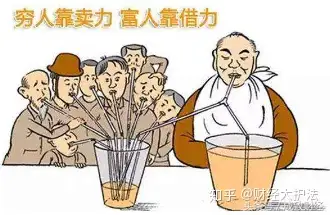
股市中,买卖不要轻率
轻率买卖,是很多投资者,尤其是新入市的投资者在操作时容易发生的弱点。他们一见股价上扬,就迫不及待地跟进;一见手中的股票下跌,又急不可捺地抛出。而对为什么买这只股票,为什么卖那只股票,没有充分的理由说服自己,买卖决策的作出非常轻率,结果导致买卖错误。
股谚云:“选股如选妻”。这个谚语强调的就是对选择股票进行投资买卖的重要性。要选择一个好的妻子,成为自己生活和事业上的志同道合的伴侣,相濡以沫,陪伴自己度过漫长的一生,不是随随便便找一个女性就能成为妻子的。成为妻子的人,要与自己志趣相投、性情相谐,方能相伴终生。选择股票也是一样,要了解这家公司的经营倩况、业绩情况、发展情况;要了解它的股性;要判断是不是买入时机,有没有受到大众的追捧的潜质等等。就股性来说,还要考虑选择适合自己投资方法的股票,如长线投资者就应该逢低买入那些潜质好、发展前景广的成长性股票,若选择不当,轻率地选择投机性质很浓的庄股,就无法判明它的未来方向如何;与之相反,以短线投机为手法的投资者,就不能像长线投资者那样购买稳健性的成长股票,因为这类股票短差极小,不适合短线炒作,而应该选择那些题材股、庄股,方能与庄共舞。
有些投资者不经过这些仔细的研究和分析,就在市场上轻率地进行买卖,东一榔头西一棒锤,东墙亏了又马上去建西墙,就是没有一套自己的买卖策略和规划,如此操作,焉有不亏之理?
还是举出投资大师巴菲特的那句名言:如果你不能在两分钟之内,向一个孩子说清自己购买一只股票地 5 种理由,你最好就不要买。
每个投资者在买卖股票时,都应以这句至理名言为鉴,慎重地考虑自己买卖的理由,如果没有能够充分说服自己的 5 种理由,那就不要轻率地做出买卖的决定。
当买入一只股票时,投资者应从以下 5 种角度考虑自己要买的股票是否值得现时买人:
(1)、行情是否正在启动,或将要启动。因为有些股票即使质地优良,如果大势不配合,它仍然无法上涨。
(2)、自已了解这家公司吗?包括它的经营情况、财务状况、尤其是未来发展情况。它是否在经营上还能继续成长?
(3)、这只股票在行业中是否有代表性,是不是这一板块的龙头股票?如果有更有代表性的股票,宁肯舍此取彼。
(4)、这只股票现时是否正在低位,有比较大的投资价值。当然,所谓投资价值,也是相对的,是与其成长性相比较而言的,不能单以静态市盈率来衡量。
(5)、主力机构对这类股票是否有兴趣?如盘子结构、流通市值、市场形象等。当然这方面也要综合考虑。
与此同理,在卖出一只股票前也要从 5 个方面考虑成熟,再做决定:
(1)、行情是否出现头部特征?
(2)、这家公司的经营上是否的确出现了比较大的问题,如是否是经营困难,财务状况恶化,夕阳产业等。
(3)、这只股票是否是一只毫无特点、毫无代表性的股票?
(4)、这只股票对其投资价值而言是否价格过高了?
(5)、主力机构是否厌弃这只股票?如盘子超大,市场形象差,庄家无法控盘等。
投机交易中最常见的一种情绪莫过于——纠结
市场趋势形成之后,没有头寸的纠结于踏空,有头寸的纠结于平还是不平?踏空的随时都想进,可一进{tema}的就被套,一止损的趋势就继续,不止损的趋势就反转;那个纠结呀……
最后弄得明明看对了趋势却屡屡赔钱;有头寸的呢,日子也不好过,天天害怕浮盈消失,随时都想获利平仓,可一平的趋势就更加凌冽,不平的又坐一次过山车,那个纠结呀……最后落得和别人说起这笔操作也只能是“想当初,我手里拿着位置极好的头寸啊,可最后的……唉……往事不堪回首啊……”;
震荡行情里,多空都纠结于看不清楚,明明看似要跌,一做空就的涨;明明看似要上涨,一做多就的跌,做多做空都倒霉;等到最后看清楚
市场其实在震荡,的钱已经白白打了水漂无数次……后悔啊……为什么就不能管住自己的手,的别手痒呢?
市场趋势将转未转之时,大伙儿就开始纠结于该不该摸顶抄底。不摸顶抄底,行情启动了那就要重复前面踏空的悲剧,摸顶抄底风险又太大,那个贪婪啊,那个恐惧啊,那个纠结啊……没完没了……的干嘛要来炒股呢,干点什么不好!
投机交易是世界上最难成功的工作(没有之一)!别的行业勤劳就能致富,可这个行业勤劳只能致癌。看似忙得要命,一会儿多一会儿空,最后却落得个杨白劳打工——没钱又没命的下场。绝大多数人操着卖白粉的心,赚着卖白菜的钱,这明显是付出与得到不对等,这叫投机吗?这叫玩儿命!

其实是市场上大部分交易者都会碰到的致命问题,就是交易的逻辑性不一致。
我早年的交易也经常纠结于这样的情形,到底是做趋势还是做波段?到底是做长线还是做短线?到底是赚钱走人还是牢牢抱住头寸?纠结在这些问题里面的人只能说还没有形成自己的一套交易体系,交易的逻辑经常出现混乱,进场是一套逻辑,出场则是另一套;赚钱的时候是一套逻辑,亏钱的时候则是又一套,如果把每一笔交易拉出来仔细分析,会发现乱的很,赚钱赚的没道理,亏钱也亏的莫名其妙。
大部分交易者之所以纠结,还是要从自己身上找原因。交易逻辑的一致,系统的科学,自我对市场认知的缺陷,交易者对交易结果的合理预期以及对自身武功的正确认识,这都是解决交易过程中纠结情绪的基础。
有一位朋友给我发的私信问:我动来动去的亏了不少钱,我想现在开始就拿着这个个股再也不动了,您看行吗?我当真不知道如何回答。
动来动去赚钱的也不少啊,做波段的不就是要动来动去吗?拿着不动的亏钱的也不少啊,趋势看错了或者趋势即将反转还拿着不动岂不是要亏惨了吗?其实,他把亏钱的原因归咎为动来动去,这本身就是个错误,连投机市场本质的东西都没有吃透,又如何能靠一招一式来解决在市场中亏钱的问题?
亏钱是正常的,谁都会亏钱,但亏钱也必须亏的明明白白,赚钱也是一样,要讲的头头是道,能自圆其说,否则赚了的钱会亏回去,亏了的钱也永远别想赚回来、
股票投机法则:放鱼头、弃鱼尾、吃鱼肚
1. 每天写投资日记
明确的记录每天自己的操作原因、操盘品种、仓位、收获和教训,每周做一次总结,总结自己一周的得与失,如果犯了重复性的错误,要给予自己惩罚。
2. 股票投机法则之一:放鱼头,弃鱼尾,吃鱼肚
一个品种的趋势行情分为鱼头、鱼肚、和鱼尾行情。
鱼头行情往往是趋势行情初始起步阶段,你很难分清是反转还是反弹,所以很难吃到。
鱼尾行情往往是一波趋势行情的末端,最大的特点是连续的逼空或者逼多,一方认输出局,所谓多头不死空头不止,这种鱼尾行情随时有可能反转或者巨幅震荡,不吃也罢。
而在我看来,我们股票作手真正需要去大吃、狠吃的阶段是鱼肚行情,此时趋势已成,行情进三退一,这时才是我们需要重仓且不断浮盈加仓大口吃肉的好时机。
3. 股票的天时地利人和
所谓天时,在股票里就是指趋势,现在大豆的长期趋势是空头没错,但是短期趋势明显向多,当这种短期趋势和长期趋势发生背离时,我们应该采取的方法是空仓观望,等待反弹明显发出结束信号时,我们再入场做空。
所谓地利,在股票里就是指有利于你开仓方向的 K线技术形态。你看,大豆股票的 K 线图明显处于一个下降通道的下轨,在这个点位反弹再正常不过了,你却非要入场做空,你不赔钱谁赔钱?
所谓人和,在股票里就是指知己知彼,你要入场做空,那么你知道你的对手盘是谁在做多吗?他们做多的理由是什么?他们的实力如何?
4. 在股票里专一是多么的重要!
如果你在一个股票品种上研究 1 年,你很可能才刚刚入门;如果你在一个股票品种上研究 5 年,你很可能会成为这个行业内的专业人员;如果你在一个股票品种上研究 10 年,你很可能会成为这个行业内的顶级专家;如果你在一个股票品种上研究 20 年,你很有可能会成为这个行业内无人企及的泰斗人物。
遗憾的是,很多股票人来到市场,往往研究一个品种不到半年,就企图从股票市场赚走大钱,这种典型的赌博心态往往让你遍体鳞伤,死不瞑目。
5 绝不能让自己盈利的单子变为亏损!这是股票投机的重要原则
我们以做多为例,随着你的分步建仓,你的持仓成本是在不断提高的,由于你是浮盈加仓,所以你应该是一直处于盈利中的,而盈利中的单子需要设立止盈点,这个止盈点就应该设立在你的持仓成本之上。
一旦市场发生反向波动,如果触及到你的止盈点,你就应该毫不犹豫的平仓止盈。绝对不能让原本盈利的单子面临亏损的可能,这是原则问题,
——那如果我一旦止盈了,市场又马上回到原来的轨道上,那时我该怎么办?”
很简单。再拿回来!
就像利弗莫尔说的那样:当我看见一个危险信号的时候,我不跟它争执。我躲开!几天以后,如果一切看起来还不错,我就再回来。
——那再拿回原有单子时我还需要分步建仓吗?
“当然还是要分步建仓。要当做一笔新的交易去做。如果你一下子一步到位的拿回原有的仓位,那不是又把自己置于危险的境地了吗?至于持仓成本,我认为这不是问题,如果你心中预期的是一万点的大行情,你还会去在乎提高的几十个点的成本吗?记住,重势不重价。
6. 等待,是整个交易过程中最为重要的环节
无论是任何股票品种,它的运行轨迹无非就是三种:上升趋势,下降趋势或者震荡。而利弗莫尔的操作系统只适用于上升趋势或者下降趋势,那么占据了大部分交易时间的震荡行情时我们该怎么操作?
利弗莫尔在文章里说的也很清楚:等待!
等待那个最小阻力路线初现的关键时刻,只有那个关键时刻初现了,才会发生你刚才所说的试仓,建仓,平仓等等操作。
这种等待不是消极的等待,而是积极的等待交易的关键点。
正所谓静如处子,动如脱兔。一旦 K线告诉你市场最小阻力发生了改变,也就是关键点初现的时刻,你要毫不犹豫的进行试仓,抓住市场的第一交易点。
人的情绪是多变的,如果没有一颗平静的心,在股票市场成功的概率很小。赚钱不骄傲,亏钱不沮丧,或许没有人能完全做到,但是要尽量去做到。投资者每个交易日都会经历盈利或亏损,赚钱不必欣喜若狂,亏钱不必万分沮丧,若情绪波动大,对身体和交易都不好。
情绪虽然是自己控制的,但会受外界因素干扰,投资者要学会排除这些干扰。我自己就是典型的例子,如果当天遇到与家人产生矛盾等情况,第二天肯定会亏钱,只要遇到类似情况,我就会坚决不做交易,回避是让自己的心态趋于平和,避开交易中的干扰因素。
如果你把股票当作赌博,操作就会有随意性,对输赢就会比较在意,而且往往把盈亏归结为运气。如果你把交易当作修行,那你在意的就会是进出场的一致性,对交易系统的完善,最后是突破自我。股票交易就如同高速公路行车,只有慎重再慎重,路况复杂要减速,身体疲劳要休息,一切都好也不要得意忘形,才不会出现难以控制的局面。
我自己十多年的股票交易之路,有成功,也有失败。经历无数次成功或失败后,最终明白股票交易不只是长跑,更是一种“变速跑”。股票市场不少人成功可能只是把握住一两次重仓的机会,但重仓失败是股票市场的常态,所以千万不要孤注一掷。在可以重仓的时候才重仓,是“变速跑”的关键。当有大亏损时,我就告诉自己,你又不是神,不可能不出现错误,这样可以让自己更好地放下,重新站起来再跑。
交易就是修行,修行要依赖经典的书籍和名师指引,不然就如同缘木求鱼。在我成长的过程中,好在通过互联网可以看到一些报道,从成功的操盘手那里汲取有营养的交易智慧,化为己用。做有把握的行情,交易次数减少了,亏损自然同步减少,成功率就会相应提高。其实交易就是这样,简单重复就好,顺势操作是最好的思路,方向很重要,看准方向就大胆动手。
投资最重要的事——敬畏人性,敬畏市场
我们常常说的“敬畏市场”其实并不是简单指向市场本身,本质上还是对于人性的敬畏。市场先生本来就是反复无常的,但在市场背后困扰我们最多的还是人性中的弱点。有一位大师曾经说过,不要轻易去逆人性。人性是我们与生俱来的弱点,让人类变得不完美,但更完整。最终,能够克服人性的只有哲学和信仰的思维。这也是为什么在投资中,数学之上是哲学,哲学之上是神学。
投资中最不需要的是聪明,资本市场是一个由几百万,上千万最聪明人组成的。要打败市场,聪明是最不需要的要素,做一个好的投资人,聪明也是最不重要的因素。市场是所有人组成的智慧,而聪明只是依靠个体。在任何时间,个体都无法战胜一个整体的组织。那些自认聪明的投资者,最终在历史的长河中逐渐被市场消灭。
第一种聪明的投资者,把别人当做韭菜来收割,想赚市场博弈的钱。市场博弈中最核心的部分来自于你把股票看做简单的筹码,然后你觉得有人会把你的筹码在高位接走,在这个“击鼓传花”的游戏中,你永远接的不是最后一棒。然而作为一个群体,这是永远不可能实现的。永远有人接最后一棒,而如果你不断是在做博弈,必然会成为接那个最后一棒的人。
第二种聪明的投资者,认为自己能预测未来。然而,如果真的有人能够预测未来,古罗马帝国,大明王朝,奥斯曼土耳其帝国,蒙古帝国等就都不会灭亡了。看了大量的历史书后,给我最深刻的感悟是,未来是无法预测的。人们总是认为自己能够预测股价的未来,产业的未来,公司的未来。而事实上,几次正确的判断可能有天时地利人和的因素。一个人要持续对未来做出正确预测的概率是零。
第三种聪明的投资者,认为自己是对的,市场是错的。这就是我们经常看到的逆向投资者。历史上看,其实大部分逆向都被市场消灭了。在大部分时候,其实市场是很有效的,能够比较客观正确的反应一个公司的价值。而前面我也提到过,全世界看到这个公司的维度,一定比单一个人看的维度更多。大部分逆势做空,逆势抄底的人最后都死了。也有老虎基金罗伯逊这种,虽然看对了纳斯达克泡沫的方向,却在市场见顶前扛不住被迫清盘。
如何长期保持谦逊和进取?无论投资,还是人生,我们最害怕的是自满。在一点点小小成就前,感到骄傲,自大,过度自信都将给未来带来毁灭性打击。看《对冲基金风云录2》中,当投资者开始想着如何享受生活的时候,往往就离开崩盘越来越远。但这又是极度反人性的。我们人性中本身,对于成功的追求就不仅仅是需要满足物质上的丰富,更是希望通过成功获得他人的认可。所以,获得外界的zan美,本身也是许多人进取的驱动力。而这种自满,往往会快速毁灭一个人。历史上看,那么多优秀的投资大师,都最终消亡在星空,仅仅成为了一刻曾经闪耀过的恒星。无论是在投资界,还是实业,或者是历史上曾经伟大的人物,许多最终被自己的自满和骄傲带入到了万丈深渊。
长期保持谦逊很难很难。很多时候我们可以做到表面上的谦逊,但内心却无法将自己放下。毕竟成功的线性思维和路径依赖会让我们过多关注自己的能力,忽视了时代给予的机遇。我个人觉得只有多看书,多学习历史,明白每一个人的渺小,才能真正做到谦逊。在市场中保持内心的谦卑。
而又如何保持进取呢?许多人在获得初步成功后,也不再会像当初那样进取,不会有当初那样的饥饿感。然而投资本身,短期依靠运气和技能,长期只有技能产生影响。如果一个人不再进取,那么之后的投资业绩必然会均值回归。保持进取的最好方式,是勿忘初心。时刻记住在一开始是为什么做投资,将这个看做真正热爱的事业,而不是赚钱工具。那些伟大的投资人,在其职业生涯时刻保持着初心的铭记。

交易中“反人性较量”
人性中天然存在着以下的一些偏向,这些偏向在交易中是有害无益,需要克服的。
努力偏向:
我们都知道要成功就要努力工作,抓住一切机会。在金融交易中,这种心理状态却是大错特错的。在交易中,需要与市场保持一定距离,若即若离,可有可无,心无挂碍,坦坦荡荡,才能够避免诸如:抢单,急躁,焦虑,顾此失彼,铤而走险,孤注一掷等等错误行为,才能抓住真正的市场机会。实际上,真正的市场机会往往在你“努力”过后才临,让你扑空
获利保守亏损冒险偏向:
当价格朝有利于交易者发展的时候,人性中的天然偏向往往希把盈利尽快确定下来,所谓“落袋为安”。当价格不利于交易者发展的时候,往往希望奇迹发生,不忍尽快止损,认输离场。这是致命的人性弱点。华尔街有句名言:截断亏损,让利润奔跑。实际就是反人性的提炼:输的时候要快速认赔,嬴的时候需要忍住性子,克服心理波动,让利润自然奔跑。这样才能够达到“资金管理”里面强调的:回报风险比大于2,甚至大于3。
赌徒谬论偏向:
连续输了几局后下更大的赌注,而在连续赢了几局后下很小的赌注。赌徒总是认为:在连续的输局后,赢局会在某个角落等待你。连续的嬴局后,输局必然而至。
这是错误的博弈心理。根据资金管理原则,连续输局后,交易者的资金总量会减少,即使保持同样的风险百分比,由于总量的减少也应该降低赌注。根据赌徒的作法,在一生的交易生涯中,只要有续输局后继续连续输局,交易生涯就会终止。资金管理原则同样适用连续嬴局,因为连续嬴局后资金总量增大,即使同样的风险百分比,赌注也应该增加。
当前交易必须成功偏向:
交易者在确定某次交易的时候,事先往往是花了功夫的,技术面,基本面,消息面一个都不能少。这就容易导致一种心理偏向易是不应该错的也不能轻易认错。实际上,交易是一个概率心理游戏,应该以概率的眼光处理交易问题而不是着眼于具体的某次对错。每次下单,都假设是错的,输了正常,盈利是惊喜。这才正确的心理状态。才能避免死不认错,小错成大错的悲剧。
为什么在股票投资中很少人能胜出,归根结底,这个市场是反人性的市场。股票交易的性正是大部分投损的原因。
如果我们把人性分为两部分,即“好的人性因素”和“坏的人性因素”,“好的人性因素比如有同情、宽容、正义感等,”坏的人性因素“比如有贪婪、恐惧、骄傲、妒忌我们仔细思考之后可以发现,股票交易反人性反的正是”坏的人性因素”。
由此,形成以一下三个观点:
第一,“坏的人性因素”每个人都有,应该说是与生俱来的,因此每个人都会经历亏损阶段。正是贪婪、恐惧、骄傲、妒忌、懒惰在投资中对我们的负面影响,使得我们一而再再而三的亏损。
第二,克服“坏的人性因素”越多,克服地越彻底,盈利的可能越大,盈利的稳定性越强。我们看到很多投资高手基本上都能做到心态平和地进行股票交易,把投资中可能产贪婪、恐惧、骄傲、妒忌、懒惰有效克服,从而获得令人羡慕的投资收益。
第三,对个人而言,股票交易是一种磨练,在磨练中走出来的人,将得到人性的升华生的升华。正是因为人性因素与生俱来,所以想要克服它们会异常艰难,自己与自己的战争确实是一场磨练;同时,也正是因为股票反的的人性因素“,所以只要真正从磨练中走出来了,那也就克服了这些”坏的人性因素“,使自己得到全方位的升华,最终不但资中受益,还将在人生的其他很多方面受益。
猎人养成记之猎枪
要成为一名合格的猎人,首先就是需要一把猎枪,这个是你捕猎的工具,如果没有猎枪,徒手上阵,最终将轮为别人的盘中餐。这把猎枪,在股市中,我们把它称作交易系统,它是你在股市中赖以生存的工具,它除了保护你不受伤害,也让你能在股市中披荆斩棘。
那么如何拥有一把好的猎枪,一个好的交易系统呢?这就需要我们自己在日常的交易中去总结归纳,去精心打造了。拿我自己的交易系统构造来说,完整的交易系统大体包括:方向判断,进场把握,设置止损,止盈离场,仓位管理。
1.方向判断:判断个股方向的方法很多,比如说MACD指标处于0轴上方为多头,在0轴下方为空头;布林线的上轨和中轨都向上倾斜说明是看涨行情,布林线的中轨和下轨都向上倾斜说明是看跌行情;关键的均线向上倾斜说明是上涨趋势,均线向下倾斜说明是下跌趋势,等等,不一而足。至于怎么把握方向的判断,每个人可以根据自己擅长使用的指标来把握。我个人使用的是均线系统来判断方向,比如,当60日均线向上倾斜明显时,在我看来,个股处于多头趋势,积极参与买入;当60日均线向下倾斜明显时,说明个股处于空头趋势,保持观望;60日均线走势较为平缓,K线在60日均线上下穿梭,说明行情较为震荡,尽量不操作,波动较大时可适当高抛低吸。
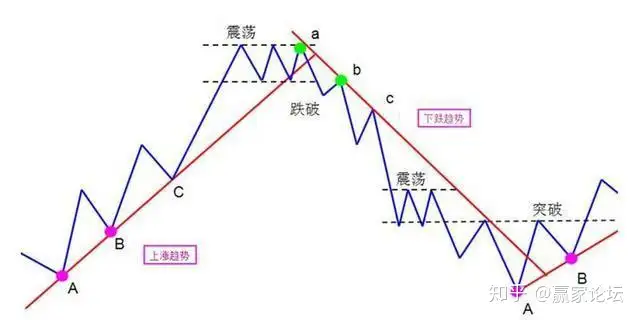
2.进场时机:进场点位的把握,大部分都是参考指标发出的做多信号时来决定,比如说可以根据MACD指标形成金叉或者绿柱消失,红柱开始变长时进场。可以根据KDJ指标形成金叉发散时,或者KDJ形成底背离信号时进场。也可以根据RSI指标在20轴以下开始向上发散时,等等。这些指标发出的信号会给我们一个明确的时机和点位,这样我们的把握性就更强。
3.设置止损:止损的设置就是单笔交易风险控制的把握,它能让你在做错的时候不至于伤筋动骨,起到保护机制的作用。止损的设置一般就是找下面的支撑位置,跌破关键支撑了说明行情可能要方向了。如何找关键的支撑位置?首先简单一点的就是前方局部低点位置,其次就是均线的支撑,再次就是成交密集水平支撑线,以及上升趋势线。
4.止盈离场:止盈的方法也很多,当MACD指标在高位出现顶背离信号时,或者5日均线与10日均线形成死叉向下发散时,也可以根据K线上破布林线上轨后明显脱离布林线上轨时止盈,不一而足,。
5.仓位管理:仓位管理比较主流的有金字塔型的加仓方式,也就是第一次仓位最大,随着行情逐步上升,每隔一段距离加一些仓位。倒金字塔型的加仓方式,就是第一次进场是轻仓,当行情没有上升反而下跌时逐步加仓的方法。我个人用到的是一次性仓位,就是不管进场和出场都说一次性进出,中间不加减仓位。当然仓位管理不单单仅限于加减仓,还有就是总体仓位的控制,当市场大环境比较弱势时,整体保持中低仓位。当处于牛市行情时基本上都说重仓交易。
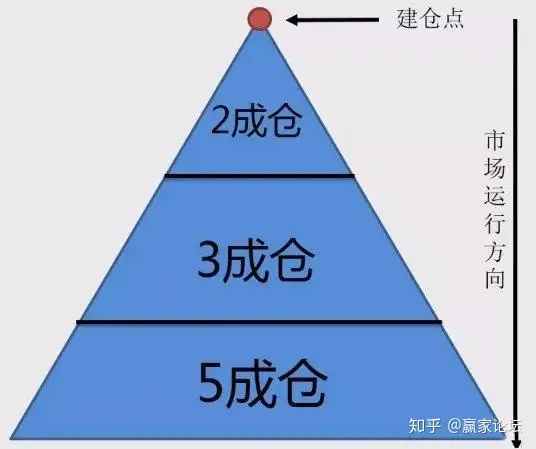
短长结合的均线系统
说人话就是
即可做短线
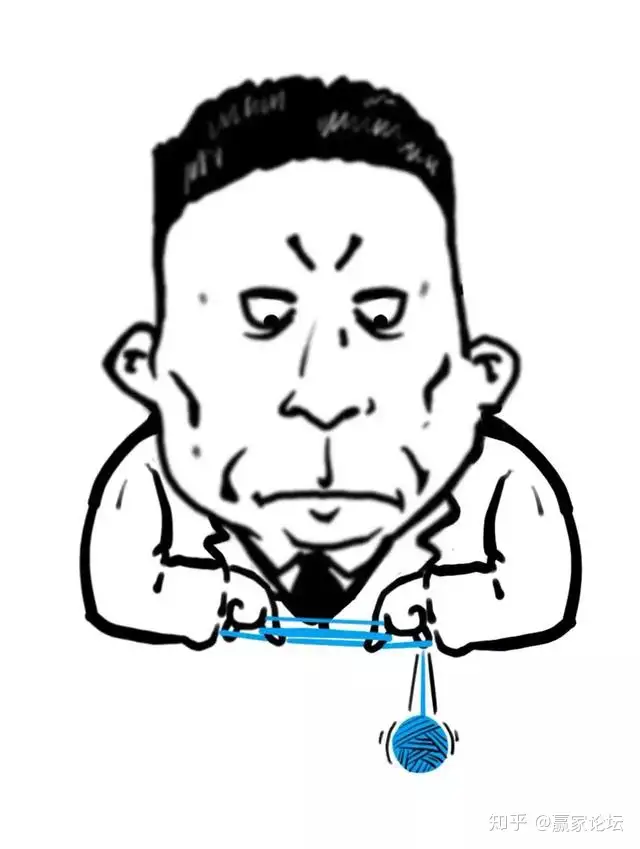
又可做长线
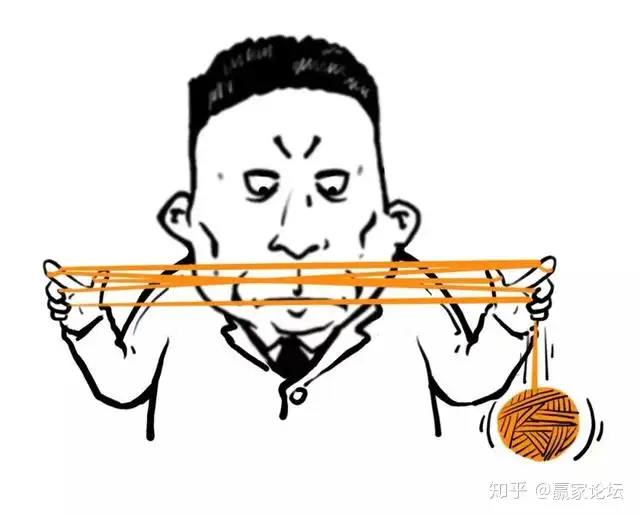
但不管短线还是长线
都是用5日、10日、60日均线来判断的
交易系统
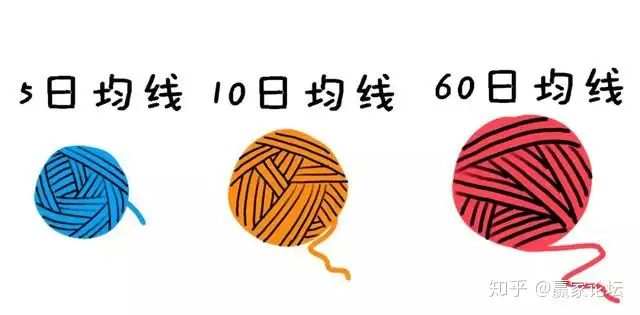
简单来说就是
用5日和10日均线组成短线系统
用60日均线确认长线趋势
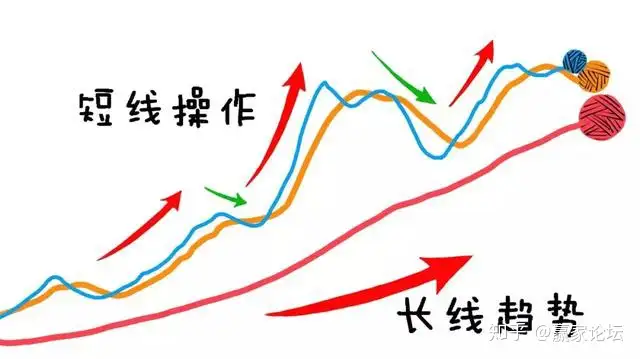
5日和10日均线
显示的都是股价短期趋势
但是它俩相爱相杀
经常会产生爱的交叉

但在大量的交叉中
只有个别的黄金交叉和死亡交叉才有意义
为了找到它们
就要用到变化缓慢
且完全不敏感的60日均线

具体的操作方法就是
5日、10日均线的方向金叉向上
此时如果60日均线也能方向向上,则助涨
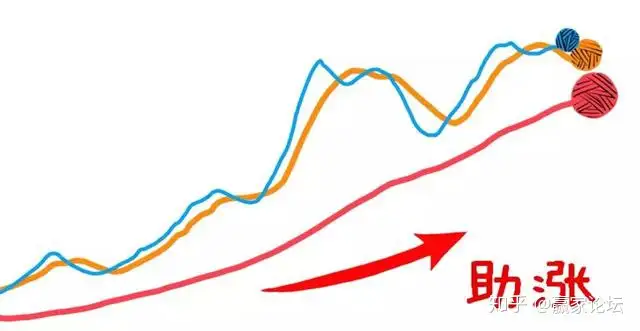
5日、10日均线的方向死叉向下
此时如果60日均线也能方向向下,则助跌
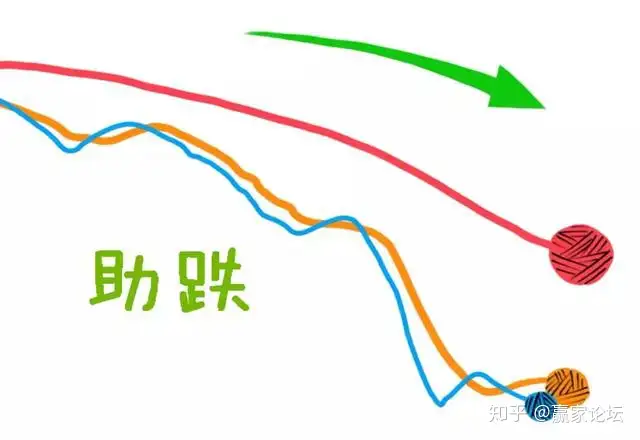
因为当5日、10日均线黄金交叉向上时
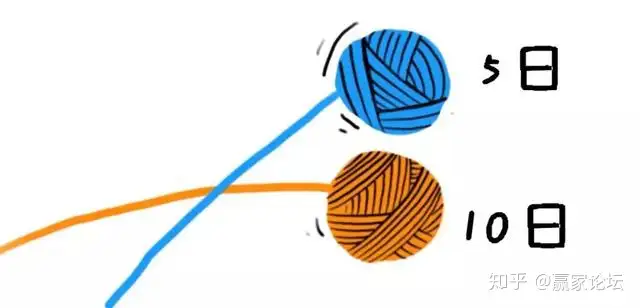
代表10日内平均买入的人已有盈利
这样可以吸引短线客入市
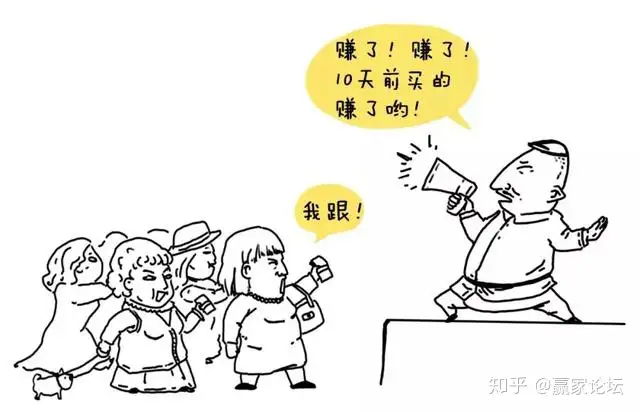
如果此时60日平均线在该黄金交叉之下
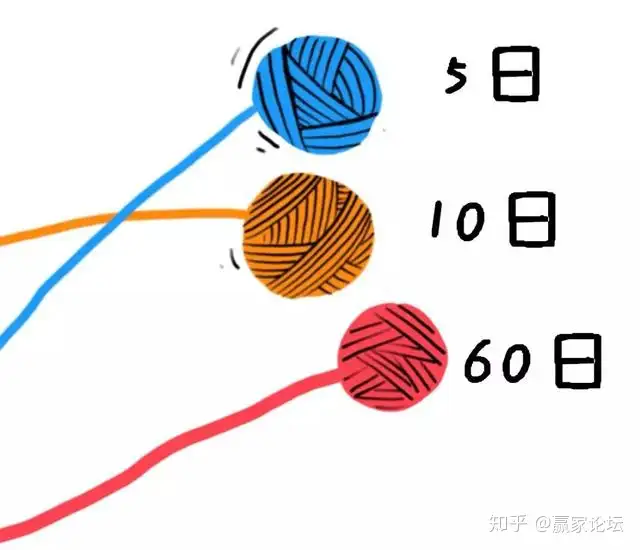
代表此时60日平均买入的人各有盈利
这样可以吸引中、长线客入市
吸引了这么多人
当然对股价有助涨作用
反之也一样
这里需要注意的是5日线、10日线他们俩
回档的时候一定要与60日线有一定空隙
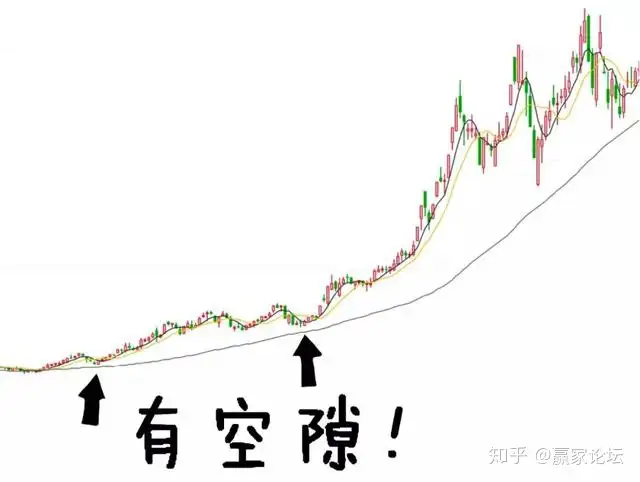
因为此时60日线起到的是一股支撑的作用
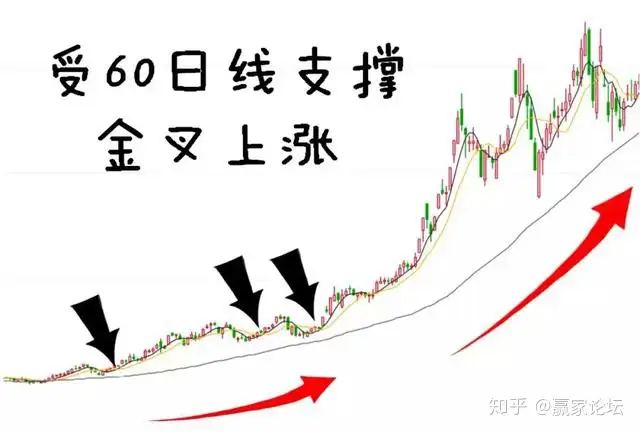
跌破60日线也就往往下跌趋势的预兆
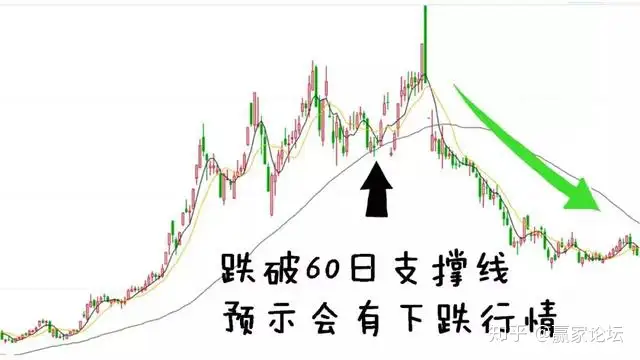
此外
只有每一个金叉都比前一个金叉位置高
才能让股价保持整体上涨的角度、速度不变
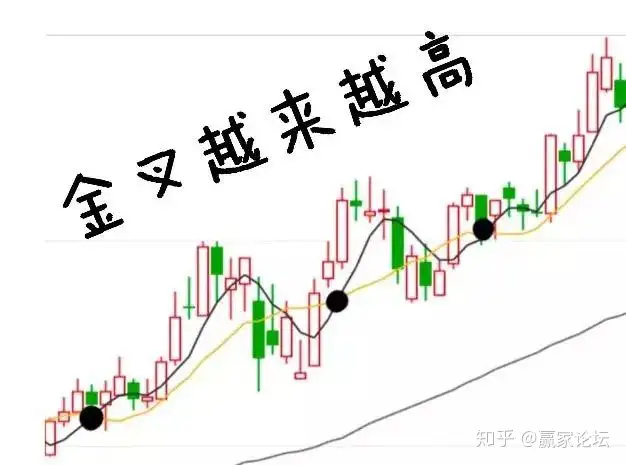
而一旦上涨速度变慢或不创新高创新低的话
那么就要考虑这辆车是不是到站了?
是否需要找机会下车了?
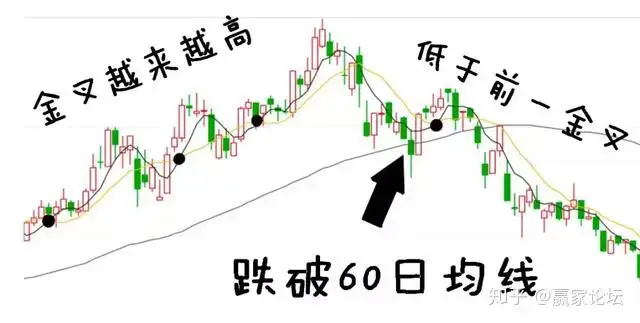
至于什么时机下车那方法可就多了去了
主要按你的交易方式来
比如
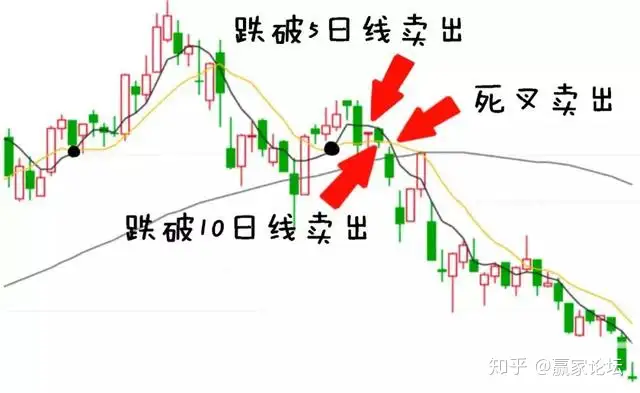
这个交易系统的好处是
兼容性强
你可以尽情的武装你的武器
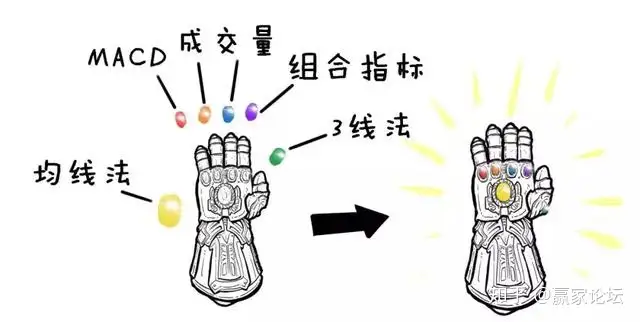
比如:成交量线+MACD
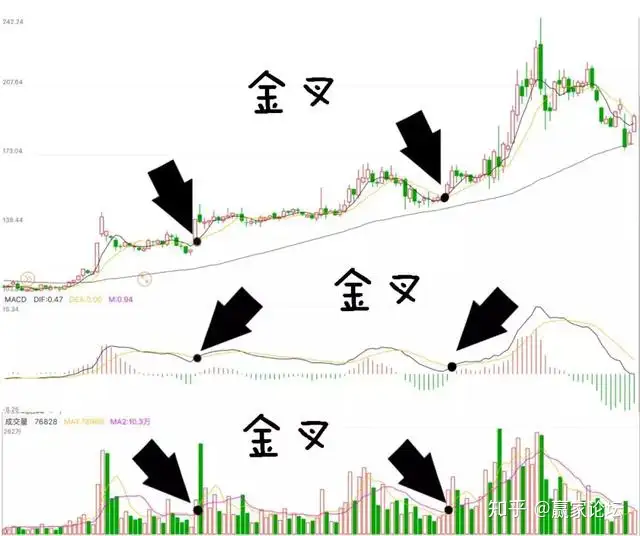
这里点到为止
你们可以多研究一下
最后总结一下:
当5日、10日均线金叉时
如果60日均线方向也向上,则助涨
举例中的三金叉尤其强势
回档幅度尽量要浅
回档时成交量越少越好
5日、10日和60日均线之间要有空隙
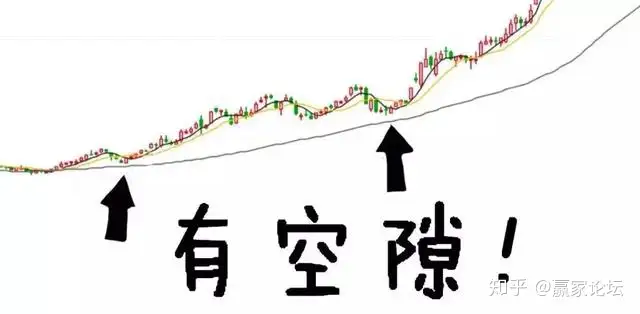
长线有一个不变的原则就是
“三线顺上不做空”
尽情等发育就好
当5日、10日均线死叉时
如果60日均线也方向向下时,则助跌
三死叉的下跌空间更大
如果每一个5日、10日均线的死叉
都比前一个位置低的话
那下跌行情还将继续
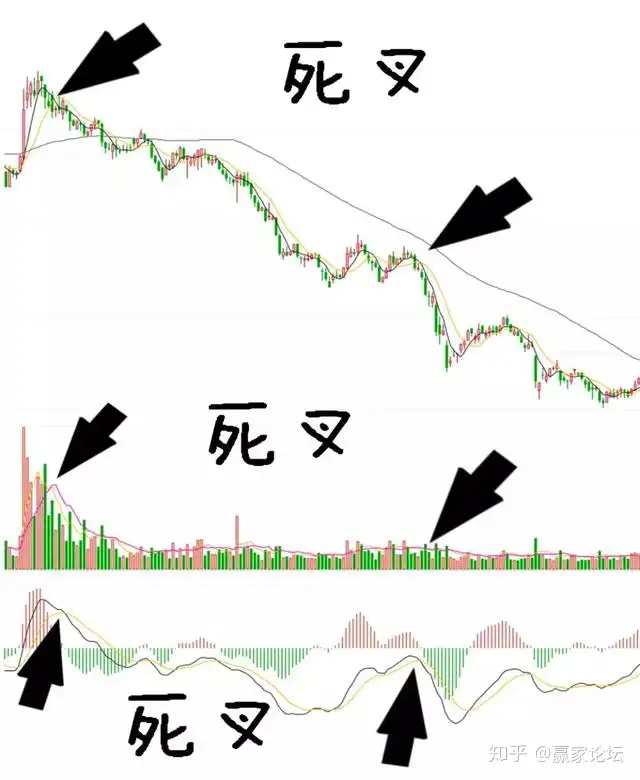
三线顺下时往往是暴跌的开始
这个交易系统主干道宗旨在于
你可以在大趋势的保障下尽情秀短线操作
也可以每天只要盯一次盘
悠闲地玩佛系炒
现在单阳不破形态几乎成了技术股民的常识,但是很多人只知其一不知其二,甚至胡乱套用。前几天一位股友留言说,在使用单阳不破时就遇到了问题,现在很多股票单阳不破形态都不涨反跌,于是笔者提醒他现在目前市场处于弱势之中,所以不宜用,那么今天再给大家重新分享一下单阳不破。
一、什么是单阳不破?
单阳不破就是出现一个大阳之后,其后6-7根k线横向盘整,并且所有低价都没有击穿该阳线的最低价,每日成交量不能超过一阳当日量的一半(长阳后越缩量越好)。
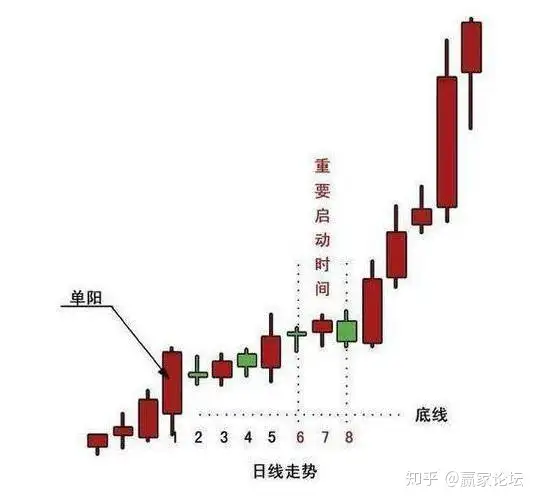
二、单阳不破的技术特征和操作技巧
1、横盘时间不能超过9个交易日,一旦超过极有可能引发趋势急速下跌可能性较大。
2、当30均线拐头向下时,在此阶段出现的任何类似“单阳不破”形态都要尽量避开
3、最好在放量突破时介入,这样成功率提升80%
4、出现此形态第5日尾盘介入,收长阳后当天高点出局(强势时再留,第八日还不能收长阳说明形态破坏要止损出局)。
5、一旦形成有效的“单阳不破”形态,一般行情会在第六个交易日启动,此时也是最佳买点。
三、单阳不破经典案例
1、远东传动(002406)在1月23号拉出一个涨停板之后开始缩量回调,但是连续4天收阴都没有跌破涨停板的最低价,到了第五天开始放量拉涨,这时就是最好的介入时机。3个交易日章法18%
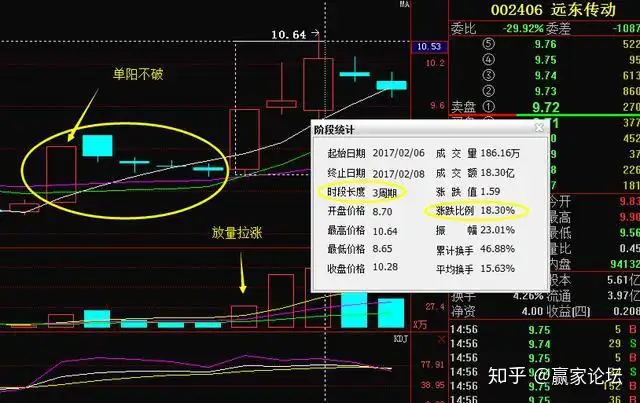
2、银龙股份(603969)于3月24号在底部支撑位置拉起一个涨停板,之后并没有继续拉涨,反而出现了缩量回调,最终股价并没有跌破前一根涨停涨的最低价,4月5号直接开始收出一字涨停板,说明这是极其强势的单阳不破,4月6号涨停打开后开始介入,6个交易日涨幅51%
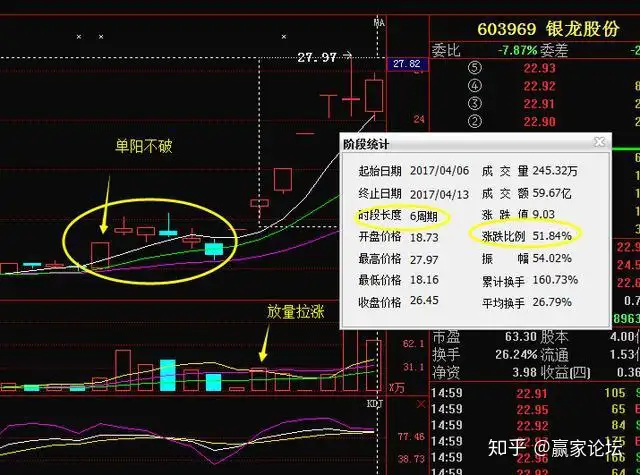
四、“单阳不破”形态卖出条件
1.获利10%~15%空间后,要获利出局,切记贪心。
2.跌破前一根大阳线最低价就坚决止损出局。
五、“单阳不破”选股注意事项
单阳不破K线之所以能爆发后续涨势,是因为6-8行为周期密码+强势角度学+心理预期+人气强度,这是一个最根本基础。时间与角度我就不用解释了,现在大家都懂的。心理预期是什么概念呢,是投资者对行情上升空间最基本预期,也是单阳不破形态的伸展空间,这个又会受到信心氛围的影响。
比如在整体下跌弱势之中市场信心疲软,对反弹行情空间往往预期过于悲观,即使这只股票已经跌幅很深。相反在信心开始恢复后,对上升高度的预期空间就会放大。并且股票不同,人们对其上升空间的预期也不同,这些都取决于股票自身因素。人们不看好的股票,预期上涨空间往往会很低,而看好的就会扩展上升的预期空间。并且同样一只股票,随着上升其预期空间也会缩水,涨到一定幅度时预期空间可能就没有了,所以这个时候即使出现单阳不破,但是有爆发却没有伸展的能力了。
人气强度代表投资者关注程度,也决定着单阳不破的爆发能力。一只不受关注的股票,或者交易不活跃的股票,往往会在爆发时缺少资金热捧。即使有很高的预期空间,但是缺乏扩展动力,上升会呈现几小步一回头的格局,所以通常缺乏的人气时机。并且在单阳不破形态当中,要谨防大成交量压头格局,比如在横盘格局被前面一根成交量非常大的K线压制,说明短期追涨者被套居多,会造成心理压力,久而收盘不破被压制的K线高点,就会导致割肉盘出现而下跌。
同样在多头市场中形成的单阳不破,周线稳定程度高于日线,心理预期越高+人气越活跃的股票,其涨幅会远远高于心理预期低+人气不活跃的股票。并且在上升行情连续出现大幅度四波之后,往往市场人气要出现大幅衰落,日线单阳不破非常不可靠。并且在牛市中后期,指数开始呈现不稳震荡时,个股已经涨幅甚高,这时日线单阳不破形态可靠性就非常低了。
如果股市处于一般力度上升之中,每隔7-8周上升市场就会有一个大幅回落,刚好处于这个临界周期时,个股出现日线级别单阳不破非常不稳定,毕竟胳膊是拧不过指数这个大腿的,而周线级别的单阳不破就变得可靠起来。而单阳不破的买入原则,可以有多种方案。其中有一种方案可以参考指数波动买入,比如指数上升回调,个股出现单阳不破。这个时候要盯紧指数分时控盘均线,指数的回调周期一般都是6-8左右,刚好和单阳不破周期相同。
交易者赚的都是别人犯错的钱,这是人与人之间的博弈。
所有技术分析理论最大的弊端在于他总是把交易者假设成一个完全的理性人,而这在实际生活中是绝对不可能出现的,用大家常说的话,谁还没点脾气啊?
而这脾气就是生活的成本,脾气不仅可能伤身,在投机市场发脾气最直接的结果就是会亏钱,人本很会因为心理上的希望和恐惧做出很多不理性的事情,比如,天天喊着止损永远都是对的,但是找几个交易者能够绝对的做到坚决止损的,真的的账户上出现浮亏的时候,谁还没点我就不信它不回来,就是死扛不止损,甚至逆势加仓的冲动?
每个人都喜欢大波幅的趋势,一波最好的行情,对另一线单子被套不止损的交易者来说,却是最坏的行情,行情波动100个点,有交易者能赚100个点,也意味着有交易者亏了100个点,我们学习到的技术分析和理论都是怎么样能赚100个点的,并且在复盘总结的时候我们也觉得自己可以赚到这100个点,可是在实盘交易的时候怎么就变成了被套100个点呢?尽管自己的交易系统止损点只是设置了15个点啊。
当你任性的时候,一定有一些交易者希望你可以更任性一点,因为你任性的程度越大,他们获利的空间越大,你不被套100个点,他们上哪去找赚100点之后的接盘侠啊。
坦白的说,一个交易十年的老手,和一个交易一年的新手,在所学的理论和技术上并没有绝对的差距,只是成熟的老手知道在怎么样的行情应该用怎么样的技术,而生涩但是心大的新手往往希望用所学到的技术分析抓住市场所有的波动和行情。
而事实是,在投机市场,你做的越多,错的就越多,错的多不是问题,问题是很多错误是交易者控制不住连续错的,当机会来临的时候,几乎所有的人都能看到,因为用的技术都是一样的,但是并不是所有交易者都能够做对,看对了,却做错了,这几乎是所有交易者都要越过的一个壕沟。
交易,如对弈,吃掉对方才能胜利,所以每个交易员都应该谨小慎微,在双方都保持理性的时候,往往很难有机会,也不会有太大的行情,机会往往出现在一方一个卒子都不舍得丢弃的时候,做交易也需要付出成本,这个成本也会缩水,这是每一个交易者必须想明白并且能够接受的,一点亏损都不舍得接受的时候,往往都是更大亏损的开始。
交易不过是一场等待自己在痛苦里长大的游戏而已
很多时候,人都是因为走得太远而忘记了当初为什么要出发。
当年,尚未踏入投机交易的坑里,身处交易场之外时最为艳羡在场内拼杀的交易员,或者可以说是崇拜,那种对金钱的驾驭感的确对每个人都有很强大的吸引力,但是经历过几年之后,越发的感觉与当时想象中的感觉截然不同,那种在精神上撕心裂肺的痛苦和折磨要远远超过赚钱是那短暂的快感,甚至一度让自己怀疑是不是得了抑郁质之类的。每一次心理煎熬过后留下的一道道伤疤,都仿佛是自身不可触碰的禁地。
其实,谁都有思想放羊的时候,毕竟人有七情六欲,不是机器,总得来说,冲动性的进场交易是每一个交易员都存在的情况,不止是交易这样,在日常生活中你会发现人总是很难坚持即使自己认为是对的行为,所以,与其把这看成是弯路,不妨当做一个成长的过程,对正确交易理念的执行不到位所造成的负面结果和情绪,除了让你可以舒舒服服的躺在床上尽情的伤心和发泄,还可以慢慢塑造你内心的坚强,每一次把自己的心情从最低谷调整回来,就会更坚强了一分,人的本性里都带有忧郁气质,或许是源自于内心对未知的恐惧,要克服这种恐惧只能够是不断的在交易中去经历。
交易员总是会不自觉的掉进只想一路顺风的认识误区里,尽可能多的想要去盈利,在本能上越来越排斥亏损,最大的矛盾点都产生在市场明明没有机会但是主观上也要创造机会上,想要赚的越多就越容易忽视风险与收益的敞口,通常这种矛盾点产生的最直接的结果就是亏损,金钱的损失可以产生实实在在的痛苦,这种痛苦表现在明明很努力了但是却被市场证明了一文不值的这种落差上,为什么一再申明市场永远是对的,原因就在这里,任性解决不了任何问题,只有不断地去尝试,去经历,去总结,去修正赚钱的可能才会越来越高。
金融投机的生态是存在即是合理,长线有长线的优势,短线有短线的技巧,抄底有抄底的理由,追高有追高的说法,你可以不去追求完美的长短高低结合,但是必须得有一手用的顺手的交易模式,这是生存的前提。
对于市场行情的分析,无论多么完美的纸面交易理论都有失效的时候,甚至是大部分时间都在失效,同时这也是交易者唯一能选择学来用的东西,很多人眼里他是一把宝剑,实际上他只是一块废铁,只不过一个优秀的交易者,也能把这块废铁用出宝剑的效果,因为他知道怎么样把自己的特长与交易技术的特点揉合到一起,当然这离不开一个最基本的思维辩证能力,这也是交易者必须要具备的一项能力,从看山是山,看水是水到看山不是山,看水不是水,再回到看山是山,看水是水,不是技术的进步,而是思维的升华。
投机,最离不开的是思考,你不能假物于人,交易之行,与一匹茫茫原野独行的孤狼,一路无伴,只有一个未知的尽头,在孤独的处境里尚不失独立的思考,这是另一种能力,从交易之术到交易之道就像“习得招式万千,只为一朝忘却,招由境生,剑随心动”,所学不是无用,只是不用,只是用心,作为一种群居性动物,人习惯了组织社会,独自面对那种市场不确定性时候的痛苦,心理承受力很容易达到一种极限,这种双重压力很容易造成交易者的操作失控,这也是很多交易者整个职业生涯都迈不过的槛,所谓交易的成长,只是比以前更能承受心理的痛苦罢了。
交易之行,与一匹茫茫原野独行的孤狼
当然有效思考的基础是丰富的交易实践,拿来无用,任何偷工加料的僭越都会变成不切实际的空中楼阁,这个时候需要的是摒弃浮躁,面对账户的资金涨落,想要不为心动,很难,所以很多交易者选择向古老的老庄孔孟等先贤寻找答案,对于交易心态,文化的差异造成了东西方交易理论中的不同解读,但是对于交易行为的理性没有本质的区别,即所谓的“圣人有情而无累”,不是因为没有感情,只是能够控制情绪。
一个充满诱惑的世界和千百年来不变的人性,决定了交易者很难一直做到心如止水,一时易,一世难,持续性的缺失造成了很多不可预知的结果,投机之所以神秘,因为他总是能够轻而易举的触碰到人性中最敏感的那几种神经,贪婪,恐惧,侥幸等等,纸上得来终觉浅,交易理论可以在面上学习,但是交易能力却是一个不断寻找,修正,感悟的过程,感性与理性的抉择,总是在冲突中不断的锻造交易者更坚强的品格,交易是一个开始就没有结束的过程,所有的输赢都只是代表了某一个阶段,赢是输的开始,输是赢的开始。
股市中想要盈利其实很简单,只要掌握正确的投资理念和方法即可,正确的方法可以让投资者轻松的战胜90%的人。我平时闲暇之余与股友们交流学习“三板斧盈利战法”,“主力高控盘选股战法”等实战操盘技巧,教一些股民朋友系统的交易模式,有兴趣自愿学习的股友欢迎大家关注私信留言“学习”,定当鼎力相助!


评论
发表评论