long-planned rebel蓄谋已久的叛匪
The most difficult part of reading "Das Kapital" is the third volume, which is the historical process of the transformation of incremental over-issued money (QE) into asset bubbles. Once you understand it, you will know the secret of capital gains and master the password of periodic investment.
First, MMT evolved into a flexible process of asset bubbles.
Usually, the over-issued increment (QE) of the local currency enters the process of capital circulation, and it has to go through a complicated process from the expansion of government deficits to the expansion of private capital. This process usually requires a Kitchin cycle (36-48 months), which is a process of boiling frogs in warm water. In this process, the capital increase gradually forms an asset bubble, but the asset bubble cannot be quickly expressed as an indicator of commodity inflation (there is a problem with the indicator). Inflation, which has been delayed for four years, cannot be immediately expressed as currency depreciation (there is a deep financial manipulation power). Therefore, the indiscriminate dollar still has strong purchasing power in the first Kitchin cycle.
Second, the alienation of asset bubbles into a treacherous form of currency depreciation.
Since the world is generally in a period of peace, stability and high-speed growth, the total supply of commodities is abundant. Therefore, the asset bubble caused by the excessive issuance of the local currency (QE) cannot be immediately expressed as commodity inflation. Under the condition of excess supply of commodities, the process of currency depreciation that should have been achieved was cut off and alienated into a confusing asset bubble solidification. The strong housing prices in Hong Kong are essentially the depreciation of the Hong Kong dollar, and the bull markets in European and American stock markets and property markets are essentially currency depreciation. However, since the global commodity supply has no bargaining power, the incremental excess currency (QE) still maintains the purchasing power of the original currency (the last Kitchin cycle). Therefore, the correctness of the time and space of the MMT theory is briefly confirmed-printing money can get everything. Of course, this is correct, there are time and space margins. OPEC+ is deciphering the correctness of MMT.
Third, the hysteresis effect of currency depreciation transmitted to the supply side.
Ordinary people cannot understand "Das Kapital" because they cannot understand the complex process of capital circulation. Capital circulation is not like a photoelectric conduction mechanism, but more like an air pressure conduction mechanism. Let's put it this way, this is not a linear extension, but a three-dimensional expansion in three-dimensional space. In a wide-area space, it takes a long process for the air pressure to increase to the point where the heart feels uncomfortable. The treacherous trick is that in a specific time and space, the air pressure can be adjusted through the air temperature. This adjustment of temperature is the change of interest. Raising interest rate is to cool down, which can reduce the air pressure, so that your heart can't feel the change of pressure. This round of sharp rate hikes (ten times) by the Federal Reserve has greatly reduced the temperature and cut off the supply side's perception of air pressure. Therefore, what should have been cheap currency and expensive goods suddenly became expensive currency and cheap goods. The U.S. dollar then began to play dead cat jumps, which is what the market calls the U.S. dollar "breaking the bottom". All this constitutes a rebound in the offshore purchasing power of the dollar and euro (the so-called easing of inflation). The hysteresis effect of inflation transmission still occurred.
Fourth, the ultimate result of supply-side inflation.
However, delay effects have temporal and spatial limitations. Please note that the cooling process of a huge space requires a huge energy loss. Meaning, there are huge costs to raising interest rates. The low air pressure maintained by artificial refrigeration is to gain time for currency depreciation. What is this time difference? It is the realization of the real purchasing power of incremental excess currency (QE). Translated into the vernacular, it is to allow the printed banknotes enough time to turn into wealth. Once this time difference is over, the supply side will immediately enter high pressure, a heart attack will occur on the supply side, and an economic crisis will be inevitable. Meaning, commodity inflation is going to happen after all. The conclusion is that the supply side fell into recession due to inflation, and even the world fell into the Great Depression.
Five, our choice.
This world is not fair. The demand side holds the capital. The demand side creates a time difference in capital flow. The U.S. dollars we received had already depreciated a Kitchin cycle ago, and they used one-third of the credit to steal 100% of our value. It’s not interesting. Yanghang used the real labor value to buy the U.S. Treasury bonds valued at the dollar value before the Kitchin cycle, and together with Japan and the United Kingdom completed the endorsement of the U.S. dollar credit fraud after the Kitchin cycle. In the Fed's operation of cooling down to reduce pressure, Yanghang used the method of self-depreciation of the renminbi to support the credit of the US dollar. We are furious! Are we really ignorant, ignorant, superstitious, and deserve to be exploited and oppressed?
Of course, pure anger is meaningless. Thanks to Marx, China also has Mohists who understand the flow of capital. Of course the Mohist will not be silent. No, Yanghang finally realized that he was wrong, and began to explain the depth and breadth (time and space) of exchange rate management. That's good, it can lead to conscience, and the rest will be easy to handle.
In fact, it's okay for a dead cat to jump, as a damned thing can't live after all.
On May 15, China Southern Power Grid Supply Chain Company announced the transaction announcement for the second selection (third batch) of energy storage battery monomer framework agreement procurement projects from 2022 to 2024.
This bidding section is the second selection of the third batch of energy storage battery monomer framework agreement from 2022 to 2024, which will be used for the Foshan Nanhai energy storage project.
The announcement shows that there are a total of 5 companies as transaction suppliers, namely Hubei Yiwei Power Co., Ltd., Xiamen Haichen Energy Storage Technology Co., Ltd., Ningde Times New Energy Technology Co., Ltd., Lishen (Qingdao) New Energy Co., Ltd., Zhongxin Aviation Technology Co., Ltd.
The above five battery companies are currently vigorously developing energy storage business, have achieved mass production of 280Ah energy storage cells, and are moving towards 300Ah+ energy storage cells.
EVE officially released a new generation of energy storage battery LF560K last year. LF560K has a super large capacity of 560Ah, a single battery can store 1.792kWh of energy, the energy efficiency of the battery cell can reach 96%, and the cycle life exceeds 12,000 times.
Haichen Energy Storage has launched 300Ah/320Ah energy storage products. Among them, the 320Ah electric energy storage battery has the same size as 280Ah "71173", the volumetric energy density is 385Wh/L, and the cycle is 10,000 times. Haichen 320Ah battery is expected to cycle to 70% EOL can reach 10,000 times, and has obtained GB/T36276 certification in March 2023. It is reported that Haichen Energy Storage's 320Ah electric energy storage battery will be sampled globally in the third quarter of 2023 and delivered globally in the first quarter of 2024.
In 2020, the Ningde era mass-produced 280Ah lithium iron phosphate energy storage cells, opening the way to upgrade large-capacity cells in the industry. The latest news from the interactive platform shows that its energy storage products have the advantages of long life and high safety. In terms of long cycle, the company has achieved mass production of 12,000 long cycle batteries and put them into application, and is committed to further improvement. In terms of high safety, the company The single failure rate of DPPB-level batteries has been achieved, which is at the highest level in the industry, and nuclear power-level safety energy storage products will be further developed.
Lishen's current mainstream energy storage products are 280Ah and 180Ah, which will be upgraded to 306Ah and 200Ah in the future. It is reported that Lishen plans to use the most advanced positive electrode lithium supplement technology and low lithium consumption negative electrode technology to launch a 306Ah "zero" attenuation battery to achieve zero attenuation of battery capacity in the first three years and a cycle life of 12,000 times, meeting the needs of energy storage for 20 years. . ,
China Innovation Aviation plans to release a new type of OS energy storage battery in June this year. The industry boldly speculates that the products involved may contain large-capacity energy storage batteries.
According to observations, the Nanhai energy storage project in Foshan, Guangdong is the first 100-megawatt peak-shaving and frequency-regulating energy storage power station in Foshan, and it is also the first energy storage site in the country to adopt a multi-technical route. Different batteries and cooling methods will be compared and verified .
At the same time, it is also the first power station in the southern region to apply a smart energy storage digital operation management and control platform. After completion, all energy storage power stations in operation in the company's system will be connected to the centralized control platform to form a professional, standardized, shared, and platform-based digital operation and maintenance system.
The project covers an area of about 40,000 square meters. It mainly constructs a 110kV substation, two 110kV transmission lines, a 300MW/600MWh energy storage system, and related auxiliary equipment. It is expected to be put into operation in 2023.
Not long ago, China Southern Power Grid Technology issued an energy storage system integration tender for this project. China Southern Power Grid Technology Co., Ltd., XJ Electric Co., Ltd., Beijing Tianqi Hongyuan New Energy Technology Co., Ltd., Foshan Heshu Energy Technology Co., Ltd., Nanjing Nanrui Jibao Engineering Technology Co., Ltd. won the bids for different sections.
In the early morning of March 30, 1950, in a small town in the eastern part of Xinjiang, the 2nd Company of the People's Liberation Army was doing morning exercises when suddenly gunfire erupted from all directions and was attacked by sudden firepower. It turned out that the northern Xinjiang rebellion broke out.
At that time, the 2nd company had just entered Yiwu, an important town in eastern Xinjiang, to take over the local government and border control, and carry out border defense and production tasks.
It's too big. Today we have to sit on the train for many days, not to mention the soldiers of the People's Liberation Army who could only march on their legs.
In order to enter Xinjiang quickly, all available resources were used. At that time, all the cars that could be transferred were transferred, and there were a total of more than 700 vehicles that could be driven, all of which were used to transport troops entering Xinjiang. You know, even when the Volunteer Army entered the DPRK, there were only 800 vehicles. Even so, when the 2nd Army entered southern Xinjiang, most of the cars broke down and all the fuel was exhausted, so they had to continue marching on foot.
Chairman Mao even asked Stalin to provide forty Li-2 transport planes. Although this transport plane can only carry 20 people, it is already very impressive. Nearly 10,000 people took the opportunity to enter Xinjiang, which is unprecedented in the history of liberation wars.
The 2nd Company of the 46th Regiment of the 16th Division of the 6th Army of the First Field Army into Xinjiang, just like this, took a plane from Jiuquan to Hami, and then stationed in Yiwu in March 1950.
Yiwu is a small county under Hami, an important town in Xinjiang. When Zuo Zongtang took over Xinjiang, Hami was also an important base camp and outpost for the Qing army to enter Xinjiang.
Yiwu is located at the northern foot of the East Tianshan Mountains, surrounded by mountains, close to the Sino-Mongolian border, and is the gateway from Xinjiang to the Hexi Corridor and Inner Mongolia. Its strategic location is very important.
At this time, more than 700 rebels had already occupied the commanding heights of the surrounding hills.
The 2nd company that was suddenly attacked immediately dispersed, and the deputy battalion commander Hu Qingshan organized resistance while observing the enemy's situation and commanding calmly.
Beishan is the most important support point for guarding Yiwu, overlooking the entire county. If Beishan is lost, Yiwu will not be protected.
Hu Qingshan issued a death order and sent a platoon to recapture the Beishan bunker.
The leader of the second platoon, Zhou Kejian, used two machine guns to feign an attack from the front, attracting the enemy to intercept him, and sent a combat team to rush five kilometers, climbing up the main peak of Beishan from behind.
The soldier Kang Xihui climbed straight up the rock. After reaching the top, he quickly threw four grenades into the bandits. The whole group raided and captured the Beishan bunker, and launched a counterattack with firepower.
In this way, the rebels attacked the city with great momentum for the first time, and were repelled by the 2nd company.
In the subsequent long-term persistence, the Beishan bunker was always firmly in the hands of the 2nd Company, which played an important role in the victory of the Yiwu Defense War. After the war, Yiwu Beishan was renamed Shengli Peak.
Although the rebels withdrew temporarily, all roads and telephone lines to Yiwu were destroyed, and the 2nd company completely lost contact with its superiors.
Yiwu became an isolated city, and the rebels were numerous and arrogant, and the situation was very serious.
At this time, the 2nd company was in Yiwu County, with only 108 troops.
This rebellion had been planned for a long time, and the rebels were very ruthless. They surrounded and attacked the county town and various production sites separately, planning to eat up the entire company of the People's Liberation Army with one strike.
Just the day before, when Hu Qingshan and the correspondent returned to Yiwu from Naomao Lake, they felt that there were many murderous opportunities along the way.
At that time, the bandit leader Urazbai ordered his subordinates to kill Hu Qingshan, but Nao Maohu had no chance to do anything, so the rebels chased him to Weizi Gorge, and sent people to pretend to be "labor troops" in order to trap and kill him.
Hu Qingshan was very vigilant and didn't stay for a moment. When he walked to the dangerous area, he dismounted first to observe.
The rebels in ambush couldn't hold their breath, and they fired as expected, and Hu Qingshan, who identified the enemy's situation, escaped witty.
Hu Qingshan, a super combat hero, had a hunch, judgment, and decision, and he was the first to attack the enemy. The veterans who came from the War of Resistance were really unambiguous, and the riots started the next day.
Hu Qingshan heard from the explosion of the rebel grenade that the rebels used our army's grenade, which means that the two squads that Company Commander Zhao Fugui took out for production were attacked at the same time in Naomao Lake, Xiamaya and other places , something might be wrong.
After the war, the 2nd company learned that the unsuspecting soldiers in the two places were trapped by the rebels, and the company commander Zhao and almost all the comrades in the two squads died.
At this time, the 2nd company can be said to be deaf and blind.
They still don't know that Usman, the largest rebel group in Xinjiang, has launched a large-scale rebellion in northern Xinjiang. The Tianshan Canyon and the foothill grassland are the main areas where the rebel cavalry rebelled.
Yao Lebosi, the former commissioner of Hami, and Urazbai, the magistrate of Yiwu County, had already joined hands with the Usman rebels (hangxie) and conspired to launch a rebellion in Yiwu.
When the 2nd company entered Yiwu, except for the civil servants and policemen of the former Kuomintang county government, all the residents in the city were taken into the mountains by the rebels, leaving only an empty city.
Xinjiang is too big, with one-sixth of the country, there are only two armies, and northern Xinjiang, where banditry is particularly serious, has only one army.
At that time, the main force of the divisions and regiments of the People's Liberation Army was going all out to suppress the rebels, and the combat area was as vast as thousands of kilometers.
For a while, he couldn't find the strength to use it in the direction of Yiwu.
The isolated city of Yiwu can only be defended independently by 2 companies.
Yiwu City only has such a small defensive force, and the main force is to defend the 12 blockhouses around the county town and the support points on the hills.
With only 108 infantry, it was necessary to fight against nearly a thousand long-planned rebels and cavalry.
The rebels not only coerced the masses of Uighurs and Kazakhstan, but also a part of the Seventh Cavalry Division who rebelled after the Dihua (Urumqi) uprising.
Before the Uprising, the Seventh Cavalry Division was the fifth cavalry army of the former Qinghai Majia Army. In 1936, it encircled and suppressed the main force of the Red West Route Army in the Hexi Corridor, and was the deadly enemy of the Red Army.
Compared with ordinary rebels, these fifth cavalry rebels mastered military technology and posed a greater threat to the defenders.
But so what?
The 2nd company is a company of the Red Army, and Hu Qingshan is a brave general with both wisdom and courage.
During the Battle of Lanzhou, Hu Qingshan's army mainly attacked Yingpanling, one of the three main positions of the Ma's army. Hu Qingshan led two companies to break through the three lines of defense of the Ma's army.
Personal military skills are quite excellent, a famous sharpshooter.
Judging from the combat experience, whether it was touching the devil's gun towers in Hebei, Shandong and Henan during the Anti-Japanese War, or moving to northern Shaanxi to smash the enemy's regiment headquarters, until the Battle of Lanzhou with a machine gun rushing to the main peak of Yingpanling, Hu Qingshan fought all offensive warfare.
In such a lonely defensive battle like Yiwu, Hu Qingshan still arranged well and commanded properly.
The rebels were besieged heavily, and the defense force was stretched. Hu Qingshan decisively made several important measures.
After the 52nd Division of the 18th Army of the People's Liberation Army entered Tibet, due to the special situation in Tibet at that time, the troops made every effort to build the Kham-Tibet Highway, and carried out production to save themselves and solve the food shortage problem. The 18th Army formed a cavalry detachment, and also formed a Tibetan regiment mainly composed of cavalry, and they all stayed in Kham. The comprehensive suppression of the rebellion in Tibet began in 1959. Before that, in 1958, the Ganqing-Nanjing rebellion closely related to the suppression of the Tibet rebellion had begun. It was at this time and region that the cavalry played an important role.
As far as Gannan is concerned, before the end of the Northwest Liberation War, the new field troops marched into Gansu and Qinghai. In order to eliminate the remaining rebellion and banditry of the Majia Army in Qinghai, all armies established cavalry regiments. It is also determined by the enemy's combat characteristics, and the role of cavalry is irreplaceable. For example, the cavalry regiment of the 1st Army participated in quelling the rebellion of the remnants of the Majia Army. The only camel regiment of the Kuomintang army was incorporated, and Usman in Xinjiang was captured alive; the cavalry regiment of the 6th Army participated in a large-scale suppression of bandits in northern Xinjiang, and quelled the rebellion of the Majia Army and the Fifth Cavalry Army.
At this time, the reconnaissance companies of the field divisions in the northwest were mostly cavalry, and there were cavalry brigades in each military division. Looking at the combat sequence of fighting the rebellion in Gansu and Qinghai, we can see that the proportion of cavalry troops is quite large. Mixed formation of infantry and cavalry, multi-way attack, infantry guarding points, and cavalry chasing and suppressing are the main combat methods for suppressing bandits and counterinsurgencies. Due to the complex terrain and harsh environment, and often relying on aviation to drop supplies, there are only planes to drop horses for the cavalry. The spectacle of the battlefield.
When Qinghai was liberated, the local leader asked Liao Hansheng, political commissar of the 1st Army: Do you have 3,000 cavalry? If so, I will listen to you. The role of cavalry can be seen.
The most typical example is that in 1953, Ma Bufang’s uncle Ma Liang rebelled. He received Jiang Fang’s airdrops of weapons and secret agents, and harassed Ganqingchuan. He was the only remaining political bandit in the mainland. The first cavalry division entered Gansu. The predecessor of the first cavalry division was the Daqingshan Cavalry Detachment and the Shaanxi-Gansu-Ningxia Joint Defense Cavalry Brigade. Mounted on horses, marched for several days, and drove straight into the bend of the Yellow River in Gannan. Ma Liang's bandits were caught off guard, and their intelligence failed. Since then, the 1st Cavalry Division has been stationed in Longyuan for a long time. In the suppression of the rebellion in 1958, it fought side by side with the cavalry of the 11th Infantry Division.
The cavalry regiments left in the Gansu and Qingzhou provinces by each army in the field were reorganized into independent cavalry regiments of the Lanzhou Military Region, plus the two old cavalry regiments of the 2nd Cavalry Division (that is, the two cavalry regiments of the 1st Cavalry Division that first crossed the Yellow River into the Northwest in 1947) Regiment, under the command of Yiye), there were as many as seven regiments, all of which were devoted to suppressing the rebellion in Ganqing. When Lanzhou was liberated, it was assigned to the 19th North China Corps of Yiye, and it also brought the 6th Cavalry Division from the 4th Cavalry Division of Fu Zuoyi's Ministry of Reorganization. When the 19th Corps entered the DPRK to participate in the war, the 6th Cavalry Division did not go, and stayed in Ningxia to counter the rebellion. This division was the first-class main force of the Fu cavalry. Later, it was reduced into a regiment and incorporated into the 1st Cavalry Division.
In Qinghai, the Yushu detachment and the Guoluo detachment of the military division are all cavalry. In addition, the Inner Mongolian cavalry divisions of the People’s Liberation Army participated in the two major battles of Liaoshen and Pingjin during the Liberation War. One of them was changed to rocket artillery and went directly to North Korea to participate in the war. Later, it was reduced to the 13th and 14th regiments of the Inner Mongolia Military Region.
This department is a strong cavalry force. Before the decisive battle in Lanzhou, it was going to go to the northwest to fight with the Ma family cavalry. The officers and soldiers had long heard that the Ma family army was arrogant and arrogant. , It's just that the Ma family didn't have a field plan, and fell in Lanzhou in the city's offensive and defensive battle. The two regiments of Mengqi participated in many large-scale counter-insurgency battles in northern Tibet until the counter-insurgency was completed and returned to the establishment. On the Ganqing grassland at that time, basically all the cavalry of the whole army had arrived. Mongolian horses, Sanhe horses, Shandan horses, Menyuan horses, Datong horses, Hequ horses, Tibetan horses, and Yili horses gathered on the plateau. It was an extremely spectacular cavalry battle.
During the suppression of the rebellion in Gansu and Qinghai, due to the vast territory, serious rebellion, and insufficient troops stationed there, the troops that had just withdrawn from the Korean battlefield were urgently transferred westward. Among them was Ding Sheng's 54th Army. The famous "Ding Zhi" is this established at the time. The two divisions under the 54th Army participated in the war in the Sichuan-Tibet and Qinghai-Tibet directions, which were thousands of miles apart. In 1958, the 11th Infantry Division, the force that later countered the Indian counterattack against the Air Force Bailey Trail, was fighting against the rebellion in Gannan Tibetan area. At the same time, the artillery regiment of the division staying in Linxia, Gansu (Ma Bufang's hometown) was suddenly besieged by tens of thousands of local people and surrounded by regiments. The artillery regiment took up infantry weapons and went into battle.
However, there are quite a few remnants of the Ma family army among the rebels, and their combat effectiveness is very strong. The artillery regiment was outnumbered for a while, and the situation was quite critical. Just as the rebels were preparing to launch the final offensive to the artillery regiment. At this time, a regiment of the 134th Division from the Korean battlefield happened to pass by nearby. They were originally going to participate in the anti-insurgency battle in Gannan. The arrival of the infantry boosted the morale of the People's Liberation Army. After joining forces, the two regiments quickly took the initiative to attack and resolutely quelled the large-scale riot that wanted to take the opportunity to light the backyard.
At that time, the Volunteer Army units returning from North Korea, as well as the 61st and 62nd Divisions, also participated in the counter-insurgency. So far, all four field armies have participated in the battle.
After the troops of the 134th Division entered Tibet, this unit, which had just fought against the mechanized U.S. troops, also formed cavalry according to the terrain in northern Tibet and the characteristics of the rebel bandits. The brigade, as the vanguard of the infantry, sought to wipe out the rebels. During the battle, they often failed to keep up with the opponent due to poor riding skills, and often lost their combat opportunities due to poor cavalry skills. Some classic battle examples.
A squadron of the cavalry brigade of the 134th Division pursued with horses and held a group of rebels tightly in the Suotai area. Finally, they outflanked the forty-odd rebels in a mountain depression, and they were cleaning the battlefield. Suddenly, gunshots erupted from the surrounding mountains, and more than 500 rebels on horseback arrived in an instant and surrounded them from all sides. The Ministry of Defense requested support, and the reinforcements came from the 32nd Regiment of the 11th Division. Although some companies did not rush to the designated positions due to unfamiliar terrain, the regiment still surrounded the rebels and ordered the battalions to use the newly formed cavalry As the vanguard, the commando quickly launched a fierce attack on the rebels.
At this time, the cavalry squadron was attacking outwards, and the 32nd regiment was attacking inwards. The rebels sent out a small force to attack the cavalry squadron and concentrated their forces to pounce on the cavalry squadron. At this time, the companies of the 32nd regiment arrived one after another, and the attack power was greatly enhanced. The internal and external pincers attacked all the rebels, and all the rebels were wiped out. More than 20 cavalry squadrons died in this battle. People were wounded, old fighters, new cavalry, and a successful center blossomed.
In the training of the cavalry back then, shooting immediately, chopping immediately, and overcoming obstacles on horseback were the basic training subjects. According to the needs of actual combat, dismounting and fighting on foot were important training contents. Control the favorable terrain and destroy the enemy with firepower. Generally, the recruits will control the horses behind and the veterans will fight in front. Veteran cavalry still has many unique skills, such as hiding in the stirrups, etc. Needless to say, cavalry with good skills, such as those cavalry who participated in the founding ceremony, will also mount the horse from the side of the horse, that is, the horse stands eight steps away in front of the body. He rushed over and jumped on the horse as soon as he put his hands on the horse's back. This action is called "eight steps to ride". Many veteran cavalry, in case of emergency, do not adjust the saddle first, but throw the saddle on the horse's back first. , the person mounts the horse, fastens the girth while controlling the horse running, and it is very neat in one go, and can quickly enter the fighting state, which is very practical.
The Great Northwest in the 1950s was the last glory of the cavalry as an ancient and legendary arm. This period of history should not be forgotten by future generations. The assumption that the cavalry will withdraw from the stage of history when automatic firearms appear is based on foreign ideas. Ben, I don't know the important history of our army's cavalry at all. China has its own national conditions and its own geographical environment, so it must have a combat form that meets the needs of actual combat. At that time, tens of thousands of soldiers with horses and swords galloped on the plateau and Gobi, and made great contributions to the unity and peace of the country. This is a story that cannot be buried. History of cavalry.
读《资本论》,最难的部分是第三卷,就是增量超发的货币(QE)转化为资产泡沫的历史进程。读懂了,就知道资本利得的秘密了,也就掌握了周期性投资的密码。
一,MMT演化成资产泡沫的柔性进程。
通常,本币超发增量(QE),进入资本流转过程,要经历从政府赤字扩张到民间资本扩张的复杂流程。这一过程通常时程需要一个基钦周期(36~48个月),这是一个温水煮青蛙的过程。这一过程,资本增量逐渐形成资产泡沫,但资产泡沫却无法迅速表达为商品通胀指标(指标真的有问题)。被延迟了四年的通货膨胀,更无法即时表达为货币贬值(真有深层的金融操纵力量)。所以,滥发的美元,在第一个基钦周期仍然具有强大的购买力。
二,资产泡沫异化为货币贬值的诡谲形态。
由于全球总体上处于和平稳定和高速增长时期,商品总供给充裕。所以,本币超发增量(QE)导致的资产泡沫,并不能即时表达为商品通胀。在商品总供给过剩的状况下,本应实现货币贬值的进程被截断,异化为令人困惑的资产泡沫固化。香港房价坚挺本质上是港币贬值,欧美股市和楼市的牛市本质上是货币贬值。但是,由于全球商品总供给没有议价能力,增量超发货币(QE)仍然保持了原初货币(上一个基钦周期)的购买力。因而,短暂印证了MMT理论的时间与空间的正确性——印钱就能获得一切。当然,这正确,有时间和空间边际。OPEC+正在破解MMT的正确性。
三,货币贬值向供给侧传导的迟滞效应。
普通人无法读懂《资本论》,是因为无法理解资本流转的复杂过程。资本流转,不像是光电传导机制,而更像是气压传导机制。这么说吧,这不是线性的延展,而是在三维空间的立体扩张。在广域的空间,气压增加到心脏不舒服,需要一个漫长的过程。诡谲的窍门是,在特定的时间空间里,可以通过气温来调节气压。这个气温调节,就是利息变动。加息就是降温,可以降低气压,让你的心脏感受不到压强的变化。本轮美联储的急剧加息(十次),大幅度降低了气温,截断了供给侧对气压的感受。于是,本应是币贱货贵,突然变成了币贵货贱。美元于是开始玩死猫跳,也就是市场上说的美元“破底翻”。这一切,构成了美元和欧元的离岸购买力反弹(所谓的通胀缓解)。通货膨胀传导的迟滞性效应还是发生了。
四,供给侧通货膨胀的终极结果。
然而,延迟效应有时间空间局限性。请注意,巨大空间的制冷过程是需要巨大能量损耗的。意思是,加息有巨大的代价。人为制冷维持的低气压,是为了争取货币贬值的时间差。这个时间差是什么?就是增量超发货币(QE)的实质购买力兑现。翻译成白话文,就是让印刷的纸币有足够的时间变成财富。这个时间差一旦结束,供给侧立刻进入高气压,供给侧心脏病就会发作,经济危机不可避免。意思是,商品通胀终究是要发生的。结论是,供给侧因通货膨胀而陷入衰退,乃至于全球陷入大萧条之中。
五,我们的选择。
这世界绝不公平。需求侧掌握了资本。需求侧制造了资本流转的时间差。我们收到的美元,早已经在一个基钦周期之前贬值了,他们用三分之一的信用窃取了我们百分之百的价值。并不有趣,秧杭用真实的劳动价值购买一个基钦周期之前美元价值的美国国债,并与日本和英国一道完成了对一个基钦周期后的美元信用欺诈进行了背书。在美联储降温以降压的骚操作中,秧杭用自贬人民币的方法支撑了美元信用。我们怒不可遏!难道,我们真的无知,我们真的愚昧,我们真的迷信,我们活该被剥削和压迫吗?
当然,单纯的愤怒并没有意义。感谢马克思,中国也有洞彻资本流转的墨者。墨者当然不会沉默。这不,秧杭终于知道错了,开始解释汇率管理的深度和宽度了(时间与空间)。这就好,能够致良知,剩下的就好办了。
其实,死猫跳一下也没什么,该死的东西终究是活不了的。
以上5家电池企业目前均在大力发展储能业务,已实现280Ah储能电芯量产,并朝着300Ah+储能电芯出击。
亿纬去年正式发布全新一代储能电池LF560K,LF560K拥有560Ah超大容量,单只电池可储存1.792kWh能量,电芯能量效率可达96%,循环寿命超过12000次。
海辰储能已经推出300Ah/320Ah的储能产品 ,其中320Ah电力储能电池,尺寸同280Ah”71173”,体积能量密度385Wh/L、循环10000次,海辰320Ah电池根据可靠性模型预计循环至70%EOL可达10000次,已于2023年3月取得GB/T36276认证。据悉,海辰储能320Ah电力储能专用电池将于2023年第三季度全球送样,2024年第一季度全球交付。
宁德时代在2020年,就量产了280Ah磷酸铁锂储能电芯,开启了业内大容量电芯的升级之路。互动平台最新消息显示,其储能产品具备长寿命、高安全等优势,长循环方面,公司已实现1.2万次长循环电芯量产且投入应用,并致力于进一步提升,高安全方面,公司已实现DPPB级电芯单体失效率,处于行业最高水平,并将进一步打造核电级安全储能产品。
力神现在主流储能产品有280Ah和180Ah,后将升级到306Ah和200Ah。据悉,力神计划采用最先进的正极补锂技术和低锂耗负极技术,推出306Ah“零”衰减电池,实现前3年电池容量零衰减,循环寿命12000次,满足储能20年应用场景需求。、
中创新航,计划在今年6月,发布新型OS储能电池,行业大胆猜测涉及的产品可能包含大容量储能电芯。
1950年3月30日凌晨,新疆东部的一个小城里,解放军2连正在出早操,突然四面八方枪声大作,遭到了突如其来的火力袭击。原来,北疆叛乱爆发了。
当时的2连,也是刚刚进驻东疆重镇伊吾,接管当地政权和边卡,执行戍边和生产任务。
新疆太大了,今天我们坐火车都要坐上好多天,更不要说当年只能靠双腿行军的解放军战士了。
为了能火速进疆,把能调的资源都用上了。当时所有能调来的汽车都调来了,能开动的总共700余辆,全部用来运输进疆部队。要知道,就是志愿军入朝时,也不过才800辆汽车。即使这样,2军进到南疆,车大多跑坏,油全部用尽,只能继续徒步行军。
毛主席甚至请斯大林提供了四十架里-2运输机,这种运输机虽然只能载20人,但这就已经很了不得了,6军成为了全军第一批实施空中机动的作战部队,前后有近万人乘机进疆,这在解放战争史上是空前的。
第一野战军进疆部队6军16师46团2连,就这样,从酒泉坐飞机到哈密,才在1950年3月进驻到伊吾。
伊吾是进疆重镇哈密下的一个小县城,左宗棠收新疆时,哈密也是清军入疆作战的重要大本营和进疆前哨。
伊吾地处东天山北麓,群山环抱,紧邻中蒙边境线,是新疆东去河西走廊和内蒙的门户,战略位置非常重要。
这时候,700多名叛匪已经占据了周围山头制高点。
受到突然袭击的2连立即散开,副营长胡青山一边组织抵抗,一边观察敌情,冷静指挥。
北山是守卫伊吾最重要的支撑点,可以俯瞰整个县城,如果北山有失,则伊吾不保。
胡青山下了死命令,派一个排去夺回北山碉堡。
二排长周克俭以两挺机枪在正面佯攻,吸引敌人拦截,派出一个战斗小组奔袭五公里,从背后爬上北山主峰。
战士康息灰攀岩直上,登顶之后,迅速向匪群里连投四颗手榴弹,全组一个突袭攻占了北山碉堡,并火力配合山下展开了反击。
就这样,叛匪第一次声势浩大的扑城,被2连打退。
在之后的长期坚守中,北山碉堡始终牢牢掌握在2连手中,为伊吾保卫战的胜利起到了重要作用,战后,伊吾北山改名胜利峰。
叛匪虽然暂时退了下去,但伊吾对外道路和电话线全部被破坏,2连与上级彻底失去了联系。
伊吾成了一座孤城,而叛匪人数众多,气焰嚣张,形势十分严峻。
此时2连在伊吾县城内,仅有兵力108人。
这起叛乱蓄谋已久,叛匪十分狠辣,对县城和各生产点分别包围袭击,准备一动手就把解放军的这个连整个吃掉。
就在前一天,胡青山和通信员从淖毛湖回伊吾,就感受到了一路上杀机重重。
当时匪首乌拉孜拜命令手下务必干掉胡青山,淖(nao)毛湖没机会动手,叛匪就追到苇子峡,还派人假意“劳军”,意欲诱杀。
胡青山非常警觉,一刻也未停留,走到险要地段,先下马观察。
埋伏的叛匪沉不住气,果然开了枪,辩明敌情的胡青山二人机智脱险。
胡青山这位特级战斗英雄,预感、判断、决断,招招制敌机先,抗战过来的老兵当真不含糊,第二天暴乱就开始了。
胡青山从叛匪手榴弹的爆炸声听出来,叛匪用的是我军的手榴弹,这意味着赵富贵连长带出去搞生产的两个班,在淖毛湖、下马崖等地同时被袭击,可能情况不妙。
战后2连才得知,两地毫无戒备的战士被叛匪诱捕,赵连长和两个班的战友几乎全部牺牲。
这时的2连可说是又聋又瞎。
他们还不知道,新疆最大的一股叛匪乌斯曼已在北疆发起大规模叛乱,天山峡谷及山麓草原是叛匪骑兵作乱的主要地域。
原哈密专员尧乐博斯,伊吾县长乌拉孜拜,此时已与乌斯曼叛匪沆瀣(hangxie)一气,密谋在伊吾发动叛乱。
2连进入伊吾时, 城中除了原国民党县政府的公务人员和警察,居民都被叛匪裹挟进了山,只剩下一座空城。
新疆太大了,六分之一国土,只有两个军,而匪患尤其严重的北疆,只有一个6军。
当时,解放军的师、团主力正在全力进剿叛匪,作战地域辽阔到上千公里。
一时抽不出力量用于伊吾方向。
伊吾孤城,只能靠2连自己独立坚守。
伊吾城就这么点守备力量,主要兵力要防守县城周边及各山头支撑点的12个碉堡。
仅仅108个步兵,要对抗近千蓄谋已久的叛匪和骑兵。
叛匪不仅裹挟的维、哈群众,还有在迪化(乌鲁木齐)起义后复叛的骑七师一部。
骑七师起义前为原青海马家军骑五军,1936年曾在河西走廊围剿红西路军的主力,是红军的死对头。
和普通叛匪比较,这些骑五军叛兵掌握军事技术,给守军造成的威胁也更大。
但,那又如何?
2连是支红军连,胡青山更是一员智勇双全的猛将。
兰州战役时,胡青山所在的6军主攻马家军三大主阵地之一的营盘岭,胡青山率两个连突破马家军三道防线,当年就被一野授予了战斗英雄称号。
个人的军事技术相当过硬,著名的神枪手。
从战斗经历来看,无论是抗战期间在冀鲁豫摸鬼子炮楼,还是转战陕北捣敌团部,一直到兰州战役端着机枪冲上营盘岭主峰,胡青山打的都是进攻战。
在伊吾这样孤悬一隅的防守战中,胡青山照样布置有方,指挥得当。
叛匪重重围困,防守兵力捉襟见肘,胡青山果断做出了几项重要处置。
解放军18军52师进藏后,因当时西藏形势特殊,部队全力修筑康藏公路,并开展生产自救,解决粮荒问题。18军组建过一个骑兵支队,还组建过一个骑兵为主的藏民团,都留在康区了。西藏全面平叛始于1959年,在此之前的1958年,与西藏平叛密切相关的甘青南平叛即已开始,骑兵发挥重要作用,也正是在这一时间和地区。
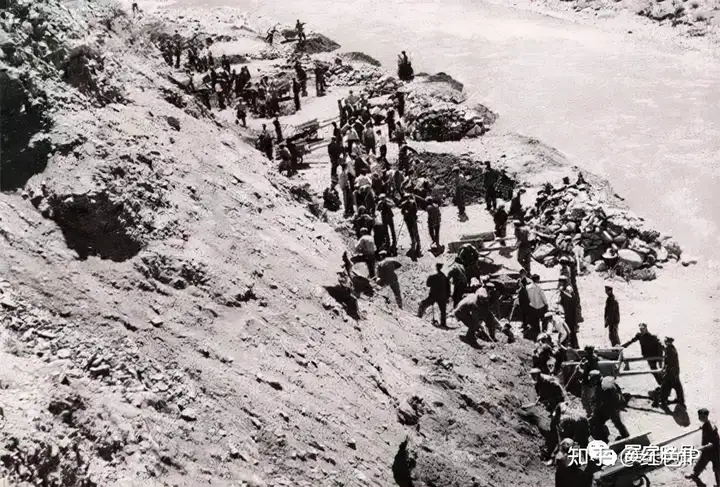
从甘南来说,早在西北解放战争结束前,进军甘青新的一野部队,为了剿灭青海马家军的残余叛乱和匪患,各军都成立了骑兵团,这是根据西北广阔的草原、戈壁、荒漠决定的,也是敌人的作战特点决定的,骑兵的作用无可替代。如1军的骑兵团参与平息马家军残部叛乱,1军入朝参战后,骑兵团留下来继续剿匪;2军的骑兵团在南疆参与了堵截乌斯曼余部的战斗;3军的骑兵团收编了国民党军唯一的一个驼兵团,活捉了新疆的乌斯曼;6军的骑兵团在北疆参与了大规模剿匪,平息马家军骑五军的叛乱。
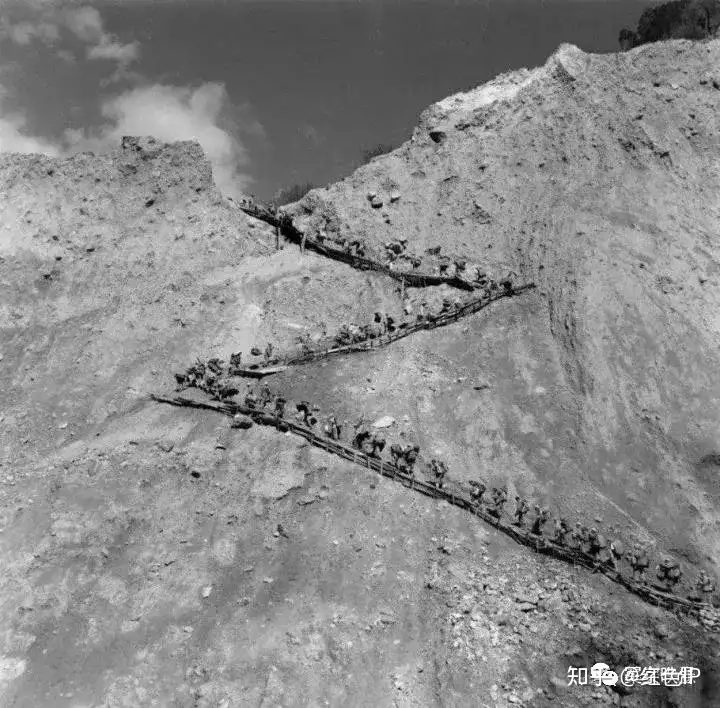
这时的西北各野战师的侦察连也多是骑兵,各军分区还有骑兵大队。查阅甘青平叛的作战序列可以看到,骑兵部队所占的比例相当大。步骑混编,多路进击,步兵守点,骑兵追剿,是剿匪平叛主要的作战方式,因地形复杂环境恶劣,还要经常依靠航空兵空投给养,所以才有飞机给骑兵投马料的战场奇观。
青海解放时,当地的头人问1军廖汉生政委:你们有没有三千骑兵,要是有,我就听你们的。骑兵的作用可见一斑。
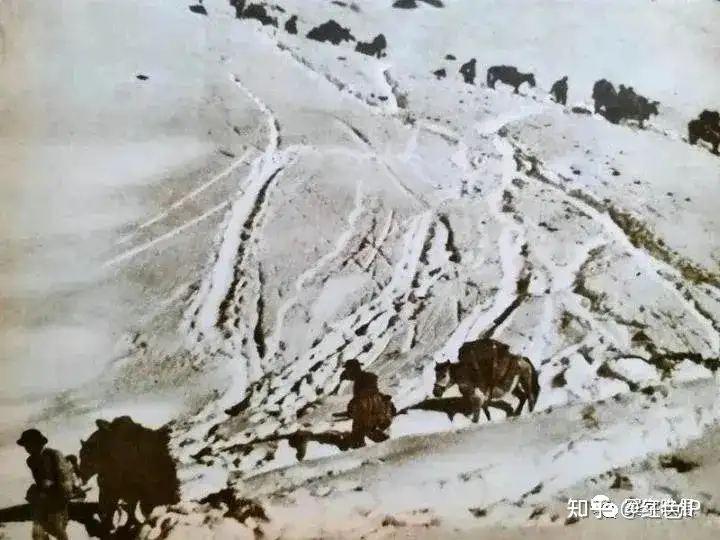
最典型的是1953年,马步芳的叔父马良叛乱,接收蒋方空投武器和特务,窜扰甘青川边,是大陆仅存的一股政治土匪,当地部队多次进剿未果,军委紧急从内蒙调骑兵第一师入甘,骑一师的前身是大青山骑兵支队和陕甘宁联防骑兵旅,长期转战在内蒙古地区,是我军历史最悠久的一支骑兵部队,该师经铁路长途输送,下车上马,急行军数日,长驱直入甘南黄河弯曲部,马良匪帮猝不及防,情报失灵,被骑1师打个正着,主力被歼,马良受擒,这个嚣张的“陆上台湾”就此覆灭。骑1师此后长期驻防陇原,在1958年平叛中,和步兵11师步骑协同并肩战斗,同为甘青南平叛的主力部队,也是当时全军唯一的一个建制骑兵师。
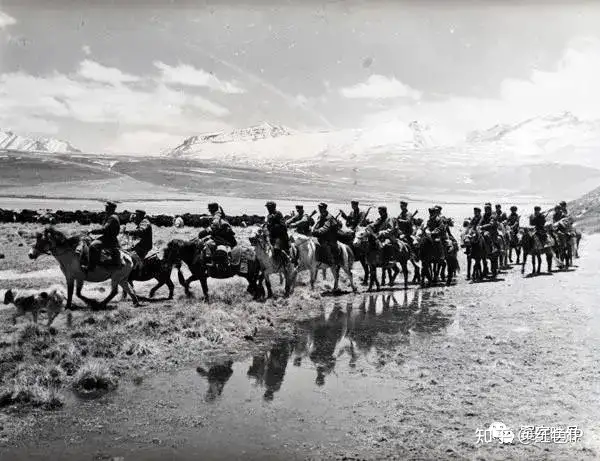
一野各军留在甘青两省的骑兵团,均改编为兰州军区各独立骑兵团,加上骑2师的两个老骑兵团(即骑1师1947年率先渡黄河进入西北的两个团,归一野指挥),共有七团之多,全部投入了甘青平叛。解放兰州时,配属给一野的华北19兵团,还带来了整编傅作义部骑4师而来的骑兵第6师。当年19兵团入朝参战时,骑6师没有去,也留在了宁夏负责平叛,这个师是傅系骑兵的头等主力,抗战时参与过奇袭百灵庙、五原大捷等战斗,剿匪完成后缩编为团,也并入了骑1师。
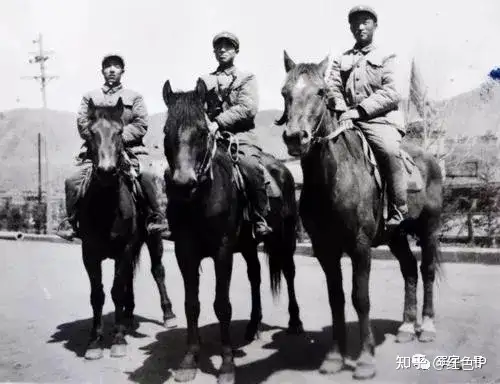
在青海,军分区的玉树支队,果洛支队都是骑兵,此外,解放军的内蒙古骑兵各师,解放战争中参加了辽沈和平津两大战役,抗美援朝时为志愿军大量输送战马,训练新马,其中一部改为火箭炮兵直接入朝参战,后缩编为内蒙古军区13、14团,也于1958年甘青平叛时调赴青海参战。
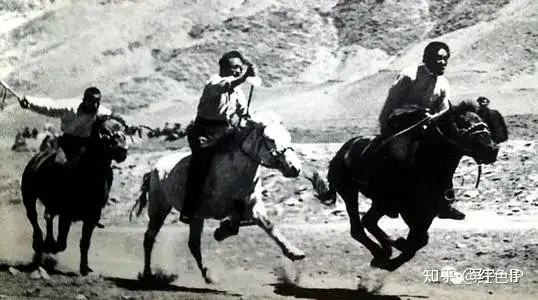
该部是一支骑兵劲旅,兰州决战前,准备调赴西北与马家骑兵打野战,官兵早就听说马家军骄横自大,当时厉马秣兵,求战欲望强烈,准备和马家军一较高下,只是马家没有野战企图,在城市攻防战中覆亡于兰州。蒙骑这两个团在藏北参加了多次大规模平叛战斗,直到平叛结束归建。当时的甘青草原上,基本上全军的建制骑兵都到了,蒙古马、三河马、山丹马、门源马、大通马、河曲马、藏马、伊犁马齐聚高原,万马嘶鸣纵横飞驰,是一场极为壮观的骑兵大会战。
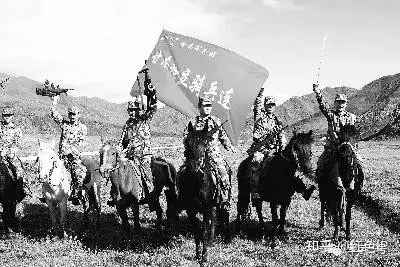
甘青平叛期间,因地域辽阔,叛情严重,而驻防当地的兵力不足,从朝鲜战场上刚撤军回来的部队也紧急西调,其中就有丁盛的54军,著名的“丁指”就是这时成立的。54军下属的两个师在相距千里的川藏和青藏两个方向参战,1958年,步兵11师,即后来对印反击战飞兵贝利小道的部队,师主力正在甘南藏区平叛之际,留守甘肃临夏(马步芳老家)的师炮兵团,突遭当地数万人围攻,被团团包围,该炮兵团拿起步兵武器投入战斗。
可是叛匪中有相当多的马家军残余人员,战斗力甚强。炮兵团一时间寡不敌众,情势相当危急。正当叛匪向炮兵团准备发起最后总攻之时。这时朝鲜战场下来的134师一个团正好从附近路过,他们本来是去参加甘南平叛战斗的,闻讯后紧急赶来,打破了叛匪的包围圈,与炮兵团会合。步兵的赶到让解放军士气大振,两个团合兵后迅速主动出击,坚决平息了这场想趁机在后院点火的大规模暴乱。
当时从朝鲜回来的志愿军部队,还有61师、62师,也参加了平叛,至此,四个野战军都有部队参战。
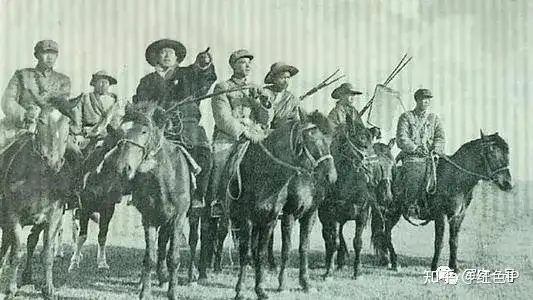
134师的部队进藏后,这支刚与机械化的美军作战过的部队,根据藏北的地形和叛匪的特点,也组建起了骑兵,同样是以侦察连为主,抽调骨干编成骑兵大队,作为步兵的前卫寻歼叛匪,作战中,经常因骑术不精撵不上对方,也经常步骑脱节,失去战机,好在临阵磨枪,不快也光,官兵的军事素质过硬,还是打出了一些经典战例。
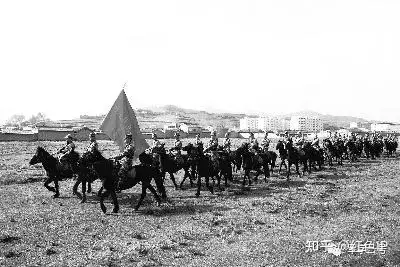
134师骑兵大队的一个中队,纵马追击,在索台地区紧紧咬住一伙叛匪不放,最后从两翼包抄,将这四十多名叛匪压在山坳里聚歼,正在打扫战场时,周围的山上突然枪声大作,五百多骑叛匪瞬间而至,从四面包围了他们,对方火力相当猛烈,是得到了美国空投武器的叛匪骨干,骑兵中队立即占领有利地形,向师部请求支援,前来增援的是11师32团,虽然因地形不熟,部分连队没有赶到指定位置,该团还是给叛匪来了个反包围,并命令各营以新编成的骑兵突击队为前锋,迅速向叛匪发起猛烈进攻。
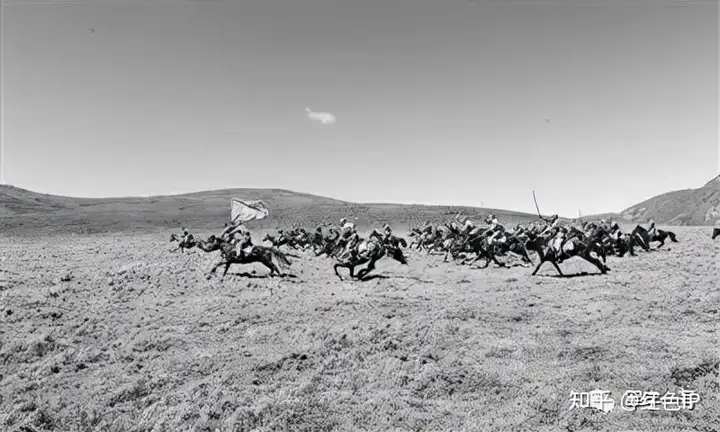
这时骑兵中队向外打,32团往里攻,叛匪分出少部兵力向外阻击,集中力量向骑兵中队猛扑,力图迅速吃掉骑兵中队,再寻隙冲出包围,骑兵中队极其顽强,连续打退了叛匪的五次冲锋,这时32团各连陆续赶到,攻击力大为增强,内外夹击,叛匪全部被消灭,此战骑兵中队二十多人牺牲,85%的人负伤,老战士、新骑兵,打出了一个成功的中心开花。
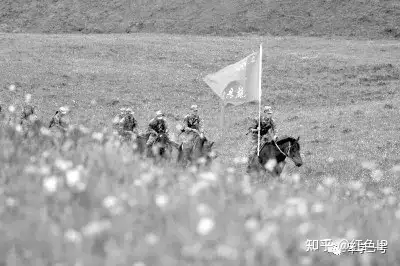
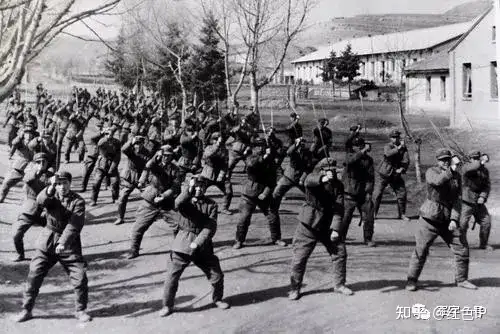
当年的骑兵,在训练中,马上射击,马上斩劈,乘马越障是基础训练科目,而根据实战需要,下马徒步战是重要的训练内容,平叛战斗中更多采取的也是高速机动,控制有利地形以火力消灭敌人,一般由新兵在后控马,老兵在前战斗。老骑兵还有很多绝活儿,镫里藏身等技术不用说,技术好的骑兵,比如参加开国大典的那些骑兵,还会从马的侧后上马,即马立在身前八步远的距离,猛跑过去,手一搭马背就跳上去了,这个动作叫“八步赶乘”;还很多老骑兵,遇到紧急情况时,不是先整理鞍具,而是先把鞍具扔上马背,人随之上马,在控马跑动中系好肚带,一气呵成非常利落,能迅速进入战斗状态,非常实用。
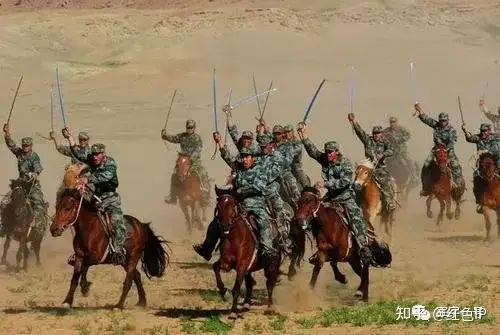
上世纪50年代的大西北,是骑兵作为一个古老而传奇的兵种光荣落幕前的最后辉煌,这段历史不该为后人忘记,那种说自动火器出现骑兵就退出历史舞台的臆断,是以洋为本,根本不了解我军骑兵的重要历史。中国有自己的国情,有自己的地理环境,必然有符合实战需要的作战形态,当年数万纵马扬刀的战士驰骋高原戈壁,为国家统一与和平立下了大功,这是一段不可埋没的骑兵史。


评论
发表评论