Huang Qifan: Deepen reform and opening up, promote high-quality development, and release four economic dividends黄奇帆:深化改革开放,推动高质量发展,释放四重经济红利
On May 6, Tsinghua PBC Chief Economist Forum was held at Tsinghua PBC School of Finance with the theme of "2023 Global Financial Turmoil and Economic Outlook". This forum is hosted by the PBC School of Finance of Tsinghua University and organized by the Center for International Finance and Economic Research (CIFER) of Tsinghua University PBC School of Finance. Huang Qifan, the former mayor of Chongqing, attended the roundtable discussion of the forum on "China's Economic Outlook".
Huang Qifan said that China's economic growth will have four dividends to be released. First, the supply-side structural reform dividend. Organically combining the implementation of the strategy of expanding domestic demand with deepening supply-side structural reforms, and canceling supply restraint policies in the field of mid-to-high-end products and services can promote the development of related industries. Secondly, the scale effect dividend of China's large market. Huang Qifan pointed out that it can reduce the cost of enterprise technology development, logistics cost, market development cost, procurement cost, fixed investment cost and labor cost, improve productivity level and attract foreign investment. Third, total factor productivity increases dividends. Huang Qifan believes that my country's current technology conversion rate is not high, key technology research and development is insufficient, and the market value of unicorn companies is not high. Through technological innovation and capital market reform, the promotion of total factor productivity can be promoted to reach the average level of developed countries, which can greatly release Productivity bonus. Finally, the new opening bonus. The signing of RCEP has brought new opening up dividends. The in-depth application of goods trade rules, especially the cumulative rules of origin, has driven the development of related industries. The lower entry threshold for service trade will bring about service growth; it is conducive to the introduction of high-quality products and accelerate the formation of international competitive products. A strong industrial chain cluster is conducive to high-quality going out.
China's economy is stabilizing and looking forward to a better future
leaders and experts!
It is a great pleasure to participate in today's roundtable forum. The meeting of the Political Bureau of the Central Committee on April 28 made an in-depth analysis of the current economic situation and made a comprehensive deployment of the next step. I have full confidence in China's economy by thoroughly studying the spirit of the 20th National Congress and the Politburo meeting. I think that China's economic growth will have four dividends to be released.
1. Organically combine the supply-side structural reform with the strategy of expanding domestic demand to release reform dividends
The 20th National Congress of the Communist Party of China emphasized that it is necessary to organically combine the implementation of the strategy of expanding domestic demand with the deepening of supply-side structural reforms. Since the reform and opening up, my country has formed the world's largest and most growing middle-to-high-income group. At present, the middle-income population with an annual household income of 100,000 to 500,000 in my country exceeds 400 million people, and there are also large-scale high-income groups. The needs of these middle and high-income groups are mainly reflected in the consumption upgrade of middle and high-end products and services. During the epidemic in the past few years, most of the consumption of tourism, study abroad, and shopping stayed in the country, and the total number of imported high-end brands increased instead of falling. According to Bain statistics, the global personal high-end consumer goods market will shrink by 23% to 217 billion euros in 2020, which is the first market shrinkage since 2009. However, during the same period, the personal high-end consumer goods market in China showed growth against the trend. In 2020, the market size of personal high-end consumer goods in China will reach 346 billion yuan, a substantial increase of 47.9% over the previous year. Moreover, the preferences of Chinese consumers and Chinese elements are becoming the main considerations for international brands to formulate marketing and design strategies. The so-called "consumer demand supported by income" focuses on this group of people.
In fact, my country's macroeconomic operation has been plagued by insufficient aggregate demand for a long time. Insufficient domestic demand is a superficial phenomenon. To a large extent, it is due to the fact that my country has many supply restraint policies in the field of mid-to-high-end products and services, which have limited the growth of supply capacity, and thus The huge and effective demand that already exists and has the ability to pay cannot be fully released. It is necessary to effectively expand the consumption of middle and high-income groups, gradually promote employment, and use employment to drive more employment, thereby increasing the income of other groups of people, and promoting the economic cycle to gradually enter a new level of dynamic adaptation of supply and demand. This is exactly the meaning of the question of building a new development pattern with internal circulation as the main body and dual circulations promoting each other.
For example, my country's annual car sales have hovered around 27 million for more than five years. Although the market size has ranked first in the world, the number of cars per thousand people is only more than 200, which is basically at the bottom of countries with similar income levels in the world. Behind this is the existence of a large number of traffic restrictions, license restrictions, and purchase restrictions, as well as lagging parking buildings and road network construction, which have inhibited the demand for automobile consumption. Straightening out these two aspects can effectively stimulate car consumption. According to the current growth rate in my country, the number of cars per thousand people has the potential to reach more than 400 in the next ten years, and the annual sales volume has the potential to increase by 10 million to more than 37 million. There are many other industries and fields like this, such as consumer demand for improved housing, personalized high-quality medical care, health, education services, low-altitude aviation, boats, racing cars, horse racing and other consumer demands, and so on. The reason why these areas have not developed is mainly due to the existence of a large number of supply restraint policies. These effective demands should be released by deepening supply-side structural reforms, and the new reform dividends should be used to promote high-quality economic development.
2. Build a super-large unified market and release market dividends
Entering a new stage of development, the Chinese economy will usher in a new dividend after the labor dividend—this is the dividend generated by our super-large single market, that is, the market dividend. In terms of size, China has a population of 1.411 billion, accounting for nearly 18% of the world's total population. In terms of market structure, China is a single big market. A single market refers to a market with a unified legal system, unified tax system, unified business rules, and unified language and culture. As far as the industrial base is concerned, China is an economy that integrates all factors, all categories, and the entire industrial chain. The combination of these three will produce "economies of scale" effect. Once the manufacturing industry enters the Chinese market, once the scale increases, it can greatly dilute six costs: one is research and development costs, the other is investment costs in fixed assets, the third is procurement costs, the fourth is labor costs, the fifth is logistics costs, and the sixth is market costs. Development costs. Generally speaking, economies of scale can affect 30%-40% of the entire manufacturing cost. Once a sufficient scale is reached, the price can be lowered by about 30%-40%, defeating foreign competitors with price advantages.
This economy of scale effect is a new dividend naturally produced by China at this stage of development, and it is also the natural logic contained in Chinese-style modernization as a modernization with a huge population. Driven by this large market, the reasonable industrial chain layout logic of multinational companies is to sell and sell real estate in the place of production. The so-called sales at the place of origin is to take advantage of the local comprehensive factor cost to organize production and sell it to the global market. The six cost dilution effects of China's large market will be an important factor affecting multinational companies' "in China, for the world". The so-called sales of real estate is to organize production for the local market and better organize the supply chain to respond to changes in consumer demand, that is, "in China, for China". China's large market of 1.4 billion people will be a huge "gravitational field". This is also where we have the confidence to stabilize the basic market of foreign trade and foreign investment.
3. Continuously open up new fields and new tracks, release talent innovation dividends and capital market dividends
One is talent and innovation dividends. Continuously opening up new fields and new tracks for development is an effective means to adapt to the requirements of the new technological revolution under the new situation, break various attempts at decoupling and breaking chains, and seek self-reliance and self-improvement in science and technology. On the one hand, China's economy has the conditions and ability to continuously open up new areas of development and win new tracks. From the perspective of demand, China has become the world's largest online retail market and is about to become the world's largest consumer market, and this market is constantly upgrading, which will provide fertile soil for local innovation.
From the perspective of the supply side, China has a large team of talents and engineers, and a group of market players who can industrialize various creative innovations at any time. In 2020, my country's population with a university education has reached nearly 220 million. Compared with the data of the sixth census, the number of people with a university education per 100,000 people has increased from 8,930 to 15,467; from 2000 to 2020, China has trained 60 million engineers in the past 20 years. The ranking of the World Intellectual Property Organization's Global Innovation Index shows that China has risen from 34th in 2012 to 11th in 2022. With China's ultra-large-scale single market and the manufacturing advantages and talent advantages of the entire industrial chain, as long as there is a "spark" of innovation and creativity, a new blue ocean of industry can be formed "like a prairie fire", which in turn will create a new blue ocean for technology applications and technologies. Integration and technical iteration provide a broad space and stage. This is the huge talent and innovation advantage that the Chinese economy has. We need to turn these potential advantages into real advantages through a new round of deepening reforms, making them a talent and innovation dividend that can boost the high-quality development of China's economy.
The second is capital market dividends. How to give full play to the supporting role of the capital market in the development of the national economy, the key lies in deepening the reform of the basic system of the capital market, through the reform of the capital market to penetrate the entire chain of innovation, and to open up the high-level closed loop of technology-finance-industry. The key to building a new development pattern. At present, the registration system has been implemented, but a series of basic system reforms are still needed to realize the stable and long-term development of the capital market.
I think there are at least two aspects: one is to improve the delisting system. For the registration system to succeed, it must cooperate with the delisting system. It is impossible to go public in batches without stopping, while some zombie companies cannot delist on the other hand. By the end of 2022, there were 5,079 listed companies in my country. In the future, the implementation of the registration system and the improvement of the delisting system will achieve a roughly balanced balance between the number of initial listings and the number of delistings, so that bad money will not drive out good money. The second is to promote the entry of long-term funds into the market. It is necessary to further expand the proportion of social insurance funds including various types of pensions entering the market, so as to provide sufficient financial support for the sustainable and stable development of the capital market. It is suggested to further promote the enterprise annuity system and improve the investment system of enterprise annuity. This has at least three advantages: 1. To improve the structure of investors, the management of enterprise annuities will surely give birth to a group of institutional investors; 2. With the development of enterprises, enterprise annuities will grow bigger and bigger, which will provide the capital market with a steady stream. 3. It helps to connect the channels for ordinary employees to participate in the capital market and obtain property income.
4. Promote the implementation of RCEP and release new opening dividends
The 20th National Congress of the Communist Party of China made systematic deployments to promote high-level opening up. Right now, one of the key tasks of opening up to the outside world is to promote the implementation of RCEP, and release a new round of opening up dividends through high-level introduction and going out. Specifically, there are five aspects:
First, the rules on trade in goods drive the development of related industries. Taking agricultural products as an example, the proportion of zero-tariff products for agricultural products exported from China to Japan has increased from the original 20% to about 60%. The opening of agricultural products between China, South Korea and ASEAN has also exceeded the existing bilateral free trade agreements. The measures have provided convenience for the export of China's agricultural products, and are also conducive to expanding the import options of other countries' superior agricultural products. In addition, RCEP's trade facilitation measures also provide institutionalized guarantees for the rapid customs clearance of fresh agricultural products.
Second, the entry threshold for service trade has been lowered, and the demand for services has increased significantly. For a long time, my country's huge trade in goods has not brought into full play the driving advantages that China's huge trade in goods should have for the development of service trade. RCEP signatories have reached market access commitments that exceed the current level of openness in terms of service trade. The expansion of trade and investment activities brought about by RCEP will inevitably lead to the expansion of supporting service chains, which objectively serve China's development of digital trade and intellectual property rights. Producer services such as R&D and design services, cross-border logistics, and life services such as life services, cultural services, and tourism services provide good conditions.
The third is the in-depth application of the rules of accumulation of origin, which has brought huge benefits to China's industrial development in four aspects: the accumulation of regional value within the scope of the entire RCEP effectively reduces the threshold for enjoying preferential tariffs, and drives the expansion of the total scale of intra-regional trade; In order to meet the standard of origin, enterprises will use more intermediate products in the region for production, which will help to further deepen the horizontal division of labor in the region and optimize the layout of the industrial chain; attract multinational companies outside the region in order to fully enjoy the accumulation rules of regional origin , to increase the investment layout in RCEP areas; it is conducive to the development of small and medium-sized enterprises. Small and medium-sized enterprises can make full use of the upstream supply chain in the region, overcome the unfavorable conditions of their own limited value-added, and increase the regional value components in products, so that it is easier to achieve the original Origin standards, enjoy the preferential tariffs of the agreement.
Fourth, it is conducive to the introduction of high-quality products and accelerates the formation of industrial chain clusters with international competitiveness. With the help of RCEP to further open up the domestic market, we can better attract global foreign capital and multinational companies to continue to gather the value chain of the manufacturing industry chain supply chain, especially the core links in China, and on this basis to accelerate the expansion of the chain and strengthen the chain. Promote cluster development.
Fifth, it is conducive to high-quality going out and promoting the construction of the "Belt and Road". The implementation of RCEP will significantly improve the level of regional economic integration in East Asia, significantly optimize the business environment in the region, further enhance the trade creation effect brought about by the free trade agreement, promote the integration of industrial chains, supply chains and value chains in the region, and promote the freedom of factors This is of great significance to the economic recovery of East Asia and the world.
In short, the future prospects of China's economy are bright, and the current difficulties are also temporary. As long as we unswervingly deepen reform and opening up, unswervingly promote high-quality development, and continue to release the dividends of reform, market, talent and innovation, and opening up, China's economic growth rate will surely be maintained above 5%. In this regard, we must have full confidence! thank you all!
黄奇帆:深化改革开放,推动高质量发展,释放四重经济红利
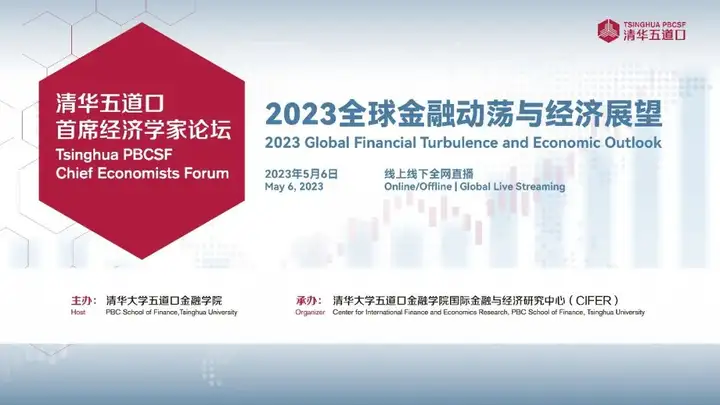
5月6日,清华五道口首席经济学家论坛以“2023全球金融动荡与经济展望”为主题,在清华大学五道口金融学院隆重召开。本届论坛由清华大学五道口金融学院主办、清华大学五道口金融学院国际金融与经济研究中心(CIFER)承办,线上线下相结合,中英双语直播。重庆市原市长黄奇帆出席论坛圆桌讨论一“中国经济展望”,他以“中国经济企稳向好未来可期”为题发言。
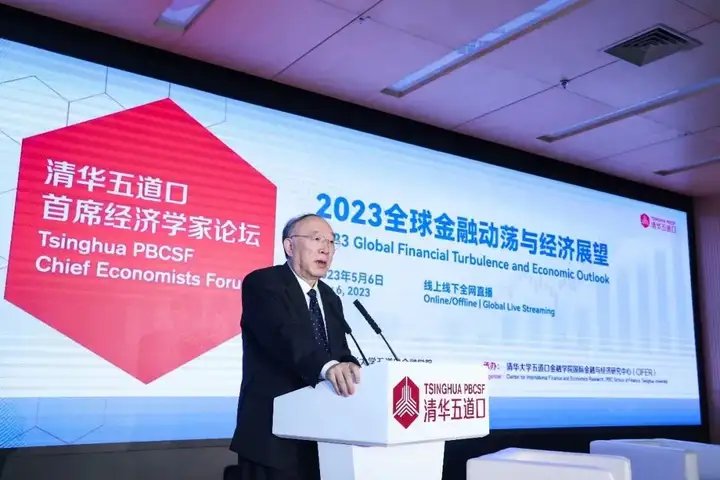
图为黄奇帆
黄奇帆表示,中国经济增长将有四个方面的红利有待释放。首先,供给侧结构性改革红利。把实施扩大内需战略同深化供给侧结构性改革有机结合起来,取消中高端产品和服务领域的供给抑制政策,可以促进相关产业发展。其次,中国大市场的规模效应红利。黄奇帆指出,可以降低企业科技开发成本、物流成本、市场开拓成本、采购成本、固定投资成本和人力成本,提升生产率水平,吸引外资。第三,全要素生产率提升红利。黄奇帆认为,目前我国科技转化率不高,关键技术研发不足,独角兽企业的市值比重不高,通过科技创新和资本市场改革促进全要素生产率的提升,达到发达国际平均水平,能够极大地释放生产率红利。最后,新对外开放红利。RCEP的签署带来新开放红利,货物贸易规则特别是原产地累积规则的深入应用带动相关产业发展,服务贸易准入门槛降低会带来服务增长;有利于高质量引进来,加快形成具有国际竞争力的产业链集群,有利于高质量走出去。
中国经济企稳向好未来可期
黄奇帆
各位领导、各位专家大家好!
很高兴参加今天的圆桌论坛。4月28日的中央政治局会议对当前经济形势做了深入分析,对下一步工作做了全面部署。深入学习二十大和政治局会议精神,对中国经济我是充满信心的。我认为中国经济增长将有四个方面的红利有待释放。
一、把供给侧结构性改革与扩大内需战略有机结合起来,释放改革红利
党的二十大强调,要把实施扩大内需战略同深化供给侧结构性改革有机结合起来。改革开放以来,我国形成了全球规模最大、最具成长性的中高收入群体。目前我国家庭年收入10-50万的中等收入人口超过4亿人,高收入群体也有很大规模。这些中高收入群体的需求主要体现为对中高端产品和服务的消费升级上。过去几年的疫情期间,旅游、留学、购物的消费大都留在了国内,进口的高端品牌总量不降反增。根据贝恩统计,2020年全球个人高端消费品市场缩水23%至2170亿欧元,是2009年以来首次出现的市场萎缩情况。但是,同期中国境内个人高端消费品市场却呈现逆势增长。2020年,中国境内个人高端消费品市场规模达到3460亿元,较上年同比大幅增长47.9%。而且中国消费者的偏好、中国元素正成为国际品牌制定营销和设计战略的主要考虑。所谓有“收入支撑的消费需求”,重点是这部分人群。
事实上,我国宏观经济运行长期受总需求不足问题困扰,内需不足是表面现象,在很大程度上源于我国在中高端产品和服务领域存在许多供给抑制政策,导致供给能力增长受限,进而使得本就存在的有支付能力的庞大有效需求得不到充分释放。要通过有效扩大中高收入人群的消费,逐步带动就业,以就业带动更多就业,进而增加其他人群的收入,推动经济大循环逐步进入供需动态适配的新水平。这也正是构建以内循环为主体、双循环相互促进新发展格局的题中之义。
比如,我国汽车年销量已经超过五年徘徊在2700万辆上下了,虽说市场规模已经稳居全球第一,但千人保有量只有200多辆,在全球同类收入水平国家中基本处于垫底位置。这背后是存在大量的限行、限牌、限购措施和停车楼、路网建设滞后,抑制了汽车消费需求。理顺了这两方面,可以有效刺激汽车消费。根据目前我国增速,未来十年千人汽车保有量完全有潜力达到400辆以上,年销量完全有潜力新增1000万辆,达到3700万辆以上。类似这样的行业和领域还有很多,比如改善性住房消费需求、个性化高品质的医疗、健康、教育服务以及低空航空、船艇、赛车、赛马等各类消费需求,等等。而这些领域之所以没有发展起来,主要原因是存在大量供给抑制政策,应通过深化供给侧结构性改革来释放这些有效需求,以新的改革红利推动经济高质量发展。
二、建设超大规模统一大市场,释放市场红利
进入新发展阶段,中国经济将在劳动力红利之后迎来一个新的红利——这就是我们的超大规模单一市场所产生的红利,即市场红利。就规模而言,中国人口有14.11亿,占全球总人口的比例接近18%。就市场结构而言,中国是个单一的大市场。单一市场是指法律体系统一、税务体系统一、商业规则统一、语言文化统一的市场。就工业基础而言,中国是全要素全门类全产业链集成的经济体。这三者叠加在一起将产生“规模经济”效应。进入中国市场的制造业,一旦规模上去了,就能够大幅摊薄六项成本:一是研发成本,二是固定资产投资成本,三是采购成本,四是人力成本,五是物流成本,六是市场开拓成本。一般来说,规模经济可以影响到整个制造业成本的30%—40%,一旦达到了充分的规模,就可以把价格压低30%—40%左右,以价格优势打败国外竞争对手。
这种规模经济效应是中国发展到如今这个阶段自然产生的新红利,这也是中国式现代化作为人口规模巨大的现代化所蕴含的自然逻辑。在这个大市场的带动下,跨国公司合理的产业链布局逻辑是产地销、销地产。所谓产地销,就是利用当地的综合要素成本的优势组织生产,面向全球市场进行销售。中国大市场的六个成本摊薄效应将是影响跨国公司“在中国、为全球”的重要因素。所谓销地产,就是面向本地市场组织生产,更好地组织供应链响应消费者需求变化,即“在中国、为中国”。中国14亿人口的大市场将是一个庞大的“引力场”。这也是我们稳定外贸外资基本盘的底气所在。
三、不断开辟新领域新赛道,释放人才创新红利和资本市场红利
一是人才和创新红利。不断开辟发展新领域新赛道是新形势下适应新科技革命要求、打破各种脱钩断链图谋、谋求科技自立自强的有效手段。一方面,中国经济有条件有能力不断开辟发展新领域、制胜新赛道。从需求端看,中国已成为全球最大网络零售市场,即将成为全球最大的消费市场,而且这个市场在不断升级换代,这将为本土创新提供作为肥沃的土壤。
从供给端看,中国有规模庞大的人才队伍、工程师队伍,有随时可以将各种创意创新创造进行产业化的市场主体群,这也是中国创新越发有底气有后劲的重要源泉。2020年我国具有大学文化程度的人口已达近2.2亿人。与第六次人口普查数据相较,每10万人中具有大学文化程度由8930人上升为 15467人;从2000年到2020年,这20年时间里中国培养了6000万名工程师。世界知识产权组织全球创新指数排名显示,中国已从2012年的第34位上升到2022年的第11位。以中国超大规模单一市场加上全产业链制造业优势和人才优势,只要有一点创新创意的“星星之火”,就可以“燎原之势”形成新的产业蓝海,反过来为技术应用、技术集成、技术迭代提供广阔的空间和舞台。这便是中国经济拥有的巨大的人才和创新优势。我们要通过新一轮深化改革把这些潜在优势转化为现实优势,使之成为助推中国经济高质量发展的人才和创新红利。
二是资本市场红利。如何发挥资本市场在国民经济发展中的支撑作用,其中的关键在于深化资本市场基础制度改革,以资本市场的改革贯通创新全链条,将科技-金融-产业的高水平闭环打通,而这正是构建新发展格局的关键所在。当前,注册制已经实施,但要实现资本市场行稳致远,还需要一系列基础制度的改革。
我认为至少有二方面:一是要健全退市制度。注册制要取得成功,要与退市制度相配合。不能一边不停的批量上市,另一边一些僵尸企业却无法退市。2022年底,我国上市公司有5079家。今后注册制的实施加上退市制度的完善,实现首发上市的数量与退市的数量大致协调均衡,这样才不至于劣币驱逐良币。二是要推动长期资金入市。要进一步扩大包括各类养老金在内的社会保险资金入市的比例,为资本市场的持续稳定发展提供充足的资金支持。建议进一步推广企业年金制度,并健全企业年金的投资体系。这至少有三方面好处:1、改善投资者结构,企业年金的管理必将催生一批机构投资者;2、随着企业发展,企业年金必将越滚越大,将为资本市场提供源源不断的资金来源,进而推动资本市场进入良性增长的轨道;3、有助于贯通普通职工参与资本市场、获取财产性收入的渠道。
四、推动RCEP落地实施,释放新的开放红利
党的二十大对推进高水平对外开放进行了系统部署。眼下,对外开放的一个重点任务就是要推动RCEP落地实施,通过高水平引进来、走出去,释放新一轮开放红利。具体有五方面:
一是货物贸易规则带动相关产业发展。以农产品为例,中国出口到日本的农产品零关税产品税目占比从原来的20%大幅提升到约60%,中国与韩国、东盟之间的农产品开放也超出了现有双边自贸协定,这些举措都为中国农产品出口提供了便利,也有利于扩大其他国家优势农产品的进口选择。此外,RCEP的贸易便利化措施也给生鲜农产品的快速通关提供制度化保障。
二是服务贸易准入门槛降低,服务需求大幅增长。长期以来我国巨量的货物贸易对于服务贸易发展理应具有的带动优势没有发挥出来。RCEP各缔约国在服务贸易方面达成了超出现有开放水平的市场准入承诺,RCEP带来的贸易投资活动的扩大也必然带来配套服务链的扩张,客观上为中国发展数字贸易、知识产权服务、研发设计服务、跨境物流等生产性服务业,以及生活服务、文化服务、旅游服务等生活性服务业,提供了良好的条件。
三是原产地累积规则的深入应用,对于中国的产业发展带来四个方面的巨大增益:整个RCEP范围内的区域价值累积有效降低了享受优惠关税的门槛,带动区域内贸易总规模的扩大;企业为了达到原产地标准,会更多地使用区域内的中间品进行生产,有助于进一步在区域内深化水平分工,优化产业链布局;吸引区域外的跨国公司为了充分享受区域原产地累积规则,加大对于RCEP区域的投资布局;有利于中小企业发展,中小企业可以充分利用区域内的上游供应链,克服自身单独增值有限的不利条件,提高产品中的区域价值成分,从而更容易达到原产地标准,享受协定的关税优惠。
四是有利于高质量引进来,加快形成具有国际竞争力的产业链集群。借助RCEP进一步开放国内市场,可以更好的吸引全球的外资和跨国企业继续将制造业的产业链供应链价值链,特别是核心环节在中国集聚,以此为基础加快补链扩链强链,推动集群化发展。
五是有利于高质量走出去,推动“一带一路”建设。RCEP的实施将显著提升东亚区域经济一体化水平,显著优化区域内营商环境,进一步提升自贸协定带来的贸易创造效应,促进区域内产业链、供应链和价值链的融合,促进要素自由流动,强化分工合作,拉动区域内消费市场扩容升级,推动区域内产业链供应链进一步发展,这对东亚乃至全球的经济复苏具有重大意义。
总之,中国经济未来前景是光明的,目前的困难也是暂时的。只要我们坚定不移深化改革开放、坚定不移推动高质量发展,持续释放改革的红利、市场的红利、人才和创新红利和开放红利,必将能使中国经济增速保持在5%以上。对此,我们要有充分的信心!谢谢大家!


评论
发表评论