Great changes unseen in five hundred years五百年未有之大变局
one
A major change unseen in a century?
Yes, many people, both Chinese and foreign, have this feeling. Humanity has come before a certain new age. Accidentally witnessing history has also become a buzzword on the Internet. However, what are we saying goodbye to and what are we welcoming? Then there are different opinions. For example, from the perspective of international power balance, Teacher Jin Canrong believes that this great change refers to the general decline of Western power.
The sentence pattern of "great changes not seen in XX" comes from Li Hongzhang's memorial to Tongzhi in 1874. At that time, he only said that China's main foreign invasion had shifted from the frontier to the sea. In the following year, in his memorial to Guangxu, Li Hongzhang further defined the "big change" as a trend of globalization. Well, there was no such word at that time, and Li’s original text roughly meant this. "My majesty is as fast as the sky. I will make an agreement to do business with him. I will put him in a cage, and the earth will be 90,000 miles away from east to west. Xu will gather in China. It will be a big change in the past three thousand years."
Three thousand years, that is, from the source of Chinese writing history to that time, so this sentence is called the most international judgment of China in the nineteenth century. It was later proved that this statement was not an exaggeration. The 3,000-year ancient civilization ended, and China began to modernize and become another country.
Can today's big changes have such weight? Or is it just another adjustment of global power? After all, judging only from the international balance of power, it cannot be compared with the shock of the disintegration of the Soviet Union today.
I humbly think that today's changes are absolutely comparable to those of the past. From a cultural perspective, China and all mankind are facing a major change unseen in five hundred years, that is, the entire modern discourse system completed by the Enlightenment since the Renaissance is coming to an end. Human beings are entering the age of science from the age of philosophy.
two
There have been three ideological emancipation movements in modern Europe. The first is the Renaissance, a European version of Togu reform. From then on, man gradually replaced God as the center of attention of Europeans. Compared with the traditional Chinese culture, which has never believed in the Creator God since ancient times and has always based on human relations as its moral basis, this change is insignificant. In the minds of the Chinese people today, the Renaissance is nothing more than leaving behind some masterpieces and paintings, and it is only a trivial matter in the literary and art circles.
The second time is the religious reformation, which is something inside the Christian world. Few Chinese can understand topics like justification by faith, let alone why millions of people are fighting for these teachings . Not only the Chinese, but for people in other parts of the world, these two times are the Europeans' own business. Although logically speaking, the Renaissance and the Reformation are the buds of the Enlightenment.
The Enlightenment was completely different from the former two. The powerful productivity brought by the Industrial Revolution allowed these ideas to take root, and they were no longer just the personal expression of thinkers. Furthermore, they swept the world with strong ships and guns. The discourse system formed by the Enlightenment has continued to the present age, and still occupies a dominant position in people's minds. The concepts of human rights, progress, freedom, democracy, equality, and the rule of law that we are familiar with all come from the Enlightenment. Not only in Europe, not only white people, but all nations in the world use it as a banner in the process of modernization. Although China today revives traditional culture on the surface, it actually only adds some cultural tourism products. A man who tries to approach his personal life with pre-Enlightenment ideals is considered a monster.
Enlightenment values were later split in two. Some people take equality as the core appeal and demand the elimination of social inequality, first of all, the inequality of results. And this requires the deprivation of some people, and the establishment of a powerful state apparatus to suppress resistance to deprivation. Another group of people takes individual freedom as the core appeal and demands the reduction of social control, which requires the reduction of the scope of government power. After the twentieth century, these two groups established the Eastern and Western camps respectively. It doesn't matter what they claim to be, as far as their cultural background is concerned, they all come from the Enlightenment.
However, Enlightenment values were established by a group of literati after all. They do not touch production labor and inventions, they only pay attention to dividing the cake, and do not pay attention to making the cake. Few of the cultural celebrities in the Enlightenment paid attention to production and construction, and none of them paid attention to people's livelihood. This makes them indistinguishable from people of traditional culture around the world who do not know how to farm.
Although deeply influenced by scientific progress at that time, except for a few people such as Kant, others rarely participated in scientific research and lacked scientific spirit. As for science itself, it was not fully involved in production at that time, and had no real impact on society. Therefore, Enlightenment thinkers used science to overthrow religion, but replaced religious concepts with a batch of secular concepts, creating "gods without gods", that is, dogmas without personalization.
three
Time entered the nineteenth century, the old world was slowly being destroyed, and human beings entered into modernization irreversibly. From this time forward, there have been constant questions about Enlightenment values. Sociologist Comte proposed that human society should start from the stage of religion, pass through the stage of philosophy, and finally enter the stage of scientific demonstration. In this way, the Enlightenment is nothing more than a product of the philosophical age, a transition to a future scientific stage.
Sociologist Comte
Sorokin, a sociologist who grew up in Russia and later lived in the United States, believed that there are only two types of human culture. One is scientific culture, which takes evidence and rationality as the starting point. One category is all other cultures, which start out with imagination and fiction. In this way, the values of the Enlightenment and religion are actually one category, and they all start from the heart and make up some dogmas for people to believe in.
Sorokin
Perhaps, those Enlightenment thinkers themselves did not have the idea of being a leader. But the reason why many later generations spread their ideas is to use them in their own political or cultural struggles, so they must be dogmatic.
It is the behavioral scientists who have conducted a comprehensive critique of the Enlightenment. This school, born in the early twentieth century, specializes in the study of human behavior, especially that of infants and young children. They have the most say in what behaviors are innate and what behaviors are learned. And these empirical data just cannot prove the existence of "natural human rights", "absolute will" or "freedom". Behavioral science has ripped out the bedrock of Enlightenment values.
Watson, who pioneered behaviorism, said in his speech that slogans such as human rights and freedom are nothing but concepts manipulated by politicians and labor union activists in the United States. Decades later, the second-generation behaviorist Skinner wrote the book "Beyond Freedom and Dignity", which directly and comprehensively criticized the values of the Enlightenment. He dubs them "liberty literature" and "dignity literature," arguing that they fictionalize a humanity that doesn't exist. The value of these classic documents is for rebelling against the existing order. And once the rebellion succeeds somewhere, their believers don't know what to do next.
After all, Skinner was a scientist born in a laboratory. Although "Beyond Freedom and Dignity" sold millions, it was very long-winded. The theme of this book can be condensed into one sentence: the Enlightenment movement has many thoughts, and in the final analysis it is justified to rebel! Because it is in direct opposition to the values of the Enlightenment, the Behaviorist School has always been the object of criticism by the traditional Western cultural circles since its formation. Not only articles, but even films devoted to criticizing behavioral science. And they never gave up their claims.
There are also some scholars who are less aggressive, but loosen the foundation of Enlightenment values in more fundamental places, such as technical economics. This discipline mainly studies the impact of technological progress on the economy. Its experts believe that as early as 1900, technological progress has already formed more than half of the growth of the United States. Nearly 70% today. China has also reached 50% of the proportion today, and it can only get bigger and bigger.
Technology determines productive labor, and various sociopolitical philosophical doctrines focus on distribution. Technical economics is actually proving that dividing the cake has no decisive effect on making the cake. Enlightenment values have always been used by politicians as the slogan of the cake.
Modernization studies are another example. This school of scholars believes that since the industrial revolution, the core change in the world is modernization, and all other changes can only be explained around modernization. The achievements of modernization are reflected in various indicators of people's livelihood, such as GDP, average life expectancy, literacy rate, living area, public security level, and so on. Specifically, it can be divided into dozens of categories and hundreds of subcategories. In this way, it doesn't matter what discourse a country uses as its ideology or what system it implements, these actual indicators are the most important. Modernization research is based on these indicators to rank countries in the world and divide them into superior and inferior.
The study of modernization has not completely departed from the values of the Enlightenment, but has quantified the idea of "progress" in the Enlightenment and regarded it as an objective indicator and a basic indicator. In reality, many countries regard ideology as an indicator, and call countries with different ideas backward countries.
Although all kinds of doubts belong to the tributaries in the cultural and academic circles, they are like pipes, and sooner or later they will burst the dam of Enlightenment values.
Four
Time to move into the modern age. The crown has fallen, and church and state have been separated. Today, the per capita consumption of material resources in the world is 100 times that of the Enlightenment era, and half of the population lives in cities. Human beings enjoy the services of modern technology, obesity is a greater threat than tuberculosis. We have bid farewell to the era of Rousseau, Voltaire and Montesquieu long ago, and the Enlightenment values have lost their lives long ago, but they have not entered the museum for a long time, because there is still a special fortress for inheriting them, that is, modern times liberal arts education.
As far back as the Renaissance, Italian humanists, with the support of the government, established the earliest liberal arts schools with the goal of competing with church schools. In the era of the Enlightenment, these liberal arts colleges, which mainly focus on literature, history and philosophy, became the positions to resist the feudal and ignorant forces. Throughout the nineteenth century, they were once the main body of education, until the end of the nineteenth century, they gave way to contemporary education with science as the main content.
In the second half of the 20th century, especially the 21st century, mankind has bid farewell to the Middle Ages. Liberal arts schools, however, were still dominated by Enlightenment values and taught mainly the classics. If some contemporary works are taught, the authors are also often taught Enlightenment values from an early age. If the Enlightenment established a group of "gods without gods," contemporary liberal arts schools are their churches. Rebel for the sake of rebellion, revolution for the sake of revolution. However, there are no more feudal tyrants, no more ecclesiastical courts, to whom do they vent their anger? Some see science as the new enemy.
Science itself has encountered three major enemies in the course of its development. The first is feudal superstition. Science pays attention to evidence, threatens theism, and is the natural enemy of traditional religion. Therefore, when science was only popular in the small intellectual circles of Western Europe, it posed a threat to medieval culture.
The second is autocracy. Science respects truth rather than authority. When scientists encounter academic disagreements, they will conduct experiments, conduct investigations, accumulate more evidence to consolidate themselves, or recognize each other. In the history of science, there are many examples of someone using authority to suppress opponents, or even borrowing external authority to suppress opponents. But none of them made it into the mainstream of science. In various social circles, only science can be truly anti-authority.
Based on these two points, the thinkers of the Age of Enlightenment, as well as their disciples and grandchildren around the world, once regarded science as the same way. The May 4th Movement called "science" and "democracy" together as two gentlemen, which is typical. Democracy, however, is precisely the third enemy of science. Scientific achievements are never decided by voting. The scientific community respects the professional system and relies on objective evidence and reason. A scientific achievement is initially created and accepted by a very small number of people, or even a few people. In terms of society as a whole, the scientific community is also a minority. Less than 20% of Americans have basic scientific literacy, and just over 7% of China.
This means that if there is a voting system in science, humans may not have access to electricity today. In modern times, scientific progress is driven by political power or capital power. Social elites have a better understanding of new scientific and technological achievements and their value. And deepening democracy often turns the anti-science trend in society into a political result, hindering progress. And this is the reality of contemporary Western countries.
Just as it prompted humans to question the existence of God, the empirical spirit of science eventually made people question the authenticity of concepts such as freedom, human rights, and absolute will, threatening the values of the Enlightenment itself.
five
Overthrow the feudal rule, complete the separation of church and state, and liberate the oppressed nations. At this point, the historical mission of the Enlightenment has come to an end, and the sages should have rested in their graves long ago. Human beings encounter many problems today, but they are all new problems that require new perspectives to understand and new methods to solve.
However, because the traditional humanities intellectual circles are conservative, they have been unable to establish a new value system, or are unwilling to establish a new value system at all. They will not analyze and solve problems based on reality, and can only constantly move out the old almanac of the Enlightenment. Constantly chanting the mantra, let the ancients who have been dead for hundreds of years come out to feel the pulse.
As a result, the Enlightenment values became dogmatic, even cult-like. A new generation of believers has attacked science and industry as the new Satan, and liberal arts colleges have almost become the stronghold of this cult. They have cultivated generations of rebels who do not understand technology, do not engage in production, and know nothing about people's livelihood. Their only advantage is that they are familiar with Voltaire and Diderot. But they think that they are pleading for the people, that the people are still in ignorance and need their awakening.
Today, the remaining Enlightenment values are no longer beneficial to people's livelihood and social progress, and have been reduced to an excuse for political criticism. Human beings are no longer driven by dogmas and slogans, and the time has come to say goodbye to the Enlightenment.
1. Civilization factors behind the ups and downs of the national destiny
1. China in the age of great voyages did not lag behind
The rise of Europe was the great geographical discovery in the 15th to 17th centuries, after which Europe did not form a technological gap with China. China has always been embedded in the global trade system at that time. At that time, China was also the world's largest surplus country, absorbing a large amount of silver shipped by Spain from South America, and continuously supplying high value-added commodities to the West at that time. There are also advantages and disadvantages in marine trade, science and technology, etc. At that time, with the development of the commodity economy in China, a sprout of capitalism that was different from the traditional feudal forces gradually emerged-the industrial and commercial class. However, the great differences between China and the West in terms of technology and social structure occurred after the Qing Empire entered the customs and controlled the Central Plains in the 17th century.
After all, the Spanish nobles liked Chinese silk, drank Chinese tea, and used Chinese porcelain. The sultanates in Southeast Asia can allow Western forces to open up colonies, but in the face of the huge Chinese Empire, these first-generation ocean overlords in the West are not enough to look at. For example, Portugal and the Netherlands have had contact with China, and their military ambitions were basically curbed by the counterattack of local forces. image
Zheng Chenggong's recovery of Taiwan was not only a feat of Chinese people crossing the sea, but also a pioneering move of regional maritime organizations. If it hadn't been for the untimely death of Guo Xingye, Manila, the Western trade center in Southeast Asia at that time, would have been taken away. , it can be seen that the strength of China's marine power at that time did not widen the gap with the West.
After all, in the middle and late Ming Dynasty, the southeast engaged in land mergers and the development of industry and commerce, not for local self-protection, but for expansion based on the principle of capital increase. But the entry of the Manchu Qing completely interrupted this trend.
2. Military civilization is the main reason behind China's modern backwardness
After the Manchu Qing Dynasty entered the customs, China’s development began to widen the gap with the West. On the one hand, Europe has obtained a massive increase in wealth. The feudal lords who took the land rent), the stubborn feudal landlord class was seized by the emerging urban bourgeoisie. It's just that this kind of revolution is not thorough, because what capital pursues is profit rather than revolution. After compromising with the state ruling machine, capitalists are very happy to see state power suppress workers and expand their territory for them. Therefore, the crown of the European continent is stable, and there are many examples of the combination of the bourgeoisie and the original rulers (such as Junker in Germany).
On the other hand, the East gradually began to be suppressed by military civilization. The military regime of the Manchu and Qing Dynasties hindered the development of productive forces: uniting small sects to rule the great sects (Manchu, Mongolian, and Tibetan nobles joined forces to rule the Han land), suppressing ideology (engaging in literary prisons) , reached the peak of ideological shackles), militarized management (soldiers entered the banner, Han Eight Banners, Manchu Eight Banners), these made military autocracy reach its peak.
Because the internal logic of military civilization is to make others not as strong as me, and to gain rule through destruction. For example, the Mongolian Yuan slaughtered the residents in the back road to prevent them from rebelling, the Manchu Qing slaughtered the city to shave their hair to eliminate the spirit of resistance, the Cossack-style expansion left by the Romanov dynasty, the Japanese military state used the Sanguang policy to govern the occupied areas, and the Nazis established Jewish concentration camps , are all of this kind of thinking - "As long as others are weak, it means that I am strong".
This is easy to do in military struggles. Physically destroying the enemy is enough, but it is troublesome in terms of state governance. If the technological revolution sprouts from the ruled class, it will become a threat to the ruling class. That's why China was only able to do so in the Qing Dynasty. There are actions to curb the development of folk technology:
For example, Dai Zi, a firearms expert during the Kangxi period, was framed by Western missionaries and sent into exile because he was of Han nationality and had mastered advanced firearms technology. On the one hand, this is the jealous suspicion of the rulers of the Qing Dynasty towards the main ethnic group at that time, that is, the people, and on the other hand, it is the pathological resistance to advanced productive forces, that is, technological achievements outside the region.
So Sun Yat-sen said why the Qing Dynasty could not implement a constitutional monarchy, because the Manchu ruling group could not effectively mobilize the masses, and would naturally resist the bottom-up technological revolution of productivity, so a revolution was necessary.
And New China has always adhered to the mass line, taking the development and liberation of productive forces as its fundamental task. This kind of difference is the great achievement of the new democratic revolution that "only by sacrificing so much ambition, dare to change the sun and the moon into a new sky".
The three hundred years of China under the rule of the Manchu Dynasty was the "Dark Ages of China" in which nomadic military civilization surpassed the Chinese production civilization. It is quite similar to the "Dark Middle Ages" in Europe under the oppression of barbarian military civilization. An abnormal state in which the world of civilization is turned upside down. The enslavement of personality and the confinement of thought by military civilization have made China's Han and Tang Dynasties no longer the glory, just as Gong Zizhen said, "It is sad to be silent when all horses are silent." In the Qing Dynasty, the ruling class was proud of calling themselves "slaves"; the intellectual social elite was proud of studying stereotyped writing; the people were proud of obeying feudal ethics. Falling behind in the tide of productivity development in the modern world.
But this kind of backwardness is not the backwardness of Chinese civilization, but the backwardness of military civilization, because the standard of Chinese civilization is production civilization, and the dark period that Manchu Qing military civilization took advantage of lagged behind the development of world productivity, which cannot explain the backwardness of Chinese civilization. behind. Because the new China later restored the original Han and Tang models of Chinese civilization, and in just a few decades caught up with and surpassed the development achievements of the West in hundreds of years, making Chinese civilization the only living civilization that evolved from the Stone Age to the Information Age , and may even take the lead in entering the era of intelligence in the future.
2. The decline of military civilization and the rise of trade civilization
As a military empire with the Chinese nation as the main body, the Qing Dynasty is a rare period of military civilization in Chinese history. It is a special form of the combination of Chinese production civilization and military civilization. In the world at that time:
The Tsarist Empire absorbed the Mongolian nomadic civilization and became a Eurasian East Slavic military empire;
The Ottoman Empire absorbed the Islamic civilization of the Arab Empire and became an alienated Islamic military empire;
It should be said that during that period, the entire Eurasian continent was a powerful military civilization, which was very related to the level of productivity at that time: the Manchu Qing Empire (the Qing Empire relied on firearms to subdue Junggar), the Tsarist Empire (Ivan the Terrible’s The direct-controlled army is equipped with muskets) and the Ottoman Empire (the main force of the Sudanese soldiers are musketeers) are all military organizations that are good at using firearms and cavalry. Military specialization and emphasis on obedience, so the autocratic regime of the military aristocracy gained an advantage on the Eurasian continent at that time. And this is also the main driving force for Western European countries to go to sea, because the land trade route of Eurasia has been locked by the three major military civilizations, and the communication cost between the two major civilization centers of the East and the West is too high, so it is necessary to open up sea routes.
However, after the Industrial Revolution, the trade empires headed by the United Kingdom and the United States quickly rose with the help of advanced productivity, which caused the rapid decline of the three major military empires that once dominated Asia and Europe. The Ottoman Empire became the "sick man of West Asia", and eventually degenerated from a hegemonic empire spanning the Middle East and North Africa across three continents to Turkey with only Asia Minor left; ", the once heroic "World Gendarmerie" has become a "gray cattle", becoming the first white country to lose to the yellow race, which is a shame to the great powers. However, the Qing Empire also lost its sovereignty by ceding land and indemnity, and was ossified and closed. Thanks to the strong vitality of Chinese civilization, it summoned people with lofty ideals to save it. In the end, the new China rose from the ground and became the choice of the times.
Why did military civilization rise all at once and then disappear at the same time? The reason behind this is that the way of struggle in the world is constantly changing with the development of the level of productivity, and only the form of political organization that is most suitable for productivity can gain an advantage in the competition for survival. The strength of military civilization is to cultivate and organize professional military organizations. Its social form is dumbbell-shaped. For example, in the Qing Empire, the military aristocratic system of the Eight Banners has obtained a huge proportion of material resource allocation, and at the same time it has undertaken major military tasks. . Moreover, it is differentiated from the general public, because its professional military skills training needs to be separated from production, so that soldiers and civilians are separated, and soldiers are used to control the people. Naturally, the professionalism of war has increased and the scale has decreased, and at the same time, the people are under heavy pressure. There are great contradictions within the society. Therefore, the Qing Dynasty did not have a large number of troops in the past. It did not launch a people’s war in the Opium War and the Sino-Japanese War. It only chose to compromise after a small amount of military force was wiped out. During the Boxer Rebellion, they were also clumsy at organizing and eventually failed.
After the Industrial Revolution began, the form of world struggle changed from competing for the military experience of people to competing for the technological superiority of weapons, which gave an advantage to the maritime trading empires that enriched the world's resources by establishing a trading system. Because no matter how skilled the pommel horse is, how brave and fearless it is, it is no match for the machine gunners who have undergone short-term training. This was especially obvious in the Battle of Baliqiao. Therefore, the military aristocracy is no match for the capital groups with advanced technology. This is the reason why the British Empire occupies all the fertile land in the world, and the ocean is the roost, and it is also the main reason for the decline of military civilization.
3. The first dawn of production civilization
But as the saying goes, when the industrial revolution advanced to the electrical revolution, the British trading civilization also began to suffer. Because the technological generational gap is gradually closing in the globalized trade system, when the technological generational gap disappears, the competition in the natural war is no longer the strength of the technology, but the strength of the production organization and the size of the country. During the First World War, countless British nobles enthusiastically signed up to join the army, thinking that it was a good opportunity to make contributions by relying on superior weapons, but they did not expect to bump into Germany, which had no technological difference with it, so blood flowed into rivers of corpses and seas of blood, and the whole of Europe The martial spirit that has been handed down since the era of great aviation has been exhausted by the mobilization of modern warfare. In the end, the United States helped Britain and France win the first battle by virtue of its production scale and national strength. In World War II, Germany, with its superb military skills and advanced weapons and equipment, only defeated Britain and France, the powerhouses of the trading civilization system, but was defeated by the Soviet Union with its huge socialized mass production and the people's war of all the people. The United States also launched the war machine , Large-scale increased production capacity and defeated Japan.
Before World War II, the United States has always played the role of China. It is harmless to humans and animals and has a strong production capacity. Although its technology is often blocked by traditional European powers, its production organization has a large-scale and large-scale production capacity that iterates rapidly. This is because the United States was actually composed of European immigrants with strong anti-British consciousness mainly of German and Irish descent after the founding of the country:
Therefore, although the United States is now known as the Angsa civilization, it was actually a non-mainstream trade civilization country after its founding until the Cold War. It could not monopolize the colonial market and raw materials like the United Kingdom, nor could it do like France. To engage in usury imperialism with the colonies, we can only rely on meticulous workmanship and technological upgrades to ensure that the products produced can be of high quality and low price like Germany. Only this manufacturing business cannot be taken away by others, so the United States chose before the Cold War. The road to the establishment of a country through industry. It was not until the Cold War that the United States was overwhelmed by the confrontation with the military-civilized Soviet Union, so it transferred its production capacity out of the United States and entrusted production and manufacturing work to its own "overseas provinces": Japan, South Korea, and Germany. Since then, the United States has passed Castrated its own physical manufacturing industry began to turn into a financial empire. And this also means that the United States has become a truly mainstream Onsa country from a non-mainstream Onsa country, so naturally it will also inherit the unfortunate fate of the British Empire. Because the end of the financial empire is the disintegration of the British Empire. Therefore, the form of a country is determined by its objective environment, but the type of civilization will subtly affect the fate of a country for a long time. The power of this return of civilization is firm and continuous, everywhere and all the time, and will eventually bring a big country with its own destiny back to the development track of its original civilization.
The electrification socialism proposed by the Soviet Union in the Lenin era is actually a country-building strategy based on production and manufacturing. However, under the dangerous situation in Europe, Stalin returned to the national line of military civilization, which came out in time during World War II and eliminated fascism, but hindered the development of society during the Cold War, allowing the Soviet Union to move towards the military like the Qing Empire. The path of rigid and closed civilization, which hinders the development of productive forces, eventually leads to the same type of fate—humiliating and seeking peace in order to seek peace, and finally internal disintegration and the collapse of the empire.
4. Genes of Civilization and the Rise and Fall of Great Powers
The United States used to be a marginalized trading civilization, while the Soviet Union was a non-mainstream military civilization. Both of them had achieved important international roles by relying on their strong production capacity, but after their success, they both gave up on production as the core. core road. This is because it is not a productive civilization at all, but to achieve its goal by borrowing the means of production under the constraints of the situation. Once it succeeds, there will be a return to civilization, so that the Soviet Union will evolve into a military civilization, and the United States will develop into a trade civilization. . In the end, both are lonely, because both military civilization and trade civilization are exogenous civilizations, that is, they will decline if they do not expand or develop, and the world does not have a country that moves forward forever. Things spiral up and advance in undulations, which is in line with the way of heaven. The objective law of the law, so the abnormal will not be long. Therefore, the lifespan of military civilization is roughly less than 100 years, so the Soviet Union died in 69 years; the lifespan of trade civilization is about 200-300 years, so the rise and fall of the British Empire is only about 200 years, and the United States is now exhausted. This law is at work.
During the five hundred years, the form of struggle in the world has gone through three major periods:
(1) Compete with people's military skills, corresponding to the hegemony of military civilization;
(2) Compete for technological superiority in weapons, corresponding to the rise of trade civilization;
(3) Compete in the scale of production organizations, corresponding to the return of production civilization.
Five hundred years of ups and downs have been busy, there is no end of history, only eternal change; there is no chosen people, only self-improvement; there is no perfect system, only production relations suitable for productivity. Therefore, there is a way to rise and fall, and only those who follow the sky and respond to others will succeed.
Therefore, in the past 500 years, the production civilization has actually been absent, but with the revival of China and the modernization of Chinese civilization, this situation is changing. Why China has been able to revive repeatedly, what are the characteristics of production civilization, how will the future multi-polar world develop,
Today, if someone is openly anti-science, it is often seen as a monster. Therefore, the anti-scientific trend of thought has already gone underground, or it has been repackaged and appeared in the media and public opinion in a grandiose manner. Below, I will dissect ten social phenomena that have no anti-science name but have anti-science reality.
pure natural worship
Linking "pure natural" with health and safety, and being willing to pay more for products that claim to be "pure natural", I call this social phenomenon "pure natural worship". The objects involved are mainly food, cosmetics and medicines, in short, some daily consumables ingested by the human body.
Pure natural worship did not exist in traditional society. Measured by today's standards, products before the industrial revolution were all "natural". Even just a few decades ago, when Chinese people paid more attention to whether they could eat enough, they didn't care about "pure natural". This kind of worship took shape very late.
"Pure natural" is not a scientific concept, so there is no precise definition. Today, apart from air, there is no ingestion that cannot be processed by humans, and even water is purified from water plants. Therefore, "pure natural" specifically refers to ingestible products that are not processed by machines.
There is no concept of "pure natural" in the West, and the use of "organic products" is similar and not a rigorous scientific concept. "Organic" scientifically refers to compounds containing carbon elements. According to this definition, all genetically modified foods are organic. Therefore, the concept of "organic products" used in western stores means that no synthetic compounds, chemical fertilizers and genetically modified technologies are used in the growth process, and there are no artificial synthetic chemical ingredients in the process of production.
No matter "pure natural worship" or "organic product worship", it is mainly aimed at food, medicine and cosmetics that the human body will ingest. So people pay special attention to their safety. There is a historical background for the formation of this kind of worship, that is, in the early stages of industrialization in various countries, businesses put harmful substances into the above-mentioned ingestibles for profit, resulting in illness, disability and death.
In China, in the 1980s and 1990s, various harmful chemical additives were put into human intake products on a large scale. However, with the improvement of the regulatory system, such phenomena are becoming less and less. The last time a large-scale death occurred due to fake wine was in 1999. After melamine, domestic milk powder has never been exposed to safety problems. Food safety in small cities and rural areas is definitely lower than in big cities due to regulatory costs, but in a longitudinal comparison across all regions, food, medicines and cosmetics are increasingly safer.
However, today, according to statistics, 87% of Chinese consumers are still willing to pay more for "pure natural food". Pure nature worship has not disappeared, but intensified. Admiration for pure nature is everywhere in product advertisements, newspaper adverts and cyberspace. In essence, it is a manifestation of technophobia. What are those chemically synthesized substances? Are they harmful? how could I know! So it's best not to put anything.
People who "worship pure nature" have no evidence to prove that intakes made by traditional manual methods are healthier and safer. They pursue pure nature and are more concerned with psychological comfort. Historically, humans have finally increased the yield of crops several times and completely got rid of famine. Fertilizers, pesticides and breeding are the main factors. They are also what the pure natural worshipers are most opposed to. Therefore, the pure natural worship is actually a nostalgia for traditional natural agriculture and a covert anti-science.
Whether it is a developed country or a developed area in China today, to put it bluntly, the provision of "natural products" or "organic products" provides more consumption choices for those who are deeply technology-phobic. You are really afraid of ingesting technology products, at least there are traditional products to choose from. At worst, some businesses exploit the public's technological fears, exaggerate them, magnify them, and reap huge profits. They are the driving force behind the cult of pure nature.
In fact, at least in China, a considerable part of natural products are no different from ordinary products. For example, food produced by traditional manual methods has a short shelf life. If a "pure natural food" has not rotted after being placed on the shelf for several months and half a year, it is certain that preservatives have been added. As for "all-plant cosmetics", you can mash the plants mentioned in the instructions, apply them on the skin, and smell what it smells like. If a product only displays real pure plant cosmetics, the smell should be similar to that of a stinky pond.
So what if, taking a step back, you can get completely real, all-natural products? Neither healthier nor safer.
The worship of pure nature comes from folk sentiment, amplified by businessmen, and then fueled by the media, thus becoming a hidden anti-scientific trend.
"Post-Industrial Era" Theory
In 1973, American scholar Bell put forward the concept of "post-industrial era", arguing that the value of industrial production in the whole society is declining, and the knowledge economy has become dominant. In a nutshell, today people don't need to build large-scale buildings, move mountains and fill seas, but engage in the service industry to make a fortune.
The theory of "post-industrial era" or "post-industrial society" originally came from the reality of that era in the United States. At that time, Bell believed that only the United States had entered the post-industrial era. Ten years later, everyone felt that Europe and Japan had also entered the post-industrial era. Later, South Korea and Taiwan both had signs of a post-industrial society. Even now, many developed provinces in China have pointed out that the province is transitioning towards a post-industrial society, or is about to enter a post-industrial era.
Both the "post-industrial era" and "post-industrial society" theories are summaries of the world's technological and industrial development trends after the 1960s. It's just that the conclusion of this theory is not neutral, but that this kind of change is inevitable in history, which is a good thing. All countries in the world will enter post-industrial society from agricultural society and industrial society. Supporters of this theory refer to post-industrial society as knowledge society and information society. Those computers on the table replaced the big machines and became the core of this era.
Until ten years ago, people in China's academic, public opinion and even political circles had no objection to these concepts. Western developed countries have undergone such transformation one by one, and China will follow the same path sooner or later. However, the past ten years have changed, and the tone of scholars remains the same. People in post-industrial countries do not buy into this "better era". Economic stagnation, social unrest, people lose their purpose, and ethnic and religious conflicts intensify.
Finally, Americans have elected Trump as their spokesperson to oppose this dynasty. He believes that compared with China's construction achievements today, many parts of the United States are more like the third world. In his eyes, these dilapidated infrastructures that must be greatly improved are the advanced achievements that are considered to be almost "industrial" in the "post-industrial era" theory.
The United States at least still has high technology, and Western Europe is even worse. Except for Germany, other countries that have gradually become dependent on agricultural products and tourism are just richer Indonesia or Thailand. Even in the Chinese community, both Taiwan and Hong Kong have entered the "post-industrial era". What did they gain? Everyone knows it at a glance.
Since Daniel Bell, almost all the people who have proposed this theory have come from sociocultural studies rather than technologists. They don't know what obstacles are still not broken through in today's technology, and what achievements in future technology can be used. In their view, since the country roads of their childhood have become highways, and the life expectancy of people in their thirties has doubled, should industrialization be enough?
Now is not a "post-industrial era", but an "industrial stagnation era". This era means that adults are unemployed and young people have no way out. This is the consensus of many ordinary people in the West. It's a pity that their political representative Trump and others also lack scientific knowledge. They only know how to mine coal, make steel, and build cars, digging out the old industries that were very prosperous when they were young.
In the middle of the nineteenth century, the wind of the industrial revolution blew to Western European countries, but the British mainland ushered in a financial crash, and the culprit was the railway stock. The British railways have been repaired to capacity, and there is no way out for funds. It's just that many parts of the world didn't even have steam engines, and the crisis caused by technological stagnation in Britain was not taken seriously.
Decades later, mankind entered the era of electrification, and the industrial economy began to make great strides. In the 1920s, the U.S. stock market rampantly speculated on high-tech concept stocks such as automobiles and airplanes at that time, until the big crash in 1929. However, for the backward countries that had not yet industrialized, the crisis was blamed on the capitalist system of the developed countries rather than a more immediate cause. That is, the blowout of scientific and technological inventions in the electrical age has temporarily come to an end, and new technological creations have not yet emerged in batches.
Today, most countries in the world have entered the age of industrialization, and technological stagnation is no longer a problem for a few countries. They must know that the reality described by the "post-industrial era" theory is just another period of industrial stagnation. There has been no major breakthrough in theoretical science for a long time, resulting in insufficient motivation for applied technology, and no large-scale emergence of new industrial growth points.
In short, the post-industrial era is by no means a better, more advanced era. If the Chinese also feel that the current level of industry is enough, stop pursuing technology and industry from now on, and give up the new industry of version 2.0 and version 3.0, Italy and Greece will beckon to us today!
Criticism of Exam-Oriented Education
Criticism of exam-oriented education is a kind of "political correctness" in China today. Until recently, no one has reflected on whether this kind of criticism is necessary and correct. For example, the Chinese are suddenly surprised to find that the "quality education" workers in Europe and America they yearn for are very envious of the level of natural science knowledge of Chinese students. In fact, this is not new. After the Soviet satellite went to space in 1957, Americans evaluated the Soviet secondary school education and believed that the knowledge level of Soviet secondary school students was two grades higher than that of American children of the same age! However, modern Chinese school education still has a profound Soviet model in its bones.
If you look at the criticisms of exam education in China today, you will find two problems. First, the author has never seen any document issued by the competent education department, saying that it is necessary to implement exam-oriented education, but I have seen many documents to the contrary. The concept of "examination-oriented education" is similar to "heretic", "class enemy" or "terrorist".
Second, the vanguards who criticize exam-oriented education are almost all people outside the education system, such as literati like Zheng Yuanjie, and humanities intellectuals play the leading role in it. They have been creating and heating up this social topic for decades, which has formed a strong pressure of public opinion.
It must be distinguished that the ancient imperial examinations are not the same as the modern college entrance examinations. In ancient China, the government was not responsible for basic education, and schools were run by the people themselves. The national examination was used to determine who was awarded official positions, not to provide higher education opportunities. . More importantly, the ancient imperial examinations examined literature, history and philosophy, while the most important content of modern examinations is scientific knowledge. The point of criticizing exam-oriented education, and even the basis of these criticisms, is to accuse it of only emphasizing intellectual education and not other things. The intellectual education here is mainly science education. It is precisely because of this that I regard it as one of the current covert anti-science trends.
Using examinations to manage school education activities is the most basic mode of operation of modern schools. Although educators from various countries have tried and tried and changed and changed, they can't find an alternative. It can only be said that examinations are inherently the core of modern schools. If there is no test, how can we measure how well a teacher teaches? A student doing well? Is a school doing well?
In addition to the hard-to-quantify results of moral education, aesthetic education, physical education and labor skills are all quantifiable. If you want the school to pay attention to them, wouldn't it be enough to increase the weight of these three educations in the examination system? If you take a closer look at the criticisms of education for exams, you will find that they do not only require attention to other education to make students more comprehensive. Many people are disgusted with science education, thinking that scientific knowledge is difficult to learn, boring, and useless when they grow up. However, in order to build a modern country, it is necessary to train laborers with scientific knowledge.
It is not worth refuting to think that exam-oriented education is against children's interests and causes a lot of weariness. What are the main interests of teenagers? It's a game! The school is to restrain this nature, semi-forced to drag all the students towards knowledge, so that they can at least become qualified laborers. This is especially true of science education, whose starting point cannot be interest. Despite the continuous development of interest teaching methods, for children, many scientific contents must be learned by rote.
The West has tried "contract teaching", in which students and teachers sign a separate contract, promising how much they will complete at a certain speed. This experiment ended in failure for the simple reason that there are always a small number of children who are eager to learn and make progress, and most of them need to be forced by the adult society to make progress.
There is also a criticism that exam-oriented education destroys children's personality and creativity, which is to confuse a very small number of geniuses with ordinary people. What kind of education system produced Einstein? In addition to him, has that system cultivated a large number of Einsteins? Do you know who his middle school teacher was? You know, the young Einstein changed his Swiss nationality to avoid German education.
No matter what kind of school education, its task is not to train a few geniuses like Einstein, but to train workers, technicians, designers, and white-collar workers in banks. Geniuses are people who go beyond the existing model. The old model cannot be cultivated, and it is the same to change to a new model.
In 1978, when China resumed the college entrance examination, China's nominal GDP ranked ninth in the world that year. The premise was that the RMB and the US dollar implemented a mandatory exchange rate of 1:1.7. Today, the exchange rate of the renminbi against the US dollar has dropped by four times, and the Chinese economy has rushed to the second place in the world. Most of these world-renowned achievements are accomplished by ordinary workers trained in Chinese schools over the past 40 years. Whatever you call this kind of education, does it produce workers so unqualified?
nimby movement
Some people in the community where I live once organized a mass incident, and the appeal was to oppose the government's construction of a hospital near the community. At that time, as long as I went home, someone would hand me materials, calling on middle-aged people like me to stand up and "struggle for the interests of the community."
When the commotion reached a certain level, the government would naturally send people to talk to each other, and the scene was set up in the square in the community. Before the dialogue, the organizers discussed that there must be someone who will overturn the table in front of the officials, even if they sit in the classroom for a few days. Only in this way can the matter be made bigger and sharper.
The hospital that was desperately resisted by the neighbors is a maternal and child health hospital, and it is almost the safest among all hospitals. I once asked them why they don't want to have such a hospital in front of their house, and one person replied to me that it is unlucky to go out to a hospital. Besides, I never heard any explanation of practical value. After three years, the hospital was finally not built. The organizers of these group movements believe that the women in their families will use the services of the Maternal and Child Health Hospital. But as long as it is not built in front of the house, everything is OK.
This teacup turmoil is a typical "NIMBY movement", which means "don't build it in my backyard". The word is imported, but even without it, sooner or later such things would happen in China. There will inevitably be a large number of factories and infrastructure in modernization. Where are they placed? It is impossible to all be in wilderness valleys, and most of them are still neighbors with ordinary houses, so friction is inevitable.
The NIMBY movement had its rationale at the beginning. The safety of factories in the early days was far inferior to that of today, with high pollution and many accidents, which did cause great harm to the surrounding environment. However, the NIMBY movement has developed to this day and has become irrational. Boycotts even include substations and cell phone towers. I believe that if there is insufficient power supply in a community, or if there is a problem with mobile phone information, the residents will definitely scold their mothers, but they don't like to build related facilities nearby. Afraid of electromagnetic waves? Are you afraid of sunbathing every day? That's a typical electromagnetic wave.
The first time I saw the term "NIMBY Movement" was in the Southern Weekend's report on protests against the PX project in various places. This newspaper, which fears for chaos in the world, portrayed it as a symbol of the people's struggle for rights. Those few years were the critical period for China's PX production to develop rapidly and strive to be number one in the world. Under the encouragement of "Southern Weekend" and public officials, this process was delayed for several years, and finally developed into a violent incident in Ningbo.
Fortunately, even with all kinds of obstacles, China still ranks first in the world in this important indicator of the chemical industry. The scientific name of PX is xylene, which is known as the cotton of the chemical industry. People often wear its final product on the body and spread it on the bed. However, it is also not allowed to build a factory that produces it near one's own home.
The reason why the "NIMBY Movement" is a typical anti-science movement is that in order to successfully organize such a movement, the project must be demonized. It is not difficult to understand the hazards of projects like urban garbage dumps, but is the chemical industry like PX harmful to the human body? Ordinary people can't tell clearly, so slogans like "Let PX get out of Kunming" must be used. In this way, relying on simple and provocative slogans, one by one scientific and technological achievements are demonized, and the lengthy explanations made by experts are obviously much paler.
The logic of the "NIMBY movement" is similar to the "worship of pure nature", which is a fear of any technological production process. It also highlights the spatial characteristics of the contradiction between science and anti-science. Traditional religion originated from the foundation of the small-scale peasant economy. After worshiping different gods, people do nothing more than farming, weaving and raising livestock. Fierce conflicts will break out between religious sects, but if you are tired from fighting, you can build your temple, and I will build mine, so that the well water does not interfere with the river water.
Science is otherwise, its changes to society are like quicksilver leaking out. Those who are pervasive, skeptical, and even hostile to science have nowhere to go in a scientific world, and can only continue to be anti-science within this society. The NIMBY movement is the crater, venting their fear of science. Think about the factories boycotted by the "NIMBY Movement", should they be concentrated in no-man's land? Or set aside a separate place on the country's land, and ask people who hate technology to move there. There is no electricity, no chemical fertilizers and pesticides, no machines, all natural.
Obviously, neither option is possible. If we accept the claims of the NIMBY movement, in the end we can only invite these factories abroad and then use foreign exchange to buy their products. Why still buy it? Because they are almost the necessities of the national economy and the people's livelihood!
Although there is no precedent for this yet, the next target of the NIMBY movement is clearly nuclear power plants. Although the safety of China's nuclear power technology is world-leading, this is nothing. Nuclear radiation is invisible and intangible, and it is enough to scare people who suffer from technophobia. Look at the other side of the strait. When the Kuomintang was in power alone, it planned to build dozens of nuclear power plants. Now it can't even pass the fourth threshold. The scientific literacy of mainland citizens is not higher, and the prospect can be imagined.
Rendering "urban disease"
Population expansion, traffic congestion, environmental degradation, housing shortage, employment difficulties... These are all problems that arise during the development of modern cities. Especially in China, the scale of urbanization is unprecedented in human history. Internationally, one million people is the bottom line of a megacity, but in China it is only at the level of Jiangjin and Yichang.
Just like people, cities should be cured when they are sick. This is not a problem at all. However, some people exaggerate the harm of "urban disease", and the solution proposed is to stop the urbanization process and even hope that people will return to the countryside. Although the government level will not accept this kind of proposition, it has a lot of influence in the urban community. It's just that hundreds of millions of peasants ignore this exaggeration and continue to flock from the countryside to the cities without hesitation.
Excessive exaggeration of the harm of "urban diseases" logically fails to judge urban communities and the whole society together. In terms of land occupation alone, the per capita land use in cities is always less than that in rural areas. The area of a district in a Chinese city is basically equivalent to a township in a rural area, and the area of a street is equivalent to a natural village. On the foundation of a high-rise residential building, only two or three houses can be built in the countryside. Just looking at the social average, to feed the same number of people, the city only uses less than one-tenth of the land in the countryside. Japan's population is denser than China's, and the country's greening level is very high now, because most people have moved to the city.
Looking at traffic, many cities are congested. However, how long it takes for farmers to harvest products from their own fields and transport them to nearby markets for sale, city people don’t pay attention, but farmers do. For the same busy day, month, and year, the city will always provide more income than the country. When disasters and diseases come, people's chances of getting help in cities are much higher than those in rural areas. Therefore, although "urban diseases" exist, they are better than "rural diseases".
Since ancient times, the center of human civilization has been in the city. After the beginning of industrialization, urbanization has developed rapidly. From 90% of the people in a country farming to 90% of the people moving to cities, this trend is irreversible. According to this ratio, China will only leave 100 million people in the countryside at least, and at most 200 million to 300 million people. No reason can stop the vigorous urbanization process on the land of China. Looking ahead, the top few largest cities in the world will be in China.
A modern city is the concentrated achievement of science and technology. Its water, electricity, fuel, food supply, etc. are all based on scientific and technological achievements. For a long time, scientific and technological personnel and urban construction experts have been prescribing various prescriptions to solve urban diseases. Urban diseases decades ago, such as large-scale industrial pollution, have been solved now. I believe that today’s urban diseases will gradually be solved in the future. .
However, those who maliciously exaggerate urban diseases solidify and perpetuate these ills, thinking that these phenomena show that cities are not as livable as rural areas, and modern life based on technology is not as human as traditional rural life. They want people to stop coming into town, it would be better if some people get out.
There are roughly three groups of people who play up urban diseases. One is the media people. The media must be located in the city, and the staff are all citizens. They feel the same about the "urban disease" and know little about the "rural disease". Almost all the media look at urban diseases from the perspective of urbanites. For example, they will find that the area of the city is expanding every year, and they are worried about occupying farmland, but they don't know that this is just occupying the farmland on the edge of the city. From the point of view of the entire country, for every square kilometer that the city expands, at least ten square kilometers of homesteads can be saved in the countryside.
The second is the mainstream people in the cultural and art circles. If you like to visit galleries, you will find that very few painters have painted cities. The irony is that none of these galleries are in the valley. The aesthetic education received by artists basically comes from the pastoral age, which made them admire the countryside and be hostile to the city, industry and technology. Since the Industrial Revolution started in Britain, mainstream artists from all over the world have seldom praised it. In their writings, the process of industrialization and urbanization is dirty, violent, dehumanizing, and bad customs. "Urban disease" can just confirm their judgment, and it is bound to take this opportunity to comment on it.
The third is some urban aborigines. In their view, urban expansion means a surge in foreign population. The job competition is intensifying, and the pressure of life is also increasing. However, if they are not second-generation immigrants, they are basically third-, fourth-, and fifth-generation immigrants. Take Beijing as an example. The population a century ago was only one-tenth of what it is now. How many aborigines are there in the city who dare to call themselves "ancestors"? Therefore, this accusation inherently has no moral basis.
For promising cities like Beijing, Shanghai, Guangzhou and Shenzhen, no matter how many diseases they suffer from, their development will not be affected. Only Detroit in the United States, or some energy cities in China, have already suffered from "urban cancer" and are almost doomed to perish. However, from the perspective of the whole society, this is the inevitable result of technological development and industrial upgrading. They use their own death to provide a lesson for the urbanization process rather than a signboard of nowhere.
Against GDP
More than ten years ago, when China's GDP was rising rapidly and its economic foundation was getting stronger, criticism of "GDP worship" appeared in the media. It is believed that the government will only focus on the growth of the absolute value of GDP, and will ignore the economic structure, environmental costs, social welfare and other fields. The original intention of this kind of criticism is good. As an economic indicator, GDP itself has many problems, and many adjustments have been made since its birth. Some local officials in China create false GDP for the sake of political achievements, which is indeed an unhealthy officialdom. For quite a long time, the Chinese government really couldn't spare the energy to focus on other things in order to make up for the economic lesson.
But for some of those, the "anti-GDP cult" turns into anti-GDP itself. In their view, the economy is almost done, and the main energy should be used in other areas. Their arguments are exactly the same as various "postmodern" theories, but they have a clearer object of criticism.
"Anti-GDP worship" is such a concept: I have driven the car to 100 miles, and I don't have to devote all my energy to accelerating, and I can focus on other things in part. And "anti-GDP" is such a concept: this year's harvest is good, next year we don't have to work, sing songs, dance, think about chicken soup for the soul. "Anti-GDP worship" is to redistribute social resources and make up for previous loopholes, while "anti-GDP" is preparing to live a life that is not human.
Seeing that "anti-GDP worship" has become "anti-GDP", I just laughed and said nothing. I lived for a few years during the Cultural Revolution. At that time, the "productivity theory" was criticized on the radio all day long. Although "anti-GDP" and "anti-productivity theory" belong to two eras, they have the same essence, that is, economic construction is not important, and other things are important.
In the eyes of the anti-productivity theorists back then, class struggle was more important than economic construction. Today's anti-GDP people, what do they regard as the most important thing? They have not found a clearer goal. Some say it is social welfare, some say it is environmental protection, and some say it is traditional culture. For a while, people brought up the illusory "happiness index", thinking that happiness is more important than GDP. The index comes from Bhutan, a closed country that launched cellphone networks later than North Korea. In the 1970s, the king of the country created such a sign in order to maintain its closed-door policy. It was very popular among the young and fresh in the West, and it was spread to China. But after several years of hype, the happiness index could not replace real employment and taxation after all, so it died down.
It is still a trivial matter not to be able to replace GDP with a clearer goal, and the reality of developed countries has severely inflamed these people's faces. According to their standards, Japan, whose GDP has not increased for more than two decades, is simply an ideal country, but the Japanese people can't seem to be happy about it. Why don't they feel happier when Greece's GDP drops so fast? A large group of Americans even sent the non-mainstream Trump to the White House in order to let him attract investment from all over the world and increase GDP like the secretary of the Chinese county party committee!
Of course GDP is not omnipotent, but without GDP it is absolutely impossible!
Seeing this, some readers may question, aren't you going to talk about anti-science? Why do you mention things that are anti-economic and anti-industrial? It depends on how you view the relationship between science and industry. In my eyes, science is the spirit, industry is the skin, and the two are the exterior and interior of each other. Science without an industrial foundation is bound to be pale and powerless, and the best time for scientific development is after the Industrial Revolution. Today, an economic power must be a technological power, and vice versa. Scientific research equipment such as "Eye of the Sky", "Oriental Super Ring", and "Gravity Wave Detector" cannot be built without a strong industrial foundation. Without the transformation of scientific achievements, the economy will inevitably stagnate.
Now few people dare to say that the earth is flat, or that humans cannot evolve from apes, and few people question the basic scientific principles. Today, the main goal of anti-science forces is to attack the muscles of science, the periphery of science, and weaken the realistic power of science. Their demands remain the same—the industry should stop developing, and human beings should stop transforming nature.
Fortunately, from government officials to ordinary people, none of them have evolved to the point where they don't eat fireworks.
ecology
Ecologism is not ecology, which is a positive science born out of biology that studies the relationship between living things and their environments. After entering the 20th century, due to the rapid improvement of human's ability to transform nature, human's impact on the environment has become an important topic of ecology.
However, no matter how it changes, ecology is always an empirical science, requiring facts to speak. The author has visited an ecology laboratory in Jiangxi, where they are studying the impact of industry on the water body of Poyang Lake. The topic may seem small, but it is a real scientific research activity.
Ecologicalism is a kind of philosophical thinking and values, which originated from the environmental protection movement and animal protection movement, and then gradually became radical and began to criticize anthropocentrism. Ecology believes that all life forms constitute an ecological circle, and the value of this ecological circle is higher than that of human beings. So it is already different from the environmental protection movement. From the perspective of ecologists, the environmental protection movement is only protecting human health and does not oppose large-scale industrial production. It is still a narrow anthropocentrism, but they regard the interests of the earth's ecology as their own, representing a higher morality.
From this standpoint, ecologists are almost universally opposed to science, which has greatly enhanced man's ability to transform nature. In the West, some ecologists have started terrorist acts, killing scientists, attacking scientific research institutes, and blowing up reservoirs and factories. They believe that science is a tool for human beings to violate ecology and must be destroyed. Ecologists have appeared in some western movies recently, such as the aliens in the science fiction film "The Day the Earth Stood Still" (new version), the villains in "The Secret Service Academy", and the extreme sportsmen in "Extreme Thief" , are ecologists.
The villain in the movie "Academy" tries to save the planet by destroying humanity
However, the vast majority of people still want to live a good life for themselves. There is no market for this kind of extreme ecologicalism, so the ecologicalism in the general public opinion field is the next best thing. They also regard the ecological circle composed of all things as the highest object, and then come to the conclusion that human beings will cause disasters if they destroy the ecology.
Back then, when the Americans built a space launch site in Cape Canaveral, the local priest ran to the rocket expert Braun and complained that the drought in Florida in recent years was caused by your rocket launches! In fact, the energy in weather changes is several orders of magnitude higher than that in rocket launches, and the two are not directly related. This example represents the characteristics of moderate ecologists. Like the extremists, they regard ecology as a mysterious complex that cannot be touched, disturbed, or studied. They do not know which human behaviors have actually affected the ecology. , just using ecology as a propaganda slogan. Therefore, even earthquakes or typhoons will be accused by them as the evil consequences of human beings destroying the ecology.
In the Chinese society, moderate ecologicalism adopts the saying of "respecting nature", which is actually a replica of the ancient theory of "relationship between heaven and man". In ancient China, if a disaster happened to a certain place, it must be because someone here did something immoral. If a large-scale disaster occurs across the country, the emperor must issue an imperial edict. In the age of science, it is obviously out of date to think that immoral behavior can bring about natural disasters, but if it is changed to say that human beings destroy the ecology and cause nature to retaliate, it is not only acceptable to society, but also popular. After all, most people are not aware of the true impact of human behavior on the environment.
Moderate ecologists will not engage in terrorist attacks, but make appeals in the form of condemnation by public opinion and public protests. In Western society, they call industrial production "traditional" and claim to build a higher civilization. It's a pity that ordinary people in developed countries have been slow to accept this higher civilization for the sake of their jobs. In order to realize the ideals of ecologists, not only waste nuclear power, but also waste water power and waste coal power are needed. Some people have even questioned whether such a large-scale wind farm will destroy the natural circulation of air?
Human beings have been transforming nature step by step since the use of fire and stone tools. Mammoth elephants and saber-toothed tigers were killed by our ancestors. The four ancient civilizations were built on the basis of cutting down local forests. Wu Song and Li Kui killed tigers. Water conservancy facilities were built in ancient times, and even became the "Asian mode of production." "Core. From an ecological point of view, these are evil acts, not to mention modern technology that is a hundred times more powerful. In short, human life is crime.
It seems that unless we go back to the era when men farmed and women weaved, or even drank blood, it was impossible to silence ecologists.
一
百年未有之大变局?
是的,无论中外,很多人都有这种感觉。人类已经走到某个新时代的面前。一不小心见证历史,也成为网络流行语。然而,我们究竟要告别什么,迎接什么?那就众说纷纭了。比如,金灿荣老师就从国际力量对比的角度,认为这个大变局是指西方势力的总衰退。
“XX年未有之大变局”这个句式来自李鸿章1874年给同治的奏章,当时他只是说中国的主要外患已经从边塞转到海洋。次年,李鸿章在给光绪的奏折中,进一步将“大变局”定义为全球化趋势。好吧,那时还没这个词,李的原文大体是在说这个意思。“我皇上如天之度,概与立约通商,以牢笼之,合地球东西南朔九万里之遥,胥聚于中国,此三千余年一大变局也。”
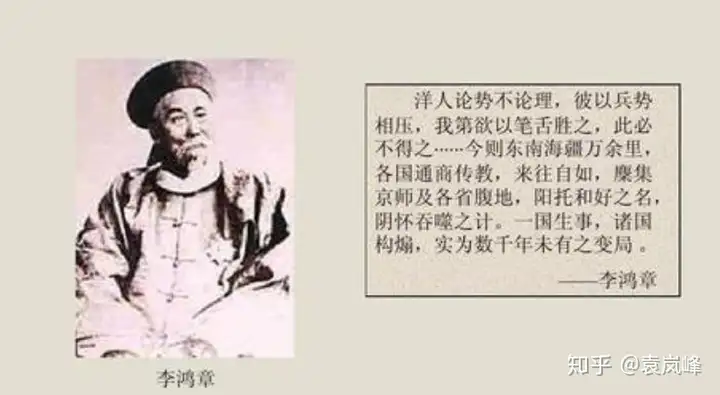
三千年,也就是从中国文字史的源头直到当时,所以,这句话被称为十九世纪中国最有国际眼光的判断。事后也证明此说并无夸张,三千年的古代文明从此结束,中国开始了现代化,变成另外一个国家。
今天这个大变局能有如此份量吗?或者,它不过是全球势力的又一次调整?毕竟只从国际力量对比来看,今天怎么也不能和苏联解体的震动相比。
窃以为,今日之变绝对比得上当年之变。从文化根基上讲,中国和全人类正在面临五百年未有之大变局,那就是自文艺复兴始,由启蒙运动完成的整套近代话语体系正在走向它的终结。人类正从哲学时代进入科学时代。
二
近代欧洲发生过三次思想解放运动。首为文艺复兴,一场欧洲版的托古改制。从此,人逐渐取代神成为欧洲人关注的中心。相比于自古就不信仰创世神,一直以人伦为道德基础的中国传统文化,此变无足轻重。到今天在中国人心目中,文艺复兴也不过是留下一些名作名画而已,仅属于文艺界的小事。
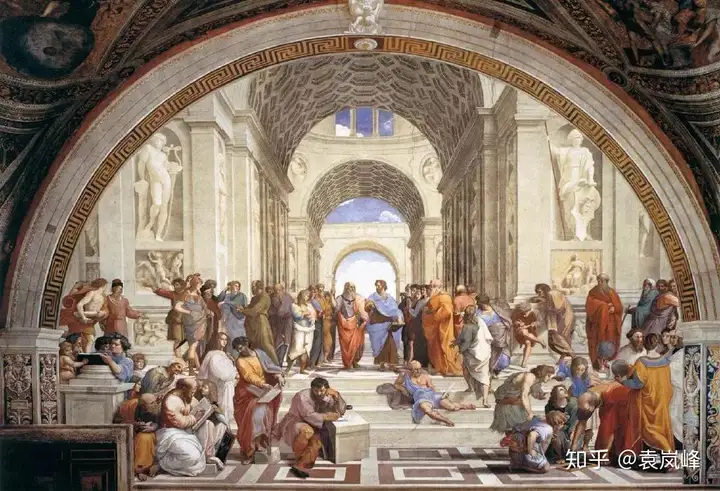
第二次是宗教改革,那更是基督教世界内部的事,很少有中国人能理解因信称义之类的话题,更不明白为什么会有几百上千万的人为这些教义去撕杀。不光中国人,对于世界其他地方的人来说,这两次都是欧洲人自己的事。虽然从内在逻辑上讲,文艺复兴和宗教改革是启蒙运动的萌芽。
启蒙运动完全不同于前两者,由工业革命带来的强大生产力让这些理念生根落地,不再只是思想家的个人表达。进而,它们伴随坚船利炮席卷世界。启蒙运动形成的话语体系一直延续到当代,在人们的头脑中仍居统治地位。我们所熟悉的人权、进步、自由、民主、平等、法制这些概念,无一不来自启蒙运动。不仅在欧洲,不仅是白人,世界各国各民族在现代化过程中都以之为旗帜。今天的中国虽然表面上复兴传统文化,实际上不过增加了一些文化旅游产品。一个人如果要用启蒙运动之前的理念处理个人生活,会被当成怪物。
启蒙运动价值观后来一分为二。一部分人以平等为核心诉求,要求消除社会的不平等,首先是结果上的不平等。而这样就需要剥夺一部分人,就需要建立强大的国家机器去镇压对剥夺的抵抗。另一部分人以个人自由为核心诉求,要求减少社会控制,这样就需要压缩政府的权力范围。二十世纪后,这两批人分别建立起东西方阵营。他们自称什么不重要,就其文化底蕴而言都来自启蒙运动。
然而,启蒙运动价值观毕竟由一群文人建立。他们不接触生产劳动和发明创始,只关注分蛋糕,不重视做蛋糕。启蒙运动中的文化名人几乎没有谁关注生产建设,没有谁关注民生。这使得他们与世界各地不识稼穑的传统文化人并无本质区别。
虽然深受当时科学进步的影响,但是除了康德等寥寥几人外,其他人很少参与科学研究,缺乏科学精神。至于科学本身,当时也没有全面介入生产,对社会无实质影响。于是,启蒙思想家们用科学打倒了宗教,却用一批世俗观念更换宗教理念,造就了“无神之神”,也就是没有人格化的教条。
三
时间进入十九世纪,旧世界慢慢被摧毁,人类不可逆转地进入现代化。从这时起,不断有人质疑启蒙运动价值观。社会学家孔德提出,人类社会要从宗教阶段开始,途径哲学阶段,最后进入科学实证阶段。这样一来,启蒙运动不过是哲学时代的产物,是未来科学阶段的过渡。
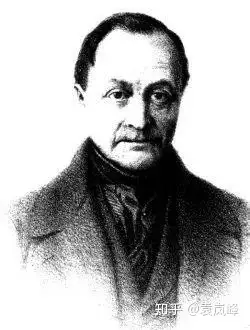
社会学家孔德
生长在俄国,后来侨居美国的社会学家索罗金认为,人类文化只有两大类。一类是科学文化,以实证和理性为出发点。一类是其他所有文化,以想象和虚构为出发点。这样一来,启蒙运动价值观和宗教其实算一类,都从内心出发,编出一些教条让人们去信奉。
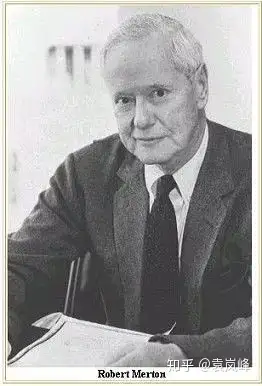
社会学家索罗金
或许,那些启蒙运动思想家本人没有当教主的想法。但是很多后人之所以传播他们的思想,不过是用于自己的政治斗争或者文化斗争,所以必须把它们教条化。
对启蒙思想进行过全面批判的是行为科学家。这个诞生于二十世纪初的学派专门研究人类行为,尤其是婴幼儿的行为。对于什么行为是天赋,什么行为来自后天习得,他们最有发言权。而这些实证资料恰恰不能证明“天赋人权”、“绝对意志”或者“自由”的存在。行为科学挖掉了启蒙运动价值观的基石。
开创行为主义的华生就在演讲中说,人权和自由这类口号,在美国不过是被政客与工会活动家操纵的概念。几十年后,第二代行为主义者斯金纳写下《超越自由和尊严》一书,直接而全面地批判启蒙运动价值观。他把它们称为“自由文献”和“尊严文献”,认为它们虚构了并不存在的人性。这些经典文献的价值是用于反抗现行秩序。而一旦在什么地方造反成功,它们的信徒并不知道接下来该做什么。
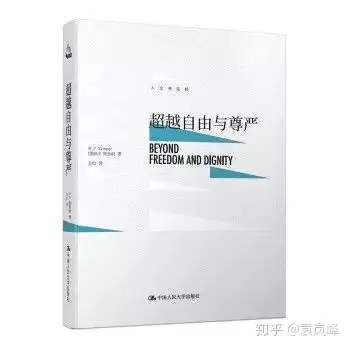
斯金纳毕竟是出身实验室的科学家,《超越自由和尊严》虽然销出上百万,但是写得很啰嗦。这本书的主题可以压缩成一句话:启蒙运动思想千头万绪,归根到底就是造反有理!因为与启蒙运动价值观针锋相对,行为主义学派自形成后一向是西方传统文化界批判的对象。不仅是文章,甚至有专门批判行为科学的电影。而他们也从未放弃自己的主张。
还有一些学者不那么剑拔弩张,但是在更基础的地方松动着启蒙运动价值观的基础,技术经济学就是一例。这门学问主要研究技术进步对经济的影响,其专家认为,早在1900年,技术进步就已经形成了美国超一半的增长。今天将近七成。中国在今天也到了百分之五十的比例,并且只能越来越大。
技术决定了生产劳动,而各种社会政治哲学学说都着眼于分配。技术经济学实际上是在证明,分蛋糕对于做蛋糕没有决定作用。而启蒙运动价值观一直被政治家当成分蛋糕的口号。
现代化研究又是一例。这派学者认为自从工业革命后,全球的核心变化就是现代化,其它一切变化要围绕现代化才能解释。而现代化的成果体现在各种民生指标上,诸如GDP、人均寿命、识字率、居住面积、治安水平等等。具体可分几十大类,几百小类。这样一来,一个国家以什么话语为意识形态,实行什么制度都不重要,这些实打实的指标最重要。现代化研究就是根据这些指标给世界各国排名,划分高下。
现代化研究并未完全离开启蒙运动价值观,而是把启蒙运动中的“进步”理念数量化,当成客观指标,当成基础指标。而在现实中,很多国家把意识形态当成指标,称理念相异的国家为落后国家。
种种质疑虽然在文化界和学术界都属于支流,但它们如同管涌,早晚会溃决启蒙运动价值观这座大坝。
四
时间进入现代。王冠已经落地,政教已经分离。今天,世界人均消耗物质资源相当于启蒙运动时代的一百倍,一半人口生活在城市。人类享受着现代科技的服务,肥胖比肺结核的威胁更大。我们早就告别了卢梭、伏尔泰和孟德斯鸠的时代,启蒙运动价值观也早就失去了生命,但却迟迟没有走进博物馆,因为还存在着一个传承它们的特殊堡垒,那就是现代文科教育。
远在文艺复兴时代,意大利的人文主义者在政府支持下,建立起最早的文科学校,目标是与教会学校相抗衡。到了启蒙运动时代,这些以文史哲为主的文科学院成为反抗封建蒙昧势力的阵地。整个十九世纪里面,它们一度是教育的主体,直到十九世纪末才一点点让位于以科学为主要内容的当代教育。
进入二十世纪后半叶,特别是二十一世纪,人类已经告别了中古。然而,文科学校仍然以启蒙运动价值观为主,教授的主要是那些经典。如果教授一些当代作品,作者也往往从小就受启蒙运动价值观熏陶。如果说启蒙运动建立了一批“无神之神”,当代文科学校就是它们的教堂。为造反而造反,为革命而革命。但是,再没有封建暴君,再没有教会法庭,他们向谁渲泄心中的怒火?一些人便把科学当成了新的敌人。
科学本身在发展过程中曾经遭遇过三大敌人。首先是封建迷信。科学讲究实证,威胁有神论,是传统宗教天生的敌人。所以,当科学还只是在西欧小小的知识圈子里流行时,就对中古文化构成了威胁。
其次是专制。科学尊重真理而不是权威,科学家遇到学术分歧,会去搞实验,作调查,积累更多证据巩固自己,或者承认对方。科学史上不乏有人用权威压制对手,甚至借用外界权威压制对手的例子。但它们都没成为科学的主流。在各种社会圈层里,只有科学能做到真正地反权威。
基于这两点,启蒙运动时代的思想家,以及他们在世界各地的徒子徒孙,曾经把科学视为同道。五四运动把“科学”与“民主”并称为两个先生就是典型。然而,民主恰恰是科学的第三个敌人。科学成果从来不依靠投票来决定。科学共同体尊重专业体系,依靠客观证据和理性。一种科学成果最初都是由极少数人,甚至个别人所创造,所接受。就整个社会而言,科学共同体也是少数派。美国人中有基本科学素质的还不到两成,中国大概刚过百分之七。
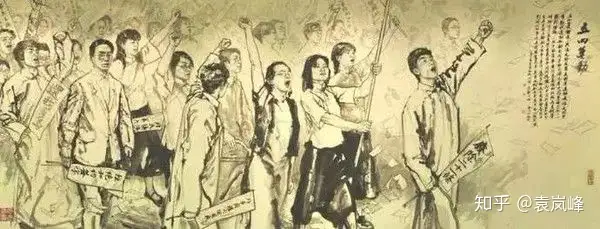
这就意味着如果科学中有投票制度,今天人类恐怕还没用上电。进入现代,科学进步更是是在政治权力或者资本力量推动下前进。社会精英更理解科学技术新成果,以及它们的价值。而深化民主往往让社会上的反科学思潮实为政治结果,阻碍进步。而这正是当代西方国家的现实。
像当年促使人类质疑神的存在一样,科学的实证精神最终让人们质疑自由、人权、绝对意志这些概念的真实性,威胁到启蒙运动价值观本身。
五
推翻封建统治,完成政教分离,解放被压迫民族。至此,启蒙运动的历史使命已经完结,先贤们也早就应该在坟墓中安息。今天人类遇到了很多问题,但都是新问题,需要新观点加以认识,需要新方法予以解决。
然而,由于传统人文知识界抱残守缺,迟迟建立不起,或者根本不愿意建立崭新的价值体系。他们不会基于现实去分析问题和解决问题,只能不断搬出启蒙运动的旧黄历。不断念动咒语,让死去几百年的古人出来把脉。
于是,启蒙运动价值观变得教条化,甚至邪教化。新一代信徒把科学和工业当成新的撒旦予以攻击,而文科院校几乎成为这种邪教的大本营。它们培养出一代又一代造反者,这些人不懂科技,不事生产,对民生一无所知,唯一长处就是熟读伏尔泰和狄德罗。但他们却认为自己在为民请命,认为人民仍然处在蒙昧当中,需要他们的唤醒。
在今天,残留的启蒙价值观已经很少再有益于民生和社会进步,沦为政治攻讦的借口。人类已经不再靠教条与口号来驱动,与启蒙运动说永别的时候已经到来。
一、国运沉浮背后的文明因素
欧洲之崛起,正是15-17世纪的地理大发现,随后欧洲并未与中国形成技术代差。中国也始终嵌入了当时全球贸易的体系当中,当时中国也是世界第一大顺差国,大量吸收了西班牙从南美运来的白银,并且不断向西方供给当时的高附加值商品。在海洋贸易、科学技术等等方面也是互有长短,在中国当时也随着商品经济的发达,逐步衍生出了有别与传统封建势力的资本主义萌芽——工商业阶层。而中国与西方在技术、社会结构上发生大差异,却是在17世纪清帝国入关控制中原以后。
毕竟当年西班牙的贵族们喜欢的是中国的丝绸、喝的是中国的茶叶,用的是中国的瓷器。东南亚的一众苏丹国可以让西方势力开拓殖民地,但是面对庞大的华夏帝国,西方的这些初代海洋霸主就不够看的了。比如葡萄牙、荷兰都曾与中国发生接触,其军事野心基本在地方力量的反击下就被遏制住了。
郑成功收复台湾,不仅仅是中国人跨海建功的壮举,更是区域性海商组织体的开拓之举,若非国姓爷英年早逝,恐怕当时东南亚的西方贸易中心马尼拉都被夺了去,可见当时中国海洋力量的实力并没有与西方拉开代差。
毕竟中晚明的时候东南大搞土地兼并,发展工商业,为的可不是当地主自保,而是以资本增殖原则进行的扩张。但是满清的入关彻底打断了这个趋势。
满清入关以后,中国的发展就开始和西方拉开差距了,一方面欧洲获取了海量的财富增量,在渐进式的阶层置换几百年后(价格革命—金本位时期的长期温和通胀削弱了吃地租的封建主),顽固的封建地主阶级被新兴的城市资产阶级夺取了权力。只不过这种革命不太彻底,因为资本追求的是盈利而非革命,在和国家统治机器妥协后资本家非常乐于看到国家力量为他们镇压工人,拓展地盘。所以欧洲大陆皇冠稳固,而且资产阶级和原来的统治者结合的例子比比皆是(例如德国的容克)。
而东方则逐渐开始被军事文明所压制,满清军事政权对生产力的发展起的是阻碍作用:联小宗治大宗(满、蒙、藏的贵族联手一起治理汉地)、钳制思想(大搞文字狱,对思想桎梏达到了顶峰),军国化管理(兵丁入旗,汉八旗、满八旗),这些使得军事专制达到了顶峰。
因为军事文明的内在逻辑是——要让别人不如我强,通过毁灭的办法获取统治。比如蒙元屠杀后路的居民以防其造反,满清屠城剃发以消灭反抗精神,罗曼诺夫王朝人滚地留的哥萨克式扩张,日本军国用三光政策来治理占领区,纳粹建立犹太人集中营,都是这一类思路——“只要别人弱了,就等于是我强了”。
这在军事斗争中还好办,肉体消灭了敌人就可以了,但是在国家治理上就麻烦了,如果技术革命从被统治阶级萌发,那么就成为了统治阶级的威胁,所以中国只有在清朝才有遏制民间技术发展的行径:
如康熙年间的火器专家戴梓就因为是汉族而且掌握了先进的火器技术,被西洋传教士构陷,被发配流放。这一方面是满清统治者对当时主要主体民族也即人民群众的忌刻猜疑,另一方面是对于先进生产力也即域外技术成果的病态抵制。
所以孙中山说为什么清王朝不能搞君主立宪制,就是因为满清统治集团不可能有效发动群众,对于生产力自下而上的技术革命更会天然抵制,所以必须革命。
而新中国更是始终坚持群众路线,把发展和解放生产力作为根本任务。这种判若云泥的区别,就是“唯有牺牲多壮志,敢叫日月换新天”的新民主主义革命的伟大成果。
中国在满清王朝统治下的三百年,是游牧军事文明凌驾于华夏生产文明的“中华黑暗期”,其与欧洲在蛮族军事文明压迫下的“黑暗中世纪”颇为类似,是野蛮战胜了文明乾坤颠倒的非常态。军事文明对于人格的奴化与思想的禁锢,使得华夏汉唐之雄风不再,正如龚自珍所说“万马齐喑究可哀”。在有清一朝:统治阶级内部都以自称“奴才”为荣;知识分子社会精英以钻研八股为荣;民众以服从于封建礼教为荣,这种僵化的社会形态当然会让华夏文明在近现代世界生产力发展的大潮中落后。
但这种落后,不是华夏文明的落后,而是军事文明的落后,因为华夏文明的本位是生产文明,其为满清军事文明所乘的黑暗期落后于世界生产力的发展,不能说明华夏文明的落后。因为后来的新中国恢复了华夏文明原本的汉唐模式,在短短几十年间即追赶并超越了西方几百年的发展成果,使得华夏文明成为唯一一个从石器时代进化到信息时代的活文明,甚至可能会在将来率先跨入智能时代。
清王朝作为一个以中华民族为主体的军事帝国,是中国历史上少有的军事文明时期,其是华夏生产文明与军事文明结合后的特殊形态。在当时的世界上:
沙皇帝国吸收了蒙元的游牧文明,成为欧亚混血的东斯拉夫军事帝国;
奥斯曼帝国吸收了阿拉伯帝国的伊斯兰文明,成为异化的伊斯兰军事帝国;
应该说在那一时期,整个欧亚大陆上都是强大的军事文明,这与当时的生产力水平非常相关:满清帝国(清帝国制服准噶尔就是靠的火器)、沙皇帝国(伊凡雷帝的直辖军配备火枪)、奥斯曼帝国(苏丹亲兵主力为火枪兵)都是擅长使用火器和骑兵的军事组织,这一方面需要专业的军事技能,另一方面需要多兵种配合的指挥技巧,故而侧重军事专业化及强调服从性,所以军事贵族的专制政体就在当时的亚欧大陆上获得了优势。而这也是迫使西欧国家远洋出海的主要动力,因为欧亚的陆上贸易路线已经被三大军事文明锁死,东西方两大文明中心的沟通成本过高,所以需要开拓海路。
然而在工业革命之后,以英美为首的贸易帝国迅速借助先进的生产力而崛起,这使得曾经虎踞亚欧的三大军事帝国迅速衰落。奥斯曼帝国成为“西亚病夫”,并最终从一个领土遍布中东北非,横跨三大洲的霸权帝国退化为仅剩小亚细亚的土耳其;沙皇帝国从“第三罗马”退化为“帝国主义最薄弱的一环”,曾经雄极一时的“世界宪兵”变成了“灰色牲口”,成为了第一个输给黄种人的白人国家,是列强之耻。而清帝国也是割地赔款主权不保,僵化封闭苟延残喘,幸赖华夏文明之强大的生命力,才召唤出仁人志士起而拯之,最终新中国拔地而起,成为了时代的选择。
为什么军事文明一时俱起,又同期而灭呢?这个背后的原因在于,世界斗争的方式随着生产力的水平发展而不断变化,只有最适应生产力的政权组织形式,才能在生存的竞争中获取优势。军事文明的长处是培养及组织专业化的军事组织,其社会形态是哑铃形的,比如清帝国,就是八旗这个军事贵族体系获得了极大的物质资源分配比重,同时也承担了主要的军事任务。而且其与人民大众是分化的,因为其专业的军事技能培养需要脱离生产,这样兵与民相隔绝,以兵而镇民,自然就是战争的专业性上升而规模下降,同时民众承受重压故而社会内部矛盾大。所以清朝在历次动兵的人数规模都不大,在鸦片战争、甲午战争中都没有发动人民战争,仅在少量的军事力量被歼灭后就选择了妥协,而庚子事变中当清廷试图利用义和团时,也是拙于组织最终失败。
当工业革命开始以后,世界的斗争形式就从比拼人的军事经验变成了比拼武器的技术优势,这使得以建立贸易体系而富集了世界资源的海洋贸易帝国形成了优势。因为无论如何鞍马娴熟,如何悍不畏死,也比不过经过短暂训练机枪兵,这在八里桥大战中就尤为明显。所以军事贵族比不过掌握先进技术的资本集团,这就是大英帝国占尽世界膏腴之地,海洋称雄的原因,也是军事文明衰落的主因。
但是正所谓一物降一物,当工业革命推进到电气革命后,英国的贸易文明也开始吃瘪。因为技术的代差全球化的贸易体系中开始逐渐弥合,当技术代差消失后,自然战争比拼的就不再是技术的长短,而是生产的组织和国家规模的实力。在一战中,无数英国贵族踊跃报名参军,以为又到了仗着优势兵器建功立业的好机会,结果没想到撞上的是与其没有技术代差的德国,于是血流成河尸山血海,整个欧洲从大航时代以来流传下来的尚武精神,被总动员的现代战争消磨殆尽。最后是美国凭借生产规模和国家实力帮英法打赢了一战。而二战中军事技巧高超,武器装备先进的德国,也只是战胜了贸易文明体系的强国英法,却被苏联用庞大的社会化大生产和全民皆兵的人民战争给击败,而美国也是通过启动战争机器,大规模拉高产能而战胜了日本。
美国在二战以前,一直是现在中国的这种角色,人畜无害而产能强大,技术虽然也经常被传统欧陆强国封锁,但是其生产组织的规模大产能迭代迅速。这是因为美国其实在建国之后是以德裔和爱尔兰裔为主的反英意识强烈的欧洲移民组成的:
' fill='%23FFFFFF'%3E%3Crect x='249' y='126' width='1' height='1'%3E%3C/rect%3E%3C/g%3E%3C/g%3E%3C/svg%3E)
所以美国虽然现在号称是昂撒文明,但是其实在其建国后直到冷战,都是一个非主流的贸易文明国家,它没法像英国那样去垄断殖民地的市场和原材料,也没法像法国那样去跟殖民地搞高利贷帝国主义,只能跟德国一样靠精工细作,技术升级来保障生产出的商品能够质优价廉,只有这个生产制造的业务别人抢不走,所以美国在冷战前选择的都是实业立国的道路。直到冷战中,美国在跟军事文明的苏联对垒中不堪重负,这才将产能转移出了美国,将生产制造工作委托给自己的“海外行省”:日本、韩国、德国,自此美国才通过阉割了自己的实体制造业开始变成一个金融帝国。而这也意味着美国从一个非主流的昂撒系国家成为了真正主流的昂撒系国家,那么自然其也要继承大英帝国当年的不幸命运。因为金融帝国的终点,就是大英帝国的解体。所以国家的形态由其所处的客观环境而确定,但是文明的类型,会潜移默化地长期作用于一个国家的命运。这种文明回归的力量,坚定且持续,无处不在,无刻不存,最终将一个能自主命运的大国拉回其原有文明的发展轨迹。
而苏联在列宁时代提出的电气化社会主义,其实也是以生产制造为主的立国策略。但是欧洲险恶的形势下,在斯大林手中又回归了军事文明的国家路线,这在二战中应时而出消灭了法西斯,但是在冷战中又阻碍了社会的发展,让苏联跟清帝国一样走向了军事文明僵化封闭、阻碍生产力发展的路径,最终也是走向了同一个类型的命运终点——屈辱求和以求苟安,最终内部瓦解帝国崩溃。
美国曾是边缘化的贸易文明,而苏联则是非主流的军事文明,这二者都曾靠强大的生产能力而获取重要的国际角色,但是其得志之后,又都不约而同地放弃了以生产为核心的道路。这是因为其本非生产文明,不过是形格势禁之下借用生产手段来达到目的而已,一旦得志之后,即会出现文明的回归力量,使苏联向军事文明演进,而美国向贸易文明发展。最终二者同归于落寞,因为无论是军事文明还是贸易文明,都是外生性文明,即不扩张或不发展即衰落,而世界并没有永远前进的国家,事物螺旋上升、起伏前进才是符合天道的客观规律,所以反常者必不久。故而军事文明的寿命大致在一百年以内,所以苏联69年而亡;贸易文明的寿命在二三百年左右,故大英帝国兴衰不过二百来年,而美国如今也疲态尽露,正是这个规律在起作用。
五百年间,世界的斗争形式经历了三个大的时期:
(1)比拼人的军事技能,对应军事文明的称霸;
(2)比拼武器技术优势,对应贸易文明的崛起;
(3)比拼生产组织规模,对应生产文明的回归。
五百年来兴衰忙,哪有什么历史的终结,只有永恒的变化;哪有什么天选之民,只有自强者不息;哪有什么完美的体制,只有适合生产力的生产关系。所以兴衰有道,唯顺天应人者成其势。
所以在过去的五百年间,实际上一直是生产文明缺位的阶段,但随着中国的复兴及华夏文明的现代化,这种形势正在为之一变。中国为何能屡次复兴,生产文明有什么特点,未来的多极世界将会如何发展,
在今天,如果有人公开反科学,往往会被看成怪物。所以,反科学思潮早已转入地下,或者换上包装,堂而皇之地出现在媒体和大众舆论中间。下面,我就解剖十种无反科学之名,却有反科学之实的社会现象。
纯天然崇拜
将“纯天然”与健康、安全挂钩,愿意为自称“纯天然”的产品多付钱,我把这种社会现象称为“纯天然崇拜”。涉及对象主要是食品、化妆品和药品,总之,是一些人体摄入的日常消耗品。

传统社会里并不存在纯天然崇拜,用今天的标准来衡量,工业革命前的产品都是“纯天然”。甚至就在几十年前,中国人更关注能不能吃饱的时候,也并不在乎什么“纯天然”,这种崇拜很晚才形成气候。
“纯天然”并非科学概念,所以也不存在准确定义。今天,除了空气,没有什么摄入品可以不经人手加工,连水都是从水厂里净化过的。所以,“纯天然”特指不用机器加工的摄入品。
西方没有“纯天然”概念,而使用“有机产品”,大同小异,都不是严谨的科学概念。“有机”在科学上是指含碳元素的化合物,按这个定义,转基因食品都是有机的。所以,西方商店里使用的“有机产品”概念,是指生长过程中不使用人工合成化合物、化肥及转基因技术,加工生产过程中也没有任何人工合成化学成分。
无论“纯天然崇拜”还是“有机产品崇拜”,主要针对人体会摄入的食品、药品和化妆品。所以人们特别在意它们的安全。形成这种崇拜有一个历史背景,就是各国在工业化初期,商家为谋利往上述摄入品中投放对人体有害的物质,导致病、残和死亡。
在中国,上世纪八、九十年代,各种有害的化学添加剂大规模投放到人体摄入品中。但随着监管体系的完善,这类现象越来越少。最后一次因为假酒发生大规模死亡还是在1999年,三聚氰胺以后,国产奶粉也再没有曝出安全问题。由于监管成本问题,小城市和农村地区的食品安全肯定低于大城市,但所有地区纵向比较,食品、药品和化妆品都是越来越安全。
然而在今天,据统计仍然有87%的中国消费者愿意为“纯天然食品”付更多的钱。纯天然崇拜并未因此消失,反而愈演愈烈。对纯天然的推崇遍布于产品广告、报刊软文和网络空间。本质上,它是科技恐惧心理的一种表现形式。那些化学合成物质到底是什么?它们有没有害?我怎么知道!所以什么都别放最好。
“纯天然崇拜”的人并没有证据证明传统手工方法制造的摄入物更健康,更安全,他们追求纯天然,更多的是心理安慰。历史上,人类最终将农作物单产提高数倍,彻底摆脱饥荒,化肥、农药和育种是主要因素。它们也正是纯天然崇拜者最反对的,所以,纯天然崇拜实际上是对传统自然农业的怀念,是隐蔽的反科学。
无论是发达国家,还是今天中国的发达地区,往好里说,提供“纯天然产品”或者“有机产品”给深度科技恐惧者提供了更多的消费选择。你实在害怕摄入科技产品,至少还有传统产品可以选择。往坏里说,一些商家利用公众的科技恐惧,将它们渲染、放大,谋取暴利,是纯天然崇拜的幕后推手。
实际上,至少在中国,相当一部分纯天然产品和普通产品并无二致。比如,传统手工方法制造的食品保持期短,如果一种“纯天然食品”在货架上摆了数月半年还不腐烂,可以肯定添了防腐剂。至于“全植物化妆品”,你可以把说明书里提到的植物拿来捣烂,敷在皮肤上,闻闻那是什么味道。如果一家商品只摆真正的纯植物化妆品,气味应该和臭水塘差不多。
即使退一步说,你能得到完全真实的纯天然产品,那又怎么样呢?既不会更健康,也不会更安全。
纯天然崇拜来自民间情绪,由商家放大,再经媒体推波助澜,就这样成为一股隐蔽的反科学潮流。
“后工业时代”理论
1973年,美国学者贝尔提出了“后工业时代”的概念,认为工业生产在全社会中的价值正在下降,知识经济升为主导。泛言之,今天人们不必再大兴土木,移山填海,而是搞服务业就能发家致富。
“后工业时代”或者“后工业社会”理论的提出,最初来自美国那个年代的现实。当时贝尔认为,只有美国还算进入了后工业时代。十几年后,大家觉得欧洲和日本也算进入了后工业时代。再往后,韩国、台湾都有后工业社会的征兆。甚至现在中国不少发达省份都提出,本省正在朝后工业社会转型,或者即将进入后工业时代。
无论“后工业时代”还是“后工业社会”理论,都是对上世纪六十年代后世界科技和工业发展趋势的总结。只不过这个理论的结论并非中性,而是认为这种变化乃历史之必然,是件好事。世界各国都会从农业社会、工业社会进入后工业社会。这种理论的支持者把后工业社会又称为知识社会,信息社会。桌上那些电脑代替大机器,成为这个时代的核心。
直到十年前,中国的学界、舆论界甚至政界,人们对这些概念并无异议。西方发达国家就是一个个这么转型的,中国早晚也会走同一条路。然而这十年不同了,学者调门依旧,那些后工业国家里的民众对这个“更好的时代”却并不买账。经济停滞,社会动荡,人们失去目标,族群和宗教冲突愈演愈烈。
终于,美国人选出特朗普作为代言人来反对这个朝代。他认为,和中国今天的建设成就相比,美国很多地方更象第三世界。而这些在他眼里破破烂烂,必须大加改造的基础设施,就是在“后工业时代”理论中认为已经“工业”得差不多的先进成果。
美国至少还有高科技,西欧更惨,除了德国,其他逐渐沦为靠农产品和旅游业为生的国家,只是更富的印尼或者泰国。即使在华人社区,台湾和香港也都算进入“后工业时代”。他们收获了什么呢?大家一望而知。
自从丹尼尔·贝尔开始,提出这一理论的人几乎都来自社会文化学界,而非科技界人士。他们并不清楚当今科技还有哪些障碍没有突破,未来科技更有哪些成果可以运用。在他们看来,既然儿时的乡间小路已经变成高速公路,三十多岁的人均寿命翻了一倍,工业化就该适可而止了吧?
现在不是什么“后工业时代”,而是“工业停滞时代”。这个时代意味着成年人失业,年轻人缺乏出路,这已经是西方很多普通人的共识。可惜他们的政治代表特朗普等人同样欠缺科学知识,只知道再去挖煤、炼钢、造汽车,翻出他们年轻时很红火的旧工业。
十九世纪中叶,工业革命之风吹向西欧各国,英国本土却迎来了一次金融大崩盘,首恶就是铁路股票。英国铁路已经修到饱和,资金没了出路。只是当年世界很多地方连蒸汽机都没有,英国这次因科技停滞造成的危机并不受重视。
几十年后,人类进入电气化时代,工业经济又开始大踏步前进。进入二十年代,美国股市暴炒汽车、飞机等当时的高科技概念股,直到1929年造成大崩盘。然而,对于那些还没有工业化的落后国家来说,这次危机被归咎于发达国家的资本主义制度,而不是更直接的原因。那就是,电气时代科技发明的井喷暂告一段落,新的科技创造还没有成批涌现。
今天,世界上大部分国家已经进入工业化时代,科技停滞再不是少数几个国家要遭遇的麻烦。他们必须知道,“后工业时代”理论所描述的现实,只不过是又一次工业停滞期。理论科学很久没有大突破,导致应用科技的动力不足,新的工业增长点没有大规模出现。
总之,后工业时代绝非更好、更先进的时代。如果中国人也觉得现在这种工业水平就够了,从此停止对科技与工业的追求,放弃2.0,3.0版的新工业,意大利和希腊今天就会向我们招手!
应试教育批判
批判应试教育在今天的中国是一种“政治正确”,直到最近一段时间,才有人反思这种批判是否必要,是否正确。比如,中国人忽然惊讶地发现,他们所向往的欧美“素质教育”工作者,非常羡慕中国学生自然科学知识水平。其实这并非新鲜事,1957年苏联卫星上天后,美国人就评估过苏联的中学教育,认为苏联中学生知识水平超过同龄美国孩子两个年级!而中国现代的学校教育,骨子里还有深刻的苏联模式。
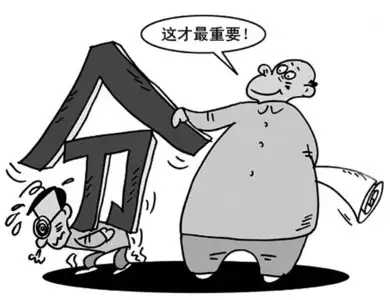
通观今天中国舆论场上对应试教育的批判,你会发现两个问题。其一,笔者从未看到任何教育主管部门发布过文件,称要推行应试教教育,相反的文件倒是看过不少。“应试教育”这个概念类似于“异教徒”、“阶级敌人”或者“恐怖分子”,只是一顶帽子,被人们扣在自己不喜欢的教育模式上面。
其二,批判应试教育的急先锋,几乎都是教育体制外面的人,比如郑渊洁这样的文人,人文知识分子在里面唱了主角。他们几十年如一日地制造并加热这个社会话题,已经形成了强大的舆论压力。
必须分清的是,古代科举考试与现代高考完全不是一回事,古代中国政府不负责基础教育,由民间自行办学,国家考试用来确定授予哪些人官职,而不是提供更高一级的教育机会。更重要的是,古代科举考的是文史哲,现代考试最重要的内容是科学知识。批判应试教育的重点,甚至是这些批判的基础,就是指责它只重智育,不重其它。而这里的智育,主要就是科学教育。也正是因为如此,我把它视为当代隐蔽反科学潮流之一。
用考试来管理学校教育活动,是现代学校最基本的运作方式。虽然各国教育家试了又试,改了又改,也找不到替代办法。只能说考试天生就是现代学校的核心。如果不考试,我们怎么衡量一个教师教得好?一名学生学得好?一座学校办得好?
除了德育成果难以量化外,美育、体育和劳动技能都是可以量化的。想让学校重视它们,增加这三育在考试体系中的权重不就行了?仔细看看那些对应试教育的批判会发现,他们并非只要求重视其它各育,让学生的素质更为全面,很多人是反感科学教育,认为科学知识难学,枯燥,长大了没用。然而要建设现代化国家,就必须培养掌握科学知识的劳动者。
认为应试教育违背孩子兴趣,造成大量厌学,也是不值一驳。青少年的主要兴趣是什么?是游戏!学校就是要克制这种天性,半强制地拖着全体学生朝着知识前进,让他们成为至少能合格的劳动者。科学教育尤其如此,它的出发点不可能是兴趣。尽管不断开发兴趣教学方式,但对于孩子来说,很多科学内容还是必须死记硬背才能掌握。
西方曾经尝试过“契约制教学”,由学生和教师单独签约,承诺自己以什么速度,完成多少学业。这场实验以失败告终,原因很简单,好学上进的孩子总是少数,大部分都需要成年人社会强拉硬拽才能进步。
还有一种批判,认为应试教育毁灭孩子的个性、创造性,这是把极少数天才混同于一般人。爱因斯坦是什么教育体制培养出来的?那个体制除了他,还培养出一大批爱因斯坦了吗?你知道他的中学教师是谁?要知道,年轻的爱因斯坦为逃避德式教育,自己换了瑞士国籍。
不管哪种学校教育,它的任务都不是培养几个爱因斯坦式的天才,而是工人,技术员,设计员,银行白领。天才都是超越现有模式的人,旧模式培养不出来,换个新模式也一样。
1978年中国恢复高考,当年中国名义GDP排在世界第九,前提是人民币和美元实行一比一点七的强制汇率。今天,人民币对美元的汇率下降四倍,中国经济反而冲到世界第二。这样傲视全球的成绩,大部分都由四十年里中国学校培养的普通劳动者来完成。不管你把这种教育称为什么,它培养的劳动者难到不合格吗?
邻避运动
我所在的小区曾经有人组织群体事件,诉求是反对政府在小区附近建一所医院。当时我只要回家,就有人给我递材料,呼吁象我这样的壮年人站出来“为社区利益斗争”。
闹到一定程度,政府自然要派人对话,现场就设在小区里的广场。对话前这些组织者就商量,必须出一个人,到时候把官员面前的桌子掀了,哪怕坐几天班房也行,只有这样才能把事情搞大,搞尖锐。
被邻居们拼命反抗的这座医院是妇幼保健医院,几乎是所有医院里最安全的。我曾经问过他们,为什么不愿意家门口有这样一座医院,一个人回答我说,出门就是医院,多不吉利。此外我再没听到任何有实际价值的解释。三年下来,医院终于没建。这些群体运动的组织者,相信他们家的女眷都会使用妇幼保健医院的服务。但只要不建在家门口,一切OK。
这场茶杯里的风波就是典型的“邻避运动”,意思是“别建在我家后院”。这个词是进口的,但即使没这个词,中国早晚也会出现这类事情。现代化必然出现大量工厂和基础设施,把它们放到哪里的?不可能都在荒野山沟,绝大部分还要和普通民居为邻,摩擦势不可免。
邻避运动一开始有它的合理性,早期工厂的安全性远不如现在,高污染,事故多,对周围环境确实有很大危害。然而邻避运动发展到今天,已经走向了非理性。抵制对象甚至包括变电站和手机基站。相信如果哪个小区供电不足,或者手机信息出问题,居民肯定要骂娘,但他们却不喜欢把相关设施建在附近。害怕电磁波?每天怕不怕晒太阳呢?那可是典型的电磁波。
最早看到“邻避运动”这个词,是《南方周末》有关各地抗议PX项目的报导,这家唯恐天下不乱的报纸把它渲染成民众争取权利的象征。那几年正是中国PX生产大发展,力争世界第一的关键期,在《南方周末》以及一干公知鼓躁下,这个过程被推迟了几年,终于在宁波发展为暴力事件。
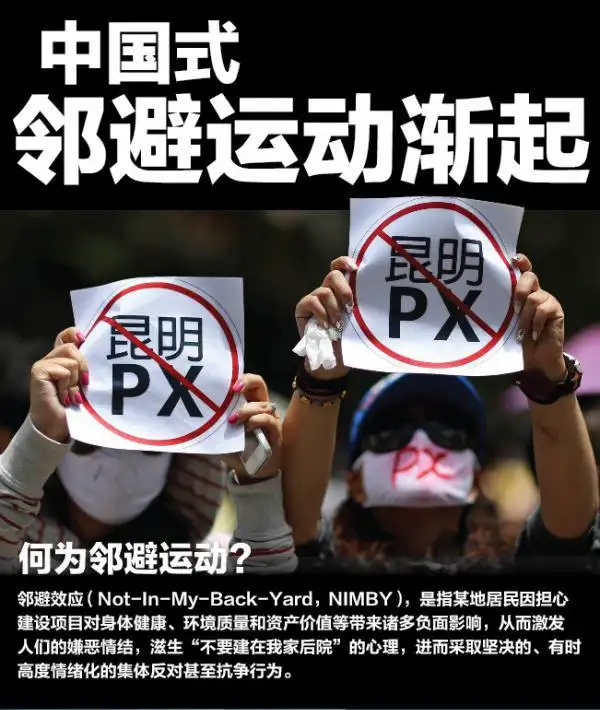
还好,即使有种种阻碍,在这个化工业的重要指标上,中国仍然走到了世界第一。PX学名二甲苯,号称化工业的棉花,人们经常把它的最终产品穿在身上,铺在床上。但是,同样不允许把生产它的工厂建在自家附近。
“邻避运动”之所以是典型的反科学运动,在于要成功组织一场这样的运动,必须妖魔化那个项目。象城市垃圾场这样的项目,其危害自然不难理解,但是象PX这样的化工业,对人体到底有没有害呢?普通人说不清楚,所以,必须使用“让PX滚出昆明”之类的口号。就这样,靠着简单而富于煽动性的标语口号,一个个科技成果被妖魔化,专家们苦口婆心的冗长解释显然要苍白许多。
“邻避运动”的逻辑类似于“纯天然崇拜”,是对任何科技生产过程抱有恐惧心理。它更彰显了科学与反科学矛盾的空间特点。传统宗教产生于小农经济基础,人们拜完不同的神后,无非是种田织布养牲口。宗教门派之间会暴发激烈冲突,但如果打累了,你修你的庙,我建我的寺,可以做到井水不犯河水。
科学不然,它对社会的改变如同水银泄地。无孔不入、怀疑甚至敌视科学的那些人,在一个科学化的世界上无处可去,只能在这个社会的内部继续反科学。邻避运动就是火山口,渲泻着他们对科学的恐惧。想想被“邻避运动”抵制的工厂,难道要把它们集中建在无人区吗?或者在国土上单独划一片地方,请讨厌科技的人迁移过去。里面没有电,没有化肥农药,没有机器,一切纯天然。
显然,这两个选项都不可能。如果接受邻避运动的主张,最终只能把这些工厂请出国门,然后再用外汇购买它们的产品。为什么还要买?因为它们几乎都是国计民生的必需品!
虽然现在还没有先例,邻避运动下一个目标显然是核电站。尽管中国核电技术的安全性已经世界领先,但这没有什么,核辐射这个东西看不见摸不到,足够吓退深患科技恐惧症的人。看看海峡对岸吧,国民党单独执政时期曾计划建设几十座核电站,现在连第四道门坎都迈不过。大陆国民的科学素质并不更高,前景可想而知。
渲染“城市病”
人口膨胀、交通拥堵、环境恶化、住房紧张、就业困难……这些都是现代城市发展过程中产生的问题。尤其在中国,城市化规模在人类历史上前所未有。国际上以一百万人为特大城市的底线,在中国却只是江津、宜昌的水平。
城市和人一样,有病就要治,这本来没什么问题。然而一部分人渲染“城市病”的危害,提出的解决方案竟然是停止城市化进程,甚至希望人们重返乡村。虽然政府层面不会接受这种主张,但在城市社区里却有很大影响力。只是,亿万农民不理会这种渲染,依旧义无反顾地从乡村拥进城市。
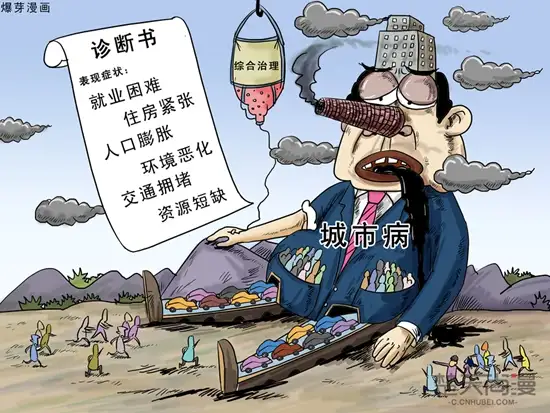
过度渲染“城市病”的危害,从逻辑上讲是没把城市社区与整个社会放到一起判断。仅以占地而言,城市人均用地永远比农村少。中国城市一个区的面积,基本相当于农村一个乡,一个街道的面积相当于一个自然村。一幢高层居民楼的地基,在农村只能建两三户住宅。只看社会平均,养活同样多的人口,城市只用了农村不到十分之一的土地。日本人口比中国还密集,现在全国绿化水平很高,就是因为绝大部分人都进了城。
再看交通,很多城市陷入拥堵,然而,农民们从自家地里收获产品,再运到附近集市上出售,这中间花了多少时间,城里人是不关注的,但农民们会比较。同样忙活一天、一月、一年时间,城市提供的收入总会胜过乡村。当灾难、疾病来临时,人们在城市中获得救助的机会更是远远高于农村。所以,“城市病”固然存在,但总好过“农村病”。
自古以来,人类文明中心一直在城市。工业化开始后,城市化更是飞速发展,一个国家从百分之九十的人种地,到百分之九十的人进城,这个趋势不可逆转。照此比例,中国最少只会留一亿人在农村,最多也不过两三亿人,任何理由都不能阻止中国大地上轰轰烈烈的城市化进程。放眼将来,全球最大城市的前几名都会在中国。
现代城市就是科技的集中成果,它的水、电、燃料、食品供应等等,都建立在科技成果之上。一直以来,科技人员和城建专家都在为解决城市病开出各种药方,几十年前的城市病,比如大规模工业污染,现在已经得到了解决,今天的城市病相信以后也会逐步解决。
然而,那些恶意渲染城市病的人将这些弊病凝固化,永恒化,认为正是这些现象说明城市不如农村更宜居,建立科技基础上的现代生活不如传统田园生活更人性。他们希望人们别再进城,如果请出去一些人更好。
渲染城市病的人大致有这么三个群体,一是媒体人,媒体肯定座落于城市,工作人员都是市民,对“城市病”感同身受,对“乡村病”几无所知。媒体几乎都从城里人的视角看待城市病。比如,他们会发现城市面积年年扩大,担心挤占农田,殊不知这只是挤占了城市边缘的农地。从整个国土来看,城市每扩大一平方公里,农村至少能节省十平方公里宅基地。
二是文化艺术界的主流人士。假如你喜欢参观画廊,就会发现很少有画家描绘城市。可笑的是,这些画廊却没有一家开在山沟里。艺术家接受的美学教育基本来自田园时代,这种教育让他们崇尚乡村,敌视城市、工业和科技。自从工业革命从英国开始后,世界各国主流艺术家便很少歌颂它。在他们笔下,工业化和城市化过程肮脏、暴力、灭人伦、坏风俗。“城市病”恰恰能印证他们的判断,势必借此机会来口株笔伐。
三是一部分城市原住民。在他们看来,城市扩大意味着外来人口激增。就业竞争加剧,生活压力也随着增加。然而,他们如果不是第二代移民,基本也是第三代,第四代,第五代移民。以北京为例,一世纪前的人口只有现在的十分之一,城里能有多少敢称“祖祖辈辈”的原住民?所以,这种指责天生不具备道德基础。
象北上广深这些大有前途的城市,患再多的病也不影响它们的发展。只有美国底特律,或者中国一些能源城市,它们已经患上“城市癌”,几乎注定会消亡。然而从整个社会角度讲,这是科技发展,产业升级的必然结果。它们以自己的死为城市化进程提供了教训而非此路不通的标志牌。
反对GDP
十几年前,当中国的GDP飞速攀升,经济基础日益强盛时,媒体上集中出现了对“GDP崇拜”的批判。认为政府单纯抓GDP绝对值的增长,会忽略经济结构、环境成本、社会福利等领域。这种批评的初衷是好的,GDP作为一种经济指标,本身确实有很多问题,自诞生到现在也做过很多调整。中国一些地方官为了政绩制造虚假的GDP,也确实属于官场歪风。在相当长的时间里,中国政府为补上经济这一课,确实也腾不出精力关注其他事情。
但是在一些人那些,“反对GDP崇拜”转变成反对GDP本身。在他们看来,经济差不多就得了,主要精力该用到其它方面了。他们的论调和各种“后现代”理论如出一辙,只是有了更明确的批判对象。
“反GDP崇拜”是这样一种观念:我已经把车开到一百迈,不必再把全部精力用于加速,可以分一部分关注其它事情。而“反GDP”是这样一种观念:今年收成不错,明年咱们就不必干活了,唱唱歌,跳跳舞,念念心灵鸡汤吧。“反GDP崇拜”是对社会资源的再分配,弥补以前的漏洞,而“反GDP”则是准备过不食人间烟火的生活。
看到“反GDP崇拜”变成“反GDP”,本人笑而不语。我在文革时代生活过几年,当时收音机里整天批判“唯生产力论”,虽然只是几岁孩童,也不免经常听到几耳朵。“反GDP”和“反唯生产力论”虽属两个时代,本质一脉相承,就是经济建设不重要,其它事情才重要。
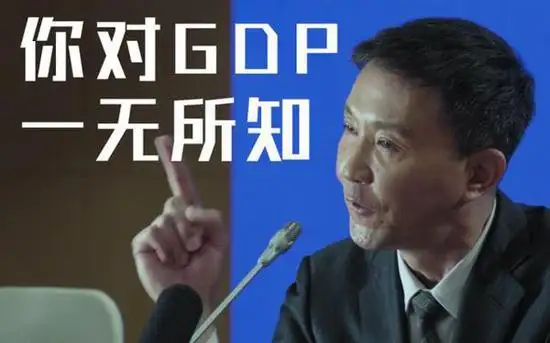
在当年反唯生产力论者眼里,比经济建设更重要的是阶级斗争。今天反GDP的人,又把什么当成最重要的呢?他们一直没有找到更明确的目标,有人说是社会福利,有人说是环境保护,有人说是传统文化。有一阵子,人们把虚无飘渺的“幸福指数”抬出来,认为幸福比GDP更重要。这个指数来自不丹,一个手机网络比朝鲜开通得还晚的封闭国家。七十年代,该国国王为保持其闭关锁国的政策,制造出这么个招牌,颇受西方小清新阶层的喜爱,并辗转传到中国。但是炒作几年之后,幸福指数毕竟无法代替实打实的就业和税收,也就偃旗息鼓了。
拿不出更明确的目标代替GDP,这还是小事,发达国家的现实更是严重煽击了这些人的脸。按照他们的标准,二十几年GDP都不增加的日本简直理想国,但日本人民对此怎么也看不出高兴的样子。希腊GDP下降那么快,他们为什么没感觉更幸福?一大群美国人更是把非主流的特朗普送到白宫,就是要让他象中国县委书记那样满世界招商引资,增加GDP!
GDP当然不是万能的,但没有GDP是万万不能的!
看到这里,有些读者或许会质疑,你不是要谈反科学吗?怎么提的都是反经济,反工业的事情?这要看你怎么看待科学与工业的关系。在我眼里,科学是精气神,工业是筋骨皮,两者互为表里。没有工业基础的科学必然苍白无力,而工业革命之后才是科学发展的最好年代。到了今天,经济大国必然是科技大国,反之亦然。象“天眼”、“东方超环”、“引力波探测仪”这样的科研设备,没有强大的工业基础根本无法造就。而没有科学成果的转化,经济也必然停滞。
现在已经没什么人敢再说大地是个平面,或者人类不可能从猿进化过来,很少有人质疑基本的科学原理。今天,反科学势力的主要目标就是攻打科学的肌肉、科学的外围、削弱科学的现实力量。他们的诉求万变不离其宗——工业不要再发展了,人类不要再改造自然了。
好在,上至政府官员,下到小民百姓,还都没有进化到不食人间烟火的程度。
生态主义
生态主义不是生态学,后者是门实证科学,诞生于生物学,研究生物与其环境之间的关系。进入二十世纪后,由于人类改造自然的能力飞速提升,人类对环境的影响又成为生态学的重要课题。
然而不管怎么变化,生态学始终是门实证科学,要求以事实说话。笔者参观过江西一个生态学实验室,他们正在研究工业对鄱阳湖水体的影响。课题看起来不大,但却是实实在在的科研活动。
生态主义则是一种哲学思想和价值观,它产生于环保运动和动物保护运动,然后逐渐激进,开始批判人类中心主义。生态主义认为所有生命体构成一个生态圈,这个生态圈的价值高于人类的价值。所以已经不同于环境保护运动。在生态主义者看来,环保运动只是在维护人类健康,也不反对工业大生产,仍然是狭隘的人类中心主义,而他们以地球生态的利益为圭皋,代表了更高级的道德。
站在这个立场上,生态主义者几乎都反对科学,因为科学大大提升了人类改造自然的能力。在西方,一些生态主义者已经开始恐怖行动,杀害科学家,袭击科研院所,炸毁水库和工厂。他们认为,科学就是人类侵犯生态的工具,必须予以毁灭。最近一些西方电影里已经出现生态主义者的身影,如科幻片《地球停转之日》(新版)中的外星人,《特工学院》里的反派,《极盗者》中的极限运动家,都是生态主义者。
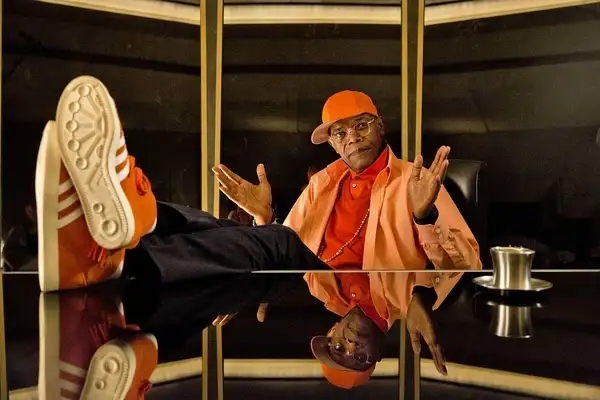
电影《特工学院》中反派试图通过毁灭人类拯救地球
然而,绝大部分人还是想过自己的好日子,这种极端的生态主义没有市场,所以,普通舆论场中的生态主义退而求其次。他们同样把万物组成的生态圈当成最高对象,然后得出结论,人类破坏生态就会遭灾惹祸。
当年,美国人在卡纳维拉尔角建立航天发射场,当地神甫就跑到火箭专家布劳恩面前抱怨说,这几年佛罗里达闹旱灾,就是你们发射火箭造成的!实际上,天气变化中的能量比火箭发射高几个数量级,两者并无直接联系。这个例子代表了温和生态主义者的特点,他们和极端派一样把生态当成神秘的综合体,它不能碰,不能扰乱,也不能研究,他们并不知道人类的哪些行为对生态造成了那些实际影响,只是把生态当成宣传口号。于是,哪怕地震或者台风,也都会被他们指责为人类破坏生态的恶果。
在华人社会里,温和生态主义采用了“敬畏自然”的说法,其实就是古代“天人感应”论的翻版。在古代中国,如果某个地方遭灾,肯定是这里有人干了缺德事。如果全国大范围遭灾,皇帝必须下罪己诏。到了科学时代,认为不道德行为就能带来自然灾难,显然已经不合时宜,但如果改说人类破坏生态,导致大自然报复,不仅社会可以接受,而且能大行其道。毕竟,大部分人并不清楚人类行为对环境的真正影响。
温和生态主义者不会搞恐怖袭击,而是以舆论遣责,民众抗议的方式提出诉求。在西方社会里,他们把工业生产称为“传统的”,自称要建立更高级的文明。可惜,发达国家的普通百姓为了饭碗,迟迟不接受这种更高级的文明。为了实现生态主义者的理想,不仅要废核电,还要废水电,废煤电,甚至已经有人质疑,如今有这么大规模的风电场,会不会破坏空气的自然循环?
人类从使用火和石器开始,就在一步步改造自然。猛玛象和剑齿虎被我们的祖先杀光了,四大文明古国建立在砍光当地森林的基础上,武松和李逵杀过老虎,水利设施更是从远古时代开始兴建,甚至成为“亚细亚生产方式”的核心。按照生态主义的观点,这些都是邪恶的行为,遑论力量强大百倍的现代科技。总之,人类活着就是犯罪。
看来,除非退回到男耕女织,甚至茹毛饮血的时代,是无法让生态主义者闭嘴的。
极端动物保护运动
在英国情报部门的恐怖组织名单上,除了ISIS这些众所周知的名字,还有一些极端动物保护组织。他们在英国国内袭击企业、医学科研机构,释放实验动物,已经构成了安全威胁。在美国,“动物解放阵线”也已经被列为恐怖组织。

随着社会文明水平的提高,保护动物已经成为社会共识,各国为此制定了大量法律,禁止随意捕杀,还投入巨资建设自然保护区。科学家也在不断发明新材料,以替代动物的组织和器官。然而这一切仍然要以人类利益为基础,在必不可少的情况下,人们不会禁止使用一切动物。同时为了维持生态环境,甚至还需要杀死一部分动物。比如在非洲,大象种群数量过高也会导致生态环境恶化,当地政府会派人乘坐直升机进入丛林,射杀大象。而这是为各国政府所接受的行动。
而在极端动物保护者看来,这些都是不可接受的,他们要爱护一切生命,并且不惜为贯彻这一原因侵犯人类利益。
从渊源上讲,极端动物保护者是生态主义者的先驱。他们不是保护高大上的生态圈,而是具体的动物,所以比后者有更多的民间支持,最大的此类组织在全球拥有百万支持者。一般来说,这些组织主要是去触大企业的霉头,比如批判肯德基贩卖鸡肉,或者NBA使用动物皮毛制造篮球。在一般人看来,这属于大家观点不同,言论自由,无可厚非。
但是在西方,极端动物保护者将医学实验视为大敌,因为医学实验通常要使用动物。甚至,医学、生理学等专业的学生在培训时都要用生物来训练。我当年学习心理学,都要在生理解剖课上宰杀兔子,辨别大脑机能分区。这门课结业时不做笔试,而是在活青蛙身上剥制一条连接神经线的肌肉。
在极端动物保护者眼里,这些行为触犯天条。在西方,动物保护运动形成了强大的压力集团,医学科研和教育中运用活体已经受到严格的限制。实验前要善待,实验中要用各种方法减少痛苦(比如在某些动物的冬眠期作实验),实验后要人道毁灭。然而这并不能满足极端动物保护运动的诉求。他们直接闯入医学实验机构,释放实验动物。
然而,正象医学家讽刺过的那样,因为有了动物实验,你们这些人才能多抗议几十年(因为医学延长了人类平均寿命)。
与生态主义者一样,极端动物保护者既然不愿意站在人类立场上,也就失去了和社会和平进行利益协商的可能性。为实现其理想,势必走向暴力。另外,这些组织要靠民间捐助维持,也必须经常搞事情才能吸引舆论。而科学研究作为人类的事业,势必将人类利益放在首位,两者的冲突不可避免。
极端动物保护组织针对科学的暴力行为包括偷走实验过程中的动物,焚烧和爆破医学机构,投寄邮件炸弹,甚至挖开科学家的祖坟以泄愤。在西方,由于医学教育和实验需要大量动物,一些农场专门饲养这类动物,而它们也成为极端动物保护组织的目标。
无论生态主义还是极端动物保护主义,都是一套价值观,而不是能够客观讨论真伪的事实,这就让他们与科学的冲突变得无法调和。我也养宠物,家里的狗狗生了病,也会焦急地带它去宠物医院。但我不会因此认为动物利益在人类利益之上,甚至平等也不可能。这也是科学的出发点之一,作为由人类投资,由人类运作的事业,科学只能把人类利益放在首位。在医院里的病人和实验动物之间,我只能维护前者的利益。
文化相对主义
文化相对主义诞生于十九世纪末的西方,由一批人类学家、文化学家创立。当时,西方国家对其他国家已经建立了明显的优势,西方主流舆论用“进步-落后”,“文明-野蛮”的标准来看待其他国家和民族,并以此为殖民扩张的道义理由。
然而,人类学家由于职业原因,长年深入其他民族,从内部去了解他们的生活方式,这些人形成了对西方文化中心主义的怀疑。他们认为,一种行为在这个文化中是正确的,在那个文化中却是错误的,彼此没有高下之分,更不要居高临下地看待他人。
这种产生于西方社会内部的观念,最初对抑制殖民侵略产生了一定作用,一些西方精英受此激励,更选择站在其他民族的角度伸张他们的利益。当这种观念传到其他社会中后,为那些不愿意抛弃传统文化,拥抱科学时代的人所接纳。
在今天,中国就有很大一批学者信奉这个主张,他们宣称,所以进步的标准只是一把“冥尺”,大家都说有,就是看不到。在一些人那里,文化相对主义更成为文化凝固主义。他们觉得一名藏族同胞或者蒙族同胞成为科学工作者,是件很怪异的事。这些同胞的生活意义,就是穿上民族服装载歌载舞,取悦游客。
如果元清两代统治者活过来,他们会是文化相对主义的坚决反对者。当年他们已经成为征服者,却愿意全盘接受被征服者的文化。辛亥革命的志士也不会同意这种观念,当年他们强制男人剪辫,女人放足,现在会被当成毁灭多元文化的刽子手。今天各国围剿ISIS也不正确,你怎么能把他们形成为野蛮、落后呢?应该用多元化去理解他们啊。
到了今天,文化相对主义主要用来阻止科学文化向落后地区传播。西方社会最早向外宣传科学,只是把它当成传教手段。耶教为体,科学为用。十九世纪后西方国家拥有了强大实力,全部来自科技发展,然而他们并不宣传科学的文化,而是把科学捆绑在西方传统文化的战车上,认为只有西方文化才能诞生科学,其他国家因为本身文化血脉落后,只能在科学上学习西方。
这种捆绑的理论传到非西方精英那里,他们就面临三个选择。一是接受科学,同时接受西方文化,比如成为基督教徒。二是反对西方文化,同时反对科学。对这些人来说,文化相对主义成为他们的思想武器,只不过换成了本民族的表达方式。三是坚持自己的文化,同时接受科学,他们也需要文化相对主义为自己张目。
但不论哪一种,都上了那些持捆绑论的西方学者的当。科学并不产生于任何一种传统文化,它是几百年来由一批科学精英形成并传播的全新文明,它和任何一种传统文化,包括西方文化在内都有冲突,几乎在所有国家里,科学文明为了占据主流都曾流过血,而绝不仅仅是非西方国家。科学最先征服了西方,然后开始征服全球。
虽然有很多种文化都声称自己放之四海而皆准,但只有科学真正作到了这一点,它是今天唯一的全球文化和普世价值,与文化相对主义有天生的冲突。如果不承认世界上存在野蛮与文明,进步与落后的区别,哪个民族都没有接受科学的必要性。所以,文化相对主义是挡在科学传播大道上的绊脚石,也是落后民族的一剂毒药。
从科学文明的角度看,是对一个埃塞俄比亚小女孩实行割礼,还是送她到学校里学习科学知识,这不可能是两种等量齐观的选择。生活在世界上任何一个角落的人,也都不必因为接受科学而感到羞愧,因为从这天起,他就是一个先进的人!
迷信披着科学外衣的权威
大约二十年前,手机开始进入千家万户,很快,一种现代迷信伴随着它传播开来,那就是将手机号划分为吉利和不吉利的,让消费者高价选择吉利号码。现在,这种迷信已经发展到很精致的程度,人们把手机号分成几段,前三位代表什么运势,接下来三位代表什么运势。如果你最近比较倒霉,他们会建议你更换什么样的手机号。
这种将符号与个人命运挂勾的作法,是非常古老的迷信。生辰八字,人名,地名,企业名称等等,都是直接将符号与命运挂勾。手机虽然是典型的新科技产品,也没逃脱千年迷信的手掌。类似的还有汽车号牌等等。如果身份证可以自行选号的话,相信这股迷信也会延伸到那里。
本篇所说的迷信披着科学外衣的权威,就是这种把科学技术与传统迷信捆绑的行为。象吉利号码这样直接赋予新科技以迷信意义,算是这类现象的典型代表。
科学本身体用兼备,它不仅是知识和技术,还是信仰、价值观和生活方式。科学的精神和它的物质外壳不可分离。虽然早年有不少科学家是虔诚的基督教,但随着时代发展,比例越来越少。前苏联开启了无神论科学家的先河,并取得了重大成绩。如今,中国科技人占全球同行总数的四分之一,他们几乎都是无神论者。在宗教国家里,无神论科学家的比例也在逐年上升。
与科技人内部这个潮流相反,社会各界更多地将科学成果与迷信捆绑在一起,表现为以下多种形式。
一,直接将传统迷信引入科技运用当中。
影视剧是伴随现代影像技术开始的新艺术,现在不少剧组在开机前都要求神拜佛请关公。可笑的是,谁都不把电影技术发明人卢米埃尔放到供桌上。
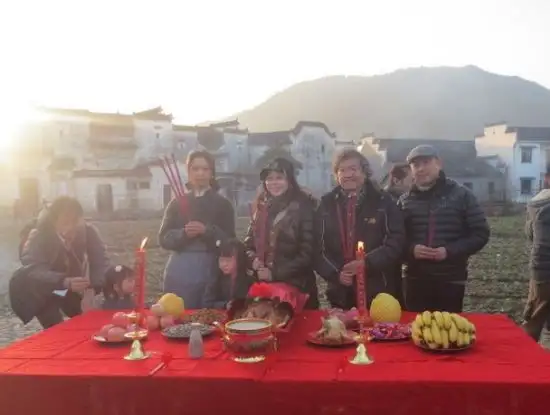
随着建筑技术的发展,中国有越来越多运用高科技的新建筑。它们使用坚固、耐火、保温的墙体材料,大量运动计算机辅助设计,在施工时使用高压泵车。中国在这个领域已经处于世界最前列,很多新建筑技术离开实验室,第一站便出现在中国。然而,其中很多建筑设计时要考虑风水,奠基或者封顶时要搞祭祀。开发商认为,神佛比起高标号水泥更能给建筑提供安全。
前苏联是无神论科学家的摇篮,现在东正教神职人员的影响力已经进入了科技界。比如,他们会给新下线的米格战机主持宗教仪式,或者在汇率下跌时给服务器洒圣水。
二,高科技企业直接引入现代迷信
南方某航空公司主管不仅自己拜“高僧”为师,还让手下高管拜其为师,在内部形成以“种福田”为核心的企业文化。然而,航空业却完全是现代科技的结晶。IT业出来的某首富更是拜具有邪教倾向的民间巫术为师,不少类似的高科技企业都被他们的老板搞得乌烟瘴气。
三,运用科技扩散封建迷信
最近几十年,以高科技手段修建的宗教形象和宗教建筑在世界上大兴其道,很多建筑的体量都是本国前几名,内部使用着声、光、电等科技成果来制造宗教气氛。香港天坛大佛就由航天科技公司设计,使用了当时宝贵的电脑计算资源来确定它的抗风能力。佛像由其下属的机器厂承建,使用了高强度的合金钢。
这样的高科技宗教新建筑,是体现了信仰,还是用科学的力量亵渎了信仰?如果全信徒们一砖一瓦用手工建造,信仰是不是更虔诚?
四,制造“宗教科学”
科学只有一个,那些挂着“基督教科学”、“佛教科学”、“量子佛学”名号的体系,都是将科学与宗教硬性捆绑的现代迷信。我曾经听过一些宗教讲座,主讲人总是说,这个道理有科学家的某某实验为证。且不说这些实验均系杜撰,即使是真的,既然论点都以科学知识作论据,为什么不干脆接受科学本身?
迷信披着科学外衣的权威是科学时代的新产物,表面上尊重科学,实际上是以将科学置于工具地位的方法来贬低科学精神。


评论
发表评论