From Qi Jinggong's Weeping to Chairman Mao's Seize the Day and Night从齐景公的泣不成声到毛主席的只争朝夕
01
Nixon quotes Mao Zedong's poems
In February 1972, the then US President Nixon visited China, and Sino-US relations ushered in a breakthrough.
This ice-breaking trip has greatly improved the relationship between the two countries.
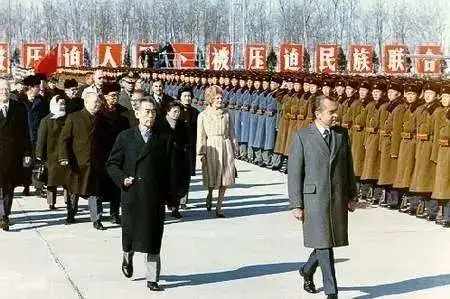
On February 21, Premier Zhou Enlai personally held a welcome dinner to warmly welcome the first American president to visit China.
Nixon was greatly moved and offered a toast affectionately.
No one expected that in Nixon's toast, he would quote a poem from Chairman Mao:
"There are so many things that are always in a hurry. The world is changing, and time is pressing. Ten thousand years is too long, and we only seize the day."
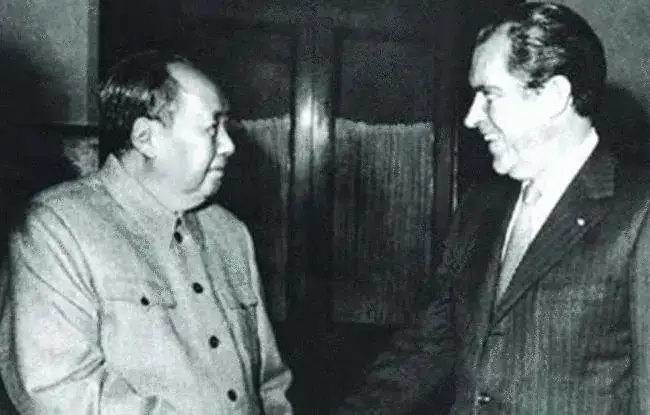
Nixon shook hands with Chairman Mao during his visit to China
Nixon cleverly quoted this poem as a metaphor that China and the United States have been hostile for a long time, and time is running out, and China and the United States must change their previous strategies.
Nixon wished that China and the United States could always enjoy peace and common development.
Nixon deserves to be a master of speech. This passage of poetry is very appropriate and generous, conveying his and the United States' wish to seize the day with China and establish good international relations.
Nixon thus set a record by becoming the first foreign head of state to quote Chairman Mao's poems in a public speech.
(On February 22, while visiting the Badaling Great Wall, Nixon recited another Mao Zedong poem "Qinyuanchun Snow" and asked the Chinese staff for the English translation of "Mao Zedong's Poems")
Zhou Enlai welcomes Nixon who is visiting China
Now the question is, which of Chairman Mao's famous poems did Nixon quote from?
02
Chairman Mao and Guo Moruo
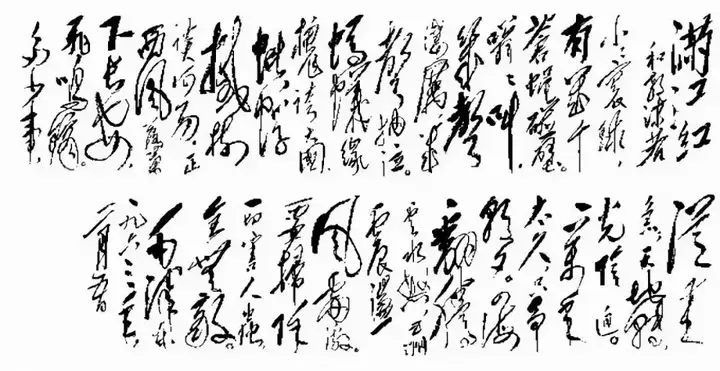
In fact, the poem Nixon quoted was Chairman Mao's masterpiece "Man Jianghong and Comrade Guo Moruo".
In a small world, a few flies hit the wall.
Buzzing, screaming, and sobbing.
It is easier said than done for ants to exaggerate the country by the locust trees, but it is easier said than done for the mayflies to shake the trees.
The westerly wind leaves Chang'an, flying with dysprosium.
There are many things that are always in a hurry; the world is turning, and time is pressing.
ten thousand years is too long, fight for now.
The four seas are churning, the clouds and water are furious, and the five continents are shaken by wind and thunder.
To wipe out all pests, all invincible.
When mentioning this poem, we must first talk about Chairman Mao's close comrade-in-arms and poet friend Guo Moruo.
Guo Moruo was a famous modern Chinese writer, poet, historian, and a revolutionary.
In March 1926, during the Great Revolution, Guo Moruo and Chairman Mao met for the first time in Guangzhou.
The two like-minded people have been friends for a long time, and they hit it off at first sight, thus forging a profound friendship.
At that time, Chairman Mao served as the acting director of the Central Propaganda Department of the Kuomintang and the director of the 6th Guangzhou Peasant Movement Workshop.
He is presiding over the Guangdong Peasant Movement Workshop to promote the Peasant Movement.
He warmly invited Guo Moruo to work as a teacher in the workshop.
It's the first time the two have collaborated.
During the Northern Expedition, Guo Moruo was the Chief and Deputy Director of the Propaganda Section of the General Political Department of the Northern Expedition Army, and his rank was very high.
After the failure of the revolution, Guo Moruo gave up the wooing of Chiang Kai-shek's high-ranking officials and generous salary, and resolutely continued to persist in the revolution.
In August 1927, Guo Moruo participated in the Nanchang Uprising, serving as a member of the Uprising Revolutionary Committee and director of the General Political Department, with a higher status than Zhu De.
Later, he lost contact with the organization and took refuge in Japan.
After the outbreak of the Anti-Japanese War, Guo Moruo resolutely gave up his family for the country and returned to the country to fight the war.
Guo Moruo and Chairman Mao were in the same trench again, fighting together.
Both Guo Moruo and Chairman Mao were great poets of romanticism, with a literati nature, and they echoed a lot in poetry and prose.
For example, Guo Moruo reconciled four pieces of Chairman Mao's masterpiece "Qinyuanchun·Snow" in one go.
After the founding of the People's Republic of China, the two poems echoed more frequently. Chairman Mao sometimes wrote poems and lyrics, often under the name "with Comrade Guo Moruo".
Moreover, after Chairman Mao finished writing the poems, he often asked Guo Moruo to revise them.
Guo Moruo, on the other hand, published many articles on Mao Zedong's poetry (from 1957 to early 1966 alone, he published nearly 20 articles).
It can be said that Guo Moruo was the person who knew Chairman Mao's poems best, and he also represented the highest level of research on Chairman Mao's poems at that time.
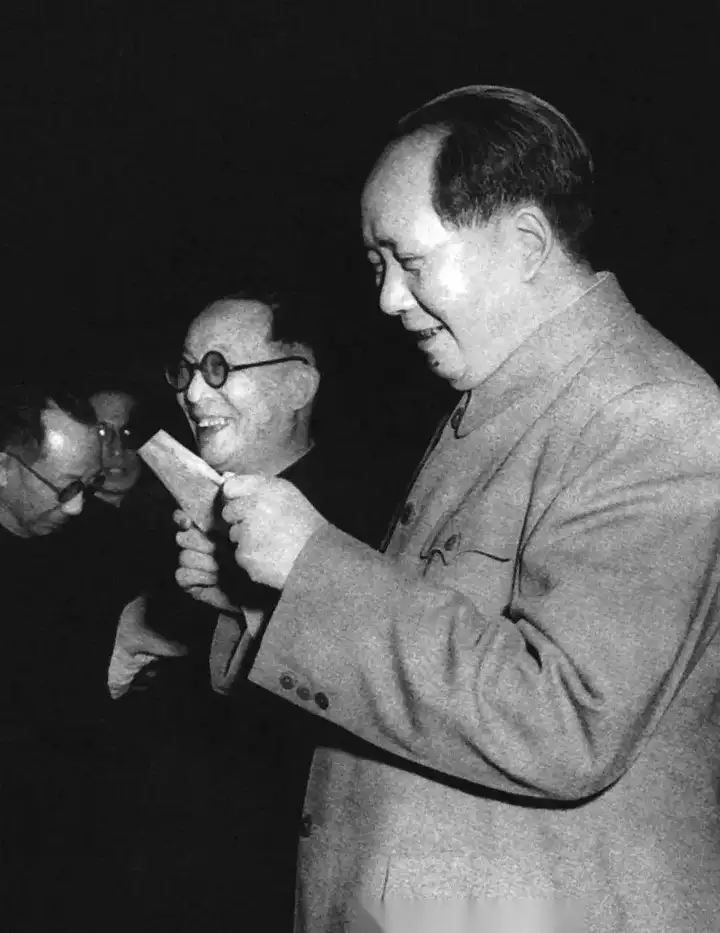
Guo Moruo and Chairman Mao
On December 26, 1962, Chairman Mao's 69th birthday, Guo Moruo wrote a song "Manjianghong·Ode to the Leader" for his friend.
The vicissitudes of life show the true qualities of a hero.
With 600 million people, strengthen unity and uphold principles.
When the sky falls, you can hold it up, and the world is invincible.
Listen to the rooster singing all over the world, the east is white.
When the sun rises, the iceberg drops; if the real gold is there, how can it be destroyed?
There are four volumes of majestic essays, which set up poles for the people.
The Jie dog barked and Yao stopped laughing, and there was no news of the mud cow entering the sea.
Facing the east wind, the revolution displays the red flag, and the universe is red.
(On January 1, 1963, "Guangming Daily" publicly published it under the name "Man Jianghong Expressing Hearts on New Year's Day in 1963")
After Chairman Mao finished reading this poem, Guo Moruo's magnificent momentum described in the poem resonated with him.
On January 9th, Chairman Mao wrote this political lyric poem - "Man Jianghong and Comrade Guo Moruo".
(The word was published on December 23, 1963)
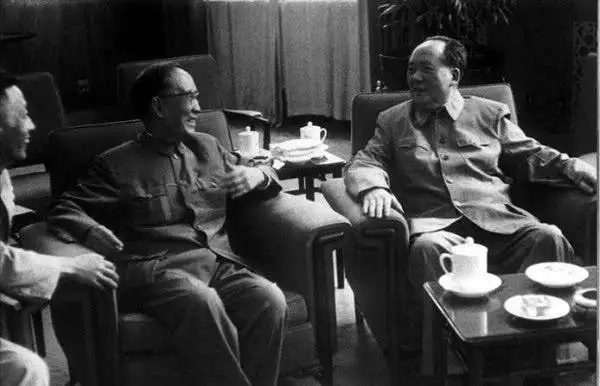
On February 13, 1964, Chairman Mao talked with Guo Moruo
03
"Man Jianghong and Comrade Guo Moruo"
Mao Zedong's poems were never written without complaints, but were closely related to current political events, international dynamics, and revolutionary situations.
To analyze this poem, we must understand the international situation at that time.
When Mao Zedong wrote this poem, it was during the Cold War, when the United States and the Soviet Union were vying for hegemony.
In order to compete for world hegemony, the two camps of the United States and the Soviet Union set off countless disputes.
New China and the United States are originally opposing camps. The United States has always implemented a policy of blockade and suppression against New China.
China and the Soviet Union were originally countries in the socialist camp, but the Soviet Union implemented "Great Chauvinism", and the relationship between China and the Soviet Union broke down and gradually turned against each other.
On the other hand, under the instigation of the United States, the Soviet Union, and the United Kingdom, India frantically provoked in order to maintain its partial hegemony.
China's diplomatic situation is very bad.
The meaning of this phrase is:
In today's world, there are a few countries (referring to countries practicing hegemonism such as the United States, the Soviet Union, Britain, and India) that are buzzing like headless chickens, barking their teeth and claws.
They keep boasting how powerful they are, but in fact, they are strong on the outside, like a mayfly shaking a tree, which is really ridiculous and absurd.
As long as we blow the horn of charge, we will be able to defeat them like the autumn wind sweeping away fallen leaves.
Time is running out, and if you have to wait 10,000 years for your (hyperbolic) victory, that is simply too long.
The general trend of the world is unpredictable. We must seize the time and seize the day to eliminate these scum that endanger world peace and restore the world to a peaceful and prosperous world.
"Man Jianghong and Comrade Guo Moruo"
The content of this poem is easy to understand, the momentum is magnificent, and the writing is extraordinary.
First of all, I started with "Little Huanqiu", looking down at the world with poise and detachment.
The earth is still so small, let alone the United States, the Soviet Union, Britain, India and other countries?
"Ants are attached to locust trees to exaggerate a great country, but how easy it is to talk about shaking trees with gnats and gnats", one sentence is based on the allusions of Li Gongzuo's "Nanke Taishou Biography" and Han Yu's "Tiao Zhang Ji" in the Tang Dynasty.
Chairman Mao used exaggeration and metaphor to compare it to a headless fly, a mayfly shaking a tree,
One village and one harmonious, complement each other, and a few strokes outline the disgusting and ridiculous ugliness of these countries.
"Chang'an under the falling leaves of the west wind, flying Ming Dy" is an allusion that during the Han Dynasty, the Xiongnu Maodun Chanyu ascended the throne by killing his father through "Ming Di" and invaded the Han Dynasty.
Chairman Mao used this allusion as a metaphor for the hostility and suppression of new China by a hegemonic country.
Chairman Mao used a variety of rhetorical techniques to ruthlessly expose the wolfish ambitions of the hegemonic country, showing his contempt and contempt.
In the sentence "How many things are always urgent; the world is turning, time is pressing", Chairman Mao used four three-character short sentences, 12 characters, to vividly render the atmosphere of chilling and the urgent situation.
Lay the emotional foundation of this word with penetrating three-point writing power.
"Ten thousand years is too long, seize the day and night", this sentence is rich in philosophy, it not only shows the situation, but also explains that we should take a proactive attitude to meet the enemy's challenge and repel the enemy's provocation.
In the last two sentences, the revolutionary prospect Mao Zedong described expresses his confidence in victory.
In the next column, using techniques such as scene description, lyricism, and discussion, he passionately praised the world revolution.
The whole poem is full of emotion, powerful writing, spicy and humorous, hearty, open and close, majestic, majestic and fierce, and the revolutionary pride is the same as before, which can be called a battle cry.
(After the cafeteria read this sentence, he admired his heroic spirit even more. Who would dare to treat the most powerful countries in the world like ants?)
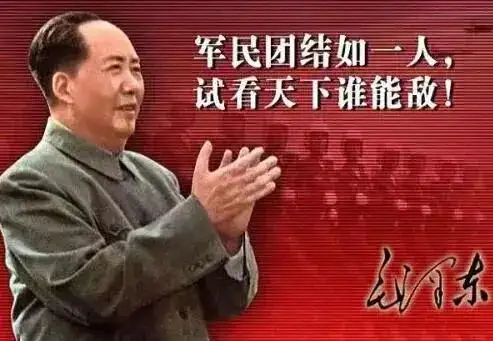
Although this poem is not very famous, it shows the unique poetic characteristics of Chairman Mao's poems in a concentrated way. It is of a very high level among Chairman Mao's works in his later years, and it is a rare masterpiece.
The impassioned verses, the awe-inspiring momentum, the fighting spirit soaring into the sky, and the firm belief that the revolution will win all aroused the resonance of the readers.
Therefore, after the first word was published, it was very popular among readers. Foreign scholars have translated it one after another, and there have been many versions. There are more than 10 versions in English translation alone.
epilogue
Everything was as expected by Mao Zedong. The blockade and provocation of New China by the United States, Britain, the Soviet Union, India and other countries ended in failure.
With the United States at a disadvantage in the US-Soviet struggle for hegemony and the growth of New China's national strength, its influence on the world has continued to increase.
The Americans finally lowered their proud heads and took the initiative to ease relations with China.
In the end, there was Nixon's visit to China.
Of course, when Nixon quoted this poem, he did not take into account the international situation when Chairman Mao wrote the poem, but mainly to quote the meaning contained in "how many things are always urgent, the world is changing, and time is pressing. Ten thousand years is too long, seize the day." philosophy.
It is also true that Chairman Mao's famous quote is frequently quoted, even if it is used in Stephen Chow's movie posters, there is no sense of disobedience.
Perhaps it is because this famous saying is so popular and catchy that many people don't know that it was written by Chairman Mao.
one
The story of Duke Jing of Qi’s Niu Shan crying loudly comes from "Yanzi Chunqiu·Admonishment", to the effect:
Once, Qi Jinggong took his officials to Niushan near the capital to play. When he walked to the north corner of Niushan Mountain and faced his own capital, he suddenly burst into tears and said, "How can I be willing to leave this beautiful capital and die!"
The accompanying ministers, Ai Kong and Liangqiu, saw that Qi Jinggong was so sad, and they either felt or agreed with him and wept.
Only Yan Zi sneered disapprovingly.
Qi Jinggong, who was used to flattery, was puzzled by Yanzi's smile. He wiped away his tears and asked sullenly:
"The widow was hurt by the scene today, Ai Kong and Liang Qiuju were both affected by me and wept, and you were the only one who laughed instead of crying. Are you mocking the widow for being sentimental?"
Yanzi pondered for a moment, then replied:
"Please listen to my explanation. If virtuousness can live a long life, then Taigong and Henggong must live forever; if bravery can live a long life, then Zhuanggong and Linggong are still alive. If they are still alive, the throne Do you still have your share? Since ancient times, human affairs have been metabolized, and exchanges have become ancient and modern. Only in this way can the throne be your turn today. Therefore, you are only crying for your own life and death, it is unkind! You cry, unkind king In the front, the flattering courtiers Ai Kong and Liang Qiuju followed closely behind, how could I not laugh!"
Duke Jing of Qi, Ai Kong, and Liang Qiuju looked at Yan Zi and had nothing to say.
When Qi Jinggong cried, he left behind an ancient idiom: Niushan snot.
two
There are generally two understandings of Niu Shan Xia Tang. The first is a metaphor for the sorrow caused by the passage of time, the change of things, and the shortness of life. The second type refers to self-seeking troubles caused by people's insatiable greed and ignorance of satisfaction.
Because Yan Zi, who is both wise and brave, explained it first, many people also think that Qi Jinggong cried because he was greedy, unsatisfied, and looking for troubles.
In fact, I am more willing to believe that Duke Jing of Qi cried mainly because of the first explanation, because although Duke Jing of Qi is the supreme monarch, he also has to face the passage of time and the sudden arrival of a hundred years.
Throughout the ages, there have been thousands of emotions about the passage of time, the shortness of life, and the vastness of the universe. However, each person has different thinking angles, understanding heights, and stalemate attitudes. If nothing else, there are similar expressions There are countless poems and songs.
three
At the same time when Qi Jinggong Niushan was crying, Confucius, facing the river flowing day and night, also let out a long sigh on the bank of the river, "The dead are like husbands, and they will never give up day and night".
After Qi Jinggong cried in Niushan in the Spring and Autumn Period, in the Warring States Period that followed, Qu Yuan’s Chu Ci "Yuanyou" also issued "Only the infiniteness of the world, mourning the long-term diligence of life. The past is beyond reach. , I don’t hear whoever comes” lamented.
When it comes to Emperor Wu of the Han Dynasty's "Autumn Wind Song", that is: the sound of the flute and the drum is accompanied by the singing of the oars, and there is a lot of joy and sorrow. How young and strong Xi Nai Lao He!
The author of "A Life Less than a Hundred Years" in the Han Dynasty is unknown. Although it mainly expresses the idea of carpe bliss in time, it still contains deep thinking about the short life.
less than 100 years old
Han Anonymous
Born less than a hundred years old, I often worry about a thousand years old.
The days are short and the nights are long, why not swim by candle!
It's time for fun, why wait for Lai here?
Fools cherish money, but scoff for future generations.
Fairy Prince Joe, it's hard to wait.
A hero such as Cao Cao also expressed his helplessness and emotion in his "Duan Ge Xing" that "singing to wine, how much life is! For example, the morning dew, the past is bitter."
In the era of great division in the Wei, Jin, Southern and Northern Dynasties, the great social turmoil gave birth to people's sense of disillusionment in life.
Tao Yuanming's "Remembering the past and not admonishing the past" in "Returning to Come" seems to be more positive. Another song "Three Poems of Proposed Elegy" "Life must be death, and early death is not fate. Yesterday and evening are the same people, today I am in the ghost record", "What is the way to die, and the body is on the same mountain" etc. in Tao Yuanming I may be really pessimistic about it. Most sentient beings will only see the impermanence and illusion of the world.
Ruan Ji said: Life is like dust and dew, and the way of heaven is long.
In the prosperous Tang Dynasty, there were more works expressing the passage of time and the changes of the world, but Chen Ziang's "Taiwan Song of Dengyouzhou" reached the pinnacle, and echoed Qu Yuan's "Only the infiniteness of the world, mourning the long-term diligence of life".
Deng Youzhou Taige
Chen Ziang Tang
The ancients are not seen before, and those who come after are not seen.
Thinking of the long distance between the world and the earth, I feel so sad and tearful!
Of course there are many more, such as:
Li Bai's "The mirror in the high hall is sad and white, the morning is like blue silk and the evening is snow", "The days are so short, but a hundred years are easy to be full of suffering. The sky is vast, and the ten thousand kalpas are too long."
Li He's "I advise you to get drunk all day long, so that the wine does not reach the soil on Liu Ling's grave", "Shen Lan sees off guests on Xianyang Road, if there is love, the sky will grow old."
Du Fu's "Thinking about physics requires pleasure, why use false names to trip this body".
Anonymous's "There are flowers that can be folded straight to be folded, don't wait for flowers to be empty to fold branches".
Luo Yin's "If you have wine today, you will be drunk today, and you will worry about tomorrow".
Du Mu's "It's only been like this throughout the ages, why should Niushan be alone in his clothes".
Fan Zhongyan, a morally perfect person in the Song Dynasty, was also lost in the helplessness of the passage of time and the changes of the years. Otherwise, there would be "fingers pondering, fighting like a party, Liu Ling drunk?", "A product and a thousand gold, ask white hair, How to avoid it?" asked the question.
Picking the Silver Lantern · Divide the topic with Mr. Ouyang at the table
Fan Zhongyan Song
Last night, I laughed at Cao Cao, Sun Quan and Liu Bei because of watching Shu Zhi. Exhausted organs, exhausted effort, only one-third of the world. Thinking carefully with your fingers, fighting like a party, Liu Ling drunk?
There is no one hundred years old in the world. Less dementia, aging and haggard. Only in the middle, these young men, forbearance to tie up their names? Yipin and Qianjin, ask the white hair, how to avoid it?
Su Dongpo, who had a bumpy official career, lived a life of ups and downs, and experienced the test of life and death several times, so he said: the world is a big dream, and life has several cool autumns.
Li Qingzhao seems to be fresh and fresh, but in the early stage, he showed his petty bourgeoisie to a high level, but when the country was in danger of ruining his family, what he blurted out was: life is a hero, and death is a ghost!
People like Zhu Dunru seem to be open-minded and transparent, but in fact, they reveal in their bones the negativity and decadence of the small court in the Southern Song Dynasty who were drunk and dreamy, and did not think about making progress.
Xijiang Moon·Day Day Deep Glass Full of Wine
Zhu Dunru Song
The day is deep and the cup is full of wine, and the flowers bloom in the small garden. Sing, dance, and enjoy yourself, without restraint or hindrance.
There are so many spring dreams in Qingshi, and so many geniuses in Huangquan. No need to worry and arrange, just get it now.
At the end of the Southern Song Dynasty, a fierce man stood up and wanted to help the building of the Southern Song Dynasty. ", keep the loyal heart to reflect the history", etc., sweeping away the sluggishness and petty atmosphere of the Southern Song Dynasty, are all famous sentences through the ages that inspire future generations with high fighting spirit.
The Han people under the Mongol Yuan rule were more aggrieved and difficult to do anything, so let’s take it lightly and make a little love.
The Full Moon and the Books in the Mountains
Zhang Kejiu Yuan
The rise and fall of the prosperous dream through the ages, the eyes of poetry are tired of the end of the world.
The arbors in Konglin, the vines in Wugong, and the jackdaws in Chu Temple.
There are several huts with a collection of thousands of books, and they are invested in the old village.
What's going on in the mountains? Brewing wine with pine flowers, brewing tea with spring water.
"Song of Tomorrow" written by Qian Fu in the Ming Dynasty is dedicated to exhorting people to cherish time, which is similar to the broken thoughts of teachers and parents.
four
Time finally came to modern times, and Teacher Mao was born. He wrote a poem in 1949 and 1963 respectively.
Seven Laws The People's Liberation Army Occupies Nanjing
Mao Zedong
The wind and rain turned pale and yellow in Zhongshan, and millions of soldiers crossed the river.
The tiger dominates the dragon, the present is better than the past, and the world is turned upside down and generous.
It is advisable to use the remaining courage to chase the poor, and not to be known as the overlord.
If the sky is loving, the sky is also old, and the right way in the world is vicissitudes.
Comrade Man Jianghong He Guomoruo
Mao Zedong
In a small world, a few flies hit the wall.
Buzzing, screaming, and sobbing.
It is easier said than done for ants to exaggerate the country by the locust trees, but it is easier said than done for the mayflies to shake the trees.
The westerly wind leaves Chang'an, flying with dysprosium.
How many things, never anxious;
The world is turning, time is pressing.
ten thousand years is too long, fight for now.
The four seas are churning, the clouds and water are furious, and the five continents are shaken by wind and thunder.
To wipe out all pests, all invincible.
For thousands of years, countless sages and sages have expressed emotion, been confused, pondered, and discussed about the passage of time, the aging of life, the shortness of life, and the infinite universe. Regarding this question, the teacher’s answer is: If the sky has love, the sky will also Old, the right way in the world is vicissitudes; ten thousand years is too long, just seize the day and night.
Qi Jinggong has many problems, but after reading his story, most people can't hate him.
Probably because he is handsome? There is no doubt that appearance sometimes really affects the tolerance of outsiders.
The above is half a joke, handsome is one thing, but Qi Jinggong has been in power for 58 years, from a young "puppet" to a powerful monarch, he is still hardworking, and he can listen to the words of loyal ministers, and he is generally recognized.
As a feudal lord in the Spring and Autumn Period, there are quite a few anecdotes about him.
It is said that in "Yanzi Chunqiu", the upright Yanzi (Yan Ying) is nothing more than all kinds of ingenious advice, and Qi Jinggong's cycle of "often making mistakes-often correcting them-continuing to make mistakes" made people laugh and left a deep impression.
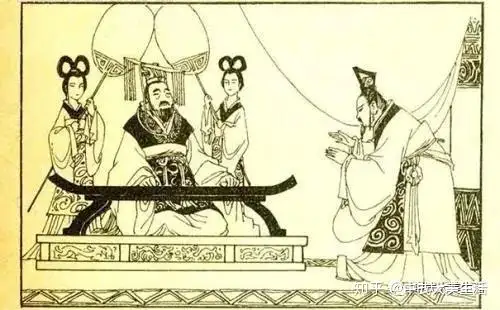
The source of "tyranny is fiercer than a tiger" is him
On the way Confucius fled from Lu State to Qi State, he saw a woman crying in front of the tomb on the side of Mount Tai. It turned out that her father-in-law, husband, and son were all killed by tigers.
Only then did Confucius know that the Qi State he was going to had a tyrannical government that was more ferocious than a tiger, so he couldn't help but feel a little bit embarrassed.
However, Qi Jinggong still treated Confucius with courtesy, and Confucius failed to stay in Qi in the end. The reason was that Yan Zi, whom Confucius admired, did not agree with Confucius' thoughts.
Yan Zi is a famous figure in history, Qi Jinggong is really obedient in front of this subordinate.
I was corrected for cutting too many feet: "Am I so cruel?"
After Qi's national conditions improved, Qi Jinggong began to pursue extravagance and entertainment. When he got angry, he directly abused the prisoner's punishment, and even cut off the prisoner's feet without asking.
Xiangguo Yanying was very worried about this.
Once, Duke Jing of Qi built a gorgeous big house for Yan Ying, but Yan Ying refused to accept it, saying that the old house was close to the market and it was convenient for shopping.
Qi Jinggong knew that Yan Ying was always frugal and rarely went shopping in the market, so he asked him with a smile:
"Do you often buy things? The widow asked you, what is the most expensive item in the market today? What item is the cheapest?"
When the time came, Yan Zi hurriedly replied:
"As far as I know, artificial feet are the most expensive and shoes are the cheapest."
Qi Jinggong didn't react at first, but after being guided by Yan Zi, he finally realized that it was his fault, and he said embarrassedly, "Am I so cruel?"
It's more about self-reflection than questioning.
Naturally, there were fewer feet to be chopped off. Qi Jinggong himself had made a thousand-year-old pioneering work on the issue of buying shoes.
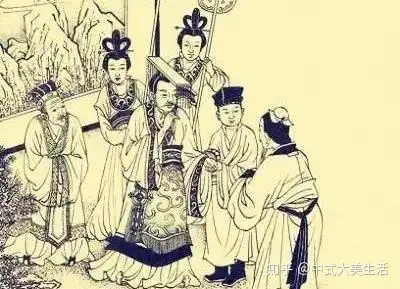
Creative shoemaking was held accountable: "If you want to punish, punish the widow."
Duke Jing of Qi invited a shoemaker from the state of Lu to make a special pair of shoes for him.
In his opinion, the shoes have to be big and luxurious in order to be worthy of the strength of Qi. So, the shoes end up like this:
The length is one foot, the toe is decorated with beautiful jade, the shoelace is made of gold, the upper is inlaid with silver, and all kinds of jewelry are adorned.
We can't imagine the specific appearance of this shoe. If it is still there, it must be a rare treasure in the museum.
On a cold morning, Qi Jinggong wore these special shoes to go to court to handle political affairs.
Yan Zi came to court, Duke Jing of Qi respected the elder of the three dynasties very much, and wanted to get up to greet him, but unfortunately the shoes under his feet were too heavy, he couldn't walk, he could only lift his feet.
Naturally, Yan Zi made some excuses again, and deliberately summarized the shoemaker's three major crimes:
The first thing is not to make shoes according to the coldness and warmth of the season, and the weight that the feet can bear;
Conclusion: It should be arrested and tried. the
Qi Jinggong is quite honest, saying that he himself asked for such a request, and kept pleading for the shoemaker, but finally he was forced to say:
"If you want to punish, punish the widow, but please spare that innocent shoemaker."
In the end, the shoemaker from the State of Lu was expelled from the country and could no longer enter the territory of the State of Qi.
Qi Jinggong no longer wears these shoes.
In the face of a great country, I want to live another 500 years
The monarch has been in office for 58 years. On the one hand, he has loyal ministers to manage state affairs for him, and on the other hand, he has flattering ministers to help him enjoy luxury. Qi Jinggong lives very comfortably.
One day, Qi Jinggong and his ministers were playing together. Standing on the mountain outside the city, Qi Jinggong suddenly burst into tears:
"The city is so prosperous and the world is so beautiful, but why should I die?"
The other two courtiers hurriedly cried together, only Yanzi sneered, and Qi Jinggong questioned sadly and shamelessly.
Yan Zi calmly replied:
"My lord, don't be stupid, if people don't die, then it's your turn? The world is like this, the ones in the front make room, and the ones in the back have a chance to sit up... Isn't it unkind to sit up but don't want to make room for it?
"Today I saw a heartless monarch, two flattering ministers, and three ridiculous people around me. How could I not laugh?"
Qi Jinggong probably could only wipe away his tears silently.
Because of his good looks, Xiaoguan once had "unreasonable thoughts" about him
One day, a small official came to see Duke Jing of Qi. As soon as he raised his head, he was overwhelmed by Duke Jing's handsomeness and stared at him dumbfounded.
Qi Jinggong noticed it and said to the people around him, "Ask him, why are you staring at me so rudely?"
The little official replied: "Anyway, you are dead if you say it, and you are dead if you don't! I think you are beautiful!"
Qi Jinggong was really angry when he heard what he said, and said, "How dare you have unreasonable thoughts about me!"
If you speak, you will kill this little official.
Yanzi happened to enter the palace, and when he asked about it, Duke Jing of Qi explained: "He has unreasonable thoughts about me, so I want to kill him."
Yanzi said: "I heard that it is against the law of heaven to reject desires, and it is unlucky to hate and love. Although a small official offended you, according to the law, he did not commit a capital crime."
Duke Jing of Qi heard this and said, "Although it's disgusting, the prime minister is right. If I take a bath, let him rub my back."
What people covet is your beauty, but your punishment method is to let him take a bath for you. What kind of operation is this?

从齐景公的泣不成声到毛主席的只争朝夕
壹
' fill='%23FFFFFF'%3E%3Crect x='249' y='126' width='1' height='1'%3E%3C/rect%3E%3C/g%3E%3C/g%3E%3C/svg%3E)
贰
叁
肆
01
尼克松引用毛泽东诗词
1972年2月,时任美国总统尼克松访华,中美两国关系迎来突破性进展。
此次破冰之旅,大为改善了两国关系。
2月21日,周恩来总理亲自举行欢迎晚宴,热烈欢迎这位第一个访华的美国总统。
尼克松大为感动,深情地献上祝酒辞。
谁也没有想到,在尼克松的祝酒辞中,他竟然引用了毛主席的一段诗词:
“多少事,从来急,天地转,光阴迫。一万年太久,只争朝夕。”
尼克松访华期间与毛主席握手
尼克松巧妙地引用这段诗词,比喻中美两国敌对已久,时不我待,中美两国必须要改变之前的策略。
尼克松祝愿中美两国能一直和平,共同发展。
尼克松不愧是演讲高手,这段诗词引用得十分恰当,大方得体,传达了他以及美国希望与中国只争朝夕、建立良好国际关系的美好愿望。
尼克松由此创下一个记录,他成为第一位在公开场合讲话中引用毛主席诗词的外国元首。
(2月22日,尼克松在游览八达岭长城时,又吟诵毛泽东另一篇诗词《沁园春·雪》,并向中方工作人员索要《毛泽东诗词》英译版)
周恩来迎接访华的尼克松
现在问题来了,尼克松引用的这些诗词,是出自毛主席哪一首名诗呢?
02
毛主席和郭沫若
其实,尼克松引用的这首诗就是毛主席的名作《满江红·和郭沫若同志》。
小小寰球,有几个苍蝇碰壁。
嗡嗡叫,几声凄厉,几声抽泣。
蚂蚁缘槐夸大国,蚍蜉撼树谈何易。
正西风落叶下长安,飞鸣镝。
多少事,从来急;天地转,光阴迫。
一万年太久,只争朝夕。
四海翻腾云水怒,五洲震荡风雷激。
要扫除一切害人虫,全无敌。
提起这首词,首先就要说到毛主席亲密战友,诗友郭沫若。
郭沫若是中国近现代著名的文豪、诗人、历史学家,还是一个革命家。
1926年3月,大革命时期,郭沫若和毛主席在广州第一次相识。
志同道合的两人,神交已久,一见如故,由此结下了深厚的友谊。
那时候,毛主席担任国民党中央宣传部代理部长兼第6届广州农民运动讲习所所长。
正在主持广东农民运动讲习所,宣传农民运动。
他热情邀请郭沫若到讲习所担任教员。
两人第一次合作。
北伐战争时期,郭沫若就是北伐军总政治部宣传科长、副主任,级别非常高。
大革命失败后,郭沫若放弃了蒋介石高官厚禄的拉拢,毅然决然地继续坚持革命。
1927年8月,郭沫若参加了南昌起义,担任起义革命委员会委员、总政治部主任,地位比朱德还高。
后来,他与组织失去联系,到日本避难。
抗战爆发后,郭沫若毅然决然,舍家为国,回国抗战。
郭沫若和毛主席又在同一个战壕,一起奋斗。
郭沫若和毛主席都是都是浪漫主义大诗人,文人秉性,诗文附和非常多。
比如,毛主席名作《沁园春·雪》,郭沫若就一口气和了四首。
新中国成立后,两人诗文附和更加频繁,毛主席有时候写诗填词,往往都是以“和郭沫若同志”为名。
而且,毛主席写完诗词后,往往还会请郭沫若进行修改。
而郭沫若则发表了很多论述毛泽东诗词的文章,(仅从1957年到1966年初,他就发表了近20篇)。
可以说,郭沫若是最了解毛主席诗词的人,也代表了当时毛主席诗词研究的最高水平。
郭沫若和毛主席
1962年12月26日,这天是毛主席69岁生日,郭沫若就为自己的好友写了一首《满江红·领袖颂》。
沧海横流,方显出英雄本色。
人六亿,加强团结,坚持原则。
天垮下来擎得起,世披靡矣扶之直。
听雄鸡一唱遍寰中,东方白。
太阳出,冰山滴;真金在,岂销铄?
有雄文四卷,为民立极。
桀犬吠尧堪笑止,泥牛入海无消息。
迎东风革命展红旗,乾坤赤。
(1963年1月1日,《光明日报》以《满江红·1963年元旦抒怀》为名公开发表)
毛主席读罢此词后,郭沫若在词中所描述的恢宏气势,引起了他的共鸣,他心潮澎湃,诗兴大发。
1月9日,毛主席就写下了这首政治抒情诗——《满江红·和郭沫若同志》。
(此词于1963年12月23日公开发表)
1964年2月13日,毛主席与郭沫若交谈
03
《满江红·和郭沫若同志》
毛泽东写诗从来都不是无病呻吟,而是紧密联系当时时政要事,国际动态,革命形势。
要解析这首词,必须要了解当时的国际形势。
毛泽东写这首词的时候,正值冷战时期,美苏争霸。
美苏两大阵营,为了争夺世界霸权,掀起无数纷争。
新中国和美国本就是对立阵营,美国对新中国一直实行封锁、打压政策。
中国和苏联本来都是社会主义阵营国家,可苏联执行“大沙文主义”,中苏关系破裂,逐渐反目。
而印度则在美苏英的挑唆下,为了维护局部霸权地位,疯狂挑衅。
中国外交形势非常恶劣。
这首词的大义是:
当今世界,有那么几个国家(指美、苏、英、印等实行霸权主义的国家),就像无头苍蝇一样,嗡嗡作响,张牙舞爪。
他们不断鼓吹自己有多强大,实际上,他们外强中干,犹如蚍蜉撼树,实在太可笑、太荒唐了。
只要我们吹响冲锋的号角,就能如秋风扫落叶般战胜他们。
时间紧迫,如果要等一万年后才能获得胜利(夸张手法)胜利,那实在是太久了。
天下大势,变幻莫测,我们要抓紧时间,只争朝夕,消灭这些危害世界和平的败类,还世界一个太平盛世。
《满江红·和郭沫若同志》
这首词,内容通俗易懂,气势恢宏,起笔不凡。
首先就以“小小寰球”起笔,俯视天下,泰然超绝。
地球尚且如此渺小,更何况美苏英印等国?
“蚂蚁缘槐夸大国,蚍蜉撼树谈何易”,一句,化用唐朝李公佐《南柯太守传》和韩愈《调张籍》典故。
毛主席以夸张和比喻的手法,将其比作,无头苍蝇,撼树蚍蜉,
一庄一谐,相映成趣,寥寥数笔,勾勒出这些国家可厌可笑的丑态。
“正西风落叶下长安,飞鸣镝”化用汉朝时期,匈奴冒顿单于通过“鸣镝”弑父登基,侵袭汉朝的典故。
毛主席就是用这个典故,比喻为霸权国家对新中国的敌视和打压。
毛主席在上阕,运用多种修辞手法,无情地揭露霸权国家的狼子野心,鄙夷、藐视之情一览无遗。
下阕,“多少事,从来急;天地转,光阴迫”一句,毛主席用四个三字短句,12个字,将肃杀的氛围,紧迫的形势,渲染得淋漓尽致。
以入木三分的笔力奠定此词的情感基础。
“一万年太久,只争朝夕”,此句富有哲理,既表明形势,又阐述我们要以积极主动的态度,迎接敌人的挑战,打退敌人的挑衅。
最后两句,毛泽东描绘的革命前景,表达了自己胜利的信心。
下阕,运用写景、抒情、议论等手法,热情歌颂世界革命。
整首词,情感炽烈,笔锋有力,辛辣幽默,酣畅淋漓,大开大合,大气豪迈,磅礴凌厉,革命豪情一如既往,堪称是一副战斗檄文。
(食堂读罢此词,越发佩服他的豪迈之气,试问有谁敢将世界最强大的几个国家视若蝼蚁?)
这首词,虽然名气并不是很大,但集中展现了毛主席诗词独有的诗词特点,在毛主席晚年作品中水准极高,是难得的佳作。
词中慷慨激扬的诗句、睥睨六合的气势,气冲云霄的战斗精神、革命必胜的坚定信念,引起了读者的共鸣。
因此,这首词发表后,深受读者喜欢,国外学者纷纷翻译,出现了很多版本,仅英文翻译就有10多个版本。
结语
一切果然如毛泽东所料,美、英、苏、印等国对新中国的封锁、挑衅以失败而告终。
随着美国在美苏争霸中处于下风和新中国国力增长,对世界的影响不断加强。
美国人终于低下了高傲的头颅,主动缓解与中国的关系。
最终,才有了尼克松访华之举。
当然,尼克松引用这句诗,并没有考虑毛主席写此词时的国际形势,主要还是为了引用“多少事,从来急,天地转,光阴迫。一万年太久,只争朝夕”所蕴含的哲理。
也正是如此,毛主席这句名句,频繁被人引用,哪怕是用在周星驰电影海报中,也毫无违和感。
或许是因为这句名言太通俗,太朗朗上口,以至于很多人都不知道这是毛主席写的。
齐景公有很多毛病,不过看完他的故事,一般人恨不起来。
大概因为,他长得帅?毫无疑问,颜值有时候真的很影响外人的容忍度。
以上算半个玩笑,帅是一回事,实则齐景公在位58年,从一名少年“傀儡”变成强国君主,他还算勤恳,也能听信忠臣之言,总体还是受认可的。
身为春秋诸侯,他的奇闻轶事着实不算少。
据说在《晏子春秋》中,刚直的晏子(晏婴)无非就是各种巧妙劝谏,而齐景公“常犯错-常改过-继续犯错”这样的循环,让人大笑不已,且留下深刻印象。
“苛政猛于虎”的出处就是他
孔子从鲁国逃往齐国的途中,在泰山一侧看到妇人在墓前哭泣,原来她的公公、丈夫、儿子都被老虎咬死。
孔子才知道,他将要去到的齐国,苛政比老虎还凶猛,不免有些心塞。
不过,齐景公对孔子还是礼遇的,孔子最终没能在齐国待下去,原因是孔子所敬佩的晏子并不认同孔子的思想。
晏子是历史名相,齐景公在这位下属面前,还真的是听话。
砍脚太多被指正:“我有这么残暴吗?”
齐国国情有所好转后,齐景公开始追求奢靡玩乐。生起气来就直接对犯人滥施刑罚,甚至不加询问便把犯人的脚砍下来。
相国晏婴对此忧心忡忡。
有一次,齐景公为晏婴建造了一座华丽的大房子,晏婴拒绝接受,说老宅离市场近,买东西方便。
齐景公知道晏婴一向节俭,很少去街市买东西,笑着问他:
“你经常买东西吗?那寡人问你,如今街市中什么东西最贵?什么东西最便宜?”
时机来了,晏子赶紧回道:
“据臣所知,现在卖的最贵的是假脚,最便宜的是鞋子。”
齐景公一开始没反应过来,经晏子引导,终于明白是自己的问题,很不好意思地说:“我有这么残暴吗?”
与其说是提问,不如说是自我反省。
砍脚自然是少了,买鞋这个问题,齐景公自己倒是做了一项千年创举。
创意制鞋被追责:“你要处罚就处罚寡人吧。”
齐景公从鲁国请来一个鞋匠,为他特制一双鞋子。
在他看来,鞋子得大,还得奢华,才能配得上齐国实力。所以,这双鞋子最终是这样的:
长度足有一尺,美玉装饰鞋头,黄金做的鞋带,白银镶的鞋帮,再缀上各式珠宝。
我们也想象不出来这鞋的具体样子,如果还在,放到博物馆肯定是稀世珍宝了。
在一个寒冷的早晨,齐景公穿着这双特制的鞋子上朝处理政事。
晏子上朝来了,齐景公很尊重这位三朝元老,想起身去迎接,可惜脚下的鞋太重,他迈不开步,仅仅能抬抬脚。
自然,晏子又是一番借题发挥,还故意总结了鞋匠的三大罪状:
不按季节寒暖,不按脚能承受的重量做鞋,此其一;鞋子不伦不类,使君侯受到各国的嘲笑,此其二;耗费钱财,对国家无功还招致百姓怨恨,此其三。
结论:应该抓起来审理。
齐景公倒是蛮忠厚,说是他自己这样要求的,一直为鞋匠求情,最后被逼无奈来了句:
“你要处罚就处罚寡人吧,但请相父饶了那个无辜的鞋匠。”
最后的结果,鲁国这名鞋匠被驱逐出境,不得再进入齐国境内。
这双鞋,齐景公也不再穿它了。
面对大好江山,还想再活500年
国君当了58年,一面有忠臣为他打理国事,一面有阿谀之臣帮他奢靡享受,齐景公日子过得很是舒心。
有一天,齐景公君臣四人游玩,站在城外山上,齐景公突然就流眼泪了:
“城池这么繁华,人世这么美好,可是我为什么要死呢?”
另外两位臣子赶紧陪着哭起来,只有晏子冷笑,齐景公又伤心又没面子、质问。
晏子冷静回答说:
“国君啊别傻了,人如果都不死哪轮到你呢?世界就是这样,前面的腾出来,后面的才有机会坐上去……你坐上去却不想腾出来,不就是不仁吗?
“我今天看到一个不仁的国君,还看到两个阿谀的大臣,身边有三个可笑的人,我怎么能不笑呢?”
齐景公大概只能默默地把泪擦干了。
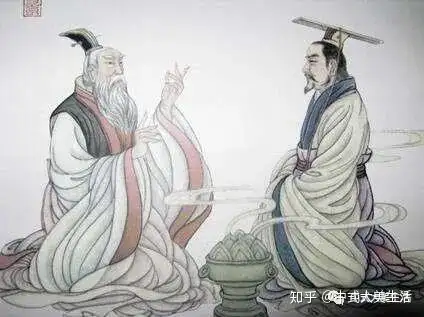
因为面容姣好,小官曾对他有“非分之想”
有一天,一个小官员来见齐景公,一抬头,当即被齐景公的帅气镇住,盯着他看呆了。
齐景公察觉,就对身边的人说:“问问他,干嘛这样无礼地盯着我看?”
小官员回答说:“反正说了也是死,不说也是死!我觉得你长得很美!”
齐景公听了他的话真的很生气,说:“你怎么敢对我有非分之想!”
说话就要杀掉这个小官员。
晏子恰好入宫,问及,齐景公解释说:“他对我抱有非分之想,所以要杀了他。”
晏子说:“我听说拒绝欲望有违天道,厌恶爱慕不吉祥,小官员虽然冒犯了你,可是根据法律他并没有犯死罪。”
齐景公听了,说:“虽然令人厌恶,但丞相说的是对的。那么如果我沐浴,便着他来给我搓背吧。”
人家垂涎的就是你的美貌,你的惩罚方式却是让他帮你搓澡,这是什么操作?


评论
发表评论