Folklore (55) Clothes for sale民俗(五十五)卖估衣
Folklore (55) Clothes for sale
Last year’s Silk Road Spring Festival Gala in Xi’an, Brother Braid performed a traditional cross talk “Selling Clothes”. It is very suitable to choose this cross talk to be performed at the party. First, it is relatively short and concise, and the duration can be controlled within 20 minutes; Give full play to the strengths and advantages of braids; third, the content is about an old business - selling estimated clothes, the burden of the whole piece is relatively dense, so this work is more suitable for TV performances, and the performance effect of the Silk Road Spring Festival Gala at that time was also very good drop.
In the cross talk, there is a passage about a fur coat seller in Beijing, which is quite vivid:
A: "It's nice to shout about a leather jacket."
B "Really?"
A: "A young apprentice next to me said 'not bad'."
B "Yes!"
A: "Hey, how can you help me find a little apprentice."
B "I went to a little apprentice and said 'not bad'."
A: "Okay. (Shouting) Who bought this leather jacket? It's the real one."
B "Not bad."
A: "It's oily and black, Fuling and Satin's face."
B "Not bad."
A: "After looking at the face, turn it over and have a look at the tube."
B "Yes!"
A: "This leather has nine bends, and Yasai's screw turns."
B "Not bad."
A: "Put on my leather jacket, don't care how cold it is, how windy it is, how much snow falls, you sleep in the ice, go take a nap in the snow!"
B "Not bad."
A "How could you forget the cold?"
B "Hello leather jacket—"
A: "I'll freeze you up."
Today we are going to talk about selling estimated clothes.
"Clothes upside down and half new,
Pull out the collar and pull up the skirt to sing and sell frequently.
Xiage winter clothes can be bought at will,
I don't know who the original system is? "
This poem is "Zhuzhi Ci on Guyi Street" written by Cui Xu during the Daoguang period of the Qing Dynasty, which vividly describes the business activities of ancient Guyi shops.
"Gua" means "estimate", while "Guiyi" means "used clothes for sale". It can be seen that calling a store that sells old clothes a clothing estimate shop means selling old clothes, but also that these old clothes are not worth a lot of money, and their prices also mean that they are estimated.
Most of the estimated clothes sold are used clothes that are 70% to 80% new, but even if the clothes that have just been made and not worn are sold to the estimated clothing store, they have to be counted as used clothes, commonly known as "scissors are estimated clothes". The fineness and color of the estimated clothes are very mixed, ranging from silk and satin to thick and fine cotton, and the styles can be inherited from generation to generation, even half a century apart. Zhang Ailing wrote in "Changing Ji": "Women's clothes are usually like jewelry, ageless, and can be sold at any time, but they are no longer popular in pawnshops in the Republic of China, because they are worthless after they pass the time. "
Guyihang is a store that used to sell used clothes as its main business method.
In the old society, due to the low living standards of the people, many poor people could not afford new clothes, so they had to buy old clothes from clothing appraisal shops to survive. Therefore, judging from the consumption level of people in the society at that time, it was indeed profitable to do this business-after all, in the era of underdeveloped productivity, food and clothing were all hard currency. After receiving the old clothes, the shopkeeper in the estimated clothing store will classify them into grades and grades according to the degree of newness and quality, and then sell them.
As an industry, in the era of underdeveloped economy, the estimated clothing line is a commercial activity that adjusts the daily livelihood of the people.
The last emperor Aixinjueluo Puyi wrote in "The First Half of My Life" when recalling the restoration of Zhang Xun and Dingsi: "According to the old Beijinger's recollection of the situation on the streets of Beijing at that time: that morning, the police suddenly asked every household to hang dragons. Flags, the residents had no choice but to use paper flags to deal with it; then, the Qing Dynasty robes and gowns that had not been seen for several years appeared on the street, one by one as if they had run out of coffins, and there were some shops outside the front door. It is also very prosperous. One is a ready-made clothing store, which sells dragon flags in a hurry;
In Beijing, clothing sales are concentrated in Dashilan outside Qianmen, Tianqiao and the flower market outside Chongwenmen.
In Tianjin, they are concentrated in Guyi Street. There is an archway at the west entrance of Guyi Street, with the words "sell the market" written on it. Gu refers to the old seventy-two Gu in Tianjin. "Selling the market" refers to the commercial market in Tianjin. Two hundred years ago, Li Ciming, a literati of the Qing Dynasty, described this street in his "Yuemantang Diary" as "the corridors are neat and tidy, as long as two miles away", and the prosperity is exactly like "the Changmen of Wu (Suzhou)". It is enough to know its prosperity in those days. There are all kinds of time-honored brands and old shops on Guyi Street, such as eating and drinking banquets, the old "Badacheng" Yangguang grocery store "Fan Yonghe", Kyoto Darentang, and the old leather mat shop are also on Guyi Street. Of course, clothing stores and silk shops are still the most popular on Guyi Street, such as Qian Yixiang, Dun Qinglong, Yuen Long, Ruifuxiang Hongji, etc. Guyi shops and stalls are scattered among them, walking in the downtown area Pedestrians and customers who have money go to big shops to buy new clothes; those who have no money can buy old clothes cheaply at clothing appraisal stalls. The two scenes together form a unique folk custom painting.
There are four main sources of used clothes in clothing stores.
One is to purchase goods at home. Some people sell their old clothes to clothing appraisal stores for various reasons, and the stores open their doors to buy them.
The second is to go out to purchase. I mainly purchase goods in bulk from some cities in the south of the Yangtze River and Shanghai, where the old clothes are of good quality and low prices, and sometimes they are even sold by the pound or in piles.
The third is that the customer sends the old clothes to the door for consignment sale. The customer sends the old clothes and quotes a price. After the clothes are sold, the store charges a commission.
The fourth is to buy it from a pawn shop. Appraisal clothing line is the vassal of pawn shop. There were many pawnshops in the old days, and the economy developed very fast among the residents. There is a saying that "there are no three generations of wealth". Therefore, the newly made fresh clothes at home may be sent to the pawn shop due to bankruptcy in an instant, and often there is no money to redeem them. The pawned clothes become "dead pawns" and the ownership is transferred to the pawn shop. As a result, the estimated clothing store resold the clothes that were not redeemed at the expiration date to the private rooms attached to the estimated clothing shops, and the private rooms were resold at a higher price to medium and small estimated clothing shops. After the founding of the People's Republic of China, the pawn shop was banned, and the estimated clothing shop lost an important source of used clothes, and its profit from operating the estimated clothing was even more meager. For this reason, many clothing stores are also engaged in other second-hand goods, such as old furniture, porcelain, jade, lacquerware, four treasures of the study, old calligraphy and paintings, etc.
After the clothing store receives the old clothes, in order to look good and sell them at a good price, they often need to wash and iron the old clothes, and sometimes need to use needles to mend them. Clothing stores need "three defenses", one is to prevent the clothes from becoming damp and moldy after the rainy season, the other is to prevent insects and rats from biting, and the third is to prevent fires. Therefore, clothing stores often have to expose clothes to the sun, and there are cats at home, so they must carefully search for candles every night to prevent accidents.
The operating method of the estimated clothing store is very special, and it uses calls for publicity. As usual, the guys tossed all the goods one by one every day, and every time they picked up a piece, they would call out the price: "This is a call for sale, and the three new big jackets inside will be sold at five times!" Countless pedestrians came to watch. Clothes sellers pay attention to codes and jargon, which is called "Dark Kaner", also called "pen", such as "Laohun pen", "Liuzi pen", "Peach pen" and "Fanzi pen", until "Diaozi pen" is the number from one to ten. Each store makes nine Chinese characters to represent "one to ten", and uses the same Chinese character for "one" and "ten", so there are nine Chinese characters in total. Guys To shake off an estimated garment, you have to turn over the bottom of the skirt to see the size, and then immediately perform mental calculations to call it out. The traditional cross talk "Selling Estimated Clothes" is a special way of doing business.
The current second-hand clothing store has turned into a vintage store. However, not all second-hand clothing can be called "vintage". Generally, vintage clothing stores mainly sell clothing from the 1950s to the early 1980s. Those who are obsessed with vintage clothing use the uniqueness of vintage clothing to express their own personality and ideas.
However, this is quite different from the purpose of the clothing appraisal shop, and the former clothing appraisal shop has disappeared into history after all.
去年的西安丝路春晚,辫儿哥哥表演了一段传统相声《卖估衣》。选择这段相声在晚会表演是很适合的,第一,它比较短小精悍,时长可以控制在二十分钟之内;第二,前面大段主要学叫卖:卖药糖、卖菜的吆喝,能够充分发挥辫儿的特长和优势;第三,内容是讲老行当——卖估衣,整个段子的包袱比较密集,因此这个作品是比较适合在电视表演的,当时丝路春晚的表演效果也是非常棒滴。
在相声里有一段讲北京卖皮袄的,相当生动:
甲 “吆喝皮袄好听。”
乙 “是吗?”
甲 “旁边一个小徒弟搭腔说‘不错’。”
乙 “是嘛!”
甲 “哎,您哪帮忙去个小徒弟。”
乙 “我去个小徒弟说‘不错’。”
甲 “好。(吆喝)谁买这一件皮袄啊原来当儿的啊。”
乙 “不错。”
甲 “黢的油儿的黑呀,福绫缎儿的面子哒。”
乙 “不错。”
甲 “瞧完了面儿,翻过来您看看筒子吧。”
乙 “是呀!”
甲 “这个皮子是九道弯,亚赛这螺丝转儿呀。”
乙 “不错。”
甲 “穿上我这件皮祆,别管多冷的天,刮多大的风、下多大的雪,你在冰地里睡觉,雪地里去冲盹儿去吧!”
乙 “不错。”
甲 “你怎么会忘了冷啦。”
乙 “皮袄好——”
甲 “把你给冻挺啦。”
今天我们就来聊一聊卖估衣。
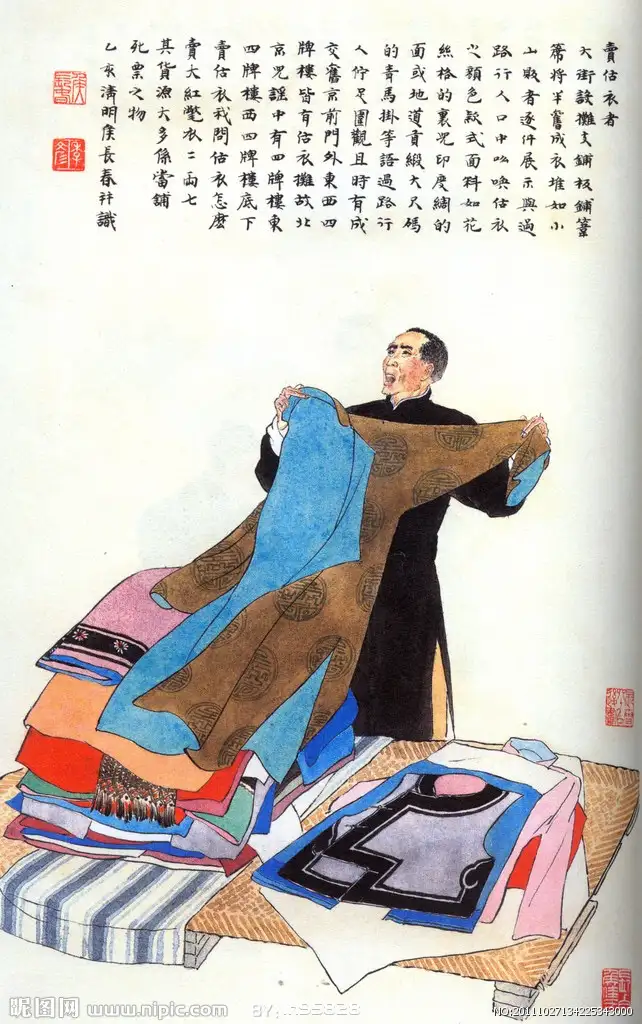
“衣裳颠倒半非新,
挈领提襟唱卖频。
夏葛冬装随意买,
不知初制是何人?”
这首诗是清代道光年间崔旭写的《估衣街竹枝词》,生动地描绘了古代估衣铺的经营活动。
“估”有“估计”的含义,“估衣”则作“出售的旧衣服”的意思。可见,把出售旧衣的店称为估衣店,既有卖旧衣的含义,也有这些旧衣并不值大钱,其价格也是估估作作的意思。
出卖的估衣多为七八成新的旧衣服,但是即便是刚做好还没穿的衣服卖到估衣行也得按旧衣算,俗称"下剪子为估衣"。估衣的成色很杂,上至绫罗绸缎,下至粗细棉布,款式能够隔朝接代,甚至相差半个世纪。张爱玲在《更衣记》里就写过:“女人的衣服往常是和珠宝一般,没有年纪的,随时可以变卖,然而在民国的当铺里不复受欢迎了,因为过了时就一文不值。”
估衣行就是过去以卖旧衣服为主要经营手段的商铺。
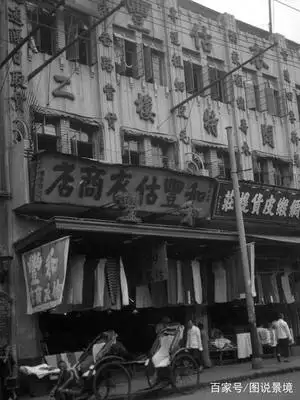
在旧社会,由于人们的生活水平较低,很多穷人买不起新衣服,只能从估衣行来购买旧衣服度日。因此从当时社会人们的消费水平看,干这行确实有利可图——毕竟在生产力不发达的年代,吃穿之物都是硬通货。在估衣行中掌柜收到旧衣服后就会将它们根据新旧程度、质量好坏分为三六九等再把它们拿出售卖。
作为一个行业来说,在经济不发达的时代,估衣行是一项调剂民间日用生计的商业活动。
末代皇帝爱新觉罗·溥仪在《我的前半生》中,在回忆张勋丁巳复辟时写道:"据老北京人回忆当时北京街上的情形说:那天早晨,警察忽然叫各户悬挂龙旗,居民们没办法,只得用纸糊的旗子来应付;接着,几年没看见的清朝袍褂在街上出现了,一个一个好像从棺材里面跑出来的人物这时前门外有些铺子的生意也大为兴隆。一种是成衣铺,赶制龙旗发卖;一种是估衣铺。清朝袍褂成了刚封了官的遗老们争购的畅销货。"
在北京,卖估衣的买卖集中在前门外大栅栏、天桥和崇文门外花市一带。
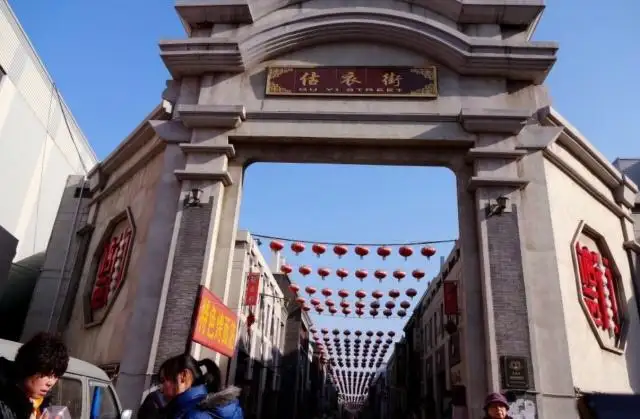
在天津则集中在估衣街,估衣街西口立有一面牌楼,上写"沽上市廛"四个字。沽,是指天津旧有七十二沽。"沽上市廛"就是指天津的商市。两百年前清代文人李慈铭在他的《越缦堂日记》中,描写这条街"廊舍整洁,几及二里",繁华绝似"吴(苏州)之阊门"。足知它当年繁荣的风貌。估衣街上有各种老字号、老商店,如吃饭饮宴,有老"八大成"洋广杂货商店"范永和"及京都达仁堂、老皮货凉席店也都在估衣街上。当然,估衣街上最多的仍然是服装店与绸缎庄,如谦益祥、敦庆隆、元隆、瑞蚨祥鸿记等,估衣铺、估衣摊杂陈其间,行在闹市间的行人、顾客,有钱的去大店铺置办新装;无钱的可以在估衣摊上便宜地买件旧衣裳。此二景凑在一起,形成了一幅独具特色的民俗风情画。
估衣店里旧衣的来源主要有四种。
一是自家进货。一些人因各种原因将旧衣卖给估衣店,店家则开门收购。
二是外出采购。主要从江南一些城市和上海批量进货,那里的旧衣质量好、价格低,有时甚至是论斤、论堆卖。
三是顾客送上门寄售,顾客将旧衣送来,自己报个价,衣服出售后店家收取佣金,若卖不掉,仍由顾客取回。
四是从当铺购得。估衣行是当铺中的附庸。旧时当铺很多,而且居民中经济发展十分快,有“富贵无三辈”的说法。因此家中新制的鲜衣华服,转瞬间就可能因破产送进当铺,往往又无钱去回赎,所当衣服即成为“死当”,所有权转移到当铺手中。于是,估衣行就把期满不赎的衣物转卖给估衣铺附设的包房,包房又加价转卖给中、小估衣铺。建国后,当铺被取缔了,估衣铺失去了重要的旧衣来源,其经营估衣的利润就更微薄了。为此,不少估衣铺都兼营起其它旧货,如旧家具、瓷器、玉器、漆器、文房四宝、古旧字画等。
估衣店收进旧衣后,为了有个好卖相、卖出好价钱,经常需要将旧衣裳清洗熨烫,有时还要动针缝补。开估衣店要“三防”,一防过梅雨天时衣服变潮发霉,二防虫蛀鼠咬,三防遭遇火灾。所以,估衣店经常要把衣服拿到阳光下暴晒,家里都养着猫,每天晚上必认真寻查火烛,以防不测。
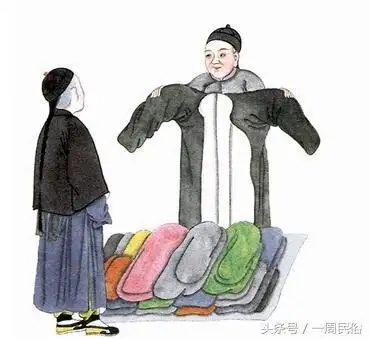
估衣行的经营方式很特殊,以吆唤做宣传。伙计们每天照例把所有的货物逐件的折腾一遍,每拿起一件,都要吆唤出价码来:“这个吆唤卖,里面三新的大夹袄,就五吊八!”于是引来无数围观的行人。卖估衣讲究暗码儿和行话,谓之“暗坎儿”,也叫做“笔"”,什么“老浑笔”、“柳字笔”、“桃字笔”、“番字笔”,直到“杓字笔”,就是由一至十的数码。各店自做九个汉字表示“一到十”,而且把“一”和“十”用同一个汉字表示,所以共计有九个汉字。伙计们把一件估衣抖开先要翻过底襟瞧瞧码儿,然后马上进行心算,才能吆唤出来。传统相声《卖估衣》就是表演了这种特殊的经营方式。
现在的二手衣店摇身变成了古着店 不过并非所有二手服饰可称为“古着”,一般古着服饰店主要售卖50年代至80年代初的服饰。而情迷古着的人,借古着服饰的独一无二,穿出自己的个性与主张。
不过,这和估衣铺的宗旨已经大相径庭,昔日的估衣铺终究已经消失在历史里了。


评论
发表评论