This blog is a vast information pool AI translated from the Chinese websites. The blogger is Haiqing Hua, a YouTuber (https://www.youtube.com/channel/UCvtj2f1ZNAZ1Kn4NrQ0JubA), you can contact him through: haiqinghua@yahoo.com
China's Diplomatic Wisdom to "Unite" Small Countries(2)中国“团结”小国的外交智慧
获取链接
Facebook
X
Pinterest
电子邮件
其他应用
Laos
One: Dam failure of hydropower station
On July 23, 2018, at around 8:00 p.m., a serious dam failure occurred at the Sanbien Sannanne Hydropower Station in Attapeu Province, southern Laos.
Five billion cubic meters of water "equivalent to more than two million Olympic-sized swimming pools" flooded seven villages, leaving hundreds missing, many dead and 6,600 displaced.
The hydropower station is the first project in Laos mainly constructed by South Korean companies (SK Construction Company and Korea Western Electric Power Company), with a total installed capacity of 410,000 kilowatts. Construction began in 2013, with a total investment of 1.02 billion US dollars.
Situation after the dam failure
On March 20, 2019, an independent investigation team composed of three international experts concluded that:
The dam failure cannot be considered to be caused by force majeure, but related to the foundation of the auxiliary dam. If adequate measures were taken, the accident could have been prevented.
However, the South Korean company attributed the cause of the accident to "heavy rain" and blamed the problems of the victims on "ineffective evacuation in Laos".
After the accident, South Korea's SK company's stock price plummeted.
Why did Laos choose a South Korean company that has no advantages in the hydropower construction industry?
As South Korea covets China's dominance in large-scale infrastructure projects in Southeast Asian countries, South Korean companies have begun to shift their market targets from the Middle East and North America to Southeast Asia.
At the time of bidding, companies from China, Japan, and South Korea all participated, but the South Korean company offered the lowest price. This is the consistent style of South Korea. Back then, South Korean shipbuilding companies were building factories while snatching ship orders from all over the world at low prices.
Laos has a poor economy. Although it recognizes the construction quality of Chinese and Japanese companies, it can only choose Korean companies because of its limited cash.
Situation before the dam collapse
In order to save money, the South Korean company modified the original design without authorization, lowered the dam height by 6.5 meters, replaced building materials, and saved 19 million US dollars.
In order to deliver the hydropower station in 2018 according to the agreement, the South Korean company braved the heavy rain to "rush to progress" construction.
On the evening of July 22, the Korean company discovered that the dam was damaged and immediately evacuated all 53 Korean personnel without notifying the local administrator.
Two days after the accident, South Korea decided to send a rescue team. Three days later, the 7-person advance team set off, and six days later, the rescue team arrived at the scene.
And how did China do it?
On July 23, the Chinese embassy in Laos immediately requested local Chinese-funded enterprises to provide assistance to the disaster area.
On July 24, the project departments of China Power Construction Corporation near the disaster area immediately sent people to the disaster area to set up rescue points and distribute relief materials.
On July 25, the PLA medical team, which was participating in the "Peace Train-2018" joint exercise in Vientiane, Laos, quickly dispatched 32 people to the disaster area.
Employees of the China Railway Company, which undertook the construction of the China-Laos Railway, also rushed from northern Laos to the south for disaster relief.
On the afternoon of July 30, the relief supplies from China arrived in Laos by special plane.
…
The dam failure ruined the reputation of Korean companies, and Southeast Asian countries put Korean companies on the negative list.
Contrary to Korean companies, the Nam Ou 7-stage hydropower station built by Chinese companies in Laos has achieved great success.
In 2007, PowerChina won China's first overseas hydropower project in the whole river basin:
The Nam Ou River project in Laos has a total installed capacity of 1.272 million kilowatts, accounting for 39% of the total installed capacity of electricity in Laos. The total investment of the project is about 2.7 billion US dollars, and the franchise operation lasts for 29 years.
The three power stations in the first phase of the Nanoujiang Water Conservancy Project have a total installed capacity of 540,000 kilowatts and have been put into commercial operation in 2016.
The remaining four power stations will be completed in 2020, and will guarantee 12% of Laos' electricity supply after completion.
The Nam Ou Hydropower Station is known as the "Seven Pearls" of the "Southeast Asia Battery" project in Laos.
Laos Nam Ou River Water Conservancy Project
Why is Laos keen on developing hydropower stations?
Laos is in the upper reaches of the Mekong River. The total length of the Mekong River is 4,900 kilometers, and the territory of Laos (including the boundary river) is 1,900 kilometers.
Coupled with the large drop in water flow, hydropower stations are naturally the best choice.
In 2017, Laos had 46 operational hydropower stations and 54 hydropower stations under construction.
By the end of 2020, 54 new transmission lines and 16 substations in Laos will be completed.
Among the developed hydropower stations in Laos, 70%-80% are invested and constructed by China.
Laos exports 70 percent of its hydropower generation to Thailand, Cambodia and Vietnam, accounting for about 30 percent of Laos' total exports.
Laos, with a population of only 6.8 million, had an import and export volume of US$11.2 billion in 2018, a year-on-year increase of 16%, exports of US$5.4 billion, a year-on-year increase of 10.9%, and imports of US$5.8 billion, a year-on-year increase of 21%.
China has sincerely helped Laos develop its economy, and Laos has reciprocated.
On April 25, 2019, China, Laos, and Thailand signed a memorandum of cooperation to build a new railway bridge near the Thai-Laos Friendship Bridge, laying meter-gauge and standard tracks at the same time, connecting Nong Khai, Thailand-Vientiane, Laos, and docking the existing China-Laos Railway , the project scale is 6 billion US dollars.
Part 2: China-Laos Railway
In April 2010, the Lao National Assembly approved the China-Laos Railway Project.
In November 2015, China and Laos signed the "Agreement on Cooperative Development of Railway Infrastructure and China-Laos Railway Project".
On December 25, 2016, the construction of the China-Laos Railway started.
The total investment of the China-Laos Railway is 7 billion US dollars, and the two countries jointly contribute 40%. Among them, China will contribute 70%, Laos will contribute 30%, and the remaining 60% will be jointly invested by Chinese and Lao enterprises.
Laos invested 840 million US dollars, accounting for 5.3% of the 2016 GDP of 15.8 billion US dollars. For a railway, Laos can be described as "the power of the whole country".
Why does Laos attach so much importance to the China-Laos Railway?
In 2008, Thailand helped Laos build the first railway, from Nong Khai, Thailand to Thanaleng on the outskirts of Vientiane, Laos, and the train journey takes 15 minutes.
The 3.5 kilometers of railway in Laos is also the total mileage of the railway in Laos.
A total of 146 countries in the world have railways, and Laos ranks fourth from the bottom.
On September 18, 2015, the Deputy Prime Minister of Laos stated at the ASEAN Expo:
Laos will change from a "land-locked country" to a "land-linked country".
The China-Laos Railway will change the blockade situation in which Laos is besieged by neighboring countries. One can imagine the urgency of Laos!
Why did the China-Laos Railway take 6 years from approval to construction?
The China-Laos railway project has twists and turns.
First, the railway standard dispute
Due to historical reasons, most of the railway standards in Southeast Asian countries adopt the meter gauge system, which is commonly referred to as narrow gauge. The railway that Thailand helped Laos build is a meter-gauge railway.
The standard track used by Chinese railways.
After negotiations, Laos agreed to adopt the standard track.
This is very important. It not only involves the issue of docking with the railways in China without changing the track, but also means that the future railway locomotives and carriages and other related heavy equipment will come from China.
Therefore, the China-Laos Railway is the second railway complete equipment construction project that fully adopts Chinese standards, Chinese technology and Chinese equipment overseas after the Jakarta-Bandung high-speed railway in Indonesia.
Second, the railway speed dispute
The China-Laos Railway is a single-track, mixed use of passenger and freight, and was originally designed to run at a speed of 200 kilometers per hour.
However, Laos is mostly mountainous. China proposes to reduce the speed of passenger transport to 160 kilometers and 120 kilometers for freight.
Laos disagrees and hopes to achieve a high standard in one step.
In the end, Laos agreed with China.
Therefore, the China-Laos Railway is not a high-speed rail, but an EMU equivalent to China.
Third, during the US-Vietnam War, the United States bombed the "Ho Chi Minh Trail" in Laos and Cambodia, leaving nearly 100 million cluster bombs in Laos that did not explode.
On July 11, 2012, during her visit to Laos, US Secretary of State Hillary Clinton stated that since 1997, the US had provided Laos with US$47 million to clear up bombs. In 2012, the United States provided another $9 million.
China and Laos have also repeatedly discussed the removal of the bomb and its responsibilities.
From January to May 2017, six cleaning teams established in Laos basically cleared the bombs along the railway.
US bombs everywhere in Laos
Fourth, in terms of financing, Laos exported 5 million tons of potassium salt, timber and other agricultural products to China as collateral, and the Export-Import Bank of China provided low-interest loans.
…
The China-Laos Railway runs from Mohan, Yunnan to Vientiane, the capital of Laos, with a total length of about 427 kilometers. It will be opened to traffic in December 2021.
Not only will Laos become the first country in the Indochina Peninsula to have a high-speed railway, but it will also be connected to port cities for the first time through the China-Thailand Railway.
Why doesn't Laos ask Vietnam to build a railway to connect to the sea?
Due to historical reasons, Laos has been greatly influenced by Vietnam.
In 1978, Vietnam invaded Cambodia, and Laos supported Vietnam.
In 1979, Laos supported Vietnam in the self-defense counterattack against Vietnam.
…
Laos and Vietnam are connected by mountains and rivers, and Vietnam has a long coastline. There are many port cities, such as Thanh Hoa, Vinh City, and Da Nang, which may become the outlet for Laos to reach the coast. However, Vietnam has not provided convenience for Laos so far.
Not only did Vietnam not build a railway connecting Laos, it did not even have a highway.
Obviously, the construction of railways and highways over mountains and mountains not only requires talents and technologies for large-scale infrastructure construction, but also means huge capital investment, but the output is not obvious.
Netizens envision Laos going to sea through Vietnam
In contrast, the oil in the South China Sea is more attractive to Vietnam, and almost no Vietnamese investment is required. Vietnam's oil industry accounts for 30 percent of its gross domestic product, relying on foreign oil exploration companies to drill for oil and gas in the South China Sea.
Vietnam, attracted by huge benefits, naturally has no time to take care of Laos.
Interesting Laos can only go north to seek help from China.
In 2009, China and Laos formed a "comprehensive strategic partnership". The two sides have reached consensus and tacit understanding in many fields, especially on the South China Sea issue.
In 2012, the Philippines insisted on including the Huangyan Island dispute in the joint communiqué. Due to objections from Cambodia, Laos and other countries, the ASEAN Foreign Ministers' Meeting failed to issue a joint communiqué for the first time.
In January 2016, Laos served as the rotating chairman of ASEAN.
On July 12, the International Arbitration Court in The Hague made a "final ruling" on the South China Sea arbitration case, ruling that the Philippines "won the case".
On July 24, the ten ASEAN foreign ministers' meeting was held in Vientiane, the capital of Laos. Both the Philippines and Vietnam hoped that the South China Sea arbitration case would be mentioned in the communiqué of the meeting.
Because "Cambodia prevented any reference to the South China Sea arbitration results in the statement", Laos, the rotating presidency, announced that ASEAN failed to reach a joint statement on the South China Sea arbitration results. This is the second time that the ASEAN Foreign Ministers' Meeting did not issue a joint communiqué.
Laos' statement on the South China Sea issue has been highly praised and supported by China.
At the end of 2015, Laos' first communication satellite was successfully launched by China, and Laotians watched Chinese satellite TV programs through satellites for the first time.
As of the end of 2017, China has invested in about 800 projects in Laos, with an investment amount of 70 billion yuan. It is the largest investor and trading country in Laos.
On April 30, 2019, China and Laos released the Action Plan of the Communist Party of China and the Lao People's Revolutionary Party to Build a China-Laos Community of Shared Future.
Kazakhstan
One: The settlement of the border issue between China and Kazakhstan
Due to historical reasons, China and the Soviet Union share more than 20 disputed areas on the western border of China, covering an area of more than 30,000 square kilometers.
After the collapse of the Soviet Union, the border issue became a dispute between China and Kazakhstan, Kyrgyzstan, and Tajikistan.
From 1992 to 1994, the border issues between China and these three countries were basically resolved.
Kazakhstan returned a total of 10 pieces of territory to China, about 1,100 square kilometers.
Why are border talks going so fast this time?
Objectively speaking, the attitudes of China and these three countries are more pragmatic.
All three countries became independent in 1991. Without the support of the Soviet Union, the mentality has changed.
For China, the disputed areas at that time were all within the actual control line of the other party. Only through negotiations, some disputed territories were returned to China, which also reflects China's transformation from idealism in the past to realism.
The second: move the capital
In December 1991, Kazakhstan became independent and Nazarbayev was elected as its first president.
Before independence, Nazarbayev was already the chairman of the Supreme Soviet of Kazakhstan and the president of the Kazakh Soviet Socialist Republic.
At the voting meeting that decided the disintegration of the Soviet Union, among the fifteen republics, the only one who voted against was Nazarbayev.
One reason Nazarbayev objected was Russia's Baikonur Cosmodrome in Kazakhstan.
This famous space center once launched the world's first man-made earth satellite and the first manned spacecraft. It has launched a total of more than 1,500 spacecraft and about 100 intercontinental ballistic missiles. The number of launches is among the best.
Location of Baikonur Cosmodrome
After the vote, Nazarbayev went to Moscow several times to meet with Gorbachev and Yeltsin, expressing his reluctance to leave the Soviet Union.
After many failed efforts, in desperation, Kazakhstan was the last to declare independence.
On December 10, 1997, Nazarbayev announced that Astana (formerly known as Akmola) officially became the new capital of Kazakhstan, replacing Almaty, which is a thousand kilometers away.
Such a feat is similar to that of Emperor Zhu Di of China's Ming Dynasty when he moved his capital from Nanjing to Beijing, a thousand kilometers away.
Astana was a small city with a population of only a few hundred thousand at that time, and the lowest temperature in winter could reach minus 40°C (second only to Ulaanbaatar, the capital of Mongolia). The location of the detention camp.
Almaty is not only the birthplace of Nazarbayev, but also the capital of Kazakhstan since 1929, known as the city of apples.
Why did Nazarbayev move the capital?
On the one hand, it is geographical factors. Almaty is located in the southeast corner of Kazakhstan, more than 200 kilometers away from China in the east and 30 kilometers away from Kyrgyzstan in the south, so its radiation capacity is limited.
On the other hand, and the most important thing, is to strengthen the control of the Russian-inhabited areas in the north.
In more than a hundred years, Kazakhstan has experienced four Russian immigration activities, resulting in changes in the ethnic structure of northern Kazakhstan.
In 1939, there were 2.46 million Russians in Kazakhstan, accounting for 40%, and 2.33 million Kazakhs, accounting for 37.8%. The Russians surpassed the Kazakhs and became the largest ethnic group in Kazakhstan.
It was not until 1989 that the Kazakhs became the largest ethnic group in Kazakhstan again: 6.54 million Kazakhs, accounting for 39.7%, and 6.22 million Russians, accounting for 37.8%.
Kazakhstan moves its capital
After independence, Nazarbayev began to prepare for moving the capital.
In 1992, Kazakhstan issued the "Immigration Law" to encourage the return of Kazakhs from all over the world.
At the same time, more births are encouraged, the recruitment of civil servants is inclined to the Kazakhs, and the Kazakh language is promoted in the west and south.
In 1997, the Kazakh population exceeded half for the first time, reaching 50.6%.
Even so, in North Kazakhstan, Kazakhs (29.6%) were still lower than Russians (49.8%) in 1999.
Nazarbayev's insistence on moving the capital can be described as far-sighted.
On March 20, 2019, Kazakhstan renamed the capital "Astana" to "Nur-Sultan" to commemorate Nursultan Abishevich Nazarbayev, who resigned from the presidency that day.
Today, the capital of Kazakhstan has developed into a modern city with a population of over one million.
Three: Irtysh River and Ili River
The Irtysh River and the Ili River are the two largest cross-border rivers between China and Kazakhstan.
irtysh river
The Irtysh River originates from the Altai Mountains in China and has a total length of 4,280 kilometers, of which 618 kilometers are in China.
In 1997, China started construction of Project 635, which is the only north-to-south water diversion project in China, including 890 kilometers of channels, five reservoirs, and three power stations. 635 represents the altitude of the reservoir.
"Yin'erzike" is the first phase of the project. It is a water delivery channel with a length of 324 kilometers and a width of 22 meters. It brings the water of the Irtysh River into Karamay. finished.
"Introduction to Urumqi" is the second phase of the project, diverting water from the Irtysh River to Urumqi.
"Incik" project
Kazakhstan expresses concern about Chinese development:
The Irtysh River is nearly 1,700 kilometers in Kazakhstan, affecting the lives of 2.5 million people, accounting for 13.5% of the total population of Kazakhstan.
In 2001, China and Kazakhstan signed an agreement to share rivers, but since China has not joined the United Nations Convention on the Protection of Cross-Border Waters, "how this agreement is implemented basically depends on China."
Yili River
The Ili River originates from the Tianshan Mountains in China and flows westward into Lake Balkhash in Kazakhstan. The water of the Ili River accounts for about 80% of the inflow of Lake Balkhash.
According to the suggestion of Chinese water conservancy experts, diverting water from the Yili River to the Zhungeer Basin can better transform the Gurbantunggut Desert.
The Gurbantunggut Desert is the second largest desert in China and also the largest fixed and semi-fixed desert in China.
"If about 15 billion cubic meters of water can be diverted every year, the Gurbantunggut Desert can be transformed into at least 40,000 square kilometers of fertile land."
In fact, since 1959, China has pushed green vegetation to the hinterland of the Gurbantunggut Desert by 15 kilometers, and the forest coverage rate has increased from 23% to 43.2%.
Ili River and Lake Balkhash
In 2007, Kazakhstan proposed to China: "Exchange a 10-year grain supply for part of the flow of Ili River water into Lake Balkhash."
Although China did not give a clear answer to this suggestion, in practice, China and Kazakhstan have maintained good interactions.
On June 30, 2014, at the request of Kazakhstan, China increased the discharge of Jilintai Reservoir and Kafuqihai Reservoir in the Ili River Basin for 10 days, alleviating the drought in Kazakhstan.
Four: China-Kazakhstan Crude Oil Pipeline
The China-Kazakhstan Crude Oil Pipeline runs from Atyrau on the Caspian Sea of Kazakhstan in the west to Alashankou in Xinjiang, China in the east, with a total length of 3,088 kilometers, including 2,818 kilometers in Kazakhstan and 270 kilometers in China.
The preliminary project of the pipeline, Atyrau-Kenkiyak, has a total length of 448.8 kilometers and was completed at the end of 2003.
The first phase of the pipeline project, Atasu-Alashan, started in September 2004 with a total length of 962.2 kilometers and was completed in December 2005.
On July 11, 2006, Kazakh crude oil officially entered China.
Kazakhstan crude oil pipeline
The second phase of the pipeline project, Kenkiyak-Atasu, was completed and put into production in July 2009, and the China-Kazakhstan crude oil pipeline was fully connected.
The China-Kazakhstan crude oil pipeline is designed to transport 20 million tons of oil per year, which can be increased to 50 million tons according to demand. It is the first pipeline invested and constructed by China in Central Asia, and is known as "the first pipeline on the Silk Road".
Competition between China-Kazakhstan Crude Oil Pipeline and Badger Oil Pipeline
In the mid-1990s, China's demand for oil began to increase significantly, and the China-Kazakhstan crude oil pipeline project and the China-Russia crude oil pipeline project were put on the agenda at the same time.
From 1997 to 1999, China and Kazakhstan completed the feasibility analysis report.
However, the plan was temporarily frozen.
On the one hand, due to China's limited economic conditions at that time, it was unable to afford the construction costs.
On the other hand, Kazakhstan's oil reserves have not yet been proven, and China is worried that Kazakhstan's oil supply will be insufficient.
As Kazakhstan's domestic oil production continued to grow, on October 3, 2001, China and Kazakhstan signed an agreement to lay a pipeline from Kenkiyak to Atyrau.
On May 23, 2002, the pipeline broke ground and was completed by the end of 2003.
Three months later, in August 2002, construction also began on the U.S.-backed Baj Oil Pipeline (BTC), which runs from Baku, Azerbaijan, to Ceyhan, Turkey, via Tbilisi, Georgia.
The Caspian Sea is known as the "Second Persian Gulf." The construction of the Badjah pipeline means that the United States is squeezing Russia's position as an "export valve" in the Caspian Sea oil region while containing Iran.
At the same time, the United States also persuaded international institutions such as the World Bank not to grant loans to the China-Kazakhstan pipeline project.
Badger (Caspian Sea) Oil Pipeline
However, the China-Kazakhstan crude oil pipeline is progressing rapidly.
On July 11, 2006, Kazakhstan oil officially entered China.
At the same time, the Badger Pipeline, known as the "Peace Pipeline" by Western countries, has also started operation, with a designed transportation capacity of 50 million tons per year.
However, since there are no large oil fields in Azerbaijan, the Baja pipeline has not been operating at full capacity since its completion, and the utilization rate has not exceeded 60%.
Therefore, the United States exerted pressure through various channels to allow Kazakhstan to supply 20 million tons of oil to the Badger pipeline every year.
Under the pressure of the United States, Kazakhstan ostensibly agreed to the request of the United States. But in fact, Kazakhstan only transports about 2 million tons of oil per year across the Caspian Sea to the Badger pipeline by merchant ships.
The United States was very dissatisfied and continued to put pressure on Kazakhstan.
In desperation, in October 2009, Kazakhstan announced that it would establish a joint venture with Azerbaijan to build the Caspian Sea submarine oil pipeline.
But this plan was strongly opposed by Russia on the grounds that "it will damage the environment of the Caspian Sea."
Therefore, the Caspian Sea oil export pipeline has not yet been settled.
In July 2009, the 3,000-kilometer China-Kazakhstan oil pipeline was fully connected.
Kazakhstan also obtains considerable economic income by allowing Russia to export 30 million tons of oil to China every year through the China-Kazakhstan pipeline.
…
Why does Kazakhstan favor Russia and China without offending the United States?
I have to say that Nazarbayev is a master.
On the one hand, he is the "founder" of the "CICA".
In October 1992, at the 47th United Nations Congress, Nazarbayev proposed for the first time to establish an Asia-wide regional security cooperation organization: "Asian Interaction and Confidence-Building Measures Conference" (CICA).
In September 1999, the first foreign ministerial meeting of the CICA was held in Almaty.
On June 4, 2002, the first summit of the "CICA" was successfully held in Almaty.
As of January 2019, CICA has 27 member states and 13 observers. Kazakhstan, Turkey, and China successively served as the presidency of CICA. In 2018, Tajikistan served as the rotating presidency of CICA.
On the one hand, the "color revolutions" in Georgia and Ukraine made Nazarbayev very vigilant.
Sure enough, in 2005, the pro-American faction in Kyrgyzstan was brought to power, and the ousted first president of Kyrgyzstan, Akayev and Nazarbayev, were still in-laws. Five years later, the pro-Russian faction came to power. In 2019, the pro-Russian president was arrested again...
(There are too many stories in Kyrgyzstan, and future articles will introduce them in detail.)
Nazarbayev, who has personally experienced the disintegration of the Soviet Union, has a deep-rooted pain for the security and stability of the country and the region, so he handles the relationship between Russia, China, and the United States with ease.
Fifth: China-Kazakhstan Natural Gas Pipeline
The China-Kazakhstan natural gas pipeline is actually a part of the Central Asia natural pipeline. When it was first designed, the gas sources mainly came from Turkmenistan and Uzbekistan, because the natural gas reserves of these two countries are much larger than Kazakhstan.
Therefore, the A/B/C/D lines of the Central Asia Natural Gas Pipeline all start in Turkmenistan.
Later, with the help of China, Kazakhstan also discovered more natural gas reserves. Kazakhstan, which mainly relies on transit income, has benefited a lot.
The Central Asia Gas Pipeline runs 188 kilometers in Turkmenistan, 530 kilometers in Uzbekistan and 1,300 kilometers in Kazakhstan. Together with the approximately 9,000 kilometers of west-to-east gas transmission in China, it constitutes the longest natural gas pipeline in the world.
On July 9, 2008, the construction of the Kazakhstan section started, and the first phase of the project was completed in July 2009.
On December 14, 2009, the A-line pipeline was fully ventilated, connecting the second phase of the "West-to-East Gas Pipeline" through Horgos, China.
In September 2012, the construction of Line C started, and Line C was laid in parallel with Lines A and B, with a designed gas transmission capacity of 25 billion cubic meters per year.
On May 31, 2014, Line C was officially put into operation, connecting with the third line of the West-East Gas Pipeline.
So far, the Central Asia natural gas pipeline has a total transmission capacity of 55 billion cubic meters per year, which can meet 23% of China's natural gas consumption demand.
As of December 31, 2019, the third line of the Central Asia Natural Gas Pipeline has delivered a total of 294.6 billion cubic meters of natural gas to China.
Why is the transmission capacity of Line C greatly improved?
The A/B line of the Central Asia Natural Gas Pipeline has a total annual transmission capacity of 30 billion cubic meters, while the C line has a single line of 25 billion cubic meters per year, and the transmission capacity has been greatly improved.
The A/B line uses X70 steel pipe with a diameter of 1067mm.
Line C uses high-grade X80 grade steel pipe with a diameter of 1219 mm.
And this X80 steel pipe is all made in China.
The joint development units of X80 steel plate include Taiyuan Iron and Steel, Baosteel, Wuhan Iron and Steel, Maanshan Iron and Steel, Anshan Iron and Steel, Shougang, and Shagang. The development units of welding wire, flux and welding process are Baoji Steel Pipe Plant and other units.
On January 13, 2008, the first batch of 630 tons of X80 steel pipes was transported from Baoji Steel Pipe Company to the Xinjiang West Second Line construction site.
Natural gas pipeline construction drawing
The second pipeline of the West-East Gas Pipeline has a total length of 9,102 kilometers, of which the main line is 4,843 kilometers long. The main line is all made of domestic X80 steel pipes, with a total of 2.78 million tons, which is equivalent to 3.4 times the amount of steel used by the Three Gorges Project, and is the sum of the global X80 steel consumption in 20 years. , China has become the world's largest construction country of X80 natural gas pipeline.
The rapid formation of a huge annual production capacity of 1.5 million tons of X80 steel in Chinese steel mills has made the price of domestic X80 steel plates and steel pipes 30% lower than that of foreign products, greatly reducing the total investment.
In pipeline construction investment, steel pipes account for roughly 30-40% of the total investment. For every increase in steel grade, the construction cost of pipelines will be reduced by about 7% to 8%.
Why doesn't line D go through Kazakhstan?
Before 2008, Turkmenistan had fewer proven natural gas reserves than the United States. Later, Turkmenistan discovered a huge natural gas field, with reserves twice as high as that of the United States, ranking fourth in the world.
Therefore, on the basis of the original A/B/C line, the Central Asia Natural Gas Pipeline has added a D line.
Line D has a total length of 1,000 kilometers, of which the overseas section is 840 kilometers, with a designed annual output of 30 billion cubic meters. The gas source is Fuxing Gas Field in Turkmenistan, and finally enters from Wuqia County in southern Xinjiang.
The pipeline does not pass through Kazakhstan.
Natural gas pipeline after laying
First of all, the D line is hundreds of kilometers shorter than the line passing through Kazakhstan, which can save costs.
Secondly, the D line passes through Tajikistan and Kyrgyzstan for the first time. These two countries are also China's neighbors. It directly benefits them and is good for China's diplomacy.
Most importantly, from the perspective of investment security, you cannot put all your eggs in the same basket.
Will the China-Kazakhstan oil and gas pipeline affect other investments in Kazakhstan?
In February 2018, Tianjin Bohai Chemical Group signed an agreement with Kazakhstan to build a comprehensive petrochemical base in the Aktoyubinsk region of Kazakhstan, with an investment of about 26.7 billion yuan.
After the first phase is completed, natural gas can be used as raw material to produce methanol. The second phase will build an ethylene plant with an annual capacity of 300,000 tons, and two other polyethylene and polypropylene plants with an annual capacity of 300,000 tons each.
Kazakhstan expects that after the project is completed in 2021, it will provide 3,000 new jobs.
In fact, this large-scale project in Kazakhstan has been announced to the public for a long time. Except for China and South Korea, no other foreign investors have participated.
At the beginning of 2016, after evaluation, South Korea's LG Chem canceled its plan to invest in the construction of a PE base with an annual output of 800,000 tons in Kazakhstan, and will transfer to "more promising" areas.
As of the first half of 2018, China's total investment in Kazakhstan reached US$15.6 billion, an increase of 5.4% over the same period of the previous year.
From 2005 to 2019, the total amount of Chinese investment and joint projects in Kazakhstan enterprises reached 35 billion U.S. dollars, covering electric power, chemical industry, transportation, metal processing and mining, construction, agriculture, finance, and public utilities.
Under such circumstances, especially in the petrochemical field, South Korea's LG's exit choice is wise.
Kyrgyzstan
One: "Tulip Revolution"
On October 12, 1991, Akayev became the first president of Kyrgyzstan after independence.
In March 2005, following Georgia's "Rose Revolution" and Ukraine's "Orange Revolution", the "Tulip Revolution" broke out in Kyrgyzstan.
On March 24, Akayev quietly fled to Russia.
Kyrgyzstan's "Tulip Revolution"
On August 14, 2005, with the support of the United States, Bakiyev became the second president.
On April 7, 2010, the Bakiyev regime was overthrown. The next day, Bakiyev left the capital and fled abroad.
On June 10, 2010, riots broke out in the Osh region in southern Kyrgyzstan. From the 14th to the evening of the 16th, the Chinese government sent 9 chartered planes to evacuate 1,300 Chinese citizens from Osh Airport to Urumqi (one of them passed through Kyrgyzstan). the capital to fly).
On December 1, 2011, with the support of Russia, Atambayev became the third president.
On November 24, 2017, Atambayev's "close ally" Jeenbekov became the fourth president.
On August 8, 2019, Atambayev was arrested.
The yellow winter jasmine is the city flower of the capital of Kyrgyzstan, and the "Tulip Revolution" is also called the "Yellow Revolution".
Why did the "color revolution" not succeed in Kazakhstan?
In 2005, Kazakhstan and Kyrgyzstan faced similar situations.
In the face of the menacing opposition, President Nazarbayev of Kazakhstan became more tough and took multiple actions:
1. The introduction of a new election law prohibits demonstrations during the election period.
2. Promulgate the "Anti-Extremism Law" and "Non-Governmental Organization Law", closely monitor domestic and foreign non-governmental organizations, and arrest 3 Ukrainian observers.
3. Issue the "Information and Communication Network Behavior (Amendment)", cut off the network connection with foreign countries, and rectify illegal information on the domestic network.
4. Expose the riots after the "color revolution" in other countries through the media.
Is Nazarbayev's approach familiar?
Not only that, but the scheming Nazarbayev unexpectedly announced that he would change the campaign logo to yellow.
Overnight, the entire country of Kazakhstan became golden, and the "yellow revolution" of the opposition had to die down.
Nazarbayev changes campaign logo to yellow
Some people say that Nazarbayev could have become one of the successors of the Soviet Union. With his ability, it is more than enough to govern a Kazakhstan with a population of only 18 million.
The same is true.
Nazarbayev served as president of Kazakhstan for 28 years after independence. Kazakhstan is a stable country with the strongest economic strength, and its per capita GDP is comparable to that of China.
For Kyrgyzstan, Nazarbayev hates iron but not steel.
In 1998, the son of Kyrgyz President Akayev married the 18-year-old daughter of Nazarbayev.
It was originally a marriage of pro-pro and pro-pro, but it only lasted three years.
In August 2001, the two quietly divorced.
In 2005, after Akayev fled to Russia, Nazarbayev commented:
"(Akayev) is too weak".
On September 21, 2017, after inspecting Almaty, Nazarbayev commented:
"The total GDP of Almaty (a city) is more than five times higher than that of Kyrgyzstan (a country)."
Contempt is evident in words.
Two: US and Russian military bases
In 2001, after the September 11 incident, the United States rented the only international airport in Kyrgyzstan, Manas Airport, and converted it into a military base on the grounds of fighting terrorists in Afghanistan.
In December 2001, the base was officially opened.
During the war on terrorism, this was the largest military base of the US military in Central Asia, with 1,500 troops stationed there.
Manas Airport is 30 kilometers northwest of Bishkek, the capital of Kyrgyzstan, and about 400 kilometers away from China.
It is obvious that the United States not only has its hands in the Central Asian region behind Russia's strategic rear, but also monitors China.
American military base in Manas
Russia responded quickly.
On October 23, 2003, Russia reactivated the Kanter air base in Kyrgyzstan. The base is located 20 kilometers east of the capital Bishkek.
The military bases of the United States and Russia are less than 50 kilometers apart.
This base was the flight training center of the former Soviet Union in Central Asia. It was idled after being taken over by Kyrgyzstan in 1992.
The base can accommodate 5 Su-27 fighter jets, 5 Su-25 fighter-bombers and helicopters, with 500 troops stationed.
Kyrgyzstan will provide Russia with the right to use the base for 15 years, which can be renewed.
In 2009, under pressure from neighboring countries, the U.S. Air Force Base was renamed the "International Transit Center".
At the end of 2011, after the pro-Russian President Atambayev came to power, he directly rejected the contract renewal request of the US air force base.
On June 3, 2014, the United States' most important military base in Manas in Central Asia was officially closed.
One and a half months before the closure of the US military base, on April 22, 2014, Kyrgyzstan passed the feasibility study report on the Kyrgyz section of the D-line of the Central Asia Natural Gas Pipeline, becoming the first transit country to approve the D-line pipeline.
The Kyrgyz section of Line D has a total length of 215 kilometers. After 35 years of cooperative operation between China and Kyrgyzstan, Kyrgyzstan will earn an annual income of US$60 million, with a cumulative income of US$2.1 billion. Kyrgyzstan, with a population of 6.4 million, had a GDP of only US$8.1 billion in 2018.
Even more anxious than Kyrgyzstan is Tajikistan.
On September 13, 2014, the Tajikistan section of Line D of the Central Asia Natural Gas Pipeline officially started.
Is the closure of the US military base related to China?
It matters a lot.
On April 26, 1996, the heads of state of China, Russia, Kazakhstan, Kyrgyzstan, and Tajikistan held their first meeting in Shanghai, known as the "Shanghai Meeting of the Five Nations".
On June 15, 2001, the "Declaration on the Establishment of the Shanghai Cooperation Organization" was signed, and the Shanghai Cooperation Organization was established, referred to as the Shanghai Cooperation Organization (SCO). The member states include the newly joined Uzbekistan, a total of 6 countries.
From the perspective of the member states, the SCO is fighting terrorism for the security and stability of the Central Asian region.
Judging from the time of its establishment, the Shanghai Cooperation Organization happened to be in the same year as the United States opened the Kyrgyz Air Force Base.
After its establishment, the Shanghai Cooperation Organization has basically conducted anti-terrorism military exercises every year, and China has never lost a single game. The timing of the exercises sometimes "coincidentally" "collides" with NATO's military exercises in Central Asia.
On August 10, 2013, the "Prairie Eagle-2013" multinational peacekeeping exercise was held in Almaty, southern Kazakhstan. 1,680 soldiers from the United States, Britain, Lithuania, Switzerland, Italy and other countries participated.
On August 11, the SCO "Border Defense Joint Resolution-2013" anti-terrorism exercise was held on the border between China and Kyrgyzstan. A total of 1,075 soldiers from China and Kyrgyzstan participated.
Shanghai Cooperation Organization military exercise
Some foreign media commented that the Shanghai Cooperation Organization has developed into a paramilitary organization intended to confront NATO and the United States.
But Chinese experts say that the SCO is only building a safe free trade zone in Central Asia while uniting member states to counter terrorism.
Joining the Shanghai Cooperation Organization, you can get economic assistance from China and Russia.
India and Pakistan became members of the Shanghai Cooperation Organization on June 9, 2017, after the US closed its military bases.
Afghanistan, Belarus, Iran, and Mongolia are observer states of the SCO, and Azerbaijan, Armenia, Cambodia, Nepal, Turkey, and Sri Lanka are dialogue partners of the SCO.
At present, the total area of the SCO member states covers three-quarters of the Eurasian continent, with a population of about 3.1 billion, accounting for 44% of the world's population, and a total GDP of more than 20 trillion US dollars, accounting for 23% of the world.
Tertiary: Enclaves of the Fergana Basin
The Fergana Basin is located at the junction of Kyrgyzstan, Uzbekistan and Tajikistan, covering an area of about 50,000 square kilometers.
The borders of the three countries intersect each other, forming multiple enclaves.
enclave diagram
Uzbekistan has 4 enclaves in Kyrgyzstan. The largest, Soh, has 42,800 people and an area of 325 square kilometers. It is now controlled by Kyrgyzstan.
The smallest area is less than 1 square kilometer, and there are no permanent residents.
Kyrgyzstan has only one enclave in Uzbekistan: Barak village, 627 people.
Tajikistan has 2 enclaves in Kyrgyzstan: Volukh, with an area of 130 km2, and West Kailahachi, with an area of less than 1 km2
Tajikistan has 1 enclave in Uzbekistan: Sawan, 15 square kilometers.
With enclaves, it is difficult to solve the problem of ethnic groups living across borders, and conflicts are inevitable.
In recent years, dozens of border armed conflicts have occurred in the Fergana Basin.
In June 2010, Kyrgyzstan clashed with Uzbekistan, and Uzbekistan closed all seven Uzbekistan border crossings.
The Fergana Basin is called the "powder keg of Central Asia" by the outside world.
Map of the Fergana Basin
Why are there enclaves?
In a word, it has something to do with the Soviet Union.
When the five Central Asian countries became the republics of the Soviet Union, the policy of the Soviet Union was to "divide the territory and rule it".
Kazakhstan, bordering Russia, is taken care of for granted, backed by technological and industrial projects, such as the Baikonur Cosmodrome.
As for the other four countries, especially Ukraine, Kyrgyzstan, and Tajikistan, they can only choose between growing cotton and providing resources, and their economies have always been weak.
The issue of enclaves existed in the Soviet Union, but at that time everyone was under the rule of the Soviet Union, which was regarded as an internal conflict.
In 1991, the five Central Asian countries became independent, and the enclave became an international issue. However, Uzbekistan, Kyrgyzstan, and Tajikistan do not border with Russia. The border issue can only be negotiated and fought until today.
Part Four: Gold Mine
Kyrgyzstan is rich in mineral resources, with about 2,500 tons of gold reserves, ranking second in the CIS.
In 2012, China National Gold Group acquired the largest copper mine in Kyrgyzstan: the Kuru-Tegalek Copper-Gold Mine.
In February 2013, China National Gold transferred a 16% stake in the project to CAMCE.
On January 12, 2015, China Energy Construction Group won the bid for the external power supply general contracting project of the mine.
Chinese companies have taken over almost all the projects of this mine, and even the transfer of shares is carried out between Chinese companies.
…
From 1995 to 2017, Chinese direct investment in Kyrgyzstan was $2.4 billion.
In 2018, the bilateral trade volume between China and Kyrgyzstan exceeded US$5.6 billion.
At present, China is Kyrgyzstan's largest trading partner and largest source of investment.
On December 27, 2019, Chinese Foreign Ministry spokesman Geng Shuang said:
"China-Kyrgyzstan relations are at an all-time high."
Uzbekistan Chapter
One: Andijan riots
On the night of May 12, 2005, riots broke out in Andijan, Uzbekistan. Militants attacked police posts and army barracks. A large number of weapons and ammunition were seized, and the prison in Andijan was breached, and some prisoners fled.
During the daytime on May 13, a large number of people gathered and chanted the slogan "demand the resignation of the president".
On the same day, Ukrainian President Islam Karimov flew to Andijan urgently.
In the evening of the same day, the Ukrainian Information Bureau announced that the riots in Andijan had subsided.
The taciturn Karimov not only quickly quelled the riot within a day, but also returned to the capital Tashkent that night.
Compared with Kyrgyz President Akayev who quietly fled abroad on the second day of the turmoil, Karimov acted resolutely.
Karimov is more low-key than Kazakh President Nursultan Nazarbayev.
Andijan riots
On the 14th, Karimov issued a statement condemning the extremist forces that provoked the riots.
Although Karimov is very clear that the supporter behind the riots is the United States, he did not directly identify it.
Officials in Uzbekistan said 187 people were killed in the riots, including 10 security personnel.
Overseas media reported that troops opened fire during the riots.
Afterwards, Uzbekistan deported some foreign media personnel and rejected new entry applications.
After the riots, the United States immediately condemned Ukraine and pointed the finger at Ukrainian President Islam Karimov.
Karimov, who hadn't intended to tear his skin apart with the United States, chose to strike quickly and fight back forcefully.
Part Two: The Closing of U.S. Military Bases
In October 2001, the United States rented Khan Abad Airport in Uzbekistan under the pretext of anti-terrorism in Afghanistan and established its first military base in Central Asia.
The base is 200 kilometers away from Afghanistan. The U.S. military uses this to transfer supplies and provide maintenance for aircraft. There are as many as 1,500 troops stationed there.
In 2002, just one year after joining the SCO, Uzbekistan demanded financial compensation from the United States on the grounds that "the take-off and landing of heavy aircraft by the US military had seriously affected the ecological environment and residents' health."
Not only has the United States consistently shied away from negotiations, but it has strongly condemned Uzbekistan after witnessing the swift quelling of the riots in Andijan, which it personally orchestrated.
On July 5, 2005, the Council of Heads of the Shanghai Cooperation Organization was held in Kazakhstan. The declaration at the meeting supported Uzbekistan and "asked the West to propose a timetable for withdrawing from Central Asia."
On July 29, the Ukrainian Ministry of Foreign Affairs notified the US ambassador that the US military was required to withdraw from the Khan Abad military base within 180 days.
Khan Abad Military Base
In order to save face, on September 30, the U.S. Senate passed a resolution requiring the U.S. to put pressure on the UN Security Council to sue Ukrainian President Islam Karimov to the International Court of Justice and hold him accountable for the "Andijan Riot Incident."
On October 6, the U.S. Congress prohibited the Department of Defense from paying 23 million U.S. dollars for the lease of military bases to Ukraine.
U.S.-Ukraine relations deteriorated rapidly.
On November 21, the United States closed the Khan Abad Air Force Base, and most of the aircraft were transferred to Afghanistan.
Not only was the U.S. military’s withdrawal time two months earlier than Uzbekistan’s request, but the U.S. Department of Defense finally paid the lease fee to Uzbekistan.
In 2014, with the closure of the U.S. air base in Manas, Kyrgyzstan, all U.S. military forces in Central Asia were withdrawn.
So far, the U.S. strategy of encircling China and Russia through Central Asia has ended in failure.
What did China do?
Before the U.S. closed down the military base, in 2004, China provided 60 million yuan in free aid for the construction of the Sino-Kyrgyzstan-Ukraine International Road.
After the closure of the US military base, on April 30, 2007, Uzbekistan signed an agreement with China to participate in the construction of the Central Asia natural gas pipeline.
The third: the dystocia-China-Kyrgyz-Uzbekistan Railway
In 1997, China, Kyrgyzstan and Uzbekistan signed a memorandum to build the China-Kyrgyzstan-Uzbekistan Railway.
In 2000, the Chinese side funded technical demonstration. In 2006, the Chinese section of the China-Kyrgyzstan-Wuhan Railway was included in China's 11th five-year plan. In 2008, China determined the construction plan of the "Kashgar-Turgat-Karasu-Andiyan" railway between China and Kyrgyzstan. The total length of the China-Kyrgyzstan-Uzbekistan Railway is about 504 kilometers, 175.9 kilometers in China, 278.1 kilometers in Kyrgyzstan, and 50 kilometers in Uzbekistan. After completion, the China-Kyrgyz-Uzbekistan Railway will become one of the shortest routes connecting China and Europe, shortening the time by one week compared with the original Russian route, and Xinjiang will also have an additional international channel. However, today, 23 years later, the railway has never been started.
Design route of China-Jiji-Wuhan Railway
Why is there such a long delay?
The main reason is that Kyrgyzstan has changed its attitude many times:
1. The construction cost of the China-Kyrgyz-Uzbekistan Railway, from the initial US$900 million, exceeded US$6.5 billion in 2013.
2. China adheres to the standard track of 1435 mm, and Kyrgyzstan adheres to the Russian standard of 1521 mm.
3. Due to the lack of funds in Kyrgyzstan, China proposed to transfer some mineral resources through Kyrgyzstan in exchange for investment, but the domestic opposition in Kyrgyzstan disagreed.
4. Kyrgyzstan's domestic regime changes frequently. Since 2005, the president of Kyrgyzstan has changed three times.
…
In 2018, China, Kyrgyzstan, and Uzbekistan stated that they would promote the construction of the China-Kyrgyzstan-Uzbekistan Railway.
In August 2019, the heads of state of Kyrgyzstan and Uzbekistan held talks and expressed that they would speed up the negotiations on the railway between the two countries.
In addition, around the China-Kyrgyz-Uzbekistan Railway, Germany once proposed to build a railway linking the south and the north of Kyrgyzstan, and a branch leading to China, with an investment of 2 billion euros loaned by European syndicates.
Not only that, Russia also expressed its willingness to invest in the extension project of the railway, using the existing facilities in the north of Kyrgyzstan to Kazakhstan and Russia.
A three-country railway in Central Asia, which is only 500 kilometers long, not only affects the interests of Europe and Russia, but also makes Uzbekistan, a double landlocked country, and Kyrgyzstan, one of the poorest countries in the world, at a loss for a while.
China-Jiujiu International Road Trial Run
Zhongjiu International Road
Unlike the railway that has not yet started construction, in 2004, the construction of the China-Jiujiu International Road started.
The road starts from Kashgar, China, passes through Osh in Kyrgyzstan, and ends in Tashkent, the capital of Uzbekistan, with a total length of 937 kilometers.
On October 30, 2017, after more than ten years of construction by China Road and Bridge and other companies, the China-Jiujiu International Road finally opened for trial operation of freight.
After the opening of the new route, the transit time has been shortened from 8 to 10 days to 2 days.
In 2018, the international road cargo transportation volume exceeded 100,000 tons.
Part Four: New Problems of Central Asia Natural Gas Pipeline
The Central Asia Natural Gas Pipeline has four lines A/B/C/D, all passing through Uzbekistan.
Uzbekistan has natural gas reserves of 1.1 trillion cubic meters, ranking 18th in the world. At present, the A/B/C line that has been opened has a total gas supply capacity of 55 billion cubic meters per year. Uzbekistan is both a pipeline transit country and a gas supplier, with gas supply accounting for about 15%. On January 20, 2020, the Prime Minister of Uzbekistan publicly stated for the first time that Uzbekistan plans to stop exporting natural gas by 2025.
Four routes of Central Asia natural gas pipeline pass through Uzbekistan
Why did Ukraine stop exporting natural gas?
On January 4, 2012, Uzbekistan suddenly cut off gas supplies to Tajikistan.
Uzbekistan officials explained that this was done to ensure China's natural gas supply.
Six years later, in April 2018, Uzbekistan resumed its natural gas supply to Tajikistan.
In early December 2016, Uzbekistan cut off its gas supply to China for half a day without reason, and the official explanation was that its domestic gas consumption was short.
In 2019, there was a relatively large-scale outage of natural gas supply for residents in Uzbekistan.
Among Central Asian countries, Uzbekistan has the largest population with 33 million people.
In 2019, Uzbekistan's domestic demand for natural gas was 39 billion cubic meters, while Uzbekistan's annual natural gas production was about 61 billion cubic meters, and its natural gas export volume reached 15 billion cubic meters.
Although there is a gap in Uzbekistan's natural gas supply, this is not the real reason for stopping exports.
What Uzbekistan really wants to do is to build a domestic natural gas chemical base and increase the added value of natural gas products.
In March 2019, Uzbekistan Oil and Gas Company and Air Products of the United States established a joint venture, planning to use MTO technology to produce low-carbon olefins from methanol synthesized from natural gas, and the product price is three times that of natural gas.
After Ukraine stops exporting in 2025, will it have any impact on China?
There is definitely an impact, but it's not a big problem.
At the beginning of December 2019, the China-Russia Eastern Natural Gas Pipeline transported 38 billion cubic meters to China every year.
After the opening of the western line of the China-Russia natural gas pipeline, it will transport 30 billion cubic meters to China every year.
After the opening of Line D of the Central Asia Natural Gas Pipeline, it will transport 30 billion cubic meters to China every year.
Uzbekistan supplies only 8 billion cubic meters of gas to China every year.
At this time in 2025, Uzbekistan should have negotiated with China.
…
2019 is the "Year of Active Investment and Social Development" in Uzbekistan.
On August 27, Uzbekistan and CITIC Group signed an agreement to establish a US$1 billion Sino-Uzbek joint investment fund.
By the end of 2019, there were 1,652 Chinese companies in Uzbekistan, an increase of 531 from 2018.
In China, China has become Uzbekistan's largest investor and trading country.
Sri Lanka
One: The demise of the Tigers
In 1983, the Sri Lankan Civil War began.
Fighting against the army is the Tamil Eelam Tigers.
Tamils only account for about 18% of the population of Sri Lanka. However, India, which is 30 kilometers away across the sea, has 62 million Tamils, while the total population of Sri Lanka is only 21 million.
Compared with India, Sri Lanka is only a small island country with an area of less than 70,000 square kilometers.
Distribution map of Tamil people
India supports the LTTE for votes and provides a lot of money to the LTTE through Tamils in India.
From 1983 to 1986, the base in southern India trained more than 2,000 members of the LTTE.
However, as the Tigers grew stronger, India began to worry about the independence of Tamil Nadu at home. Coupled with Sri Lanka turning to Pakistan for help, India's policy began to shift.
In 1987, India and Sri Lanka signed the "Indo-Sri Lanka Peace Agreement".
Subsequently, 70,000 Indian troops entered Sri Lanka to fight against the Tigers in the name of peacekeeping.
In three years, India lost more than 1,000 soldiers, but the Tigers became more and more courageous.
On May 21, 1991, the LTTE planned a suicide attack that killed former Indian Prime Minister Rajiv Gandhi.
In desperation, India withdrew from the Sri Lankan civil war.
Before withdrawing its troops, India intentionally released more than 1,500 members of the LTTE it had captured, which made the situation in Sri Lanka even more chaotic.
Killed LTTE leader Prabha Karan (middle)
In February 2002, under the mediation of the West, Sri Lanka and the LTTE signed a permanent ceasefire agreement in Norway.
However, the Tigers wanted to build an independent country, ignored the ceasefire treaty, and continued to provoke domestic wars.
In the middle of the night on August 12, 2005, the Sri Lankan Foreign Minister was shot and killed by the LTTE.
On August 30, the President of Sri Lanka, who was really powerless, visited China.
Since then, China has given US$1 billion in aid to Sri Lanka every year.
In July 2006, the Sri Lankan army launched a large-scale attack on the LTTE.
On May 18, 2009, the leader of the LTTE was killed, and the 26-year civil war ended.
Part 2: Chinese Weapons in Sri Lanka
In the early morning of March 20, 2003, the Chinese fishing boat "Fuyuanyu 225" was suddenly attacked by several small gunboats in the eastern waters of Sri Lanka. The boat was sunk, 8 people were rescued, and 15 people were missing.
Sri Lanka blamed the LTTE for the attack.
In 2004, Chinese weapons and equipment began to enter Sri Lanka in large quantities.
Prior to this, Sri Lanka's weapons came from various countries, which can be described as varied.
Only China's weapons are supplied to Sri Lanka in standard form.
Chinese WZ551 armored transport vehicle of the Sri Lankan Army
The army's conventional weapons include 152mm howitzers, Type 81 automatic rifles, Type 63 armored vehicles, WZ551 armored vehicles, and Type 59 tanks.
For the air force, there are K-8 primary trainer aircraft, JJ-5 intermediate trainer aircraft, J-7 fighter jets, Y-8 medium transport aircraft, and JY-11 air search radar.
In terms of the navy, there are 062 frigates and so on.
A staff member of China North Industries Corporation was sitting in the car of the reception staff in Sri Lanka, but a car behind was hit by a rocket from the Tigers...
In addition to providing weapons, China has also sent military experts to guide the Sri Lankan army strategically and tactically.
After 2006, the Sri Lankan army changed its previous mental outlook and suddenly became extremely brave. It encircled and suppressed the Tigers from sea, land, and air, especially the J-7MG fighter jets, which always controlled the air supremacy.
Not only that, Sri Lanka also disintegrated the LTTE from within and accepted the surrender of Karuna Aman, the second-in-command and supreme military leader of the LTTE.
In less than three years, the once mighty Tigers were defeated like a mountain.
On January 2, 2009, the Sri Lankan army launched a decisive battle. Five months later, the LTTE was wiped out.
Clearing the field with strong walls, covering with artillery fire, encircling points to fight for aid, all kinds of classic tactics of the People's Liberation Army are reproduced one by one...
Chinese J-7 fighter jets of the Sri Lanka Air Force
Although Western countries list the LTTE as a terrorist organization, they actually want to use the LTTE to contain Sri Lanka.
With the LTTE completely wiped out, the West is not reconciled to the failure of its own plan.
On March 22, 2012, the United Nations passed a resolution calling for accountability for human rights violations in the latter part of the civil war in Sri Lanka.
India voted in favor.
China voted against the resolution.
Sri Lanka is very grateful to China.
Afterwards, Sri Lanka purchased Type 037 submarine hunters and KS-1A medium-range air defense missiles from China.
Sri Lanka has become China's second largest purchaser of weapons in South Asia, second only to Pakistan, and is known as the "Second Liberation Army."
Part 3: Is Hambantota Port a Chinese military base?
In 2007, China Merchants Group began construction of Hambantota Port in southern Sri Lanka.
The total investment in the port is US$1.5 billion, and China has provided about US$300 million in loans.
In June 2012, the port began operations. At present, there are about 300 ships arriving at the port every day.
In July 2017, China Merchants Group acquired a 70% stake in the port for US$1.12 billion, with a lease term of 99 years.
At the same time, an industrial park of 60 square kilometers will be built near the port.
China Merchants Group proposed to build Hambantota Port into "Sri Lanka's Shekou".
Strategic Location of Hambantota Port
A year later, the same scene played out in Myanmar.
On November 8, 2018, China and Myanmar signed the Kyaukpyu Deep-water Port and Industrial Park Framework Agreement.
As one of the winning bidders, China Merchants Group proposed to Myanmar that the ultimate goal is to "surpass Singapore in 20 years."
The manager of the public relations department of China Merchants Group may be a fan of Zhang Zhaozhong, the "war neglected bureau".
On April 8, 2019, the Prime Minister of Sri Lanka stated:
"Many people think that Hambantota Port is China's military base. I admit that there is indeed a military base there, but it is the base of the Sri Lankan Navy. Ships from any country can go there and we will control the operations."
India did not believe this diplomatically rhetoric answer.
The "pit" at Hambantota Airport
On November 17, 2009, CCCC started construction of Sri Lanka's second international airport: Hambantota International Airport.
In October 2012, after the airport began operations, it was changed to the name of the then president: Matra-Rajapaksa International Airport.
By the end of 2016, the airport had lost more than $110 million. Of the original 14 airlines, only one remains.
Faced with such a big "pit", Sri Lanka was helpless, thinking hard about the solution.
The opportunity finally presented itself.
The familiar China Merchants Group is here again.
In December 2017, Sri Lanka held a high-profile handover ceremony to officially transfer the management of Hambantota Port to China Merchants Group.
After China Central Television and Xinhua News Agency reported the whole event, the global media widely reprinted it.
The most vacant airport in the world - Hambantota International Airport
Just two weeks later, India made an offer to acquire a 70% stake in the airport for $205 million over 40 years.
The figure of 205 million US dollars is very interesting, which is exactly the same as the construction cost of the airport.
Obviously, this was intentionally revealed to India in advance by insiders in Sri Lanka.
The Chinese company's bidding plan was eliminated because of "too high quotation".
India finally took the initiative to jump into the "pit", which will be used as an airport for temporary storage of rice and used to track the Hambantota port 17 kilometers away.
Not only that, but the Indian Consulate was also established in Hambantota.
With the joint help of Sri Lanka and China Merchants Group, the world's most vacant airport welcomes its new owner - India.
Part Four: Chinese Submarines in Colombo Port
In 2011, China Merchants Group signed an agreement with Sri Lanka to build an international container terminal at the Port of Colombo, with the Chinese side holding 85% of the shares.
In July 2013, the container terminal started operation.
As of 2017, the connectivity ranking of the Port of Colombo has risen rapidly to 13th in the world, and the container terminal throughput exceeds one-third.
Chinese submarine docks at Colombo container terminal
After the opening of the container terminal, Chinese warships began to appear frequently in Colombo Port.
In mid-August 2014, the Chinese landing ship Changbaishan and the missile frigate Yuncheng docked at the Colombo container terminal.
From September 7 to 14, the Chinese Type 039 submarine Great Wall 329 and the rescue ship Changxing Island docked at the container terminal of Colombo Port. At that time, Japanese Prime Minister Shinzo Abe was visiting Sri Lanka.
From October 31 to November 6, the Chinese submarine and the rescue ship Changxing Island again docked at the Colombo Container Terminal. It was the time when Vietnamese Prime Minister Nguyen Tan Dung was visiting India.
Foreign media commented that Chinese warships always choose a "coincidental" time to call at the Port of Colombo, which is very meaningful.
On July 19, 2016, Sri Lanka formally agreed to Chinese naval ships docking at the Port of Colombo.
On November 29, 2018, China Harbor Engineering Company undertook a new project: the reconstruction and expansion of the Jaya Container Terminal in the Port of Colombo.
The Sri Lankan frigate converted from the "Tongling"
On July 8, 2019, the frigate P625 donated by China to Sri Lanka arrived at Colombo Port.
The total number of Sri Lankan Navy is about 50,000. Among the four frigates with combat capabilities, the "Tongling" has the best overall performance.
Chinese warships and submarines are docked at the port of Colombo, and India's plan to monitor Hambantota port by purchasing an airport has failed.
Fifth: The shutdown of Colombo Port City
In 2014, China Communications Construction and the National Port Authority of Sri Lanka signed an agreement to jointly develop the Colombo Port City.
Port City is located adjacent to the Colombo International Container Terminal and adjacent to the Colombo Business Center.
On September 17, 2014, the 269-hectare land reclamation project of the port city under the charge of China Harbor Engineering Co., Ltd. started.
After reclamation, 108 hectares of land will be owned by CCCC.
On January 8, 2015, Sri Lanka held a general election. The "pro-China" President Rajapaksa lost the election, and Sirisena became the new president.
On March 5, 2015, Sri Lanka suspended 35 investment projects, 28 of which were Chinese, including the Colombo Port City project.
The total investment of the port city reclamation project is about 1.4 billion US dollars, and China Harbor Engineering Co., Ltd. claims 140 million US dollars in compensation.
On August 2, 2016, Sri Lanka and China Harbor reached an agreement to cancel 20 hectares of the Chinese party's freehold property rights, and add another 2 hectares of land as compensation, with a lease time of 99 years.
In September 2016, after Colombo Port City resumed work, four super-large dredgers from China worked day and night.
On January 16, 2019, the reclamation land was completely completed.
Colombo Port City Reclamation Project
On November 18, 2019, Gotabaya Rajapaksa took office as the new President of Sri Lanka.
The new president did not shy away from relatives, and appointed his elder brother, former President Mahinda Mahinda, as the prime minister. Another elder brother, Chamar, also served as several ministers at the same time, staged the spectacle of a "band of brothers" composed of three brothers managing a country.
In 2009, China surpassed Japan and India to become Sri Lanka's largest lender, with a loan amount of US$5 billion.
Chinese companies have participated in more than 90% of large-scale projects and more than 50% of infrastructure projects in Sri Lanka.
In 2016, China overtook India to become Sri Lanka's most important trading partner, with bilateral trade reaching US$4.56 billion.
Nepal
One: The National Boundary of Mount Everest
After the founding of New China, disputes arose with Nepal over the sovereignty of Mount Everest.
Both China and Nepal claim sovereignty over Mount Everest.
On May 29, 1953, Nepalese mountaineers climbed to the summit of Mount Everest from the south slope.
Later, in response to China's proposal to split Mount Everest in two, Nepal replied:
"I haven't climbed my own mountain, so how can I say it's yours?"
The Chinese mountaineering team climbed Mount Everest for the first time (historical video)
In 1956, the Chinese mountaineering team was established with the help of the Soviet Union.
In March 1960, a Chinese mountaineering team of more than 200 people established a base camp at the foot of Mount Everest at an altitude of 5,200 meters.
On March 25, the material support personnel of the mountaineering team set off first.
On May 17, 19 mountaineering team members officially set off from the base camp.
From the base camp to 6,400 meters above sea level, then to 7,007 meters, and finally to the 8,500-meter camp, more than 50 people suffered from frostbite, and 2 accompanying scientific expedition personnel were killed.
At around 9:00 am on May 24, four commandos marched towards the summit.
At around 12 noon, we reached an altitude of 8680 meters.
According to the description of the British, this is "a place that even birds can never go beyond".
In the evening, reach an altitude of 8700 meters.
Team member Liu Lianman was exhausted and unable to move on. On the top of the snow mountain, he wrote a suicide note:
"I didn't complete the task...Here are the oxygen cylinders and sugar you left me. Use it, maybe it will help you go down the mountain earlier. Bring the news of victory to the people of the motherland. Farewell!"
On May 25, 1960, at 4:20 in the morning, Chinese mountaineering team members Wang Fuzhou, Qu Yinhua and Gongbu brought a five-star red flag and a white bust of Chairman Mao to the summit of Mount Everest.
The first time the Chinese stood on Mount Everest, they created the history of mankind's first ascent from the north slope of Mount Everest.
Fortunately, after the three climbers descended the mountain, they met up with Liu Lianman smoothly. Holding the suicide note in their hands, the four men hugged each other and wept.
(From left to right) Qu Yinhua, Gongbu, Wang Fuzhou
In the autumn of 1961, the King of Nepal visited China and reached an agreement with China on the sovereignty of Mount Everest:
The south of the peak belongs to Nepal, and the north of the peak belongs to China.
An episode about China's climbing of Mount Everest is that in May 1960, while China was climbing Mount Everest from the north slope, the Indian mountaineering team was also advancing towards Mount Everest from the south slope.
At an altitude of 8,625 meters, the weather changed suddenly and a snowstorm rolled in. The Indian mountaineering team retreated despite the difficulties.
Two: China-Nepal Highway
Due to historical reasons, Nepal is deeply influenced by India.
India not only controls the economic lifeline of Nepal, but also directly recruits troops in Nepal.
On October 20, 1962, the Sino-Indian border self-defense counterattack started. On November 21, it ended with a big victory for China.
China's victory allowed Nepal to see the possibility of getting rid of India's control.
highway
In July 1963, the construction of the China-Nepal Highway started.
The highway starts from Lhasa, passes through Shigatse, enters Nepal through Zhangmu Port, and ends at Kathmandu, the capital of Nepal.
In May 1967, the China-Nepal Highway was fully opened to traffic.
With the China-Nepal Highway connecting China, Nepal has begun to gradually get rid of India.
In 1969, Nepal made a request to India to withdraw the Indian military delegation stationed in Kathmandu, as well as the Indian army at the northern border post.
…
In 2002, the United States began to intervene in the Nepalese civil war in the name of counter-terrorism.
China is very clear: the intention of the United States is to strengthen its intervention power on the Chinese border.
In 2003, China suddenly invested a lot of money and manpower in the reconstruction and expansion of the China-Nepal Highway, which was completed in 2006.
Subsequently, various supplies from China to Nepal continued to enter Nepal through the China-Nepal Highway.
(The wonderful games of this period are detailed later in the article.)
In October 2015, due to dissatisfaction with Nepal's adoption of a new constitution, India imposed an "informal embargo" on gasoline and diesel to Nepal.
Nepal, which was hit by an 8.1-magnitude earthquake just six months ago, has almost paralyzed its economy. The daily life of the country's 29 million people has been seriously affected.
Nepal urgently purchased 1,000 tons of gasoline from China and transported it back to China through the China-Nepal road, which relieved the urgent need.
This is the first time that Nepal has purchased gasoline from China.
With the support of India, residents of Indian descent in southern Nepal also took this opportunity to take to the streets to make trouble, causing the situation to be chaotic for a while.
If the Sino-Indian border war was the turning point for Nepal to turn to China, then India directly pushed Nepal into the arms of China in the gasoline embargo incident.
Armored vehicles aided by China on the China-Nepal road
On February 13, 2017, a large number of light wheeled armored vehicles supported by China traveled to Kathmandu, Nepal via the China-Nepal Highway.
On April 15, the joint training of the Chinese and Nepalese armies was held in Kathmandu, code-named "Everest Friendship-2017", and lasted for 10 days.
This is the first time that China and Nepal have conducted joint military training.
In September 2018, the China-Nepal "Everest Friendship-2018" special forces joint training was held in Chengdu.
In August 2019, the China-Nepal "Everest Friendship-2019" special forces joint training was held in Kathmandu.
India is naturally very clear about the purpose of the China-Nepal joint training.
The strategic significance of the China-Nepal Highway is self-evident.
Part Three: Nepal under the Administration of Three "Communist Parties"
In the late 1940s, the Communist Party of Nepal was established in India.
In the early 1960s, Sino-Soviet relations broke down, and the Communist Party of Nepal was also divided into a pro-Soviet "moderate faction" and a pro-China "radical faction".
Later, the moderates gradually declined. After the radical faction grew stronger, it split into several independent factions of the Communist Party. There are three main factions:
In 1989, the United Communist Party of Nepal (Maoist) was established.
In 1991, the Communist Party of Nepal (United Marxist-Leninist) was established.
In 1994, the Communist Party of Nepal (Maoist) was established.
In 1991, after the disintegration of the Soviet Union, the world communist movement fell into a low ebb, but the Communist Party of Nepal is developing and growing, which is impressive.
Not only that, in November 1994, the Communist Party of Nepal (United Marxist-Leninist Party) took power in a religious kingdom through a peaceful parliamentary election, which attracted worldwide attention.
take turns governing
In May 2008, after Nepal abolished the monarchy and changed the state system to a federal democratic republic, the three communist factions began to take turns (jointly) govern.
Communist Party of Nepal (United Marxist-Leninist):
2009.05--2010.06,
2011.02--2011.08,
2015.10--2016.08,
2018.02--present.
United Communist Party of Nepal (Maoist):
2011.08--2013.03.
Communist Party of Nepal (Maoist):
2008.08--2009.04,
2016.08--2017.06.
Among them, on May 19, 2016, the Communist Party of Nepal (Maoist) merged with other 10 small factions of the Communist Party of Nepal to form a new political party: the Communist Party of Nepal (Maoist Center).
On February 19, 2018, the Communist Party of Nepal (United Marxist-Leninist) and the Communist Party of Nepal (Maoist Center) announced their merger, and the party name was "Communist Party of Nepal".
Several factions of the Communist Party, which were independent, finally changed back to their original name: Communist Party of Nepal.
Four: Strong Prachanda
In 1994, after Prachanda founded the Communist Party of Nepal (Maoist), he entered the mountains of Nepal and "launched a people's war, taking the armed road of encircling the cities from the countryside."
The slogan he shouted was, "Eliminate discrimination against caste, region, religion, and women", which was supported by the people at the bottom.
The guerrilla he developed was known as the "Nepal People's Liberation Army", with 30,000 regular soldiers and 100,000 militiamen.
Nepal People's Liberation Army
In 2002, the United States designated the faction a terrorist organization and provided military and economic aid to Nepal.
On February 23, 2005, Chinese Foreign Ministry spokesman Liu Jianchao said:
"We are outraged that this faction has nothing to do with China and that they have appropriated the name of Mao Zedong, the great leader of the Chinese people."
After China expressed its position, in November 2005, under the introduction of the new Nepalese King Gyanendra, China became an observer state of the "South Asian Association for Regional Cooperation" and began to intervene in South Asian affairs.
Around 2005, it was the heyday of the "color revolution" launched by the United States and the West.
With the support of the United States and India, seven opposition parties formed a "seven-party alliance", becoming the second anti-royal force besides the Communist Party of Nepal (Maoist).
The United States specially holds a training course on the "Political Leadership Development Project" for the "Seven-Party Alliance".
In April 2006, there were large-scale anti-king demonstrations in major cities and towns in Nepal.
In order to restrain the "Seven-Party Alliance", Prachanda started negotiations with the "Seven-Party Alliance" at the suggestion of China.
On November 21, 2006, Prachanda signed a peace agreement with the "Seven-Party Alliance", ending the civil war in Nepal that lasted more than ten years.
On August 15, 2008, Prachanda was elected as the first Prime Minister of the Federal Democratic Republic of Nepal.
Just a week later, on August 23, Prachanda flew to Beijing to attend the closing ceremony of the Olympic Games, breaking the practice of Nepali leaders visiting India first after taking office.
On August 25, 2008, Prachanda visited the Institute of Botany in Beijing
In April 2009, Prachanda resigned as prime minister.
In early 2011, Prachanda launched an "anti-India campaign", demanding that India return "looted Nepali territory".
On August 3, 2016, Prachanda became the Prime Minister of Nepal again.
On February 19, 2018, after the merger, the "Communist Party of Nepal" became the largest political party in Nepal. Prachanda and the current Prime Minister Oli jointly served as the chairman.
It is foreseeable that Prachanda will serve as the Prime Minister of Nepal for the third time.
It is said that on Prachanda's desk, there is a bronze statue of Mao Zedong wearing a red scarf. On the walls are portraits of Marx, Engels, Lenin, Stalin and Mao Zedong.
Fifth: Withdrawal of the United Nations Military Monitoring Mission
In January 2007, with the support of the United States, the United Nations decided to send a military monitoring mission composed of 20 countries to Nepal.
Nepal is a neighboring country of China, and the military supervision team is stationed in Nepal, so the target is naturally aimed at China.
Regarding the stationing time of the military supervision mission in Nepal, except China insisting on half a year, the rest of the countries agreed to a one-year period.
The final result is that the first period is one year, and if there is an extension, each time is limited to half a year.
However, the subsequent developments were beyond the expectations of the United States.
The first group of members came from Japan, the United Kingdom, Croatia and other countries, with a total of 186 military observers and about 60 civilian personnel, including 5 members of the Japanese Self-Defense Force.
Before the one-year deadline, Nepal submitted the application for extension directly to the United Nations without waiting for the military supervisory mission to speak.
The plane the supervisory mission was on crashed
After the first postponement, on March 4, 2008, the Russian Mi-8 helicopter aboard the UN monitoring mission crashed into a mountain in Nepal, killing seven members of the monitoring mission and three crew members on board.
A week later, the surviving Russian mechanic committed suicide.
A second request for an extension was submitted to the United Nations a few months later.
However, when the application was approved this time, the United Nations reduced the size of the monitoring mission in order to save costs.
Then the third time, the fourth time...
On December 9, 2010, the United States, which couldn't bear it with Nepal, issued a statement through its permanent representative to the United Nations that it would stop extending the work of the United Nations Nepal Monitoring Mission.
On January 15, 2011, all members of the UN Monitoring Mission withdrew from Nepal.
The plan of the United States to intervene in China by meddling in Nepalese affairs fell through.
Sixth: Why can China live in harmony with the ruling parties?
This is related to the incident at the Myitsone Hydropower Station in Myanmar.
In 2011, China's construction of the Myitsone hydropower station in Myanmar was suspended indefinitely by the Myanmar president. The initial investment of Chinese enterprises exceeds 7.3 billion yuan, and there are 300 million yuan in financial and maintenance costs every year.
After the incident at the Myitsone Hydropower Station, China’s foreign policy began to change:
While building a good relationship with the ruling party, China also maintains normal exchanges with the opposition.
Therefore, no matter who or which party comes to power in Nepal, China can deal with it calmly.
What's more, there are three factions of the Communist Party in power in turn.
Pokhara International Airport nearing completion
With the rapid development of China-Nepal trade, the original China-Nepal road is far from meeting the requirements.
In 2014, Tibet Airlines of China and a Nepalese company jointly invested to establish Himalaya Airlines.
On April 13, 2016, the construction of Pokhara International Airport in Nepal undertaken by CAMCE officially started.
While developing aviation and airport construction, one of China's strengths - the hydropower project, has not been idle.
At the end of February 2018, Nepal returned the largest Budhagandaki hydropower project to China Gezhouba Group, with a total investment of 2.5 billion US dollars. The total GDP of Nepal in 2018 was only 28.8 billion US dollars.
It has to be said that this is a very visionary decision.
On August 28, 2019, the "Indian Three Gorges Dam" in Jharkhand, India, broke 22 hours after it was opened, causing 35 villages to be submerged.
The collapse of the 42-year-old dam, which cost 2.2 billion yuan, was blamed by India on rat holes.
The former Prime Minister of Nepal, after canceling the Budha Gandaki Hydropower Project for the first time, originally planned to hand it over to India for construction.
Nepal chooses to trust China, and China will naturally open the door to Nepal.
On September 7, 2018, China and Nepal signed an agreement allowing Nepal to use China's four seaports and three dry ports for international trade.
The four seaport cities are: Tianjin, Shenzhen, Lianyungang, and Zhanjiang.
The first dry port cities are: Lanzhou, Lhasa, and Shigatse.
The opening of 7 Chinese ports has broken India's long-term monopoly on Nepal's foreign trade and transportation.
Nepal Railway (planning) enters Nepal from Geelong Port
Of course, this is not enough.
On April 16, 2019, the diversion tunnel in Baribabe, Nepal, which is under the charge of China Overseas Engineering Corporation, was completed, with a total length of 12.2 kilometers.
The significance of this project is that it uses a double-shield tunnel boring machine to cross the Himalayas for the first time in the world, providing valuable experience for the construction of the China-Nepal railway.
From April 25th to 27th, 2019, the "Belt and Road" Summit Forum was held in Beijing. China listed the Geelong-Kathmandu China-Nepal Railway as a key project, with a total length of 170 kilometers.
After the China-Nepal railway is completed, it will become the highest railway in the world.
Afghanistan
1: Border negotiations completed in ten hours
The border negotiations between China and Afghanistan may be the shortest in the world.
In 1895, in order to avoid direct conflict, Russia and the United Kingdom signed an agreement in private, artificially dividing a long and narrow "Wakhan Corridor" on the territory of the Wahan Pamir territory of the Qing Dynasty, and allocated it to Afghanistan as a buffer zone.
At the end of 1949, after the peaceful liberation of Xinjiang, the People's Liberation Army came to the border of the Wakhan Corridor to replace the Kuomintang soldiers who were still standing firm.
On January 20, 1955, China and Afghanistan established diplomatic relations.
In 1963, China and Afghanistan began border negotiations.
At the time, China’s thinking was too idealistic:
"Both China and Afghanistan are countries that have suffered from imperialist aggression. Afghanistan is a small country that lives in peace with China. China should take care of Afghanistan as necessary."
wakhan corridor
Under such a guiding ideology, China directly recognized the "Wakhan Corridor" without too much consideration of history.
Therefore, the Sino-Arab border negotiations took only 10 hours.
On November 22, 1963, Chen Yi, then Chinese Foreign Minister, signed the Sino-Arab border treaty in Beijing.
The Sino-Arab border is very short, only 92 kilometers.
To the west of the border, the Wakhan Corridor in Afghanistan is about 300 kilometers long.
To the east of the border, the Wakhan Corridor in China is known as the "Congling Ancient Road", with a length of about 100 kilometers and an average width of about 3-5 kilometers.
After the border was divided, China completely closed the Sino-Arab border line, which has remained to this day.
Part Two: Chinese Mules and Donkeys Aiding Afghanistan to Fight the Soviet Union
In December 1979, the Soviet army dispatched 80,000 troops to invade Afghanistan on a large scale.
The United States, which was once deeply involved in the Vietnam War, will naturally use this opportunity to hold the Soviet Union back, hoping to turn Afghanistan into a second Vietnam.
At that time, the United States and the Soviet Union were in the Cold War period, and it was not convenient for the United States to go out in person, so it thought of China.
And 10 months ago, China had just taught Vietnam backed by the Soviet Union. China understands the intentions of the United States.
Due to the restrictions of the US-Soviet military agreement, before 1985, US weapons could not appear on the battlefield in Afghanistan.
As a result, the United States purchased a large number of Soviet-made weapons around the world, Egypt, Israel, Pakistan...
However, for the 30 million Afghans on 650,000 square kilometers, weapons are far from enough.
The United States once again thought of China.
Most of China's weapons are imitated from the Soviet Union, with low prices and sufficient production capacity.
During the Su-Afghan War, the United States purchased nearly $1 billion of Chinese weapons for Afghanistan.
However, new problems also came.
Due to the control of traffic arteries and air supremacy by the Soviet army, a large number of weapons and equipment could not be transported normally.
The United States thought of donkeys, and once planned to airlift thousands of donkeys from the United States to Afghanistan.
However, donkeys in the United States may not be suitable for Central Asia, and the transportation cost is too high.
The United States thought of China again.
convoy
So, in two years, the United States paid for it, and thousands of mules and donkeys in Northwest China became strategic materials.
After these mules and donkeys entered Pakistan, they carried all kinds of equipment and supplies and sneaked into Afghanistan late at night.
The recipients of these equipment were the Afghan "Jihad" organizations that fought against the Soviet Union, including the later al-Qaeda leader Osama bin Laden.
The weapons provided by China include Type 56 submachine guns, anti-personnel landmines, 40mm anti-tank rocket launchers and domestically produced Hongying-5 shoulder-launched air defense missiles.
These weapons are easy to operate and easy to maintain, which is suitable for the less educated Afghan guerrillas.
Nearly 100,000 guerrillas were trained in Pakistan during the ten-year war.
In order to teach these guerrillas to use Chinese weapons, China has also sent corresponding weapons experts.
At the same time, the Chinese military adviser also imparted some tactical experience on guerrilla warfare by the way.
In this way, the Afghan Mujahideen, relying on flexible guerrilla tactics, fought the "protracted war" against the Soviet Union in the mountains for ten years.
U.S. Monitoring Stations in China
In 1984, in response to the US "Star Wars" program, the Soviet Union implemented the "7680 Project" in Tajikistan (formerly the Soviet Union) to build the "Nurek" space observatory, also known as the "Skylight".
The United States finally stood on the stage and publicly accused the Soviet Union of violating the US-Soviet "space demilitarization" agreement.
In order to deal with the Soviet Union, the United States still thought of China.
Soviet "Skylight" facility
As a result, the United States also built a monitoring station in China, not only to monitor the Soviet army in Afghanistan, but also to observe the Soviet Union's Baikonur Space Center in Kazakhstan (formerly the Soviet Union).
In 1989, due to twists and turns in Sino-US relations, the US monitoring station was withdrawn.
On February 15, 1989, Soviet troops withdrew from Afghanistan.
During the war, 1.3 million people were killed in Afghanistan and more than 5 million people were exiled abroad.
The Soviet Union had more than 1.5 million soldiers fighting in Afghanistan successively, with a total of more than 50,000 casualties.
Coincidentally, starting from February 1979, China's self-defense counterattack against Vietnam began. In September 1989, Vietnam, which lost the support of the Soviet Union, took the initiative to cease the war, ending the ten-year Sino-Vietnamese border war.
In 1991, the Soviet Union disintegrated, and the world was in an uproar.
There are different opinions about the reasons for the disintegration of the Soviet Union.
Some experts analyzed that from the perspective of external factors, China's direct participation in the border war with Vietnam and the indirect participation in the Su-Afghanistan War can also be regarded as one of the reasons.
Part Three: The Tenacious Taliban
In 1994, there were only 800 Taliban at the beginning of its establishment.
From 1996 to 2001, the Taliban established a nationwide regime in Afghanistan.
In 2001, after the "September 11" incident, the US army entered Afghanistan, and the Taliban moved into the mountains, where they started the familiar guerrilla warfare again.
Most of the main members of the Taliban grew up in the war against the Soviet Union, and after the baptism of the Afghan civil war, they have very rich war experience.
However, this time the opponent has become the United States, but the ranking of military strength has not changed. (In the 1980s, the Soviet Union was stronger militarily than the United States.)
Of course, the time has also become longer, from ten years of driving away the Soviet Union to nearly 20 years of driving away the United States.
Taliban fighter
China intervenes in Afghan counter-terrorism
In 2011, the United States began to gradually withdraw its troops from Afghanistan.
Since then, China has begun to think about the future of Afghanistan.
On June 7, 2012, the Shanghai Cooperation Organization absorbed Afghanistan as an observer state.
According to NATO's evaluation, the Shanghai Cooperation Organization is actually a paramilitary organization.
The reason why Afghanistan is only allowed to become an observer country instead of a formal member state is because there is an ISIS terrorist organization in Afghanistan on the one hand, and on the other hand, it is to avoid arousing the resentment of the United States and NATO.
At the end of 2014, NATO coalition forces withdrew from Afghanistan on a large scale.
Afterwards, China crossed the economic field and began to intervene in counter-terrorism in Afghanistan.
In 2016, China agreed to help Afghanistan form a "mountain brigade" in Badakhshan province to improve its anti-terrorism capabilities.
Among them, China's Shijiazhuang Army Academy is responsible for receiving Afghan military officers and systematically training them in special operations capabilities.
On July 3, 2016, the first batch of China-aided anti-terrorism weapons and equipment arrived in Afghanistan.
Proactive engagement with the Taliban in China
On July 19, 2007, the Taliban kidnapped 23 South Koreans in Afghanistan.
On July 25 and 30, two South Koreans were shot dead by the Taliban.
Unlike the Koreans who were shot and killed, the ending of the employees of Chinese companies is completely different.
On June 29, 2008, Sheng Jianhui, an employee of China Railway Construction Corporation, was kidnapped by the Taliban in Kabul, Afghanistan.
With the comprehensive rescue efforts of all walks of life in China, Sheng Jianhui was released on July 27.
The selective approach of the Taliban laid the groundwork for the subsequent contact with China.
Afghan President Ghani Receives Interview in Beijing
At the end of October 2014, Ghani, the new Afghan President who took office for one month, visited Beijing.
In November, representatives of the Taliban also came to Beijing on their own initiative and began to contact China.
The news that China met with the Afghan ruler and opposition soon spread around the world.
In fact, this is nothing new for China.
After the Myitsone Hydropower Station in Myanmar in 2011, China began to contact Aung San Suu Kyi, then the largest opposition leader in Myanmar. Four years later, her party won Myanmar's general election.
After the end of the Nepalese Civil War, the Nepalese regime changed frequently, and the three Communist Party factions took turns in power. Since various political parties in China and Nepal have maintained normal exchanges, the relationship between China and Nepal has become closer and closer.
This time, for China, it is nothing more than changing the name of a country.
The subsequent developments have once again proved China's strategic vision.
On July 18, 2016, a senior Taliban delegation visited China.
On June 20, 2019, the chief negotiator of the Taliban, Baradar, visited China.
On September 22, Baradar visited China again.
Why is China suddenly in close contact with the Taliban?
In October 2018, the United States changed its mind and began negotiations with the Taliban.
The progress of the negotiations was not smooth. During the nine rounds of negotiations, the two sides talked while fighting.
The bilateral negotiations between the United States and the Taliban did not include the Afghan ruling authorities, causing strong dissatisfaction in Afghanistan.
For China, this negotiation is led by the United States, which is not in China's interests.
Moreover, since March 2018, the Sino-US trade war has gradually heated up, and cracks have appeared in Sino-US relations.
China hopes to take the initiative to participate in and lead the peace process in Afghanistan, not just mediate in the negotiations led by the United States.
China's proposition of "Afghan-dominated and Afghan-owned" is more in line with the requirements of the Afghan government and the Taliban.
Taliban delegation joins Qatar peace talks
On February 29, 2020, the United States and the Taliban signed a peace agreement:
U.S. troops will withdraw from Afghanistan within 14 months.
As of October 2018, nearly 2,300 U.S. military personnel have been killed in action, at a direct cost of 900 billion U.S. dollars. More than 30,000 Afghans have died in the war.
The United States climbed out of the quagmire of the Vietnam War, dragged the Soviet Union to Afghanistan, and finally jumped into the "cemetery of empires" in Afghanistan.
As a neighboring country of Vietnam and Afghanistan, China has been "calmly" observing from the sidelines.
Part Four: Chinese Investment in Afghanistan
Unlike the Soviet Union and the United States, China was not directly involved in the two wars in Afghanistan.
According to comments from foreign media, China is more concerned about the post-war reconstruction in Afghanistan.
Afghanistan has huge reserves of gold, copper, iron ore, oil and other resources, worth nearly US$3 trillion.
In 2007, China Metallurgical and Jiangxi Copper jointly won the bid for the Aynak Copper Mine in Afghanistan, with a total amount of US$3.5 billion.
The mine is the second largest undeveloped copper mine in the world, with a total copper content of nearly 11 million tons, which is one-third of China's total copper reserves.
According to the tender requirements, in addition to China building a 400-megawatt thermal power plant for Afghanistan, Afghanistan also needs to hand over the 700-kilometer railway connecting Pakistan and Uzbekistan to China for construction.
In order to obtain this copper mine, Sun Changsheng, the project manager of China Metallurgical Corporation, paid the price with his life.
On February 25, 2003, Sun Changsheng accompanied the Minister of Mining and Industry of Afghanistan to Pakistan. All 8 people on board were killed in the crash of a "Cessna" small passenger plane.
In 2010, Afghanistan conducted its first oil field bidding, and CNPC won the bid.
After the crude oil is extracted, CNPC will help Afghanistan build an oil refinery worth 300 million US dollars.
On January 8, 2017, China Road and Bridge Corporation signed a contract with Afghanistan to be responsible for the repair and reconstruction of the second section of the "National North-South Corridor" road in Afghanistan, with a total length of 178 kilometers and an amount of 205 million US dollars.
…
From 2001 to the end of 2018, China provided a total of RMB 3.5 billion in free aid to Afghanistan.
In response to foreign media's comment that "China is the biggest winner of the war in Afghanistan", China has always emphasized:
China is willing to continue to help neighboring countries with its own efforts and fulfill its due responsibilities as a major developing country.
Israel
One: "Puffer Project"
Around 1903, Russia began to exclude Jews on a large scale, and some Jews came to Northeast China.
During the Russo-Japanese War in 1904, the American Jewish Society raised $20 million to provide aid to Japan, which lost Russia.
In 1931, after the "September 18th Incident", Japan invaded and occupied the three northeastern provinces of China.
The Jews, who are good at management, also invested a lot of money to participate in Japan's construction in the Northeast, which aroused Japan's attention.
In 1934, the Japanese diplomatic journal published an article "A Plan to Invite 50,000 German Jews to Manchukuo", which also attracted the attention of Jews who were being persecuted around the world.
Distribution map of Jewish buildings in Harbin
In December 1937, the first meeting of the Far East Jewish community was held at the Modern Hotel in Harbin, and a declaration was issued to global Jewish organizations:
"We will work with Japan and Manchukuo to create a new order in Asia. We ask for help from our fellow religionists on the condition of equal treatment and the promise of a Jewish state in the Northeast."
In 1938, five top Japanese officials held a five-phase meeting and approved the "Blowfish Project":
Set up a "Jewish settlement" in China, and resettle 30,000 Jewish refugees first, and the American Jewish Foundation will bear the resettlement fee of US$100 million;
Attract Jewish capital and improve relations with Western countries.
plan bankruptcy
In 1939, after the Soviet Union and Germany signed a non-aggression pact, they successively annexed the Baltic countries, basically blocking the route of Jews entering Japan from Europe.
On September 27, 1940, Germany, Italy, and Japan signed the Treaty of Alliance to become the Axis powers, and official Japanese support for the plan was ruled out.
In the summer of 1941, about 3,000 Jews who fled from Europe to Kobe, Japan were forcibly relocated to Shanghai.
Shanghai Hongkou Jewish Memorial Museum
In December 1941, after the Japanese attack on Pearl Harbor in the United States, the American Jewish Society issued a statement:
Any Jew who cooperates with Japan is a traitor.
Subsequently, the American Jewish Association cut off financial assistance to Chinese Jews.
In 1942, in desperation, Japan abolished the "Blowfish Project".
On February 18, 1943, Japan forced Shanghai Jews to move into the "stateless refugee isolation area" in Hongkou District.
In 1945, after Japan declared its defeat, the Jews gave up their plan to establish a state in China and left the Northeast.
Part Two: China-Israel Military Cooperation
On April 1, 1994, the "Paris Coordination Organization", which prohibited the export of sensitive military technology to socialist countries, was dissolved.
Although Israel, which just established diplomatic relations with China two years ago, is not a member of Batumi, it quickly began military cooperation with China.
Israel was one of the few countries that openly provided advanced military technology to China at the time.
Harpy Drone
In 1994, China and Israel signed an agreement to purchase 120 Harpy drones from Israel for US$55 million.
Known as the "radar killer," the Harpy drone can be launched from a truck to attack radar systems autonomously.
In December 2004, the United States asked Israel to detain the drone after learning that the Harpy drone had been transported back to Israel for technological upgrading.
Although Israel insisted that the Harpy UAV was designed by itself and had nothing to do with American technology, after weighing it, Israel returned the "not upgraded" Harpy UAV to China in 2005.
"Harpy UAV" launch moment
J-10 aircraft
In 1994, China began building the J-10 prototype.
On March 23, 1998, the first flight of the J-10 was successful.
In 2003, the J-10 was officially delivered to the troops.
Regarding the smooth development process of the J-10, some Western media believe that the J-10 was developed on the basis of the Israeli "Lion" fighter.
In 1979, based on the stolen complete set of design data of the French "Phantom" aircraft, Israel cooperated with the United States to develop the "Lion" fighter.
Later, Israel continued to increase its requirements, causing the development cost to soar to 2 billion US dollars.
In August 1987, under pressure from the United States, Israel stopped its development program.
From this, the Western media inferred:
Israel is likely to sell relevant information to China in exchange for part of the research and development costs.
Chinese technicians visit the "Lion" fighter
China and Israel have been silent on this statement.
Some experts also commented:
The J-10 and the "Lion" fighter are obviously different in terms of aircraft dimensions and combat functions.
As for the significantly improved overall performance, at most it refers to some of the design ideas and subsystems of the "Lion".
AWACS incident
In May 1997, China, Israel, and Russia signed an agreement that Russia would provide the fuselage, and Israel would be responsible for installing the "Falcon" early warning system and then sell the formed early warning aircraft to China.
In July 2000, under pressure from the United States, Israel announced that it would suspend its plan to sell early warning aircraft to China.
After repeated negotiations, Israel compensated China with US$350 million.
In 2002, China "accidentally" discovered parts of the "Phalcon" system and other airborne electronic equipment that "could not be dismantled" from four Russian planes it received from which radar detection equipment had been removed.
In November 2003, the KJ-2000, which was equipped with China's own onboard radar system, made its maiden flight successfully.
KJ-200 early warning aircraft
In the same year, China began to develop the Air Police-200 early warning aircraft with the Yun-8 aircraft as the fuselage.
On October 28, 2004, KJ-200 made its first successful flight and was delivered to the troops in January 2006.
On June 3, 2006, when the second Air Police-200 flew over Anhui, it unfortunately crashed into a mountain and fell. None of the 40 passengers, including two generals, five military scientific research experts, and five test pilots, survived.
This serious air crash dealt a serious blow to China's early warning aircraft expert team.
After the air crash, China issued a policy prohibiting the chief and deputy heads of key projects of the military and national defense scientific research institutions from taking the same plane.
Eight years later, in 2014, the new generation of early warning aircraft KJ-500 joined the Air Force.
Since ancient times, heroes have suffered a lot. Every major scientific and technological progress in China has blood and tears behind it.
Part Three: Chinese Investment in Israel
Israel, which is based on the development of science and technology, has a population of less than 9 million and urgently needs China to participate in Israel's large-scale infrastructure construction.
Haifa Port New Terminal
In 2015, the Israeli Ministry of Transport and Shanghai Port Group signed an agreement, and the Chinese side invested 2 billion US dollars to build Haifa Port into Israel's largest deep-water port.
The new terminal is planned to be put into use in 2021 and will be leased by the Chinese side for 25 years.
US warships often visit this largest port city in Israel, and the docking place is the Israeli naval base not far from the port of Haifa.
In response to the U.S. statement that China may monitor the naval base, Israeli experts refuted:
"What can be done by renting an apartment in China, does it still need to build a wharf?"
Haifa Port Night View
Tel Aviv Light Rail
The Tel Aviv light rail project is the largest infrastructure construction project in Israel. The first phase of the project is also known as the Red Line Project, with a cost of nearly 20 billion yuan.
Israel invites bids in the form of BOT, and the franchise period is 32 years.
On May 20, 2015, the joint venture of China Railway Tunnel Bureau Group won the bid and became the general contractor of the tunnel for the West Bid Section of the Red Line of the Light Rail.
In November 2017, China Railway Construction, China Civil Engineering Group, Shenzhen Metro Group, and Israel Public Transport Company formed a consortium and won the bid for the operation and maintenance project of the light rail red line.
On March 27, 2018, China Railway Tunnel Bureau Group and China Railway Electrification Bureau Group formed a joint venture to become the general contractor of light rail red line track laying and electromechanical system engineering, with an amount of 4.5 billion yuan.
Chinese companies not only dominated the construction of light rail, but also broke the history of Western monopoly on the operation of urban rail transit systems in developed countries for the first time.
"Red Sea-Mediterranean" high-speed rail
In October 2013, Israel approved the "Red Sea-Mediterranean" high-speed rail plan.
The railway connects the Red Sea port city of Eilat with the Mediterranean port of Haifa, with a total length of 350 kilometers and a design speed of 250 kilometers per hour, for mixed transportation of passengers and goods.
After completion, sea cargo can bypass the Suez Canal and finally reach Europe.
However, since the Suez Canal is in Egypt, the completion of the railway will definitely have a great impact on the Egyptian economy, so the project was temporarily put on hold.
Chinese companies have actively participated in the design of the high-speed rail project.
Israel and the surrounding Arab countries have fought five Middle East wars, which can be described as "surrounded by the sea on one side and surrounded by enemies on three sides."
In terms of diplomacy, China chooses to support Arab countries and Palestine.
Israel understands China's diplomatic rhetoric very well.
Israel is well aware that it is a small country with little influence in international affairs.
And China is one of the five permanent members of the United Nations, and its every move affects the nerves of the world.
Therefore, most of the Israelis who grew up with their lives and experiences cooperate with China in the fields of economy and commerce.
As for the transaction of some military technology and weapons, it is also wandering in a gray area.
When the United States strikes, Israel takes a step back. If the United States does not say anything, Israel will move forward.
Later, Israel also learned to be smart, and some military-related technologies were simply promoted in China in the name of industrial applications.
For example, the Israeli helmet technology, which is obviously used for fighter pilots, has been renamed "Visualization Application in Industrial Scenes" in China.
As for infrastructure construction, Israel boldly chose China. On the one hand, this involves Israel’s future economic transformation, and on the other hand, it is also to use China to check and balance the United States.
…
Chinese investment in Israel has grown substantially over the decades:
When the two countries established diplomatic relations in 1992, China's investment was only US$50 million. In 2019, China's cumulative investment totaled nearly US$20 billion.
China has become Israel's second largest source of investment, after the United States.
In 2019, the total trade volume between China and Israel was about 15.6 billion US dollars. Among them, Israel's exports to China increased by nearly 50% year-on-year, and semiconductors soared by nearly 80%.
In 2020, after four years of negotiating a China-Israel free trade agreement, according to news announced by Israel, it will also bear fruit.
Ukraine
One: Military cooperation between China and Ukraine
If it is said that after the disintegration of the Soviet Union, Russia was the biggest supporter of China's military industry development, then Ukraine ranked second.
Ukraine's "Three Ships"
Ukraine has the three major naval ship research bases of the Soviet Union, and its shipbuilding capacity accounts for a quarter of the Soviet Union's.
After the collapse of the Soviet Union in 1991, some warships and ships under construction in Ukraine were forced to stop.
For this once-in-a-lifetime opportunity, China immediately provided assistance, and later became the "Three Musketeers" of Ukraine.
1. "Snow Dragon" icebreaker
In March 1993, China purchased the Vitus Bering-class icebreaker from Ukraine for US$17.5 million. After transformation, it became China's first polar scientific research ship "Xuelong".
"Snow Dragon" icebreaker
2. Comprehensive supply ship "Qinghai Lake"
In 1993, after China purchased the unfinished ship from Ukraine, Dalian Shipyard was responsible for rebuilding it.
In 1996, the ship joined the South China Sea Fleet and became China's first and largest comprehensive supply ship with a displacement of 37,000 tons.
3. "Varyag" aircraft carrier
In 1999, after China purchased the Varyag, it took several years to drag it back to Dalian.
According to the design drawings provided by Ukraine, the Varyag has been rebuilt for many years and has become China's first aircraft carrier "Liaoning".
The Varyag that was disassembled into empty shells
In the process of purchasing, China "builds plank roads in the open, but hides old warehouses in the dark".
At that time, the "Ukraine" cruiser was nearing completion, and China's determined attitude towards this 10,000-ton ship caused obstruction by the United States and Western countries.
In desperation, China had no choice but to buy the Varyag that had been dismantled into empty shells.
"European bison" air cushion landing ship
In 2009, China ordered four large hovercraft "European Bison" from Ukraine.
"European Bison" is the largest air cushion landing ship in the world today, which can carry three T-80 main battle tanks, or 140 combat personnel and equipment.
"European bison" air cushion landing ship
"Double Citation Project" and "Friendship Award"
In 1991, while carrying out military equipment cooperation with Ukraine, China also launched the "Double Introduction Project" to introduce a large number of talents and technologies from the Commonwealth of Independent States.
By the end of 2002, China had introduced tens of thousands of experts and more than 2,000 technical projects from Russia and other CIS countries.
Ukraine is naturally a key area of care for China.
In 2006 alone, there were 150 batches of Ukrainian experts who came to China for exchanges, with more than 2,000 person-times.
At the same time, in order to commend foreign experts who have made outstanding contributions, China has also established national and provincial "Friendship Awards". Three experts from Ukraine have won the National Friendship Award one after another.
Some foreign media commented that after the disintegration of the Soviet Union, China's military industry was the biggest winner.
Why does China have military cooperation with Ukraine?
First of all, when the Soviet Union disintegrated in 1991, Ukraine inherited 35% of the Soviet Union's military production capacity, and its industrial system was complete.
There are as many as 3,594 military enterprises in Ukraine with more than 3 million employees, while the total population of Ukraine is only 42 million.
Secondly, after the independence of Ukraine, the economic situation is very bad. Ukraine sold some weapons and equipment technology in exchange for income to tide over the difficulties.
At the same time, for some cutting-edge weapons, Ukraine has taken the act of self-destruction in order to show its merits to the developed countries in Western Europe.
Ukraine inherited 19 of the most advanced Tu-160 strategic bombers from the Soviet Union, of which 8 were repaid and returned to Russia, 10 were destroyed, and 1 was left for people to visit in the park.
The demolished Tu-160 bomber
On January 27, 2006, the 60 Tu-22 bombers inherited by Ukraine were all destroyed.
Third, while Russia supports China in terms of military exports, it always has reservations.
Because Ukraine does not border China, and Ukraine is always vigilant against Russia, Ukraine has less worries about military exports to China.
carrier aircraft
When China was transforming the Varyag aircraft carrier, negotiations with Russia on carrier-based aircraft related technologies were not smooth.
Ukraine, however, provided the complete third and seventh T10K carrier-based prototypes directly to China to help China produce the J-15 carrier-based aircraft relatively smoothly.
liquid rocket engine
The Soviet Union's SS-18 heavy-duty multiple-warhead liquid intercontinental ballistic missile with independent guidance was one of the highest levels in the world at that time.
China and Russia discuss sharing liquid rocket engine technology, and Russia refuses to provide advanced RD180 rocket engine technology to China.
Ukraine, however, provided China with the technology of the high-end version RD170, which accelerated the development process of a certain type of Dongfeng missile in China.
air tanker
In 2008, China and Russia signed a contract to purchase Il-78 tankers, but Russia has been unable to supply them.
In desperation, China had no choice but to turn to Ukraine.
Ukraine directly provided China with 3 Il-78 air refueling aircraft for 45 million US dollars.
Il-78 air tanker
Therefore, in Ukraine's arms export transactions, China has always been one of the top buyers.
Part Two: Two "Color Revolutions"
first
In 2004, a color revolution took place in Ukraine, and Yushchenko, representing pro-Western forces, won.
The movement was also known as the Orange Revolution, due to Yushchenko's use of orange as a representative color.
the second time
At the end of November 2013, the pro-Russian President Yanukovych refused to sign an agreement with the EU.
Afterwards, with the direct support of the United States and the West, Ukrainian pro-Europeans held large-scale anti-government demonstrations in Kiev.
On February 22, 2014, Yanukovych was removed from the presidency by the parliament. Soon, he fled to Russia.
On March 11, the Crimean Parliament adopted the Crimean Declaration of Independence.
In the end, Poroshenko, known as the "Chocolate King", became president with the support of the West.
In a country, two color revolutions occurred within ten years, which shows the political turmoil in Ukraine.
China implements "nuclear protection" for Ukraine
When the Soviet Union collapsed, Ukraine inherited a large number of nuclear weapons.
Since nuclear weapons are not allowed to be exported, under the interference of Western countries, Ukraine will destroy the remaining nuclear weapons and launchers together with sending some nuclear weapons to Russia to pay off its debts.
Ukraine destroys nuclear launch device
More than a decade after the weapons were eliminated, Ukraine has not waited for the economic aid promised by the West.
From December 3 to 6, 2013, Yanukovych, who was troubled both at home and abroad, paid a state visit to China.
Afterwards, China and Ukraine issued a joint statement:
"China promises unconditionally not to use or threaten to use nuclear weapons against Ukraine, a non-nuclear-weapon state, and to provide corresponding security guarantees to Ukraine in the event that Ukraine is invaded by the use of nuclear weapons or threatened by such aggression."
The country that China has promised nuclear protection for the second time is actually Ukraine, which was once the third largest nuclear power.
Why is China silent on the color revolution in Ukraine?
There are several reasons:
First: Ukraine is not a neighbor of China, and China's foreign policy is not to interfere in the internal affairs of other countries.
Second: Ukraine used to be Russia's sphere of influence, and China maintains close contacts with Russia.
Third: Ukraine is the gateway connecting Western Europe and China. Ukraine maintains normal diplomatic relations with Europe, which meets the economic development requirements of China's "Silk Road" and helps China expand its railway freight exports.
Fourth: Although Ukraine is important, China does not want to affect China's overall strategy in Central and Eastern Europe.
In 2013, China and Central and Eastern European countries signed a total of US$22.2 billion in loan and investment agreements.
China needs Ukraine, but Ukraine needs China more.
Geographical map of Ukraine and China
Fifth: China is not satisfied with Ukrainian President Viktor Yanukovych.
Before 2013, China had invested tens of billions of dollars in Ukraine. At the end of 2013, China promised to invest another US$8 billion in Ukraine.
However, the political situation in Ukraine has changed turbulently, and it has not changed much after Yanukovych came to power in 2010. As a result, the implementation of Chinese investment projects in Ukraine has not been smooth.
In Odessa’s “Seven Kilometers” wholesale market, which Yanukovych’s son participated in running, there were many kidnappings targeting Chinese, and later the police also participated in the robbery of Chinese shops. These incidents have deepened China's discontent with Yanukovych.
In short, China hopes that Ukraine can maintain a balanced diplomatic relationship between Western European countries and Russia, and not completely fall to one side.
Therefore, when Ukraine refused to sign an agreement with the EU, China promised to provide nuclear protection to Ukraine.
Russia supported the Crimea referendum, the UN condemned Russia, and China abstained.
When the result of the referendum passed, China backed Russia.
The result is that Ukraine, once a military industrial power and a nuclear power, has become a pawn in the game of great powers, with little power to fight back.
Three: China's largest overseas farm - Ukraine
Ukraine has 30% of the world's black soil resources and is known as the "granary of Europe".
China is also eyeing this largest piece of black land.
In 2011, China and Ukraine signed a memorandum of understanding on the construction of a China-Ukraine agricultural cooperation park.
On May 25, 2012, China Complete Equipment Corporation signed a four-party agreement with the Export-Import Bank of China, the Ministry of Finance of Ukraine and the National Food and Grain Group, and China-Ukraine agriculture began to cooperate.
In June 2013, the Xinjiang Production and Construction Corps signed an agreement with the Ukrainian KSG Agricultural Company, planning to lease 3 million hectares of fertile land in Ukraine (about 30,000 square kilometers, with a land area of 600,000 square kilometers in Ukraine) for growing grain and raising pigs, with an investment of more than $2.6 billion.
The land lease is for 50 years with an initial 100,000 hectares.
This is China's largest overseas agricultural investment, and Ukraine has also become China's largest overseas farm.
On December 5, 2017, the Chinese Ministry of Commerce and the Ministry of Agriculture signed the "China-Ukraine Investment Cooperation Plan" with the Ukrainian Ministry of Agriculture and the Ministry of Economy and Trade. China plans to invest approximately US$10 billion in Ukrainian agriculture.
In 2019, China surpassed India to become the largest importer of Ukrainian agricultural products, with a total value of 1.955 billion US dollars.
Part Four: China's Financial Investment in Ukraine
Since Ukraine's infrastructure is relatively good, China's investment in Ukraine is relatively small in this regard.
In 2011, China National Complete Engineering Corporation won the National Air Express project in Ukraine, laying rail transit from Ukraine's Bolispoli International Airport to the capital Kiev.
On May 18, 2017, China Harbor Engineering Company won the bid for the grain wharf dredging project of Southern Port of Ukraine.
In October 2017, China's Xinjiang Communications Construction Group signed an agreement with the Ukrainian State Highway Administration to renovate two main roads in Ukraine. The total length of the road section is about 124 kilometers, and the total cost is 96 million US dollars
On May 28, 2020, CRRC Tangshan Company won the bid for the Kharkov subway project in Ukraine and provided 40 subway trains.
Significantly, Chinese investment in Ukraine's financial sector.
In December 2016, Tianjin Bohai Commodity Exchange acquired Ukrainian Bank for Reconstruction and Development for US$3 million, making the bank the first Chinese-funded bank in Ukraine.
Unveiling Ceremony of the Bank for Reconstruction and Development
On September 27, 2019, the new core system of the Reconstruction and Development Bank went online.
The trade funds between China and Ukraine will be traded through China's own cross-border payment system CIPS and will no longer be monitored by the US SWIFT system.
Incidents like HSBC’s provision of Huawei’s transaction information to the United States, which led to the arrest of Meng Wanzhou, will not be repeated, at least in Ukraine.
Obviously, China's investment in Ukraine has risen to a higher level, and Ukraine is also quite cooperative.
In March 2020, Tianjin Bohai Commodity Exchange acquired a 49.9% stake in Ukraine's First Stock Exchange, which was approved by the Ukrainian Securities Regulatory Commission and officially completed the acquisition.
China's "One Belt, One Road" policy has extended from the infrastructure construction industry to the financial field, and Ukraine is just the beginning.
In 2019, China surpassed Russia to become Ukraine's largest trading partner, with a total trade volume exceeding US$10 billion.
Belarus
Belarus is commonly known as "Sanmao" in China, while Russia and Ukraine are known as "Big Mao and Ermao".
One: China-Belarus military cooperation
Perhaps Ukraine's military industry is too dazzling, and Belarus appears much darker.
In fact, after the disintegration of the Soviet Union, Belarus retained about 3,000 tanks and armored vehicles each, and nearly 400 aircraft.
Of course, like other CIS countries, Belarus also chooses to sell these weapons in exchange for income.
Before 2015, Belarus' arms exports ranked among the top 10 in the world many times.
Thermal imaging night vision device
In 1971, the Soviet military optoelectronic equipment development consortium was established, and its thermal imaging and night vision sight products were relatively advanced.
After the collapse of the Soviet Union, the enterprise was inherited by the Central Design Bureau of Belarus.
The laser rangefinder sight installed on the Russian BMP-3 infantry fighting vehicle and the thermal imager installed on the T-90S main station tank are all produced by the company.
After the formation of the Chinese Type 99 tank, due to the ban on sales by Western countries, Chinese tanks have always been weak in night combat due to the lack of advanced night vision devices.
Later, after many negotiations, Belarus provided thermal imaging night vision technology to China, and the Type 99 became a real all-weather tank.
Heavy Wheeled Special Vehicles
China's missile technology developed relatively early. However, the outbreak of the Iraq war prompted China to realize the importance of missile mobility.
Due to the lack of heavy-duty special vehicle technology, China tried to buy from Russia, but was rejected by Russia.
By chance, China got a "Scud" missile launch vehicle MAZ-543. After a period of imitation in China, the product performance cannot meet the requirements.
However, it is not completely without gains.
China knows that the manufacturer of this launch vehicle is the well-known Belarusian Minsk Wheeled Special Vehicle Factory.
After the collapse of the Soviet Union, it became one of the few companies in the world that could produce heavy vehicles for the military.
China Wanshan 16X16 all-wheel drive WS-21200 transport vehicle exported abroad
In 1998, China Aerospace and Belarus established a joint venture—Sanjiang Walit Special Vehicle Co., Ltd. (belonging to Aerospace Wanshan), with an annual output of 300 special trucks.
After more than ten years of unremitting efforts, China has become a leader in this industry in the world.
In addition to meeting the military use of heavy-duty missile vehicles, they are also widely used in the civilian industry. Manufacturers such as Wanshan, Hanyang, Taishan, and Beiben are advancing hand in hand, and some vehicle chassis can have a maximum carrying capacity of 120 tons.
long-range multiple rocket launchers
In June 2015, Belarus tested the "Polonaise" 300mm long-range multiple rocket launcher in China.
The "Poronaise" rocket launcher is actually a Chinese A-200 8-unit 300mm long-range rocket launcher system installed on the chassis of the MZKT-7930 heavy truck of the Minsk Automobile Factory.
"Polonaise" rocket launcher
The rocket launcher adopts a satellite-guided/inertial composite guidance method, uses head-to-body separation technology and realizes maneuvering flight capabilities, with a minimum error of less than 30 meters and a launch distance of more than 200 kilometers.
To put it simply, the "Polonaise" jointly developed by China and Belarus uses Chinese guns and Belarusian vehicles.
Later, Belarus not only installed this weapon itself, but also exported it to countries such as Azerbaijan.
The military cooperation between China and Belarus took only 20 years from import to export.
Chinese elements in the military parade
On July 3, 2019, Belarus held an Independence Day military parade in the capital Minsk.
The Minister of Defense of Belarus inspected the troops in a Chinese red flag car.
Red flag car on the Belarusian military parade
Subsequently, the foot team was inspected, including 96 soldiers from the honor guard of the Chinese People's Liberation Army.
This is the second time that Chinese troops have participated in the Belarus Independence Day parade.
Chinese weapons unveiled at the parade include:
China's ORV "Warrior" military off-road vehicle, which is manufactured by China's Dongfeng Group.
China's CS/VN-3C light-duty wheeled armored vehicle, which is produced by China's military equipment Chongqing Dajiang Industry.
Obviously, the purpose of Belarus doing this is to show the United States and the European Union that sanctioned Belarus:
Behind Belarus is China's support.
Part 2: Why didn't a "color revolution" happen in Belarus?
After the disintegration of the Soviet Union, Belarus, like other CIS countries, suffered economic collapse.
However, after Lukashenko was elected president in March 1994, he adopted a different policy.
1. In terms of military affairs, Belarus insists on promoting the process of "Russian-Belarus integration".
In 1995, Belarus held a referendum on "Russian-Belarus economic integration", with a support rate of 82.4%.
After that, Belarus and Russia signed a series of treaties: "Russia-Belarus Community Treaty", "Russia-Belarus Union Treaty", "Russia-Belarus Union State Treaty", "Belarus and Russia Unified Regional Air Defense System Agreement", which guaranteed Belarus' military safety.
2. Economically, Belarus learns from China.
Lukashenko put forward the slogan of establishing "market socialism with Belarusian characteristics":
"Implement a mixed ownership system with the state-owned system as the main body and the coexistence of various types of ownership. Establish an economic system that combines state intervention and market regulation, and the state will strictly control the privatization reform."
After the implementation of the policy, Belarus has achieved rapid economic growth for 12 consecutive years, and it is the CIS country that has recovered to the economic level of the Soviet Union the fastest.
Because the policy obviously borrowed from China, Lukashenko was called "Deng Shenke" by the Chinese people.
Economic success has given Lukashenko high prestige in Belarus.
In August 2015, Lukashenko was elected president for the fifth time and has been in power in Belarus for 26 years.
In 2017, Luvashenko (right) and his son (left) in Beijing
Western Sanctions and Chinese Aid
western sanctions
From the perspective of the European Union, Lukashenko's powerful rule in Belarus has hindered NATO's eastward expansion.
From the perspective of the United States, Belarus still retains the original team of the Soviet KGB, which hinders the United States from eroding the CIS headquarters in Belarus.
After the United States and Europe successfully instigated the "color revolution" in Georgia and Ukraine, they turned their targets to Belarus.
Since 2004, the United States has imposed sanctions on Belarus 17 times on the grounds of violating human rights and detaining political prisoners.
The United States has imposed travel bans and asset freezes on 16 people, including Lukashenko, and 10 Belarusian companies have been banned from entering the US market.
In March 2008, Belarus and the United States recalled each other's ambassadors, leaving only chargé d'affaires.
On March 24, 2006, the European Union also announced that it would impose sanctions on Lukashenko and other people, as well as some Belarusian companies.
Chinese aid
Belarus is a small country, so naturally it can't stand the trouble.
The world economic crisis in 2008 made the Belarusian economy worse.
However, China immediately extended a helping hand.
On March 11, 2009, China and Belarus signed a currency swap agreement with a scale of 20 billion yuan/8 trillion Belarusian rubles, valid for three years.
In 2011, China and Belarus signed the "Agreement on the Cooperation of Chinese Investors in the Process of Privatization of Belarusian Enterprises", and China provided Belarus with a loan of US$1 billion.
In June 2013, China invested 5 billion U.S. dollars to build the China-Belarus Industrial Park in Belarus.
On May 10, 2015, China and Belarus renewed the bilateral local currency swap agreement with a scale of 7 billion yuan/16 trillion Belarusian rubles, which is valid for three years and can be extended.
From June 15 to 27, 2015, the China-Belarus "Shenying-2015" joint anti-terrorism exercise was held in Belarus, and a special airborne company of the Chinese People's Liberation Army participated.
Of course, China did this anti-terrorism exercise in Belarus for the United States and Europe to see:
China will protect China's investment interests in Belarus at all costs.
Through economic assistance, China has helped Belarus to resist rounds of economic sanctions imposed by the West and successfully overcome the difficulties.
On February 15, 2016, the extremely disappointed EU had to announce the lifting of some sanctions against Belarus, including the freezing of assets in the EU and the ban on entering and leaving the EU for 170 Belarusians including Lukashenko, and the termination of the sanctions against 3 Belarusian companies. economic sanctions.
On September 17, 2019, the helpless United States also resumed diplomatic relations at the ambassadorial level with Belarus.
Why Belarus chooses to trust China?
In fact, Russia remains Belarus' biggest supporter.
Russia is Belarus' largest trading partner. Russia not only meets nearly 80% of Belarus' energy needs every year, but also imports most of Belarus' industrial products. To this end, Russia provides Belarus with 10 billion U.S. dollars in financial subsidies every year.
However, Belarus has a single economy. Among the industrial output value accounting for a quarter of GDP, petroleum products and machinery exported to Russia account for 50% of the foreign trade volume, resulting in the hidden danger of being heavily dependent on foreign trade.
At the same time, Russia's support capacity is limited due to its economy being hit hard after the Ukrainian crisis.
In addition, Belarus is also wary of Putin's ambitions.
In 2008, with the support of Russia, South Ossetia and Abkhazia, formerly part of Georgia, became independent.
In 2014, Crimea declared independence after a referendum on independence.
With the occurrence of these incidents, Belarus has also become afraid of the previous "Russian-Belarusian integration".
The vast majority of China Railway Express passes through Belarus
Under such complicated circumstances, Belarus will naturally put its trust in China.
Due to the special geographical location of Belarus, it is in line with China's "One Belt, One Road" strategy to enter Europe.
The China Railway Express has been in operation for more than 9 years, and most of them have passed through Belarus. The tolls of more than 20,000 trains have made Belarus a lot of money.
The introduction of Belarus to China can also balance Russia's influence on Belarus.
In March 2018, the Belarusian ambassador to China announced that the correct name of the country is the "Republic of Belarus".
This news, which was only released in China, has a long meaning:
According to the explanation of the Belarusian embassy, let the Chinese better distinguish between Belarus and Russia.
At the end of 2018, Belarus also rejected Russia's proposal to build an air force base in Belarus.
Part Three: Chinese Investment in Belarus
In 2011, Geely Group established a joint venture in Belarus. In November 2017, the first Geely sedan officially rolled off the assembly line.
In May 2011, Beijing Zhuzong Group started construction of the Swan high-end community project in Minsk, Belarus, and it will be completed in 2020 at a cost of about 200 million US dollars.
On September 27, 2014, Beijing Hotel in Minsk, the first five-star hotel built by China in Europe, opened with an investment of 200 million US dollars.
On July 31, 2017, the largest substation in Belarus, the 330 kV Postavi substation, which was contracted and constructed by a Chinese company, was completed.
Beijing Hotel Minsk
China-Belarus Industrial Park
In June 2013, the overall plan of the China-Belarus Industrial Park was approved by Belarus.
China invested $5 billion to use it as a base for the export of Chinese goods to Russia and European countries.
The industrial park covers a total area of 91.5 square kilometers (only 60 square kilometers in Manhattan, USA), and is currently the largest overseas industrial park in China.
The Chinese shareholders are CAMCE and Harbin Investment Group, accounting for 60% of the shares, and the White shareholders account for 40% of the shares.
At the end of 2018, after the completion of the first phase of the China-Belarus Industrial Park, the number of Chinese and foreign companies entering the park reached 41. Chinese companies include PetroChina, Huawei, ZTE, China YTO, Zoomlion, Maz Weichai Co., Ltd., and AVIC.
In February 2019, the China-Belarus Industrial Park became the first regional special economic zone in Belarus.
In 2030, after the completion of the second phase of the project, 155,000 people will settle in the park, while the total population of Belarus is only 9.5 million.
Geographical location of China-Belarus Industrial Park
On December 16, 2019, China and Belarus signed a 3.5 billion offshore RMB sovereign loan agreement.
In 2019, the bilateral trade volume between China and Belarus exceeded nearly US$5 billion, and China became Belarus' third largest trading partner and second largest source of imports.
This image shows a poster titled “The Ultimate Tool Stack for AI Agents” (created by Rocky Bhatia). It organizes the AI agent ecosystem into layered categories — essentially a reference map of the modern agent development stack. Here’s a clear breakdown of what it’s showing: 1️⃣ Orchestration Platforms Purpose: Coordinate workflows and manage how agents operate. Examples shown: LangChain Hub Make.com n8n Reka CrewAI + LangGraph PromptLayer Cognosys Flowise These tools help define how agents think, plan, and execute steps . 2️⃣ Tool Use & API Integration Purpose: Give agents access to external tools and real-world actions. Examples: OpenAI Functions Anthropic Tools LangChain Tools Zapier AI Actions SerpAPI BrowserPilot ShellGPT This layer lets agents: Call APIs Search the web Control browsers Use structured function calls It’s what turns an LLM from a chatbot into an action-taking system . 3️⃣ Agen...
Experiment 39: String standing wave 1 Experimental purpose Observe the standing wave phenomenon formed on strings and rings, study the conditions and rules for the generation of standing waves, and understand the normality of string vibration. Patterns and sound patterns of stringed instruments. 2. Experimental device The experimental device is shown in Figure 39-1, including an electric oscillator, a vibration source, a string (circular elastic band), and a steel wire ring. root. The vibration signal is generated by the electric oscillator and output to the vibration source in the vibration source box. The vibration source is modified from a speaker and connected to A vibrating rod, the vibration source drives the vibrating rod to vibrate up and down. The vibration frequency and amplitude of the vibrating rod can be determined by the electric oscillator The frequency adjustment knob and power adjustment knob control and adjust. The vibrating rod can drive the string or steel wire...
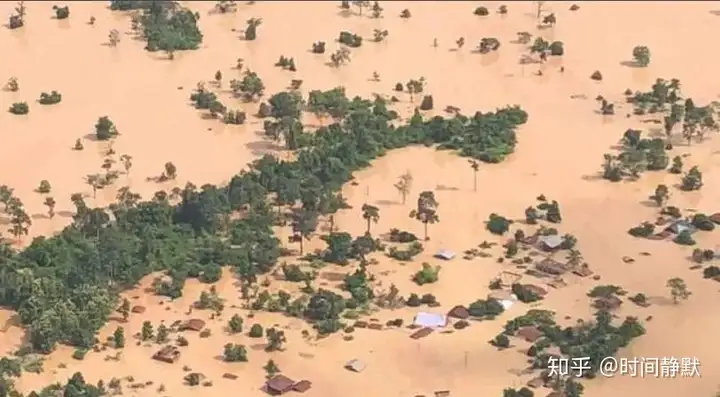
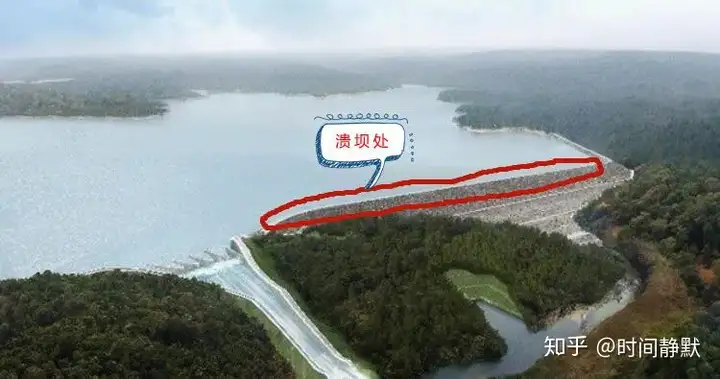
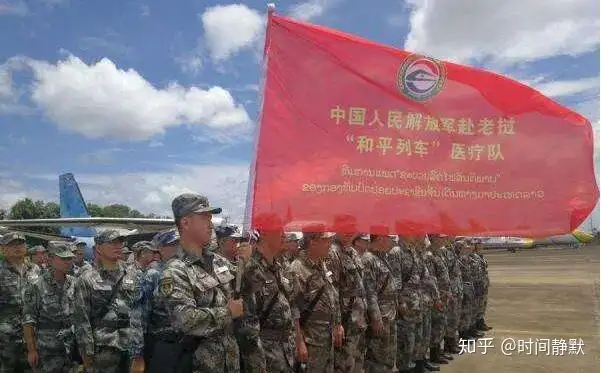
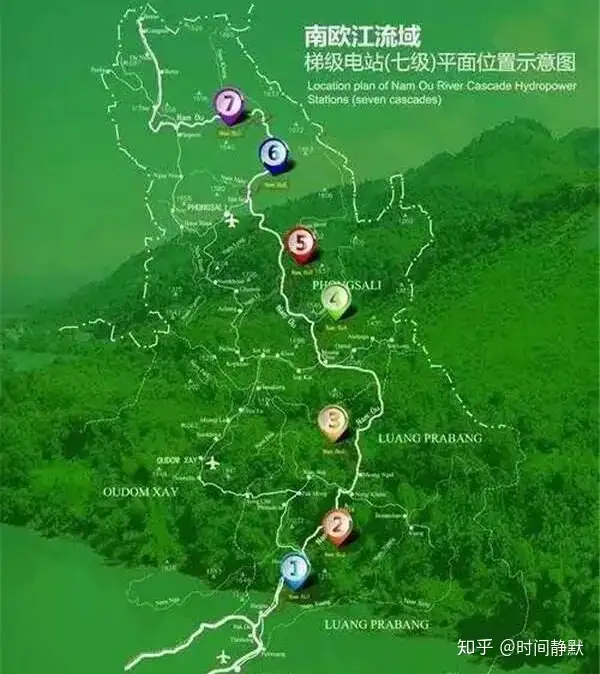
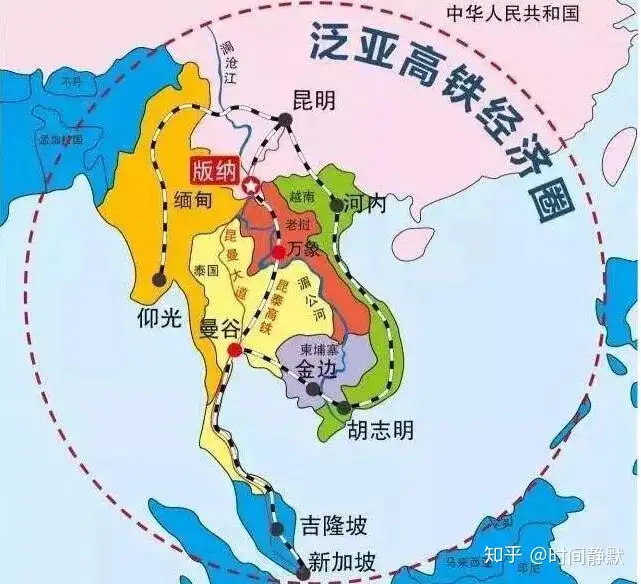
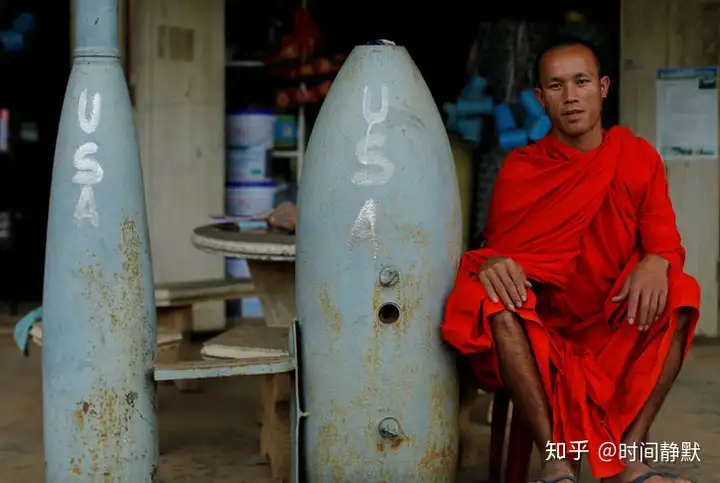
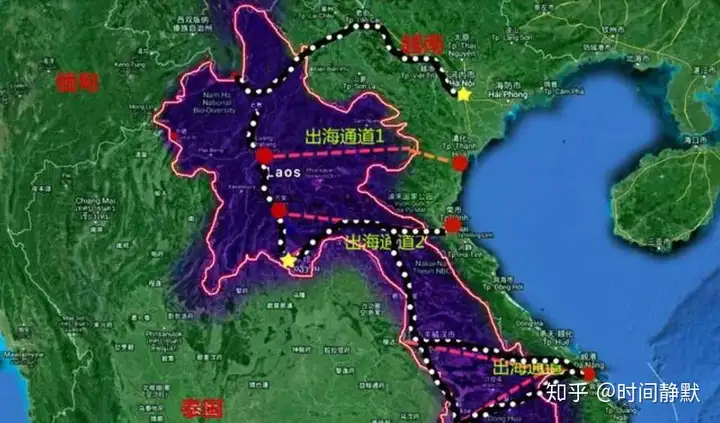
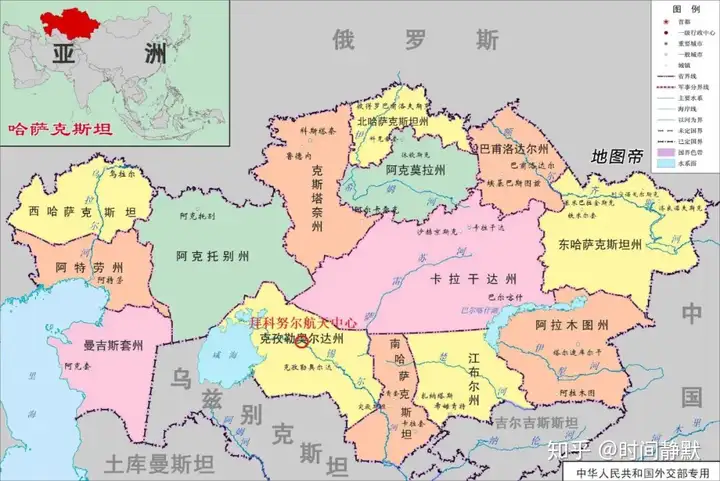
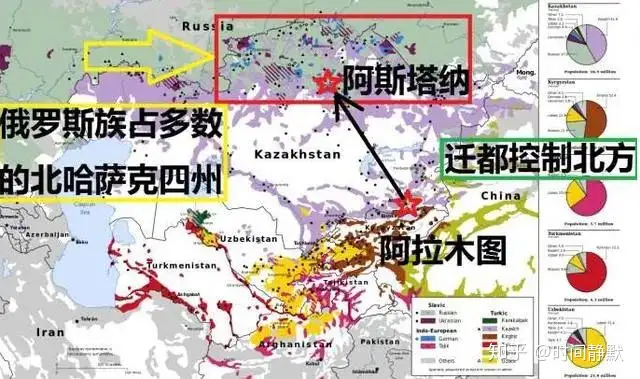
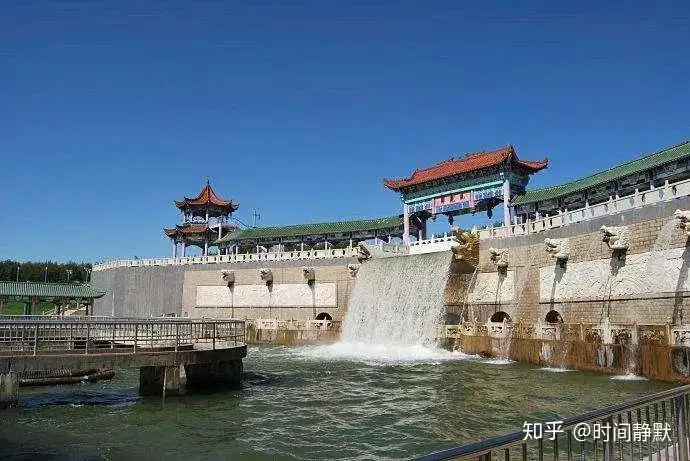
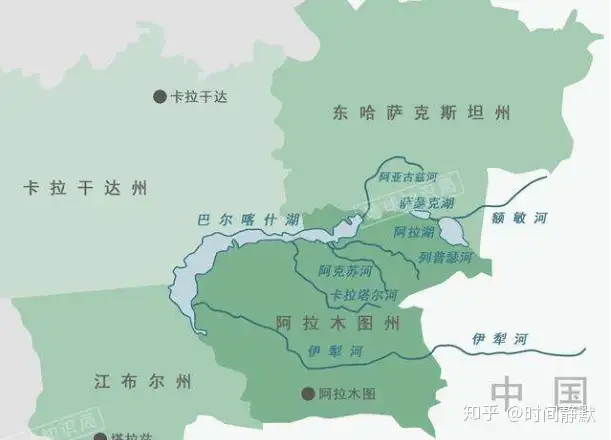
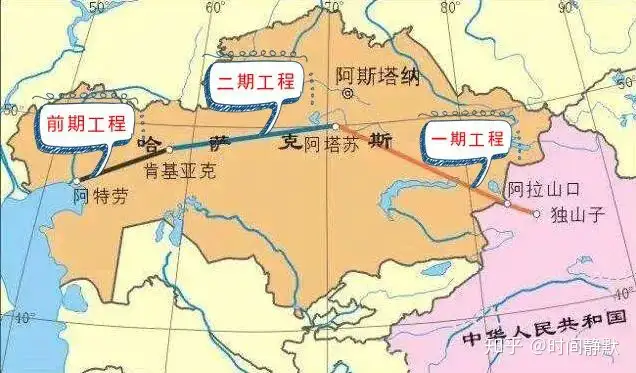
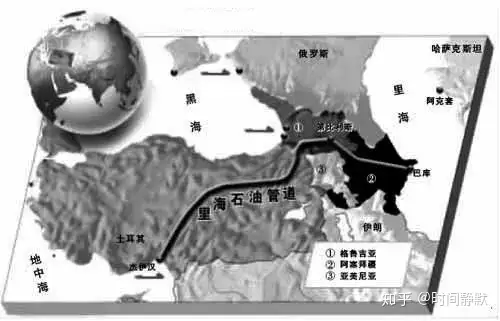
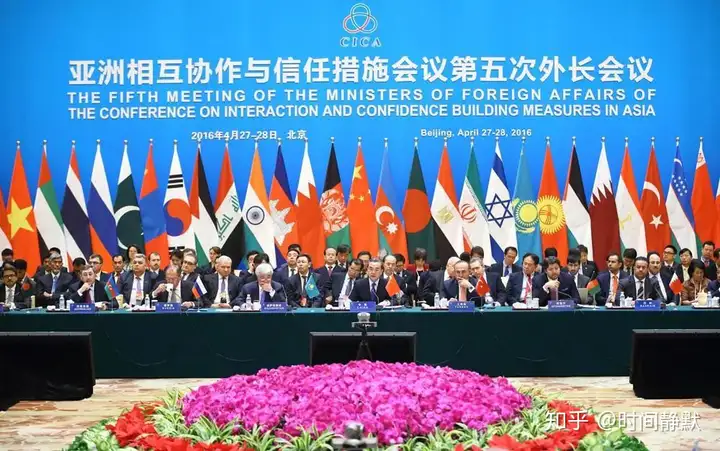
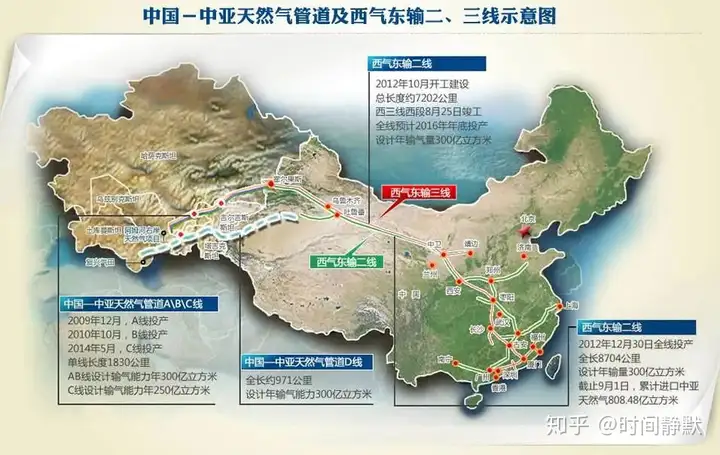
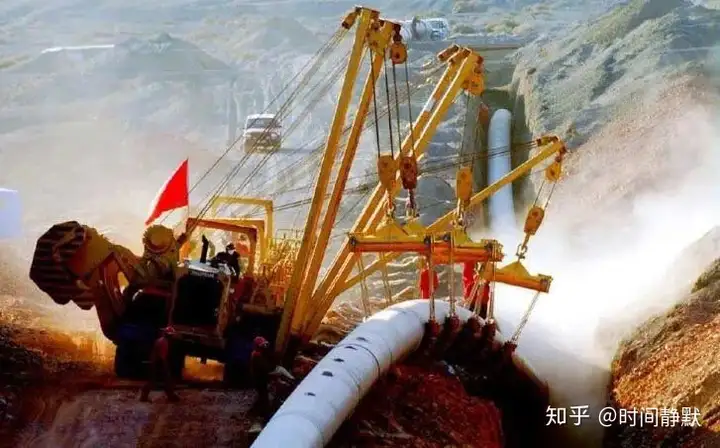
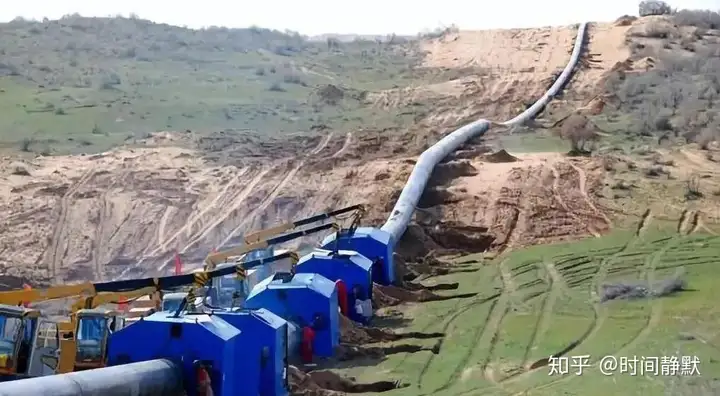
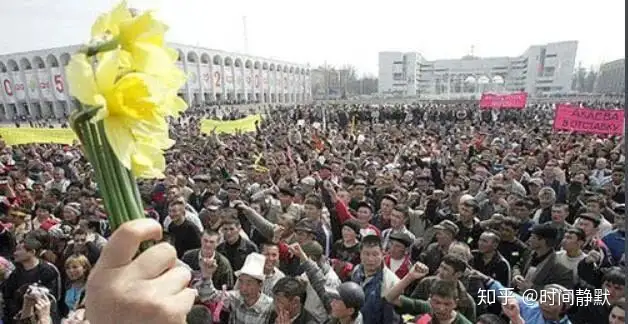
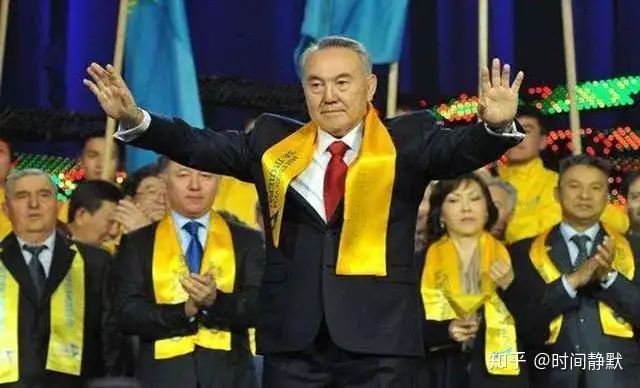
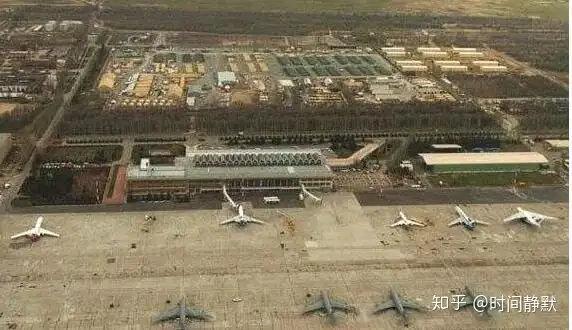
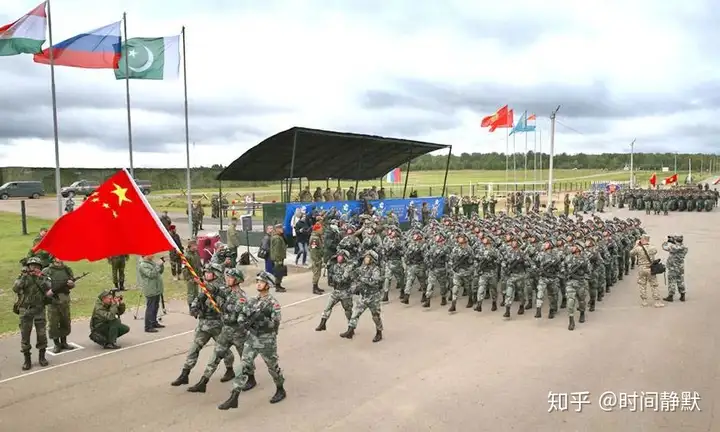
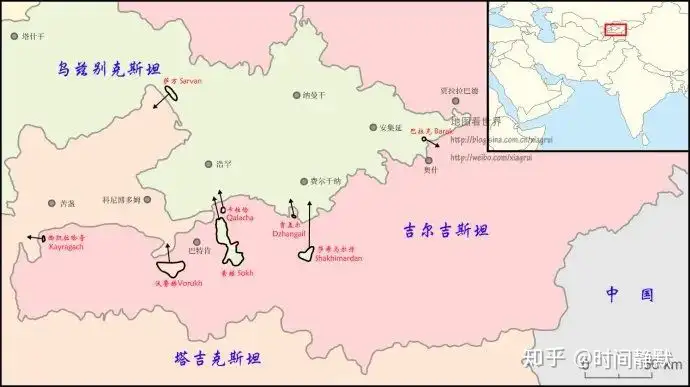
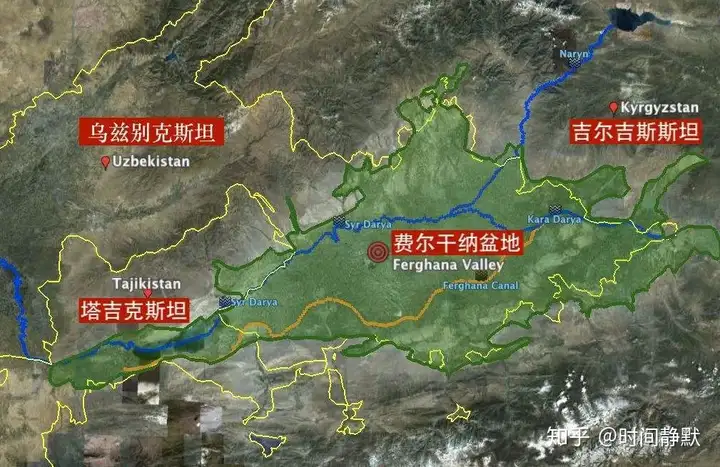
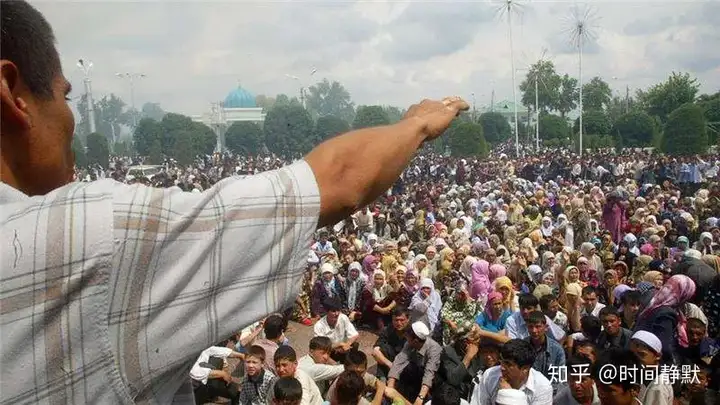
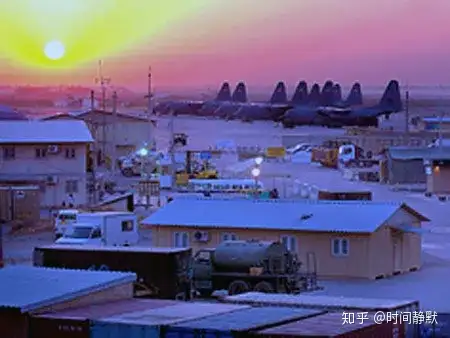
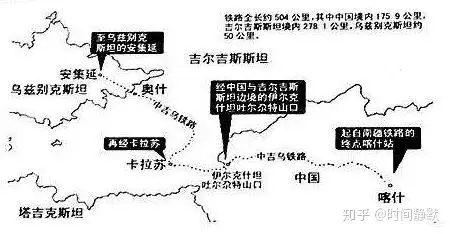
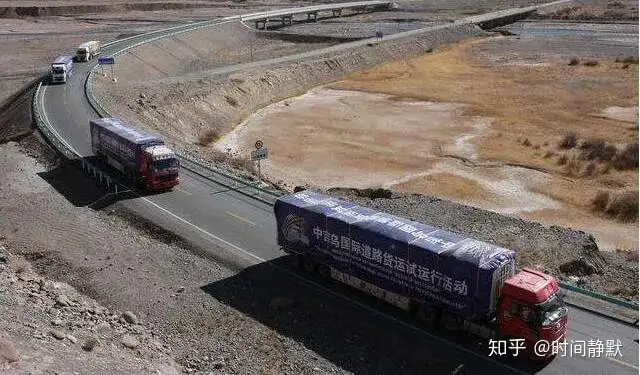
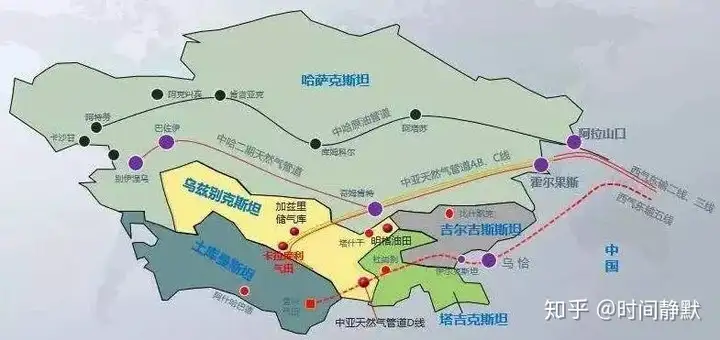
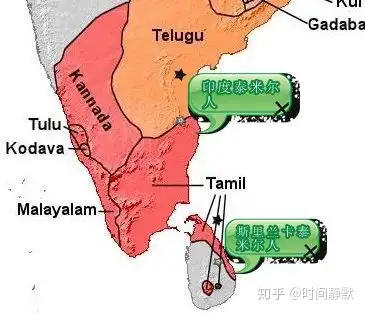
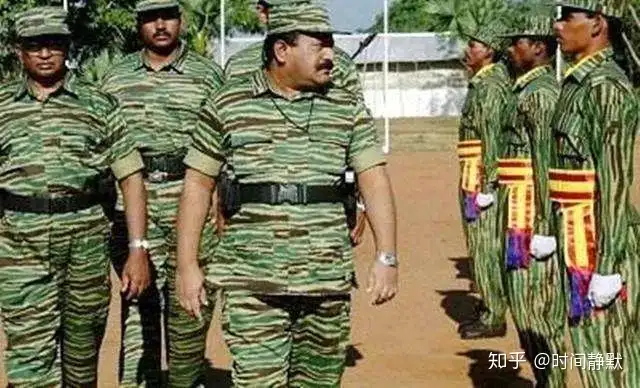
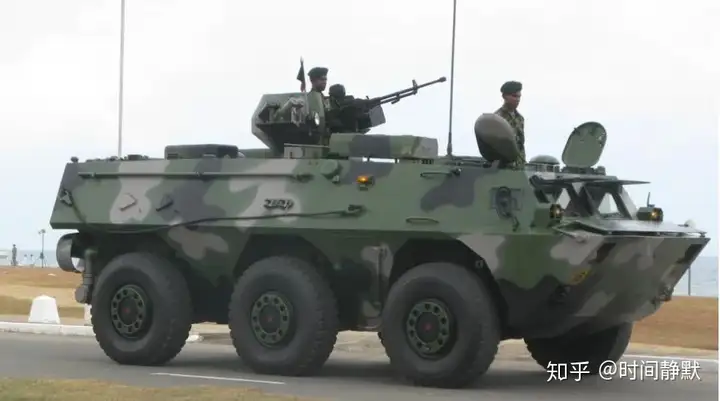
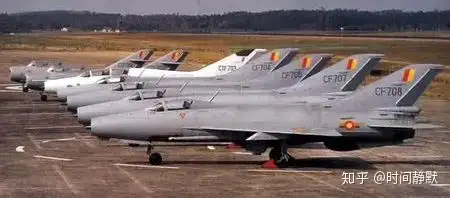
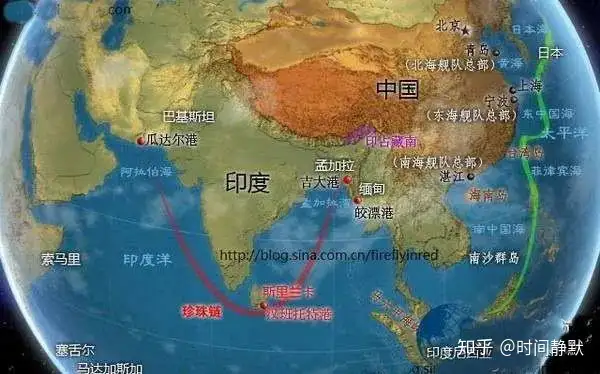
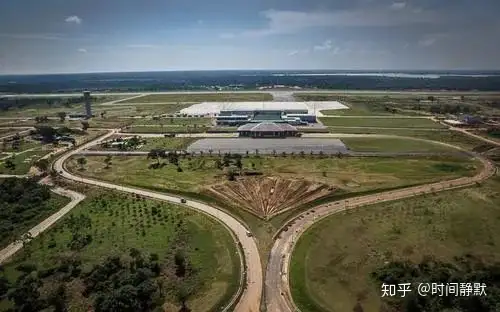
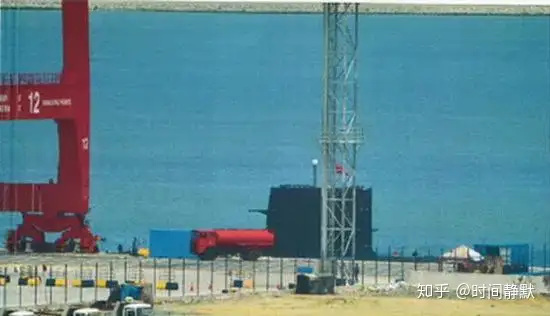
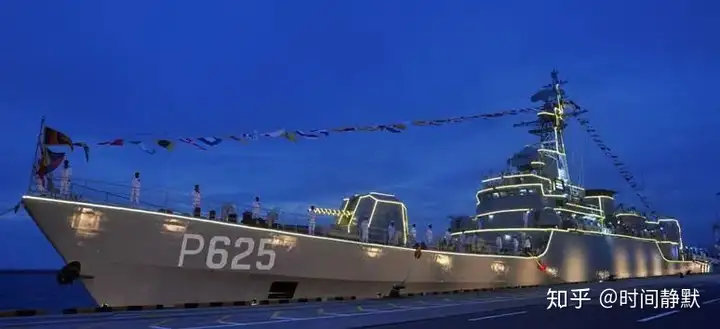
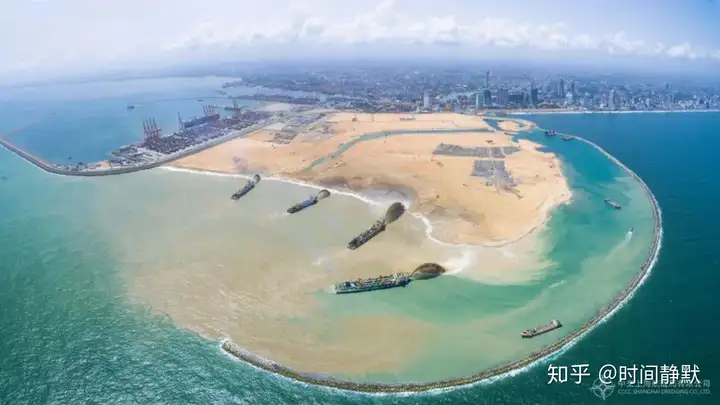
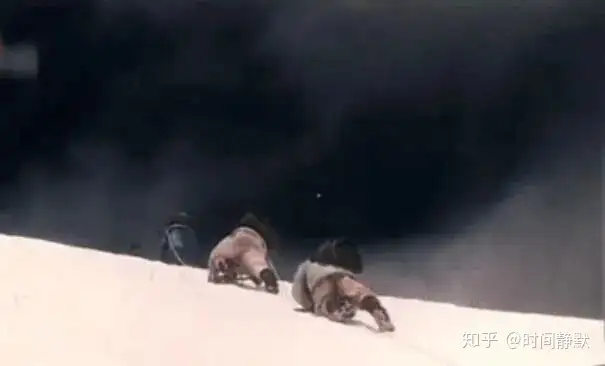
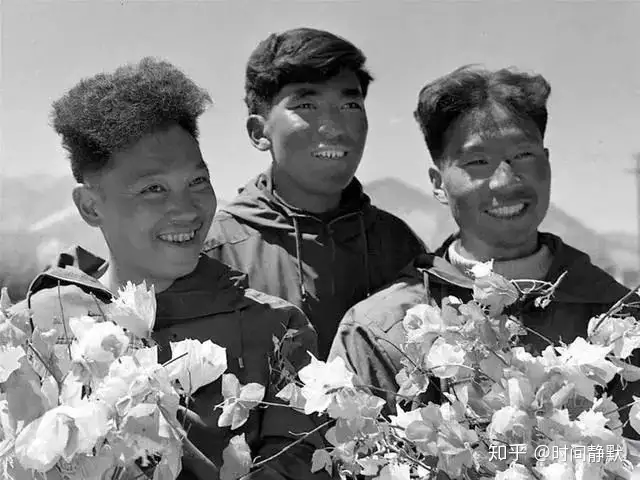
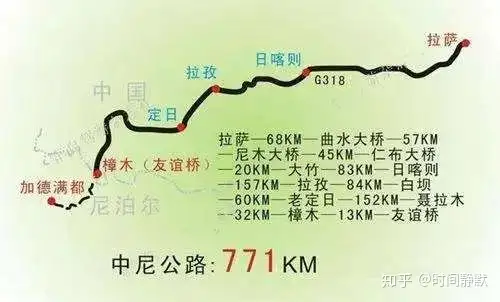
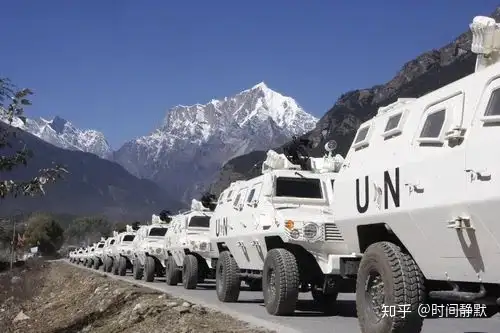
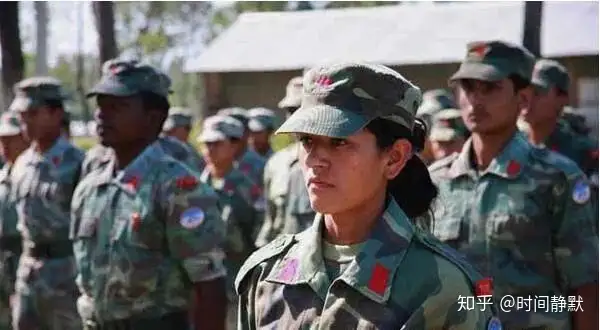
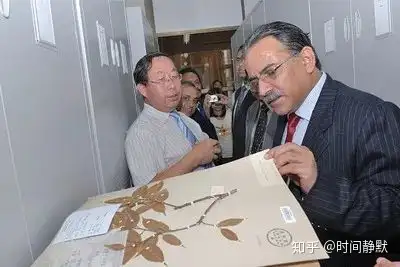
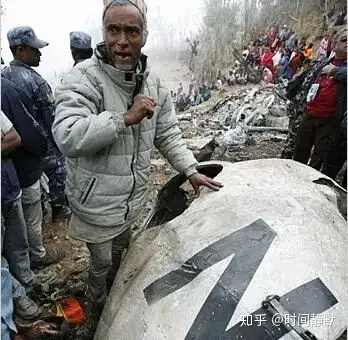
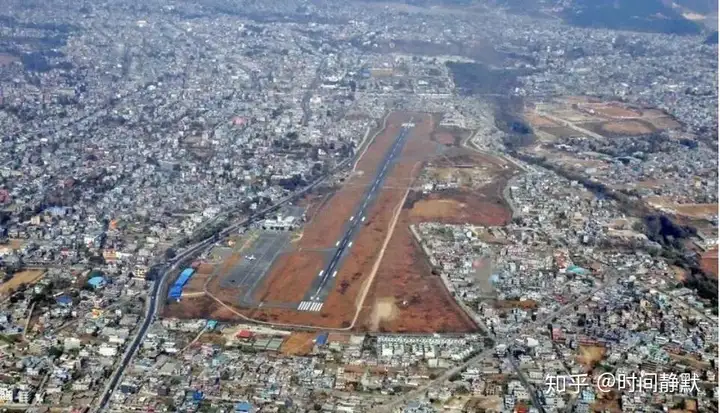
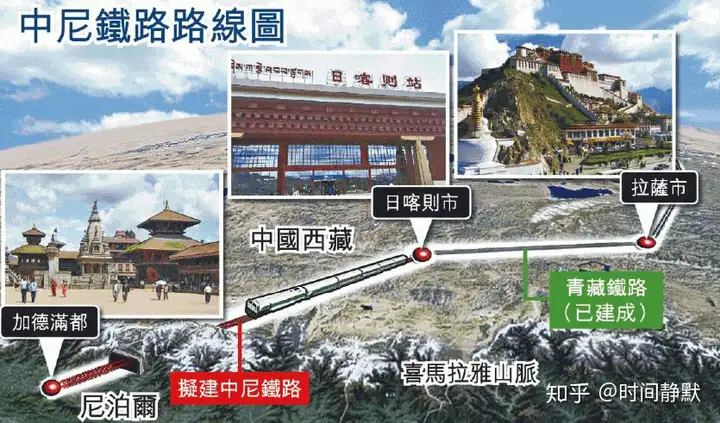
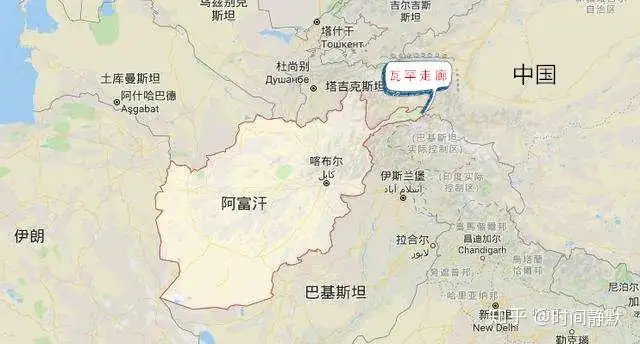
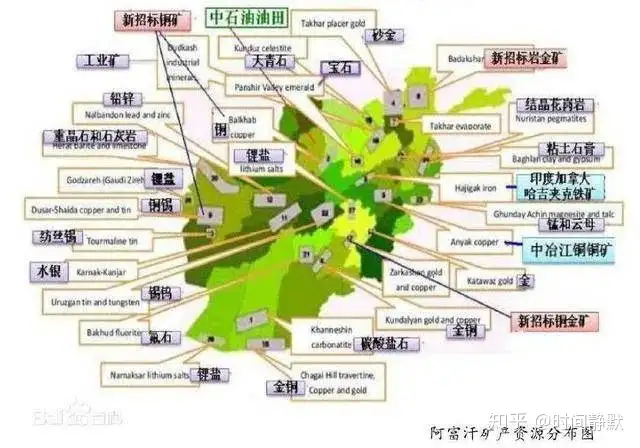
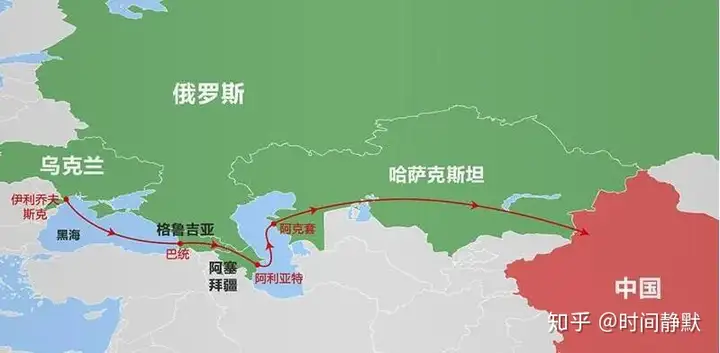
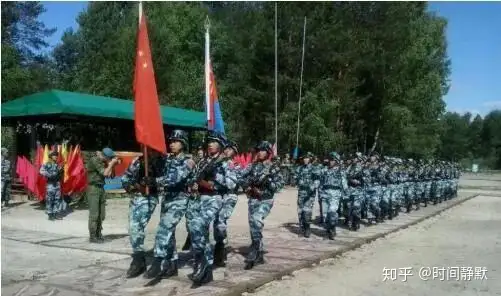
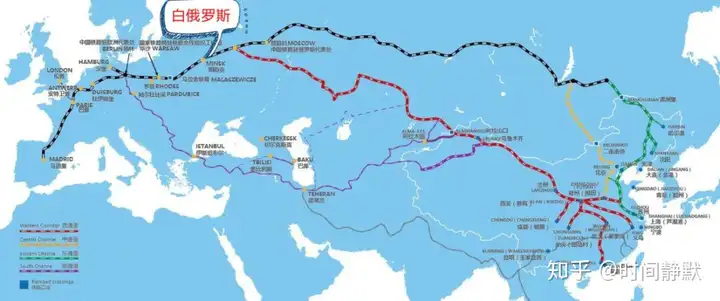
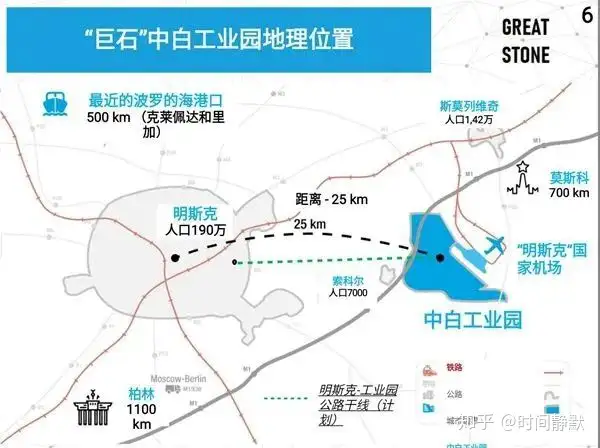


评论
发表评论