China cities -- Jieshou
The leader of the world, the leader of the world, the leader of the world. Bragging, bragging, not bragging? Whether Jieshou is the head of the world is not discussed here, but Jieshou is very good in some aspects, but he is not bragging.
Jieshou City, as the only county-level city in northern Anhui, not only has a special existence in Fuyang and the boundary of northern Anhui, but also has several first titles in the whole province and even the whole country. For example, the first car lamp in New China was produced in Jieshou; Guangwu Town in Jieshou is the only town in the country named after the emperor's posthumous title; Tianying Town in Jieshou ranks 75th among the top 1000 towns in China in 2021, ranking the highest in Anhui Province First; in 2020, Jieshou City ranks first among 18 counties and cities in northern Anhui with a per capita GDP of 56,618 yuan. Such data is also in the upper reaches of Anhui Province. Although Jieshou is not big, it is hard enough.
Jieshou is located in the northwest of Anhui, southeast of Henan, in the upper left corner of Fuyang City, surrounded by Linquan and Taihe counties in the interior, and Shenqiu and Dancheng counties in Henan Province on the outside. Such a geographical location may not be regarded as advantageous today, but In history, Jieshou ushered in a short but sudden moment of development in such a geographical location.
At the beginning of 1938, after winning the Battle of Xuzhou, the Japanese army quickly attacked westward and fell into Kaifeng, Henan Province. At this time, Nanjing had already fallen. All over the sky, it quickly spread to the three provinces of Henan, Anhui and Jiangsu, forming a yellow flood zone with an area of over 30,000 square kilometers. Although this act of cutting off the wrists caused disasters to tens of millions of people in the country, it also greatly blocked the speed of the Japanese mechanized troops going south, and gave the national army a respite for organizing the Wuhan War.
At this time, Jieshou was located in the core area of the Yellow River Flood. Due to its remote location and the resistance of the national army, the Japanese army was unable to capture Jieshou for a while. Thanks to the water transportation of the Yinghe River, Jieshou became a place for the distribution and transshipment of goods and medicines from the Kuomintang-controlled areas and the Japanese-occupied areas. At that time, merchants gathered and the population was prosperous. It was during this period that the three traditional Jieshou towns grew and took shape. In the troubled times, it won the title of "Little Shanghai". There are many cities in China called "Little Shanghai", but Jieshou is particularly sad.
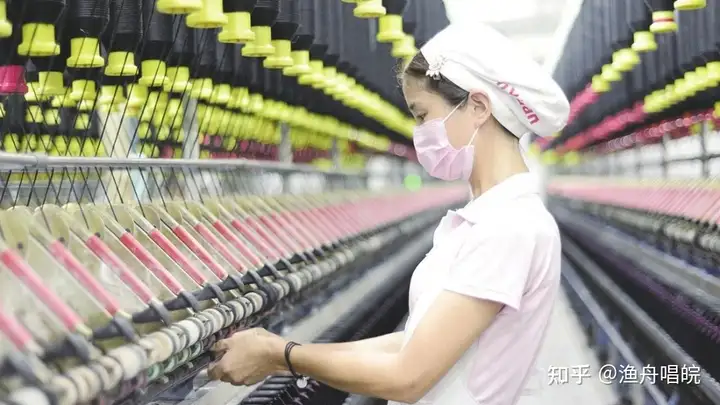
After the victory of the Anti-Japanese War, the merchants gathered in Jieshou returned home one after another, but this also laid a good foundation for the development of Jieshou. After the reform and opening up, relying on the foundation accumulated during the Anti-Japanese War, Jieshou quickly embarked on the road of developing light industry, forming the "five small industries" represented by small food, small papermaking, small machinery, small smelting, and small handicraft industries. A number of commercial brands such as Shahewang, Qiante sports shoes, Fusekang, Xueyuankang, and Xiaonan instant noodles were born.
What impressed me the most was a liquor called Shahe Tequ. When I was a child, I saw this brand of wine that my elders drank the most, and I often saw bottles of this brand on the roadside and in garbage dumps. In northern Anhui, Shahe Tequ is unfamiliar to no one, but not many people know that it is produced in Jieshou. From the reform and opening up to the beginning of this century, Jieshou has developed rapidly and brilliantly enough, and has the reputation of Ningguo in the south and Jieshou in the north.
However, the development has not been smooth sailing. Due to comprehensive reasons such as the failure of state-owned enterprise reform and the inability to maintain competitiveness in the domestic market at the beginning of this century, the development of Jieshou’s light industry declined rapidly, factories closed down, and workers went south to work. The poverty-stricken counties were called "the pain of the world" during this period.
The path can go crooked, but not all the way. After learning from the pain, Jieshou decided to start again, shouting the slogan "the brand is not down, the foundation is still there, the potential is huge, and the hard work is the most important thing" to continue to develop the industry. In 2006, Jieshou officially established the "industrial strong city, industrial city" The overall goal is to develop industries by strengthening scientific and technological innovation, introducing skilled talents, establishing academician workstations, sharing talent circles, supporting township enterprises, and building comprehensive recycling industrial parks.
In 2017, Jieshou returned to the top ten counties in Anhui Province, and the construction of Yingnan and Dongcheng New Districts gave Jieshou a new look. In addition, the city has a high degree of greening, and Jieshou has a new look. The old look, the residents' sense of happiness in life has improved significantly, and the city's sense of identity has rapidly gathered. Jieshou people are proud of being a Jieshou person. Of course, this is not a nonsense. However, we must also clearly recognize that although Jieshou has changed its previous development trend, it is far from becoming bigger and stronger, and the road ahead is still full of bumps and variables. This is an eternal topic for Jieshou.
Jieshou is located at the intersection of the Central Plains and the Jianghuai River. Naturally, it has a long history and a collection of humanities. At the end of the Western Han Dynasty, Wang Mang and Liu Xiu once fought here, leaving many allusions and stories; at the end of the Yuan Dynasty and the beginning of the Ming Dynasty, Liu Futong, a famous peasant uprising general and one of the leaders of the Red Scarf Army, raised the flag of anti-Yuanyi for the first time in his hometown. The court fought fiercely for decades, and although he died in battle unfortunately, it also dealt a heavy blow to the decadent rule of the Yuan court. Liu Futong was a hero who bravely resisted national and class oppression.
In terms of cultural tourism, Jieshou has 3A scenic spots such as Hanmo Cultural Park, Jieshou Museum, and Yingnan Botanical Garden in Jieshou City. This is not a magnificent scene, but it also presents Jieshou's unique connotation and style in the historical precipitation and the scenery of northern Anhui, which is worthy of love People from Jieshou went to find out. In terms of transportation, in 2019, Jieshou South Station officially opened for operation, and Jieshou officially entered the era of high-speed rail. It is an important passenger transport channel connecting the Central Plains, the Jianghuai River and the southeast coast, and has a historic role in promoting regional development.
Today, Jieshou has embarked on a fresh start. As an important part and growth pole of Fuyang's economic development, Jieshou will also play a key role in a key position, building a high-quality industrial city, a livable city, and revitalizing The glory of the year, sit firmly at the top of northern Anhui!
Sansheng Changju Clothing Cotton Cloth and Satin Shop
Located on Xinhua Street, Jieshou Town, "Sanshengchangjuyi Cotton Cloth and Satin Shop" is owned by three uncles and nephews of the Zhao clan, and its founder is Zhao Xianghua.
Zhao Xianghua, courtesy name Congfeng, was born in Chen Guan, Fujing Town, Shenqiu County, Henan Province, and was born in a scholarly family. The ancestors were rich and wealthy, and the head of the Zhao clan had close friendships with the upper-level figures at the county level. Therefore, the Zhao clan was quite influential in Shenqiu County. Congfeng worked hard since he was a child, read a lot of books, paid attention to articles, was suave, uninhibited and standardized behavior, good at reading but not prosperous in office, influenced by feudal family traditions and did not follow the rules, advocated his family younger brother at the age of forty Zhao Guifang and her family nephew Zhao Zhenwu jointly raised more than 1,000 silver coins, and rented three of Xu Jin's douwa houses in Xinhua Street as facades, and six thatched houses in the east and west of the backyard as warehouses and clothing estimation workshops, and hung the name "San Sheng Chang". In 1928, he founded Guyi Cotton Cloth and Satin Shop, employing Dong Changfa, Li Fengyun, and Lu Kemin, mainly operating Yiyi and retailing cotton cloth. Later, he gradually purchased silk and satin, taking care of both wholesale and retail, and his business gradually prospered. For the first few years, Dong Changfa was given full authority over the in-store and out-of-store clothing estimation, operation and financial management. The three uncles and nephews don't come to the store often, and occasionally go to the cloth shop. They mostly talk, play chess, and play cards with the staff or fellow Shenqiu acquaintances. They don't care about politics, they don't fear the government, they don't associate with philistines, they don't rely on the government, and they don't pay attention to the profit and loss of cloth houses.
At that time, Jieshou was still a remote market town in the countryside, and the two towns of Liuxing and Zaomiao had not yet become downtown. There are very few cotton silk and satin shops in the jurisdiction of Jieshou Town, and they are concentrated in Xinhua Street, Dayi Street and Zhigong Street. "Houbudian", "Shunchanghebudian", etc., they sell to the urban and rural residents of Jieshou Town, so the business is very light and the income is low. However, "Sanshengchang" mainly focuses on estimating clothing, so the business is better than other companies who only deal in cotton cloth. The wages of their masters and servants are seven to three, and the employees are divided into clerks and shop assistants. Monthly payment, year-end settlement.
After the outbreak of the Anti-Japanese War, the three northeastern provinces and the important towns in the hinterland of the Central Plains fell one after another. In the area of eastern Henan and northern Anhui, floods often flooded. After the floods, thousands of miles of bare land were starved and starved to death. As a result, countless business travelers and hungry people flocked to Jieshou, which is a relatively safe corner, so that the population of the three towns of Jieshou increased dramatically, and there were many businesses, which quickly rose into a bustling downtown. Among the business travelers were those from Zhengzhou, Luoyang, Xinxiang, and Huaiqing Prefecture in Henan Province, and those from other parts of the country included Hanzhong, Yinchuan, Lanzhou, Shijiazhuang, Baoding, Tianjin, Nanjing, Wuhan, Qingdao, Zhoucun, and Harbin; They mainly came from Yanling, Fugou, Xihua, Qixian, Taikang, Chenliu, Shangqiu and Bozhou. They came here to make a living. Merchants took the region as the boundary and the industry as the neighbor, and opened their businesses one after another. They established "hometown associations" to consolidate the connection with fellow villagers, established industry organizations, exchanged information, and supported each other. Expand the supply of goods, increase the variety of designs and colors, actively expand the scope of business, in an attempt to dominate the market, and compete fiercely with local gangs and other provincial factions. The vast number of hungry people filled the shops of business travelers in various places with extremely cheap labor, which greatly promoted the development of various businesses, prospered the commercial market of the three towns of Jieshou, stimulated and promoted the business of the three towns of Jieshou, including the cotton cloth industry. prosperity and development. According to statistics, at that time there was a rapid rise of well-known people who opened one after another, including "Jufeng Cloth Shop", "Tongxin Cloth Shop", "Longxiang Cloth Shop", "Qingda Cloth Shop", and "Xiangda Cloth Shop" from Henan Province In addition, there are cloth shops owned by Hou Hongsheng from Qingdao, six cloth shops opened by people from Zhoucun and Weifang in Shandong, three cloth shops opened by people from Harbin, and cloth shops and silk shops of different sizes without licenses and quotas in the three towns. More than 50 companies have formed a vigorous and thriving cotton silk and satin industry.
In order to seek the market and survive, these cloth shops competed extremely fiercely with each other. In the business field, it even reached the level of ruthless father and son, and ruthless friends. However, in terms of business methods, they have tried their best to open up their doors and ventured deep into enemy-occupied areas to purchase goods. The famous stores mostly purchased various kinds of cloth in Zhoucun, Zichuan, Jinan, Weifang and other places. Locally buy all kinds of silks and satins from Xiaofang, Laofang, Hengluo, and Shuluo from Nanyang Zhenping, and from old shops Guangluo, and send special purchasing personnel in various places to collect information and pass on information. According to local market conditions, The focus is on buying in-demand and in-demand varieties, or selling them at small profits, or hoarding them in order to monopolize the market, presenting a business war situation where the big swallow the small and the strong bully the weak.
As the local gang's "Sanshengchang" wealth owners, unwilling to be inferior to others, they tried to compete with others on the cusp of the wind and waves. In addition to the original capital of increasing value, the three uncles and nephews added another 5,000 silver dollars as the principal. To expand the capital and expand the source of goods; resolutely dismiss the mediocre Dong Changfa, and hire Wang Jusan as the manager with a lot of money. Wang Jusan, whose courtesy name is Pingxian, was born in Yangji, Shenqiu, Henan. He came from a poor family, but he is intelligent. The wealth of righteousness, good at making friends but not domineering, is the best candidate with Confucian businessman's demeanor in the business field. As expected, he lived up to the great love and expectation of Zhao's uncle and nephew. After being in charge of "Sanshengchang", he first became close to and made friends with high-level people in Jieshou business circles such as Rao Shaozhou, Guo Yizhai, Xia Liangchu, Cai Zhongpin, etc., and opened up doors for "Sanshengchang". After laying the social foundation, the eight employees (Li Guoliang, Wang Zhenquan, Li Fengyun, Wang Shiyan, Guo Quanding, Li Yongchang, Dong XX, Li Zixiang) and four shop assistants (Wei Jingxiu, Wang Ziren, Xiao Mu) in the cloth store Ran, Yang Dianying) use of measured materials, procurement and management, and tailors perform their duties, so that the work inside and outside the "Sanshengchang" counter is orderly, and finally make the operation and management of "Sanshengchang" well, master and servant Jingcheng Unity is the first in the cotton cloth industry of the first three towns in the world, and it is said that it is making money every day.
"Sanshengchang" widely purchases cotton silk and satin and pays great attention to its color varieties and local market needs. In addition to having special personnel stationed and frequently traveling between Shandong, Jiangsu and Henan, etc., it pays special attention to collecting information and trends in this regard, and in the fastest way. The speed is fed back to Jieshou for reference by Mr. Zhao and Mr. Wang Pinxian. It is often the best way to defeat the opponent and obtain high profits. It is worth mentioning that they once appointed special personnel to ride bicycles around the Bengbu River Liuji Cotton Silk and Satin Grocery Distribution Center, which was newly emerging during the Anti-Japanese War, regardless of day and night and severe cold and heat. Once valuable information is obtained, they decisively purchase the right amount of goods, and work hard day and night to go back to Jieshou, so that the supply of "Sanshengchang" always maintains the advantages of complete varieties and everything that one expects. This is one of the main factors for its prosperity. .
"Sanshengchang" is unique among the three towns in Jieshou in the production and market supply of estimated clothing (old products sewn into new clothes), and is quite famous and prosperous. In its heyday, there were three workshops, two master tailors were hired, and they worked day and night to make all kinds of expensive and lowly items. The old, young and young men and women could use them differently. The workshops were full of designs and varieties. In the urban and rural areas of two provinces and three counties, the supply exceeded demand. Most of the raw materials are the leftover cloth heads of various fabrics in our shop, which are actually waste utilization, but the profits are quite high, and they are welcomed and loved by the masses.
The employees and clerks of "Sanshengchang" are all proficient in business, and they are good at speaking, skillful in observing facial expressions, and good at doing business. It is said that everyone who enters the store can make a deal, and some practices are still the way of doing business today. If the customer comes, greet him with a smile, never tire of taking a hundred, and the price can be negotiated again and again until you are satisfied with the goods and the price. Once negotiated, the full size and inch, the whole change is exactly the same, and there is no deception. In the face of large sales and purchases, they are even more attentive and special: first give up their seats to customers, then take out soap and cleansing towels, bring clean water to wash the dust, then send good cigarettes and tea, and invite them to take a nap. Negotiate the price, and after the goods are cleared and packaged properly, they will be given food and wine, and the cloth village will provide comfortable rooms for free. It is convenient for some romantic Confucian merchants to go to the academy to play the piano, or go to the theater to enjoy operas. Before going on the road the next day, he hired a vehicle for him, and gave him towels and soap as spares, and asked "Come again next time!" As a result, a large number of customers returned with satisfaction. Therefore, the customers of "Sanshengchang" not only have a wide market in the three towns, but also Gudui, Yuanqiang, Feihe, Shuizhen, Jiuxian, Guangwu in Taihe County, Yangqiao and Laoji in Linquan County, Henan Province There are wholesale sales markets in Shenqiu, Xiangcheng, Dancheng, Luyi and other places in the province, so there is a lot of traffic in front of the "Sanshengchang" every day, customers are full, the rooms are extremely full, and the business is booming.
"Sanshengchang" always adheres to the principle of credit first and etiquette as the basis for purchasing goods. Regardless of whether it is a factory store in Shandong, Jiangsu, Henan or Bengbu, as long as it receives the order receipt or telegram from "Sanshengchang", it will send the payment in full without any delay, or entrust the train to send it to Bengbu or Heliuji, etc. Buzhuang dispatched staff to take back the supply market on time; or hired a horse-drawn carriage to pull it to Jieshou on its behalf. "An important example of a work ethic that buys time to market.
Although the business scope of "Three Prosperous Prosperity" is constantly expanding, the profits are increasing day by day, and the private pockets of the rich owners are getting bigger and bigger, but the profit sharing still follows the previous rule of seven people and three, and the employees are divided into three grades. However, shop assistants are still treated as apprentices, and their wages are barely enough to survive.
During its heyday, "Sanshengchang" once set aside part of the funds in cloth village to set up a joint store with Zhao Jingchang, the manager of "Huachangsheng Cloth Store" located on Zhongzhou Road, and Yang Anting, the manager of "Linda Commercial Bank" in Chanchan Street, and the profits were divided into two .
It is said that during the heyday of "Three Prosperity", Zhao's uncles and nephews successively raised the principal to buy land, and Wang Pinxian, the main pillar of the cloth shop, also became a wealthy man. The beautiful woman is a concubine, greedy for comfort, and gradually neglects the management of the cloth shop. At the same time, the Emperor of Japan announced his unconditional surrender. As a result, merchants from all over the world who temporarily lived in Jieshou left the border one after another, causing the business in the three towns of Jieshou to decline rapidly. And as the cotton cloth industry, various merchants also followed suit, eager to sell goods and convert them into cash. They each had their own plans: those from other places were eager to bring money back home, and those from other places wanted to find another way out when there was no market.
"Three Prosperity" Cotton Cloth and Satin Co., Ltd. started from scratch, from prosperity to decline. After 17 years of ups and downs, their way of managing and employing people and business ethics are still missed by people and worth remembering. Among the 19 managers they hired and hired, only Wei Jingxiu, Yang Dianying and Li Ruizheng were engaged in cotton silk and satin business after the end of the Anti-Japanese War, and Yang and Li died after a few years. Wei Jingxiu used "Wei Lixiang Cloth Shop" and "Rende Cloth Shop" until 1951, and later changed to groceries.
界首,界首,世界之首。吹牛,吹牛,不吹咋牛?界首是不是世界之首此处暂且不论,但界首在某些方面很牛,却不是在吹牛。
界首市,作为皖北唯一一座县级市,不仅在阜阳及大皖北地界是特殊的存在,在全省乃至全国也拥有几项第一名头加身。比如,新中国第一个汽车灯便产自界首;界首光武镇是全国唯一用皇帝谥号命名的镇;界首田营镇位居2021年全国千强镇第75名,高居安徽省第一;2020年,界首市以人均GDP56618元位居皖北18个县市第一名,这样的数据在安徽全省也处于上游位置,界首虽然不大,却足够硬。
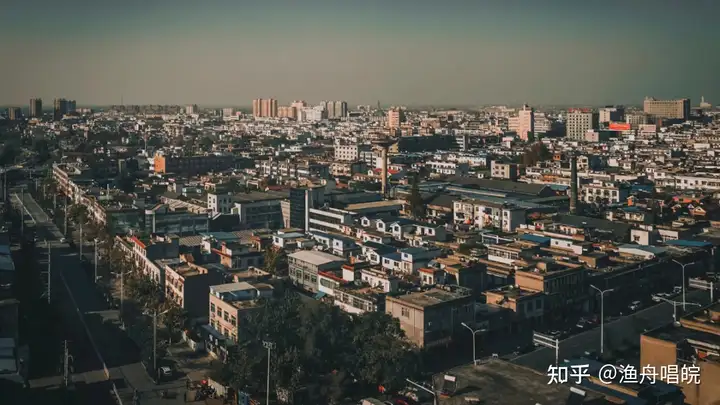
界首地处皖西北,豫东南,阜阳市左上角,内被临泉、太和两县环绕,外接河南沈丘、郸城二县,这样的地理位置也许放在今天并不算优越,但历史上界首正在如此地理位置迎来了短暂却又突变的发展片刻。
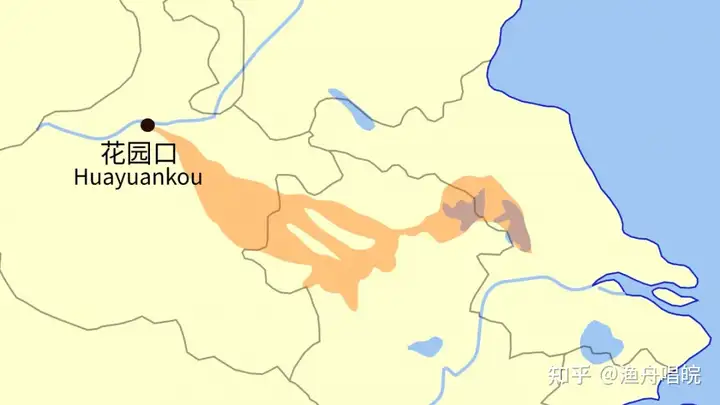
1938年初,日军在赢得徐州会战后迅速西进攻陷河南开封,此时南京已经失守,为阻日军两线夹击武汉,国民政府于1938年6月9日下令掘开花园口段黄河大堤,黄水漫天,迅速蔓延豫皖苏三省,形成了面积超3万平方公里的黄泛区。此断腕之举虽使千万国人受灾,却也大大阻挡了日军机械化部队的南下速度,为国军组织武汉会战争取了喘息。
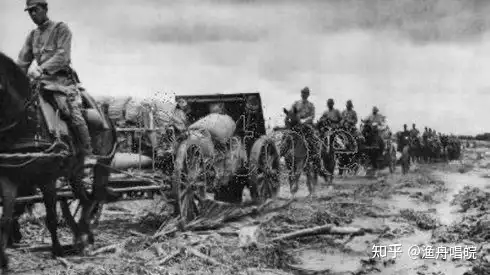
此时的界首恰处黄泛核心区,因位置偏僻及国军的阻击一时日军无法攻陷界首,这让界首短暂成为南京、上海、苏州等东来百姓、商人的避难之所,同时又得颍河水运之便,界首又成为了国统区与沦陷区货物、药品等物资的集散和转运之地,一时商贾云集,人口繁盛,传统界首三镇正是在这段时期壮大成型,乱世之中竟得了一个“小上海”的称号,中国号称“小上海”的城市有很多,界首这个却显得尤为悲情。
抗日战争胜利后云集于界首的商贾陆续返乡,但这也为界首的发展打下了良好基础。改革开放后,正是凭借抗战期间积累的基础,界首迅速走上了发展轻工业的道路,形成了以小食品、小造纸、小机械、小冶炼、小手工业为代表的“五小工业”,诞生了一批如沙河王、奇安特运动鞋、富硒康、雪源康、小保姆方便面等为代表的商业品牌。
让笔者印象最为深刻的是一款名为沙河特曲的白酒,小时候见长辈喝的最多的就是这个牌子的酒,路边、垃圾堆里也经常能看到这个牌子的酒瓶。在皖北地区,沙河特曲没人会感觉陌生,但没有多少人知道它是产自界首的。改革开放至本世纪初期,界首发展足够迅速和亮眼,有着南有宁国,北有界首的美称。
但是,发展没有是一帆风顺的,本世纪初期由于国企改革失败、对内市场无法保持竞争力等综合原因,界首轻工业发展迅速衰败,工厂倒闭,工人南下务工,曾经富裕的界首竟然登了全国贫困县,这段时间被人称之为“界首之痛”。
路子可以走歪,但不能一直歪。痛定思痛后界首决定重新开始,喊着“牌子没倒,基础还在,潜力很大,贵在实干”的口号继续发展工业,2006年,界首正式确立“工业强市、产业立市”的总目标,以加强科技创新、引进技能人才、建立院士工作站、共享人才圈、扶持乡镇企业、打造综合循环产业园等为抓手发展工业。
路子对了,就不怕没有成绩,2017年,界首重返安徽全省十强县,颍南、东城新区的打造更使得界首城市面貌焕然一新,加之城市绿化程度较高,界首新貌换旧颜,居民生活幸福感明显提升,城市认同感快速集聚,界首人都因自己是界首人而骄傲,当然,这并不是一句废话。但是,我们也要清楚的认知到,界首虽一改之前发展颓势,但远未做大做强,前路依旧充满坎坷和存在变数,这对界首来说是一件永恒的课题。
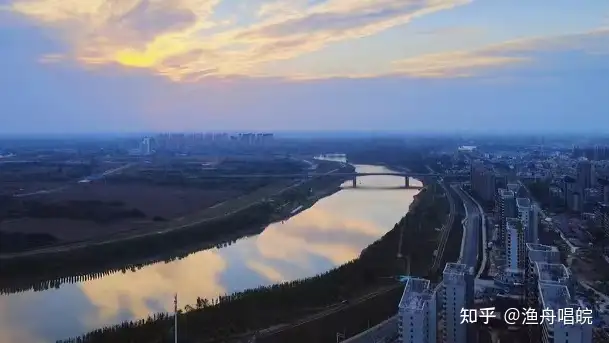
界首地处中原与江淮交汇之地,自然是历史悠久,人文荟萃。西汉末年,王莽、刘秀曾大战于此,留下了众多典故故事;元末明初,著名农民起义军将领,红巾军领袖之一刘福通便是在家乡界首首举反元义旗,前后与元廷鏖战数十年,后虽不幸战死,却也沉重打击了元廷腐朽统治,刘福通是一位勇敢反抗民族压迫和阶级压迫的英雄。
文化旅游方面界首拥有翰墨文化园、界首博物馆、界首市颍南植物园等3A景点,此非盛景倒也在历史沉淀与皖北风光中呈现着界首独特的内在与风情,值得热爱界首的人前去一探究竟。交通方面,2019年,界首南站正式开通运营,界首正式迈入高铁时代,这对界首来说注定是一个难忘的时刻,界首南站是郑阜高速铁路入皖第一站,是连接中原与江淮及东南沿海的重要客运通道,对促进区域发展具有历史性作用。
今天,界首已轻装上阵重新出发,作为阜阳经济发展的重要组成部分和增长极,界首也必将能在关键位置上发挥关键作用,高质量打造工业之城,宜居之城,重振当年之雄风,稳坐皖北之冠首!
三盛昌估衣棉布绸缎庄


评论
发表评论