Chairman Mao criticized ten bad customs in officialdom!毛主席痛批官场十大不良风气!
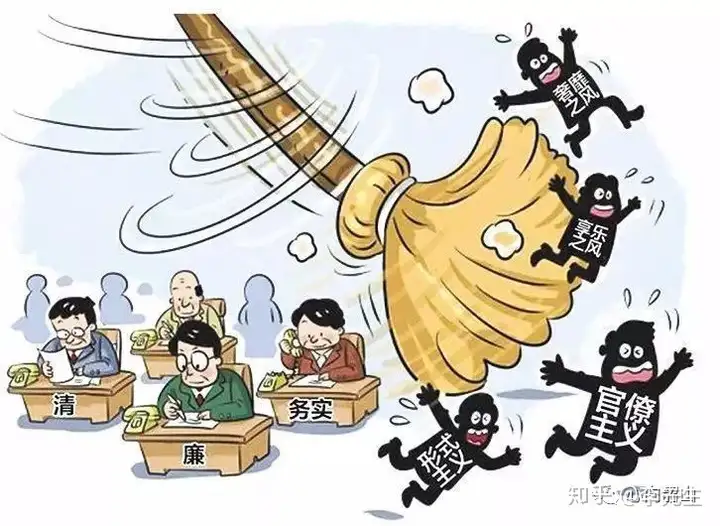
Chairman Mao has always hated formalism and bureaucracy extremely. In his later years, this belief became more and more firm and decisive.
On the whole, Chairman Mao has made classic explanations and conclusions on almost every aspect of the manifestation of formalism and bureaucracy. Get down to work. Each reread is rewarding.
At the same time, Chairman Mao is also a master of flexible use of language. He discovers and asks questions straight to the point and hits the nail on the head.
In the past two years, the author has searched "Mao Zedong Chronicle", "Mao Zedong Collected Works" and other works, and collected more than a hundred of Chairman Mao's arguments against formalism and bureaucracy, all of which have been published in the original form of quotations. Interested readers must have already experienced the demeanor of the great man.
Today, when the whole party is actively fighting against formalism and bureaucracy, it is of great practical significance for us to learn and understand some classic theories of Chairman Mao.
(1) About statistical reports
——"Resolutely Stop the Serious Phenomenon of Issuing Statistical Statements indiscriminately" On July 22, 1953, Chairman Mao drafted the commentary of the CPC Central Committee for forwarding the "Report on the Inspection of Rural Statistical Statements", pointing out: "Party, government, and people at the county level and above Statistical reports issued by high-level agencies have flooded the countryside and reached a level that is completely intolerable....Describe feasible methods for simplifying and controlling the reports, and resolutely put a stop to the serious phenomenon of excessive statistical reports.” ("Collected Works of Mao Zedong" "Volume VI, page 283)
——"Statistics every day, reporting every day, the statistics are not enough" On the evening of March 5, 1961, Chairman Mao made a speech at the enlarged meeting of the Standing Committee of the Political Bureau of the Central Committee: "In the past, we always wanted numbers, how much of what was planted, and how much was produced. How much, how much fat I have accumulated today, what will I do tomorrow, counting every day, reporting every day, and the statistics are not enough. It’s just like that. If you order blindly, I will report randomly, and the result will be exaggerated, which is not true at all. "("Mao Zedong Chronicle (1949-1976)" Volume IV, page 549)
——"Today's notice will be required tomorrow, it can only be a false report." On March 13, 1961, Chairman Mao delivered a speech at the working meeting of the heads of the Central South Bureau, Southwest Bureau, and East China Bureau (called the South Three District Meeting), emphasizing: " I don’t want to read those forms. I don’t read the reports. It’s really tasteless. Henan requires the subordinates to report the situation of the six types of cadres. Today’s notice will be required tomorrow. , the statistics department needs reports to conduct statistics, but we do not mainly rely on reports to understand the situation, nor can we rely on level-by-level reports, we must personally understand the situation at the grassroots level."
——"It is bureaucratic to ask the subordinates to report figures every day." On August 25, 1971, Chairman Mao talked with Hua Guofeng at the Donghu guest house in Wuchang. When Hua Guofeng mentioned that the production of chemical fertilizers in the country was not good, Chairman Mao said: "We have been talking about decentralization for more than ten years, and the decentralization can't be done. The dictatorship can't be changed. The steel produced in the local area can't be divided. They will all be taken away, and the tractors will be destroyed." Don’t let the province do it, such a big country, so many people, can the ministry manage it? Dictatorship kills people, so I advocate relying on the province to manage it. It’s bureaucratic to ask the subordinates to report the accumulated fat figures every day.” ("Mao Zedong Chronicle." (1949-1976) "Volume VI, page 392) (2) Regarding Wen Shan Hui Hai - "One instruction a year is formalism" On the evening of February 8, 1961, Chairman Mao talked with Jiang Hua, Lin Hujia, Tian Jiaying, etc. The issue of rural rectification. Lin Hujia (the secretary of the Zhejiang Provincial Party Committee Secretariat at the time) said: "Some of the blind commanders came from the province." Chairman Mao said: "There are also some who went down from Beijing... I told Comrade Tan Zhenlin not to start for three years. Conference of agricultural secretaries. Spring plowing production instruction, once a year, formalism, who will read it, the peasants will be hungry, and he doesn’t know how to plow and sow? The problem is to come up with some specific measures and methods.” ("Mao Zedong Chronicle (1949) -1976) "Volume 4, page 538)
——"Don't make so many documents" On the evening of March 5, 1961, Chairman Mao made a speech at the enlarged meeting of the Standing Committee of the Political Bureau of the Central Committee, pointing out: "In the future, don't make so many documents, but compress them appropriately. Don't try to put them in one document Talk about everything. In order to be comprehensive, talk about everything, but the result is that the problem is not solved. Don’t approve too many documents. I was also an enthusiastic person in the past, and I approved many documents....I don’t believe it, so many documents are approved every year You have all read it, and comrades from all provinces have read it. There must be many who have not read it." ("Mao Zedong Chronicle (1949-1976)" Vol. 4 pp. 549-550)
(3) Regarding investigation and research - "investigation and research will still be carried out in 10,000 years", in addition to "without investigation, you will have no right to speak" and "if you don't do correct investigation, you will also have no right to speak", the most famous one should be this That's it. On March 23, 1961, the Central Working Conference was held in Guangzhou. Chairman Mao interpreted his article "Investigation Work" written in May 1930 paragraph by paragraph. This article has seven paragraphs and more than 3,000 words. Chairman Mao's interpretation is nearly 7,000 words. This is the only article that Chairman Mao personally interpreted in his life. Chairman Mao said: "In the stage of the democratic revolution, investigation and research must be carried out, in the stage of socialist revolution and construction, investigation and research must still be carried out, and in ten thousand years, investigation and research must still be carried out."
——"The party committee has the right to drive them away when bureaucratic investigation methods are implemented." Chairman Mao emphasized that when going down for investigations, one must avoid making publicity, and one should not easily ask leaders at all levels to accompany them. Don't do "old-fashioned investigations" and don't follow the set of "patrols go out of the court, the earth shakes and the mountains shake". Chairman Mao hated formalist and bureaucratic investigations. He once commented: "The party committee has the right to educate them when the bureaucratic and old-fashioned investigation method is disgusting. If the bureaucrats are disobedient, the party committee has the right to arrest them. Boom away." ("Mao Zedong Chronicle (1949-1976)" Volume Four Page 593)
(4) Regarding ghostwriting by secretaries - "Don't let others do it for you when writing articles." On March 28, 1964, Chairman Mao listened to the reports of the heads of the Shanxi and Hebei Provincial Party Committees on the situation of rural socialist education in Handan. When talking about bureaucracy, He said: "Some people don't write by themselves, but ask the secretary to do it for them. I never ask others to do it for me when I write articles. If I am sick and can't write, I just talk about it! Now the ministers and bureau chiefs in Beijing don't write. Let the secretary do all the work. The secretary can only find materials, and if some things are handled by the secretary, then the ministers and bureau chiefs can cancel it and let the secretary do it." ("Mao Zedong Chronicle (1949-1976)", Volume 5, page 332)
(5) Concerning conveying feelings from the bottom to the top—“The serious problem is that not only the bottom is cheating, but we believe.” On November 23, 1958, Chairman Mao made a speech at the enlarged meeting of the Political Bureau of the Central Committee of the Communist Party of China, pointing out: “You must be honest. Be honest, don’t cheat. The serious problem now is that not only the lower levels are cheating, but we believe it, from the central government, the provinces, the localities to the counties, mainly the top three levels believe it. I can’t find it out. I hope that the three levels of the central government, the province, and the prefecture will understand this problem, have a clear head, and make a discount.” ("Mao Zedong Chronicle (1949-1976)" Vol. Reporting the situation, I am the most tired." For leaders at all levels, what is the most tiring? Is it because of busy work? No! On June 24, 1959, Chairman Mao talked with Wang Renzhong and said: "Don't report the situation to me , I am the most tired. If you tell me the real situation in Hubei, I will not be tired." ("Mao Zedong Chronicle" Vol. , Some words must be believed, nor can they be fully believed. On the afternoon of March 23, 1960, Chairman Mao talked with Lin Tie, Liu Zihou, etc. on the special train that stopped in Tianjin. When talking about the issue of the people's commune, he said: "The bureaucrats don't discuss with the masses, and beat, curse, and force Orders..... For the following things, you just have to believe seven out of ten points, and you will suffer losses if you believe everything in ten points, and you will be fooled." ("Mao Zedong Chronicle" Vol.
(6) About the official atmosphere and style - "We must scold those who are blinded by profit." On January 27, 1957, Chairman Mao pointed out in a speech at the meeting of party committee secretaries of provinces, municipalities and autonomous regions: "If an official becomes big, he can also make his mind faint. .Being the first secretary is also a kind of advantage, and it is easy to make the head dizzy. When he is very dizzy, he has to use some method to scold him." ("Mao Zedong Collected Works" Volume VII, page 191)— —"Official air is the lowest taste." On May 20, 1958, Chairman Mao pointed out at the Second Plenary Session of the Eighth Central Committee: "Official air must be destroyed, official air must be swept away, and this official air must be swept away among cadres. .Obey whoever is right, no matter if it is a manure picker, a coal digger, or a poor peasant, as long as the truth is in their hands, you must obey them. If you have a big official, but the truth is not in your hands I can't obey you.... Official air is a kind of low-level taste. Putting on airs, putting on qualifications, treating people unfairly, and looking down on others are the lowest tastes. This is not the noble spirit of communism." ("Collected Works of Mao Zedong" Volume VII, page 378)——"Don't always discipline people"
On October 3, 1967, when Chairman Mao met with the delegation of the Congo (Brazzaville) government, he said: "There is one thing, you don't put on bureaucratic airs. I only ask you to put down the bureaucratic airs, and communicate with the common people, workers, farmers, Students, soldiers, and subordinates should all be treated as equals. Don’t just scold people at every turn. You can explain why you should scold them if there is a reason.” ("Mao Zedong Chronicle (1949-1976)", Vol. 6, p. 129)
(7) Regarding the mass line - "one level runs from top to bottom, and it does not come from the masses." In his speech at the enlarged meeting of the Standing Committee, he pointed out: "In the past we listened to you, but you did not investigate yourself. It runs from top to bottom, not from the masses at all, but from his mind." ("Mao Zedong Chronicle (1949-1976)" Volume IV, page 591) - "The masses don't care what you are Officials, just look at your policies." On December 5, 1963, Chairman Mao met with a Colombian "Worker-School-Peasant Movement" study delegation in the Great Hall of the People, and pointed out: "The masses don't care what kind of official you are, and they don't care what you wear. What kind of clothes, just look at your policies. They don’t care what party you are. The Communist Party’s policies are wrong, and they will scold you. Where does knowledge come from? Knowledge comes from the masses. If we don’t conduct research and research , I just don’t understand anything.” ("Mao Zedong Chronicle (1949-1976)" Volume 5, page 287)
(8) About reading and studying——"If you do business every day, you must lose your way"
Cadres fall into "businessism" and seem to be busy, but in fact they are exhausted, exhausted and ineffective. It is not only useless, but also harmful, often becoming a breeding ground for formalism and bureaucracy.
Not long after the founding of New China, Chairman Mao once said: "In view of the fact that we still have transactionalism in our work, we should study hard." The eighth volume of "Collected Works of Mao Zedong" has an article "Eighteen Issues Discussed at the Lushan Conference", which was written by Mao Zedong. The chairman believes that the important issues that should be discussed, the first issue is "reading". Chairman Mao said: "We advocate reading, so that these comrades will not be like ants on a hot pot, falling into transactionalism all year round, making them very busy, and giving them time to think about problems."
On February 6, 1962, Chairman Mao presided over the Central Work Conference in the Great Hall of the People. When D talked about the lesson of the past few years that he was busy with affairs, did not pay attention to study, and his thoughts were easily vulgarized, Chairman Mao said: "If you don't pay attention to learning theory, and do affairs every day, you will definitely lose your way." ("Mao Zedong Chronicle (1949-1949- 1976) "Volume 5, page 84)
(9) About the work report
——"Whoever wants to read a manuscript, I will doze off to show my objection." The advantages of oral reports: first, there are more truths and less clichés; Chairman Mao did not like to report according to the scriptures. He once clearly said: "Whoever wants to read the manuscript, I will doze off to express my opposition." Reporting. When he learned that Chairman Mao asked very detailed questions, Kang Shien took the time to prepare materials and wrote the report outline. He recalled: "I read a paragraph according to the outline, and the chairman interrupted and said, don't read it anymore, I also have books here, so just talk about it!" in progress.
(10) About bureaucracy
——"Don't be contaminated with bureaucratic style" In February 1950, Chairman Mao visited the Soviet Union and returned to China, and stopped briefly in Harbin, Songjiang Province (merged with Heilongjiang Province in 1954). After listening to the reports of provincial and municipal leaders, at the request of the person in charge of the Songjiang Provincial Party Committee, Comrade Mao Zedong wrote an inscription for the Provincial Party Committee: "Learning", "Struggling" and "Don't Contaminate Bureaucratic Style". This is the first time that Comrade Mao Zedong wrote an inscription for a local provincial party committee after the founding of New China. ("Mao Zedong Chronicle (1949-1976)" Volume 1, page 97)
——"Whoever commits bureaucracy, the masses have a reason to remove him"
On November 15, 1956, Chairman Mao attended the Second Plenary Session of the Eighth Central Committee and made a concluding speech, emphasizing: "We must be vigilant, not to breed bureaucratic style, and not to form an aristocratic class that is divorced from the people. Whoever commits bureaucracy will not To solve the problems of the masses, scold the masses, oppress the masses, if he does not reform, the masses have reason to get rid of him. I say that getting rid of him is very good and should be done away." ("Mao Zedong Chronicle (1949-1976)" third Vol., p. 34) This statement is very heavy. From the perspective of post-historical development, it is understandable that Chairman Mao resolutely took some decisive measures when the bureaucracy at all levels from top to bottom was really intolerable.
01 If you command blindly, I will report randomly
In the past, we always needed figures, how much was planted, how much was produced, how much fertilizer was accumulated today, and what will be done tomorrow. We counted and reported every day, and the statistics were not enough. Hengzhi is like that, if you command blindly, I will report randomly, and the result will be exaggerated, which is not true at all. Including the documents issued by our central government, the same is true.
—Speech at an enlarged meeting of the Standing Committee of the Political Bureau of the Central Committee on the evening of March 5, 1961
02 One spring plowing production instruction per year is formalism
Lin Hujia (the secretary of the Zhejiang Provincial Party Committee Secretariat at the time) said: Some of the blind commanders came from the province. Mao Zedong said: Some went down from Beijing. In October 1959, a meeting of agricultural secretaries was held, and a set of documents was prepared, which was issued without approval. I told Comrade Tan Zhenlin not to hold a meeting of agricultural secretaries for three years. Spring plowing production instructions, one a year, formalism, who will look at it, farmers will be hungry, he does not know how to plow and plant? The problem is to come up with some concrete measures and methods.
——On the evening of February 8, 1961, talking with Jiang Hua, Lin Hujia, Tian Jiaying, etc. about the issue of rural rectification and communal reform
03 Don't make so many files
Don't make so many files in the future, but compress them appropriately. Don't try to cover everything in one document. In order to be comprehensive, we talk about all kinds of problems, but the result is that the problems are not solved. Don't approve too many documents. In the past, I was also an enthusiastic person and approved many documents. ...For another example, every year when spring plowing comes, the central government will issue instructions, and the State Council will issue orders, so why don't we do it this year? I say it's all redundant. Just a few articles per year...not too many. I don't believe it. You have read so many documents approved every year, and comrades from all provinces have read them. There must be many who haven't seen it.
—Speech at an enlarged meeting of the Standing Committee of the Political Bureau of the Central Committee on the evening of March 5, 1961
04 It is better to send less files
Hu Qiaomu said: Comrade Peng Zhen called yesterday, planning to send an internal party document on the food issue to the branch for discussion, to talk about the food situation, the disaster situation, and the temporary difficulties, asking everyone to do everything possible to find a solution, It is better to find those who work less or do not work to save food for those who do work. Mao Zedong said: It is better for the central government to issue fewer documents, and don't do it. Once the central government writes a document, it is tantamount to an order to send it out, and the bottom will be arrested, and a conference call will be held, etc. As a result, a large number of problems have arisen again. I don't see this document as good.
——On the afternoon of February 25, 1961, meeting with Tao Zhu, Hu Qiaomu, Tian Jiaying, etc. to discuss drafting the working regulations of rural people's communes
05 It is dangerous to make a decision without doing research
Enthusiasm still needs to be drummed up. If you want to seek truth from facts, you need to investigate and research. The water is muddy, so I don't know if there are any fish, so I just want to make a big effort to investigate and study. Exaggeration, bureaucracy, and lack of understanding must be completely overcome. In the past few years, we have not talked much about investigation and research, which is a loss. It is unreliable and dangerous to formulate guidelines and policies not based on investigation and research, and you may have uncertainties. You may know the numbers, but you don't know the actual situation.
——On the evening of January 29, 1961, a conversation with relevant personnel of Jiangsu Provincial Party Committee and Nanjing Municipal Party Committee
06 Where Bureaucracy Can't Reach, Things Are Better
Hu Qiaomu said: The experience of the past few years is that the more remote places are probably the better ones. Mao Zedong said: It is a place that bureaucracy cannot reach, a place that cannot be reached by subjectivism, and a place that cannot be reached by blind command.
——On the afternoon of February 11, 1961, talking with Zhang Pinghua, Hu Qiaomu, etc. about Hunan's rural rectification and organization
07 Don't be busy with business every day
The first secretary must do research and do some ideological work. If the first secretary is too busy, he will choose another secretary to do it. All in all, be a person with a little more peace of mind, and don't be busy with affairs every day.
——On the afternoon of February 11, 1961, talking with Zhang Pinghua, Hu Qiaomu, etc. about Hunan's rural rectification and organization
08 Leave the little things aside and focus on research
I hope that after the comrades go back, they will conduct investigations and studies, put aside trivial matters, and spend part of their time with a few assistants to investigate and study one or two production teams and one or two communes. …To conduct investigations is to gain confidence in one’s mind, and one cannot act without a foundation. To understand the situation, you need to see with your eyes, ask with your mouth, and take notes with your hands. Over the years, our comrades have not done research and research work. If we do not do investigation and research, but only rely on imagination and estimation, our work will have no basis. Therefore, comrades are invited to vigorously investigate and study after returning home, proceed from reality in everything, and do not make up your mind if you are not sure.
——Speech at the Central Working Conference on January 13, 1961
09 Do a little more real work
There are always differences between rural areas and cities, and between agriculture and industry. Agriculture cannot direct production like industry, and agriculture cannot use telephone calls to direct production. In rural areas, teleconferences are often held to assign tasks, which are actually dead orders. It can kill. In my opinion, leading production should be more passive than active. If you have time, you can read documents, read more books, study more, and do more practical work. In short, don’t direct blindly.
——On the afternoon of March 7, 1961, talking with Wang Renzhong about the rural situation in Hubei
10 Typical surveys to do in person
I see that you still don’t understand the above two issues of egalitarianism, don’t you? Am I wrong? Most of the first secretaries of provinces, prefectures, counties, and communes are also like this. . The reason is that they are busy with routine work and do not conduct typical investigations in person. They are satisfied with listening to reports at the prefectural and county levels at meetings, reading written reports at prefectural and county levels, or being satisfied with surveys at the superficial level. Comrades in the Central Committee generally make the same mistakes. I hope that comrades will correct this from now on. Of course, my own faults must be resolutely corrected.
——Letter to Liu Shaoqi, Zhou Enlai, Chen Yun, Deng Xiaoping, Peng Zhen and others on the morning of March 13, 1961
11 Investigation and research should follow the mass line
In the past, we listened to you, but you did not investigate it yourself, and you also listened to others, so you have to investigate it yourself. Only by investigating and researching and following the mass line can we get a good refund. The mass line is very important. Henan is run from top to bottom level by level, not from the masses at all, but from his mind.
——Speech at an enlarged meeting of the Standing Committee of the Political Bureau of the Central Committee attended by the first secretaries of the Central Bureau on the afternoon of May 23, 1961
12 The purpose is to solve the problem, not to report
We have made mistakes in the past few years, first of all because the situation is unclear. ... The reasons for the defeats in the history are mostly unknown. In recent years, I suffered a lot from unknown circumstances, and the price I paid was very high. We have become officials, and we no longer do research and research. I've done some research, but mostly just floating around and reading reports. Now, I want to set up a few points, a few bases for investigation, and go down to make some friends. I don't have the right to speak on urban issues, and I have long wanted to investigate a few factories. I made an appointment with you to do some investigation and research on non-staple food bases. The purpose is to solve problems, not for reports. There is one thing about reports. Statistics departments need reports to conduct statistics, but we do not mainly rely on reports to understand the situation, nor can we rely on level-by-level reports. We must personally understand the situation at the grassroots level.
——On March 13, 1961, a speech at the working meeting of the heads of the Central South Bureau, Southwest Bureau, and East China Bureau of the Central Committee of the Communist Party of China (called the South Three District Conference)
13 Not allowed to reflect on behalf of the policy
During this period of time, the bad style of exaggerating and substituting sentiments for policies has once again risen. This is a major lesson, and leading comrades at all levels in the party must never ignore or forget this lesson that has been paid for.
——March 23, 1961 Amendments to the Instruction Letter on Investigation Work
14 Violation of objective laws will be punished
Regardless of what Marx, Engels, Lenin, Stalin, Mao Zedong, you, cooks, and grooms say, only if it works among the masses. Those who violate the laws of objective things and insist on implementing them will be punished. If you are punished, you must review it. Now we are punished, the land, people, and livestock are thin. What is "three thin" not punished? ...The current "three thin" are mainly in charge of the central government and myself, and I bear the main responsibility. …You guys here, comrades in the region, if it’s 40% or 60%, you’ll have 40% of it! I have been telling him these words for several years, and you should be prepared, if you get tired of listening to them, I will stop talking about them.
——Speech at an enlarged meeting of the Standing Committee of the Political Bureau of the Central Committee in the morning of June 8, 1961, attended by the first secretaries of the Central Bureaux
15 If you get the masses, you get the cadres
The commune should not be divided into small or small, and it should not be divided into small and small. Don't listen to the cadres, but mainly listen to the masses. The cadres are definitely not willing to be divided. They will find out many reasons, saying that there is no house, what difficulties they have, and so on. As long as we get the masses, we get cadres. What's wrong with us delegating the command of production. If according to the opinions of the cadres, private plots should not be retained, flat-scaled items should not be refunded, and production control should not be delegated. In this way, we will not be able to gain the masses and win the trust of the people.
—Speech at an enlarged meeting of the Standing Committee of the Political Bureau of the Central Committee on the evening of March 5, 1961
[Remarks: The speeches, conversations, instructions, etc. of Comrade Mao Zedong above are all excerpted from Volume 4 of "Mao Zedong Chronicle (1949-1976)", which was published by Central Literature Publishing House in December 2013. 】
"Red Lens" and Du Xiuxian
Mao Yuanxin
When I heard the news of Lao Du's death, I recalled a meeting more than ten years ago...
At the end of the 1990s, a friend sent me the book "Red Lens" in two volumes, saying that it contained my precious photos. I opened it and saw that the book was published by Liaoning People's Publishing House in March 1998, signed: "Written by Gu Baozi, photographed by Du Xiuxian". Underneath the three big words "Red Lens" on the cover, there is a subtitle: "National Affairs in the Eyes of Zhongnanhai Photographers." The title page has the solemn inscriptions of Nie Rongzhen and Xu Qianqian: "Witness of History" and "Faithful Reproduction of History" . It can be seen that this book is of great historical value in the eyes of the publisher.
Mao Yuanxin stood beside Chairman Mao's body
After opening the book, because my friend said that there are precious photos of me in the book, I first flipped through the pictures in the book. Sure enough, at the top of page 667 of the second volume, there is a photo of me standing next to the dead body of the chairman (attached photo 2). I haven't seen this photo before, it is so precious. Looking at the photos carefully, my thoughts can't help but go back to more than 30 years ago. Life is full of mixed flavors, rolling ups and downs in my chest...
Returning to reality from the past, my first reaction is to thank Lao Du from the bottom of my heart, for he left me with that unforgettable moment with the camera. Du Xiuxian is a photographer stationed in Zhongnanhai by Xinhua News Agency. I have been in contact with him many times and we have gradually become familiar with each other. And because he succeeded Shi Shaohua as Jiang Qing's photography teacher, we met many times at Jiang Qing's residence in Diaoyutai and became friends. I remember one time, the long table in the center of the living room was covered with color photos that he helped Jiang Qing develop and enlarge. In front of Jiang Qing, he explained to me how well the lighting of a certain photo was, and the angle of view of a certain photo was well chosen, and he was full of praise. I think a few of them are really good shots, and I don't think so. I have never learned the principle of color photography, such terms as color tone and color temperature. Lao Du talked about it with great interest, but I half understood it. Jiang Qing reprimanded Lao Du face to face: "Good is good, bad is bad. Don't flatter!" I found Lao Du a little embarrassed, and I smoothed things over for him and said, "Lao Du is an expert. From the professional point of view of photography, I'm afraid he said It still makes sense."...
Staring at the photo in the book in my hand, I thought, next time I go to Beijing, I must ask him to meet, express my thanks to my old friend in person, and ask him to make one for me too.
Turning over a page, the picture at the bottom of page 668 (attached figure 3) surprised me: the photo with four corners of a rectangle, the upper right corner was cut off obliquely with a knife, and turned into a pentagonal photo. This is really a miracle in the history of news pictures! Looking closely at the content of the photo, Zhang Chunqiao, Wang Hongwen, and Jiang Qing stood in a row from left to right in front of Chairman Mao's body. From Jiang Qing to the right, there are five people who were beheaded, cut at the waist, and had their legs broken. Judging from the "incomplete" limbs, it is difficult to identify who the five people are. The caption below the picture reads: "The 'Gang of Four' eyes are focused on Mao Zedong's corpse who will never see the world".
Seeing this picture description, can not help but puzzling. It was said to be the "Gang of Four", but there were eight people standing there, and only three of them could be seen clearly. I don't know what explanation the other five people gave. If they also belonged to the "Gang of Four", why should they be beheaded? If you don't belong to the "Gang of Four", why is the description of the picture written as "The eyes of the 'Gang of Four' are gathered...", where are the eyes of the other five people gathered?
Looking at the attributive "I will never see this world" added in front of "Mao Zedong's body" in the explanation, it seems to express a certain special psychological complex of the author. Combined with the author's position and tone that I have read throughout the book since then, I don't know. Is it gloating, or some kind of unspeakable resentment.
The old Du in my heart is still the original impression more than 30 years ago. When we took pictures in front of the chairman's body that year, he and I felt exactly the same no matter what we expressed or what we knew about each other. How did it become like this now? The vicissitudes of life...
Without a common language, friends will become strangers! Eager to see him and express his gratitude, became dazed. Well, this reminds me not only to look at the photos, but also to read the descriptions of the photos and read the articles outside the camera.
The words in the book are all written in Du Xiuxian's first person. Although the cover states that a person named Gu Baozi wrote the article, it is still like listening to Lao Du's own narration. As a photographer stationed by Xinhua News Agency in Zhongnanhai, Lao Du was also a photography teacher trusted by Jiang Qing during the Cultural Revolution. Except for a few photographers who are otherwise specified, the pictures in the book are basically taken by Lao Du himself. Is there any doubt about the authenticity of the content of the above article?
I have not personally experienced the events before the Cultural Revolution described in the book, so it is difficult to comment. But after the Cultural Revolution, especially after 1968, many of the events I witnessed were personally experienced, but not all of them were as described in the book. Although I have not personally experienced some things, according to common sense, people with a little brains will question them. For example, the book mentions that in February 1976 Jiang Qing went to the swimming pool to meet the chairman. What did the old couple say and do at that time, and there was no third party present, let alone invite photographers to take pictures. How could Lao Du be so specific? Did you really install a bug around the chairman? It seems to be mentioned in his book, and was later quoted in many articles, that one of the charges charged against him in the early days of the Cultural Revolution was lurking around the central leadership with a bug. After reading this, I just want to laugh. If he was really charged with this kind of "crime", would it be possible for Jiang Qing to keep him by his side and trust him so much?
Such suspected false words abound in the book.
A year later, I had the opportunity to go to Beijing and live in the Hunan Provincial Office in Beijing over the Madian Bridge. Some staff members around the chairman came to see me, and Du Xiuxian was occasionally mentioned during the conversation. I said that in his book "Red Lens", there was a photo of me next to the chairman's body, and I wondered if I could get it for me.
They immediately contacted Du Xiuxian by phone, and Lao Du said that he must come to the Hunan office to see me.
After dinner the next day, Lao Du came to my residence. An old friend we haven't seen in over 20 years, we are both very excited. Lao Du took out a big envelope. To my surprise, besides the photo I wanted, there were two other photos of me in it. One of them is the one in the book "Red Lens" in which five people were beheaded and cut in half, and it is a complete color photo. (
This time I saw clearly that the ones on Jiang Qing's right who were beheaded were Hua Guofeng and me, and those on the right who were beheaded and had their legs broken were Yao Wenyuan, Chen Xilian, and Wang Dongxing.
I held Lao Du's hand tightly with both hands and expressed my heartfelt thanks to him. Lao Du was also very excited. He looked me up and down and said, "You, you are in good health. I am relieved. It is rumored that one of your legs was broken." I said, "Don't listen to the rumors, I have never been injured in prison I was beaten. It was just more than ten years of imprisonment, and my spine was sick, which caused necrosis of the femoral head, so I couldn’t move more easily.” We recalled some past events more than 20 years ago and chatted happily.
It was Lao Du who first asked me: "Do you have my "Red Lens"? I can give you a set." I said: "My friend has given it to me. I learned about this photo from the book." ."
"What do you think of this book?" Lao Du asked frankly.
"Do you want to hear the truth or lie?" I asked. "Of course it's the truth." Old Du said.
"How to say?..." I hesitated.
"It's an old friend, let's talk straight!" Lao Du patted my arm and said bluntly.
"The photos in your book record the true history of our party. As the inscriptions of the two old men said, they can be said to be priceless. I will give you 120 points." The reason why I say this is because in the early 1970s , once in Jiang Qing’s living room in Diaoyutai, Jiang Qing, Lao Du and I discussed several camellia photos taken by Jiang Qing. One of them was very good. I said it could score 100 points, and Lao Du said it could score 120 points. .
Probably Lao Du also remembered the story of "scoring" that time, and a knowing smile appeared on the corner of his mouth.
"However," I continued, "as a historical material for recording history, the text in your book is really not flattering. The combination of photos and text is worth 50 points at most. It depends on old friends. For the sake. Your words are worthless."
"You, you...how can you, can you say that?" Old Du's eyes widened. Lao Du, who was already a bit stuttering, stuttered even more in a hurry because of the unexpected.
"Old Du," I said, "if you publish a book of pictures instead of this book with a lot of miscellaneous words, in addition to the photos you took, each photo will at most have a brief description, including The time, place, and identity of the people in the picture are all enough. If such a collection of photos is published as historical materials, it will be an invaluable treasure, and it can get 120 points."
Lao Du shook his head, apparently unable to accept my statement.
"You were just a photojournalist for Xinhua News Agency," I said, "Your task is to use the lens to faithfully record the historical moments of every important event. As for describing the ins and outs of those historical events, and evaluating those events Right and wrong are not your job. According to my impression, you have a fairly high professional level in photojournalism, but not that high level of political and writing skills. Moreover, the conditions and environment of your work, it is impossible to be exposed to such Lots of insider politics."
Lao Du listened to me silently, neither shaking his head nor nodding.
"For example," I said, "some meeting was held at the top of the central government. Your task is to take a few photos of the meeting before and after the meeting according to the arrangement of the meeting, and then leave the venue. You are not an official member of the meeting, you How do you know how the meeting was held, who said what, who looked what, and who was thinking in his heart? But in your book, these contents are written vividly. Those words are not made up by you, You just copied it from what others said later. Isn’t it? There are also some meetings, without your task of taking pictures, you can’t even get involved, so how would you know the inside story of the meeting? For example, the meeting where the commanders of the eight major military regions were transferred, I It is a personal participant, and I have never invited you to take photos. How do you know the real situation of the meeting? Didn’t you listen to or read something written by others later, and you copied it and processed it to become your own? stuff. Am I right?"
Old Du nodded his head reluctantly.
I went on to say: "Since it was a few years later that I heard the copied text from others, then with your identity as a photographer in Zhongnanhai, has it become a real history? If the text written by others originally had Is it wrong or fake? Even with your real photos, can it become a real historical file? I noticed the inscriptions of two respected old men, saying that it is a "witness of history", which must refer to your photos Nie Shuai's inscription also specifically indicated that it was written for your "photograph collection", not the words you wrote. I'm afraid they didn't even read the pile of words you copied from what you heard. I have read it, let alone verified it one by one. Do you think it is? The real value of this book lies in your photos! Old Du, the text outside the lens not only does not add value, but gives you a great deal discounted because much of it does not stand up to scrutiny and the test of history."
Lao Du just listened and didn't argue with me any more. It seems that he is still an honest man. I put some water in his teacup, handed him a cigarette, and lit it for him.
The two smoked in silence and sat relatively silent for a while, neither of them said anything.
"Alas!" Old Du sighed deeply, but he hesitated to speak, as if he had something to hide.
I changed the subject and asked him, "Do you know that book published by Li Zhisui in the United States?"
"I know," Lao Du said, "that's, it's nonsense. The Americans used his status to deliberately vilify the chairman."
"I have the same opinion as you." I said, "It is said that Li Zhisui's original manuscript only wrote about political issues, and those messy things in life were added by people with ulterior motives."
"I've heard that too." Old Du said, "As soon as the book came out, he died of a heart attack. I think he was frightened to death by himself."
"Li Zhisui," I continued, "is just a doctor sent by the Health Bureau. Except for illness, the chairman never likes to have a doctor around, let alone let him intervene in the political issues of the high-level central government. In many meetings of the high-level central government, he even He couldn’t even go to the venue, so how would he know about the meeting? To be honest, he’s not as good as you, and you might even take photos before or after the meeting as required. Right?”
"En." Old Du nodded affirmatively.
It seems that there is still some common language between old friends. I turned back to the topic of "Red Lens" and said, "Don't you think your book has some similarities with Li Zhisui's book?"
Old Du suddenly stood up from the sofa, and said angrily, "You...you, how can you compare me with Li...Li Zhisui?"
I also hurriedly stood up and pulled him to sit down with a smile: "Don't be angry, don't be angry. Lao Du, I'm just saying that neither you nor he are really involved in some important activities of the central government. However, you and him But they all commented there in the tone of a personal participant. Why? It’s nothing more than taking advantage of your identity as the photographer of Zhongnanhai, who is the doctor who works next to the chairman, so as to increase readers’ trust in the authenticity and reliability of your writing agree. On this point, you are basically the same, right?"
Lao Du didn't comment, just sat there and smoked heavily.
"However," I said, "you are fundamentally different from him: he vented his strong hatred for Chairman Mao, Premier Zhou, and even the entire Chinese Communist Party, while you still support the Chairman, the Premier, and the Communist Party, but you only show your hatred for the Communist Party." 'Gang of Four', especially strong dissatisfaction with Jiang Qing. Am I right?"
Old Du was still noncommittal, puffing on his cigarette.
I said: "Let's just talk about Jiang Qing. Although she also reprimanded you, I generally feel that your relationship was quite good at that time. She praised you in front of me many times. And you also respected Jiang Qing very much at that time. It even went to the point of obeying. It was Jiang Qing’s photography teacher, but later it was more like her accompanying photographer. Excluding foreign affairs activities, your personal contacts with Jiang Qing, the photos you took for Jiang Qing, and the photos you developed and enlarged for her. As for your personal contacts with the chairman and the prime minister, I’m afraid there are more photos than you took of them. Is this true? But judging from the text in your book, from the very beginning of your contact with Jiang Qing, you have had a strong sense of Antagonism, dissatisfaction, even hatred. Is this in line with history? If your relationship with Jiang Qing is really like what is written in your book, you also know that Jiang Qing has such overly sensitive nerves and such a domineering temper Personality, she has already put a hat on you and told you to get out. But the fact is that she has always trusted you until the chairman passed away and she was arrested. Am I right?"
Old Du was still noncommittal, but his face became more and more ugly.
"For example," I went on, "you said in your book that Jiang Qing changed your name from 'Du Xiuxian' to 'Du Xiuxian' in 1974. What is your attitude? It is written in the book how angry you were at that time. You have the courage to change your name or surname when you are a real man. He also said that because he couldn’t bear Jiang Qing’s unreasonable behavior imposed on you, he went to the hospital to report Jiang Qing to Premier Zhou who was seriously ill in bed. After being persuaded by the Prime Minister, the name was changed in humiliation. Is that how it was written?"
Old Du nodded slightly.
"Is this a historical fact?" I continued, "I was there when Jiang Qing changed your name. It didn't seem to be 1974, but it was probably around 1971 or earlier. I happened to be in Beijing at that time, at Diaoyutai In the entrance hall of Building No. 10, there are several staff members from a squadron. You ran out of Jiang Qing’s living room and shouted excitedly, “Comrade Jiang Qing personally changed my name!” The two characters have a feudal color. You still picked up the pen and explained to me "beautiful beauty, salty in Xianyang" while writing. At that time, you were so happy that several people present saw it. Am I right? At that time, the Prime Minister was not sick and hospitalized. Just for this little shit, I went to Premier Zhou, who was "severely ill in bed", and I would believe it! Jiang Qing had a hobby of changing people's names, but she only gave them to her most trusted people at the time. People change their names, such as changing 'Haoliang' to 'Haoliang', and changing 'Yinlu' to 'Yinglu'. At that time, you can get such a 'treatment', it's too late to be happy, and there is no trace of anger and dissatisfaction ? You even brought Premier Zhou in as a shield for your name change, are you worthy of the Premier?"
Old Du's pimple-ridden face was flushed red, but he just stood there sullenly, gasping for breath.
"Aren't I telling the truth?" I asked him.
After holding back for a while, he finally raised his head. "Alas!" Old Du sighed, "Yuanxin! Just because of my special relationship with Jiang Qing, just because of those photos, you know how much I have suffered! After smashing the 'Gang of Four', say I It's Jiang Qing's death... his best friend, who has been censored and criticized for several years, and he won't let him go! Don't write like this, people... can people let me go?"
It turned out to be like this. I said, "It turns out that you have been implicated so much. I really don't know anything about it!" I said sincerely, "I understand your difficulties. I'm sorry, I said too much just now, please forgive me. "
"Forget it. My suffering is far worse than...compared to yours." Old Du said. Both of them gradually calmed down, passed cigarettes to each other, and lit cigarettes...
Lao Du is different from me. He is just a photojournalist of Xinhua News Agency. He was sent by the organization to work next to Jiang Qing. The special relationship with Jiang Qing has been censored and criticized for several years. Driven by various factors, it is understandable to publish such a book to show that he and Jiang Qing have drawn a clear line. I only hope that readers can understand his difficulties. The photos in the book are real history, and many additional words are just bubbles created by Lao Du to wash his "innocence". After all, the bubble will still be washed away by the wind and rain of history.
I patted Lao Du on the knee and said: "A friend who has read the book "Red Lens" asked me if Du Xiuxian also participated in the arrest of the 'Gang of Four'..."
"Nothing!" Old Du interrupted me, "Will...will people believe me?"
"I also said to that friend, it's totally impossible." I continued, "And that friend said, it's possible. Didn't Du Xiuxian say in the book that when he took pictures of Wang Hongwen's work, he had already noticed this Is the vice-chairman of the party busy with intrigue and conspiracy to usurp the party and power?"
Old Du's face was full of helplessness, and he shook his head dumbfounded.
I picked up the color photo of the eight people next to the chairman's body from the coffee table, and used the back of another photo to cover the upper right corner of it according to the way he handled it in the book, and said to Lao Du: "This is the picture in the book." The way the photos are processed is unprecedented in the history of news photos. What do you think?"
"That's decided by the publishing house, otherwise the books... will not be released." Lao Du said.
"The text under the picture, why did it say that? What does 'eyes focus on the body of Mao Zedong, who will never see the world'. What does it mean?" I asked.
"Is that how it was written? No, no... no way?" He asked suspiciously. "Exactly. If you don't believe me, go back and check." I replied.
"That, that... is the manuscript that Gu Baozi and the publishing house made, and I didn't even look at it carefully." He said, "You know, how could I have such a high...literary level? Those texts. The text part was all written by Gu Baozi, and some of them were rewritten according to the publishing house's... request. Don't change it like that, they won't...not publish it for you."
I see. The subtitle of the book "Red Lens" is "National Affairs in the Eyes of Zhongnanhai Photographers", can it be said that the "National Affairs in the Eyes of Zhongnanhai Photographer Lao Du" mainly refers to the pictures in the book; while the text in the book In part, it may be more accurate to say that it is the state affairs in the eyes of the female writer Gu Baozi. Lao Du needs Ms. Gu to help him apply foam-rich washing liquid to cleanse his relationship with Jiang Qing. And Ms. Gu probably needs Lao Du's "Zhongnanhai Photographer" signboard to improve the credibility of her writing. Their respective needs brought the two parties together, and "Red Lens", a hybrid of a large number of real pictures and a lot of false text, was born.
I sent Lao Du to the elevator entrance, and said, "You said it, old friend, tell the truth. I said too much, don't take it seriously. I sincerely thank you for those three photos, and I will keep them forever."
Old Du smiled wryly unnaturally, turned his head and went into the elevator without even shaking hands.
毛主席历来极端痛恨形式主义官僚主义,到了晚年,这一信念愈发坚定与决绝。
综合来看,毛主席几乎在形式主义官僚主义表现的每个方面,都作了经典的阐释与论断,这既是对公职人员尤其各级领导干部如何从政为官进行谆谆教诲,更是启发我们如何脚踏实地开展工作。每次重读都让人受益匪浅。
同时,毛主席又是灵活运用语言文字的大师,发现、提出问题开门见山、一针见血,言谈文章之间,无不显露出举重若轻的处事风格和幽默风趣的活泼气息。
近两年来,笔者遍查《毛泽东年谱》、《毛泽东文集》等著作,搜罗毛主席反对形式主义官僚主义论述达百余则,皆以语录体形式原汁原味地公诸于世,对此问题感兴趣的读者朋友,想必早已领略了伟人的风采。
在全党上下正积极与形式主义官僚主义作斗争的今天,我们再来学习感悟毛主席的一些经典论断,就很有现实意义。
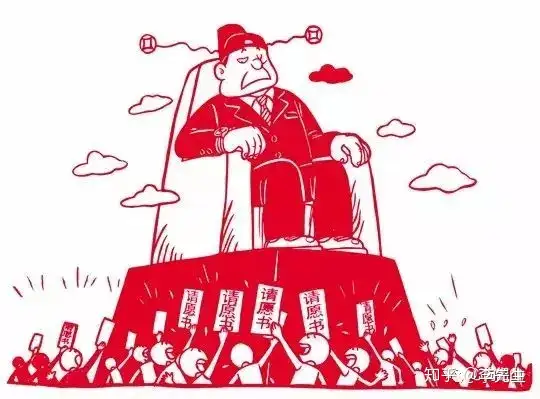
(一)关于统计报表
——“坚决制止滥发统计报表的严重现象”1953年7月22日,毛主席为转发《关于检查农村统计报表情况的报告》起草中共中央批语,指出:“县以上党、政、民各级机关所发统计报表,在农村中已泛滥成灾,达到了完全不能容忍的程度。……规定简化报表及控制报表的可行办法,坚决制止滥发统计报表的严重现象。”(《毛泽东文集》第六卷 283页)
——“天天统计,天天上报,统计也统计不及”1961年3月5日晚上,毛主席在中央政治局常委扩大会议上作讲话:“过去我们老是要数字,什么东西种了多少,产了多少,今天积了多少肥,明天又搞些什么,天天统计,天天上报,统计也统计不及。横直就是那样,你瞎指挥,我就乱报,结果就浮夸起来了,一点也不实在。”(《毛泽东年谱(1949-1976)》第四卷 549页)
——“今天通知明天要,只能是假报告”1961年3月13日,毛主席在中南局、西南局、华东局负责人工作会议(称南三区会议)上发表讲话,强调:“我看不要看那些表格,报表我是不看的,实在没有味道。河南要求下边报六类干部情况,今天通知明天就要,这只能是假报告。我们要接受教训。报表有一点也可以,统计部门搞统计需要报表,可是我们了解情况主要不靠报表,也不能靠逐级的报告,要亲自了解基层的情况。”(《毛泽东文集》第八卷253-254页)
——“天天叫下面报数字,官僚主义”1971年8月25日,毛主席在武昌东湖客舍同华国锋谈话。当华国锋提到全国化肥生产情况不好时,毛主席说:“讲下放十几年了,下放不了,条条专政就是改不了,地方生产的钢也分不成,统统拿走,拖拉机也不让省里搞,这样大的国家,这样多的人,部里能管得了?条条专政害死人,我就主张靠省里管。天天叫下面报积肥数字,官僚主义。”(《毛泽东年谱(1949-1976)》第六卷 392页)(二)关于文山会海——“指示一年一个,就是形式主义”1961年2月8日晚上,毛主席与江华、林乎加、田家英等谈农村整风整社问题。林乎加(时任浙江省委书记处书记)说:“瞎指挥有些是从省里下去的。”毛主席说:“也有从北京下去的。……我对谭震林同志说,三年不要开农业书记会议。春耕生产指示,一年一个,形式主义,谁人去看,农民要饿肚子,他不懂得要耕要种?问题是要搞一些具体措施和办法。”(《毛泽东年谱(1949-1976)》第四卷 538页)
——“不要搞那么多文件”1961年3月5日晚上,毛主席在中央政治局常委扩大会议上作讲话,指出:“今后不要搞那么多文件,要适当压缩。不要想在一个文件里什么问题都讲。为了全面,什么问题都讲,结果就是不解决问题。不要批文件过多,过去我也是热心家,也批了许多文件。……我就不信,每年批了那么多的文件你们都看了,各省的同志都看了。肯定有许多没有看。”(《毛泽东年谱(1949-1976)》第四卷 549-550页)
(三)关于调查研究——“一万年还是要进行调查研究”除了“没有调查,就没有发言权”、“不做正确的调查,同样没有发言权”之外,最著名的应该就是这句了。1961年3月23日,中央工作会议在广州召开。毛主席逐段解读了他在1930年5月写成的《调查工作》一文,此文共七段,3000多字,毛主席的解读近7000字。这是毛主席一生中亲自解读的唯一一篇文章。毛主席说:“民主革命阶段,要进行调查研究,社会主义革命和建设阶段,还是要进行调查研究,一万年还是要进行调查研究工作。”(《毛泽东文集》第八卷 262页)
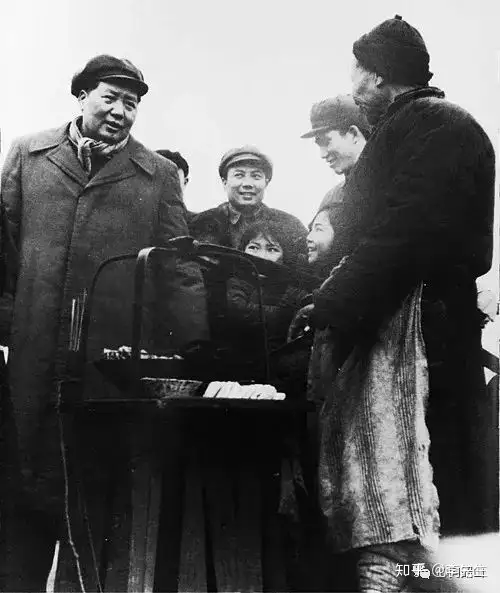
——“实行官僚主义的那种调查法,党委有权把他们轰走”毛主席强调,下去调查切忌张扬,也不要动辄要求各级领导作陪。不要“老爷式的调查”,不要学“巡按出朝,地动山摇”那一套。毛主席对形式主义官僚式的调查深恶痛绝,曾批示道:“实行官僚主义的老爷式的使人厌恶透顶的那种调查法,党委有权教育他们。死官僚不听话的,党委有权把他们轰走。”(《毛泽东年谱(1949-1976)》第四卷 593页)
(四)关于秘书代笔——“写文章不要让别人代劳”1964年3月28日,毛主席在邯郸听取山西、河北省委负责人汇报农村社会主义教育情况,在讲到官僚主义问题时,他说:“有的人,自己不写东西,要秘书代劳。我写文章从来不叫别人代劳,有了病不能写就用嘴说嘛!现在北京当部长、局长的都不写东西了,统统让秘书代劳。秘书只能找材料,如果一些都由秘书去办,那么部长、局长就可以取消,让秘书干。”(《毛泽东年谱(1949-1976)》第五卷 332页)
(五)关于下情上达——“严重的问题是,不仅下面作假,而且我们相信”1958年11月23日,毛主席在中共中央政治局扩大会议上作讲话,指出:“要老老实实,不要作假。现在的严重问题是,不仅下面作假,而且我们相信,从中央、省、地到县都相信,主要是前三级相信,这就危险。……有些假的,你查也查不出来。希望中央、省、地这三级都懂得这个问题,有个清醒头脑,打个折扣。”(《毛泽东年谱(1949-1976)》第三卷 527页)——“不向我反映情况,我才最累”对各级领导来说,什么才最累?是工作繁忙吗?不是!1959年6月24日,毛主席同王任重谈话,说:“不向我反映情况,我才最累。你把湖北的真实情况告诉我,我就不累了。”(《毛泽东年谱》第四卷 78页)——“十分里头信七分就好了”与基层干部群众交流,有些话不可不信,亦不可全信。1960年3月23日下午,毛主席在停靠天津的专列上同林铁、刘子厚等谈话,谈到人民公社问题时说:“官僚主义者,就是不同群众商量,还有打人、骂人,强迫命令。……下面的事情,十分里头信七分就好了,十分都信就吃亏,就上当。”(《毛泽东年谱》第四卷 356-357页)
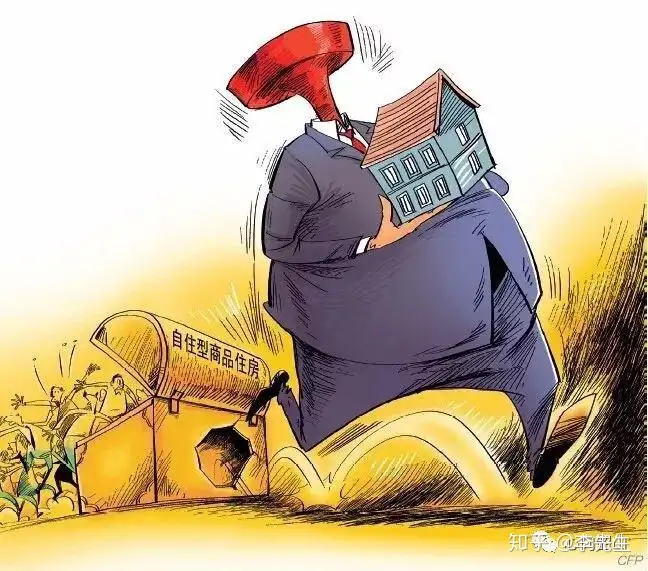
(六)关于官气官风——“对利令智昏之人要臭骂一顿”1957年1月27日,毛主席在省市自治区党委书记会议上的讲话中指出:“官做大了也可以利令智昏。当了第一书记,也是一种利,也容易使头脑发昏。昏得厉害的时候,就得用一种什么办法去臭骂他一顿。”(《毛泽东文集》第七卷 191页)——“官气是最低级的趣味”1958年5月20日,毛主席在八届二中全会上指出:“要破除官气,要扫掉官气,要在干部当中扫掉这种官气。谁有理就服从谁,不管是挑大粪的也好,挖煤炭的也好,贫苦的农民也好,只要真理他们手里,就要服从他们。如果你的官很大,可是真理不在你手里,也不能服从你。……官气是一种低级趣味,摆架子、摆资格、不平等待人、看不起人,这是最低级的趣味,这不是高尚的共产主义精神。”(《毛泽东文集》第七卷378页)——“不要动不动训人”
1967年10月3日,毛主席在会见刚果(布)政府代表团时说:“就是有一条,你不要摆官僚架子。我只求你一条,把官僚架子放下,跟老百姓、工人、农民、学生、战士、下级一起,平等待人。不要动不动就训人,有道理为什么要训人,可以解释嘛。”(《毛泽东年谱(1949-1976)》第六卷 129页)
(七)关于群众路线——“一级一级从上往下贯,根本不是从群众中来的”1961年5月23日下午,毛主席在有各中央局第一书记参加的中央政治局常委扩大会议上的讲话中指出:“过去我们听你们的,你们没有亲自调查,你们也是听人家的,你们要亲自调查。调查研究,走群众路线,才能退赔好。群众路线很重要。河南一级一级从上往下贯,根本不是从群众中来的,是从他脑子里想的。”(《毛泽东年谱(1949-1976)》第四卷 591页)——“群众不管你是什么官,只看你的政策”1963年12月5日,毛主席在人民大会堂会见哥伦比亚“工、学、农运动”学习代表团,指出:“群众不管你是什么官,也不看你穿什么衣服,只看你的政策。他们也不管你是什么党,共产党的政策错了,他们一样要骂你。知识是从哪里来的?知识是从群众中来的。我们如不进行调查研究,就是什么也不懂。”(《毛泽东年谱(1949-1976)》第五卷 287页)
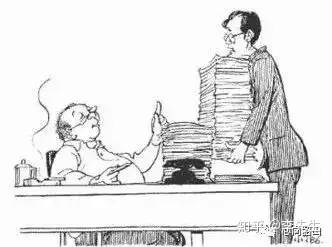
(八)关于读书学习——“天天搞事务,一定要迷失方向”
干部陷入“事务主义”,看似忙忙碌碌,实则疲于应付、疲惫不堪,毫无成效。不仅无益,而且有害,往往成为滋生形式主义、官僚主义的温床。
新中国成立不久,毛主席曾说:“有鉴于现在工作中还有事务主义,所以应当好好读书。”《毛泽东文集》第八卷有一篇“庐山会议讨论的十八个问题”,是毛主席认为应当重点讨论的重要问题,第一个问题就是“读书”。毛主席说:“我们提倡读书,使这些同志不要像热锅上的蚂蚁,整年整月陷入事务主义,搞得很忙乱,要使他们有时间想想问题。”
1962年2月6日,毛主席在人民大会堂主持中央工作会议。在D讲到这几年的教训是忙于事务,不注意学习,思想容易庸俗化时,毛主席说:“不重视学习理论,天天搞事务,一定要迷失方向。”(《毛泽东年谱(1949-1976)》第五卷 84页)
(九)关于工作汇报
——“谁要念稿子,我就打瞌睡,以示反对。”口头汇报的好处:一是实话多,套话少;二是防止虚与委蛇。毛主席不喜欢照本宣科式的汇报,曾明确说过:“谁要念稿子,我就打瞌睡,以示反对。”1956年春节前夕,石油工业部副部长康世恩接到通知,要向毛主席汇报工作。当得知毛主席问得非常详细时,康世恩抓紧时间准备材料,并写出了汇报提纲。他回忆说:“我照着提纲念了一段,主席打断说,你不要念了,我这里也有本本,就随便说吧!”接着,整个汇报便在毛主席和康世恩的一问一答中进行。
(十)关于官僚主义
——“不要沾染官僚主义作风”1950年2月,毛主席访苏回国,短暂停留松江省(1954年与黑龙江省合并)哈尔滨市。在听取省、市领导汇报后,应松江省委负责人请求,毛泽东同志为省委题词“学习”、“奋斗”和“不要沾染官僚主义作风”。这是新中国成立后,毛泽东同志第一次为地方省委题词。(《毛泽东年谱(1949-1976)》第一卷,97页)
——“谁犯了官僚主义,群众就有理由把他革掉”
1956年11月15日,毛主席出席八届二中全会作总结讲话,强调:“我们一定要警惕,不要滋长官僚主义作风,不要形成一个脱离人民群众的贵族阶层。谁犯了官僚主义,不去解决群众的问题,骂群众,压群众,总是不改,群众就有理由把他革掉。我说革掉很好,应当革掉。”(《毛泽东年谱(1949-1976)》第三卷,34页)这话说的是很重的。从事后历史发展来看,真到了对从上到下各层级的官僚主义忍无可忍的时候,毛主席毅然决然采取了一些果断措施,也就可以理解了。
《红镜头》与杜修贤
毛远新
听到老杜去世的消息,我回想起十多年前的一次会面……
上世纪90年代末,朋友给我寄来《红镜头》一书,上下两册,说其中有我珍贵的照片。我打开一看,该书由辽宁人民出版社1998年3月出版,署名:"顾保孜撰文、杜修贤摄影"。封面"红镜头"三个大字下面,还有一个副标题:"中南海摄影师眼中的国事风云。"扉页分别有聂荣臻、徐向前两位老帅的庄重题字:"历史的见证"和"忠实再现历史"。可见此书在出版者眼中历史价值之重。
打开书后,因朋友说书中有我珍贵的照片,我便首先翻看书中的图片。果然,在下册第667页上方,有一幅我站在主席遗体旁的照片(附图2)。这张照片,我还没见过,实在是太珍贵了。仔细端详照片,我的思绪不由得回到30多年前,人生五味杂陈,在胸中翻滚起伏……
从往昔回到现实,第一反应就是从心底里感谢老杜,是他为我用镜头留下了那终生难忘的瞬间。杜修贤是新华社派驻中南海的摄影师,我和他多次接触而逐渐彼此熟悉。又因为他接替石少华,当了江青的摄影老师,我们多次在钓鱼台江青的住处见面而成为朋友。记得有一次,客厅中央的长桌上,铺满了他帮江青冲洗放大的彩色照片。当着江青的面,他给我讲解某张照片采光如何好,某张照片取景角度选得好,满口赞誉之词。我觉得其中有几张确实拍得不错,其他我看也一般。我没学过彩色摄影的原理,什么色调、色温等等术语,老杜讲得津津有味,我却听得似懂非懂。江青当面训斥老杜:"好就是好,不好就是不好。少拍马屁!"发觉老杜略显尴尬,我还替他打圆场说:"老杜是专家,从摄影专业角度讲,恐怕他说的还是有道理。"……
凝视着手里书中的这张照片,我想,下次到北京,一定要约他见上一面,当面向老朋友表示感谢,并请他能给我也洗一张。
翻过一页,第668页下方的图片(附图3)却让我吃了一惊:长方形四个角的照片,右上角被一刀斜砍下去,变成了一张五边形照片。这可真是新闻图片史上的奇迹!细看照片内容,在毛主席的遗体前,由左向右站成一排的是张春桥、王洪文、江青三人。从江青再往右,却是被斩首、被砍腰、被断腿的五个人,从"残缺不全"的肢体看,很难辨认出那五个人是谁。图片下面的说明:"'四人帮'的目光聚集在永远看不见这个世界的毛泽东遗体上"。
看到这个图片说明,不免令人费解。说是"四人帮",却有八个人站在那里,其能看清的只有三人,不知其他五人作何解释。如果他们也属于"四人帮",那为何要被砍头腰斩呢?如果不属于"四人帮",图片的说明为什么要写成"'四人帮'的目光聚集……",其他五人的目光又聚集在哪里呢?
再看说明中加在"毛泽东遗体"前那个"永远看不见这个世界"的定语,似乎表达了作者某种特殊的心理情结,结合此后我阅读全书所感知的作者的立场和口气来看,不知是幸灾乐祸,还是某种说不出口的怨恨。
我心中的老杜,还是30多年前原来的印象。当年在主席遗体前拍照的时候,他和我的心情,无论从表现出来的还是从彼此所了解的,是完全一样的。现如今怎么变成这个样子了呢?沧海桑田啊……
失去了共同语言,朋友也会变得陌生!急于想见他一面并表示感谢的心情,变得茫然了。也好,这倒提醒我不要只看照片,还要看照片的说明,读镜头之外的文章。
书中文字,都是以杜修贤第一人称写就,虽然封面注明,是个叫顾保孜的人撰文,读来还是如同聆听老杜亲口叙述一般。老杜身为新华社派驻中南海的摄影师,又是文革中深受江青信任的摄影老师,书中图片,除少数另行注明摄影者外,基本都是老杜亲自拍摄,那老杜亲口所述文章内容的真实性还有什么可怀疑的吗?
书中所叙文革以前的事,我未亲身经历,难以评说。但文革以后,特别是1968年以后的事,许多是我亲身经历亲眼看见的,可并不都像书中所写的那样。有些事我虽然没有亲身经历,根据常识,稍有头脑的人都会提出质疑。比如,书中提到1976年2月江青去游泳池见主席那一段,人家老两口子当时说了些什么,做了些什么,又没有第三者在场,更不会请摄影记者去拍照,你老杜怎么能有板有眼说得那么具体呢?难道你真在主席身边安装了窃听器?他书中好像提到,后来还被很多文章引用,说文革初期给他扣的罪名之一,就是带着窃听器潜伏在中央领导身边。读到这里,我就想笑,如果他当时真的背负有这类"罪名",江青还可能把他一直留在身边而且那么信任吗?
此类涉嫌虚假的文字,在书中比比皆是。
一年后,我有机会到了北京,住在马甸桥那边的湖南省驻京办事处。当年主席身边的一些工作人员来看我,谈话中偶尔提到杜修贤,我说他那本《红镜头》书中,有一张我在主席遗体旁的照片,不知能不能帮我弄到。
他们马上用电话和杜修贤联系,老杜说他一定要来湖南办事处看我。
第二天晚饭后,老杜就来到我的住处。20多年没见面的老朋友了,我们俩都很激动。老杜拿出个大信封,出乎我的意料,里面除了我想要的那张照片外,还有另外两张上面有我的照片。其中一张就是在《红镜头》书中有五人被砍头腰斩的那张,而且是完整的彩色的照片。(
这回我看清了,江青右边被砍头的是华国锋和我,再往右被斩腰、断腿的依次是姚文元、陈锡联、汪东兴。
我双手紧握老杜的手,向他表示由衷的感谢。老杜也很激动,上下打量我说:"你,你身体还可以,我放心了。外边传你一条腿被打折了。"我说:"别听外边瞎传,我在监狱里从来没有挨过打。只是十多年的铁窗生涯,脊柱患病,造成股骨头坏死,行动不大方便了。"我们共同回忆起20多年前的一些往事,聊得很开心。
是老杜先问我:"你有我那本《红镜头》吗?我可以送给你一套。"我说:"朋友已经送给我了,我是从书中得知这张照片的。"
"你对这本书怎么个看法?"老杜坦率地问。
"想听真话还是听假话?"我道。"当然是真话了。"老杜说。
"怎么说呢?......"我犹豫了一下。
"老朋友了,就直说吧!"老杜拍了拍我的手臂,爽快地说。
"你那本书里的照片,记录着我们党的真实历史,正如两位老帅题字所说,可以说是无价之宝。我给你打120分。"我之所以这样说,是因为70年代初,一次在钓鱼台江青的客厅里,江青、老杜和我三个人曾一起议论江青拍摄的几张茶花照片,其中有一张拍得很好,我说可以打100分,老杜说可以打120分。
大概老杜也想起那次"打分"的故事,嘴角露出会意的微笑。
"但是,"我接着说,"作为记录历史的史料来看,你那本书里的文字,实在不敢恭维。照片和文字加在一起,顶多值50分。这还是看在老朋友的份上。你那些文字,一文不值。"
"你,你......你怎么能,能这么说?"老杜瞪大了眼睛。原本就有点口吃的老杜,此时因为出乎意料,情急之下显得更加结巴了。
"老杜啊,"我说,"如果你出版的不是这本添加了许多杂七杂八文字的书,而是出版一本画册,除了你拍的照片,每张照片顶多再加个简要说明,包括拍摄的时间、地点、画面中人物姓名身份就完全够了。如果出版这样一本摄影集,作为历史资料,那将是无价之宝,完全可以得120分。"
老杜摇了摇头,看来无法接受我的说法。
"你当时不过是新华社的一名摄影记者,"我说,"你的任务,就是用镜头如实记录下每个重要事件的历史瞬间。至于描述那些历史事件的来龙去脉,以及评价那些事件中的是非曲直,原本就不是你的工作。据我的印象,你有相当高的新闻摄影专业水平,却没有那么高的政治水平和文字水平。况且,你工作的条件、环境,也不可能接触那么多政治内幕。"
老杜默默地听我说,既没有摇头也没有点头。
"比如,"我说,"中央高层开了个什么会,你的任务不过是根据会议的安排,会前会后拍摄几张会议相关照片就离开会场了。你又不是会议的正式成员,你怎么就知道会议是怎么开的、谁说了些什么、谁是什么表情、谁的心里又在想些什么?而你书中,对这些内容却写得活灵活现。那些文字不是你臆造出来的,就是后来听别人讲,你抄来的。不是吗?还有些会议,没有你的拍照任务,你连边都沾不上,又怎么会知道会议内幕呢?比如八大军区司令员对调的会议,我是亲身参加者,我就没见请你去拍过照片,你怎么就知道会议的真实情况呢?还不是后来听了或看了别人写的东西,你抄来加工一下,变成了你的东西。我说的对吧?"
老杜很不情愿地轻轻点了下头。
我接着说:"既然是若干年后,才从别人那里听来抄来的文字,那么加上你中南海摄影师的身份,就变成为真实的历史了吗?如果别人写的文字原本就有误或有假呢?尽管搭配上你真实的照片,难道就能变成真实的历史档案了吗?我注意到了两位德高望重的老帅题字,说是'历史的见证',肯定是指你拍的那些照片,聂帅题词还特意指明是为你的'摄影集'题的字,而不是指你另写的那些文字。那一堆你听来抄来的文字,他们恐怕连看都没细看过,更不要说去一一核实考证了。你说是吗?这本书真正的价值在于你的那些照片!老杜啊,那些镜头之外的文字不仅不能增加价值,反而给你大大地打了折扣,因为其中许多内容经不起推敲,经不起历史的检验。"
老杜只是听,没有再和我争辩。看来他还是个老实人。我给他茶杯里加了点水,又递给他一枝香烟,并帮他点着。
两人默默地抽着烟,相对无语地坐了好一会儿,谁也没说话。
"唉!"老杜深深叹了口气,却欲言又止,似乎有难言之隐。
我转了个话题,问他:"你知道李志绥在美国出版的那本书吗?"
"知道,"老杜说,"那是,是胡说八道。是美国人利用他的身份,故意丑化主席的。"
"我和你的看法一样。"我说,"据说李志绥原稿只写了政治问题,那些生活上乌七八糟的事,是别有用心的人后加进去的。"
"我也听说了。"老杜说,"书一出来,他就心脏病死了。我看他是自己吓……吓死的。"
"李志绥,"我继续说,"不过是保健局派来工作的医生。除了生病,主席从来不喜欢医生在身边,更不用说让他介入中央高层的政治问题了。中央高层许多会议,他连会场都去不了,他怎么会知道会议的情况?说实话,他还真不如你,会前或者会后,你还可能按要求去拍照片呢。对吧?"
"嗯。"老杜点头肯定。
看来老朋友之间还是有些共同语言。我又转回到《红镜头》话题上,说:"你不觉得你那本书,和李志绥的书有某些相同之处吗?"
老杜猛地从沙发上站起身来,气冲冲地说:"你……你,你怎么能把我和李……李志绥相提并论?"
我也急忙站起身来,笑着拉他坐下:"别生气,别生气。老杜,我仅仅是讲,中央高层的一些重要活动,你和他都不是真正参与者。然而,你和他却都以亲身参与者的口吻,在那里评说一通。凭什么呢?无非是利用你是中南海的摄影师,他是主席身边工作医生的身份,以此抬高读者对你们所写文字真实可靠性的认同。在这一点上,你们基本上相同吧?"
老杜不置可否,只是坐在那里大口地吸着烟。
"但是,"我说,"你和他还有本质的不同:他发泄出对毛主席、周总理甚至整个中国共产党的强烈仇恨,而你还是拥护主席、总理,拥护共产党的,只是流露出对'四人帮',特别是对江青的强烈不满。我说的对吧?"
老杜还是不置可否,大口地吸着烟。
我说:"就说江青吧,虽然她也训斥过你,但我总的感觉,你们当时的关系相当好,她多次当我的面夸奖你。而你呢,当时对江青也非常敬重,甚至到了言听计从的地步。说是江青的摄影老师,后来更像是她随行摄影师。除去外事活动,你和江青个人的来往,你给江青拍的照片,加上帮她冲洗放大的照片,比起你和主席、总理的个人来往,比起给他们拍的照片,恐怕还要多,这是事实吧?可是从你书中的文字看,从一开始和江青接触,你就带着强烈的对立不满情绪,甚至是仇恨。这符合历史吗?如果你和江青的关系,真像你书中所写的那样,你也知道,江青那个人有那么过分敏感的神经,还有那么霸道的脾气性格,她早就给你扣上顶什么帽子,叫你滚蛋了。而事实是,直到主席去世她被抓之前,她对你都一直十分信任。我没说错吧?"
老杜依然不置可否,但脸色越来越难看。
"举个例子,"我往下说,"你书中说江青1974年给你改了名字,把'杜修贤'改成'杜秀咸'。你是什么态度呢?书中写你当时如何气愤,很有种大丈夫行不更名、坐不改姓的气魄。还说由于受不了江青这种强加于你的无理行为,还专门跑到医院,为此事向重病在床的周总理告了江青一状,经总理劝解,才忍气吞声地改了名字。是这么写的吧?"
老杜轻轻点了下头。
"这是历史事实吗?"我接着道,"江青给你改名字,我当时就在现场。好像不是1974年,大概是在1971年左右或更早。当时我恰巧就在北京,就在钓鱼台十号楼一进门的大厅里,还有一中队几个工作人员。你从江青的客厅里跑出来,兴奋得大声喊道'江青同志亲自给我改名字了!'你说江青认为'修贤'二字有封建色彩。你还拿起笔,边写边给我解释什么'秀丽的秀,咸阳的咸'。那时你那个高兴劲儿,在场的好几个人都有目共睹。我说的没错吧?那时候总理还没有生病住院。就为这点屁事还专门去请示'重病在床'的周总理,鬼才相信呢!江青是有给人改名字的爱好,但她只给当时她最亲信的人改名字,比如把'浩梁'改成'浩亮',把'银禄'改成'英路'。当时你能得到这样的'待遇',高兴还来不及呢,哪有一丝一毫的气愤不满?你居然还把周总理扯进来为你改名字之事作挡箭牌,你对得起总理吗?"
老杜原本就疙里疙瘩的脸胀得通红,只是闷头在那里不停地大口喘着气。
"难道我说的不是事实吗?"我问他。
憋了好一阵,他终于抬起头来。"唉!"老杜长叹一声:"远新啊!就,就因为我和江青的特……特殊关系,就因为那些照片,你知道我吃了多少苦哇!粉碎'四人帮'以后,说我是江青的死……死党,审查批判了好几年,揪着不放呐!不这么写,人……人家能放过我吗?"
原来是这样。我说:"原来你也受了这么大的牵连,我确实一点也不知道啊!"我诚恳地说,"我理解你的苦衷。对不起,刚才有些话,我说过头了,请你原谅。"
"算了吧。我吃的苦,比……比起你来,还差远了。"老杜说。两个人都逐渐平静下来,相互递烟,点烟……
老杜和我不同,他不过是新华社一个摄影记者,被组织上派到江青身边工作,是执行上级下达的任务,他并不涉及、更未参与任何党内路线斗争的问题,不过是因为和江青的特殊关系,却受了几年的审查批判。种种因素驱使之下,出这么本书表示自己和江青划清了界限,也情有可原。只望读者能体谅其苦衷,书中照片是真实的历史,而许多附加的文字,不过是老杜为洗刷自己"清白"所制造的泡沫。泡沫终归还是会被历史的风雨冲刷掉的。
我拍着老杜膝盖说:"有位看过《红镜头》这本书的朋友问我,杜修贤是否也参加了抓捕'四人帮'的行动……"
"没有的事!"老杜打断我的话,"人……人家会相信我吗?"
"我对那个朋友也说,完全不可能。"我接着道,"而那位朋友说,有可能哟。杜修贤不是在书中说,在他给王洪文拍工作照时,就已经察觉出这位党的副主席正忙着搞阴谋诡计,想要篡党夺权吗?"
老杜满脸的无奈,哭笑不得地摇了摇头。
我从茶几上拿起那张八个人在主席遗体边的彩色照片,用另一张照片的背面,按他书中处理的方式,盖住其右上角,对老杜说:"书中这张照片的处理手法,堪称新闻图片史上空前之作。你说呢?"
"那是出……出版社决定的,否则书都……都不让出。"老杜说。
"那张图片下面的文字说明,为什么要那么写呢?什么'目光聚集在永远看不见这个世界的毛泽东遗体上'。这是什么意思?"我问。
"是那么写的?不,不……不会吧?"他疑惑地问。"一字不差。不信你回去查查看。"我答道。
"那,那……是顾保孜和出版社定的稿,我都没再细看。"他说,"你也知道,我这个人,哪有那么高的文……文学水平,根本写不出那些文字来。文字部分,全都是顾保孜写的,有些,还是按出版社要……要求改写的。不那么改,人家不……不给你出版。"
我明白了。《红镜头》这本书的副标题叫"中南海摄影师眼中的国事风云",是不是可以说,中南海摄影师老杜"眼中的国事风云"主要是指书中的图片部分;而书中的文字部分,说是女作家顾保孜"眼中的国事风云"也许更准确些。老杜需要顾女士帮他涂抹富含泡沫的洗涤液,以洗清自己和江青的关系。而顾女士很可能需要老杜这块"中南海摄影师"的招牌,提高自己文字的可信度。各自的需求使双方合在一起,诞生了《红镜头》这样一个大量真实图片与不少虚假文字杂交的混血儿。
我送老杜到电梯口,说:"是你说的嘛,老朋友要说真话。我说过头的,别往心里去。我真心感谢你那三张照片,我会永久保存的。"
老杜极不自然地苦笑了一下,连手都没握,扭头就进了电梯。


评论
发表评论