Why doesn't the country systematically "clean up" public knowledge?国家为何不系统性“收拾”公知
On December 25, 1948, Huang Wei was captured on the Huaihai battlefield, and he received the admission letter from "Gongdelin University".
For this "prestige university", Wei is conflicted in his heart. I, Huang, belong to the first phase of Whampoa. Do you want to teach me? snort!
Therefore, Huang Wei became the most stubborn object of transformation.
During the War to Resist U.S. Aggression and Aid Korea, the PLA’s heroic battles and the common hatred of the people of the whole country educated almost all the Kuomintang, Manchukuo and Japanese war criminals. They finally understood that there is no shame in defeating the PLA who can defeat the United Nations Army, except for Huang Wei.
What he thinks is about winning the king and defeating the enemy, leading troops to fight, each is his own master, nothing more than soldiers against soldiers, guns against guns, you die or I die, whoever wins a battle is capable, and whoever loses a battle deserves it.
If you want me to accept the Communist Party's thinking, I can't do it. This nerd is not an ordinary axis.
Since 1952, Huang Wei’s multiple tuberculosis broke out at the same time. The drug effect of the Soviet Union was not good, and the United States blocked the new China. The Ministry of Public Security could only buy it from Hong Kong and Macau. Heavy for 4 years, continuous treatment for 10 years.
Even so, this hard-hearted man still cannot be moved.
In December 1959, the country implemented the first batch of amnesty for war criminals. Premier Zhou called for amnesty for Huang Wei. Premier Zhou's idea was that Huang Wei was also a passionate young man who also embarked on the road of joining the army in order to save the country and the people. He was just an axis. He is not bad. Amnesty can influence a group of people, which is conducive to the unification of Taiwan, but the War Criminals Management Office disagrees. The reason is simple. If he can be amnesty, then everyone can be amnesty. The two sides think differently. He also felt that he could not be amnesty.
As a result, 10 people including Du Yuming, Wang Yaowu, and Qiu Xingxiang were pardoned. "Amnesty 1959" talks about the process of ideological transformation of war criminals in the past 10 years. War criminals should also try their best to make them self-reliant and useful to society.
Huang Wei has self-knowledge and is calm in the face of the result.
He proposed to study the "perpetual motion machine" in order to avoid "ideological remolding". In 1979, the state allocated special funds to support his "academic research" in order to make him give up.
The War Criminals Management Office also had a headache. He would not listen to reasoning; he would not read books given to him; he would not be grateful for saving his life; If you kill him, you will fulfill his "hero" reputation of "sacrificing his life for righteousness".
It is easy to kill, but difficult to kill.
Thought remolding is not an easy task, and he can only comprehend it with the facts.
The War Criminals Management Office organized many outings to observe and emulate, which played a decisive role in his ideological transformation.
In the past, Huang Wei could not get used to the fact that the Kuomintang did not attach importance to the development of production and did not engage in construction. He also knew that the lives of ordinary people were very hard, so he was dissatisfied with the Kuomintang. Every time I meet a like-minded person, I often complain secretly. But for the future of the country and the livelihood of the people, there is nothing to do. On the contrary, they follow the Kuomintang and sink deeper and deeper.
Through on-the-spot visits to the Changchun First Automobile Factory, Wuhan Yangtze River Bridge, and Beijing Sijiqing Commune, I saw with my own eyes the achievements of the new China’s construction and the great changes in the motherland. Yes, it's not bragging, he has indeed made great achievements, which makes him feel that the Communist Party still has a way.
In the five amnesties in 1960, 1961, 1963, 1964 and 1966, Huang Wei was not included.
It wasn't until the seventh amnesty in 1975 that Huang Weicai "graduated". When he returned to his room with the amnesty notice, he couldn't help crying with tears in his eyes.
This is an unconditional amnesty: Citizenship is given to everyone, and labor is exempted; those who are able to work will be arranged to work, and those who are not able to work will be supported by the state; those who are sick will enjoy public medical care; those who are willing to return to Taiwan can return to Taiwan and give To cover the travel expenses and provide convenience; those who have gone to Taiwan and are willing to come back are still welcome.
According to Premier Zhou's instructions, Huang Wei served as a member of the Standing Committee of the Chinese People's Political Consultative Conference and enjoyed vice-ministerial treatment until his death in 1989.
The 10 people who want to go back to Taiwan are not so lucky. The Jiang family has always insisted on anti-communist propaganda, and even announced that these people have been martyred for the "country". If they go back, they will be slapped in the face. , Threats and lures, 1 person committed suicide, 2 people stayed in Hong Kong, 3 people returned to the mainland, 4 people went to the United States...
These people are very well-known, who have worked hard for their spiritual motherland all their lives, and will eventually end up with nowhere to live.
Friends may be wondering, isn't it said that today is public knowledge? How do you talk about Huang Wei? In fact, reforming war criminals is the same as reforming public knowledge.
Defeating the Kuomintang on the battlefield has taken away their resource base. Without soldiers and guns, a bare-handed commander cannot make a big wave.
They were dissatisfied, so they let themselves feel the difference between the new China and the Nationalist government, and consciously accept ideological remolding.
The same is true for public knowledge.
First of all, we must take away their knowledge monopoly advantage that is necessary for them to become public intellectuals, and use universal education to make every ordinary person an intellectual.
Then use the Internet to level the common people's power compared with their power on the speech platform. The power of the people is infinite, and it can only be the people who defeat the public in the end.
They were dissatisfied, so they used development to tell them: "Your dreams, fantasies, and extravagant dreams are all castles in the air", so that they can wake up and become a positive force in building the country on their own.
If you really want to go all the way to the dark, whether you go to America to breathe sweet vinyl chloride, or you are willing to drink the water of the Ganges River that can cure all diseases, we will not hesitate to bless you. The spiritual motherland, there is a high probability that it will be rejected.
This method is very slow, but the most effective. After all, the public knowledge group is a knowledgeable, cultured, capable and large group. It is just that they fantasize that they can still enjoy the eclectic dream of the old Chinese literati in the new China, even after more than 70 years. , still can't wake up, we need to push them, after all, self-denial is difficult, and it is even more difficult to abandon vested interests.
Rather than "cleaning up" public intellectuals, it is better to unify the thoughts of public intellectuals so that they can become members of the people and contribute to national rejuvenation. After all, there are a group of brainwashed ordinary people behind them. This work has been going on and nourishing things It's so quiet that no one can feel it.
There is no public knowledge in the world. It is a term artificially created by some forces to subvert China.
The definition of "Southern People Weekly" in 2005 is: an intellectual with an academic background and professional quality; an actor who speaks out to society and participates in public affairs; an ideal person with a critical spirit and moral responsibility.
This definition is full of holes!
You are a professional, have opinions on social and public affairs, and there are plenty of channels to express opinions. Do you want to be an activist? The interlacing is like a mountain, don't you know? To raise opinions across borders can only bring shame on oneself.
You are a professional, you are very clear about the problems in the industry, shouldn't you solve the problems in the industry? Why emphasize the critical spirit, instead of thinking about how to solve the problem and want to be a referee?
You are a professional, and you want to be a moral person. Your subtext is that this society is extremely dark and dirty, and you need a guardian?
You are a professional, and you want to be an actor in social and public affairs, where do you get the funds for your activities?
Later, public knowledge's behavior proved everyone's judgment, it's not early if there is no benefit, and the so-called moral bearers are just trying to mess up the country for petty profits, causing the society to fall into confrontation and tearing apart.
Now that there is such a term, let me define it.
Public intellectuals are opportunistic intellectuals who always feel that they are underappreciated, have no motherland and people in their hearts, imagine that China is full of illiteracy, social turmoil, and use their knowledge to attach themselves to the powerful at home and abroad. They act recklessly and seek personal gain for themselves.
There is a book called "The Five Great Intellects of the Warring States Period", which calls Mozi, Mencius, Zhuangzi, Xunzi, and Han Feizi all intellectuals, which is really absurd.
During the Warring States period, there were constant conquests. No matter how much the pre-Qin scholars argued, the theme was highly unified, which was how to stop the turmoil and make the world peaceful.
The Chinese people's "view of the world" was established by the pre-Qin philosophers.
This is not the same concept as the current public knowledge of betraying the country, disrupting the country, and harming others. The current public knowledge is almost equivalent to traitors.
New China is a socialist country where the people are the masters of the country. Why are these people unwilling to walk with the country and insist on standing on the opposite side of the country and the people?
It is necessary for us to understand how knowledge is produced.
At the end of the 19th century and the beginning of the 20th century, imperialist aggression made China impoverished and weak. The Chinese nation suffered from internal and external troubles, and the Chinese people were constantly looking for a way to become a powerful country. During this period, various trends of thought flooded into China, which had a great influence on the intellectuals at that time. Later, people tried constitutional monarchy, restoration of monarchy, parliamentary system, multi-party system, presidential system, but none of them worked.
In the 1920s and 1930s, Chen Xujing came to the conclusion that "total westernization is an inevitable trend", and Hu Shi systematized the "total westernization theory", believing that China should "accept the new civilization wholeheartedly". Hu Shi is also known as The well-known originator of China.
In 1949, when New China was established, a large number of old intellectuals were retained. Although they were treated far better than ordinary workers and peasants, they did not agree with the leadership of the Communist Party. The core problem was that they were unwilling to be equal to workers and peasants. In their hearts, The masses of workers and peasants originally served them, but now they have actually become the leading class.
We can find the answer from the book they edited.
The first Literary Congress (July 2-19, 1949) realized the overall leadership of the Communist Party of China over literature and established the relationship between the leader and the led between the new regime and literary artists. ——"New Draft of Chinese Contemporary Literary History" 2005 First Edition
Make no mistake, they don't want to be led, they don't want to be part of the people, they want to be free and above the people.
If our political and cultural mechanism has not fundamentally changed, wouldn’t it be inevitable that once there are elites who have won the Nobel Prize, they will still be discriminated against, attacked, trampled on, destroyed, and persecuted just like their predecessors? ——The first edition of "Thinking of the People of the Motherland" in May 2013
Not to mention that winning the Nobel Prize in Literature needs to conform to Western values, just because they want to change China's political and cultural mechanism, it shows that they are still dreaming of unrealistic spring and autumn dreams.
The overthrown landlords, compradors, and capitalists ran away as much as they could, and those who could not. The seeds of hatred in their hearts kept sprouting, and their descendants became the main force of historical nihilism.
At the end of the 1970s, He Shang literature was overwhelming. They took the "Second Resolution" and poured all the dirty water on Chairman Mao, trying to achieve "de-Maoization" and even obliterating the historic achievements made since the founding of New China. Achievement.
In the late 1980s and early 1990s, when the Soviet Union disintegrated and Eastern Europe underwent drastic changes, Chinese intellectuals were terrified. Under the banner of "reform" and "transformation," they denied the "May 4th Movement," the Revolution of 1911, and Marxism. Denying the leadership of the Communist Party of China, "full Westernization" is still their main appeal.
Entering the 21st century, especially after the United States focused its energy on China and distributed dog food, on the new media platform, they artificially created the term "public knowledge" and put on an academic cloak to vigorously promote Western constitutional democracy and "universal wisdom". Value" and other views, at this time the public knowledge has become a traitor.
Today, the logic of the Western world is unsustainable. In particular, the three-year epidemic has awakened most of the public knowledge. The democratic world described by the West is only a democracy for a few people, and the vast majority of people are not "people."
However, there are still a large number of public intellectuals who are not reconciled and do not look back. They are still criticizing and criticizing Huai Huai in public and in private, but at the end of the battle, they cannot penetrate Lu Jin.
Some of them will never turn back, or have a clue in the hands of others, or have received dirty money, or treat slandering China as a profession and are not seen by others, or emigrate abroad and want to regain Chinese nationality. God, I can only continue barking to prove that I am not wrong.
A simple history of the development of public knowledge tells us that the public knowledge group is collectively inferior. They only recognize the strong, but they are unwilling to make themselves strong through hard work. They hoped that China would be strong at the beginning, but when someone threw a bone, they then Wagging his tail and begging for mercy, he ate with great relish, and then he became aggressive.
Public knowledge is not unique to China. There are a group of Westernized public knowledge in all countries in the world. China is fortunate to have a firm leadership of the party.
Take Russia for example.
Putin's affection for the West is deep, and what he got in return was the West's progress. Prior to this, Russia had three major Westernization histories.
First, the Westernization of Peter I. He disguised himself and went to the Netherlands to learn shipbuilding. After ten years of hard work, he finally snatched St. Petersburg, the port of the Baltic Sea, from Sweden, and opened the road to the power of Tsarist Russia. There are still a large number of ships, medicine in Russian. Vocabulary comes from Dutch.
The only son opposed learning from the West and attempted a coup. Peter the Great had to kill his son to continue the reform.
Peter the Great's reforms brought Russia into the Western society, and his idea of "total Westernization" penetrated into the bones of the Russian nobles and intellectuals. Not only was the tsar keen to marry the royal families of Western Europe, hoping to get rid of the "barbarian" label brought by the Mongols, but even the common language among the nobles was French, and it would be a shame for the Russian court to speak Russian in the end.
Ekaterina grasped the antipathy of the local Russian party to excessive Westernization, and as a Prussian woman, she achieved the great myth of the Russian female tsar.
Since then, Russia has entered into a long-term struggle between the Westernization faction and the local faction. The rulers can only bridge the differences between the two sides through foreign aggression, which has led to the history of Tsarist Russia being a history of expansion.
The second time was the "Decembrist Revolution" initiated by young Russian military officers. During the War against Napoleon in 1812, some Russian noble officers participated in foreign expeditions. The system is extremely dissatisfied. After returning to China, they set up a secret revolutionary organization, trying to reform the country in a Western way.
In December 1825, the young military officers launched the first armed uprising in Russian history to overthrow the tsarist autocracy, and were thus exiled, hence the name "Decembrists".
The "Decembrist Revolution" had a profound impact on Russian history, and the subsequent "February Revolution" and "October Revolution" were all affected by it.
The third time was Gorbachev and Yeltsin. Gorbachev personally buried the Soviet Union, and Yeltsin brought Russia to life through radical "shock therapy".
There are still a large number of Westernized public figures in Russian society today. Putin is in power, and he can still control the situation. No one knows what will happen to Putin after a hundred years.
China's well-known people are full of strange things, and it is necessary to make a portrait of them.
The above figure basically summarizes the known types, let's analyze them one by one.
The land reform is the material basis for the success of the Chinese revolution and the core means to eliminate exploitation, but some people don't think so. They deny the justice of the land reform by overturning the case for the landlords, and thus deny the legitimacy of the regime.
Liu Wencai, Huang Shiren, Nan Batian, and Zhou Papi are the four famous landlords.
Only Liu Wencai is a real person, and the other three are artistic images. Therefore, reversing the case for Liu Wencai has become a breakthrough for some people.
Phoenix Satellite TV's "The Great Landlord Liu Wencai", Xiao Shu (Chen Min)'s "The Truth About Liu Wencai", Fang Fang's "Soft Buried", and Mo Yan's "Life and Death Fatigue" all belong to this category;
At the beginning of the founding of New China, landlords and rich peasants, who accounted for less than 7% of the total number of peasant households, owned more than 50% of the total cultivated land, while poor peasants and farm laborers, who accounted for more than 57% of the country’s peasant households, only occupied 14% of the total cultivated land.
Although the Kuomintang reactionary regime had been overthrown on the mainland, and some small and medium-sized landlords and enlightened gentlemen expressed their willingness to obey the land reform laws, the entire landlord class was unwilling to lose its original ruling position and economic interests in the countryside.
On June 28, 1950, the state promulgated the "Land Reform Law of the People's Republic of China". Article 1 of Chapter 1 clearly stipulates that: abolish the land ownership system of feudal exploitation by the landlord class, and implement the land ownership system of farmers, so as to liberate rural productivity and develop agriculture. production, paved the way for the industrialization of new China.
In the winter of 1952, except for Xinjiang, Tibet and other ethnic minority areas and Taiwan Province, the task of land reform was basically completed. In 1959, the Tibetan area also started a democratic reform centered on land reform. Peasants were truly liberated.
For the landlords, there is also a way out, the purpose is to turn them from exploiters into self-sufficient laborers.
During this vigorous land reform process, the vast number of farmers realized the dream of "land to the tiller", beat gongs and drums, celebrated the liberation and became the masters of the country.
They deny the land reform. In their eyes, nearly 90% of the peasants in New China are not human beings.
How Phoenix Satellite TV got its start, what did Xiao Shu and Fang Fang do, why Mo Yan won the Nobel Prize in Literature but not the title of "People's Artist", you can search and judge for yourself.
People who engage in historical nihilists have a relatively complex composition. There are roughly three types of people. The first type is those who are closely related to Western anti-China forces and have ulterior motives in politics; the second type is those who have no institutional confidence and cultural confidence. The trend of thought affects those who advocate total westernization; the third category is those who are dissatisfied with society.
The reason why it is assigned to the name of the comprador spokesperson is because of the principle that whoever makes the profit is the most suspected.
The purpose of historical nihilists is to fundamentally negate the leadership of the Communist Party of China, negate Marxism, negate the guiding position of Mao Zedong Thought, negate the historical inevitability of China's move towards socialism, confuse people's hearts, and subvert the regime.
They attack, vilify and slander the people's revolution, revolutionary leaders and heroes. Under the guise of "re-evaluating and writing history", they "fragment" and even fabricate "spoof" history.
Historical nihilism is an idealistic view of history. By questioning, negating, and confusing all Chinese history, it shakes China's national foundation, splits the historical inheritance from Confucius to Sun Yat-sen, and makes China return to the state of being bullied again, denying the legitimacy of the Communist Party in power. Sex, and then take the road of capitalism, the biggest profit is undoubtedly the comprador.
Empty history, destroy successful experience, and confuse the people's minds, so that they can fish in troubled waters.
Opposing historical nihilism is a systematic project, and it is the common responsibility of historians, theoretical circles, philosophy and social science circles, literature and art circles, experts and scholars, party members and the masses.
The Chinese Academy of History (established on January 3, 2019) ended up against the public knowledge, clearing the Internet, and was called "the long drought meets the rain" by the majority of Ziganwu, which shows how fierce historical nihilism was in those days.
The spokesperson of the national army is a branch of historical nihilists. The reason why they are listed separately is that these people deny the legitimacy of the Chinese revolution by whitewashing the Kuomintang and fabricating the "Golden Decade of the Republic of China", and then advocate "farewell to the revolution" and "the revolution is guilty". ", let everyone beat their hearts: "Since the Kuomintang is so good, why should it be overthrown?"
The generation of Heshang is actually quite pitiful. They have no ability to distinguish right from wrong. They attack food stamps, the May 7th cadre school, and educated youths going to the countryside...
The food stamp system is an important means to keep everyone alive. If food is sold openly and rich people hoard a pile of food at home, the price of food in the market will skyrocket, and the poor will die in large numbers. Most of the food in the world The crisis was created by the Americans. Their method is very simple, which is to artificially create a food crisis by frequently selling short and long positions in the grain circulation market.
The May 7th Cadre School was called the "cowshed" by some people. What they didn't know was how happy the common people would be if they could live in the "cowshed".
Their wages can catch up with the level of major generals and lieutenant generals who have come from the mountains of corpses and blood. Just let them participate in a little labor, and they are wronged. One”, these people don’t understand, and they still haven’t understood.
They feel that they are superior to others, that they cannot be touched, that they are dragons and phoenixes among people, and that they must be sacrificed.
Attacking educated youths to go to the countryside is even repaying virtue with grievances. At that time, China was blocked by the United States and the Soviet Union at the same time, and urban employment was shrinking. The country sent educated youths to the countryside. What will you do when you grow up in the countryside? It's good if you don't make trouble.
Those who are brainwashed are mostly actively brainwashed. Some people say that this is the inevitable result of the reform and opening up. This statement is not true. It is like a child who goes to school and thinks that other people's homes are good. Go home and scold your parents?
The country's "Four Confidences" is to cure some people's schizophrenia and brain calcium deficiency, and let them understand that the Americans stopped playing the overbearing Chinese two thousand years ago; the Chinese civilization has continued for five thousand years, and its super Strong stability has an inevitable logic of geography and history; socialism will inevitably replace capitalism; Marxism is a dialectical materialist theory that can stand the test of time, and we must always adhere to it.
Those who sing praises for the capitalists and eat dog food are speculators who use other people's money to eliminate disasters for others.
Yu Donglai from Xuchang, Henan Province distributes 95% of the profits to employees, while Ren Zhengfei from Huawei only owns 0.8% of the shares. They are all private entrepreneurs. I would like to call them people entrepreneurs.
Comprador entrepreneurs, netizens have hammered it many times, so I won’t repeat myself.
Those who eat dog food will pay a high price for small profits, because the Internet has memory.
What we need to worry about is actually robot knowledge, which is the category of cyber warfare. Some countries can bombard specific topics with overwhelming information through network technology. A thousand times a lie can become the truth. The United States, Taiwan, and Japan have made a lot of efforts in this regard . The reason why public knowledge can become public knowledge is the foundation of knowledge monopoly.
Before the founding of New China, knowledge was always monopolized by the elite.
Whether it is the official schools of the Xia, Shang, Zhou, Qin and Han Dynasties, the academies and classics of the Tang, Song, Yuan, Ming and Qing Dynasties, or the elite education of the Republic of China, education is the privilege of the powerful class.
Before the invention of printing in the Song Dynasty, writing was a very luxurious thing. The original meaning of "the book has its own golden house" is to encourage learning. In fact, the book itself is an important property, and there are books in the rich and powerful.
Ordinary peasant families have a hard time eating enough. If they want to support a scholar who does not work and specializes in studying for fame, if there is no disease, no disaster, no military chaos, and everything is going well, it will take the power of the family to complete the work of three generations to be able to succeed. .
Everyone in the new China has the right to education, which originated from the agronomy, night school, private school and winter school during the revolutionary war.
On April 24, 1939, at Dongguan, Yan'an, two Xiaobalu happily greeted Chairman Mao. Mao Zedong smiled and said, "I'm not Chairman Mao, I'm Mao Zedong." As he spoke, he wrote these three characters in the palm of his hand and taught them how to write them.
Soon afterward, Yan'an began to implement compulsory education.
In the early 1960s, Mao Zedong met Shi Shaohua, who took the photo (the then vice president of Xinhua News Agency), and asked, "Have you found those two Xiaobalu?" Shi Shaohua said, "I can't find it."
In 1986, by chance, Shi Shaohua met Liu Changgui, who was the smallest of the two Xiaobalu in Liaoning. Because of his cultural studies, he has grown into a national cadre.
Image↑April 1986, Xiaobalu Liu Changgui (middle) and Shi Shaohua talked after their reunion
The major liberated areas also successfully carried out literacy education in the extremely difficult and dangerous war environment, and achieved great results, improving the cultural level of farmers, promoting the consolidation and development of border areas, and promoting the liberation of women.
After the founding of New China, four literacy campaigns were carried out across the country. From 1949 to 1969, more than 100 million Chinese people were illiterate.
The literacy campaign cannot fail to mention Qi Jianhua, a soldier in the Southwest Military Region. He invented the "rapid literacy method" that allows a person to learn more than 3,000 Chinese characters in 30 days. He often walked while teaching soldiers to learn phonetic alphabets. Chairman Mao called him the real "Literacy expert", Liu Shaoqi called him "contemporary Cangjie", and Lu Dingyi called him "the second greatest saint in China". The phonetic literacy method is still preserved in the "Xinhua Dictionary".
Today, the popularity of education at all levels in my country has reached or exceeded the average level of middle- and high-income countries, and the popularity of compulsory education has reached the average level of high-income countries in the world. Higher education has achieved a historic leap from popularization to popularization.
The 2022 Education Statistical Bulletin has not yet been released, so we will refer to the 2021 data.
There are 529,300 schools of various levels and types in the country, with 291 million students;
There are 295,000 kindergartens across the country, with 48.052 million children enrolled in preschool education, and the gross enrollment rate in kindergartens is 88.1%, an increase of 23.6 percentage points in ten years, and basic universalization has been achieved.
There are 207,000 compulsory education schools, with 160 million students, and universal access has been achieved.
There are 22,000 high school education schools, with 39.764 million students and a gross enrollment rate of 91.4%, an increase of 6.4 percentage points in ten years.
There are 3,012 higher education schools, with a total enrollment of 44.3 million students, an increase of more than 11 million in ten years, and a gross enrollment rate of 57.8%, an increase of 27.8 percentage points in ten years, nearly doubling.
From 2000 to 2020 alone, there will be 140 million college students trained. One can imagine the difficulty of fooling hundreds of millions of intellectuals.
Young people are the main force on the Internet. When they were born, China was a thriving country. They have no sense of bowing to the United States. Young people are knowledgeable, educated, confident, sunny, and dare to question everything.
At Station B, they used the "Basic Principles of Marx" to criticize the horse "Papa", which caused the video to be taken off the shelves directly. They believed that there is nothing wrong with capital making money, but capitalists insist on putting gold on their faces, denying the subjectivity of working people to create value, should criticize;
The live broadcast program of "cultural celebrities" sending messages to graduates was scolded and shut down urgently, because young people believed that a "historical inventor" was not worthy of occupying public resources to give them lectures. With the implementation of universal education, the common people will have the knowledge to be able to judge whether the public knowledge is correct or not.
The significance of popularizing education lies in bridging the knowledge gap between common people and public knowledge, and destroying the knowledge monopoly advantage that public knowledge relies on for survival.
The popularity of the mass Internet makes everyone a publisher of information and a receiver of information. Public knowledge can speak, and others can also speak. The decentralized nature of the Internet makes public knowledge speech under a magnifying glass Being dissected, not rigorous, not supported by data, logical errors, and nonsense will all be pointed out, and the number of people with a sense of justice is far more than public knowledge, which overturns the public knowledge platform advantage.
Taking two measures at the same time, being a public intellectual in China has become a high-risk occupation.
After the public intellectuals confused a group of people in the early stage, science and engineering professionals began to popularize science;
Science Popularization China sponsored by China Association for Science and Technology then ended in 2015;
Research institutes of the Chinese Academy of Sciences have also opened WeChat, Weibo, and Bilibili accounts one after another.
Professionals in science and engineering have stopped popularizing science, and public intellectuals have fled.
So they turned their main attack direction to making history and making up history, but history is not a little girl who can be dressed up by others.
On January 1, 2019, Learning Power went online, and all comrades in the party studied collectively;
On January 3, 2019, the Chinese Academy of History directly came off the field as a national team to reduce dimensionality.
If it weren't for Chen Hongyou's astonishing words, netizens haven't had the pleasure of fighting public knowledge for several years. In fact, he still can't reach the level of public knowledge.
I downloaded all his papers, a total of 23 papers with a total of 168 pages, of which the master's thesis accounted for 83 pages, accounting for 49.4%. Discuss the proposition that "the principal's cohesion is the charisma and attraction that the principal has on the school organization members due to his excellent quality, superb power utilization skills and high work performance, and the centripetal force and loyalty of the school organization members to the principal".
After "studying", it is not surprising that he can make such remarks. The strange thing is, why does he have such a title at this level, and what units invite him to give speeches? Of course, this is another topic, let's talk again when we have time.
Philosophers just explain the world in different ways, but the key is to change the world - Marx
The question of whether human thinking can reach objective truth is not a question of cognition, but a question of practice. -Marx
Chairman Mao inherited and developed Marxism, and wrote two philosophical works "On Contradiction" and "On Practice", the essence of which is to seek truth from facts.
Contradictions are everywhere. If you want to solve a problem, you must analyze the contradiction, find out the main contradiction and the secondary contradiction, the main aspect and the secondary aspect of the contradiction. To solve the problem, you must first solve the main contradiction. It will rise to the main contradiction, continue to solve the main contradiction, and repeat the cycle.
For example, in the early days of the founding of the People’s Republic of China, there was a lot of poverty and a lot of things. Whether the new regime could survive was the main issue. The purpose of the War to Resist US Aggression and Aid Korea was security. Most of the 156 industrial projects were heavy industries, especially military heavy industries.
Those who opposed the War to Resist US Aggression and Aid Korea and those who opposed the third-line builders failed to understand the main contradiction at that time.
Is your solution to the problem correct? This requires practice to answer. Through practice, if there is a problem with the method, it needs to be adjusted. After adjustment, practice, and after practice, adjust the method, and the cycle repeats.
For example, we will compile the "Construction Organization Design" before we do a project, but during implementation, resource conditions (policies, funds, technology, manpower, environment, equipment, materials, etc.) have changed, and you have to adjust the implementation plan and lead Once the whole body is moved, the related parts must also be adjusted accordingly. Therefore, "the plan cannot keep up with the change" is the norm.
"On Contradiction" and "On Practice" are the basic logic for people to understand and change the world. They are typical dogmatists who solve practical problems with the books of ancient and modern sages.
The following video is from
Party School of the Central Committee of the Communist Party of China (National School of Administration)
Let's look at the literati.
"The reeds on the wall are top-heavy and shallow-rooted; the bamboo shoots in the mountains have a sharp mouth, thick skin, and a hollow belly" - Mao Zedong
They are used to sitting at home, crossing their legs, drinking coffee, giving advice, full of passion.
They just say they don't do it, and no matter what you do, he can make criticisms. You ask him to come up with evidence, but he can't come up with it.
No investigation, no practice, no standards, high self-esteem, but no practice to solve problems.
This is not only dogmatism, but also typical idealism.
"I don't want you to think, I want me to think" is a common problem of literati, with high-mindedness and low-handedness, blind self-confidence, rhetoric, stricter than others, and more lenient than self-discipline.
There are no quantitative standards for culture and art, and they are justified anyway, so literati are given room to move around.
Knowing these, it is easy to understand many problems that arise in society.
For example, a large number of media and musicians criticized Dao Ling's songs as low-level, without aesthetic views, and sung for migrant workers, but Dao Ling's songs were covered by a large number of foreign singers from Sweden, the United States, India, the United Kingdom, and Cambodia. There are countless covers in China, and it is true that migrant workers are all over the world.
These critics have now disappeared, why?
"Every sound originates from the human heart."
"Music is the source of sound; its origin lies in the human heart and the feeling of things." - "The Book of Music"
Music is a person's perception of people, things, things, or joy, or anger, or sorrow, or joy, or respect, or love, the so-called "joy comes from the heart"
Music is a personal perception, and there is no standard. My own true perception does not need to be recognized by others.
In the Western Zhou Dynasty, when the country was governed by ritual and law, music was a compulsory course, and all previous poems could be sung.
For a song, there should be words (feelings) first, then music, and finally singing.
But in the era of commercialization, everything turned upside down. The singers became stars and got a lot of money, while the writers and arrangers became humble and could only get small money.
Music has become a commodity. If music wants to sell well, it needs to get the emotional recognition of as many people as possible, and it needs to turn personal perception into the perception of the majority. This requires finding the greatest common divisor.
Therefore, "love" and "love" are rotten on the street.
"I love you, you don't love me"
"I love you, but you love him"
"I love you, but you can't let him go"
"If you don't love me, I won't let you go"
"I love you as humble as licking a dog"
"I love you and you play hide and seek with me"
"I love you, but you want to coil her long hair"
"You smell of her perfume, wipe away your tears and sleep with you"
...
Cheap or not!
You go to KTV to order songs, search for the word "love", and you can waste hours just by reading the catalog.
Songs like love are mass-produced, is this their perception? of course not.
How many relationships can a person have for 30,000 days?
It's nothing more than eating hot pot and bragging about bullshit.
But the market capacity is limited. If they want to stand at the top of the market, some people set their own standards and crowd out other people's genuine music.
There is no standard for music. I think good music is good. What should they do?
So we saw those criticisms of Dao Ling, let's analyze them one by one.
"Low-level", this one is untenable. Human music was originally produced by the labor chants of the working people. What is the standard? They couldn't tell, but in fact, they just gave Dao Ling a hat because they couldn't sell it.
Music is popular culture, it’s too high-end, if a song is sung by hundreds of people, ordinary people can’t play it, sing it, or understand it, then the music is not far from death. Kunqu opera is the self-entertainment of literati and officials. Ordinary people can't understand, so rescue is needed now.
"No aesthetic point of view" is even more powerless to complain.
"Beauty is not beautiful, it is revealed by people" - Han Yu
A flower is only beautiful if the person who admires it thinks it is beautiful. The flower itself has no attributes of beauty or ugliness.
Therefore, there is nothing wrong with the saying "beauty is in the eye of the beholder".
Just like humans discovered atomic energy, you can use it to make nuclear weapons or generate electricity. The former Soviet Union also used hydrogen bombs to build reservoirs. Atomic energy itself has no military or civilian attributes. Its attributes depend on how people use atomic energy.
The same flower, you think it is beautiful, I think it is not beautiful, "beauty" itself has no standard, if you use "beauty" without standard to define Dao Ling, there is no "aesthetic point of view", this brain circuit!
"Singing for migrant workers", this is the highest evaluation of Dao Ling, although she feels that she is belittling Dao Ling.
Chairman Mao's "Speech at the Yan'an Forum on Literature and Art" said three things: We need literature and art, literature and art must serve the workers, peasants and soldiers, and how literature and art workers should serve the workers, peasants and soldiers.
Dao Ling is from Sichuan. He collected folk songs everywhere in the Gobi of Xinjiang, went deep into the pastures and made friends with herdsmen. This is research and research, and then he wrote his feelings into songs, which everyone liked.
Some people like Dao Ling's songs and some don't. It's normal, but a group of people who don't go deep into life and don't understand the joys, sorrows, sorrows and joys of ordinary people criticize Dao Ling, that's full of energy.
It's like public knowledge, they just say nothing, and then set their own standards, criticize the country for doing something wrong here and there, and set themselves in the position of referee, and when they are criticized by netizens, they will be furious and swear words, really It's a shame to be an intellectual.
A large number of literati like troubled times, especially the Spring and Autumn and Warring States, Song Dynasty and the Republic of China.
The common people really can't understand, why do they like it in the era of war and chaos?
This is determined by the dependence of literati.
The literati do not grow grains, do not produce, and cannot support themselves. They have always been dependent on the class.
Or rely on the emperor, and if you are good at learning, you will be an official. The so-called learning of literature and martial arts is the same as the emperor's family;
If you are obedient, you will have to be a high-ranking official and ride a fine horse; if you are not obedient, you will be served in the "literary prison";
Or rely on the tyrants to serve as supporters of the shogunate, such as Lord Mengchang and Lord Pingyuan, who have thousands of diners;
Or rely on wealthy businessmen to satisfy the arty psychological needs of the rich;
Or cling to the landlord and become an accomplice in oppressing the common people;
Today, they are attached to capital, advocating for capital;
When Qin Shihuang unified China, he only needed one team. Before the unification, there were seven teams;
The Song Dynasty emphasized literature and suppressed military affairs, and redundant officials were serious. Three people did one person's work, and the most serious crimes of literati were not to be beheaded, but to be exiled at most;
In the Republic of China, there were Zhili, Anhui, Feng, Jin, Guangxi, Yunnan, and Guangdong warlords, as well as transportation captains.
Today's public intellectuals believe that in troubled times and increasing demand, with their "intelligence and intelligence", they will definitely be able to be high-ranking officials, with wives and concubines in groups, like a fish in water, and have both ways.
Su Qin can hang the seal of the six countries, which can be said to be the highest achievement in troubled times;
Therefore, the intellectuals miss the troubled times infinitely.
They have never stood on the side of the people, they only work for their masters, and at the same time they can betray their masters at any time.
The so-called "every time more dogs are slaughtered in righteousness, most of them are scholars who are ungrateful"
What do you eat if you don't work? You can only say whoever eats what you eat. There is no exception in ancient and modern China and abroad.
There are many people who switch to others and turn around to harm their masters.
During the Warring States period, it became common practice to support scholars. Lian Po, a famous general of the State of Zhao, was caught by Qin’s countermeasures.
Lian Po angrily said: "Please go away!" The diner said: "Hey! How come the general understands this truth now! The relationship between people is all about buying and selling. If the general has power, we will follow. If the general loses power, we will go away. This is of course the truth, what is there to complain about!"
Lian Po was so angry that he exploded on the spot.
"Wen Yiduo rose up against the crime, raged at the KMT's pistols, and would rather fall down than surrender.
Zhu Ziqing was seriously ill and would rather starve to death than receive the "relief food" from the United States.
We should write odes to Wen Yiduo and odes to Zhu Ziqing, they show the heroism of our nation. "——Mao Zedong "Farewell, Leighton Stuart"
Why did Chairman Mao specifically praise these two gentlemen in such a heavy article, because there are too few such spineless literati.
In the troubled times of the Warring States Period, literati could transfer to other countries at will;
The Song Dynasty emphasized literature and suppressed martial arts, and as a result, traitors, rebels, and sycophants in "Song History" became disasters;
The Republic of China was in turmoil, and traitors and literati became disasters.
People who really have people in their hearts are often not recognized in the literati circle, because they block other people's money.
Being a private school teacher, or setting up a stall in the street, writing letters to the common people, writing couplets, etc., or unwilling to work for the emperor, living in seclusion and self-cultivation, and truly self-sufficient, are all reluctant.
New China is a country where the people are the masters of the country. If you want to be an official, you must serve the people. The literati who are accustomed to empty talk can only rely on capital and be slaves of capital. They call themselves "public intellectuals"
Shandong strategists gathered in Zhao State to plan to attack Qin. Qin Prime Minister Wei Ran said: "Qin and the strategists have no grudges. They are only seeking their own wealth and honor, so they plan to attack Qin. Throw a bone, and they immediately fight." According to Wei Ran's plan, the King of Qin spent less than three thousand gold, and the strategists of the State of Zhao really fought for it.
It is the same reason that a wealthy person raises a gentleman and raises a dog.
It is the same reason that literati tear each other, literati compete for favor, and dogs grab bones.
It is precisely because of the need to build a large liberal arts department and enhance the international discourse power that we criticize the public intellectuals, with the purpose of making them come back.
The people need literature and art, and knowledge products, but if the intellectuals are depraved, they write like knives to the common people, and flatter the West. After China defeats the hegemony of the United States and popularizes universities, the people will choose to abandon public knowledge and let it fend for itself. .
Speculation is fun for a while, and the price is borne by oneself. Countless historical experience proves that there is no good end to surrendering to the enemy.
China is a peasant revolution, and most of the soldiers are from poor backgrounds, most of them are illiterate, and they can only learn about war through war.
After the founding of New China, Chairman Mao's evaluation was "one poor and two white", "poor" refers to low productivity, and "white" refers to many illiterates and low technological level.
To solve the problems of "poor" and "white", intellectuals are needed;
Intellectuals are also needed to address national security issues.
Today, we rely on science and technology for productivity, and we also need large-scale intellectuals.
Before the promulgation of the new Chinese constitution, the "Common Program" played the role of a temporary constitution, and the regulations on education are as follows:
Article 41 The culture and education of the People's Republic of China is that of New Democracy, that is, national, scientific and mass cultural education.
Article 47 Carry out universal education in a planned and step-by-step manner, strengthen secondary education and higher education, pay attention to technical education, and strengthen amateur education for laborers and education for on-the-job cadres.
Although in Yan'an caves, Chairman Mao built 29 "universities" and trained 200,000 cadres.
But these cadres are mainly trained for the frontline wars. For example, the school system of the Anti-Japanese University requires only three months to graduate from the university, because there is a serious shortage of cadres in the front line, and they cannot wait.
The military and political personnel and school teachers of the Kuomintang were all retained. First, our own talents are not enough, and second, killing them will not help the construction of new China.
Later, we implemented a school system of five years in primary school, two years in junior high school, and two years in high school. There was also a serious shortage of talents.
In order to support the construction of Anshan Iron and Steel, hundreds of thousands of skilled workers and 500 management cadres above the county level were mobilized from all over the country. Later, Anshan Iron and Steel became the "old hen" of China's iron and steel industry. The role of the only talents has been brought to the extreme.
On January 20, 1956, Chairman Mao pointed out at the meeting of the Central Committee of the Communist Party of China on the issue of intellectuals: "Some comrades said something that was not smart, saying 'you can do without them' and 'I am a revolutionary', these words are wrong. Now it is called a technological revolution, a cultural revolution, and a revolution against the stupid and ignorant. Without them, we can’t do it, and we can’t do it alone. These words are smart words, and we must make it clear to the majority of cadres. At an altitude of 8,000 meters, at supersonic speed, it is not possible to ride a horse in the past, and it is impossible without senior intellectuals.”
No matter what business you do, you need talents.
The vast majority of intellectuals are actively working in their respective positions, and the public intellectuals are only a small number of people.
The purpose of our opposition to public knowledge and criticism of public knowledge is to hope that they can work together with us to build a socialist modern power, rather than become a negative and unstable factor in society.
The masses of the people are very angry about many public speeches and actions, but there is nothing they can do about it.
The Constitution grants citizens the right to speech, so what can the country do? "Convicted for words"? There is no legal basis.
Although the "Constitution" stipulates that when citizens exercise their rights, they must not damage the interests of the state, society, and the collective, and the legitimate rights of other citizens.
But "I question, I criticize, this is the right granted to me by the Constitution to criticize state organs and state staff."
"I propose to abolish the death penalty, I propose to support homosexuality, I propose to give capitalists political status... This is the right granted to me by the Constitution to make suggestions to state organs and state employees."
what can you do The state does not support it at most, and the common people scold them at most, and the common people scold them, which increases the price of public knowledge in front of their masters, but the state cannot stop them from speaking.
The Constitution grants citizens the right to literary and artistic creation and other cultural activities.
Public knowledge criticizes Sang Huai in literary works, what can you do? Mo Yan described the People's Liberation Army in the novel as worse than the Japanese army. Fang Buyuan made it up and made it up. She wrote a novel. What laws do you use to restrain her?
The public intellectual brainwashes students in schools. He said that the state supports the flourishing of academia and the contention of a hundred schools of thought. You are not allowed to have different opinions. This means saying one thing and doing another. What can the state do?
"Students who are highly educated are teachers, and those who are highly educated are models." Public intellectuals in colleges and universities are not public intellectuals if they have morality.
As long as the public is not engaged in organizing, planning, and carrying out activities to subvert state power and overthrow the socialist system, the law will have nothing to do with them.
It is not that China has no right to speech, but that speech has no bottom line.
The country is also a headache, you are not allowed to speak, he said you are unconstitutional;
You don't let him criticize Chairman Mao, he says you practice personality cult;
You don't let him criticize and criticize Huai in literary works, he says you are unconstitutional;
You don't let him brainwash students, he says you violate the "Double Hundred Policy".
Historically, there has been no good way to deal with public knowledge.
The Qin Dynasty died in 15 years, and the public knowledge is indispensable.
Qin Shihuang gave very preferential treatment to scholars. He invited scholars from Confucius' hometown to Xianyang Palace to let them participate in the grand celebration and prosperity of Taiping. It was very courteous.
But the world has been set for the first time, and chaos is the most feared. Li Si is a scholar, so he is the best at cleaning up scholars.
His idea is very simple, the world is initially determined, unification of thinking is the most important thing, it is better to keep them silent than to let them talk nonsense.
"Burning books" refers to the prohibition of private collection of books of the six arts masters, which is aimed at "literary scholars";
"Kit Confucianism" refers to the burial of more than 460 "all living beings", and it is aimed at "fang warlocks".
"Zhu Sheng" are the alchemists from Yanqi who begged immortals and medicines for him. These alchemists defrauded a large amount of money, but in the end they found nothing. They not only took the money away, but also fled.
Qin Shihuang sent censors to investigate their corruption cases. They exposed each other and bit out more than 460 people. Those who were really buried alive were these alchemists who absconded with money, not Confucian scholars.
Qin Shihuang abolished enfeoffment, traveled to prefectures and counties, only one of the seven teams was appointed, and officials were directly appointed by the central government, and many public officials were laid off;
Legalists ruled the country, strictly prohibited private education, and ruined the jobs of many public figures;
To unify the characters, everyone knows that they have to learn Xiaozhuan again, and they are very angry;
Unify the weights and measures, and all the original measuring instruments and weighing instruments (bronze wares) are all invalidated, and the public is very angry;
The cars are on the same track, the original cars can no longer go on the road, and the public officials are very angry;
Unifying the currency, the money originally minted by the six countries is useless again, and the public is so angry that it explodes on the spot.
"Scholars rebelled, three years failed", but it is known that there are still ways to confuse people's hearts. This group of people instigated everywhere, and Qin Shihuang wanted to solve all problems with a generation of work, and the labor was too heavy, and Qin Cai II died.
After the founding of New China, public intellectuals worked hard
What is public knowledge?
In short, it refers to intellectuals with professional academic background and quality. On the other hand, because they actively participate in the criticism or construction of public affairs, they are also called public intellectuals, or public intellectuals for short.
In the past, there was no such exact term as public intellectuals, but there was such a group of people, but no one stood up and summarized them as "public knowledge". The emergence of this term came in 2005 when "Southern People Weekly" planned an activity to "influence 50 Chinese public intellectuals", after which the concept and vocabulary of public intellectuals began to become popular in China.
I recently published some articles and remarks about the United States. Some netizens called me a "public intellectual" who helped the United States clean up the ground. In fact, I think this is a kind of flattery to me. I am not an intellectual, at most It is considered an intellectual, let alone a "public intellectual". This is about some digressions between me and "public knowledge".
Ever since the concept of "public intellectuals" was created, it has brought a lot of criticism along the way. Also in this year, "Guangming Daily" published a tit-for-tat article "Beware of the Trend of "Public Intellectuals"," saying:
The so-called independence and criticism of public intellectuals, in essence, is to compete for the "right to speak" by advocating so-called intellectual autonomy, which is not conducive to the reform, development and stability of the country.
In short, the main argument of this article is that the "public knowledge" does not have a good impression, which is caused by the position of the "public knowledge". Although "public intellectuals" often call themselves a group of people who are "neutral and objectively critical", many times they will stand in opposition to society, the people, and the country to criticize society.
This leads to a problem: it is almost impossible to hear pleasant comments from the mouths of "known people".
This tradition is mainly influenced by Western culture. The earliest concept of "public intellectuals" originated from a book "The Last Intellectuals" written by American philosopher Jacoby. In this book, the philosopher puts forward five requirements for intellectuals, calling on these intellectuals to have "professional intellectual accomplishment, a grand vision of the world, a sense of social responsibility for justice, and actions to participate in the transformation of society." , have the courage and determination to be a social leader”;
This kind of "five haves" eventually became the pursuit of intellectuals, but it is not objective to say that China's "public knowledge" is completely influenced by Western culture, because Chinese intellectuals themselves have a tradition of "governing the country and bringing peace to the world." The only difference is that in traditional Chinese culture, the pursuit of "governing the country and bringing peace to the world" requires close cooperation with the government.
Without this kind of cooperation, it would be impossible to talk about "governing the country and bringing peace to the world." But this leads to some intellectuals who are unwilling to cooperate, why are they unwilling to cooperate? For example, due to personality reasons, dislike of officialdom, lack of political talent, disagreement with political ideas, and so on. Since this kind of cooperative relationship does not exist, it cannot be achieved.
However, the "sincere heart" of intellectuals still needs to be vented, and there is still a feeling of "taking the world as their own responsibility" in their hearts-the independence pursued by intellectuals in the West has solved the problem of Chinese intellectuals very well. Confused, because in the past if Chinese intellectuals were not cooperating with the government, it often meant that they were useless.
It is the independence advertised by Western intellectuals that provides a stage for Chinese intellectuals. When they cannot demonstrate their value through cooperation, then an independent intellectual obviously resolves this embarrassing situation very well. . The reason for this is that the group of Chinese intellectuals who were independent in the past, we generally call them celebrities and hermits.
Although they are well-known, they do not have much influence in society. This is because of Chinese culture, so that people do not realize that a group of independent intellectuals can also participate in the construction of society and the country. This is specifically manifested in Speech monitoring and criticism. But in the past we know that in the feudal period, the control of speech was very strict. The so-called "Qingfeng is illiterate, so why flip books randomly".
Celebrities and hermits have no right to speak, and they may be attacked by the feudal rulers if they say something wrong. For example, the intellectuals in the Wei and Jin Dynasties were suppressed politically, and finally embarked on the road of madness and eccentricity. Since my country's reform and opening up, a large number of Western cultures have poured into China again. Similarly, the tradition of intellectuals in the West has found a suitable position for this group of people.
The independence they advertised deeply affected this group of intellectuals who were floating between the public and the government, allowing them to seek a very proper position. So from that time on, a large number of intellectuals began to speak enthusiastically, criticizing various social phenomena combined with their own cultural knowledge on a large scale. In the past, the information bastion still existed, and the education level was generally low.
Public intellectuals have indeed exerted a great influence in society by virtue of their identities, fame, and speeches. They have indeed acted as the spokespersons and opinion leaders of society at a certain period, and their speeches have also been recognized by many people.
So why did these "public intellectuals" get worse and worse in the end?
The reason is very simple, that is, the ideological dispute between the East and the West. Chinese modern intellectuals are deeply influenced by Western culture, and basically maintain a contemptuous and dismissive attitude towards their own culture, which makes their criticism often like to take The West is used as the background and comparison object, so their logic is solidified as - how do we do it badly, where are the problems - look at how good others are doing, and how reasonable they are doing;
For example, in the diary that was very controversial in the past few months, I believe it is not difficult for people of insight to see this kind of logic from it. "Revealing your own scars and slapping yourself" has become the usual logic of Chinese "public intellectuals". After exposing the scars and slapping yourself, it is natural to praise the advancement of the United States and Japan.
If this kind of logic and methods were more useful ten years ago, the reason why "public intellectuals" are so unpopular today is that there is no problem with "revealing your own scars and slapping yourself", the real problem lies in "revealing your own scars". , what should I do after slapping myself? Unfortunately, Chinese "public intellectuals" have never said anything about this. Therefore, what is really disgusting about them may not be that they always sing the opposite tune and have a low self-esteem, but that they are unable to come up with constructive opinions and appeals while criticizing.
This also makes them more like a biting old woman with a sharp mouth. Sarcasm, ridicule and disdain have become their instinctive attitudes and gestures. They point out the problem, but they cannot solve the problem (of course, this is not their responsibility), but the problem The reason is that the vast majority of public knowledge does not even have basic appeals and opinions.
They seem to be more accustomed to simply criticizing from their position, but this often results in their critical posture actually being more like a kind of indifference from the sidelines, and their arguments sound more like ridicule and sarcasm. At a certain stage, their criticism catered to the public's psychology and was sought after. However, with the rise of China, many "public intellectuals" are still deeply trapped in this kind of thinking and logic, which makes their arguments sound like Even more harsh.
Of course, harshness is not a bad thing. A society needs harsh voices, but the problem is that they seem to be unable to see the progress of society - which naturally causes their continued criticism. It is no longer the responsibility and moral spirit of the so-called "public knowledge". Because a qualified intellectual should not only have the courage to expose social injustice, but also have the courage to admit that society has made progress.
In addition, there are indeed some "public intellectuals" who have regarded this matter as a business from the very beginning. This is why their reputation is getting worse and worse. The post-90s generation is abandoning them. As a special product of a specific era, they will eventually become a historical relic.
国家为何不系统性“收拾”公知
1948年12月25日,黄维在淮海战场被俘,喜获“功德林大学”入学通知书。
对于这所“名牌大学”,黄维心里是抵触的,我黄某人是黄埔一期,你们想教我?哼!
于是,黄维便成了最顽固的改造对象。
抗美援朝期间,解放军的英勇战斗、全国人民的同仇敌忾,教育了几乎所有国民党、伪满和日本战犯,他们终于明白,败在能打败联合国军的解放军手里不丢人,但黄维除外。
他想的是成王败寇,带兵打仗嘛,各为其主,无非是兵对兵、枪对枪,不是你死就是我死,谁打胜仗就是谁有本事,打了败仗活该。
要我接受共产党的思想,做不到,这个书呆子不是一般的轴。
1952年起,黄维多种结核病一齐爆发,苏联的药效不佳,美国又对新中国封锁,公安部只能从香港、澳门去买,多次把黄维从死亡线上拽回来,病重4年,持续治疗10年。
尽管如此,仍不能感动这个铁石心肠。
1959年12月,国家实施第一批战犯特赦,周总理点名要特赦黄维,周总理的想法是,黄维也是热血青年,也是为寻求救国救民之路走上从军道路的,他只是轴,他并不坏,特赦他可以感化一批人,有利于统一台湾,但战犯管理所不同意,理由很简单,他都能特赦,那所有人都能特赦,双方想得不一样,黄维自己也觉得他不能被特赦。
于是,杜聿明、王耀武、邱行湘等10人被特赦,《特赦1959》说的就是这10年的战犯思想改造过程,我看过好几遍,不得不感慨老一辈无产阶级革命家的博大胸襟,即使是战犯,也要想尽办法让他们成为自食其力对社会有用的人。
黄维有自知之明,面对结果倒也坦然。
他提出要研究“永动机”就是为了逃避“思想改造”,1979年,国家专门拨款支持他的“学术研究”,目的就是让他死心。
战犯管理所也头疼,说理,他不听;给他书,他不看;救他命,不感恩;对他好,不说谢谢。你要是杀他,又成全了他的“舍生取义”的“英雄”美名。
杀人容易,诛心难。
思想改造不是一件容易事,只能用事实让他自己去领悟。
战犯管理所组织了很多次的外出观摩活动,对他的思想转变起到了决定性的作用。
过去黄维对国民党不重视发展生产、不搞建设也看不惯,也知道老百姓生活很苦,对国民党不满意。每遇同好,也常暗地里发发牢骚。可是对国家的前途、人民的生计,又拿不出任何办法来,相反,跟着国民党愈陷愈深。
通过实地参观长春第一汽车制造厂、武汉长江大桥、北京四季青公社,亲眼看到了新中国的建设成就,看到祖国的巨大变化,这说明报纸上登的、电台讲的,那都是真的,不是吹牛皮,确有了不起的成就,这使他感到还是共产党有办法。
1960年、1961年、1963年、1964年、1966年五次特赦均没有黄维。
直到1975年第七次特赦,黄维才“毕业”,拿着特赦通知书,回到自己的房间时,禁不住热泪盈眶,失声痛哭。
这是一次无条件特赦:给每个人公民权,劳动全免;有工作能力的安排工作、没有工作能力的,国家养起来;有病的、一律享受公费医疗;愿意回台湾的,可以回台湾,给足路费,提供方便;去了台湾,又愿意回来的,照样欢迎。
根据周总理生前嘱咐,黄维任政协常委,享受副部长级待遇,直至1989年病逝。
而要回台湾的10个人,就没那么幸运了,蒋氏父子一直坚持反共宣传,甚至宣布这些人都已为“国”殉难了,他们要是回去了,啪啪打脸啊,于是蒋经国百般阻挠、威逼利诱,1人自杀,2人留在了香港,3人又回到了大陆,4人去了美国……
这些人像极了公知,为精神母国卖力一生,终会落得无处安身。
朋友们可能会奇怪,今天不是说公知吗?怎么说起黄维了?其实改造战犯和改造公知是一个道理。
战场上打败国民党,是抽掉了他们的资源基础,没兵没枪,光杆司令是掀不起大浪的。
他们心里不服,就让他们自己感受新中国与国民政府有什么不同,自觉接受思想改造。
对待公知也是一样。
首先要抽掉他们成为公知必备的知识垄断优势,用普及教育使每个老百姓都成为知识分子。
再用互联网平权拉平老百姓与他们在言论平台上的力量对比,人民的力量是无穷的,最终打败公知的只能是人民。
他们心里不服,就用发展告诉他们:“你们梦想的、幻想的、奢望的春秋大梦都是空中楼阁”,让他们自己醒悟,成为自食其力建设国家的积极力量。
真要一条道走到黑,不管是去阿美丽卡呼吸香甜的氯乙烯,还是愿意去喝包治百病的恒河水,我们都会不吝祝福,很多公知在西方世界眼中只是耗材,真要投奔他们的精神祖国,大概率是会被拒收的。
这种方法很慢,但最有效,毕竟公知群体是一个有知识、有文化、有能力且数量庞大的群体,只是他们幻想着在新中国仍然能享受旧中国文人的香艳美梦,虽历经70多年,仍不能醒悟,我们就需要推他们一把,毕竟自我否定很难的,舍弃既得利益更难。
与其说“收拾”公知,不如说统一公知们的思想,让他们能够成为人民的一员,为民族复兴贡献力量,毕竟他们后面都有一批被洗脑的普通民众,这个工作一直在进行,润物细无声,大家感受不到罢了。
世上本无公知,是某些势力为颠覆中国而人为创造出来的一个名词。
《南方人物周刊》2005年的定义是:具有学术背景和专业素质的知识者;对社会进言并参与公共事务的行动者;具有批判精神和道义担当的理想者。
这个定义漏洞百出!
你是专业人士,对社会和公共事务有意见,有的是渠道提意见,你想当行动者?隔行如隔山,你不知道吗?跨界提意见,只能自取其辱。
你是专业人士,对行业内的问题你很清楚,你不是应该去解决行业内的问题吗?为什么要强调批判精神,不想着如何解决问题想去当裁判?
你是专业人士,你又想当道义担当者,你的潜台词是这个社会无比黑暗肮脏,需要你这个卫道士?
你是专业人士,你又想当社会和公共事务的行动者,请问你的活动经费从何而来?
……
后来,公知的行为证明了大家的判断,无利不起早,所谓道义担当者,只是为了蝇头小利而要把国家搞乱,让社会陷入对立和撕裂。
既然有这么个名词,那我来下个定义吧。
公知就是总感觉自己怀才不遇,心中没有祖国和人民,幻想着中国文盲遍地,社会动荡,利用知识优势依附国内外权贵,肆意妄为,为自己谋取私利的知识分子投机阶层。
有本书叫《战国五大公知》,把墨子、孟子、庄子、荀子、韩非子说成是公知,实在大谬。
战国时,征伐不断,先秦诸子不管怎么争论,主题却高度统一,就是如何制止动乱,让天下太平。
中国人的“天下观”就是先秦诸子奠定的。
这与现在卖国、乱国、害人的公知不是一个概念,现在的公知几乎等同于汉奸。
新中国是社会主义国家,是人民当家作主的国家,为什么这些人不愿意与国同行,非要站在国家和人民的对立面呢?
我们有必要了解公知是怎么产生的。
19世纪末20世纪初,帝国主义侵略导致中国积贫积弱,中华民族内忧外患,中国人不断寻找强国之路。这一时期,各种思潮涌入中国,给当时的知识分子带来极大影响。
后来,人们尝试过君主立宪制、恢复帝制、议会制、多党制、总统制,但都行不通。
20世纪20—30年代,陈序经得出了“全盘西化是必然趋势”的结论,胡适又对“全盘西化论”进行了系统化,认为中国要“全心全意地接受新文明”,胡适也被称为中国公知的鼻祖。
1949年,新中国成立,大量旧知识分子被留用,虽然给予他们的待遇远超普通工农,但他们心里并不认同共产党的领导,核心问题是他们心里不愿意与工人农民平起平坐,在他们心中,工农群众原本是为他们服务的,现在居然成了领导阶级。
我们从他们编辑的书中可以找到答案。
第一次文代会(1949年7月2日到19日)实现了中国共产党对于文学的全面领导,确立了新生政权与文学艺术家之间领导与被领导的关系。——《中国当代文学史新稿》2005年第一版
毫无疑问,他们不想被领导,他们不想成为人民的一员,他们想不被约束,站在人民之上。
如果我们的政治文化机制没有从根本上改弦易辙,一旦有了获得诺贝尔奖的精英,岂不也还是难免像他们的前辈一样遭受歧视、打击、践踏、摧残、迫害吗?——《故国人民有所思》2013年5月第一版
且不说获得诺贝尔文学奖需要符合西方价值观,单从他们想要改变中国的政治文化机制,就说明他们还在做不切实际的春秋大梦。
而被打倒的地主、买办、资本家们能跑的都跑了,不能跑的,心里仇恨的种子一直在发芽,他们的后代就了历史虚无主义的主力军。
20世纪70年代末,河殇文学铺天盖地,他们拿着《第二个决议》,把所有脏水劈头盖脸地泼向毛主席,试图实现“非毛化”,甚至抹杀新中国成立以来取得的历史性成就。
20世纪80年代末90年代初,苏联解体,东欧剧变,中国公知被吓破了胆,他们打着“改良”“转型”的旗号,否定“五四运动”、否定辛亥革命、反对马克思主义、否定中国共产党的领导地位,“全面西化”仍是他们的主要诉求。
进入21世纪,特别是美国将主要精力对准中国并大发狗粮后,在新媒体平台上,他们人为创造了“公知”一词,披着学术外衣,大力宣扬西方宪政民主、“普世价值”等观点,此时的公知已经成为了汉奸。
如今,西方世界运行的逻辑已难以为继,特别是三年的疫情警醒了绝大部分公知,西方描述的民主世界只是少数人的民主,绝大多数人都不是“民”。
但仍有大量公知不甘心,不回头,仍在明里暗里指桑骂槐,但强弩之末势不能穿鲁缟。
其中有些公知是永远也回不了头了,或有把柄在别人手上,或收了脏钱,或者把污蔑中国当成了职业不被人待见,或移民国外想重获中国国籍又难比登天,只能继续狂吠下去,以证明自己没有错。
简单的公知发展史告诉我们,公知群体是集体自卑的,他们只认强者,却不愿意通过努力使自己成为强者,他们一开始是希望中国强盛的,但有人扔块骨头,他们便又摇尾乞怜,吃得津津有味,继而狗仗人势起来。
公知并非中国独有,世界各国都有一批西化派公知,中国的幸运是有坚定的党的领导,而苏联解体、南美被掏空、欧洲被渗透成了筛子,公知都“功不可没”。
以俄罗斯为例。
普京对西方的情深意浓,换来的是西方的得寸进尺,在此之前,俄罗斯有过三次大的西化历史。
先是彼得一世的西化,他自己乔装改扮到荷兰学习造船,历经十年励精图治,终于从瑞典手上抢来了波罗的海出海口圣彼得堡,开启了沙俄的强国之路,现在俄语中仍有大量船舶、医学词汇来自荷兰语。
唯一的儿子反对学习西方,图谋政变,彼得大帝不得不杀了儿子,才使改革继续进行。
彼得大帝的改革将俄罗斯带入了西方社会,其“全盘西化”的思想渗透进了俄罗斯大贵族和知识分子的骨髓。不仅沙皇热衷于与西欧各国王室联姻,希望以此摆脱蒙古人带来的“野蛮人”标签,甚至贵族间的通用语言都是法语,最后发展到俄罗斯宫廷讲俄语都是件耻辱的事。
叶卡捷琳娜抓住了俄罗斯本土派对过度西化的反感,以普鲁士女人的身份成就了俄罗斯女沙皇的大帝神话。
俄国从此进入了西化派和本土派的长期斗争,统治者只能通过对外侵略弥合双方分歧,导致了沙皇俄国的历史就是一部扩张史。
第二次是俄国青年军官发起的“十二月党人革命”,在1812年反对拿破仑战争中,一些俄国贵族军官参加了国外的远征,受到西欧民主思想的影响,对国内的农奴制度和专制制度极为不满。回国后,他们成立秘密的革命组织,想要按照西方的方式来改造国家。
1825年12月,青年军官们发动了俄国历史上第一次试图推翻沙皇专制制度的武装起义,因而被流放,故名“十二月党人”。
“十二月党人革命”对俄罗斯历史影响深远,后来的“二月革命”“十月革命”均受其影响。
第三次是戈尔巴乔夫和叶利钦,戈尔巴乔夫亲手葬送了苏联,叶利钦通过激进的“休克疗法”把俄罗斯搞得死去活来,后来才有了天降猛男普京。
现在的俄罗斯社会仍有大量西化派公知,普京在位,还能镇得住场子,普京百年之后,什么情况,谁也不知道。
中国的公知千奇百怪,有必要对他们进行一个画像。
上图基本概括了公知的类型,我们一一来分析。
土改是中国革命成功的物质基础,是消灭剥削的核心手段,但有些人不这么想,他们通过为地主翻案来否定土改的正义性,进而否定政权的合法性。
刘文彩、黄世仁、南霸天、周扒皮是四大知名地主。
只有刘文彩是真实人物,其他三个都是艺术形象,于是,为刘文彩翻案就成了某些人的突破口。
凤凰卫视的《大地主刘文彩》、笑蜀(陈敏)的《刘文彩真相》、方方的《软埋》、莫言的《生死疲劳》都属于此类;
新中国成立之初,占农户总数不到7%的地主、富农,占有总耕地的50%以上,而占全国农户57%以上的贫农、雇农,仅占有耕地总数的14%。
尽管国民党反动政权在大陆已被推翻,也有一部分中小地主和开明绅士表示愿意服从土改法令,但就整个地主阶级而言,是不甘心失去其原来在农村的统治地位和经济利益的。
1950年6月28日,国家颁布了《中华人民共和国土地改革法》,第一章第一条明确规定:废除地主阶级封建剥削的土地所有制,实行农民的土地所有制,借以解放农村生产力,发展农业生产,为新中国的工业化开辟道路。
1952年冬,全国除新疆、西藏等少数民族地区以及台湾省外,基本上完成了土地改革任务。而在1959年,西藏地区也开始了土地改革为中心的民主改革。农民真正获得了解放。
对于地主,也是给出路的,目的是让他们从剥削者成为自食其力的劳动者。
在这场轰轰烈烈的土改过程中,广大农民实现了“耕者有其田”的梦想,敲锣打鼓欢天喜地,庆祝翻身解放,当家作主。
他们否定土改,在他们眼里,新中国近九成的农民不是人。
凤凰卫视是怎么起家的,笑蜀、方方干过什么,为什么莫言获得诺贝尔文学奖却无法获得“人民艺术家”称号,大家可以自行搜索和判断。
搞历史虚无主义者的人,成分比较复杂,大致有三类人,第一类是同西方反华势力有着密切联系的、在政治上别有用心的人;第二类是没有制度自信、文化自信受西方错误思潮影响主张全盘西化的人;第三类是对社会不满的人。
之所以划到买办代言人名下,是因为谁获利谁嫌疑最大原则。
历史虚无主义者的目的在于从根本上否定中国共产党的领导,否定马克思主义,否定毛泽东思想的指导地位,否定中国走向社会主义的历史必然性,搞乱人心,颠覆政权。
他们攻击、丑化和污蔑人民革命、革命领袖和英模人物,以“重新评价历史、书写历史”为幌子,以“碎片化”甚至胡编滥造“恶搞”历史。
历史虚无主义是唯心史观,通过质疑、否定、混淆中国一切历史,动摇中国的国本,割裂从孔子到孙中山一脉相传的历史传承,使中国再次回到任人欺凌的状态,否定共产党执政的合法性,进而走资本主义道路,获利最大的毫无疑问是买办。
掏空历史,摧毁成功经验,让老百姓思想混乱,他们才可以浑水摸鱼。
反对历史虚无主义,是一个系统工程,是史学界、理论界、哲学社会科学界、文艺界专家学者、党员和群众的共同责任。
中国历史研究院(2019年1月3日成立)下场怼公知,清朗网络,被广大自干五称为“久旱逢甘霖”,可见当年历史虚无主义搞得有多凶。
国军代言人,是历史虚无主义者的一个分支,之所以单独列出来,是因为这些人通过粉饰国民党,编造“民国黄金十年”否定中国革命的合法性,进而鼓吹“告别革命”“革命有罪”,让大家心里打鼓:“国民党既然这么好,那为什么要推翻呢?”
河殇一代,其实挺可怜的,他们没有能力明辨是非,他们攻击粮票,攻击五七干校,攻击知识青年下乡……
粮票制度是为了让所有人都活下来的重要手段,如果敞开卖粮,有钱人家里囤一堆粮,市场粮价就会涨上天,穷人就会大批量死亡,世界上绝大多数粮食危机都是美国人搞出来的,他们的手段很简单,就是通过频繁做空做多粮食流通市场,人为制造粮食危机。
五七干校被有些人称为“牛棚”,他们不知道的是,如果老百姓都能住上“牛棚”,老百姓该有多么开心。
他们的工资能赶上从尸山血海里走过来的少将、中将的水平,只是让他们参加些许劳动,就委屈得不行,真是矫情得不行,500多年前的王阳明都知道人要“知行合一”,这些人不懂,至今也没搞懂。
他们觉得自己是高人一等的,是不可触碰的,是人中龙凤,要供着才行。
攻击知识青年下乡更是以怨报德,当时的中国被美苏同时封锁,城市就业萎缩,国家让知识青年下乡,其实就是让农民抚养知识青年,你说一个十几二十岁的孩子在城市长大到了农村会干什么呀,不捣乱就不错了。
被人洗脑者,多是主动被人洗脑,有人说这是改革开放的必然结果,这个说法不成立,就像一个孩子出去上学,学完了觉得别人家好,不想着怎么把自己家搞好,反而回家骂父母?
国家提“四个自信”,就是要治某些人的软骨病和大脑缺钙症,让他们明白美国人玩的霸道中国人两千年前就不玩了;中华文明五千年不断,其超强稳定性有着地理、历史的必然逻辑;社会主义必然代替资本主义;马克思主义是经得起时间考验的辩证唯物主义理论,我们要始终坚持。
为资本家唱赞歌、吃狗粮者都是投机分子,拿人钱财替人消灾而已。
河南许昌的于东来把95%的利润都分给员工,华为的任正非只有0.8%的股份,他们都是民营企业家,我愿称他们为人民企业家。
买办企业家,网友已经锤了很多遍了,我就不啰唆了。
吃狗粮者,谋小利而失大节,代价蛮大的,因为互联网是有记忆的。
我们需要担心的其实是机器人公知,这是网络战争的范畴,某些国家通过网络技术,可以对特定话题进行铺天盖地的信息轰炸,谎言千遍成真理,美国、台湾、日本在这方面着力不少。
公知之所以能成为公知,知识垄断是其基础。
新中国成立之前,知识一直是被权贵阶层垄断的。
不管是夏商周秦汉的官学,唐宋元明清的书院、经馆,还是民国时期的精英教育,受教育都是权贵阶级的特权。
宋代发明印刷术之前,书写是一件很奢侈的事情,“书中自有黄金屋”本意是劝学,其实书本身就是重要的财产,权贵家中才有书。
普通农民家庭吃饱饭都费劲,想要供养一个不劳动专门读取功名的读书人,在没病、没灾、没有兵乱、一切顺利的情况,要举家族之力毕三代之功才有可能成功。
新中国人人都有受教育的权利,这源于革命战争时期的农学、夜校、民校和农闲冬学。
下面这张照片非常著名。
1939年4月24日,在延安东关,两个小八路兴冲冲地问毛主席好。毛泽东笑道:“我不叫毛主席,我叫毛泽东”说着,他在手心里写下这三个字,教他们怎么写。
事后不久,延安开始推行义务教育。
20世纪60年代初,毛泽东见到照片拍摄者(时任新华社副社长)石少华,还问:“找到那两个小八路没有?”石少华说:“找不到。”
1986年,一个很偶然的机会,石少华在辽宁见到了当年两个小八路中个子小的刘长贵,因为学了文化,他已成长为一名国家干部。
↑1986年4月,小八路刘长贵(中)与石少华重逢后交谈
各大解放区也在极端艰险的战争环境中,成功地进行了扫盲教育,并取得了巨大成绩,提高了农民文化程度,推动了边区的巩固和发展,促进了妇女的解放。
新中国成立后,在全国范围先后开展了四次扫盲运动,从1949年至1969年,先后有1亿多中国人摘掉了文盲的帽子。
扫盲运动不能不提西南军区战士祁建华,他发明的“速成识字法”,能让一个人30天学会3000多汉字,他经常一面走,一面教战士学习注音字母,毛主席称他为真正的“识字专家”,刘少奇称他是“当代仓颉”,陆定一称他为“中国第二大圣人”,注音识字法,现在还保留在《新华字典》上。
如今,我国各级教育普及程度已达到或超过中高收入国家平均水平,其中义务教育普及程度达到世界高收入国家平均水平,高等教育实现了从大众化到普及化的历史性跨越。
2022年的教育统计公报还没出来,我们以2021年的数据为准。
全国共有各级各类学校52.93万所,在校生2.91亿人;
全国共有幼儿园29.5万所,学前教育在园幼儿4805.2万人,毛入园率88.1%,十年提高23.6个百分点,实现基本普及。
义务教育阶段学校20.7万所,在校生1.6亿人,已实现全面普及。
高中阶段教育学校2.2万所,在校生3976.4万人,毛入学率91.4%,十年提高6.4个百分点。
高等教育学校3012所,在学总规模4430万人,十年增加1100余万人,毛入学率57.8%,十年提高27.8个百分点,翻了近一倍。
仅2000~2020年培养的大学生就有1.4亿人,公知想忽悠上亿知识分子的难度可想而知。
年轻人是上网的主力军,他们出生时中国就是一个蓬勃向上的国家,没有对美国的跪拜感,年轻人有知识,有文化,他们自信,他们阳光,他们敢于质疑一切。
在B站,他们用《马克思基本原理》批评马“爸爸”,导致视频直接下架,他们认为资本挣钱无可厚非,但资本家非要往自己脸上贴金,否定劳动人民创造价值的主体性,就该批评;
“文化名人”寄语毕业生直播节目被骂得紧急关闭,因为年轻人认为,一个“历史发明家”不配占用公共资源给他们讲课。
实行普及教育,老百姓有了知识,才有能力判断公知说得对不对。
普及教育的意义在于填平了老百姓与公知之间的知识鸿沟,打掉了公知赖以生存的知识垄断优势。
大众互联网的普及,使得人人都是信息的发布者,又都是信息的接收者,公知可以发言,其他人也可以发言,互联网这种去中心化的特性使公知言论会被放到放大镜下被人解剖,不严谨,没有数据支撑,逻辑错误,胡说八道都会被人指出来,而有正义感的百姓人数远远多于公知,又推倒了公知的言论平台优势。
两措并举,在中国当公知已经成了高危职业。
公知们在早期迷惑了一批人之后,理工科专业人士开始下场科普;
中国科协主办的科普中国随后于2015年下场科普;
中科院各研究所也相继开通了微信、微博、B站账号。
理工科专业人士下场科普,公知们纷纷溃逃。
于是他们将主攻方向转向了制造历史、虚构历史,但历史不是任由人打扮的小姑娘。
2019年1月1日,学习强国上线,全党同志集体学习;
2019年1月3日,中国历史研究院直接以国家队身份下场降维打击。
如果不是陈宏友语出惊人,网友们已经有几年没有斗公知的快感了,其实他还达不到公知的级别。
我下载了他的所有论文,总计23篇共168页,其中硕士论文就占了83页,占比49.4%,题目是《中小学校长的凝聚力研究——基于A省一线校长的现状调查》,论述了“校长凝聚力就是校长因优良的素质、高超的权力运用技巧和高工作绩效等对学校组织成员产生的感召力和吸引力,学校组织成员对校长的向心力和忠诚度”这一命题。
“学习”之后,发现他能有那样的言论一点都不奇怪,奇怪的是,他这个水平怎么有那么头衔,都是些什么单位请他去演讲呢?当然这是另外一个话题,我们有闲再聊。
哲学家们只是用不同的方式解释世界,关键却在于改变世界——马克思
人的思维是否能达到客观真理的问题,并不是一个认识问题,而是一个实践问题——马克思
毛主席继承了和发展了马克思主义,写下了两篇哲学著作《矛盾论》和《实践论》,其精髓就是实事求是。
矛盾是无处不在的,你要解决问题就要分析矛盾,搞清楚主要矛盾和次要矛盾、矛盾的主要方面和次要方面,解决问题首先要解决主要矛盾,主要矛盾解决了,次要矛盾就会上升为主要矛盾,继续解决主要矛盾,循环往复。
比如说,建国初期,一穷二白,千头万绪,新生政权能否存活下来是主要问题,抗美援朝打的是安全,156个工业项目多是重工业特别是军事重工业也是为了安全。
反对抗美援朝者,反对三线建设者,都是没搞清楚当时的主要矛盾。
你提出的解决问题的方法对不对呢?这就需要实践来回答,通过实践发现方法有问题就需要调整,调整之后再实践,实践之后再调整方法,循环往复。
比如,我们做工程之前都会编制《施工组织设计》,但在实施的时候,资源条件(政策、资金、技术、人力、环境、设备、材料等)发生了变化,你就要调整实施方案,牵一发而动全身,关联部分也要跟着调整,所以,“计划赶不上变化”才是常态。
《矛盾论》《实践论》是人们认识世界、改变世界的基本逻辑,抱着古今圣贤的书本解决现实的问题,没有不失败的,是典型的教条主义者。
我们来看看文人。
“墙上芦苇,头重脚轻根底浅;山间竹笋,嘴尖皮厚腹中空”——毛泽东
他们习惯于坐在家里,跷着二郎腿,喝着咖啡,指点江山,激情满怀。
他们只说不做,而且不管你怎么做,他都能提出批评意见,你要他拿出依据,他又拿不出来。
没有调查,没有实践,没有标准,自视甚高,却不去通过实践解决问题。
这不仅是教条主义,更是典型的唯心主义。
“不要你觉得,我要我觉得”是文人的通病,眼高手低,盲目自信,夸夸其谈,严于律人,宽于律己。
文化、艺术没有量化标准,怎么说都有理,所以才给了文人闪展腾挪的空间。
了解了这些,对于社会上出现的很多问题就很容易理解了。
比如,一众媒体、音乐人大肆批评刀郞的歌低级,不具备审美观点,是唱给农民工听的,但刀郞的歌被瑞典、美国、印度、英国、柬埔寨等大量外国歌手翻唱,国内更是翻唱无数,真是农民工遍天下啊。
这些批评者现在都销声匿迹了,为什么呢?
“凡音之起,由人心生也。”
“乐者,音之所由生也;其本在人心之感于物也。”——《乐记》
音乐是个人对于人、事、物的感悟,或喜,或怒,或哀,或乐,或敬,或爱,所谓“乐由心生”
音乐是个人化的感悟,是没有标准的,我自己真实的感悟不需要别人承认。
西周礼法治国,音乐是必修课,以前的诗歌都是可以唱的。
一首歌,应该是先有词(感悟),再有曲,最后才有唱。
但到了商业化时代,一切都颠倒了过来,唱的人成了明星,拿了大钱,写词编曲的变得卑微,只能拿小钱。
音乐成了商品,音乐想要大卖,就需要得到尽可能多的人的情感认同,需要把个人化的感悟变成多数人的感悟,这就需要寻找最大公约数。
于是,“情”“爱”就烂了大街。
“我爱你,你不爱我”
“我爱你,你却爱着他”
“我爱你,你却放不下他”
“你不爱我,我死不放手”
“我爱你,爱得如舔狗般卑微”
“我爱你,你却跟我玩捉迷藏”
“我爱你,你却想盘起她的长发”
“你身上有她的香水味,擦掉眼泪陪你睡”
……
贱不贱啊!
你到KTV去点歌,搜索“爱”字,光看完目录就能浪费你几个小时。
情爱之类的歌被批量生产,这是他们的感悟吗?当然不是。
一个人,三万天,能有多少段感情?
无非是吃着火锅吹着牛胡编乱造出来的。
但市场容量是有限的,要想站在市场高点,有些人就自定标准,把别人真情实感的音乐排挤掉。
音乐是没有标准的,我觉得好听就是好听,他们怎么办呢?
于是我们就看到了那些批评刀郞的话,我们来一一分析。
“低级”,这一条站不住脚,人类的音乐最初就产生于劳动人民的劳动号子,本就带有泥土气息,你说刀郞低级,那什么是高级呢?标准是什么?她们说不出来,其实,她们是因为卖不过刀郞强行给刀郞扣帽子而已。
音乐是大众文化,太高级了,唱一首歌几百人伴奏,普通老百姓玩不了,唱不了,听不懂,那音乐也就离死不远了,昆曲就是文人士大夫的自娱自乐,老百姓听不懂,所以现在才需要抢救。
“不具备审美观点”,更是让人无力吐槽。
“美之不美,因人而彰”——韩愈
一朵花,欣赏的人觉得美,它才美,花本身是没有美丑属性的。
所以,“情人眼里出西施”这句话是没毛病的。
就像人类发现了原子能,你可以用来制造核武器,也可以用来发电,前苏联还用氢弹修过水库,原子能本身是没有军用或民用属性的,它的属性取决于人们怎么使用原子能。
同样一朵花,你觉得美,我觉得不美,“美”本身也是没有标准的,你用没有标准的“美”去定义刀郞没有“审美观点”,这脑回路!
“唱给农民工听的”,这是对刀郞的最高评价,虽然她觉得是在贬低刀郞。
毛主席《在延安文艺座谈会上的讲话》说了三条:我们需要文艺、文艺要为工农兵服务、文艺工作者怎么为工农兵服务。
刀郞是四川人,他在新疆戈壁到处采风,深入牧场与牧民做朋友,这就是调查研究啊,然后把心中感悟写成歌,大家都喜欢,恰恰说明了刀郞是“实践派”。
刀郞的歌,有人喜欢有人不喜欢,这很正常,但一帮不深入生活,不去了解老百姓喜怒哀乐的人,批评起刀郞来,那叫一个劲头十足。
这就像公知,他们只说不做,然后自定标准,批评国家这儿做得不对,那儿做得不对,把自己设定在裁判的位置上,被网友们批评了就气急败坏,脏话连篇,实在有失知识分子的体面。 大量文人喜欢乱世,特别喜欢春秋战国、宋朝和民国。
老百姓实在无法理解,兵荒马乱的年代,他们为什么会喜欢呢?
这是由文人的依附性决定的。
文人不种五谷,不事生产,无法养活自己,历来都是依附阶级。
或依附帝王,学而优则仕,所谓学成文武艺,货与帝王家;
听话就高官得做,骏马得骑,不听话,就“文字狱”伺候;
或依附豪强,做幕府养士,如孟尝君、平原君食客数千人;
或依附巨贾,以满足有钱人附庸风雅的心理需求;
或依附地主,成为欺压老百姓的帮凶;
如今,他们依附资本,为资本鼓与吹;
秦始皇统一中国,只需要一套班子,统一之前有七套班子;
宋朝重文抑武,冗官严重,一个人的活三个人干,文人天大的罪过不杀头,最多流放;
民国有直系、皖系、奉系、晋系、桂系、滇系、粤系军阀,还有运输大队长。
现在的公知们认为,身逢乱世,需求增加,以他们的“聪明才智”一定可以高官得做,妻妾成群,如鱼得水,左右逢源。
苏秦可以挂六国相印,可以说是乱世最高成就了;
所以,公知们无限怀念乱世。
他们从未站在人民立场,他们只为自己的主子卖命,同时又可以随时出卖主子。
所谓“仗义每多屠狗辈,负心多是读书人”
不劳动吃什么呢?只能是吃谁的饭就说谁的话,古今中外,概莫能外。
转投他人,掉头就要害主子的人多的是。
战国养士成风,赵国名将廉颇中了秦国的反间计,被解职回家,从长平回到邯郸,发现食客都走了,等到廉颇再被重用,门客们又都回来了。
廉颇愤怒道:“你们请走吧!”食客道:“嘻!将军怎么现在才懂得这个道理呢!人与人全是买卖的关系。将军有势,我们跟从。将军失势,我们走开,这是当然的道理,有什么可怨啊!”
气得廉颇原地爆炸。
“闻一多拍案而起,横眉怒对国民党的手枪,宁可倒下去,不愿屈服。
朱自清一身重病,宁可饿死,不领美国的‘救济粮’。
我们应当写闻一多颂,写朱自清颂,他们表现了我们民族的英雄气概。”——毛泽东《别了,司徒雷登》
毛主席为什么在这样的重磅文章中专门赞扬这两位先生,因为这样有骨气的文人太少了。
战国乱世,文人可以随便转投他国;
宋朝重文抑武,结果《宋史》中奸臣、叛臣、佞幸成灾;
民国动荡,汉奸文人成灾。
真正心中有民的,在文人圈子里往往不被认同,因为挡住了别人的财路。
当个私塾先生,或者上街摆个摊,给老百姓写写信、写写对联什么的,或者不愿意为帝王卖命,隐居自耕,真正自食其力的,却都是不情不愿的。
新中国是人民当家作主的国家,想要当官就要为人民服务,习惯空谈的文人只能依附资本,做资本的奴才,自我冠名“公共知识分子”
山东策士聚在赵国谋划攻秦。秦相魏冉说:“秦和策士没有怨仇,他们无非谋自己的富贵,所以谋攻秦。投下一块骨头,他们立刻起来争夺了”。秦王依魏冉计,用了不到三千金,赵国策士果然争夺起来。
富贵人养士,和养狗是一样的道理。
文人撕逼,文人争宠,和狗抢骨头是一个道理。
正因为需要建设大文科,增强国际话语权,我们才会批评公知,目的是让他们回头是岸。
人民需要文艺,需要知识产品,但如果知识分子精神堕落,对老百姓下笔如刀,对西方极尽谄媚,待到中国打败美国霸权,大学普及之后,人民就会选择抛弃公知,任其自生自灭。
投机一时爽,代价自己扛,无数的历史经验证明,投敌没有好下场。
中国是农民革命,战士多是贫苦出身,文盲居多,只能在战争中学习战争。
新中国成立后,毛主席的评价是“一穷二白”,“穷”指生产力低,“白”指文盲多,科技水平低。
要解决“穷”和“白”的问题,需要知识分子;
要解决国家安全问题,也需要知识分子。
如今,我们向科技要生产力,更需要成规模的知识分子。
在新中国宪法颁布之前,《共同纲领》起到了临时宪法的作用,关于教育是这么规定的:
第四十一条 中华人民共和国的文化教育为新民主主义的,即民族的、科学的、大众的文化教育。
第四十七条 有计划有步骤地实行普及教育,加强中等教育和高等教育,注重技术教育,加强劳动者的业余教育和在职干部教育。
尽管在延安窑洞里,毛主席建了29所“大学”,培养了20万干部。
但这些干部主要是为前线打仗培养的,比如抗大的学制,最短只要三个月就大学毕业了,因为前方严重缺干部,等不及。
国民党军政人员、学校老师全部留用,一是我们自己的人才不够,二是杀他们对新中国的建设没有帮助。
后来,我们曾实行过小学五年,初中二年、高中两年的学制,同样是严重缺人才。
为支援鞍钢建设,从全国调集了十几万技术工人和500名县级以上管理干部,后来,鞍钢成了中国钢铁行业的“老母鸡”,包建、援建了十多个钢厂,将仅有的人才作用发挥到了极致。
1956年1月20日,毛主席在中共中央关于知识分子问题的会议上指出:“有的同志说些不聪明的话,说什么‘不要他们也行’‘老子是革命的’,这话不对。现在叫技术革命,文化革命,革愚蠢无知的命,没有他们是不行的,单靠我们老粗是不行的。这些话是聪明的话,要向广大干部讲清楚,现在打仗,飞机要飞到一万八千公尺的高空,超音速,不是过去骑着马了,没有高级知识分子是不行的。”
不管干什么事业,都需要人才。
绝大多数知识分子都在各自岗位上积极工作,公知只是少数人。
我们反对公知,批评公知的目的,是希望他们能与我们一起为建设社会主义现代化强国一起努力,而不是成为社会的消极和不安定因素。
对于很多公知言论和行为,人民群众很生气,但又无可奈何。
《宪法》赋予公民言论的权利,国家能怎么办呢?“因言获罪”?没有法律依据。
虽然《宪法》规定了公民在行使权利的时候,不得损害国家的、社会的、集体的利益和其他公民的合法的权利。
但“我质疑,我批评,这是《宪法》赋予我对国家机关和国家工作人员提出批评的权利。”
“我建议取消死刑,我建议支持同性恋,我建议给予资本家政治地位……这是《宪法》赋予我对国家机关和国家工作人员提出建议的权利。”
你能怎么办?国家最多不支持,老百姓最多骂骂他们,老百姓骂他们,反而提高了公知在他们主子面前的价格,但国家不能不让他们说话。
《宪法》赋予公民文学艺术创作和其他文化活动的权利。
公知在文学作品中指桑骂槐,你有什么办法呢?莫言在小说中把解放军描写得比日军还坏,方不圆胡编乱造,人家写的是小说啊,你用什么法律来约束她呢?
公知在学校给学生洗脑,他说国家支持学术界百花齐放、百家争鸣,你不允许有不同意见,这是说一套做一套,国家有什么办法?
“学高为师,德高为范”,高校公知要是有道德就不是公知了。
公知只要不从事组织、策划、实施颠覆国家政权、推翻社会主义制度的活动,法律都拿他们没办法。
中国不是没有言论权利,而是言论没有底线。
国家也头疼,你不让说话,他说你违宪;
你不让他批评毛主席,他说你搞个人崇拜;
你不让他在文学作品中指桑骂槐,他说你违宪;
你不让他给学生洗脑,他说你违反“双百方针”。
历史上,对付公知没有很好的办法。
秦朝15年而亡,公知功不可没。
秦始皇对读书人非常优待,他把孔夫子家乡的读书人请到咸阳宫,让他们共襄盛举兴太平,非常礼遇。
但天下初定,最怕乱,李斯是读书人,因而最会收拾读书人。
他的想法很简单,天下初定,统一思想最重要,与其让他们乱说乱动,不如让他们不说不动。
“焚书”指禁止民间私藏六艺诸子之书,这是针对“文学士”;
“坑儒”指活埋了460多个“诸生”,则是针对“方术士”。
“诸生”是替他求仙访药的燕齐方士,这些方士,骗取了大笔经费,最后什么也没找到,他们不但把钱卷走,溜之大吉。
秦始皇派御史查办他们的贪污案,他们互相揭发,咬出460多人,真正活埋的,就是这些携款潜逃的方士,没有儒生。
秦始皇废分封,行郡县,七套班子只要一套,官员又由中央直接任命,很多公知下岗;
法家治国,严禁私学,又砸了很多公知的饭碗;
统一文字,公知要重新学习小篆,气得不行;
统一度量衡,原有的所有量器和衡器(铜器)全部作废,公知气得不行;
车同轨,原有的车不能上路了,公知们又气得不行;
统一货币,六国原来铸的钱又没用了,公知气得原地爆炸。
“秀才造反,三年不成”,但公知蛊惑人心的办法还是有的,这帮人到处煽动,加之秦始皇想毕一代之功解决所有问题,劳民过重,秦才二世而亡。
新中国成立后的公知拼命诋毁秦始皇,说毛主席就是秦始皇,毛主席晚年赋诗一首:“劝君少骂秦始皇,百代都行秦政法”意思是说,你们这些人骂了秦始皇二千多年,但为什么一直都在使用秦代的郡县制度呢,一面骂又一面用,逻辑不通。
需要说明的是,毛主席一生对任何人都没有私仇,国民党掘了毛家祖坟,最后仍然将国民党战犯全放了,还保护蒋介石的老家奉化,现在我们都可以去旅游,这首诗只是他不同意郭沫若先生《十批判书》中对秦始皇和孔子的评价。
汉朝初定,需要休养生息,行黄老之学,无为而治,公知们爱怎么折腾就怎么折腾,只要老百姓多生孩子多打粮就行,税赋只有三十税一(3.33%),灭不了匈奴,只能年年进贡美女、粮食、布匹。
汉武帝骨子里就是秦始皇,他要在秦始皇完成国家统一、制度统一的基础上,实现宗教统一和思想统一。
秦始皇平定战国乱世,他最担心的就是乱,所以北修长城,南收岭南,修直道、驰道、粮道、田道,建千里黄河堤防,还不放心,五次巡视天下,秦始皇是劳动模范,是真的累,49岁就驾鹤西游了。
统一思想,汉武帝比秦始皇要从容得多,有文景之治攒下的家底,他采用了徐徐图之的办法。
汉武帝独尊儒术,知识分子交给死人孔夫子管,给一个出路,是满足知识分子的需要,不烧书,但你想入仕只能读儒家经典,是李斯做法的变种,但更容易接受一些;
公元前134年,董仲舒提出“罢黜百家,独尊儒术”,公元前133年,汉武帝发动对匈作战,历时百年,于公元前36年汉元帝建昭三年彻底解决匈奴问题。
大战之前,统一思想和粮草准备同等重要,我没有说湾湾,大家不要随意联想。
兴立祠時,老百姓交各种祠時管,满足老百姓的宗教需要,这事秦始皇也做了,只是没有汉朝规模大。
人心涣散怎么办?为了让六国人民出气,把气撒在秦始皇身上;让知识分子出气,气也撒在秦始皇身上,秦始皇成了出气筒。
这对汉朝来说,是一本万利的事,汉承秦制,几乎啥也没改,但为了给自己的政权提供合法性,就大力抹黑秦始皇,知识分子和老百姓一听,心里舒服多了。
但我们不能说汉武帝比秦始皇高明,秦始皇从平定六国到病逝沙丘,只有11年,历史没有给始皇帝太多时间,而汉武帝从“独尊儒术”到病逝还有47年,即使当时的政策无法执行,他还可以调整。
“文字狱”目的也是为了统一思想,宋、明、清三代都有。
清代最为严重,有人写了一句“清风不识字,何故乱翻书”就被斩立决。
苏东坡的“乌台诗案”以贬官三级,下放黄州流放琼崖结束;
明代万历皇帝,创造了“中国第一思想犯”,将李卓吾以“敢倡乱道”“妄言欺世”罪名拿下诏狱,逼其自刎。
清代康、雍、乾三朝是“文字狱”的巅峰期。
清康熙在位61年,较大“文字狱”11起,“文字狱”多由“汉人互相攻讦”而起;
雍正在位13年,大规模的“文字狱”近20 多起,其中不少是“亲自揭发”“亲自审讯”;
乾隆在位60年,创造了130多起酷刑“文字狱”。
清朝的政权合法性一直不被老百姓认同,虽然康熙亲祭明孝陵,也不能扑灭“反清复明”的民间思潮,郑成功就是南明反清复明的重要力量。
八旗最多时只有27万人,其中还包括八旗汉军,自己的力量又太小,要统治这么大的中国,一方面学习汉制,任用汉人,另一方面就是用严刑峻法压制反抗思想。
同为游牧民族,元朝创立行省制度,也是因为人太少了。
从秦代的“焚书”到汉代的“独尊儒术”,再到宋明清的“文字狱”,都没能解决思想统一的问题。
新中国是“我为人人,人人为我”的社会,现在的公知已经没有了家国情怀,他们心中幻想的只有金钱、美女、地位和权力,却不愿意与人民一起奋斗,注定要被历史抛弃。
因为广大人民都在撸起袖子加油干,一帮光说不练的人却在指点江山,哪来的说服力。
互联网大发展到今天不到20年,在前期,公知们利用知识优势迷惑了不少人,随着互联网的普及,每年1亿以上人次出国,公知的绝大部分言论已被戳破。
他们不愿意融入人民,与人民一起建设自己的国家,就想做着春秋大梦,出卖灵魂挣赃钱,我们也没办法,只要不触及法律,就让他们存在着吧。
公知,任何时代都有,就像病毒一样,无法消灭,只能通过提高自身免疫力来对抗。
只要不危及国家安全,我们就可以与“公知病毒”共存,“水至清则无鱼”,公知说得对,我们就改进,公知说得不对,我们就无视,毕竟人体中就有8%左右的病毒。
病毒本无毒,它的无限繁殖导致人体各大系统过载才会危及生命。
怎么防止“公知病毒”的无限繁殖呢?只能靠“人民战争”
公知被大家熟知,是在互联网普及之后,而在此之前,他们在文化界、思想界、舆论界、学术界、艺术界、教育界、法律界早就埋雷无数,只是那时大家不知道罢了。
新中国尝试过系统清除公知,但效果并不好,所以我们再也不会用那样的方法去解决问题。
群众路线是我党的法宝。
公知只是少数人,他们依仗自己的知识优势,在网络世界和现实世界妄图给大家洗脑,搞乱国家和社会,那我们就打掉他们的知识优势和话语权。
前文讲过新中国的普及教育制度,目的就是要让每个老百姓都成为有知识有文化的人,大家都有了辨别能力,公知想再忽悠人就很难了。
中国的5G基站超过世界的六成,一方面是为即将到来的智能制造打下基础,另一方面也为普通民众获取知识提供了方便之门。
公知只是某一方面的专业人士,他只要跨专业,立即会被人批得体无完肤,人民群众的汪洋大海就会将他们淹没。
中国任何一个行业都“卷”得不要不要的,即使在公知的专业领域,比公知水平高的人也比比皆是,被同行打脸,那个疼是火辣辣的。
如果他们在文科领域、意识领域兴风作浪,人民群众就会拿出《宪法》《毛选》与他们斗争,现在的公知越来越成为濒危动物,力量就来源于人民群众特别是自干五们的不懈斗争。
国家把教育平权和网络平权的基础打好了,人民群众就会让公知就无处遁形。
在此基础上,通过学习强国平台加强对党员和军队的教育培训和学习,使他们成为集体主义、国家主义的坚强力量,引领整个社会为中华民族的伟大复兴而奋斗。
三措并举,并不会使公知绝迹,但积极向上的风气就会成为整个社会的主流。
中国太大,人口太多,不可能要求所有人都一致,主流是积极向上的,这个社会就是健康的。
简言之,是指拥有专业学术背景和素质的知识分子,另一方面由于他们积极参与公共事务的批判或建设,所以又把他们叫做公共知识分子,简称公知。
以前并没有公共知识分子这种确切说法,但是有这么一群人,只不过没有人站出来把他们概括为“公知”。这个词汇的出现是2005年《南方人物周刊》策划了一个“”“影响中国公共知识分子50人”的活动,之后公共知识分子这个概念和词汇就开始在中国流行起来。
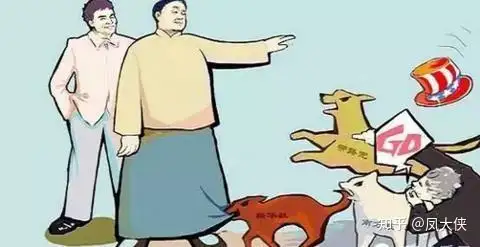
最近我发表了一些关于美国的文章和言论,有些网友把我称之为替美国洗地的“公知”,其实我觉得这是对我的一种抬举,我谈不上是一个知识分子,最多算一个知道分子,至于“公知”则就更谈不上了。这是关于我和“公知”之间的一些题外话。
自从“公知”这个概念被创造出来以后,它就一路带着许多非议,也是在这一年,《光明日报》发表了一篇针锋相对的文章《警惕“公共知识分子”思潮》说:
公共知识分子的所谓独立性和批判性,其实质是要通过宣扬所谓的知识自主性来争夺“话语权”,不利于国家的改革发展和稳定。
简言之这篇文章的主要论调就是对“公知”并没有很大的好感,这是由于“公知”的立场问题导致的。尽管“公知”们往往把自己自诩为“立场中立,客观批判”的一群人,但是很多时候他们会站在和社会、民众和国家的对立面对社会进行批判。
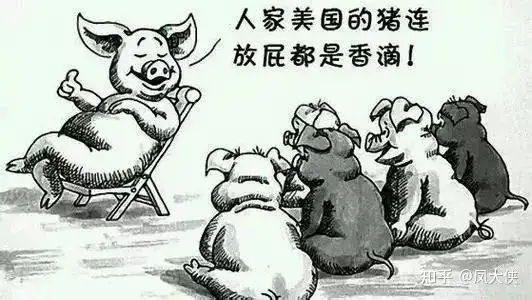
这就导致一个问题:你几乎不可能从“公知”的口中听到悦耳的评论。
这种传统主要是受到西方文化的影响,最早的“公共知识分子”这一概念起源于美国哲学家雅各比写的一本书《最后的知识分子》。 在这本书中,这位哲学家对知识分子提出了五个要求,呼吁这些知识分子要具备“有专业的知识素养,有宏大的世界视野,有正义的社会责任感,有参与改造社会的行动,有担当社会引领者的勇气和决心”;
这种“五有”最后也成为知识分子的追求,不过说中国的“公知”完全是受西方文化影响这话也不客观,因为中国的知识分子本身就有一种“治国平天下”的传统。只不过区别在于,在中国的传统文化中,“治国平天下”这种追求需要和政府进行密切的合作。
如果没有这种合作,那么就谈不上“治国平天下”。但这就造成,一些不愿合作的知识分子,为什么不愿合作?譬如性格原因,看不惯官场的做派啦、或者政治才能不足啦,政治理念不合啦等等诸如此类。既然这种合作关系不存在了,无法达成。
但是知识分子的一片“赤诚之心”还是要宣泄,在他们的心中还是有一种“以天下为己任”的情怀——西方的这种知识分子追求的独立很好地解开了中国知识分子的困惑,因为过去如果中国的知识分子不和政府合作的话,那么这往往意味着他们没有用武之地。
但是西方知识分子标榜的独立很好地为中国的知识分子提供了一种舞台,在他们无法通过合作彰显自己的价值的时候,那么一个独立的知识分子显然很好地化解了这种尴尬的处境。其缘由在于,过去独立的那群中国知识分子,我们一般把他们称之为名士、隐士。
他们虽然有名气,但是在社会上的影响力并不大,这是因为中国文化导致的缘故,使得人们没有认识到一群独立的知识分子也可以参与到社会和国家的建设中,这具体表现为言论监督和批判。但是在过去我们知道,封建时期对于言论控制得很厉害,所谓“清风不识字,何故乱翻书”。
名士和隐士们没有话语权,说错了话往往可能遭到封建统治者的打击,如魏晋名士这群知识分子就是因为政治上受到打压,最终才走上狷狂怪诞的道路。而我国随着改革开放以来,西方文化再次大量的涌入中国,同样的,西方那种知识分子的传统为这群人寻求到了一个合适的位置。
他们所标榜的独立深深的影响了游离在大众和政府之间的这群知识分子,让他们寻求到一个很恰当的位置。于是从那个时候开始,大量的知识分子开始踊跃发言,针对种种社会现象结合自己的文化知识进行大范围的批判。在过去那个信息堡垒依然还存在,教育程度普遍不高的年代。
公知们确实凭借他们的身份和名气,以及言论在社会中发挥了很大的影响,他们也确实在某一时期充当的社会的代言人,意见领袖,他们的言论也得到了很多民众的认可。
那么为什么这些“公知”们最后名声却变得越来越差呢?
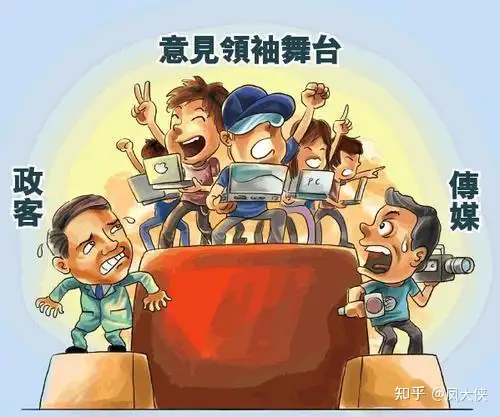
原因很简单,就是东方和西方的意识形态之争,中国的近现代知识分子受到西方文化的影响很深,对于本国文化基本保持着嗤之以鼻和不屑一顾的态度,这造成他们的批判往往喜欢拿西方来作为背景和比照对象,他们的逻辑因此固化为——我们怎么怎么做的不好,哪里哪里有问题——看看人家做的多么多么优秀,做的多么多么合理;
譬如前几个月争议非常大的那本日记,相信有识之士不难从其中看出这种逻辑,“自揭伤疤,自打耳光”成为了中国“公知”们惯用的逻辑,在“自揭伤疤,自打耳光”之后则自然是免不了要歌功颂德一番美国、日本的先进之处。
如果说在十年前这种逻辑和手段还比较受用,那么如今“公知”们如此不受待见的缘故在于——“自揭伤疤,自打耳光”没有问题,真正的问题在于“自揭伤疤,自打耳光”之后应该怎么做?很遗憾,中国的“公知”们对这一点向来没有说法。因此,他们真正令人厌恶的地方兴许并不在于他们总是高唱反调,心态自卑,而是批判之余却无法拿出建设性的意见和呼吁。
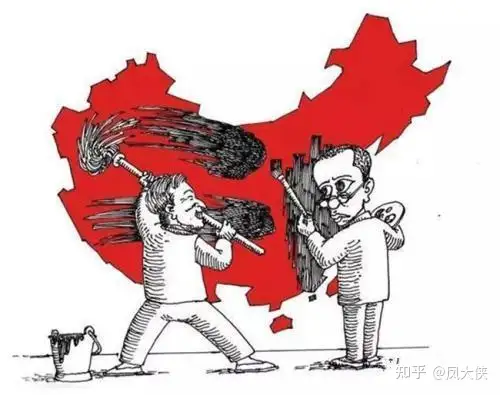
这也造成他们更像是一个尖酸刻薄的碎嘴老太婆,讥讽、嘲笑和不屑成为他们本能的一种态度和姿态,他们指出问题,却无法解决问题(当然,这不是他们的责任),但问题在于绝大部分公知连基本的呼吁和意见都不曾有。
他们似乎更习惯于站在他们的位置上进行简单的批判而已,但这往往造成,他们批判的姿态实际上更像是一种置身事外的漠视,他们的论调听起来也更像是嘲笑、讥讽。在某个阶段,他们的批判迎合了民众的心理而受到追捧,然而,随着中国的崛起,诸多“公知”依然深陷在这种思维和逻辑之中,这导致他们的论调听起来也就更加的刺耳了。
当然,刺耳并不是坏事,一个社会需要刺耳的声音,但问题在于,他们似乎又看不到社会的进步——这自然也就造成,他们继续批判的声音和姿态在现在看来更像是一场生意,而再不是所谓“公知”的担当和道义精神了。因为一个合格的知识分子,他既要勇于揭露社会的不公正,也要勇于承认社会取得进步,总是一贯的自我贬低,自打耳光,那么则其心可诛,其言可弃了。
另外,也确实有一部分“公知”从一开始就把这件事当成了生意来做。这就是为什么他们的名声越来越差的缘故,九零后以来的一代正把他们抛弃,他们作为一个特定年代的特殊产物,最终也将成为一个历史文物。


评论
发表评论