milestone for the Chinese nation沉住气,中国正在下一盘大棋!(深度好文)
This is an important indicator.
It will also be an important milestone for the Chinese nation.
A few days ago, the Central Financial and Economic Commission held a meeting to study an important issue:
How to promote common prosperity.
This is the 10th meeting held by the Finance and Economics Committee since 2018. Every time it is related to the national economy and the people's livelihood, and the historical trend.
The first meeting studied the three-year fight against poverty, and this time it studied how to promote common prosperity in a solid manner.
The Xinhua News Agency reported that day like this, and every word made people cry:
Common prosperity is the essential requirement of socialism and an important feature of Chinese-style modernization. We must adhere to the people-centered development philosophy and promote common prosperity through high-quality development.
Common prosperity has been the dream of the Chinese nation for thousands of years!
And today is finally pushed to reality by the torrent of history, we not only have to participate in this history, but also witness this history!
Shouldn't this be full of joy and laughter?
It's a pity that many people still don't know anything about such a major decision related to the fate of each of us, or have only a half-knowledge.
Today, I will try my best to learn with you.
01. The choice of history
Let's start with a little background.
Why is it now, not before or in the future to propose common prosperity?
Because we now have a basis in reality.
First, the three-year battle against poverty has been won, and the problem of absolute poverty has been eliminated historically.
Second, China will leap to become the world's largest consumer country, and the economic dual cycle pattern is beginning to show results.
With these two foundations, common prosperity will inevitably become our next goal.
This is a historical choice, but also a realistic choice.
At the beginning of the founding of the People's Republic of China, we also wanted to be prosperous together, but reality did not allow it, and we took some detours. After the reform and opening up, it was proposed to let some people get rich first, and then drive common prosperity.
After more than 40 years of hard work, some of them did get rich first, but many of them only cared about enjoying themselves, and forgot what to do after they got rich.
Therefore, this meeting emphasized one of the most important logics:
underlying logic. This logic is to shift from giving priority to growth to taking into account fairness.
Now that the country is rich, some people are rich, but it does not mean that the people are rich, but the whole is rich.
Common prosperity is to solve the problem of original intention and solve the problem of fairness.
Don't forget the original intention, never forget the end.
02. Spring River Plumbing Duck Prophet
Behind this major decision, there are two subtexts:
First, socialism has developed to a new stage, and the next goal is to go to 2035 and basically realize socialist modernization.
Poverty is not socialism, and a few people are rich is not socialism. Realizing common prosperity on the basis of a well-off life for the whole people, and finally moving towards a modern and powerful country, is socialism with Chinese characteristics.
Second, it shows that the high-level tolerance for the gap between the rich and the poor has reached its limit, which can be seen from the recent series of violent killing decisions.
Industries such as the Internet, real estate, online education, and entertainment for wealth creation have been hit continuously, and capital cleanup and monopoly have been dealt heavy blows one after another.
Suspend the merger of Huya and Douyu, cancel the exclusive copyright of Tencent Music, and even open the ecological closed loop between Ali and Tencent in the next step.
Obviously, common prosperity will be a historical period in the future, and the general manager of all policy policies is also a big game of the times.
If you can't even see this, even if the community doesn't abandon you, the times will.
Capital is the most sensitive. Just before the meeting, Japan's Softbank Masayoshi Son announced that he would no longer invest in China.
Is it because China is not good? He invested in Ali and made 1,000 times, and took all our money away.
But from now on, it is impossible for him to take advantage of a penny in China, and the era of getting money without bending over is gone forever!
Looking at China again, Tencent made two statements within 4 months, and previously donated 50 billion yuan for "social sustainable value innovation".
I can't help but admire Brother Ma's political acumen. As soon as the meeting ended, he immediately announced that he would donate another 50 billion yuan for people's livelihood.
Spring River Plumbing Duck Prophet, do you understand?
3. What is common prosperity
What is common prosperity?
The eighth meeting of the Central Finance and Economics Committee defined it as follows:
Common prosperity refers to the prosperity of all the people, the material and spiritual life of the people, not the prosperity of a few people, nor the uniform egalitarianism. We must promote common prosperity in stages.
So don't rush to be happy, see the logic clearly before getting excited.
First, it is the prosperity of the whole people, not the prosperity of a few people.
Poverty is not socialism, and a few people are rich is not socialism.
True socialism means that all the people are well-off, that they can be educated, get paid for their work, get medical care for their illness, get care for their old age, have a place to live, and a place to live in their hearts.
Why can some people make a lot of money in a day, and why can some rich people make 100 million in a day?
Ability and luck are part of it, and more are the dividends given to you by the times.
Second, common prosperity is both material and spiritual prosperity.
It is not difficult to understand that the top management is trying to rectify the game market and suppressing the entertainment industry.
From Zheng Shuang, to Wu Yifan, to Huo Zun, one popped up and banned the other. These actors who are pushed by capital in the foreground are enough for us to earn for a lifetime. Did they get rich first and lead us to get rich later?
The times treat you well, but what have you done for the times?
The third is not egalitarianism, but stages.
So don't be too happy too early, common prosperity is not about giving money, not egalitarianism, let alone killing the rich and helping the poor.
The premise of common prosperity is to get rich through hard work and operate legally.
Since ancient times, lazy people have been outcasts of society, and strugglers are the protagonists of the times.
Although there is a guarantee mechanism to cover the bottom line, no one will value it.
4. About three distributions
Easier said than done.
The biggest problem facing common prosperity is:
Income Distribution.
This problem is not a current problem, nor is it a problem in China.
It is a universal problem in any historical period and under any national system.
But history has handed over this major issue to China and to the Chinese Communist Party.
Regarding income distribution, the meeting described it as follows:
Promote common prosperity in high-quality development, correctly handle the relationship between efficiency and fairness, and build a basic institutional arrangement for coordination and matching of primary distribution, redistribution, and tertiary distribution.
What is an allocation?
That is, you get paid for your work, you get wages when you go to work, you earn the difference in business, and craftsmen earn money for their craftsmanship.
This is the basic structure of the social economy, and most people live like this.
But reincarnation is a technical job, and occupations are divided into high and low. Everyone has different resources, abilities, and luck.
There is nothing absolutely fair in this world. When the window for young people is getting smaller and smaller, the gap between rich and poor is getting bigger and bigger.
Then the government will lead the secondary distribution.
The main form of expression is public investment. The money collected through taxes is returned to the people through social security, medical insurance, unemployment insurance, and land loss insurance.
The government uses the adjustment mechanism to redistribute the national income, which is actually the wooden barrel theory, which guarantees the bottom line.
However, secondary distribution cannot solve the problem of the gap between the rich and the poor. Instead, it allows capital to hijack the economy and even politics.
For example, if ants are allowed to go public, how many billionaires will be created in batches?
Will these billionaires find out with conscience and take the initiative to help the social animals of Tiantian 996?
As a result, the economy has formed a vicious circle of "the rich get richer and the poor get poorer".
Not only do young people not want to have a third child, they simply want to "lie down" and let it go.
Therefore, narrowing the gap between rich and poor and reducing the Gini coefficient is a top priority.
Then, the three allocations come roaring along with the pulse of the times.
Clean up unreasonable income, put an end to illegal income, and encourage high-income groups and enterprises to give back to society.
In simple terms, the biggest difference between the three allocations is:
A distribution is market-led,
Secondary distribution is government regulation,
Three allocations are morally driven.
05. Strike hard to promote fairness
So, what problem does the three allocations solve?
The answer is: fair!
During the epidemic last year, two figures were disclosed for the first time. One was that 600 million people had a monthly income of less than 1,000 yuan, and 800 million people had a monthly income of only 2,000 yuan.
Of course, there is one thing to say, the elderly and children who do not generate income are also averaged here.
But don't suffer from scarcity but inequality. Our goal is to build an olive-shaped distribution structure with a big middle and small ends, so the middle-income group must be expanded to at least 800 million.
These two sets of data are clearly far from each other.
how to solve this problem? The best way to do this is to distribute three times.
Simply put, it is taxing the rich and subsidizing the poor.
Property tax, inheritance tax, what should come will come soon.
You can chew on three signals:
First, crack down on online credit and private usury, and control the rapid growth of housing prices.
So you can see that some real estate companies can't hold on, and their debt ratios have skyrocketed.
This is to address resource fairness.
Second, the platform economy has been severely beaten, and the myth of Internet wealth creation has come to an end.
Starting with the anti-monopoly attack on Ali, Meituan, Didi, and 58 were investigated successively. Ant dreamed of breaking the Golden Bund, and the road to listing in the United States was also cut off.
This is to address capital equity.
Third, the cultural industry has been severely punished, and the online education and entertainment industry has entered a cold winter.
Online education has plummeted by 90% from the peak period when it organized a group to go overseas, and now it has plummeted by 90%, and it is almost impossible to turn it around. Off-campus training is also trembling.
This is to address educational equity.
And with the crackdown on fandom culture, Zheng Shuang, Wu Yifan, Huo Zun and other top celebrities were banned, the entertainment industry has already become a frightened bird, and a group of bigwigs lined up to Korgos to cancel the company.
All of this can be described as brutal.
It is both fair and reshaping civilization.
06. Dreams come true
For the three assignments, the presentation of the meeting is:
Based on voluntariness, the distribution of social resources and social wealth in the form of charitable public welfare such as fundraising, voluntary donations and funding is a beneficial supplement to the initial distribution and redistribution.
can't read? playing dumb? Then make it clear:
It is necessary to strengthen the regulation and regulation of high income, protect legal income according to law, reasonably adjust excessive high income, and encourage high-income groups and enterprises to give more to society.
Keywords: Charity!
In July this year, Zhejiang became a demonstration zone for common prosperity.
I realized then that this signal was a big deal.
In the implementation plan issued by Zhejiang, it is specifically proposed to create "Zhejiang of good deeds".
including but not limited to:
——Establish and improve the incentive mechanism to repay the society;
——Implement the preferential tax policies for public welfare donations, and improve the charity reward system;
——Establish a "beehive-style" charity mechanism for Zheshang merchants, and unblock the channels for all aspects of society to participate in charity and social assistance;
——Encourage and guide high-income groups and entrepreneurs to be kind and caring for the society, set up social public welfare entities, and participate in public welfare and charitable undertakings;
——Implement the public welfare and charity first plan of "respecting the good and doing good, helping the poor and helping the poor", vigorously develop charitable trusts, and provide policy support for charitable trusts;
—— Carry forward the modern charity concept of "everyone's charity", and create a nationwide charity activity represented by "one-day charity donation".
Obviously, a group of entrepreneurs have long foresighted.
Huang Zheng, who has stepped down as the CEO of Pinduoduo, became the first charity in China with a donation of 12 billion yuan.
And Zhang Yiming of ByteDance also expressed his strong desire to devote himself to public welfare when he left office.
As soon as the meeting ended, Tencent quickly expressed its position to donate another 50 billion. I believe many companies will follow up quickly.
If it is too late at this time, then the people will abandon you if the times do not eliminate you.
More than 40 years ago, the country said that "get rich first and then get rich later",
We always thought it was just talk,
I never thought that my dream would come true so soon.
And we will witness it ourselves!
Socialism will not fail China,
No one will be left behind!
Zhang Weiwei, dean of the China Research Institute of Fudan University, interpreted the 2020 government work report on CCTV's "On the Cloud" program. Observer.com has been authorized by Professor Zhang to sort out the interview recordings. The following is the full text of the interview. CCTV: Professor Zhang, hello. I saw a sign hanging on the wall behind you, "See the micro to know the book", so today's government work report is very important, what "micro" did you see?
Zhang Weiwei: I find today's report very interesting. It is relatively shorter than in the past. This may reflect the special circumstances of the epidemic. The entire session has been shortened, and the length of the report has also been shortened. However, this report is very "real". In the words of our common people, there are a lot of dry goods, and the policies are very specific, especially when it comes to "protecting employment and people's livelihood". A few specific figures, the government has to live a tight life, the government's non-rigid expenditures will be reduced by 50%, and special anti-epidemic bonds will be issued, even specific to urban "vegetable baskets", rural "rice bags", and the installation of elevators in urban communities, etc. , so there are a lot of dry goods.
Another special place is that it is not mentioned this time.
GDP growth target, which is rare, is also a new change in this report. Premier Li also mentioned in the report that this is due to too many uncertainties in the external environment. If we take a closer look at the forced resumption of work and production in the United States, the current death rate of the new crown in the United States is still high. Under such circumstances, even American medical experts believe that there may be a danger of a second outbreak. time may be more serious. Furthermore, the United States is implementing quantitative easing, and the outside world is very concerned about whether it will lead to another financial crisis. Therefore, when the external market is full of uncertainties, we don't necessarily have to set a hard target first.
On the "minister channel" that day, He Lifeng, director of the National Development and Reform Commission, also introduced that our current indicator system is different from the past. There are 25 indicators for a well-off society in an all-round way, forming an indicator system that includes restrictive indicators, such as unit Energy consumption, greenhouse gas emissions per unit of carbon dioxide, these have hard indicators. We generally call it "predictive indicators" such as GDP growth rate. This means that we create favorable conditions such as the market environment and strive to achieve this goal.
I am also very concerned about the National People's Congress's review of Hong Kong's laws and regulations to safeguard national security. This is national-level legislation. I think this issue is very important to ensure the establishment of a legal system and implementation mechanism for safeguarding national security in Hong Kong. CCTV: You mentioned many aspects just now, and I would like to focus on two of them. One is about GDP. According to your observation, has the international community paid attention to whether China's GDP has set a clear target? What do you think the international community will say about this? Zhang Weiwei: There are always some voices in the international community who think that China's economic growth this year may have some problems, etc., but the habit of the Western media is to always think in a negative direction when facing China. In fact, looking at the whole world, no matter how many challenges we have, China is relatively better than others. We took the lead in getting out of the epidemic and were able to hold the National People's Congress. Today's National People's Congress has more than 2,800 deputies at the same time. , Such a large-scale conference can only be held in China now.
This in itself is a kind of confidence and self-confidence. We have come out of the epidemic, and our economic life, social life, and political life are all normalizing. This is normal prevention and control, and this state is very good. Therefore, I don’t think we should care about what the West says. They will definitely have more comments tomorrow and the day after tomorrow. We must have strong concentration. Many of the current practices are very realistic. Maybe it will be okay in three to five months. Come up with more detailed development indicators. CCTV: Professor Zhang feels that we should calm down in the face of some short-term comments from Western media. However, everyone will still pay attention to the world discourse system. If it is in the hands of foreign media, especially some American media, how should the Chinese story be expressed? How should our goal setting be told to the people of the world? Zhang Weiwei: We have to be very, very calm. For Western discourse, I still did some research. Now the West still has a few advantages in some aspects, or the few cards left in the West's hands, and these are sometimes paper tigers. As long as you dare to show your sword, you can expose the loopholes in their words. I have always said that we must deconstruct Western discourse in a realistic manner, and construct Chinese discourse in a realistic manner. After construction, we can tell Chinese stories well.
For example, in this epidemic, ordinary Chinese people are also participating in the construction of Chinese discourse. Most people now use smartphones. Ordinary people, overseas students, overseas Chinese, and even foreigners use Chinese eyes and Chinese standards to look at the anti-epidemic efforts of countries around the world and compare them, which greatly strengthens our people’s ability to fight against the epidemic. self-confidence. We found that every Chinese understands that human life is at stake and puts people's lives first. Our policy is people-centered. This will not be controversial in Chinese society, but it is not like this in the West.
Red represents the status of the diagnosis. The screenshot is from the New Crown Data Center of Johns Hopkins University. A whole set of methods, but the West puts economic interests and commercial interests first, and adopts their approach. As a result, the "hardest hit areas" in Western countries are all the most economically developed sectors, which just proves that their capital interests are very short-sighted. . For example, New York is one of the worst areas. I made a rough calculation. If the latest statistics are used as the basis, comparing the number of confirmed cases in Hubei, the hardest-hit area in China, with New York State, Hubei is 6 times safer than New York State. ; Judging by the absolute number of deaths from the epidemic, China is at least 20 times safer than the United States. I think behind this is the contest between different systems, and at the same time, it can be told as a good Chinese story and spread. CCTV: But while telling Chinese stories, we are indeed facing some international challenges, such as anti-globalization, and there is even more extreme de-Sinicization. What do you think of these tendencies? How should we respond? Zhang Weiwei: After the outbreak of the epidemic, I think all countries, including China, will have some thoughts on how to take the next step in globalization. Many countries cannot produce masks, protective clothing, etc. by themselves. Maybe after the epidemic, they will ask their domestic companies to start restoring some of their basic production capacity in their own country. This is entirely possible and understandable to some extent.
But I think "de-Sinicization" is very difficult, mainly because we have the world's most complete industrial chain and the world's largest consumer market. This epidemic prevention and control also proves that China's government is world-class. Of course, although we still have our own shortcomings and shortcomings, we really can stand the comparison of the world. Furthermore, the overall quality of the Chinese people is also quite high. In the past, it was always said that the quality of the Chinese people was not good, but in this epidemic, we have seen that this is by no means the case. On the contrary, the quality of many Western nations is worrying. Combining all these together, it is very difficult to "de-Sinicize".
Let me give you an example. The U.S. government has been urging U.S. companies to relocate to the U.S., but so far, all surveys have shown that the vast majority, 75%-80%, of U.S. companies are unwilling to go back because they cannot find a similar Such a good place in China. It is often said that the rise of China is the integration of the four industrial revolutions. We can produce everything from the simplest textile industry and garment manufacturing to the current 5G and artificial intelligence. To move American industries back is equivalent to making tigers change their meat-eating nature and become vegetarians. Products from the first industrial revolution, such as the textile industry and the coal industry, have to be restored. This cost is extremely high, and the price of goods in the United States may increase by more than three to five times.
White House Chief Economic Advisor Larry Kudlow advocates the relocation of American companies. The screenshot is from Fox CCTV: If the US government is determined to do this and move the industrial chain back, what should China do? Zhang Weiwei: I think, first of all, we can wait a little longer and be more unrestrained. Different capital interest groups in the United States will fight. For example, nearly 80% of the U.S. GDP is now the service industry. If the manufacturing industry is moved back, the profits of the service industry will be greatly reduced. The manufacturing industry will indeed fight with the service industry, and it will take a long time. The United States can’t do whatever the government says. The capital forces behind the struggle of various interest groups, the financial sector is more supportive of globalization, and the traditional manufacturing sector is now somewhat anti-globalization. The two sides will fight very fiercely. So, we can wait and see. I personally think that "de-Sinicization" is very difficult, even if it is done, it will take a long time, not to mention that China is now the world's largest consumer market, foreign capital is flowing to China, and the speed at which we attract foreign investment is accelerating. CCTV: You mentioned that we will wait and see, so what can we do during this period to cultivate our inner strength? Zhang Weiwei: It is inevitable to consolidate the industrial chain. And looking at it now, I estimate that a new situation may emerge in globalization. One situation may be the strengthening of regionalization, that is, the distance between many multinational productions will be shortened. You will find that during this epidemic, our cooperation with Southeast Asia has been very good, and the cooperation between China, Japan and South Korea is also relatively good, especially the cooperation with South Korea is quite good. This is very beneficial to the integration of East Asia after the epidemic, and it is also in line with our The regional characteristics just mentioned. Second, it can also be seen from the struggle of the WHO that most countries support China, which is very important. China is now the largest trading nation of more than 130 countries. If the United States really wants to separate from China, the effect will be that the world will separate from the United States. CCTV: I mentioned a lot of issues about international relations. Did you read any relevant information in this government work report? Zhang Weiwei: There is not much focus in this report. I think we can still build a community with a shared future for mankind in the spirit of win-win cooperation, including of course the building of a community of human health and health mentioned now.
For example, at this World Health Organization conference, the establishment of a coordination base for UN aid supplies in China, as well as some aid projects, etc., are some steps in building a community with a shared future for mankind. With the outbreak of this epidemic, we found that although we have not yet reached the realm of a community of shared future for mankind, the feeling of a community of shared future in some form has emerged. Many countries and many ordinary people feel that everyone is actually connected. After the interruption, the meeting cannot be held, and they cannot visit each other, which is very inconvenient, because many issues still need to be discussed and resolved together. The feeling is stronger than ever that some form of community of common destiny has begun to form, consciously or not. The globalization proposed by China is a new type of globalization, and the Belt and Road Initiative as a representative of extensive consultation, joint construction, sharing, and win-win cooperation has a very good prospect. CCTV: You mentioned the community just now, making everyone feel that our destiny is so closely linked, but at the same time isolationism has become a very popular term. How do you view this contradiction? Zhang Weiwei: This is a problem caused by the Western system. In the past few decades of globalization, multinational corporations like the West have made a lot of money, but their domestic distribution mechanism is very unreasonable, resulting in the excess profits earned by multinational corporations, which cannot be shared by the common people in the West, almost without exception; In the vast majority of Western countries, the real income of most people has not increased in the past 20 years or as many as 30 years, which has led to anti-globalization, anti-globalization, populism in Western society, and finally formed a vicious circle . This is a huge challenge that the West must face, or in other words, the so-called democratic system in the West is facing a huge challenge. More and more populists will be unable to implement long-term policies that are beneficial to their own country and the world.
Today, ordinary Chinese people think that what the U.S. government says and the policies it introduces are ridiculous. Why is the level of U.S. leaders so low? That’s why the Chinese people’s mentality is particularly good this time. CCTV: You mentioned the concept of the West. In an interview with Professor Zheng Yongnian, he made an assertion that the epidemic shows that the West is no longer a unified West. What do you think? Zhang Weiwei: In fact, in the West, we generally refer to Europe and the United States. The contradiction between Europe and the United States has always existed, and they cannot be united. For example, from the perspective of the Americans, the euro alone has brought so much trouble to the United States, so they always try to destroy the euro and the European Union.
After President Trump came to power, he publicly stated that the United States puts the United States first, which aroused widespread resentment among Europeans. Before the epidemic, I held a meeting in Davos, Switzerland. In Europe, as long as you tell jokes about Trump, the common people and intellectuals are very happy. According to the latest polls, in Germany and Italy, the favorable opinion of the United States has dropped sharply, even dropping by more than half. This is the "incompetent general" of the United States, which caused the "exhausted army". Now the allies of the United States are not to mention falling apart for the time being, at least the centrifugal force is getting stronger and stronger. CCTV: In fact, we look at it from the perspective of an ordinary person. It seems normal for you to think about America first or Britain first, but why does it seem different when you shout this slogan? Zhang Weiwei: The priority of the United States has a specific meaning, not a general meaning. It is not a win-win situation, but "I win and you lose". This will cause trouble, just like grabbing supplies from other countries, masks, ventilators, etc. This is extremely ridiculous. Just like Trump announced the ban on European flights to the United States, he did not even discuss with the EU, and all bans were banned. This lacks basic common sense. Frankly speaking, the minds of this term of American leaders are not so mature, a wave of paranoia. Last year, the Sino-US trade war intensified. Some people were quite afraid. I said there is no need to be afraid. The United States is really shooting itself with stones and will definitely fail. We study political science, the process of decision-making and the quality of decision-making. The quality and process of decision-making in the United States are too low. It is polite to say that they are third-rate, so many policies are bound to fail. CCTV: This year is the election year in the United States. You said that their policies are bound to fail. Will there be any changes or adjustments at this time of the election? Zhang Weiwei: Trump's campaign is overwhelming now. He is like a "giant baby". He thinks he is very smart, and outsiders can see clearly. For example, when sending money to Americans, he must be listed on the check The name, such small tricks are actually for the election.
Now it seems that he is determined to throw the pot away, because the prevention and control of the epidemic is indeed too bad, and he is almost defeated. But he wanted to throw the blame away, but others didn't buy it because there were so many facts out there. Today I saw a research report released by Columbia University saying that if the U.S. government could announce social distancing one week earlier, it could have reduced more than 30,000 deaths, and if it could have reduced more than 50,000 deaths two weeks earlier, they put these The situation is quantified. So Trump can do this, but I am afraid that most discerning people in the United States will see it.CCTV: Speaking of this year's government work report, one of the key words is poverty alleviation. What do you think of this year's task of poverty alleviation? What's the point? Zhang Weiwei: First of all, we have done a good job in poverty alleviation. I have traveled to more than 70 developing countries, and there is a comparison. Our poverty alleviation standards are quite high. "Two guarantees and three guarantees", no worries about food and clothing, education, housing, and medical care are guaranteed. This is a very high level. I have seen some poor households in China. If they were placed in India, Egypt, and Nigeria, they could all be considered middle class. To be honest, this is what I saw. Today I read that the incidence of poverty this year is 0.6, which is already very low; generally it is less than 3% in the United Nations system, even if poverty alleviation has been completed. But our current requirement is to get rid of poverty. We already have very specific policies, and the remaining 0.6 can be completed. The main difficulty at present is that some poor places are in remote mountainous areas, and the cost of poverty alleviation is relatively high, otherwise it would be easier to solve. But if it can be resolved, it will be a great event in human history.
On April 15, 2019, President Xi Jinping inspected and investigated in Chongqing. Picture from CCTV CCTV: During the interview, many netizens left messages for us. Some netizens mentioned a concept. He felt that poverty alleviation or the degree of poverty is a dynamic feeling. What should we do after this year is completed? How to solve the problem of returning to poverty? Zhang Weiwei: We have mentioned it several times, and Chairman Xi also said that after solving extreme poverty this time, the next step is to solve relative poverty. Then relative poverty is a new challenge and we will move forward step by step.
I always feel that everything lies in international comparison. The governor of New York State and the mayor of New York City said the day before yesterday that one out of every five children in New York is now starving. Why is it so difficult for American schools to suspend classes? Because they have to take care of the poor children's lunch. What to do with lunch after suspending classes becomes a huge challenge, and many children will go hungry.
I did a statistic, comparing it directly with the United States, not with developing countries, (according to Princeton University economist Angus
Deaton's research) There are more than 5.3 million people in the United States who live on less than $4 a day, and $4 includes government subsidies. This is the data two years ago, and now it will only increase and will not decrease; there are at least 550,000 homeless people Those who return, this is also the data of one or two years ago. China's poverty alleviation standard exceeds it no matter what. As long as "two guarantees and three guarantees" are achieved, it will surpass the 6 million people in the United States.
Therefore, we must first affirm our own achievements, and then confidently move forward step by step on this basis, because our goal is common prosperity, which is a great goal. CCTV: In the decisive year of poverty alleviation, we encountered the challenge of the epidemic, and the overall economic development was also challenged. Our director told me that you mentioned a sentence in the two sessions last year, saying that China is completing the transformation of old and new growth drivers and is in the next stage. Good chess, great chess, but now it seems that the chess game has been disrupted, how should the economy be adjusted, are there any specific suggestions? Zhang Weiwei: The "big chess" I mentioned means that we have long-term goals, such as basically realizing modernization by 2035, building a powerful socialist country by 2050, and completing the goal of great national rejuvenation. The "good chess" I mentioned means that we have a whole set of methods, such as the conversion of old and new kinetic energy. These have not changed and will not change. It is just that some aspects may be accelerated now; according to the deterioration of the external environment, we are actually accelerating the conversion of old and new kinetic energy. It is very notable that new infrastructure, artificial intelligence, big data centers, especially 5G, a large amount of investment from national funds, and private investment are also priority areas. This can be called a big leap from the third industrial revolution to the fourth industrial revolution. . Strictly speaking, only China and the United States can do it in the world, and China is not behind at all, and is even a bit ahead of the curve in general. Now China's mobile payment is more than 70 times that of the United States, and this is the data half a year ago. CCTV: There must be many young people, including entrepreneurs, who are watching our live broadcast. You just mentioned new infrastructure and the transformation of old and new growth drivers. Do you have any suggestions for them? Are there any opportunities that can be seized? Zhang Weiwei: I always said in the past that China is a civilized country, the size of which is the sum of 100 ordinary European countries. It is a world itself. With such a large population, world-class infrastructure and a very stable political environment, There must be a lot of opportunities, as long as you ponder with your heart, study with your heart, and try with your heart, there is no other place in the world that has more opportunities than China. CCTV: But you are indeed facing a lot of challenges now, such as closing stores and going bankrupt, how do you deal with it? Zhang Weiwei: I remember Deng Xiaoping said this in the 1980s. At that time, he was also facing Western sanctions. Deng Xiaoping said that he should be good at defending himself. When the external situation is not very good or when he encounters challenges, he should try his best to protect the basic market. I quite agree with Ma Yun’s words—today is bad, tomorrow will be bad, and the day after tomorrow will be wonderful, but many people will die tomorrow night, so sometimes we just have to stick to it. There is a sentence in the work report of the Prime Minister today that is very good. Wonderful, keep the green hills and win the future. Be good at staying humble and develop new opportunities. CCTV: One last question. Many of our netizens are young people who are back waves. After listening to the government work report today, what would you like to say to the back waves? Zhang Weiwei: You have caught up with the good times. This is the best time, the best time since modern Chinese history. This sudden outbreak is really like a world war. The development models, political and economic systems of all countries in the world compete on the same stage, and China is the best. Yesterday, a reporter from the BBC interviewed me. He said that Taiwan is doing better than the mainland. I said how is it possible? Look at most provinces in the mainland are doing better than Taiwan. Opposite Taiwan is Fujian Province. The overall epidemic prevention and control in Fujian Province Much better than Taiwan. Because China is a super-large country, comparing Fujian Province with Taiwan Province, it is easier to find the feeling in this way.
And judging from big data, the "post-90s", "post-95s" and even "post-00s" can be said to be the most confident generation in modern Chinese history. People's self-confidence is very important. We all know that when we study, even if your grades are not very good now, if you are not confident, your grades will never improve. Confidence and hard work, stupid birds fly first, and finally get up. It's as simple as that, so you have to be strong . I believe that not only China, but the whole world is your stage. Think about it, in another 10 or 15 years, China will become the largest economy in the world. - over -
2020年疫情爆发以来,美国没有鼎力相助,而是选择了落井下石。美国的做法令人不耻,但绝对是有缘由的。
看问题要看本质,本文将从更深的层次、更广的全球视角去分析中美关系。
看完本文,你将弄清美国的真实意图、读懂中国正在布局的这一盘世纪大棋!
中美关系,是当今世界最主要的国际关系,没有之一!
中美两国如何相处,决定了世界的格局、走势,但这取决于双方如何定位彼此的关系。
二战之后,中美之间一直维持着一个大体上的平衡,即使是朝鲜战争这种双方直接交战,都没有延伸到对方本土。
也正是这种维持了数十年的”和平状态“,维持的越久,矛盾就越多。
时间到了2014年,中国的GDP首次达到了美国GDP的60%,2018年达到约66%,而且占比逐年上升,中国的GDP增速有目共睹!
60%是啥?
这可是美国一贯的警戒线!
上世纪,美国对对手有两次出手,都是因为这个60%。
第一次是苏联的GDP一度超过美国的60%,美国对苏联加大遏制,导致其最终解体。
第二次是日本GDP一度超过美国的60%,引起美国警觉,逼迫日本签署“广场协议”、日元升值,日本陷入“失去的二十年”。
也正因为这个60%,美国近几年开始对中国频频发难!
这绝非偶然,而是两国宏观态势长期演进的结果,所谓“蓄之既久,其发必速”,有“势”所必然之理。
01
看似美好的“中美夫妻论”
二战后的美国,靠着美元霸权、军事霸权开始在全球薅“羊毛”:只要开动印钞机,便可以用纸来换取别人的真实财富。如此低成本、高效率的交易,使得美国在这一游戏规则下获得了最大的利益。
而在这一体系下,中国此前无疑贡献了最多的“羊毛”——成本低廉,体量巨大,制造业发达,贸易门类齐全,更重要的是,中国在诸多高端产品、服务领域的差距,使得占有相对或绝对优势的美国天然成为首要供应方,从而获取了最为丰厚的垄断利润。
似乎,中美在这样的体系下有着各自的角色,分工而互补,也算各取所需,合作平顺。
中国相当于一个吃苦耐劳、踏实能干的打工仔,为美国这个老板创造了巨大的价值,而老板则从丰厚的收益中拿出一些作为薪水。打工仔生活有所改善的同时,省吃俭用,渐渐有了点积蓄,劳资双方一段时间内相安无事——这就是过去二十年间中美关系之所以较为和谐的本质。因此有了“中美蜜月期”、“中美国”等和谐说法。
但显而易见,这种看似平和的框架下掩盖着极端的不平等,我们不能总是拿8亿件衬衫换一架波音飞机,因此我们有了C919。
中国不可能一直为他人作嫁衣,而美国作为“既得利益者”,肯定极力维护自身少劳多得的地位,矛盾因此而来。
一句话,“打工者”有了余钱,总要自立门户的。美国人肯定也清楚这一点,一厢情愿的“中美夫妻论”终有难以为继的一天。
百年未有之大变局
对中国来说,一个国家要维护人民利益,必须对内爱民与对外反霸双管齐下,只有反霸才能拿回本就属于中国人民创造的财富。
为什么这么说?
中国财富生产能力,2010年就超过了美国,2018年更是超过了美日德之总和。创造这么多社会财富,但以GDP一衡量,我们就变成了第二,财富到哪里去了?被美国通过金融霸权卷跑了!
卷跑了多少?记得以前与群友讨论时,参照华为做过评估。如果中国不被国际金融寡头盘剥,中国人均年GDP起码在30至50万人民币之间。现在多少?只有区区几万!
一边吸食中国人民的劳动血汗一边嚷嚷自己亏本了,这就是西方垄断资本的嘴脸。所谓贸易战,讨论的只不过是吸多点吸少点而已。
中国要做的,就是通过终结美国金融霸权,改变世界旧体系,建立国际新规则,把被美国利用旧规则拿跑的那部分夺回来,造福中国人民!不打破美国霸权,中国的蛋糕做得再大,中国人民的基本福利也得不到保障或者保障不充分。
可以说,中国是自愿加入这一不平等的以西方(以美国为首)为主导的世界政治经济体系的(如WTO),尽管“学费”昂贵,却是当时“两害相权取其轻”的最优选项。但“赎买”只是手段,“发展”才是目的,一旦达到两者“倒挂”的临界点,中国必然会加以调整,此前的格局便会为之一变。
现在,就是中美关系转变的历史性关口。
网上曾有人戏言,如果将百年前和今天作一比较,会发现其实历史在原地踏步。1900年,打进北京的八国联军几乎囊括了当时世界上所谓的“列强”——
英、俄、日、法、德、美、意、奥;而如今,“G7”、“G8”集团则由西方几大工业国组成,除了“伪列强”奥匈帝国早已灰飞烟灭,为“后起之秀”加拿大所取代外(实则加拿大当年就内嵌于“大英帝国”之中),两份名单竟惊人地一致——世界的权力与财富格局确实有着强大的惯性与顽固的承袭。
而在这一产业、财富、力量的重新布局中,最大的变量就是以中、印为代表的新兴市场国家,它们携自身人口、土地、文化尤其是立国规模宏大之力,吸纳西方数百年科学技术积淀之功,一跃而起,将全球产业链条、要素市场、价值分工作了极大的重构,使得世界治理秩序、运转逻辑、权力架构有了迥异于百年前的样貌。
今天的中国是有力量的,这点切不可妄自菲薄。
如上文所述,中国多年打工,渐有积蓄,集聚资本的同时,对于美国全球薅羊毛的顶层设计与运作技巧也了然于胸:既然美国人是靠金融、军事、科技这三根支柱来构筑自身的超然地位,中国便在这几方面着力,依样画葫芦也就是了。
近年来,中国在内外方面大政频出,令人颇有目不暇给之感,但如果清楚了上述逻辑,便会发现实际上都是按既定“剧本”来上戏码,太阳底下的任何事都不是无缘无故的。
金融方面:成立亚投行,推动“一带一路”沿线国家的双边本币结算,在英国伦敦设立人民币离岸清算中心,在上海、香港交易所陆续推出人民币黄金、人民币原油、人民币铁矿石等,还有大力发展区块链技术,这些显然都是在推进人民币国际化的步伐,以获取核心资源的定价话语权,实质即是将人民币“资本化”,为未来获取国外资本收益布局。
军事方面:航母接连下水(近期有未经核实的报道说第三艘航母已在建造),大造军舰,强力推进南海岛礁建设,又推出改革开放以来最大规模的军改,建国70周年大阅兵高调展示东风41、东风17等等,这些整军备武之举,既有战略震慑的宏观考虑,也有保障未来投资安全、交通要道的现实需要,更有为人民币国际信用“赋权”的终极目标。
科技产业方面:科研经费投入逐年攀升,2015年1.4万亿,2016年1.57万亿, 2017年1.76万亿,投入之巨,已仅次于美国;根据中国科学院和科睿唯安共同发布的《2017研究前沿》分析报告,在10个大学科领域里,美国表现突出,中国稳居第2,而在143个研究前沿中,中国取得了24个前沿的领跑位置,美国则领跑87个前沿的发展。
差距虽然很大,但中国追赶速度却非常之快;而在贸易战中被热炒的“中国制造2025”,则聚焦智能制造、工业强基、高端装备创新等五大工程,以及新一代信息技术产业、5G、高档数控机床和机器人、航空航天装备等十大领域,直指世界制造强国的目标——尽管有人不以为然,嗤之为“口号”,但已足以令西方不安。
还有文化价值方面:“中国方案”不断推向世界,不仅“自信”,还要“他信”。目前,中国对第三世界的吸引力与日俱增”。中国的发展速度与成就附着着相应的价值观,向境外扩展,不可避免地在空间上对西方意识形态形成一定的挤压。
可以说,中国体量的快速增长,使得美国在各个方面都感受到了事实上的压力,这里面既有中国实现“伟大复兴”的强烈主观意愿在鼓舞,也有社会经济发展的客观规律在驱动。
“人民对美好生活的向往,就是我们的奋斗目标”——这既是中国政治价值观层面的官方宣言,也内蕴着社会经济发展的现实要求。
四十年的改革开放,使得中国面貌发生了巨大变化,富裕阶层不断扩容,生活水平极大提高,但不可否认的是,贫富、城乡、东西部三大分化加剧,社会矛盾累积,且不时有尖锐化表象。
而要缓解乃至消弭社会矛盾,在注重公平正义、做好存量财富分配的同时,获取增量财富、把蛋糕做大就是更为迫切的需求。
由此,将政治、经济乃至军事的触角伸向全球,在更大空间内获取资源,取得收益,保障安全,成为了中国继续发展的必然选择。
而中国的继续发展,将会极大冲击现状:产业链条分工的修正与再构,资源产品的流向改造,全球收益的重新分配,力量分布的转移,等等。总之一句话,会带来全球政治经济秩序的剧变——如果不是颠覆的话。
“卧榻之侧岂容他人鼾睡”,作为“既得利益者”,美国与西方当然会就此作出评估并寻找因应之道的。
这便是“百年未有之大变局”的来由。
中国要变,美国要变,世界要变!
03
美国的思路与反应
中国的高速发展,令既成的权力财富布局与利益分配格局感到了前所未有的压力,也使得中美关系也达到了一种“临界点”。
现在论及中美争端,无论是所谓的专家,还是网上的吃瓜群众,动辄就端出意识形态、价值文明、法律体系、民主威权这套“高大上”的话语来加以诠释论证,走得远的,甚至对中国现状口诛笔伐、堕入国内如何如何不堪的情绪宣泄中。
中国现阶段,固然问题多多,一味沉溺于“厉害了我的国”之类的虚火上升当然贻笑大方;但看不到进步,以为处于暗无天日之中,企盼美帝“王师”救自己于水火,那更是一厢情愿的单相思。
显而易见,美国现阶段的最大国家利益,便是如何应对中国的“战略挑战”甚至是“威胁”。
2010年5月,奥巴马在白宫接受澳大利亚电视采访时发出了严厉警告:
如果10多亿中国人口也过上与美国和澳大利亚同样的生活,那将是人类的悲剧和灾难,地球根本承受不了。
让我们看一下现实。
目前全球约70亿人口,包括美国在内的发达国家共8亿人,如果扣除发达国家贫困人口,加上发展中国家的富裕人群,全球过上舒适生活的人满打满算也不会超过10亿——1:7,这就是目前世界存量蛋糕的分配现状。
另外,就世界GDP增速而言:
20世纪60年代增速是5.32%; 70年代是3.77%; 80年代是3.16%(WB)或者3.30%(IMF); 90年代是2.81%或2.86%; 21世纪00年代是2.59%或2.52%; 10年代则是2.45%或2.55%。
再看看二战后挤进发达国家/地区行列的,它们抢得了一些奶酪,其实这些国家或地区非常集中:亚洲四小龙。而这几个经济体的特点也相当一致:面积小、体量小、人口少,最大的韩国也不过5000万人,而最小的新加坡只是个微型城市经济体。从本质上说,二战后经济的增量,其实也只能允许这么点人口“走进现代”。
从这个角度而言,让14亿人中国人摆脱短缺经济,享有现代生活,确是前无古人的伟大理想与事业,这毫不夸张。
然而,这一踏踏实实、稳步推进的伟大理想,足以让既得利益者“恐怖”!因为世界的大蛋糕,中国在拿走越来越多的份额。
2009—2015年,6年时间全球电力消耗量增长了17%,而中国增长了52%,美国只增长了6%,全球电力消耗量增长的57%是中国贡献的。
2016年,中国拿走全球石油的15%份额,全球铁矿石的50%,全球主要大豆出口国出口量的70%。另外中国的高铁、电力也在逐步走向全球!
在全球范围内,决定一个国家福利水平高低的无非两个因素:“蛋糕”的大小和获得的多少。当美国发现做大蛋糕越来越困难时,回头全力阻击越来越近的追击者就是最合理、最现实的选择。
总而言之言而总之一句话:后发国家在追赶的过程中,随着经济体量越来越大,其与守成大国的贸易关系,将从互惠变为冲突。
在后发国家中,中国的特殊性在于:她太大了!她的面积与整个欧洲相当,人口占世界五分之一,关键还有着伟大复兴的梦想,怎么能让美国安枕呢?
中国的策略
逻辑已经很清楚,在此消彼长的存量博弈思维下,美国对于中国的阻遏是个必然选项。
对此,中国将如何抉择呢?
近年来,无论是领导人的讲话,还是官方的宣言,都多次重复着一句话:
“太平洋足够大,容得下中美两国。”
其实这话已经把中国的战略意图表述得很清楚了,那就是:在“薅全球羊毛”的顶层设计中,我承认你的优势、尊重你的利益,但好处不能你全占了,我也想分一杯羹,大家有事好商量,但千万别冲动,别弄得把锅砸了。
很显然,这对于之前你输我赢、你死我活的大国博弈思维,无疑是个突破。
但关键是,美国人凭什么让渡你利益?如果美国人不接受你这一套,那你就是一厢情愿地真做梦了。
文武之道,一张一弛。
前面我们提到过,美国之所以能收取美元“铸币税”,表面看是美元的全球储备货币地位,其根源则是美国的政治军事强权。
所以中国的整军备武则正是沿着“止戈为武”“以战止战”的传统智慧来部署的。
比如,中国推进人民币国际化,以收取国外铸币税,这是动了美国的禁脔,但战争之所以还没有到来,还不是因为中国军队枕戈待旦,令美国心存忌惮。
“一带一路“上有强盗土匪,就不做生意了吗?
古人尚且知道要请镖局,大英帝国的强大海军为殖民地贸易保驾护航,今天美国霸权的三大基石无非是美军+航空母舰+美元,今后我们也要持剑经商。持剑经商,确保胜利果实,就需要海外根据地,枪杆子里出利益,这话用在这没错!
除了“武备”,中国也在“文攻”。
通过各种接触与对话,中国在向美国传达自身清晰的意图,避免战略误判。
“构建人类命运共同体”、“摈弃你输我赢的零和思维”、“中国永远不称霸,永远不搞扩张”等“官宣”,都是中国对世界、尤其是对美国西方的政治承诺,而这些承诺背后,依旧是军事经济实力的支撑:不管你信不信,反正你现在不敢动我,我就利用这个时间窗口全力奔跑。
事实可以看出,中国正在尽全力稳定局面,避免任何一个战略方向的矛盾激化,以防被民粹裹挟、为“政治正确”所绑架,给自己以更大的战略回旋空间。
如果中国能实现这些目标,重新校准全球利益框架,让包括美国在内的西方渐渐接受自己的逻辑,承认现实,放平心态,那么“和平崛起”将真正有了现实的可能性。
结束语
中美博弈,看似纷繁,但实则因果关系清晰可辨:
首先,天下没有免费的午餐。
发达国家民众每天优哉游哉,阳光、沙滩、比基尼,滋润得不要不要的,而我们天天累得和狗一样,却只能勉强糊口。这和薅羊毛的全球顶层设计是密不可分的,美国尤其从中分得了最大的利益。
其次,随着中国的崛起,全球财富流向必将重塑,西方普世价值神话必将破灭。
当前,我们正处于国际、国内大历史周期伟大切换的关口,旧秩序的碎裂声、新秩序的号角声不绝于耳,我们看到的国内国际大调整、大动静、大风浪,不过是新旧秩序转换的副产品。
在这沧桑轮回的苍茫大地上,我们随时能听见伟大领袖毛主席说,一万年太久,只争朝夕!
中美大变局,世界大变局,看似很慢,其实进展远比我们预想来的快。
非常庆幸我们生于这个伟大的时代,与我们的民族一起荡气回肠!
比如贸易战烽烟一起,中国备受美国指责,公知也火上浇油,“强制技术转让”、“偷盗先进技术”、“保护知识产权不力”,“盗版”等等,把中国说的一无是处,种种不绝于耳。而国内有些人也义愤填膺地自残式反思,觉得中国确实利用了不公平、不道德的手段。
你美国“薅羊毛”如此疯狂,我为何不能这样“无耻”?
沉住气,中国正在下一盘大棋!(深度好文)
这是一个重要风向标。
也将是中华民族的一个重要里程碑。
几天前,中央财经委开了个会议,研究了一个重要问题:
如何促进共同富裕。
这是财经委自2018年以来召开的第10次会议,每一次都关系国计民生,历史走向。
第1次会议研究的是三年脱贫攻坚战,而这一次研究的是如何扎实促进共同富裕。
当天的新华社是这样报道的,每一个字都让人热泪盈眶:
共同富裕是社会主义的本质要求,是中国式现代化的重要特征,要坚持以人民为中心的发展思想,在高质量发展中促进共同富裕。
共同富裕,这是中华民族几千年来驰驰不息的梦想啊!
而今天终于被历史的滚滚洪流推向现实,我们不仅要参与这个历史,更将见证这个历史!
难道这不应该喜大普奔吗,不应该仰天长笑吗?
遗憾的是,这样一条关系我们每一个人命运走向的重大决策,很多人还一无所知,或是一知半解。
今天,我就尽我所知所思,和大家共同学习一下吧。
01.历史的选择
我们先来了解一下背景。
为什么是现在,而不是此前或今后提出共同富裕?
因为我们现在已经具备了现实基础。
第一,三年脱贫攻坚战完胜,历史性消灭了绝对贫困问题。
第二,中国将一跃成为世界第一消费大国,经济双循环格局初显成效。
有了这两个基础,共同富裕就必然会成为我们下一个奋斗目标。
这是历史的选择,更是现实的选择。
建国之初,我们也想共同富裕,但现实不允许,走了一些弯路。后来改革开放,提出让一部分人先富起来,然后带动共同致富。
经过四十多年的努力,一部分确实先富起来了,但他们中的很多人只顾着自己享受了,忘了富起来之后该干嘛了。
所以,这次会议强调了一个最重要的逻辑:
底层逻辑。这个逻辑就是从增速优先转向兼顾公平。
现在国富了,一部分人富了,但不代表人民富,整体富。
共同富裕,就是要解决初心问题,解决公平问题。
不忘初心,鲜克有终。
02.春江水暖鸭先知
这个重大决策背后,有两个潜台词:
第一,社会主义已经发展到了新阶段,下一个目标就是奔着2035年去的,基本实现社会主义现代化。
贫穷不是社会主义,少数人富裕也不是社会主义,在全民小康的基础上实现共同富裕,最终迈向现代化强国,才是中国特色社会主义。
第二,说明高层对贫富差距的容忍已经到了极限了,这从最近一系列疾风骤雨般的杀伐决断就能看出来。
互联网、房地产、线上教育、娱乐造富等行业连续遭到暴击,整肃资本打击垄断重拳迭出。
中止虎牙和斗鱼的合并,取消腾讯音乐的独家版权,下一步甚至还要打通阿里和腾讯的生态闭环。
显然,共同富裕将是未来一段历史时期,所有施政方针的总领,也是一盘时代大棋。
如果你连这个都看不出来,即使社区不抛弃你,时代也会抛弃你。
资本是最敏感的,就在会议之前,日本软银孙正义宣布不再投资中国。
是因为中国不好吗,他投资阿里赚了1000倍,把我们的钱全拿走了。
但现在以后,他不可能再在中国占到一分钱便宜,不弯腰就能捡到钱的时代一去不返了!
再看国内,腾讯4个月之内两次表态,此前就捐出500亿元用于“社会可持续价值创新”。
不能不佩服小马哥的政治敏锐度,这次会议一结束,马上又宣布再捐500亿用于民生建设。
春江水暖鸭先知,你看懂了么?
03.什么是共同富裕
什么是共同富裕?
中央财经委第八次会议是这么定义的:
共同富裕是全体人民的富裕,是人民群众物质生活和精神生活都富裕,不是少数人的富裕,也不是整齐划一的平均主义,要分阶段促进共同富裕。
所以先不要急着高兴,看清楚逻辑再兴奋。
第一,是全体人民的富裕,不是少数人的富裕。
贫穷不是社会主义,少数人富裕也不是社会主义。
真正的社会主义是全体人民都富裕,学有所教、劳有所得、病有所医、老有所养、住有所居、心有所栖。
凭什么有人一天可以赚一爽,凭什么有的富人一天就能赚一亿?
能力和运气是一部分,更多则是时代给你的红利。
第二,共同富裕是物质与精神双富裕。
这也就不难理解,高层对于整治游戏市场的试探,对于娱乐行业的打压。
从郑爽,到吴亦凡,再到霍尊,冒出一个封杀一个。这些资本推在前台的戏子,一爽就够我们赚一辈子的,他们先富带领我们后富了吗?
时代待你不薄,但你为时代做了什么?
第三,不是平均主义,而是要分阶段。
所以不要高兴的太早,共同富裕不是发钱,不是平均主义,更不是杀富济贫。
共同富裕的前提是勤劳致富、合法经营,不是薅羊毛摊大饼,干与不干一个样,躺平拥有一切。
自古以来,懒人都是社会的弃儿,奋斗者才是时代的主角。
虽然有保障机制兜底,但没有人会看得起。
04.关于三次分配
知易行难。
摆在共同富裕面前最大的问题是:
收入分配。
这个问题,不是现在的问题,也不是中国的问题。
放在任何历史时期,放到任何国家体制下,都是个普遍性问题。
但历史把这个重大课题,交给了中国,交给了中国共产党。
关于收入分配,会议如此描述:
在高质量发展中促进共同富裕,正确处理效率和公平的关系,构建初次分配、再分配、三次分配协调配套的基础性制度安排。
什么是一次分配?
就是劳有所得,上班领工资,经商赚差价,手艺人赚手艺钱。
这是社会经济的基础构成,绝大部分人都是这么生活的。
但投胎是个技术活,职业又分高低,每个人掌握的资源不同,能力有大小,运气有差别。
这世界上本就没有什么绝对公平的事,当给予年轻人的窗口越来越小,贫富差距就越来越大。
然后政府就要主导二次分配。
主要表现形式就是公共投入,把通过税收收上来的钱,再通过社保、医保、失业保险、失地保险等方式,还之于民。
政府通过调节机制,对国民收入进行二次分配,实际上就是木桶理论,兜底保障。
但二次分配解决不了贫富差距问题,反而让资本绑架经济,甚至绑架政治。
比如说,如果放任蚂蚁上市,要批量造就多少个亿万富翁?
这些亿万富翁会良心发现,主动救济天天996的社畜们?
于是,经济就形成了“富者愈富,穷者愈穷”的怪圈。
年轻人不仅不想生三孩,干脆还想“躺平”了之。
所以,缩小贫富差距,降低基尼系数,就是当务之急。
那么,三次分配就顺着时代的脉搏,呼啸而来。
清理不合理收入,杜绝非法收入,鼓励高收入人群和企业更多回报社会。
简单来说,三次分配最大的区别是:
一次分配是市场主导,
二次分配是政府调节,
三次分配是道德驱动。
05.重拳出击促公平
那么,三次分配要解决什么问题?
答案是:公平!
去年疫情期间,有两个数字首次披露,一个是有6亿人月收入不足1000元,8亿人月收入只有2000元。
当然,有一说一,这里也平均了并不创造收入的老人和孩子。
但不患寡而患不均。我们的目标是建设中间大、两头小的橄榄型分配结构,那么中等收入群体就至少要扩大到8亿。
这两组数据显然相去甚远。
如何解决这个问题?最好的方法就是三次分配。
简单来说就是向富人征税,给穷人补贴。
房产税、遗产税,该来的很快就会来。
三个信号大家可以咀嚼一下:
第一,重拳整治网络信贷和民间高利贷,控制房价不过快增长。
于是大家看到,一些房企撑不住了,负债率直线上升。
这是要解决资源公平。
第二,重拳暴捶平台经济,互联网造富神话宣告终结。
以反垄断第一刀砍向阿里为起始,美团、滴滴、58,先后被调查。蚂蚁梦断金外滩,赴美上市之路亦被斩断。
这是要解决资本公平。
第三,重拳整肃文化产业,线上教育与娱乐行业进入寒冬。
线上教育从高峰期的组团出海上市,到现在暴跌90%,几无翻盘可能了。校外培训也在瑟瑟发抖中。
这是要解决教育公平。
而随着严打饭圈文化,郑爽、吴亦凡、霍尊等顶流名星被封杀,娱乐圈早已成了惊弓之鸟,一众大佬排着队去霍尔果斯注销公司。
这一切,可谓拳拳到肉刀刀见血。
既是兼顾公平,又在重塑文明。
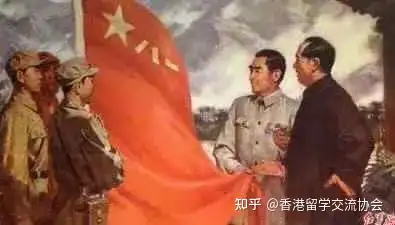
06.梦想照进现实
对于三次分配,会议的表述是:
建立在自愿性的基础上,以募集、自愿捐赠和资助等慈善公益方式对社会资源和社会财富进行的分配,是对初次分配和再分配的有益补充。
看不懂?装糊涂?那就把话挑明了:
要加强对高收入的规范和调节,依法保护合法收入,合理调节过高收入,鼓励高收入人群和企业更多回报社会。
关键词:慈善!
今年7月,浙江成为共同富裕示范区。
当时我就意识到,这个信号非同小可。
在浙江出台的实施方案中,特别提出要打造“善行浙江”。
包括但不限于:
——建立健全回报社会的激励机制;
——落实公益性捐赠税收优惠政策,完善慈善褒奖制度;
——建立“蜂巢式”浙商公益慈善机制,畅通社会各方面参与慈善公益和社会救助的渠道;
——鼓励引导高收入群体和企业家向上向善、关爱社会,兴办社会公益实体,参与公益慈善事业;
——实施“崇善行善、扶危济困”公益慈善先行计划,大力发展慈善信托,对慈善信托给予政策支持;
——发扬“人人慈善”的现代慈善理念,打造以“慈善公益一日捐”为代表的全民性慈善活动。
显然,一众企业家早已先知先觉。
已经卸任拼多多CEO的黄铮,以120亿元的捐赠成为中国首善。
而字节跳动的张一鸣,也在卸任时表达了投身公益事业的强烈愿望。
此次会议一结束,腾讯就迅速表态再捐500亿,相信很多企业会迅速跟进。
如果这个时候还见势迟,那么时代不淘汰你,人民也会抛弃你。
40多年前,国家说“先富带动后富”,
我们一直以为就是说说而已,
没想到这么快梦想就照进现实,
而且我们还将亲自见证!
社会主义不会辜负中国,
也不会丢下任何一个人!
2020年疫情爆发以来,美国没有鼎力相助,而是选择了落井下石。美国的做法令人不耻,但绝对是有缘由的。
看问题要看本质,本文将从更深的层次、更广的全球视角去分析中美关系。
看完本文,你将弄清美国的真实意图、读懂中国正在布局的这一盘世纪大棋!
中美关系,是当今世界最主要的国际关系,没有之一!
中美两国如何相处,决定了世界的格局、走势,但这取决于双方如何定位彼此的关系。
二战之后,中美之间一直维持着一个大体上的平衡,即使是朝鲜战争这种双方直接交战,都没有延伸到对方本土。
也正是这种维持了数十年的”和平状态“,维持的越久,矛盾就越多。
时间到了2014年,中国的GDP首次达到了美国GDP的60%,2018年达到约66%,而且占比逐年上升,中国的GDP增速有目共睹!
60%是啥?
这可是美国一贯的警戒线!
上世纪,美国对对手有两次出手,都是因为这个60%。
第一次是苏联的GDP一度超过美国的60%,美国对苏联加大遏制,导致其最终解体。
第二次是日本GDP一度超过美国的60%,引起美国警觉,逼迫日本签署“广场协议”、日元升值,日本陷入“失去的二十年”。
也正因为这个60%,美国近几年开始对中国频频发难!
这绝非偶然,而是两国宏观态势长期演进的结果,所谓“蓄之既久,其发必速”,有“势”所必然之理。
01
看似美好的“中美夫妻论”
二战后的美国,靠着美元霸权、军事霸权开始在全球薅“羊毛”:只要开动印钞机,便可以用纸来换取别人的真实财富。如此低成本、高效率的交易,使得美国在这一游戏规则下获得了最大的利益。
而在这一体系下,中国此前无疑贡献了最多的“羊毛”——成本低廉,体量巨大,制造业发达,贸易门类齐全,更重要的是,中国在诸多高端产品、服务领域的差距,使得占有相对或绝对优势的美国天然成为首要供应方,从而获取了最为丰厚的垄断利润。
似乎,中美在这样的体系下有着各自的角色,分工而互补,也算各取所需,合作平顺。
中国相当于一个吃苦耐劳、踏实能干的打工仔,为美国这个老板创造了巨大的价值,而老板则从丰厚的收益中拿出一些作为薪水。打工仔生活有所改善的同时,省吃俭用,渐渐有了点积蓄,劳资双方一段时间内相安无事——这就是过去二十年间中美关系之所以较为和谐的本质。因此有了“中美蜜月期”、“中美国”等和谐说法。
但显而易见,这种看似平和的框架下掩盖着极端的不平等,我们不能总是拿8亿件衬衫换一架波音飞机,因此我们有了C919。
中国不可能一直为他人作嫁衣,而美国作为“既得利益者”,肯定极力维护自身少劳多得的地位,矛盾因此而来。
一句话,“打工者”有了余钱,总要自立门户的。美国人肯定也清楚这一点,一厢情愿的“中美夫妻论”终有难以为继的一天。
百年未有之大变局
对中国来说,一个国家要维护人民利益,必须对内爱民与对外反霸双管齐下,只有反霸才能拿回本就属于中国人民创造的财富。
为什么这么说?
中国财富生产能力,2010年就超过了美国,2018年更是超过了美日德之总和。创造这么多社会财富,但以GDP一衡量,我们就变成了第二,财富到哪里去了?被美国通过金融霸权卷跑了!
卷跑了多少?记得以前与群友讨论时,参照华为做过评估。如果中国不被国际金融寡头盘剥,中国人均年GDP起码在30至50万人民币之间。现在多少?只有区区几万!
一边吸食中国人民的劳动血汗一边嚷嚷自己亏本了,这就是西方垄断资本的嘴脸。所谓贸易战,讨论的只不过是吸多点吸少点而已。
中国要做的,就是通过终结美国金融霸权,改变世界旧体系,建立国际新规则,把被美国利用旧规则拿跑的那部分夺回来,造福中国人民!不打破美国霸权,中国的蛋糕做得再大,中国人民的基本福利也得不到保障或者保障不充分。
可以说,中国是自愿加入这一不平等的以西方(以美国为首)为主导的世界政治经济体系的(如WTO),尽管“学费”昂贵,却是当时“两害相权取其轻”的最优选项。但“赎买”只是手段,“发展”才是目的,一旦达到两者“倒挂”的临界点,中国必然会加以调整,此前的格局便会为之一变。
现在,就是中美关系转变的历史性关口。
网上曾有人戏言,如果将百年前和今天作一比较,会发现其实历史在原地踏步。1900年,打进北京的八国联军几乎囊括了当时世界上所谓的“列强”——
英、俄、日、法、德、美、意、奥;而如今,“G7”、“G8”集团则由西方几大工业国组成,除了“伪列强”奥匈帝国早已灰飞烟灭,为“后起之秀”加拿大所取代外(实则加拿大当年就内嵌于“大英帝国”之中),两份名单竟惊人地一致——世界的权力与财富格局确实有着强大的惯性与顽固的承袭。
而在这一产业、财富、力量的重新布局中,最大的变量就是以中、印为代表的新兴市场国家,它们携自身人口、土地、文化尤其是立国规模宏大之力,吸纳西方数百年科学技术积淀之功,一跃而起,将全球产业链条、要素市场、价值分工作了极大的重构,使得世界治理秩序、运转逻辑、权力架构有了迥异于百年前的样貌。
今天的中国是有力量的,这点切不可妄自菲薄。
如上文所述,中国多年打工,渐有积蓄,集聚资本的同时,对于美国全球薅羊毛的顶层设计与运作技巧也了然于胸:既然美国人是靠金融、军事、科技这三根支柱来构筑自身的超然地位,中国便在这几方面着力,依样画葫芦也就是了。
近年来,中国在内外方面大政频出,令人颇有目不暇给之感,但如果清楚了上述逻辑,便会发现实际上都是按既定“剧本”来上戏码,太阳底下的任何事都不是无缘无故的。
金融方面:成立亚投行,推动“一带一路”沿线国家的双边本币结算,在英国伦敦设立人民币离岸清算中心,在上海、香港交易所陆续推出人民币黄金、人民币原油、人民币铁矿石等,还有大力发展区块链技术,这些显然都是在推进人民币国际化的步伐,以获取核心资源的定价话语权,实质即是将人民币“资本化”,为未来获取国外资本收益布局。
军事方面:航母接连下水(近期有未经核实的报道说第三艘航母已在建造),大造军舰,强力推进南海岛礁建设,又推出改革开放以来最大规模的军改,建国70周年大阅兵高调展示东风41、东风17等等,这些整军备武之举,既有战略震慑的宏观考虑,也有保障未来投资安全、交通要道的现实需要,更有为人民币国际信用“赋权”的终极目标。
科技产业方面:科研经费投入逐年攀升,2015年1.4万亿,2016年1.57万亿, 2017年1.76万亿,投入之巨,已仅次于美国;根据中国科学院和科睿唯安共同发布的《2017研究前沿》分析报告,在10个大学科领域里,美国表现突出,中国稳居第2,而在143个研究前沿中,中国取得了24个前沿的领跑位置,美国则领跑87个前沿的发展。
差距虽然很大,但中国追赶速度却非常之快;而在贸易战中被热炒的“中国制造2025”,则聚焦智能制造、工业强基、高端装备创新等五大工程,以及新一代信息技术产业、5G、高档数控机床和机器人、航空航天装备等十大领域,直指世界制造强国的目标——尽管有人不以为然,嗤之为“口号”,但已足以令西方不安。
还有文化价值方面:“中国方案”不断推向世界,不仅“自信”,还要“他信”。目前,中国对第三世界的吸引力与日俱增”。中国的发展速度与成就附着着相应的价值观,向境外扩展,不可避免地在空间上对西方意识形态形成一定的挤压。
可以说,中国体量的快速增长,使得美国在各个方面都感受到了事实上的压力,这里面既有中国实现“伟大复兴”的强烈主观意愿在鼓舞,也有社会经济发展的客观规律在驱动。
“人民对美好生活的向往,就是我们的奋斗目标”——这既是中国政治价值观层面的官方宣言,也内蕴着社会经济发展的现实要求。
四十年的改革开放,使得中国面貌发生了巨大变化,富裕阶层不断扩容,生活水平极大提高,但不可否认的是,贫富、城乡、东西部三大分化加剧,社会矛盾累积,且不时有尖锐化表象。
而要缓解乃至消弭社会矛盾,在注重公平正义、做好存量财富分配的同时,获取增量财富、把蛋糕做大就是更为迫切的需求。
由此,将政治、经济乃至军事的触角伸向全球,在更大空间内获取资源,取得收益,保障安全,成为了中国继续发展的必然选择。
而中国的继续发展,将会极大冲击现状:产业链条分工的修正与再构,资源产品的流向改造,全球收益的重新分配,力量分布的转移,等等。总之一句话,会带来全球政治经济秩序的剧变——如果不是颠覆的话。
“卧榻之侧岂容他人鼾睡”,作为“既得利益者”,美国与西方当然会就此作出评估并寻找因应之道的。
这便是“百年未有之大变局”的来由。
中国要变,美国要变,世界要变!
03
美国的思路与反应
中国的高速发展,令既成的权力财富布局与利益分配格局感到了前所未有的压力,也使得中美关系也达到了一种“临界点”。
现在论及中美争端,无论是所谓的专家,还是网上的吃瓜群众,动辄就端出意识形态、价值文明、法律体系、民主威权这套“高大上”的话语来加以诠释论证,走得远的,甚至对中国现状口诛笔伐、堕入国内如何如何不堪的情绪宣泄中。
中国现阶段,固然问题多多,一味沉溺于“厉害了我的国”之类的虚火上升当然贻笑大方;但看不到进步,以为处于暗无天日之中,企盼美帝“王师”救自己于水火,那更是一厢情愿的单相思。
显而易见,美国现阶段的最大国家利益,便是如何应对中国的“战略挑战”甚至是“威胁”。
2010年5月,奥巴马在白宫接受澳大利亚电视采访时发出了严厉警告:
如果10多亿中国人口也过上与美国和澳大利亚同样的生活,那将是人类的悲剧和灾难,地球根本承受不了。
让我们看一下现实。
目前全球约70亿人口,包括美国在内的发达国家共8亿人,如果扣除发达国家贫困人口,加上发展中国家的富裕人群,全球过上舒适生活的人满打满算也不会超过10亿——1:7,这就是目前世界存量蛋糕的分配现状。
另外,就世界GDP增速而言:
20世纪60年代增速是5.32%; 70年代是3.77%; 80年代是3.16%(WB)或者3.30%(IMF); 90年代是2.81%或2.86%; 21世纪00年代是2.59%或2.52%; 10年代则是2.45%或2.55%。
再看看二战后挤进发达国家/地区行列的,它们抢得了一些奶酪,其实这些国家或地区非常集中:亚洲四小龙。而这几个经济体的特点也相当一致:面积小、体量小、人口少,最大的韩国也不过5000万人,而最小的新加坡只是个微型城市经济体。从本质上说,二战后经济的增量,其实也只能允许这么点人口“走进现代”。
从这个角度而言,让14亿人中国人摆脱短缺经济,享有现代生活,确是前无古人的伟大理想与事业,这毫不夸张。
然而,这一踏踏实实、稳步推进的伟大理想,足以让既得利益者“恐怖”!因为世界的大蛋糕,中国在拿走越来越多的份额。
2009—2015年,6年时间全球电力消耗量增长了17%,而中国增长了52%,美国只增长了6%,全球电力消耗量增长的57%是中国贡献的。
2016年,中国拿走全球石油的15%份额,全球铁矿石的50%,全球主要大豆出口国出口量的70%。另外中国的高铁、电力也在逐步走向全球!
在全球范围内,决定一个国家福利水平高低的无非两个因素:“蛋糕”的大小和获得的多少。当美国发现做大蛋糕越来越困难时,回头全力阻击越来越近的追击者就是最合理、最现实的选择。
总而言之言而总之一句话:后发国家在追赶的过程中,随着经济体量越来越大,其与守成大国的贸易关系,将从互惠变为冲突。
在后发国家中,中国的特殊性在于:她太大了!她的面积与整个欧洲相当,人口占世界五分之一,关键还有着伟大复兴的梦想,怎么能让美国安枕呢?
中国的策略
逻辑已经很清楚,在此消彼长的存量博弈思维下,美国对于中国的阻遏是个必然选项。
对此,中国将如何抉择呢?
近年来,无论是领导人的讲话,还是官方的宣言,都多次重复着一句话:
“太平洋足够大,容得下中美两国。”
其实这话已经把中国的战略意图表述得很清楚了,那就是:在“薅全球羊毛”的顶层设计中,我承认你的优势、尊重你的利益,但好处不能你全占了,我也想分一杯羹,大家有事好商量,但千万别冲动,别弄得把锅砸了。
很显然,这对于之前你输我赢、你死我活的大国博弈思维,无疑是个突破。
但关键是,美国人凭什么让渡你利益?如果美国人不接受你这一套,那你就是一厢情愿地真做梦了。
文武之道,一张一弛。
前面我们提到过,美国之所以能收取美元“铸币税”,表面看是美元的全球储备货币地位,其根源则是美国的政治军事强权。
所以中国的整军备武则正是沿着“止戈为武”“以战止战”的传统智慧来部署的。
比如,中国推进人民币国际化,以收取国外铸币税,这是动了美国的禁脔,但战争之所以还没有到来,还不是因为中国军队枕戈待旦,令美国心存忌惮。
“一带一路“上有强盗土匪,就不做生意了吗?
古人尚且知道要请镖局,大英帝国的强大海军为殖民地贸易保驾护航,今天美国霸权的三大基石无非是美军+航空母舰+美元,今后我们也要持剑经商。持剑经商,确保胜利果实,就需要海外根据地,枪杆子里出利益,这话用在这没错!
除了“武备”,中国也在“文攻”。
通过各种接触与对话,中国在向美国传达自身清晰的意图,避免战略误判。
“构建人类命运共同体”、“摈弃你输我赢的零和思维”、“中国永远不称霸,永远不搞扩张”等“官宣”,都是中国对世界、尤其是对美国西方的政治承诺,而这些承诺背后,依旧是军事经济实力的支撑:不管你信不信,反正你现在不敢动我,我就利用这个时间窗口全力奔跑。
事实可以看出,中国正在尽全力稳定局面,避免任何一个战略方向的矛盾激化,以防被民粹裹挟、为“政治正确”所绑架,给自己以更大的战略回旋空间。
如果中国能实现这些目标,重新校准全球利益框架,让包括美国在内的西方渐渐接受自己的逻辑,承认现实,放平心态,那么“和平崛起”将真正有了现实的可能性。
结束语
中美博弈,看似纷繁,但实则因果关系清晰可辨:
首先,天下没有免费的午餐。
发达国家民众每天优哉游哉,阳光、沙滩、比基尼,滋润得不要不要的,而我们天天累得和狗一样,却只能勉强糊口。这和薅羊毛的全球顶层设计是密不可分的,美国尤其从中分得了最大的利益。
其次,随着中国的崛起,全球财富流向必将重塑,西方普世价值神话必将破灭。
当前,我们正处于国际、国内大历史周期伟大切换的关口,旧秩序的碎裂声、新秩序的号角声不绝于耳,我们看到的国内国际大调整、大动静、大风浪,不过是新旧秩序转换的副产品。
在这沧桑轮回的苍茫大地上,我们随时能听见伟大领袖毛主席说,一万年太久,只争朝夕!
中美大变局,世界大变局,看似很慢,其实进展远比我们预想来的快。
非常庆幸我们生于这个伟大的时代,与我们的民族一起荡气回肠!
最后我要说的是,在根本利益面前,不要天真地相信纯粹的道德。这一点必须打脸一些所谓“公知”“大V”。
比如贸易战烽烟一起,中国备受美国指责,公知也火上浇油,“强制技术转让”、“偷盗先进技术”、“保护知识产权不力”,“盗版”等等,把中国说的一无是处,种种不绝于耳。而国内有些人也义愤填膺地自残式反思,觉得中国确实利用了不公平、不道德的手段。
你美国“薅羊毛”如此疯狂,我为何不能这样“无耻”?
复旦大学中国研究院院长张维为接受央视“云上会”节目中解读2020年政府工作报告。观察者网已获张教授授权,整理访谈录音,以下为访谈全文。央视:张教授,您好。看到您身后的墙上挂了一幅字,“见微知著”,那么今天的政府工作报告重,您见到什么“微”了呢?
张维为:今天这个报告我觉得很有意思,篇幅比过去相对要短,这可能反映了此次疫情的特殊情况,整个会期都缩短了,报告的长度也变短了。但是,这个报告非常的“实”,用我们老百姓的话说,干货很多,政策提得很具体,特别是涉及到“保就业、保民生”层面都有很多具体方案,比如,在财政政策上提出了几个具体数字,政府要过紧日子,政府非刚性开销要减少50%,还将发行抗疫特别国债,甚至具体到城市“菜篮子”、农村“米袋子”,城市小区加装电梯等等,所以干货非常多。
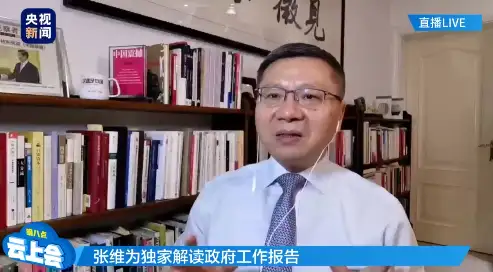
央视截图
另外比较特殊的一个地方,就是这次没有提到
GDP增速目标,这是很少见的,也是本次报告的一个新变化。李总理也在报告中提到,这是由于外部环境有太多不确定因素。如果我们去仔细看看美国强行推进复工复产,目前美国的新冠病死率仍居高不下,在这种情况下,连美国的医学专家都认为恐怕会有第二次爆发的危险,而且第二次可能会更严重。再者,美国推行量化宽松,外界都很担心会不会再次酿成金融危机。所以,当外部市场充满不确定性时,我们不一定非得先定一个硬性指标。
当天在“部长通道”上,国家发改委主任何立峰也介绍说,我们现在的指标体系跟过去不一样,全面小康社会的指标有25个,形成了一个指标体系,其中包括约束性的指标,比如单位能耗,单位二氧化碳温室气体排放,这些都有硬性指标。像GDP增长速度等,我们一般称之为“预判性指标”。这就意味着,我们创造市场环境等有利条件,努力实现这个目标。
我个人还非常关心的人大审议香港维护国家安全的法律法规,这是国家层面的立法,确保在香港建立维护国家安全的法律制度和实施机制,我觉得这个议题非常重要。央视:刚刚您提到了很多方面,我想挑其中两个重点谈一下。一个是关于GDP,据您观察,国际社会有没有关注中国GDP是否设定一个明确指标?您觉得国际社会对此会有些什么评价?张维为:国际社会中总是会有一些声音认为中国今年经济增长可能会出现一些问题等等,但是西方媒体的习惯是,在面对中国时总会朝消极方向思考。实际上,纵观整个世界,不管我们有多少挑战,中国相对而言还是比别人好很多的,我们率先走出疫情,能够召开全国两会,像今天的全国人大会议同时有2800多位人大代表在会场,这样的大型会议现在只有中国能够举行。
这本身就是一种信心、自信。我们走出了疫情,我们的经济生活、社会生活、政治生活都在正常化,这是常态下的防控,这种状态非常好。所以,我觉得不要在意西方说什么,他们在明天后天一定会有更多的评论,我们自己要有强大的定力,现在的很多做法是非常实事求是的,也许再隔三五个月,也可以拿出更详细的发展指标。央视:张教授觉得面对西方媒体在短期内的一些评论,我们还是要淡定一点。但是,大家还是会关注世界话语体系,如果掌握在外媒、尤其是部分美国媒体手中,那么中国故事该怎么表达?我们的目标设定该怎么讲给世界人民听?张维为:我们要非常非常淡定。对于西方话语,我还是做了一些研究的。现在西方还有一些方面是为数不多的优势,或者说西方手中剩下为数不多的几张牌,而且这些有时候也是纸老虎,你只要敢于亮剑,就可以把它们的话语漏洞揭露出来。我一直说,我们要实事求是地解构西方话语,实事求是地建构中国话语,建构起来之后,可以把中国故事讲好。
比如,这次疫情中,我们普普通通的中国老百姓也在参与建构中国话语。现在绝大部分人都用上智能手机,普通百姓、海外留学生、海外华人,甚至老外,每时每刻都用中国眼光、中国标准看待世界各国的抗疫,并进行比较,大大增强了我们人民的自信。我们发现,每个中国人都懂得人命关天,把人民的生命放在第一位,我们的政策是以人民为中心,这在中国社会不会有任何争议,但西方不是这样的。
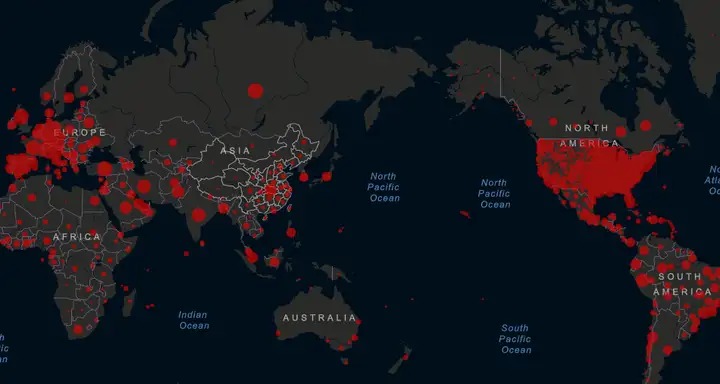
红色代表确诊状况,截图来自约翰·霍普金斯大学新冠数据中心
最后,人们就有了一个清楚的比较,我们是以人民为中心,把人民的生命健康放在第一位,所以采取这样一整套的做法,但西方是把经济利益商业利益放在第一位,采取他们那样的做法,结果西方国家的“重灾区”全是经济最发达的版块,这恰恰证明他们的资本利益导向非常短视。比如,纽约就是最严重的地区之一,我粗粗算了一下,如果以最新的统计数字为准,拿中国的重灾区湖北和纽约州的确诊数相比,湖北要比纽约州安全6倍;按疫情的绝对死亡数来看,中国要比美国安全至少20倍。我觉得这背后就是不同体制的较量,同时也可以把它说成很好的中国故事,传播出去。央视:但是在讲中国故事的同时,我们的确也面临着国际上的一些挑战,比如逆全球化,其中还有更极端的去中国化,您怎么看待这些倾向?我们该如何应对?张维为:这次疫情暴发之后,我想所有国家包括中国在内,对于全球化下一步该怎么走,都会有一些思考。很多国家不能自己生产口罩、防护服等等,可能疫情过后,他们会要求本国企业也开始把一部分基本产能在自己国内恢复,这是完全可能的,某种程度上也是可以理解。
但是我觉得“去中国化”是非常难的,主要是因为我们有全世界最完整的产业链,有世界最大的消费市场。这次疫情防控也证明中国的政府是世界一流的,当然尽管我们还有自己的缺点和不足,但真的是经得起全世界比较。再来,中国民众整体的素质水平也相当高,过去总说中国人素质不好,但这次疫情中我们看到绝非如此,反而是西方很多民族的素质堪忧。种种这些综合在一起,想要“去中国化”,非常难。
我就举个例子,美国政府一直怂恿美国企业迁回美国,但到现在为止,所有调查都显示,绝大多数、75%-80%的美国企业都不愿意回去,因为他们找不到一个像中国条件这么好的地方。
我经常讲这样一个观点,中国崛起是集四次工业革命为一体的,我们可以从最简单的纺织业、成衣制造等一直到现在的5G、人工智能等等,都可以生产。要美国产业迁回去,这相当于让老虎改变吃肉的本性,变成吃素。纺织业、煤炭业等等从第一次工业革命开始的产品都有要恢复,这个成本高得不得了,美国物价恐怕也会增加三到五倍不止。
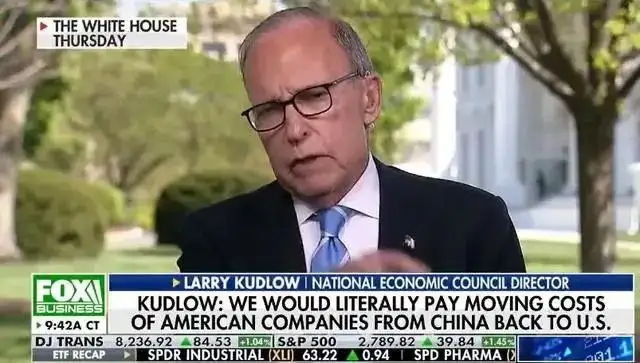
白宫首席经济顾问库德洛鼓吹美国企业回迁,截图来自福克斯 央视:如果美国政府铁了心,一定要干这件事,把产业链迁回去,中国应该怎么做?张维为:我想,首先我们可以稍微等一等,潇洒一点,美国国内不同的资本利益集团会争斗。比如,现在美国GDP的将近80%是服务业,如果把制造业迁回去的话,首先服务业利润就会大幅减少,制造业确实会和服务业打架,而且要打很长时间。美国不是政府说什么就能做到什么,各种利益集团搏斗背后的资本力量,金融板块是更加支持全球化,传统的制造业板块现在有点反全球化,双方会斗得非常厉害。所以,我们可以等一等、看一看。我本人认为“去中国化”非常之难,即使要做也要很长时间,更何况中国现在是世界最大的消费市场,外国资本是在向中国流,我们吸引外资的速度是在加快。央视:您提到等一等看一看,那么这段时期我们可以做些什么,修炼内功?张维为:巩固产业链,这是必然的。而且现在看来,我估计全球化可能会出现新的形势。一个形势可能是区域化加强,也就是很多跨国生产的距离会拉近。你会发现,在这次疫情中间,我们和东南亚的合作一直很好,中日韩合作也比较好,特别是跟韩国的合作相当不错,这对疫情之后东亚地区的整合非常有利,也符合我刚才讲的区域化特质。二是,从这次世卫组织的斗争也能看得出来,多数国家是支持中国的,这一点非常之重要。中国现在已经是130多个国家的最大贸易国,如果美国真的要脱离中国,实质上会造成的效果是世界脱离美国。央视:前面提到很多关于国际关系的问题,在这次政府工作报告中您有没有读出一些相关信息?张维为:这次报告中的着墨不是特别多,我想我们还是本着合作共赢的精神,建设人类命运共同体,当然包括现在提到的建设人类卫生健康共同体,这些都是可以做的。
比如这次世卫组织大会上,在中国国内组建联合国援助物资的协调基地,还有一些援助项目等等,这些都是建立人类命运共同体的一些步骤。这次疫情袭来,我们发觉虽然还没有达到人类命运共同体的境界,但是某种形式的命运共同体的感觉已经出来了,很多国家、很多普通人都感觉到大家其实都是连在一起的,交通中断后会议也不能开了,相互之间不能访问,非常不便,因为很多问题还是需要大家一起商量一起做才行。这种感觉比过去任何时候都强,某种形式的命运共同体已经有意无意地开始形成。现在中国提出的全球化是一种新型全球化,以一带一路为代表的共商、共建、共享、合作共赢,有着很好的前景。央视:您刚刚提到共同体,让大家觉得我们的命运如此紧密相连,但同时孤立主义又成了一个非常热的名词,怎么看待这对矛盾?张维为:这是西方制度造成的问题。过去全球化数十年,像西方的跨国公司赚得盆满钵满,但是它们国内的分配机制非常不合理,导致跨国公司赚到的超额利润,没有能够让西方的百姓共享,几乎没有例外;绝大多数西方国家,少则过去20年、多则过去30年,多数人的实际收入没有增长,这就导致了西方社会的反全球化、逆全球化、民粹主义,最后形成一种恶性循环。这是西方必须面对的巨大挑战,或者说西方所谓的民主制度面临着巨大挑战,越来越民粹就无法执行长远的、有利于自己国家、有利于世界的政策。
今天普通中国老百姓看美国政府讲的话也好、出台的政策也好,都觉得非常荒谬的,怎么美国领导人水平这么低,所以这次中国人的心态特别好。央视:您提到西方的概念,之前在采访郑永年教授时,他有一个论断说,疫情可以看出西方已经不是统一的西方了,您怎么看?张维为:其实西方我们一般主要就是指欧美,欧洲和美国的矛盾一直存在,联合不起来。比如,从美国人角度来看,光是欧元就给美国带来多少麻烦,所以总是想办法破坏欧元,想办法破坏欧盟。
特朗普总统上台之后,公开表示美国优先美国第一,招致欧洲人普遍反感。疫情之前,我在瑞士达沃斯开会,在欧洲你只要讲特朗普的笑话,老百姓也好,知识界也好,特别开心。根据最新的民调,在德国、在意大利,对美国的好感度急剧下降,甚至下降一半都不止。这是美国自己“将帅无能”,造成的“累死三军”,现在美国的盟友暂时不说分崩离析,至少离心力越来越强。央视:其实我们站在一个普通人的角度来看,你心里想着美国优先也好,英国优先也好,好像都很正常,但为什么喊出这个口号来,就显得不一样?张维为:美国的优先是有具体含义的,还不是一般的含义。它不是双赢,而是“我赢你输”,这样一来就麻烦了,就像抢其它国家的物资,口罩呼吸机等,这都是极端荒谬的。就像特朗普宣布禁止欧洲航班飞到美国,连跟欧盟商量都不商量,说禁就全部禁止了,这缺少起码的常识。坦率地说,这一届美国领导人的心智都不那么成熟,一拨偏执狂。去年中美贸易战愈演愈烈之势,有些人挺害怕,我说一点都不用害怕,美国真的是搬起石头砸自己,一定会失败的。我们研究政治学,研究决策的过程和决策的质量,美国现在的决策质量和过程太低了,说三流都是客气,所以许多政策一定要失败。央视:今年是美国的大选年,您说他们的政策一定要失败,那么在大选这个时间节点,会不会转向或者调整?张维为:特朗普现在是竞选压倒一切,他就像一个“巨婴”,他以为自己很聪明,外边人看得清清楚楚,比方说给美国人发钱,支票上要放上他的名,诸如此类的雕虫小技其实都是为了选举。
现在看来,他是铁了心得一定要甩锅,因为疫情防控确实做得太烂了,几乎是兵败如山倒。但他想甩锅,别人还不买账,因为这么多的事实摆在那。今天我看到哥伦比亚大学公布的一份研究报告称,如果美国政府能早一个星期宣布保持社交距离,可以减少三万多的死亡数,如果能够早两个星期能减少5万多,他们把这些情况都量化了。所以特朗普可以这样做,但恐怕多数美国的明眼人都会看出来。央视:说回今年的政府工作报告,其中有一个关键词是脱贫攻坚,您怎么看待今年的脱贫攻坚任务?意义何在?张维为:首先我们的脱贫攻坚做得很好,我走过70多个发展中国家,就有对比。我们的脱贫攻坚标准相当高,“两不愁三保障”,不愁吃、不愁穿,保障读书、住房、医疗,这是很高的水平。我看了国内的一些贫困户,如果放到印度、埃及、尼日利亚,都可以算得上中产阶级。我实事求的说,这是我自己看到的。今天我看到介绍说,今年的贫困发生率是0.6,这已经非常低了;一般在联合国系统内低于3%,就算完成扶贫了。但我们现在的要求是全部脱贫,已经有了非常具体的政策,剩下的0.6是可以完成的;当前主要困难是有些贫困地方是在边远山区,扶贫成本比较高,否则就更容易解决。但如果能够解决,这将是人类历史上的一个伟大事件。
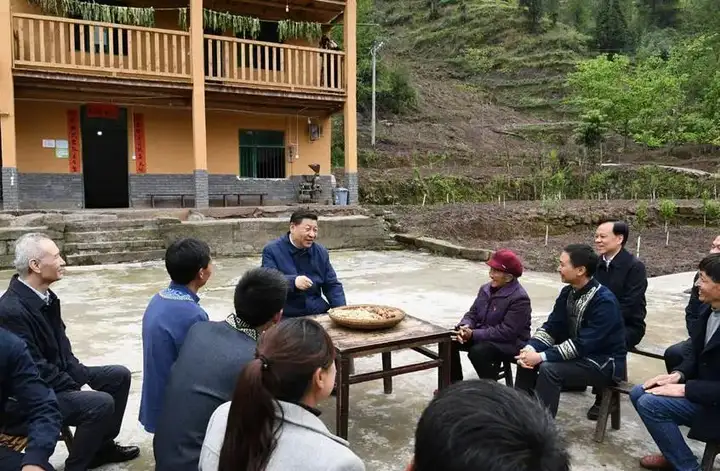
2019年4月15日,国家主席习近平在重庆考察调研。图自央视 央视:访谈过程中,有很多网友给我们留言,有网友提到了一个概念,他觉得脱贫或者说贫困的程度是一个动态的感觉,今年完成之后怎么办?返贫问题怎么解决?张维为:我们已经提过好几次,习主席也说过,这次解决极端贫困之后,下一步是要解决相对贫困,那么相对贫困又是一个新的挑战,会一步步往前走。
我总觉得,一切在于国际比较。前天纽约州州长和纽约市市长都说,现在纽约的孩子,大概每5个人中就有1个挨饿。为什么美国学校停课这么难,因为他们要管穷人的孩子一顿中饭,一停课之后午饭怎么办,就变成巨大挑战,很多孩子就会挨饿。
我做过一个统计,直接跟美国比,不是跟发展中国家比,(根据普林斯顿大学经济学家 Angus
Deaton的研究)美国有530多万每天生活水平不到4美元的人,4美元包括了政府补贴,这是两年前的数据,现在只会增加不会减少;还有至少55万无家可归者,这也是一两年前的数据。中国的扶贫标准怎么说都超过它了,只要做到“两不愁三保障”,怎么都超过美国这600万人。
所以我们先肯定自己成绩,在这个基础上再自信地往上一步步走,因为我们目标是共同富裕,这是很伟大的一个目标。央视:我们在脱贫攻坚的决胜之年,遭遇到疫情挑战,整个经济发展也遭到挑战,我们编导告诉我,去年两会您提到一句话,说中国正在完成新旧动能的转换,正在下一盘好棋、大棋,但现在看来,棋局是不是被打乱了,经济该怎么调整,有没有具体的建议?张维为:我讲的“大棋”是指我们有长远的目标,比如说2035年基本实现现代化,2050年建成社会主义强国,完成伟大民族复兴的目标。我讲的“好棋”,是指我们有一整套方法,比如新旧动能转换。这些都没有改变、也不会改变,只是说现在可能有些方面要提速了;根据外部环境的恶化,我们新旧动能转换方面实际上在提速。非常显著的就是新基建,人工智能,大数据中心,特别是5G,国家基金大量投资,民间投资也作为优先领域,这可以称之为第三次工业革命走向第四次工业革命的一个大跨越。严格来讲,世界上只有中国美国可以做,而中国一点都不落后,总体上甚至有些超前。现在中国的移动支付已经是美国的70多倍了,这还是半年前的数据。央视:现在肯定有很多年轻人,包括创业者、企业家在看我们的直播,您刚刚提到新基建、新旧动能转换,对他们有没有什么建议?有什么机会是可以抓住的吗?张维为:我过去总说,中国是文明型国家,规模是100个普通欧洲国家之和,自己就是一个世界,这么大的人口规模再加上世界一流的基础设施和非常稳定的政治环境,一定有大量机遇,只要用心去琢磨,用心去研究,用心去尝试,世界上没有其他地方比中国更有机会,真是海阔天空。央视:但是大家现在的确碰到了很多挑战,的确出现关店、破产的情况,怎么来应对呢?张维为:我记得80年代邓小平说过这个话,当时也是面临西方制裁,邓小平就说要长于守拙,就在外部形势不是很好的时候,或者遇到挑战的时候,尽量保护基本盘。我蛮同意马云的那句话——今天很糟糕,明天也很糟糕,后天非常精彩,但很多人在明天晚上死去了,所以有时候就是要坚持一下,今天总理的工作报告中有一句话很精彩,留得青山、赢得未来。长于守拙,开发新的机遇。央视:最后一个问题,我们很多网友是年轻人,是后浪,今天听完政府工作报告,想对后浪们说点什么?张维为:你们赶上好时代了,这是最好的时代,中国近代史以来最好的时代。这次突发的疫情,真的像一场世界大战,世界各国的发展模式、政治经济制度同台竞争,中国都是佼佼者。昨天BBC的一位记者他采访我,他说台湾比大陆做得好,我说怎么可能,看看大陆的多数省份都比台湾做得好,台湾对面是福建省,福建省的整体疫情防控比台湾做的好很多。因为中国是超大型国家,福建省跟台湾省相比,这样比较能够找到感觉。
而且从大数据来看,“90后”“95后”甚至“00后”可以说是中国近代史以来最自信的一代人。人的自信非常重要,我们读书时都知道,哪怕你现在成绩不是很好,但如果不自信,成绩永远不会上去,自信努力,笨鸟先飞,最后就上去了,就是这么简单,所以要有股劲。我相信,不光是中国,整个世界都是你们的舞台。想想看,再过10年、15年,中国怎么都是世界最大的经济体了。- 完 -


评论
发表评论