Bill Gates went to the countryside with his capital, and the ulterior motive was in the land...比尔·盖茨资本下乡,醉翁之意在土地也……
Bill Gates went to the countryside with his capital, and the ulterior motive was in the land...
Microsoft founder Bill Gates recently won approval to buy 2,100 acres of farmland worth $13.5 million.
In the past ten years, Bill Gates and his ex-wife Melinda have purchased more than 270,000 acres (approximately 1,638,980 acres) of farmland in 19 states in the United States, equivalent to the size of a Hong Kong. So far Bill Gates has become the largest private farmland owner in the United States.
Source Public Account: Kepler Civilization
In China, everyone is familiar with the term landlord, which refers to a person whose family owns land and whose members do not participate in labor.
In the feudal society, the biggest landlord was the emperor, who owned the land of the whole country, and others were divided according to rank and so on. From big landlords to small landlords, and finally to the lowest-ranking peasants. Lower levels pay regular taxes to higher levels. The hired farm workers without land are directly ordered by the landlords to work for them.
Since the beginning of this year, the former richest man in the United States, Bill Gates, has become the largest private owner of farmland in the United States, but his motives for large-scale purchases of farmland have recently been questioned.
Some analysts believe that investing in agricultural land in the United States has "high return and low risk", which is better than most other investments. The data shows that since 1972, US farmland (NCREIF Farmland Index) has an annualized return of about 10%, while US real estate (US REIT Index) is only 9%; the S&P 500 Index is about 7%, and gold About 5%.
Especially in today's global inflation and soaring food prices, it is more wise to invest in farmland.
Many farmers feel uneasy after Bill Gates owns so much farmland acreage.
In response, Bill Gates responded to how to use the farmland in the "Ask Me Anything" online Q&A event on Reddit, "My investment team bought the farmland. Farmland ownership is diverse, we invest Farmland is there to increase production. Some farmland close to cities may end up being used for other purposes."
According to statistics, Bill Gates has bought farmland in 19 states in the United States, with a total area of 270,000 acres, which is roughly equal to my country's 1.64 million acres, or 1,100 square kilometers. Coincidentally, Hong Kong, China has an area of 1106 square kilometers, which is very close in size.
The farmland area currently owned by Bill Gates accounts for 1% of the entire United States. This is a rather scary figure. Assuming that 100 Bill Gates-level super-rich people come to buy American farmland, this means that all American farmland will flow into the country. In the hands of the super rich, what the common people want to eat depends on what the rich want to grow.
According to reports, Gates' farmland has polluted Florida's environment, causing destructive algae blooms and destroying fish and marsh habitat due to the large-scale use of fertilizers, pollutants seeped into sewers.
In addition to direct farming, farmland can also be transformed into a place for leisure and health preservation, which can earn benefits from commercial operations. Some even change the use of the land and become the source of land for real estate, and the value of the land can be doubled immediately.
Why are the rich keen to buy land? This is probably related to the current economic situation in the United States.
This year, against the background of the Russia-Ukraine crisis and India's protectionist policies, the global supply chain crisis has been caused and food prices have soared. The S&P 500 is down about 16% this year, while the tech-heavy Nasdaq is down 26% over the same period.
Supply chain problems and a slowing economy have investors worried and billionaires nervous, too. However, the demand for grains such as wheat, soybeans, rapeseed, and corn is continuous. At this time, agricultural land has become a "sweet pastry". When the economy is in a downturn, the value of cultivated land generally does not depreciate. Buying farmland has become "an efficient inflation hedge," surpassing even most stocks and bonds.
In recent years, Bill Gates has been promoting the development of the "artificial meat" industry and has invested in a number of artificial meat companies. He also publicly stated last year that in order to combat climate change, citizens of all developed countries should eat 100% synthetic beef . In response to Bill Gates buying farmland in the United States on a large scale while telling Americans not to eat meat.
With the outbreak of the new crown epidemic and the past, rumors of Bill Gates participating in virus research and vaccine research are endless. No matter how Bill Gates justifies, it is an iron fact that he is deeply involved in the fields of biomedicine, virus research and vaccine research and development.
In addition to these high-tech investments, Bill Gates has quietly become the largest farmland owner in the United States!
In June 2022, Microsoft founder Bill Gates' application to purchase 2,100 acres of farmland worth US$13.5 million (approximately RMB 90.41 million) in North Dakota, USA was approved.
The 2021 "Land 100 Report" in the United States shows that Bill Gates has become the largest private owner of farmland in the United States, owning about 269,000 acres of farmland in dozens of states, equivalent to 1.63 million acres of land, accounting for almost all of the farmland in the United States 1%.
One acre is 4050 square meters, approximately equal to 6.075 acres.
China has always adhered to the red line of 1.8 billion mu of arable land, and the arable land owned by Bill Gates alone accounts for 9/10,000 of all the arable land in China!
In addition to Bill Gates, American super-rich Buffett, Zuckerberg, and Bezos are all very keen on buying land.
1. Land desire
The Chinese tradition is farming to establish a country, and there is a tradition of land ownership in history. In the past dynasties, most of the dynasties came to the end because of land annexation, which led to too many landless farmers, which led to uprisings.
After the fall of the Qing Dynasty, the Chinese people experienced decades of exploration, found the road to socialism, and established an economic system with public ownership as the mainstay.
The so-called public ownership refers to the public ownership of the means of production including land. The manifestations of public ownership in Chinese society are "state ownership" and "collective ownership". The mixed ownership system promoted in recent years is a form of ownership formed by combining several types of ownership. The specific forms of mixed ownership economy include: joint-stock economy, cooperative economy, joint venture economy, etc.
In recent years, experts from all walks of life, represented by advocates of capital going to the countryside, have been advocating capital going to the countryside and promoting the monetization of resource assets such as rural farmland, homesteads, forest land, mountain land, and fish ponds.
Under the banner of pleading for the people, these experts seem to be running for the interests of farmers. In fact, some people are like foxes, greedy for the meat in the crow's mouth, and constantly tricking the crow into opening its mouth and dropping the meat.
In fact, if state-owned capital goes to the countryside, it is to promote rural social and economic development and achieve common prosperity. The ultimate goal of private capital going to the countryside is to control land resources and amass wealth through land transactions or resource transactions. If the country's private capital goes to the countryside, the negative effects may be controllable. If foreign capital goes to the countryside with the help of Chinese private capital, and then controls and occupies a large amount of land use rights, it may seriously threaten the development and stability of the country.
Strictly speaking, the capital going to the countryside advocated by advocates today is in line with the land privatization advocated by Mao Yushi more than ten years ago.
In October 2004, the Rural Development Association of Yaowan Town, Xinyi City, Northern Jiangsu was established.
In 2004, the association established the "Agricultural Association Development Fund", which is nominally a public welfare project. The so-called "Agricultural Association Development Fund" was first proposed by Mao Yushi and Wen Tiejun! In addition to the Yaokou Town Fund, Mao Yushi also established Shanxi's "Longshuitou Poverty Alleviation Foundation", "Tuanshuitou Poverty Alleviation Foundation", "Xiaozhaishang Poverty Alleviation Foundation" and Sichuan "Xingfu Village Mutual Aid Foundation". These projects are actually usury!
Mao Yushi has repeatedly advocated usury!
In May 2011, "New Financial Observation" interviewed Mao Yushi. He believed that "usury is not exploitation, it is a great thing that benefits the country and the people."
The consequences of letting go of usury can be imagined! P2P Internet financial chaos in the past few years, how much wealth has been wiped out...
On December 24, 2008, the report "Food Security and Cultivated Land Protection" was released by the U.S. Ford Foundation and Beijing Unirule Economic Research Institute.
Mao Yushi, chairman of the Unirule Institute, pointed out, “At present, there is sufficient food production abroad and a global market. The possibility of famine is very small, if not zero. … What is particularly worth worrying about is the relationship between food security and the protection of arable land. Stand up and ask to ensure that the 1.8 billion mu of cultivated land is not allowed to break through. …”
After the release of the above point of view, it caused great controversy.
On December 26, 2008, Mao Yushi expressed his opinion again:
"China has enough foreign exchange to buy grain, and even if it encounters a once-in-a-century food crisis, it only needs to import 50 million tons per year, which is not very large compared to the annual international trade volume of 530 million tons. The red line of 1.8 billion mu The numbers are based entirely on brains, without any research that can stand the test. The red line of 1.8 billion mu has greatly hindered the process of urbanization in our country, and is extremely detrimental to accelerating the migration of farmers to cities and solving the three rural issues."
It is sad and ridiculous that such a pseudo-scholar who deceives the world and steals his name is packaged as a "famous economist" by some forces after returning to China because he once went to the United States to study.
Reminiscent of the spy case of Dong Yuyu, director of the commentary department of Guangming Daily, are some scholars who are full of nonsense running the train really academic contention?
Isn't there a special mission behind these weird views?
2. Land merger
The propagandists of capital going to the countryside have always regarded the United States on the other side of the Pacific Ocean as "the other shore of dreams" and "the ideal country", and their admiration and worship of the United States is unprecedented. Everything in the Utopia is correct, with the will of God, holy and universal, unattainable, with occasional stains, but the flaws are not concealed.
The propagandists of capital going to the countryside always try to realize their "enlightenment" to the Chinese people by advocating words such as "democracy", "people" and "public opinion", but unexpectedly, the result of carrying private goods in the hypocritical expression context is countless loopholes .
Advocates of capital going to the countryside who advocate market fundamentalism advocate an extreme, comprehensive, and thorough privatization model in the United States. This kind of admiration seems so ironic in the face of the increasingly degraded reality of American society.
After entering the 21st century, with the continuous rapid development of my country's economy, various forces of different forms but with the same goal began to advocate that China's land should be thoroughly privatized and the land should be freely circulated.
Such views unanimously believe that once China implements land privatization, it will use this to obtain more sufficient and sustainable development momentum. The so-called only seeing its advantages but not its disadvantages is a true portrayal of this kind of view. There is no other reason, and the eyes are covered by greed. the
In the United States, where land is bought and sold freely, the largest landowner in the United States is the Emerson family, with a total of 2.3 million acres (9307 square kilometers) of private land.
In the United States, where capital controls everything, of course huge capital is needed to buy these lands.
The super rich in the United States generally believe that land is an investment with low risk and stable returns, which can diversify investment and reduce risks; agriculture is one of the industries with the highest tax cuts and subsidies in the United States, and can pay a lot less tax. Can get government subsidies; international food prices remain high, and growing food is also a good business.
In fact, not only in the United States, but also in China, investing in land is also a good business with stable income. It's just that many people don't realize it, or even if they realize it, they may not have the opportunity to get the land.
In the context of the propagandists of capital going to the countryside, there is a dreamland where noble and elegant gentlemen fill the streets: "Beyond the mountains and beyond the sea, there is a dreamland, where the men are handsome and chic, and the women are beautiful and beautiful. Riding horses is majestic, hunting is also elegant, everything about them is gentlemen. The boundless land, the sun never sets, oh, the land of rich gentlemen, everyone is rich and everyone is glorious."
During the Industrial Revolution, the gore of the British sheep cannibalism movement has long been diluted by the years.
With its powerful and invincible fleet, Great Britain created the myth that the sun will always shine on its land. The sharp domestic conflicts were released and passed on during the expansion, and the descendants of pirates maintained their hegemony for three hundred years by virtue of expansion and plunder.
However, "when the sun rises, it will lose, and when the moon rises, it will lose." How can there be a miracle that the sun never sets forever?
When the hegemony fell apart and the people were confined to an island again, there were 60 million people living in this island country, and their land area was only over 240,000 square kilometers, equivalent to 24 million hectares.
However, more than 6,000 large landowners in the country own 16.19 million hectares of land, which is equivalent to two-thirds of all land in the UK.
70% of the land in the UK is in the hands of less than 1% of the people.
The average British citizen owns less than 284 square meters of land.
The true way is: Across the country for thousands of miles, the sun will never set, so what does it have to do with me as a commoner...
It's really amazing!
3. Historical experience
Speaking of the land system in ancient China, people habitually think of the trilogy of land annexation, peasant uprising, and dynasty collapse.
In the millennium-long history from the Qin and Han Dynasties to the end of the Tang Dynasty, the core features of China's land management and taxation system were the state land grant system and per capita taxation.
The reason why peasants lost their land on a large scale was due to the dual effects of land annexation and tax system.
In the history from Han Dynasty to Tang Dynasty, the tax system of land tax collected on a per-person basis was the accelerator for peasants to go bankrupt and go into exile. the
During the Western Zhou Dynasty, land was owned by the ruling clan. The system of granting land was a common system in the Warring States Period. All countries granted land according to the person, and each husband had a hundred acres. Shang Yang reformed the law and implemented the system of granting land for military merit, increasing the number of land grants per man per hundred mu to stimulate the enthusiasm of the Chinese people to participate in the war. the
The laws formulated by Shang Yang did not change substantially after the unification of the Qin Dynasty. The Han Dynasty inherited the Qin system, and still implemented the land grant system. When the Western Han Dynasty implemented the land grant system, it began to legally allow land sales, and the momentum of land annexation was inevitable. "Hanshu·Shihuozhi" records that "the rich are connected with fields, and the poor have no place to stand". the
After the unification of the Western Jin Dynasty, in 280, land occupation, taxation system and household modulation were promulgated. The operation methods were basically similar to those in the Han Dynasty. Farmers who were subordinate to the government were still essentially national taxation farmers. the
The land equalization system implemented in the Northern Wei, Sui and Tang dynasties was still similar in essence to the land granting system in the Western Han Dynasty, the land occupation in the Western Jin Dynasty, and the tax land system. However, the land equalization system has never been strictly enforced, and it is difficult for farmers to obtain a sufficient amount of land according to the land grant standard, but they must complete the rent adjustment paid on a per capita basis.
With the increase of taxes and taxes and the corruption of officials, many peasants sold their fields and houses, bought off their children and grandchildren, left their hometowns, and moved to other places. Despite the serious exodus of peasants, the government still collects rents based on the number of people recorded in the existing household registration, and the registered peasants who have not fled the land need to bear the taxes of those who have lost their land, thus falling into a vicious circle.
After the Anshi Rebellion in the Tang Dynasty, the country was unable to solve the farmers' land problems, so it had to historically change the tradition of collecting land taxes on a per-person basis and collect land taxes on a land-by-land basis. The two-tax law entered the stage of history. the
The Two Taxes Law merged the original rent adjustment into two major items: land tax and household tax. The household tax is a continuation of the traditional population tax, but the household tax is determined according to the amount of assets, not the number of people; the land tax is based on How much land is collected for land tax. This makes the tax burden theoretically consistent with the taxpayer's actual means of production and asset ownership, and reduces the tax burden of landless peasants.
The implementation of the two tax laws is an epoch-making change in the land tax system in ancient my country, and it marks an epoch-making change in the relationship between farmers and the state.
Since then, the state's personal control over farmers has been weakened, and efforts to solve farmers' land problems through administrative distribution have been abandoned. Many institutional obstacles have been eliminated for landlords to annex land, large-scale land ownership has expanded rapidly, and tenancy relations have developed rapidly. It is impossible for farmers to obtain land through state distribution as in the past. In the end, when they were desperate, they revolted.
The Huangchao Uprising at the end of the Tang Dynasty was a typical peasant uprising in pursuit of equal land rights and wealth.
One of the direct reasons why the Huangchao Uprising used the slogans of "average" and "evenness" was because the implementation of the two tax laws in the Tang Dynasty changed the state granting land system that had continued since the Qin and Han Dynasties, making it impossible for farmers to rely on the state granting land to obtain land. .
The yellow nests shouted: Since the country does not give us land, we have no choice but to take it ourselves!
Four, the meaning of the drunkard
Advocates of capital going to the countryside claim that mergers and acquisitions after land privatization can free up a large amount of non-agricultural land and release hundreds of millions of rural laborers for industrial production. However, they did not demonstrate how many stable and effective jobs China's non-agricultural industries can provide, nor did they examine where to find the purchase market for the huge production capacity brought about by it. the
Advocates of capital going to the countryside believe that land privatization is conducive to land mergers, and claim that it is reasonable for farmers to sell their land in exchange for property when it is quite difficult. Advocates of capital going to the countryside say that the ultimate goal of land private ownership is to allow land to be gradually merged and concentrated, and they believe that if land cannot be merged at all, then Chinese society will always be a backward country with a rural population in the majority. the
Advocates of capital going to the countryside believe that the privatization of land to every people is for fairness and justice. In fact, because everyone has different social status, resources, opportunities, and abilities, the final result is that land, industry, and capital are concentrated among a few people, forming an oligarchy. Accompanied by a large number of farmers and individuals losing their land and means of production, the final result is complete freedom for the few and unfreedom for the vast majority of the people. the
Advocates of capital going to the countryside claim that without clear land property rights and the sanctity of private property, China’s democratic and free society or constitutional order cannot be established, and the social foundation of China’s centralized system cannot be disintegrated.
In fact, the propagandists of capital going to the countryside seem to be defending the rights and interests of farmers, but in essence, they have no intention of drinking!
The first stage: the goal is to achieve private ownership of land under the guise of national economic development and safeguarding the interests of farmers;
The second stage: the goal is to promote the free circulation and transaction of land under the premise of land private ownership, and realize land merger in the legal name of free transaction;
Stage 3: The goal is for power and capital to control the land for a long time or permanently. the
Five, Ercao
China is facing a rapid urbanization process. This process is a long historical process. If the cities cannot provide enough jobs, large-scale landless farmers will become urban jobless people in the cities, and a large-scale urbanization may quickly form in the cities. Similar to slums in some Indian cities.
If the peasants who fail to enter the city do not lose their land and have the opportunity to return to their hometowns to work in agriculture, they still have hope for the future.
Certain land-related disputes are mostly financial and official issues. Fiscal issues need to be adjusted by financial means, and the issue of official governance needs to be solved with determination and anti-corruption means. If we want to shake the foundation of the country and change the land system because of administrative problems, it is putting the cart before the horse and prescribing random medicines.
Some scholars do not hesitate to bypass logical arguments for any problems that arise during China's rapid development, and attribute them all to "system problems, or system problems!"
This kind of thinking mode or idiomatic language mode of the advocates of capital going to the countryside has long made people laugh and cry.
In the view of the propagandists of sending capital to the countryside, a country that does not conform to the system in their minds is not an "ideal country", and a system that cannot meet their own interests and needs is not a "good system." the
The propagandists of capital going to the countryside imagined that they had found the ultimate truth about China's institutional arrangements and China's social development.
Some market fundamentalists are as rigid as dead wood, and they always talk about a completely free market economy. They discuss China's land system out of China's specific context, thinking that economic principles are universal truths, and many of their views are superficial and naive. the
In the process of the great rejuvenation of the Chinese nation, Ercao's body and name will be destroyed, and the rivers and rivers will not be abandoned forever.
The implementation of the two tax laws is an epoch-making change in the land tax system in ancient my country, and it marks an epoch-making change in the relationship between farmers and the state.
比尔·盖茨资本下乡,醉翁之意在土地也……
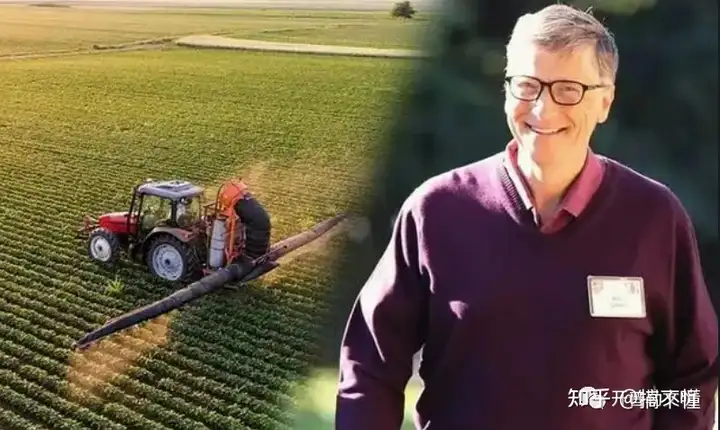
微软创始人比尔·盖茨近日获批购买2100英亩农田,价值1350万美元。
过去十年里,比尔·盖茨和前妻梅琳达在美国19个州购买了总面积超过27万英亩(约163.898万亩)的农田,相当于一个香港的大小。至此比尔·盖茨成为美国最大的私人农田所有者。
来源公众号:开普勒文明
在中国大家对地主一词并不陌生,地主指家庭拥有土地,其成员不参加劳动的人。
封建社会里最大的地主为皇帝,拥有全国土地,其它的根据级别之类的划分。从大地主下划到小地主,最后划到级别最低的农民手里。低级别的向上级定期交税。没土地的雇佣农工直接受地主使唤,为他们干活。
今年以来,美国前首富比尔·盖茨已成为美国最大的农田私人所有者,但其大举购买农田的动机最近却遭遇质疑。
有分析认为,投资美国农业用地“高回报,低风险”,比其他绝大多数投资都要好。数据显示,自 1972 年以来,美国农田(NCREIF 农田指数)的年化回报率约为 10%,而美国房地产(美国房地产投资信托指数)仅为 9%;标准普尔 500 指数约为7%,黄金约为5%。
尤其是在全球通货膨胀、食品价格飙涨的今天,投资农田显得更为明智。
比尔·盖茨拥有如此多的农田土地面积后,许多农民感到了不安。
对此,比尔·盖茨在Reddit上的“问我任何事”在线问答活动中针对如何使用农田做出了回应,“我的投资团队买下了这些农田。农田所有权是多样化的,我们投资农田是为了提高产量。有些靠近城市的农田最终可能有其他用途。”
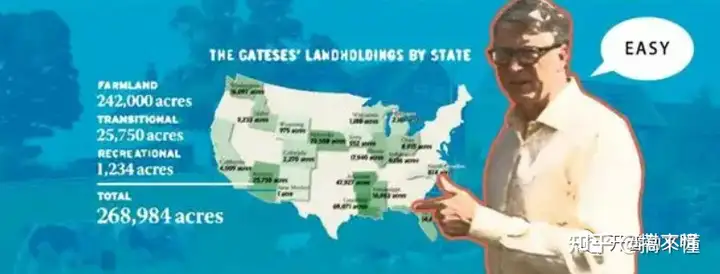
据统计,比尔盖茨已经在美国19个州买过农田,总面积达到了27万英亩,大约等于我国的164万亩,1100平方公里。巧合的是,中国香港的面积为1106平方公里,面积十分接近。
比尔盖茨目前拥有的农田面积占了美国全国的1%,这是一个比较可怕的数据,假设有100个比尔盖茨级别的超级富豪来买美国的农田,这就意味着美国的农田全部流入到了超级富豪手里,老百姓想要吃什么就要取决于这些富豪们想要种什么。
据报道,盖茨的农田对佛州的环境造成了污染,由于大规模使用肥料,污染物渗入下水道,导致破坏性藻类大量繁殖,还破坏了鱼类和沼泽栖息地。
除了直接种地外,农田还可以改造成休闲养生的地方,能够赚取商业经营的利益。有的更甚的可以改变土地的使用用途,成为房地产的土地来源,土地价值立马翻百倍。
富豪为什么热衷买田地?这恐怕和美国目前的经济形势有关。
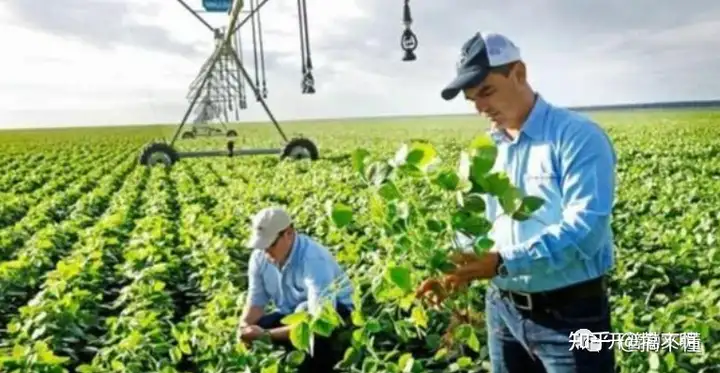
今年在俄乌危机、印度的保护主义政策等背景下,造成全球供应链危机,食品价格飞涨。今年标准普尔500指数下跌了约16%,而以科技股为主的纳斯达克指数同期下跌了26%。
供应链问题和经济放缓使得投资者开始担心,亿万富翁同样很紧张。而小麦、大豆、油菜籽和玉米等粮食需求是持续的,这时农业用地反而成了“香饽饽”,在经济不景气的时候,耕地的价值一般不会贬值。购买农田成为“一种高效的通胀对冲工具”,甚至超过大多数股票和债券。
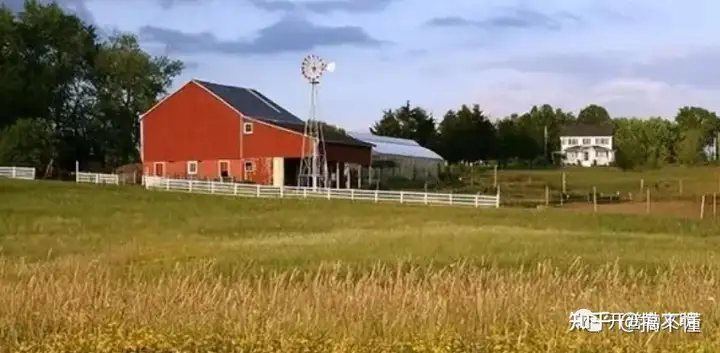
近年来,比尔·盖茨一直在推动“人造肉”产业的发展,投资了多家人造肉公司,他还曾在去年公开表示,为应对气候变化,所有发达国家的公民应该食用100%合成牛肉。针对比尔·盖茨在美国大举购买农田,同时又告诉美国人不要吃肉一事。
随着新冠疫情的爆发和过去,比尔·盖茨参与病毒研究、疫苗研究的传闻不绝于耳。不管比尔·盖茨如何辩解,他深度介入生物医药、病毒研究和疫苗研发领域是铁的事实。
除了这些高科技领域的投资之外,比尔·盖茨悄然间已经成为美国最大的农田主!
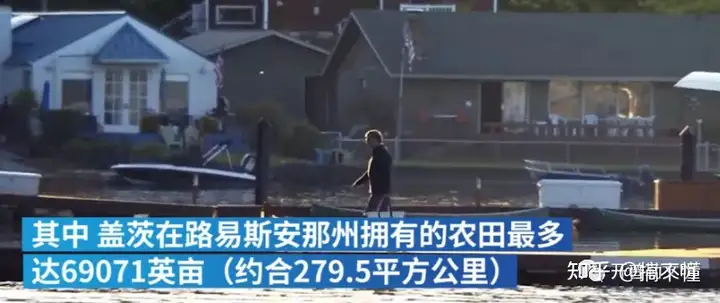
2022年6月,微软创始人比尔·盖茨在美国北达科他州购买价值1350万美元(约合人民币9041万元)的2100英亩农田的申请获得批准。
美国2021年的《100号土地报告》显示,比尔·盖茨已经成为是美国最大的农田私有者,在数十个州拥有约269000英亩的农田,相当于163万亩的土地,几乎占全美农田的1%。
一英亩是4050平方米,约等于6.075亩。
中国一直坚守18亿亩耕地红线,比尔盖茨一个人拥有的耕地就占了中国所有耕地的万分之九!
除了比尔·盖茨外,美国超级富豪巴菲特、扎克伯格、贝佐斯都非常热衷于购买土地。
一、土地欲望
中国传统就是农耕立国,在历史上就有占有土地的传统。历朝历代,王朝走到末世大多是因为土地兼并导致失地农民过多,进而引发起义。
清朝灭亡后,中国人民经历了几十年的探索,找到了社会主义道路,建立了以公有制为主体的经济制度。
所谓公有制,就是包括土地在内的生产资料的公有制。中国社会的公有制的表现形式就是“国家所有”和“集体所有”两种,近年推进的混合所有制,是几种所有制成分结合在一起而形成的所有制形式。混合所有制经济的具体形式有:股份制经济,合作经济,合资经济等。
近年来,以资本下乡吹鼓手们为代表的各路专家,一直鼓吹资本下乡,推进农村耕地、宅基地、林地、山地、鱼塘等资源性资产货币化。
这些专家打着为民请命的旗号,表面看来是为了农民利益奔走呼号。事实上,有些人就像是狐狸,眼馋乌鸦嘴里的肉,不断花言巧语,欺骗乌鸦张嘴把肉掉下来。
其实,如果说国有资本下乡是为了推进农村社会经济发展,实现共同富裕。私营资本下乡的最终目标都是要控制土地资源,通过土地交易或者资源交易聚敛财富。如果本国私营资本下乡,带来的负面效果或许可控。假如外国资本借助中国私营资本下乡,进而控制占有大量的土地使用权,那就有可能严重威胁到国家的发展和稳定。
严格说来,资本下乡吹鼓手们今天鼓吹的资本下乡,与十几年前茅于轼鼓吹的土地私有化一脉相承。
2004年10月,苏北新沂市窑湾镇农村发展协会成立。
2004年,这个协会成立“农协发展基金”,名义上是公益项目。所谓“农协发展基金”是茅于轼和温铁军最先提出!除了窑口镇基金,茅于轼还建立了山西“龙水头扶贫基金会”、“湍水头扶贫基金会”、“小寨上扶贫基金会”和四川“兴付村互助基金会”。这些项目实际上就是高利贷!
茅于轼曾多次鼓吹高利贷!
2011年5月,《新金融观察》专访茅于轼,他认为“高利贷不是剥削是利国利民大好事”。
放开高利贷的后果可想而知!前几年P2P互联网金融乱象,多少财富灰飞烟灭……
2008年12月24日,美国福特基金会资助、北京天则经济研究所发布“粮食安全与耕地保护”报告。
天则所理事长茅于轼指出,“当前国外有足够的粮食生产和全球化的市场。发生饥荒的可能性即使不等于零,也是微乎其微的。……特别值得担心的是把粮食安全和保护耕地面积联系起来,要求确保18亿亩耕地不许突破。……”
上述观点发布后,引起巨大争议。
2008年12月26日,茅于轼再次发表观点:
“中国有足够的外汇买粮食,且就算遇上百年一遇的粮食危机,每年也只需进口5000万吨,相对于每年5.3亿吨的国际贸易量,并不是很大。18亿亩红线的数目完全是拍脑袋出来的,没有经过任何经得起检验的研究。18亿亩的红线极大地阻碍了我国城镇化的进程,极不利于加速农民进城,解决三农问题。”
这样一个欺世盗名的伪学者,就是因为曾经赴美国留学,回国后就被某些势力包装成“著名经济学家”,可悲可笑。
联想到光明日报评论部主任董郁玉间谍案,某些满嘴跑火车胡说八道的学者难道真是学术争鸣吗?
难道这些奇葩观点的背后没有特殊任务吗?
二、土地兼并
资本下乡吹鼓手们一贯以太平洋彼岸的美国为“梦中彼岸”、“理想国”,其对美国的推崇膜拜之态,堪称亘古未有。那理想国的一切都是对的,都是带着神的意志,圣洁普世,高不可攀,偶有污点,也是瑕不掩瑜。
资本下乡吹鼓手们总试图通过鼓吹“民主”、“民众”、“民意”等词汇来实现自己对中国民众的“启蒙”,却不料在虚伪的表达语境中夹带私货的结果就是破绽无数。
推崇市场原教旨主义的资本下乡吹鼓手们,鼓吹的美国极端的、全面的、彻底的私有化模式。这种推崇在美国社会日渐堕落的现实面前显得是那样的嘲讽。
进入二十一世纪之后,随着我国经济持续的高速发展,各种形式各异但目标一致的势力开始同时鼓吹中国土地应该实行彻底的私有化,让土地自由流通。
此类观点一致认定中国一旦实行了土地私有化,就会籍此获得更加充足持久的发展动力。所谓只见其利不见其弊,正是此类观点的真实写照,原因无他,贪婪之心遮住了双眼。
在土地自由买卖的美国,美国最大的地主是埃默森家族,共拥有230万英亩(9307平方公里)的私人土地。
在资本控制一切的美国,要买下这些地当然需要巨大的资本。
美国超级富豪普遍认为,土地是一笔低风险、稳回报的投资,可以分散投资降低风险;农业是美国减税和补贴力度最高的行业之一,可以少交不少税,放着不动也能拿政府补贴;国际粮价居高不下,种粮食也是门好生意。
其实不仅是美国,就是在中国,投资土地同样是一门收益稳定的好生意。只不过很多人没有意识到,或者即便意识到了也未必有机会拿到土地而已。
在资本下乡吹鼓手们的语境中,有一个高贵儒雅绅士满街的梦中国度:”在山的那边海的那边,有一个梦之国,男人英俊又潇洒,女人美丽又漂亮,骑马很威武,狩猎也优雅,他们的一切都绅士。那无垠的国土啊,永远日不落,噢,富饶的绅士国,人人都富有,个个都荣光。”
工业革命时英国羊吃人圈地运动的血腥早已被岁月冲淡。
凭借强大无敌的舰队,大不列颠创造了太阳永远照在国土的神话。尖锐的国内矛盾在扩张中释放转嫁,海盗后裔们凭借扩张掠夺维持霸权三百年。
然而“日盈则昃,月盈则亏”,哪里有永远的日不落神迹呢?
当霸权分崩离析,人民重又局促一岛的时候,在这个岛国上,生活着6000万人,他们的国土面积只有24万多平方公里,相当于2,400万公顷。
然而全国6000多名大地主,拥有1,619万公顷土地,相当于英国所有土地的三分之二。
英国70%的土地掌握在不到1%的人手中。
英国民众平均拥有的土地不到284平方米。
真道是:纵国土万里,永远日不落,与我平民何干焉……
这真的很神奇!
三、历史经验
说起中国古代的土地制度,人们习惯性会联想到土地兼并、农民起义、王朝崩溃三部曲。
从秦汉直到唐末的长达千年的历史中,中国土地管理及赋税制度的核心特点是国家授田制和按人丁纳税。
农民大规模失地的原因是由于土地兼并和赋役制度的双重作用。
由汉至唐的历史,按人收田税的赋役制度是农民破产、流亡的加速剂。
西周时期,土地是统治宗族所有制。授田制是战国时代普遍的制度,各国均按人授田,每夫百亩。商鞅变法,推行军功授田制度,在每夫百亩外增加授田数量以刺激国人参战积极性。
商鞅制定的法律,秦朝统一后没有实质性变动。汉承秦制,依然实行授田制度。西汉在推行授田制的同时,开始在法律上允许土地买卖,土地兼并的势头必然一发而不可收。《汉书•食货志》记载“富者田连阡陌,贫者无立锥之地”。
西晋统一之后,于280年颁布了占田、课田制和户调制,其操作方式与汉代基本相似,隶名于官府的农民,本质上依然是国家的课役农。
北魏隋唐实行的均田制,与西汉授田制、西晋占田、课田制本质仍然相似,均田的目的是为了按人头均税,均田制下的农民本质上依然是国家的课役农。但均田制从没有严格执行,农民很难按照授田标准获得足额土地,却必须完成按人头缴纳的租庸调。
随着赋役增加、吏治败坏,许多农民卖田宅、鬻子孙,离乡背井,转徙他乡。尽管农民流亡严重、官府依然按照现有户籍所记载的人丁数征收租庸调,未逃离土地的在籍农民又需要承担那些流失农民的赋税,于是陷入恶性循环。
唐朝安史之乱后,国家已经无力解决农民的土地问题,不得不历史性地改变按人征收田税的传统,按地征收田税,两税法登上了历史舞台。
两税法将原来的租庸调归并入地税和户税两大项,其中的户税是传统的人口税的继续,但是按照资产多少确定户税高低,而不是完全按照人丁数量;地税则按照土地多少征收的田税。这样使得赋税负担和纳税人实际的生产资料以及资产拥有的情况在理论上相一致,减轻了无地农民的赋税负担。
两税法的实行,是我国古代田税制度的划时代转变,标志着农民与国家关系的划时代转变。
从此,国家对农民的人身控制有所弱化,也放弃了用行政分配的方式解决农民土地问题的努力,地主兼并土地少了许多制度性障碍,大土地所有制迅速膨胀,租佃关系迅速发展。农民不可能像以往那样靠国家分配获得土地,最终实在走投无路,就揭竿起义。
唐末黄巢起义是很典型的追求平均地权和财富的农民起义。
黄巢起义之所以用“平均”、“均平”的口号,一个直接原因是因为唐朝两税法的实行,改变了秦汉以来一直延续的国家授田制度,使农民已经无法靠国家授田获得土地。
黄巢们高喊:既然国家不给我们土地,那我们只好自己拿了!
四、醉翁之意
资本下乡吹鼓手们宣称,土地私有化后的兼并集中可以腾出大量非农用地,可以释放的高达数亿的农村劳动力去进行工业生产。他们却不去论证中国非农产业到底能够提供多少稳定有效的工作岗位,也不去考证以及由此带来的巨大生产能力去哪里寻找购买市场。
资本下乡吹鼓手们认为,土地私有化有利于土地兼并,并且宣称在相当困难时农民卖掉土地换取财产是合情合理行为。资本下乡吹鼓手们毫不讳言土地私有的最终目的就是让土地逐步兼并集中起来,并认为如果土地根本就无法兼并,那么中国社会永远都是一个农村人口居大多数的一个落后国家。
资本下乡吹鼓手们认为,把土地分给每一个人民的土地私有化是为了公平正义。事实上,由于每一个人的在社会的地位、资源、机遇及能力的不同,最终结果就是土地、产业、资本向少数人集中,形成寡头。伴随着大量农民、个人失去土地和生产资料,最终结果是少数人的完全自由和绝大多数人民的不自由。
资本下乡吹鼓手们宣称,如果没有土地产权的明确,没有私有财产的神圣不可侵犯,中国的民主自由社会或宪政秩序就不能建成,中国集权制度的社会基础就不能瓦解。
事实上,资本下乡吹鼓手们貌似在维护农民权益,实质是醉翁之意不在酒!
第一阶段:目标是以国家经济发展和维护农民的利益为幌子实现土地私有制;
第二阶段:目标是推动土地私有前提下的土地自由流通交易,以自由交易的合法名义实现土地兼并;
第三阶段:目标是权力和资本长期或者永久控制土地。
五、尔曹
中国面临快速的城市化进程,这个进程是一个漫长的历史进程,如果城市无法提供足够的就业岗位,大规模的失地农民在城市就会沦为城市无业者,或许会迅速在城市形成规模庞大的类似于印度某些城市的贫民窟。
如果进城失败农民没有失去土地,还有机会返乡务农,他们就仍然对未来拥有希望。
某些涉地纠纷事件多属于财政问题和吏治问题。财政问题需要财政手段调节,吏治问题需要用下决心用反腐手段去解决。如果因为行政性问题去动摇国本,去改变土地制度,那就是本末倒置,乱下药方。
某些学者对中国高速发展过程中出现的任何问题都不惜绕开逻辑论证,统统归结为“体制问题,还是体制问题!”
资本下乡吹鼓手们的这种思维模式或者说惯用的语言模式早已让人啼笑皆非。
在资本下乡吹鼓手们看来,一个不符合自己心目中体制的国家就不是“理想国”,一个不能满足自己利益需求的体制就不是“好体制”。
资本下乡吹鼓手们在臆想中以为自己找到了关于中国制度安排和中国社会发展的终极真理。
某些市场原教旨主义者言论僵化不知变通简直如朽木一般,言必称完全自由的市场经济,脱离中国具体语境讨论中国的土地制度,以为经济学原理是普适真理,许多观点肤浅而幼稚。
在中华民族伟大复兴的进程中,尔曹身与名俱灭,不废江河万古流。


评论
发表评论