Behind the big price cut of durian is the reshaping of land rights in Southeast Asia by China Railway!榴莲大降价的背后,是中国铁路重塑东南亚陆权!
Durian has really dropped in price.
The drop is not small. In previous years, the price of durians that cost more than 30 per catty and more than 40 per catty has dropped to more than 20 this year. In previous years, a durian cost two to three hundred yuan, but the team leader only dared to look at it, but did not dare to buy it. But this year, you can buy a durian for just over 100 yuan. The captain found in the supermarket in front of his house that the special durian was only 19.8 yuan per catty, and each person was limited to one. There is almost one customer in the supermarket.
Two days later, the team leader went to the supermarket again, and the normal price of durian was only 26 yuan per catty. In Guangzhou, this is basically the cheapest durian in recent years.
During the May Day period, when the captain was in Kunming, the regular price of durian fell to 38 yuan per kilogram, and there was also a special price of 25 yuan per kilogram. Buying a large one only costs about 110 yuan. In Kunming, the price of fruit is in kilograms, and one kilogram is equal to our usual two catties. According to our usual market habits, the price of durian has been lowered to less than 20 yuan, and the special price of durian is less than 15 yuan per catty. This is the lowest durian price the captain has ever seen.
Durian is known as the "King of Fruits", and it is also the largest category of imported fruits in China, ranking first in import volume for three consecutive years. When Chinese people buy imported fruits, the most expensive one is durian. In previous years, durian was too expensive, and many ordinary people were reluctant to buy it. But after the durian price cut this year, the sales volume has exploded! The usual takeaway costs 20 to 30 yuan a piece, and a durian only costs 3 to 4 takeaways. Try something new to satisfy your hunger, and even ordinary citizens can afford it.
Why is the price of durian dropping? There is only one reason: the opening of the China-Laos Railway.
Thailand is China's largest durian importer. In 2022 alone, China will import 780,000 tons of durian from Thailand, accounting for 95% of China's total durian imports, with a total import value of about US$4 billion. The total import of all fruits in China is only 14.6 billion US dollars, and durian imports accounted for 27.3%, which is worthy of the name of the largest single product.
In the eyes of many people, the high price of durian should have something to do with the low production. This is a wrong perception. The output of durian is not small, but it is very large. The captain showed everyone the real durian tree:
You can find that this is just a branch of the durian tree, and there are more than ten durians hanging on it. The durian tree is very tall and has a large amount of fruit. A tree can bear three to four hundred durians every year. Based on the calculation of 300 yuan for a durian, the total market price of a durian tree bearing fruit is more than 30,000 yuan per year.
In the 1980s, it was a very honorable thing to be able to work in a factory as a worker.
Why glory, because it is too lucrative to be a worker, especially in coastal areas.
In 1990, workers in the Shenzhen factory earned as little as four or five hundred yuan a month, and as much as 800 to 1,000 yuan a month. Female workers in the Shenzhen Kaida factory even earned 1,700 yuan for overtime work.
In that year, the per capita monthly salary in Beijing was 221.08 yuan.
In many counties and towns, the salary that many people can receive a month is only a few dozen yuan.
At this time, even if you don’t have any academic qualifications, as long as you dare to leave your hometown and work in a factory in Shenzhen, you can get a salary of four to five hundred yuan, or even more than 1,000 yuan a month.
How do you feel about such a factory?
Of course, it is an extremely strong sense of happiness and belonging. You wish you could stay in such a factory for a lifetime. If the factory is gone, your happy life will also be gone.
At that time, the wages of workers in Taiwan exceeded 10,000 yuan, and the wages of workers in the United States exceeded 25,000 yuan. The capitalists felt that opening a factory in the mainland and recruiting a qualified worker for 400 to 500 yuan was really a gift from heaven.
But for migrant workers in mainland China, finding a job worth four to five hundred yuan is also a gift from heaven, because they simply cannot find such a high-paying job in other places.
People's happiness is based on comparison. As long as I have a higher income than other people around me, I will be very happy.
Working in a factory in Shenzhen for a year, you can build a new house and buy a color TV when you return to your hometown. Under the envious and jealous eyes of your fellow villagers, your self-esteem has been greatly satisfied.
Driven by the exemplary effect, a large number of migrant workers flooded into Shenzhen like a tide.
At that time, the factory was very strict in recruiting workers, and a bunch of workers were lining up outside waiting to enter the factory.
Enter a factory, but also look good! The recruitment conditions are stricter than those of many countries.
As long as they are under the age of 25, as long as they are good-looking, not short-sighted, must have a health certificate, must not have hepatitis B, the female cannot be lower than 1.55, and the male should not be lower than 1.65.
On the basis of no academic qualifications and too many applicants, they can only select people based on their appearance.
In the factory at that time, there were many beautiful girls in their 20s who worked as female workers, and they worked hard.
Working 12 hours a day, 30 days without a break, still a bunch of people flocked in to apply.
Difficult to recruit?
It doesn't exist, and the workers who come here are all very high-quality, very obedient, and easy to manage.
Such days are still missed by many factory owners.
1
In today's China, there are many factories, but there are not enough workers. A large number of factories have begun to complain about the difficulty of recruiting workers. This kind of news is flooding the screen every year.
Why is it difficult to recruit workers, because the salary is low.
Many companies offer a salary of 4,000 to 7,000 yuan when recruiting. In fact, there is a subtext behind it that is "piecework, no social security". Skilled workers work 12 hours a day without sleep to get so much salary, and newcomers can't get such a salary at all. many.
And even such job opportunities are not available every month. There are only so many jobs in the peak season. In the off-season, it is thankful that you can get 3,000 a month.
A young job seeker believes that jobs are easy to find, but good jobs are hard to find.
What is a "good job"? The working hours are from 10:00 am to 12:00 pm. Do not work too long overtime every day, and give yourself a little rest time. This is called a "good job".
This is far beyond the scope of 996, and all the work is manual.
This is a recruitment notice from a typical Shenzhen factory. You work 22 days a month with weekends and work 8 hours a day. I will give you all the rights stipulated by the law.
But your salary is only 2,200 yuan. If you want a higher income, you can just work overtime.
Overtime on weekdays is 17.5/hour, and overtime on Saturday and Sunday is 24/hour. The monthly comprehensive salary is 4000-6000 yuan.
Of course, there must be no social security. If additional social security is paid, it will be solemnly written in the recruitment notice, and it must be black and bold. This is the rule.
I did a rough calculation and found that I have to work about 100 hours of overtime every month, and the salary is only 4,000 yuan. If the salary is 6,000 yuan, I have to work 200 hours of overtime.
Many people don't know the concept of 100 hours of overtime and 200 hours of overtime, let me do the math for you.
Assuming 30 days a month without a break, 100 hours of overtime work means that you work 3.3 hours of overtime every day, plus the original 8 hours, you have to work 11.3 hours.
If you work 200 hours of overtime, it means that you have to work 6.6 hours of overtime every day, plus the original 8 hours, you have to work 14.6 hours.
Of course, there are no 8 hours on weekends, so the data can be flattened a bit, but all in all, if you want to get an income of 5,000 without social security, you can't escape by working 12 hours a day.
This is another Shenzhen factory, and the wages are much higher, but everyone’s basic salary of 2,200 won’t change. The only thing that has increased is overtime wages.
The above-mentioned income can only be obtained in the peak season when there is work. In the off-season when there is no work, you cannot work overtime, and the salary will naturally go down.
The salary given in the recruitment notice is the theoretical maximum monthly salary for the whole year, not a guaranteed monthly salary. This is also a rule.
At the same time, as a delivery boy, it is very easy to earn more than 4,000 a month, and hardworking people can even earn 8,000 or even 10,000.
It’s also piecework wages. Being a delivery rider is obviously better than working as a factory worker. At least when you’re a rider, there’s no off-season or peak season. It’s peak season all year round. This income is very stable, because there are people eating every day (it’s you) .
Because of the rise of takeaway riders, it is obviously difficult for factories to recruit workers, and they can't recruit people.
2
Because China has earned too much wealth from factories for a long time, many Chinese people think that working in factories is the right way, while being a delivery rider is crooked, and even large media have such a tendency.
But the actual situation may not be the same as everyone thinks.
Let's see the job recruitment site. If you look at the picture below, do you think it's the boss or the wage earner.
These people in the picture are serious factory owners, holding the finished clothes of the factory in their hands, and holding a sign stating the type of work they want to recruit.
The factory is unwilling to train novices, even simple assembly line training. They only need skilled workers, so they only have finished clothes in their hands. This means that as long as I have worked as a worker for this kind of clothes, they must be able to use them when entering the factory.
This is the recruitment site of the "bloodthirsty capitalists" in your impression. Their net worth may not be as good as a programmer of an Internet company.
Working in a large Internet factory is much more enjoyable than the small bosses of these factories. This is the reality in China.
Regardless of how little money they have, they support a lot of workers. There are as few as 30 to 50 people in the factory, and as many as hundreds of people, contributing to a large number of jobs in our country.
As for the working environment and technical level of these factories, you can imagine how bad it is. Even the recruitment has to be done in person. Do you think such a boss will hire technicians to study technology?
Such a factory is of course a sweatshop, but the boss is not to be blamed for being unkind, because he himself is about to become a sweatshop.
With low technical ability and poor profitability, he can only do this. There is no other way. The wages he pays to workers are already the limit he can bear.
The industrial upgrading and transformation my country has pursued in recent years is actually to develop high-tech factories and eliminate such low-end factories.
Relying on OEM for Europe and America, the future is doomed to be limited.
3
Taiwan, China is a typical representative of making a fortune for European and American contemporary factories and finally stagnating in the future.
In 1990, the GDP of a small island in Taiwan actually reached 44% of that of the entire mainland. Converted to per capita, the gap is simply terrifying.
Many Taiwanese look down on mainlanders because they developed a sense of superiority during this period.
In 1996, the average salary of Taiwanese laborers reached NT$43,000. The exchange rate in that year was NT$27 to one US dollar, which means that the monthly salary was almost equivalent to US$1,592.
In the following 20 years, Taiwan's GDP gradually increased, but the increase in labor wages was not large, and it can even be said to have stagnated.
In 2018, the average salary of laborers in Taiwan was only NT$49,989. The increase was so low that mainlanders were dumbfounded.
In 2018, the exchange rate was 31 Taiwan dollars to 1 US dollar. The average salary of Taiwanese workers was 1,612 US dollars, which is almost the same as that of 22 years ago. Combined with the depreciation of the US dollar itself, the living standards of Taiwanese workers can be said to be getting worse.
US$1,612 is almost equivalent to RMB 11,284, and the developed coastal cities in China are already approaching this level.
You can think that this level is the salary ceiling for European and American OEMs, and it is extremely difficult to break through. Taiwan has spent 22 years proving this.
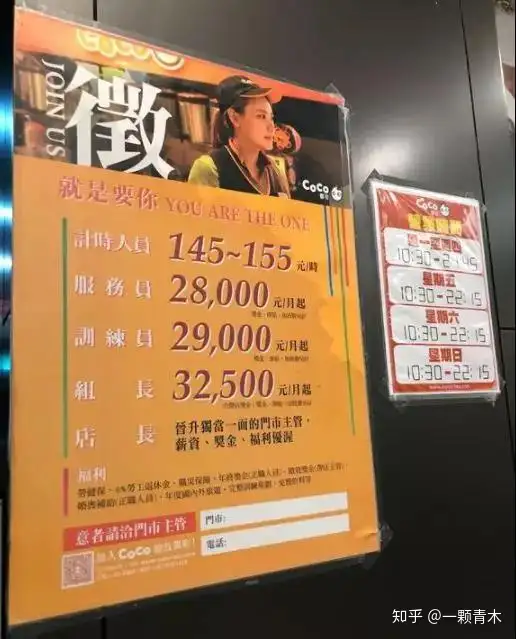
This is a recruitment notice from a convenience store in Taiwan. It is located in the most prosperous Taipei. The monthly salary of the waiter is NT$28,000, which is about 6,500 RMB, and the team leader is NT$32,500, which is about RMB 7,549.
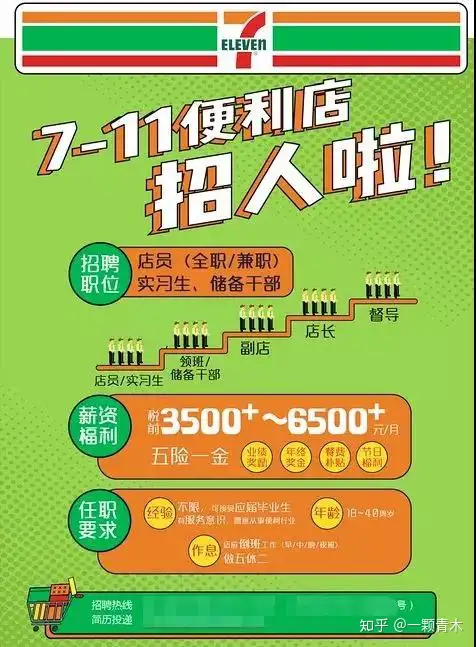
In an ordinary convenience store in mainland China, the monthly salary is 3500-6500, and the company also pays social security. You should often see recruitment notices for convenience stores at this salary level at the entrance of your community.
It can be said that the salary gap between Taiwan and mainland China is no longer as exaggerated as everyone imagined.
In 1996, the average salary of Taiwanese workers exceeded 10,000 yuan, while the average salary in Beijing was 798 yuan, and the national average was lower. The salary gap between the two sides was 10 to 20 times.
But in 2018, if any city in the country is pulled out, it is basically impossible to recruit people with a monthly salary of less than 3,000. The average salary gap between the two parties has narrowed to 30-50%. If only the developed coastal areas of China are compared with Taiwan, then The gap is smaller.
Taiwan's labor income has not regressed in the past 22 years, but the wages of mainlanders have risen too fast, and the gap between the two sides is about to be evened out.
Now factories in China offer five to six thousand wages, but still can’t recruit people. Are these factories capable of higher wages? No, profitability determines his salary cap.
In fact, the Chinese now look down on the monthly salary of 4,000 to 5,000 yuan offered by the factory, but this income is already very high. The price of hiring 1 worker in my country can hire 1.5 people in Thailand, 2.5 people in the Philippines, and 2.5 people in Indonesia. 3.5 people.
When you envy Americans every day, have you ever thought that Thais are actually envious of you too.
4
In the 1990s, the monthly gross income of taxi drivers could reach tens of thousands. After deducting the 1,650 yuan handed in, and deducting the cost of car repair and refueling, the net income of a taxi driver could be seven to eight thousand a month.
In those days, you could get rich by working in a factory, and even more so by driving a taxi. Why?
Because at that time, factories represented the most advanced productivity in China.
The so-called low-end factories and sweatshops in your eyes now were the top advanced modern manufacturing industry in the 1990s.
Working in China's top high-tech factories, can the wages not be high? It must be much higher than other industries.
The happiness of workers at that time was not because of their high income, but because the income of other industries was too low, which was the happiness that was brought out.
The reason why taxi drivers can earn such a high income is very simple. Few people could drive in those days, and the skill of driving represented high-end productivity. Of course, he could earn a high income.
Only the most advanced technology can bring high income, and only those with the most advanced technology can get high income.
Therefore, our country must transform high-end manufacturing at all costs, because the current growth of low-end manufacturing has reached the ceiling, and it is useless to change it to manage it.
Why the income of farmers is so high, directly catching up with the average salary in Europe and the United States, is very simple. The whole industry can make money, has extremely high productivity, and there are not many people who know how to do it. Of course, the wages of employees are high.
If each of our factories can be equipped with only a small number of operators like the automated terminal below, the overall productivity will be greatly improved.
When productivity increases, profits will naturally increase. With profits, higher wages will naturally be paid
But with the popularization of robots, there will be no people in low-end jobs, even jobs will be gone, and there will be no wages.
The kind of low-end jobs that are constantly screwing screws like a robot on the assembly line are indeed gone, but have you ever thought about it, factories that produce robots need a lot of R&D personnel positions.
This is the transformation of the manufacturing industry, and this is the industrial upgrading of the high-end manufacturing industry.
Chinese people should not be like robots, screwing screws on the assembly line every day, but should be engaged in research and development of high-end manufacturing.
Through education investment and industrial upgrading from generation to generation, low-end jobs are gradually eliminated, and at the same time, a large number of Chinese are trained as high-paying R&D personnel with cutting-edge technology.
A lot of news complained about the high wages of Chinese workers, saying that the increasing wages of the Chinese people are weakening the competitiveness of the Chinese economy.
I strongly disagree with this, in my opinion.
It is the growing competitiveness of the Chinese economy that is driving up the wages of the Chinese people.
Durian is not rare, its shortage is caused by transportation.
The biggest cost of fresh fruit is not the output, but whether it can be transported efficiently. The freshness period of fruit is very short, and long-distance transportation can easily damage the taste, increase cargo damage, and increase costs. In order to ensure profits, merchants can only increase prices.
Before the opening of the China-Laos Railway, Thai durians entered China mainly by sea and road transportation. If it is shipped by sea, it will take 7 days to enter China, and then it will take more than 10 days to enter supermarkets in various cities from China. Road transportation is faster than sea transportation, but it takes 5 days to enter the Chinese border port, which is too long.
After the opening of the China-Laos Railway, the "Fruit Express" went online. It only takes 3 days to reach Kunming from Thailand, 4 days to Chongqing, and 5 days to Guangzhou. The transportation efficiency has been greatly improved, and the transportation cost has also been reduced by 30%-50%. Fast speed and low cost means less damage to goods, more delicious taste and cheaper price.
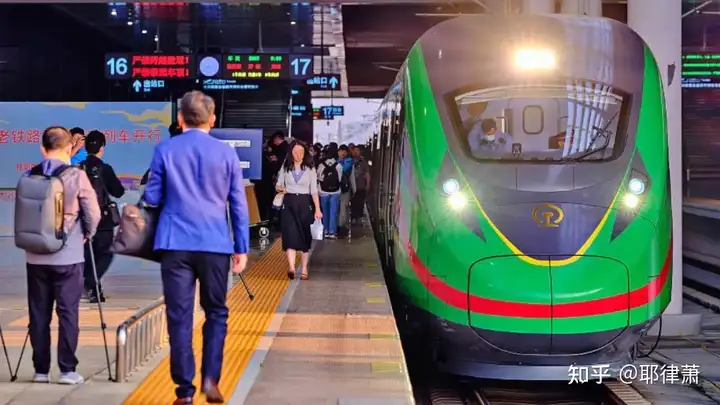
When the China-Laos Railway was opened, many people believed that the China-Laos Railway was just an ordinary traditional railway, and its speed was similar to that of traditional green leather cars. This is a huge misunderstanding. Although the design speed of the China-Laos Railway is not as high as domestic high-speed railways, it has reached 160 km/h. There are two main types of trains: one is "Fuxing" and the other is "Lancang". Everyone is familiar with the Fuxing, which is the second generation of high-speed trains in China, with a maximum speed of 400 km/h and a normal speed of 350 km/h.
The "Lancang" is actually the bullet "Harmony", which was renamed after going to Southeast Asia. Its top speed is 250 km/h, and it usually runs at 200 km/h. This shows that the China-Laos Railway can run high-speed trains, and there is still a lot of room for speed-up in the future. The design of the railway stations along the China-Laos Railway is exactly the same as that in China. All the stations are marked in Chinese, and the broadcasting at the railway station is also broadcasting in Chinese. It is the technical output of the entire system in China.
Countries such as Thailand and Laos are actually equivalent to a certain domestic province in terms of area. With the China-Laos Railway running through Thailand, Laos and China, the cost of foreign trade between the three countries has been greatly reduced and the speed has been increased at a high speed. This will not only drive the agricultural development of Thailand and Laos, but also allow Chinese consumers to enjoy high-quality products at low prices. Commodities, completely mutually beneficial and win-win.
During the economic crisis before World War II, American farmers were forced to dump milk. Many people regard this behavior as "reckless". But in fact, the reason why farmers are forced to dump milk is that its transportation costs are high. Local people who produce milk can't finish it, while non-locals who don't produce milk are hungry but have nothing to drink. If the milk is delivered for free, it can only be given to local people. If it is given to outsiders, the farmer will lose all his wealth and cannot afford the transportation fee.
This led to a surplus of milk on the one hand and no milk on the other. The same is true for the durian issue. On the one hand, the durian production in Thailand is very high, but Chinese consumers are discouraged by the high price. The cost is driven up by the high cost of logistics.
In the railway planning in Southeast Asia, the China-Thailand high-speed railway is also actively being built, with one linking to Kunming, Yunnan and Nanning, Guangxi. After the completion of these two high-speed railways, the price of durian in Thailand will plummet further, and the prices of fruits in Southeast Asia will be greatly reduced. Vietnam also agreed to adopt Chinese rail standards, paving the way for the construction of the Sino-Vietnamese Railway.
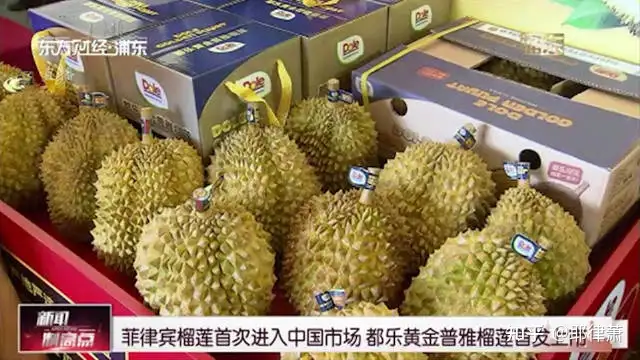
In order to further lower the price of durian, China allowed Philippine durian to enter China for the first time, so that Thai durian and Philippine durian were rolled up. At present, only fresh durians from Malaysia are not open for import. The main reason is that the quality of fresh durians from Malaysia is not stable. Only frozen durians from Malaysia are allowed to be imported.
The free trade agreement signed between China and ASEAN has also reduced the tariff cost of durian. The Thai durians we ate this year are all zero-tariff, loaded from Thailand on the "fruit train", all the way north, straight to the mouths of Chinese foodies.
Usually, many people scold, why does China borrow money to help others build high-speed rail? Why does China go to Africa to build railways and repay debts to Africa? Why is the China-Central Asia Railway very important? Because these railway constructions cost money, but what they get back is cheap oil and natural gas, industrial raw materials, and agricultural products. In the end, it is the Chinese consumers who benefit.
While promoting the development of industries in other countries, it also benefits the people of the country. How did the purchasing power of RMB increase? Isn't it just relying on these continuous railways to reduce the cost of imports?
The railway is not only the road to wealth, but also the road to benefits. The United States uses sea power to control the world, and China also uses railways to reshape land power.
榴莲大降价的背后,是中国铁路重塑东南亚陆权!
队长发现,今年的榴莲真的降价了。
降幅不小,往年30多一斤,40多一斤的榴莲,今年价格竟然降到了20多。往年一个榴莲两三百块,队长只敢瞧,不敢买。可今年,只要100多块钱就能买一个榴莲了。队长在家门口的超市里发现,特价榴莲仅19.8元一斤,每人限购一个。超市里的顾客几乎人手一个。
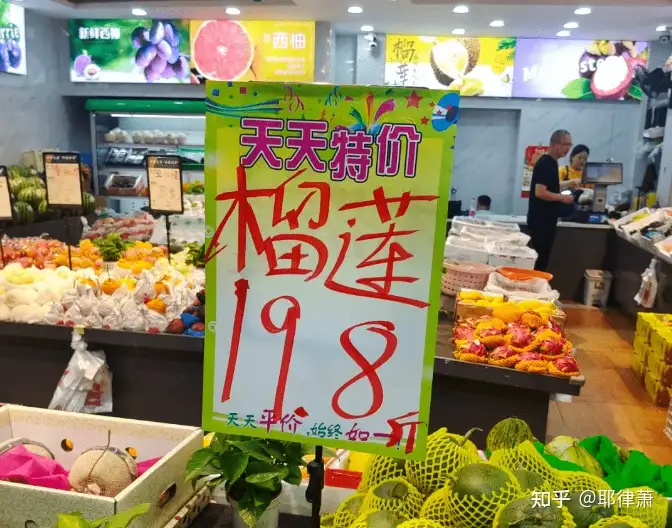
过了两天后,队长再去超市看,恢复常规价格后的榴莲也只要26元一斤。在广州,这基本就是近年来最便宜的榴莲。
五一期间,队长在昆明的时候,榴莲常规价格直接跌至38元一公斤,还有25元一公斤的特惠榴莲,买一大个仅需110块钱左右。在昆明那边,水果标价都是以公斤为单位,一公斤等于我们平常的两市斤。按我们平常的市斤习惯,榴莲价格已经被打到20元以内,特价榴莲不到15元/斤。这是队长见过的榴莲最低价。

榴莲被誉为“水果之王”,也是中国进口水果中的第一大品类,进口额连续3年排位第一。中国人买进口水果,花钱最多的就是榴莲了。往年榴莲太贵,很多普通老百姓都舍不得买。可今年榴莲降价后,销量可谓是额外爆火!平时的外卖都要二三十块钱一份,一个榴莲只要三四份外卖的钱,尝鲜解馋,哪怕是普通市民也能消费得起了。
为什么榴莲会大降价呢?原因只有一个:中老铁路开通了。
泰国是中国第一大榴莲进口国。仅2022年,中国就从泰国进口了78万吨榴莲,占中国榴莲总进口量的95%,进口总额约40亿美元。中国所有水果进口总额才146亿美元,榴莲进口额占比就达到了27.3%,是名副其实的第一大单品。
在很多人眼里,榴莲价格贵,应该和产量少有关系。这是一种错误的认知。榴莲的产量不少,而是很大。队长给大家看一下真正的榴莲树:
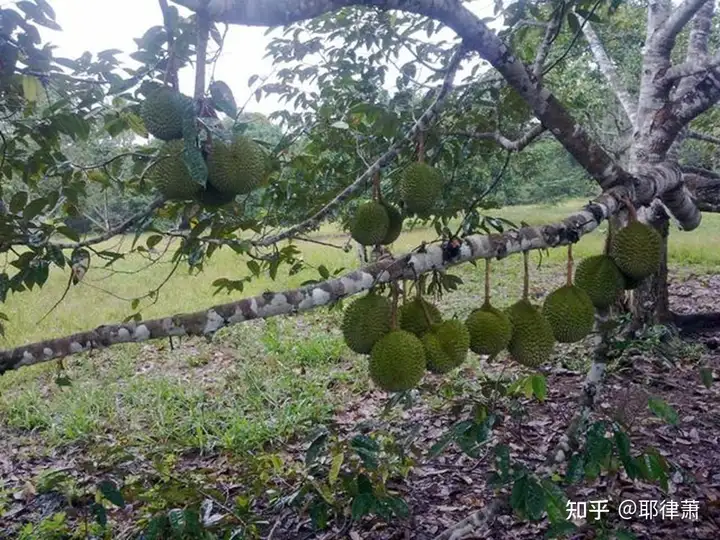
大家可以发现,这只是榴莲树的一根树枝,它上面就挂了十多个榴莲。榴莲树非常高大,挂果量也很大,一棵树每年可以挂果三四百个榴莲。按一个榴莲300块计算,一棵榴莲树挂果每年的市场总价格就超过3万块。
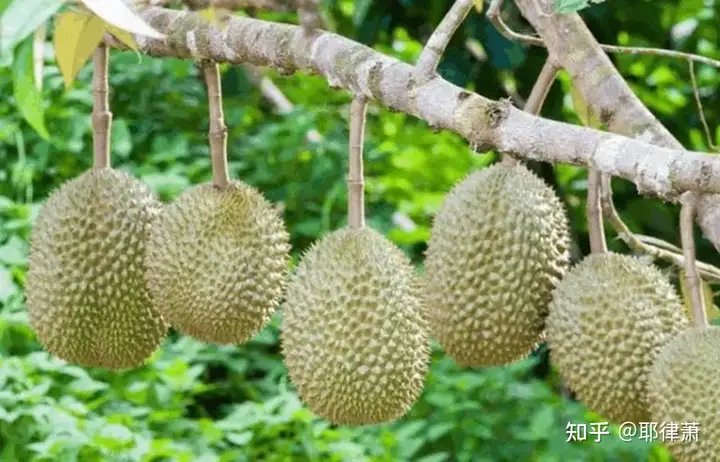
榴莲并不是以稀为贵,它的短缺是由交通运输造成的。
生鲜类水果最大的成本不在于产量,而在于能否高效运输。水果的保鲜期很短,长途运输很容易破坏口感,增加货损,提高成本。而商家为了确保利润,就只能提高价格。
在中老铁路尚未开通前,泰国榴莲进入中国主要靠海运和公路运输。走海运的话,进入中国就需要7天,再从中国进入到各个城市商超,则需要10天以上。公路运输比海运快一些,但也要5天才能进入中国边境口岸,耗时太长了。
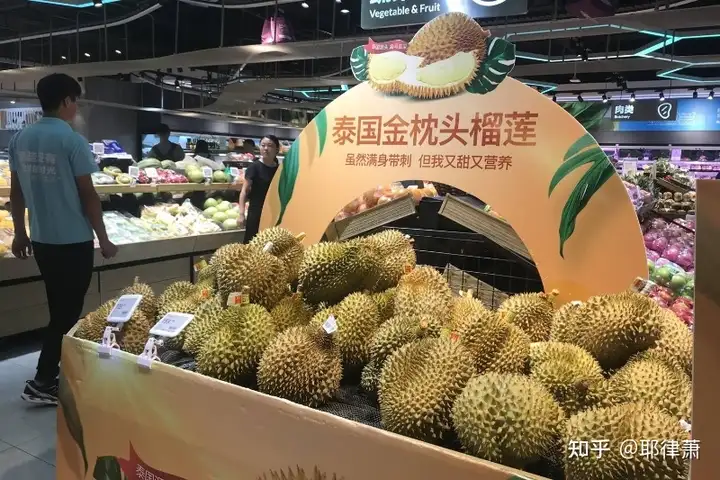
在中老铁路开通后,“水果专列”上线,从泰国抵达昆明只需3天,到重庆只需4天,到广州只需5天。运输效率大幅提升,运输成本也直线降低30%-50%。速度快,成本低,就意味着货损降低,味道更鲜美,价格更便宜。
在中老铁路开通时,很多人认为,中老铁路只是一条普通的传统铁路,它的速度类似于传统绿皮车。这是一个巨大的误会。中老铁路设计时速虽然比不上国内的高铁,但它也达到了160公里/小时,主要跑的列车有两款:一是“复兴”号,二是“澜沧”号。复兴号大家很熟了,是中国第二代高速列车,最高时速为400公里/小时,平常就跑350公里/小时。
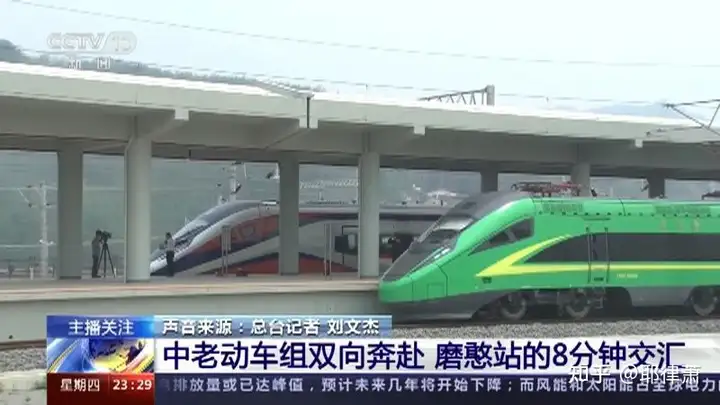
“澜沧”号其实就是子弹头“和谐”号,去东南亚后改了个名字。它的最高时速250公里/小时,平常跑200公里/小时。这说明,中老铁路是可以跑高速列车的,未来还有很大的提速空间。中老铁路沿途的火车站设计跟国内一模一样,全部站点都用中文标注,火车站广播也是中文广播,它是中国全体系的技术输出。
泰国、老挝等国家,在面积上其实就相当于国内的某个省。有了中老铁路贯通泰国、老挝和中国,三国之间的外贸往来成本大幅降低,速度高速提高,既能带动泰国和老挝的农业发展,又能让中国消费者享受到物美价廉的高质量商品,完全地互利共赢。
在二战前的经济危机中,美国农场主被迫倒牛奶。许多人把这种行为视为“暴殄天物”。可其实,逼得农场主把牛奶倒掉,就在于它的运输成本很高。生产牛奶的本地人喝不完,而不生产牛奶的外地人,挨饿却没得喝。如果把牛奶免费送,只能送给当地人,送给外地人的话,农场主倾家荡产都付不起运输费。
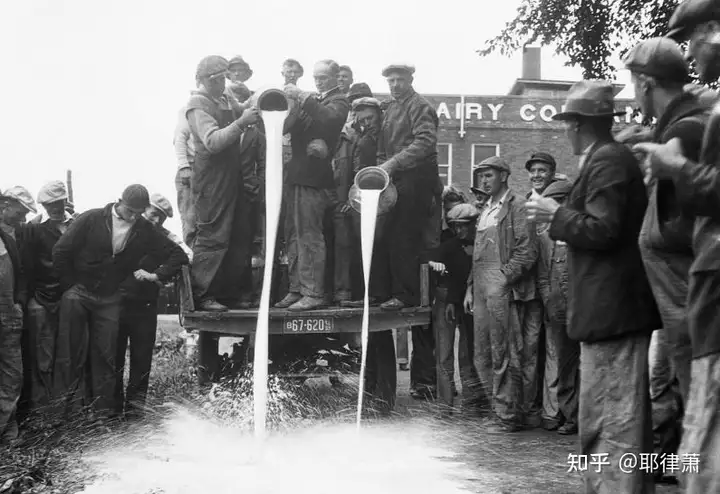
这才导致了一边是牛奶过剩,一边是没得牛奶喝。在榴莲问题上也是如此,一边是泰国榴莲产量很高,但中国消费者却因高昂的价格望而却步,抬高成本的就在于物流成本过高。
在东南亚的铁路规划中,中泰高铁也在积极修建,一条通云南昆明,一条通广西南宁。等这两条高铁修通后,泰国榴莲的价格还会进一步暴跌,整个东南亚水果都会大降价。越南也同意了采取中国铁轨标准,为中越高铁的修建铺垫。
为了进一步打低榴莲的价格,中国首次允许菲律宾榴莲进入中国,让泰国榴莲和菲律宾榴莲内卷起来。当下,只剩马来西亚新鲜榴莲还没有开放进口了,主要是马来西亚新鲜榴莲质量不稳定,只允许进口马来西亚冰冻榴莲。
中国与东盟签署的自由贸易协定也减少了榴莲的关税成本。我们今年吃的泰国榴莲都是零关税的,从泰国装货上“水果专列”,一路向北,直抵中国吃货的嘴里。
平时很多人骂,为什么中国要借钱帮别人修高铁?为什么中国要去非洲修铁路,还给非洲免债?为什么中国-中亚铁路非常重要?因为,这些铁路修建花出去的是钱,但收回来的是廉价的石油天然气、工业原料以及农产品等,最终实惠的还是中国消费者。
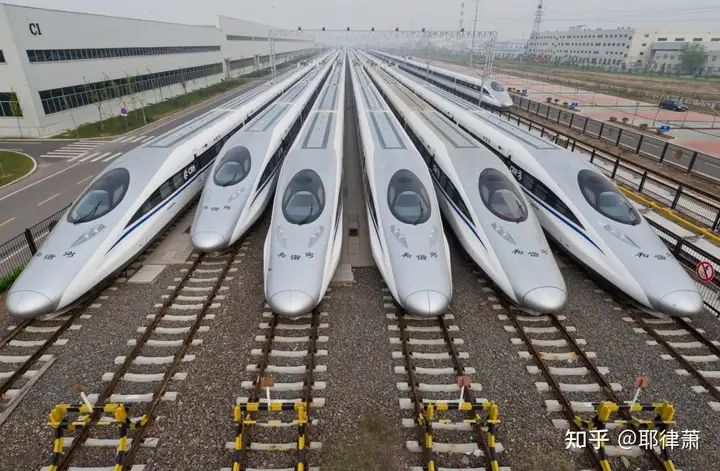
在带动他国产业发展的同时,也实惠了本国的老百姓。人民币的购买力是如何提高的?不就是靠这一条条连绵出去的铁路,把进口成本打下来吗?
铁路,既是致富之路,也是实惠之路。美国利用海权控制世界,中国也要用铁路来重塑陆权。
富裕的中国和空荡的工厂
上世纪80年代,能进工厂当工人,是一件非常荣耀的事情。
为什么荣耀,因为当工人太赚钱了,尤其是在沿海地区当工人。
1990年深圳工厂的工人,月工资少的有四五百元,多的甚至可以达到800~1000元,深圳凯达厂的女工,加班多的甚至可以拿到1700元。
而那一年,北京市的人均月工资,是221.08元。
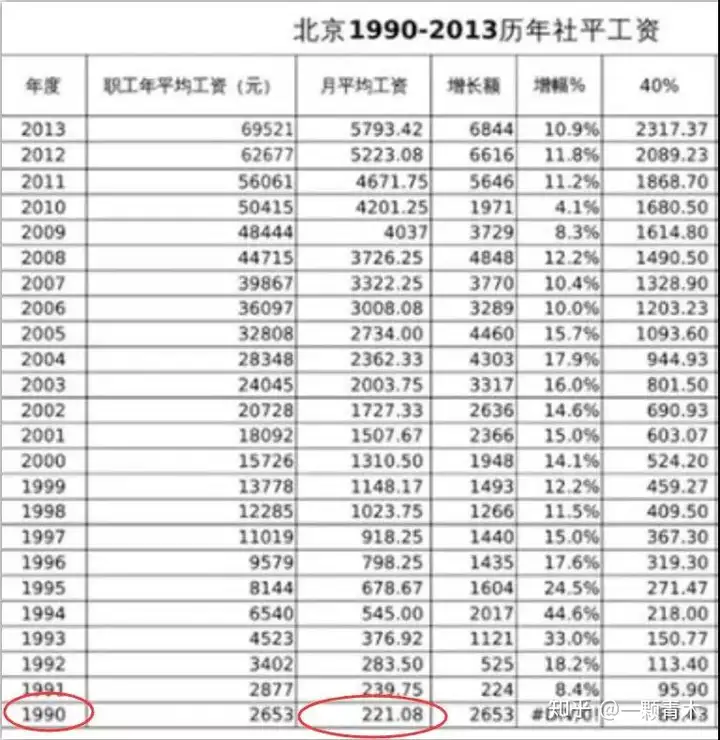
在很多县城和乡镇,很多人一个月能领取的薪水,才几十块钱。
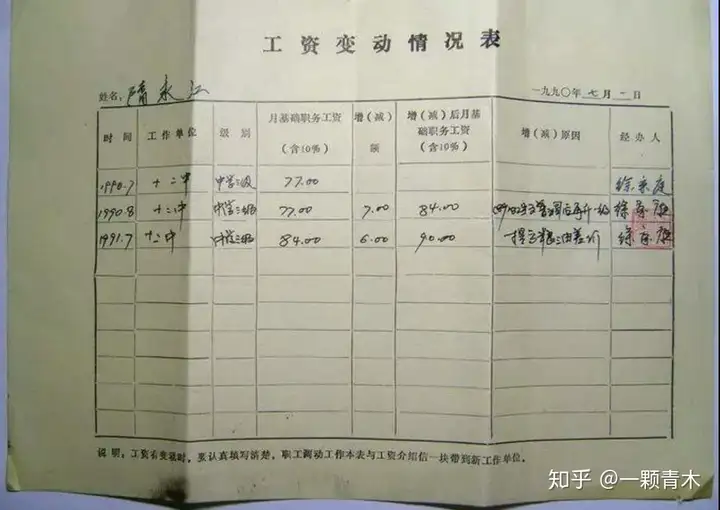
这时候,哪怕你没有任何学历,只要你敢离开家乡,到深圳工厂里打工,一个月就能拿到手四五百元,甚至1000多元的工资。
你对这样的工厂有什么感觉?
当然是极其强大的幸福感和归属感了,你恨不能在这样的工厂里呆一辈子,万一厂子不在了,你的幸福生活也就随之没了。
那个时候,台湾的工人工资破万元人民币,美国的工人工资破2.5万,资本家觉得到大陆开个厂,用四五百元就能招到一名合格的工人,真的是上天的恩赐。
但是对大陆的农民工来说,能找到一份四五百元的工作,同样也是上天的恩赐,因为在其他地方,他们根本找不到如此高薪的工作。
人的幸福感,是比出来的,我只要比周围其他人的收入高,我就很幸福。
在深圳工厂打工一年,回老家就可以盖新房、买彩电,在同村人羡慕嫉妒恨的眼光中,你的自尊得到了极大的满足。
在模范效应的带动下,大量的农民工潮水一样的涌入了深圳。
那个时候,工厂招工可严格了,外面一堆工人排着队等着进厂。
进个工厂,还要长的好看!招工条件比很多国家的招兵还要严格。
只要25岁以下的,只要长相端正的,不能近视,必须有健康证明,不能有乙肝,女不能低于1.55,男不能低于1.65。
在都没有学历的基础上,应聘人数又过多的情况下,只能凭外貌去刷人了。
那时候的工厂,里面有好多20岁左右的漂亮小姑娘当女工,吃苦耐劳。
每天工作12小时,30天无休,照样一堆人涌进来应聘。
招工难?
不存在的,而且来的工人都非常优质,特别听话,特别好管理。
这样的日子,至今仍然被很多工厂主所怀念。
1
今天的中国,工厂很多,工人却不够了,大量的工厂开始抱怨招工难,这样的新闻,每年都刷屏。
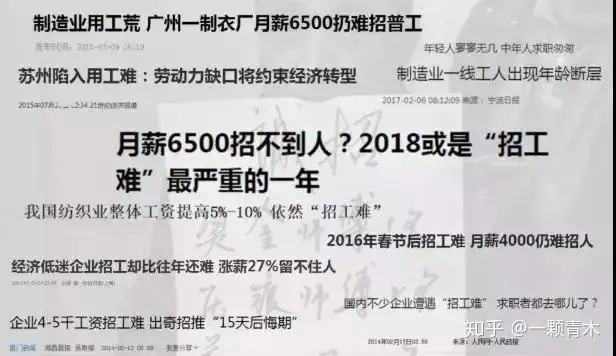
为什么招工难,因为待遇低啊。
很多企业招聘时给出了4000~7000元的工资,实际背后有个潜台词就是“计件,不交社保”,熟练工每天工作12个小时不眠不休才能拿到这么多工资,新人根本拿不到这么多。
而且就连这样的工作机会,也不是月月都有,旺季的时候才有那么多活,淡季的时候,一个月能拿到3000就谢天谢地了。
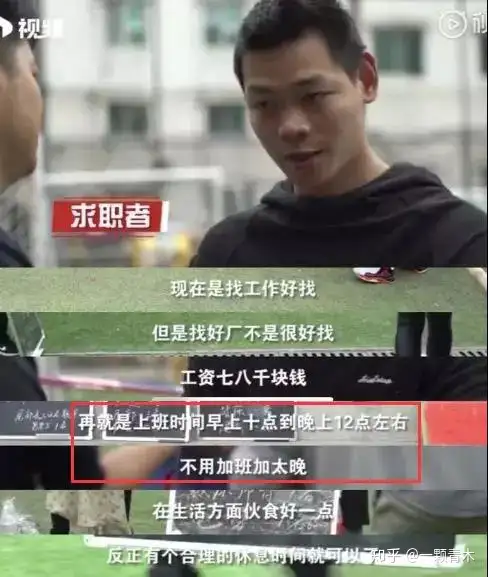
一位年轻的求职者认为,工作好找,但好工作难找。
什么叫“好工作”,工作时间从早上10点到晚上12点,每天加班别太长时间,给自己一点休息时间,这就叫“好工作”了。
这已经远远超出996的范畴了,而且从事的还都是体力活。
这是一家典型的深圳工厂招聘通知,每月22天工作,有双休,每天干8小时,这些法律规定的权利我都给你。
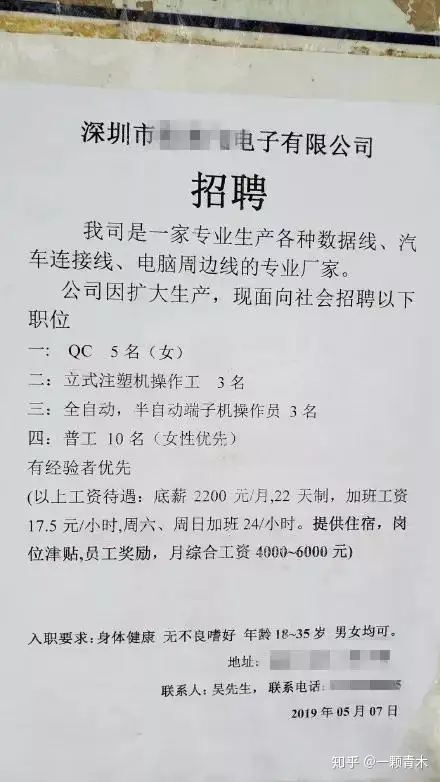
但你的工资只有2200元,想要更高收入也可以,加班就行。
工作日加班17.5/小时,周六周日加班24/小时,月综合工资4000-6000元。
当然,肯定是没社保的,如果还额外给社保,招聘通知里一定会郑重的写上,而且还要黑色加粗,这是行规。
我粗粗算了一下,每个月差不多要加班100个小时,工资才有4000元,如果要6000工资,那要加班200个小时。
多人不知道加班100小时和200小时是什么概念,来我给你算一算。
假设一个月30天无休的话,加班100小时代表你每天加班3.3个小时,加上本来的8小时,你要工作11.3个小时。
如果加班200小时,那代表你每天要加班6.6个小时,加上原来的8小时,你要工作14.6个小时。
当然,周末没有那8小时,可以把数据给拉平一点,但综合起来,想拿到无社保的5000收入,一天工作12个小时是跑不掉的。
这是另外一家深圳工厂,开的工资高了不少,但大家的2200底薪是不会变的,唯一涨价的就是加班工资。
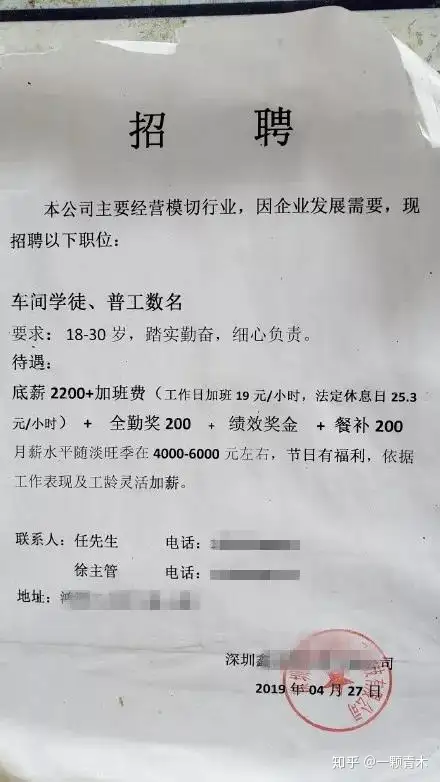
以上这些收入,有活的旺季才能拿到,没活的淡季,无法加班,工资自然就下去了。
招聘通知上给的工资,是理论上的全年最高月薪,而不是一定给你的月薪,这也是行规。
与此同时,当一个外卖小哥,每个月拿到4000以上是非常轻松的,勤快的人甚至可以拿到八千甚至一万的收入。
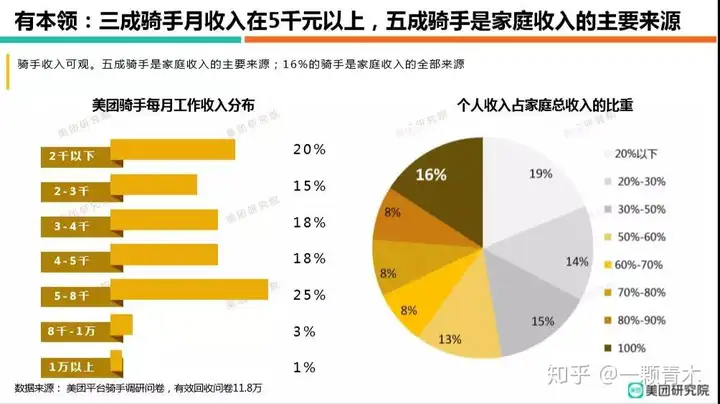
同样是计件工资,当外卖骑手,明显好过去工厂当工人,至少当骑手不存在淡季还是旺季,一年到头都是旺季,这份收入很稳定,因为天天都有人在吃吃吃(说的就是你)。

因为外卖骑手的崛起,工厂招工明显难了,招不到人了。
2
由于长期以来,中国靠工厂赚到了太多的财富,所以很多中国人认为去工厂当工人才是正道,而去当外卖骑手则是歪门邪道,甚至连大型媒体也都抱有如此倾向。

但实际情况,可能和大家想的不太一样。
我们看看招工现场就知道了,你看看下面这张图,你觉得图里面的是老板还是打工仔。

图中的这些人,是正儿八经的工厂老板,手里拿着的是工厂的成品衣服,举着的牌子上写明了要招的工种。
工厂不愿意培训生手,哪怕是简单的流水线培训都不愿意做,只要熟练工,所以手里才会拿成品衣服,意思是我只要做过这种衣服的工人,进厂就必须能用。
这就是你们印象中的“嗜血资本家”的招工现场,他们的身家,可能还不如互联网公司的一个程序员。
在互联网大厂里打工,比这些工厂的小老板活的爽多了,这就是中国现实。
别看他们钱少,养的工人可不少,厂里少则三五十人,多则数百人,贡献了我国大量的就业岗位。
至于这些工厂的工作环境和技术水准,你可想而知到底有多差。连招工都要亲自出马,你觉得这样的老板会养技术员研究技术么?
这样的工厂,当然是血汗工厂,但并不怪老板黑心,因为他自己都快成血汗老板了。
技术能力低,盈利能力差,他只能这么干,没别的办法,给工人的工资,已经是他能承受的极限了。
我国近些年谋求的产业升级转型,实际上就是要发展高科技工厂,淘汰掉这种低端工厂。
靠给欧美代工,前途注定是有限的。
3
给欧美当代工厂发家,最后前途停滞的典型代表,就是中国台湾。
1990年,台湾区区一个小岛,GDP居然达到了整个大陆的44%,换算成人均,那差距简直大的恐怖。
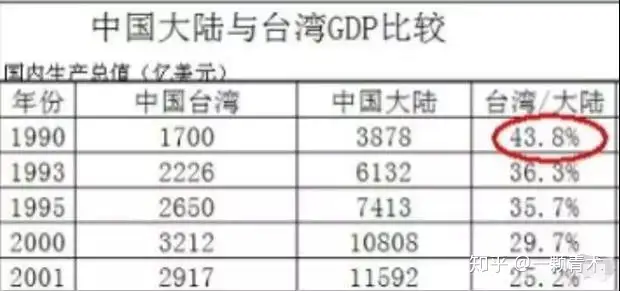
很多台湾人看不起大陆人,就是这段时间养成的优越感。
1996年,台湾劳工的平均薪资就达到了43000新台币,当年的汇率是27新台币兑一美元,也就是说月薪差不多相当于1592美元。
随后的20多年里,台湾的GDP逐步增高,但劳工薪资增长并不大,甚至可以说趋于停滞。
2018年,台湾的劳工平均薪资居然只有49989新台币,涨幅之低令大陆人瞠目结舌。
2018年的汇率是31台币兑1美元,台湾劳工的平均薪资是1612美元,和22年前相比几乎没有差别,结合美元自身的贬值,台湾劳工的生活水平可以说是越过越差。
1612美元,差不多相当于11284元人民币,中国沿海发达城市已经快要接近这个水平。
你可以认为,这个水平就是给欧美代工的薪酬天花板,极难被突破,台湾已经用了22年来证明这个事情。
这是台湾一家便利店的招聘通知,位于最繁华的台北,服务员月薪28000新台币,约合6500人民币,组长32500新台币,约合7549元人民币。
而中国内地一家普通的便利店,月薪则是3500-6500,公司还给缴纳社保,这种薪资级别的便利店招聘通知,大家的小区门口应该都经常见到。
可以说,中国台湾和大陆的薪资差距,已经没有大家想象的那么夸张了。
1996年,台湾劳工平均工资破万,北京的平均工资为798元,全国平均更低,双方的薪酬差距是10~20倍。
但2018年,全国随便一个城市拽出来,月薪低于3000都基本招不到人,双方的平均薪酬差距,已经缩小到30~50%,如果只把中国沿海发达地区拿出来和台湾比,那差距更小。
台湾这22年来的劳工收入并没有退步,但是大陆人的薪酬涨的太快了,双方的差距,已经要被拉平了。
现在中国的工厂,开出了五六千的工资,依然招不到人,那这些工厂有能力开更高工资么?不能,盈利能力决定了他的工资上限。
实际上,中国人现在看不起工厂开出的四五千人民币月薪,但这份收入已经很高了,在我国雇佣1名工人的价格可以在泰国雇佣1.5人,在菲律宾雇佣2.5人,在印尼雇佣3.5人。
你天天羡慕美国人的时候,可曾想过,泰国人其实也很羡慕你。
4
在90年代,出租车司机每个月的毛入能有上万,扣掉上缴的1650元份子钱,扣掉修车和加油的费用,一个月净赚到手能有七八千。
在那个年代,你去工厂打工能发财,开出租车,更能发财,为什么?
因为在那个年代,工厂代表了中国最先进的生产力。
你现在眼里所谓的低端工厂、血汗工厂,放到上世纪90年代,那就是最顶端的高级现代化制造业。
在中国最顶级的高科技工厂里上班,工资能不高么,肯定远远高于其他行业啊。
那时候的工人幸福,并不是因为他们的收入有多高,而是因为其他行业的收入太低了,衬托出来的幸福而已。
而出租车司机为啥能有那么高的收入,很简单,那年代没几个人会开车,会开车这门技术就代表了高端生产力,他当然能拿到高收入。
只有最先进的技术,才能带来高收入,只有手握最先进技术的人,才能拿到高收入。
所以,我国不惜一切代价,都要转型高端制造业,因为目前低端制造业的增长已经到了天花板了,换神仙过来管理都没用。
农为什么那么高收入,直追欧美平均薪酬,很简单,整个行业能赚钱,具备极高的生产力,会的人又不多,从业人员的工资当然高。
如果我们每一个工厂,都能像下面这个自动化码头一样,只需要配备少量的操作人员,那整体生产力必然大幅提升。
生产力上去了,盈利自然就上去了,有了盈利,自然可以发更高的工资。
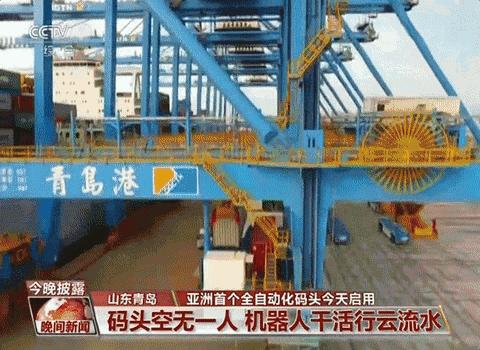
但是普及了机器人,低端岗位不就没人了么,连工作都没了,哪里还有工资。
那种在流水线上像个机器人一样不断拧螺丝的低端岗位确实是没了,但是你想过没有,生产机器人的工厂却需要大量研发人员岗位了。
这就是制造业转型,这就是高端制造业的产业升级。
中国人不应该像个机器人一样,天天待在流水线上不断拧螺丝,而是应该从事高端制造业的研发工作。
通过一代代的教育投入和产业升级,慢慢淘汰掉低端工作岗位,同时把大量的中国人培训成高薪的,手握尖端技术的研发人员。
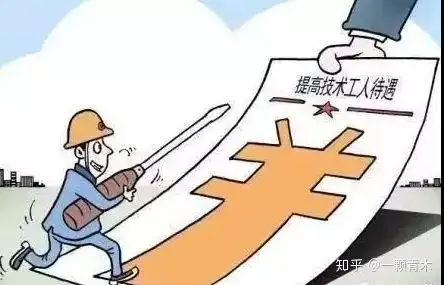
很多新闻吐槽中国工人的工资高,说中国民众日益增长的工资水平,正在削弱中国经济的竞争力。
这一点我非常不同意,在我看来。
正是中国经济日益增长的竞争力,才抬高了中国民众的工资水平。


评论
发表评论